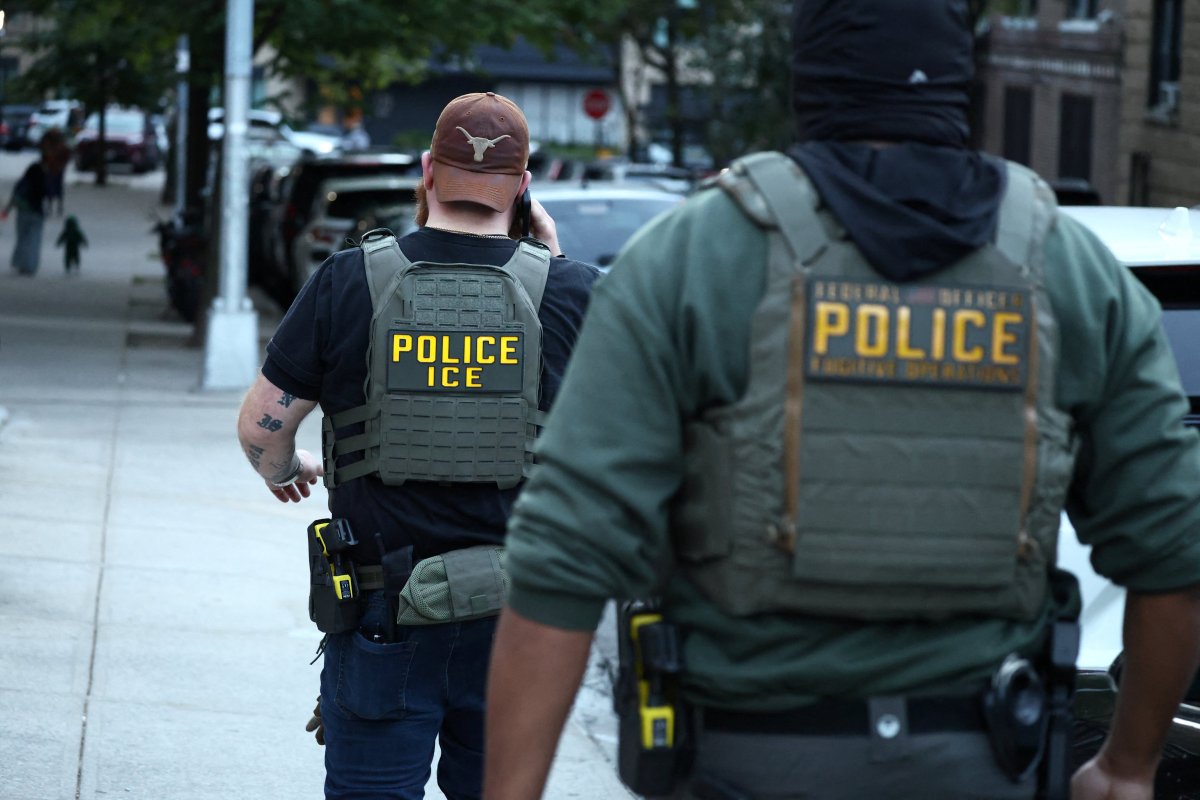
The article discusses how sanctuary city policies affect immigration enforcement in different areas. It argues that government treatment varies by location and may favor illegal immigrants over citizens, which challenges the idea of equal justice under the law.
Key Facts
Sanctuary cities limit cooperation with federal immigration authorities.
Policies differ depending on the city or ZIP code.
These differences lead to inconsistent enforcement of immigration laws.
Some believe this results in unfair treatment of citizens compared to illegal immigrants.
Equal justice under law means all people should be treated fairly by the government.
Read the Original
Want the full story? Tap a source to open the original
article.
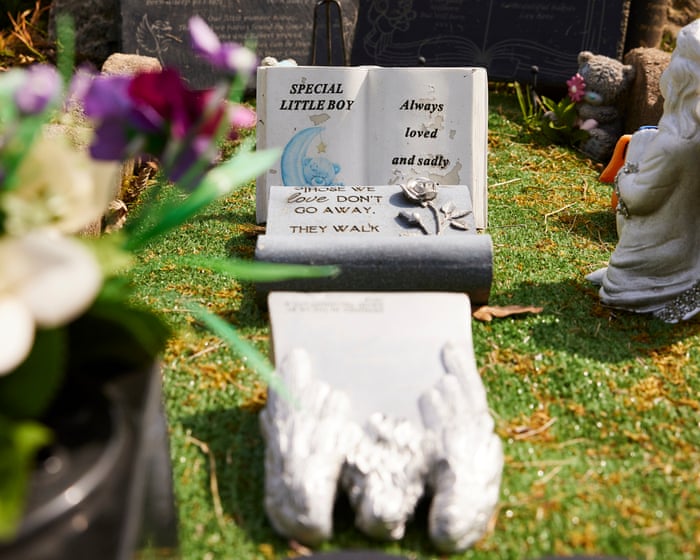
The UK government has apologized for burying stillborn babies in mass graves without informing their parents from the 1930s to the early 1980s. Many parents only learned decades later about the burial practices, causing lasting pain and grief.
Key Facts
Stillborn babies were buried in mass graves in places like Wirral and Royton between 1935 and 1981.
Parents were not told where their babies were buried or given any choice about the burials.
Over 1,000 babies were buried in cemeteries in Wirral, and more than 270 in Oldham.
Gina Jacobs campaigned for an official apology after not knowing where her stillborn son was buried for 53 years.
Health Secretary Yvette Cooper gave a formal apology in the UK House of Commons.
Liverpool city council passed a motion demanding a government apology to affected families.
The council also called for funding to retrieve burial records and a full review of the mass burial practices.
Officials stressed the need for support and further justice for families affected by the historic practices.
Read the Original
Want the full story? Tap a source to open the original
article.
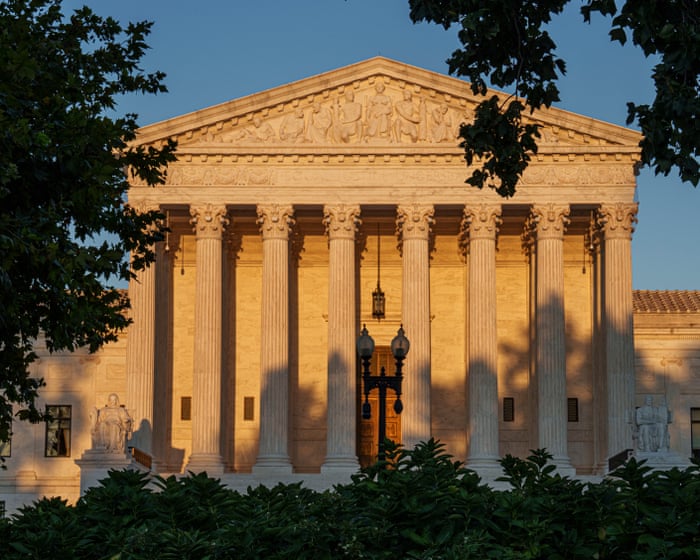
The Supreme Court will review several key policies from President Donald Trump’s second term, including immigration and deportation rules, a climate change lawsuit targeting energy companies, and efforts to relax restrictions on assault-style rifles. The court’s decisions on these cases will come by June 2027 and could affect how the government handles immigration, climate responsibility, and religious rights.
Key Facts
The court will decide if local governments can hold energy companies responsible for climate change damages in a case involving Boulder County suing ExxonMobil and Suncor Energy.
One case challenges the policy of detaining immigrants indefinitely while they await deportation, a stricter approach introduced by the Trump administration.
Another case questions the legality of quickly deporting immigrants to third countries without letting them contest their removal or raise safety concerns.
The Supreme Court already allowed officials to temporarily deport immigrants to third countries while legal challenges continue.
A case involving Catholic parishes addresses whether they can refuse admission to families that don’t follow their religious values but still receive state-funded preschool benefits.
The court is often divided 6-3 in favor of conservative positions but has sometimes ruled against Trump’s policies.
Justice Samuel Alito has recused himself from the climate change case due to a conflict of interest, possibly affecting the outcome.
These cases involve important issues about immigration detentions, climate accountability, and the balance between anti-discrimination laws and religious freedom.
Read the Original
Want the full story? Tap a source to open the original
article.
Congress is working on stopping fraud with three anti-fraud bills passed by the House. These bills are now waiting for the Senate to act during the lame duck session. The federal government's yearly deficit is expected to reach $2 trillion by 2026.
Key Facts
The federal government’s annual deficit is projected to be $2 trillion in 2026.
The House of Representatives has passed three anti-fraud bills.
These bills aim to reduce fraud and save government money.
The bills are waiting for the Senate’s decision.
This is happening during the lame duck session, which is the period after an election but before new members take office.
Both political parties support the anti-fraud bills.
Preventing fraud could help lower the government deficit over time.
Read the Original
Want the full story? Tap a source to open the original
article.
A mechanic in Cardiff, Neil John Lewis, pleaded guilty to fraud for giving a car a fake MOT certificate before it crashed and killed three people. He was sentenced to a 12-month community order, including unpaid work and fines. The crash happened in March 2023, and investigations continue into the circumstances.
Key Facts
Neil John Lewis, 47, from Cardiff, pleaded guilty to fraud by false representation.
He gave a faulty car a fake MOT certificate weeks before it crashed.
The crash killed three people: Eve Smith (21), Darcy Ross (21), and Rafel Jeanne (24).
The car was sold to a friend of Rafel Jeanne and had serious safety issues like defective seatbelts.
Lewis owned G and J Motors for 21 years and gave up his testing certificate after the incident.
The car failed the first MOT test due to warning lights for seatbelt and airbag faults.
Lewis passed the car in a retest without fixing these defects.
The crash victims were missing for two days before being found in woodland near Cardiff.
Lewis was sentenced to 100 hours of unpaid work, a £185 court fee, and £114 in costs.
Police officers involved in the investigation will face misconduct hearings related to how it was handled.
Read the Original
Want the full story? Tap a source to open the original
article.
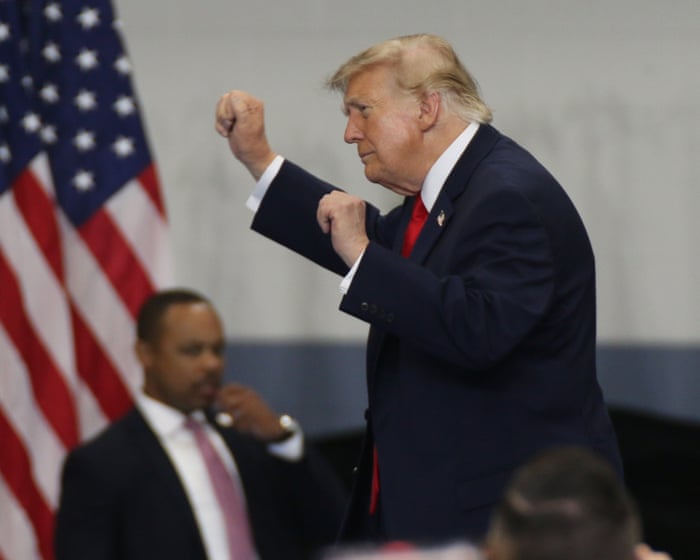
President Donald Trump said the Republican Party faces a tough fight to keep control of both the House of Representatives and the Senate in the November midterm elections. Despite this, Republicans are spending hundreds of millions of dollars to support candidates in areas that were once considered safe for their party, while shifting resources to key states where Democrats are strong.
Key Facts
President Trump spoke about the difficult midterm election battles for Republicans.
Republicans want to remain in control of the House and the Senate.
Many Republican-held seats once seen as safe are now at risk.
The party is spending hundreds of millions of dollars on campaigns.
In states like North Carolina and Georgia, Republicans are adjusting their strategies.
Resources are moving toward other Republican strongholds facing unexpected Democratic challenges.
The midterm elections will take place in November 2026.
Read the Original
Want the full story? Tap a source to open the original
article.
A graduate student at the University of Wyoming was arrested for allegedly poisoning a fellow student’s tea with a chemical and trying to flee to China. She was caught with electronic devices and documents, and police recorded her searching the victim’s desk.
Key Facts
Aili Wang, 32, a microbiology student from China, was arrested Oct. 6 at Los Angeles Airport.
She allegedly poisoned a colleague’s tea with acrylamide, a chemical she reportedly bought online.
The victim, identified as "K.T.," experienced severe symptoms after using a coffee maker in their shared office.
Police surveillance captured Wang searching the victim’s desk and handling his notebooks.
Wang tried to leave the U.S. with laptops, storage devices, and documents linked to the case.
The victim was working on new technology for treating diseases and had pending patents.
Wang had similar research experience in China and was reportedly jealous of the victim’s success.
Wang remains jailed without bail, and prosecutors want to raise her bond to keep her from fleeing again.
Read the Original
Want the full story? Tap a source to open the original
article.
A Newsweek analysis compares key House races in 2018, 2022, and 2026 using the Cook Political Report’s ratings. It shows Republicans currently hold more competitive districts at risk in 2026, similar to 2018, while Democrats had more vulnerable seats in 2022.
Key Facts
Cook Political Report rates all 435 House districts on a seven-point scale from Solid Democratic to Solid Republican, with Toss Up meaning neither side has an advantage.
In October 2018, Republicans held 45 competitive seats rated Toss Up or worse, while Democrats held 3.
In October 2022, Democrats held 30 such competitive seats, and Republicans held 12.
For the 2026 elections, Republicans hold 23 competitive seats, and Democrats hold 11.
The ratings include categories like Solid, Likely, Lean, and Toss Up, each showing a different level of advantage or competition.
In 2018, Democrats gained control of the House by winning many competitive districts, including some rated as Lean or Likely Republican.
The current ratings show the Republican majority is defending a larger number of vulnerable districts compared to recent years.
Election ratings and competitiveness can change between now and Election Day.
Read the Original
Want the full story? Tap a source to open the original
article.
President Donald Trump shared a video of a British man being fatally attacked by a tiger on his social media, which upset the man’s family. Trump also campaigned in Alaska, Arizona, and Montana, focusing on conservative areas as his party faces challenges in some states. He repeated incorrect claims about starting a war with Iran and urged Republicans to vote by mail.
Key Facts
President Trump posted a video of William Chapman being attacked by a tiger, causing distress to Chapman’s family.
Chapman’s family said he had significant mental health issues and was on strong medication.
Trump’s campaign stopped in Alaska, a conservative state where the Senate race is close.
Alaska’s Democratic candidate Mary Peltola is tied or slightly ahead of Republican Senator Dan Sullivan.
Trump has low approval ratings in key areas due to rising fuel prices and the unpopular Middle East conflict.
Trump repeated a false claim that he started a war with Iran because Iran was close to having a nuclear weapon.
He encouraged Republicans to vote by mail, despite previously criticizing this voting method.
Trump pardoned two local repair shop owners convicted of breaking air pollution laws.
Read the Original
Want the full story? Tap a source to open the original
article.
Pope Leo XIV, the first US-born pope, had lung cancer surgery and is recovering with canceled appointments until October 20. Meanwhile, President Donald Trump faced a court ruling that restored White House access to journalists from certain media outlets, and Kimberly Guilfoyle resigned as US ambassador to Greece amid allegations of improper conduct.
Key Facts
Pope Leo XIV, age 71, had part of his right lung removed due to lung cancer.
His surgery was reported successful, and he is now resting at the Vatican.
Pope Leo has canceled all public engagements until October 20.
A federal judge ruled that CNN, MSNBC, and Politico journalists must keep White House access during a lawsuit against the Trump administration.
Judge Kelly found that revoking press access based on viewpoint likely violates the First Amendment.
The BBC is pushing President Trump to schedule a deposition in his $10 billion defamation lawsuit against the broadcaster.
Kimberly Guilfoyle resigned as US ambassador to Greece after reports she sought payments from a Trump donor in exchange for influence.
Guilfoyle denies wrongdoing and says she will defend her reputation.
Read the Original
Want the full story? Tap a source to open the original
article.
Seven people released from Immigration and Customs Enforcement (ICE) custody are suing the agency because their passports, work permits, and other personal items were not returned. The lawsuit claims ICE often keeps these belongings without a good reason, which makes it hard for people to work, drive, and support themselves after release.
Key Facts
Seven former ICE detainees filed a federal lawsuit against ICE on Tuesday in Washington.
The plaintiffs say ICE has a nationwide practice of withholding important personal documents and belongings after release.
Items not returned include passports, Social Security cards, work permits, driver’s licenses, phones, car keys, cash, clothing, and even a wedding ring.
One plaintiff, Vladimir Izmailov, was detained from November 2025 to April and still lacks key documents needed to work and drive.
The plaintiffs want the court to order ICE to return the withheld property and to create rules to protect detainees’ belongings.
The lawsuit alleges ICE’s actions violate the Fourth Amendment (protection against unreasonable searches and seizures) and federal laws.
ICE detained more than 610,000 people after President Trump took office in 2024, with 80% arrested inside the U.S.
The plaintiffs say lost documents hurt their ability to find jobs, drive legally, and support their families, causing financial hardship.
Read the Original
Want the full story? Tap a source to open the original
article.
Andy Burnham, the former mayor of Greater Manchester, had two hospitality dinners with Manchester City football club's chairman Khaldoon Al Mubarak in 2017 and 2018. These dinners were declared earlier but were not detailed in a recent statement by the Greater Manchester Combined Authority about his meetings with the club.
Key Facts
Andy Burnham dined twice with Manchester City chairman Khaldoon Al Mubarak during football matches in 2017 and 2018.
The dinners were listed in a previous register of declarations but the register has since been removed from the Greater Manchester Combined Authority (GMCA) website.
The recent GMCA statement mentioned a formal 2021 meeting and informal meetings, but did not specify the two hospitality dinners.
Hospitality dinners were valued at £300 in 2017 and about £699 in 2018.
Burnham declared other hospitality, including tickets to an Ed Sheeran concert at the same stadium.
Manchester City was found guilty of breaking Premier League rules and is appealing the decision.
Political figures are asking Burnham and the government to disclose all details of their meetings with Manchester City.
Burnham has agreed to publish a full list of his meetings with the club during his time as mayor.
Read the Original
Want the full story? Tap a source to open the original
article.
Federal agents raided the home of Representative Ilhan Omar in connection with a criminal investigation into her immigration, which has no evidence of wrongdoing. The raid happened amid political tensions as President Donald Trump and his supporters have frequently criticized Omar.
Key Facts
Federal agents from the Department of Homeland Security raided Ilhan Omar’s home near Washington DC.
The raid was related to a criminal investigation into Omar’s immigration as a child, but no evidence of fraud exists.
A judge approved the raid after review by federal security officials.
Ilhan Omar is a Somali-American congresswoman from Minnesota and a member of the Democratic Party.
President Trump and some Republican leaders have repeatedly criticized Omar and made false claims about her citizenship.
Trump recently said Minnesota is being taken over by Somali immigrants and urged resistance against them.
The raid took place shortly after Trump returned to power as the 47th U.S. President in 2025.
Supporters of President Trump chanted calls for deportation of immigrants at his recent campaign rallies.
Read the Original
Want the full story? Tap a source to open the original
article.
In May 2025, a man used generative AI to help plan a car bomb attack on a fertility clinic, killing himself and injuring four others. Since 2021, U.S. law enforcement agencies have been monitoring how terrorists and extremists might use AI to commit crimes and target AI infrastructure, while also exploring ways to use AI tools for policing.
Key Facts
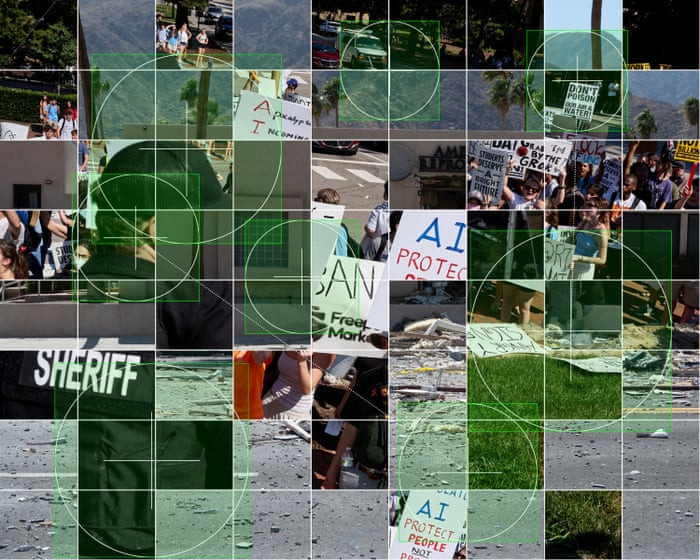
A 25-year-old man used an AI chatbot to get bomb-making instructions before detonating a car bomb in Palm Springs in May 2025.
Law enforcement found current AI safety measures are not strong enough to stop criminals from accessing dangerous information via AI.
FBI memos warn that terrorists will likely increase their use of AI for planning attacks.
Police and intelligence agencies have tracked the risk that extremists might use AI to create misinformation, deepfakes, and harmful content like child abuse material.
Law enforcement is also concerned about public opposition and extremist threats targeting the physical places (data centers) that house AI technology.
Over 80 documents from agencies like the FBI, DHS, and NYPD reveal ongoing efforts to monitor AI-related threats and use AI for policing.
The NYPD’s AI threat analysis referred to the "AI 2027" project, which examines possible future risks from AI, including bioweapon drones.
Police balance using AI to monitor social media against concerns about privacy and public trust.
Read the Original
Want the full story? Tap a source to open the original
article.
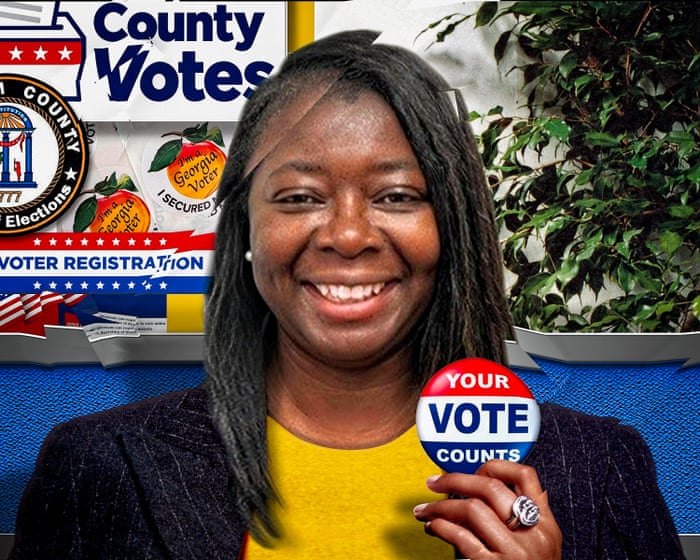
Sabrina German is the director of voter registration in Chatham County, Georgia, and avoids political discussions to stay neutral. She leads the Georgia Association of Voter Registration and Election Officials, working to support election workers amid ongoing accusations from election skeptics.
Key Facts
Sabrina German has worked in elections in Savannah, Georgia, since 1996.
She currently directs voter registration in Chatham County, Georgia.
German avoids political conversations to maintain neutrality in her work.
She serves as president of the Georgia Association of Voter Registration and Election Officials (Gavreo).
Election workers in Georgia face threats and false claims of fraud, especially after the 2020 presidential election.
Two Fulton County poll workers, Ruby Freeman and Shaye Moss, received death threats after false fraud accusations.
German supports election workers and stresses their commitment to serving voters, not politics.
Georgia remains a tense location for elections due to ongoing challenges and skepticism.
Read the Original
Want the full story? Tap a source to open the original
article.
The article discusses key trends in the 2026 U.S. midterm elections, focusing on the challenges Republicans face and how voters’ concerns vary in different regions. It highlights issues like inflation, local economic worries, and environmental problems that influence voter behavior more than national political battles.
Key Facts
The 2026 midterms are seen as a test of President Trump’s influence but also reflect wider voter dissatisfaction.
Republicans tried to change election rules, including mail-in voting and redistricting, to gain advantage but faced legal obstacles.
Inflation affects regions differently: in Maine, heating oil prices are a top concern, while in Texas, beef prices matter most.
Some Democratic candidates attract support from both progressive and moderate groups, blending different political views.
Iowa’s elections are important because environmental issues, such as high cancer rates, influence voters more than traditional economic topics.
Voter anger is described as more about "down vs up" (ordinary people vs elites) than the usual left vs right divide.
The article notes the importance of local, lived experiences over national culture war narratives in shaping voter choices.
Read the Original
Want the full story? Tap a source to open the original
article.
Several Senate Republicans are speaking out against President Donald Trump’s unexpected agreement with Russian President Vladimir Putin to allow importing 2.2 million tons of Russian diesel fuel into the United States. At least eight Republican senators have publicly shared their worries about this deal.
Key Facts
President Donald Trump made a deal with Russian President Vladimir Putin.
The deal allows the U.S. to import 2.2 million tons of Russian diesel fuel.
Diesel is a type of fuel used mainly for trucks and machinery.
At least eight Republican senators have raised concerns about the deal.
The senators’ criticism shows growing disagreement within the Republican Party.
The deal could bring hundreds of thousands of tons of Russian diesel into the U.S. market.
Read the Original
Want the full story? Tap a source to open the original
article.
President Donald Trump has decided not to invite international election observers from the Organization for Security and Cooperation in Europe (OSCE) to monitor the upcoming U.S. midterm elections. This breaks a tradition of over 20 years, where the U.S. has welcomed these groups to observe and report on the fairness of its elections.
Key Facts
President Trump is choosing not to allow OSCE election observers for the midterm elections.
The U.S. has invited these observers for more than 20 years to promote election transparency.
The OSCE observers usually monitor both presidential and midterm U.S. elections.
These observers check if the elections are fair and free from fraud or problems.
Some critics say not inviting observers may reduce trust in the election process.
Election observation aims to support democratic practices and transparency.
President Trump's decision is different from past U.S. election practices.
Read the Original
Want the full story? Tap a source to open the original
article.
Lawmakers are debating whether to keep changing clocks twice a year or switch to permanent daylight saving time. Some senators worry that permanent daylight saving time could make children walk to school in the dark, so they oppose the plan passed by the House and supported by President Trump.
Key Facts
The House of Representatives has passed a law to stop changing clocks twice a year.
This law would make daylight saving time permanent.
President Trump strongly supports permanent daylight saving time.
Some senators oppose the law because of safety concerns for children walking to school in the dark.
The debate highlights worries about school start times and children’s safety.
Changing the clocks affects the amount of daylight in the morning and evening.
Lawmakers are divided on whether to keep the current system or adopt permanent daylight saving time.
Read the Original
Want the full story? Tap a source to open the original
article.
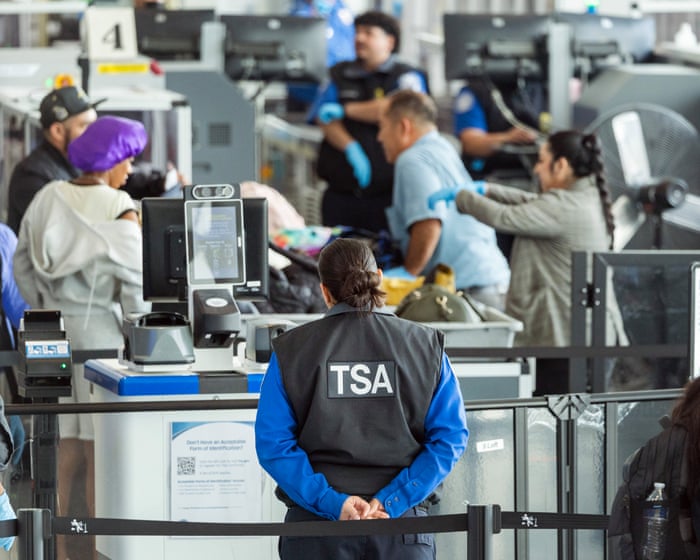
The Trump administration has removed chairs at TSA document checking stations, requiring agents to stand while working. This policy follows a long tradition in the U.S. where many workers, like supermarket cashiers, must stand on the job, unlike their European counterparts who often get to sit.
Key Facts
TSA staff at U.S. airports are no longer allowed to sit at travel document checking stations.
The government says standing improves professionalism and security.
Border patrol and customs officers do not have the same standing-only rule.
Many U.S. workers, including supermarket cashiers, have traditionally had to stand while working.
The U.S. has fewer labor laws protecting workers’ right to sit compared to Europe.
Aldi is an exception, providing seats to cashiers for better efficiency.
President Donald Trump is often seen sitting or resting while working at his desk.
During government shutdowns in Trump’s second term, TSA agents worked without pay, while members of Congress continued to receive salaries unless they chose not to.
Read the Original
Want the full story? Tap a source to open the original
article.