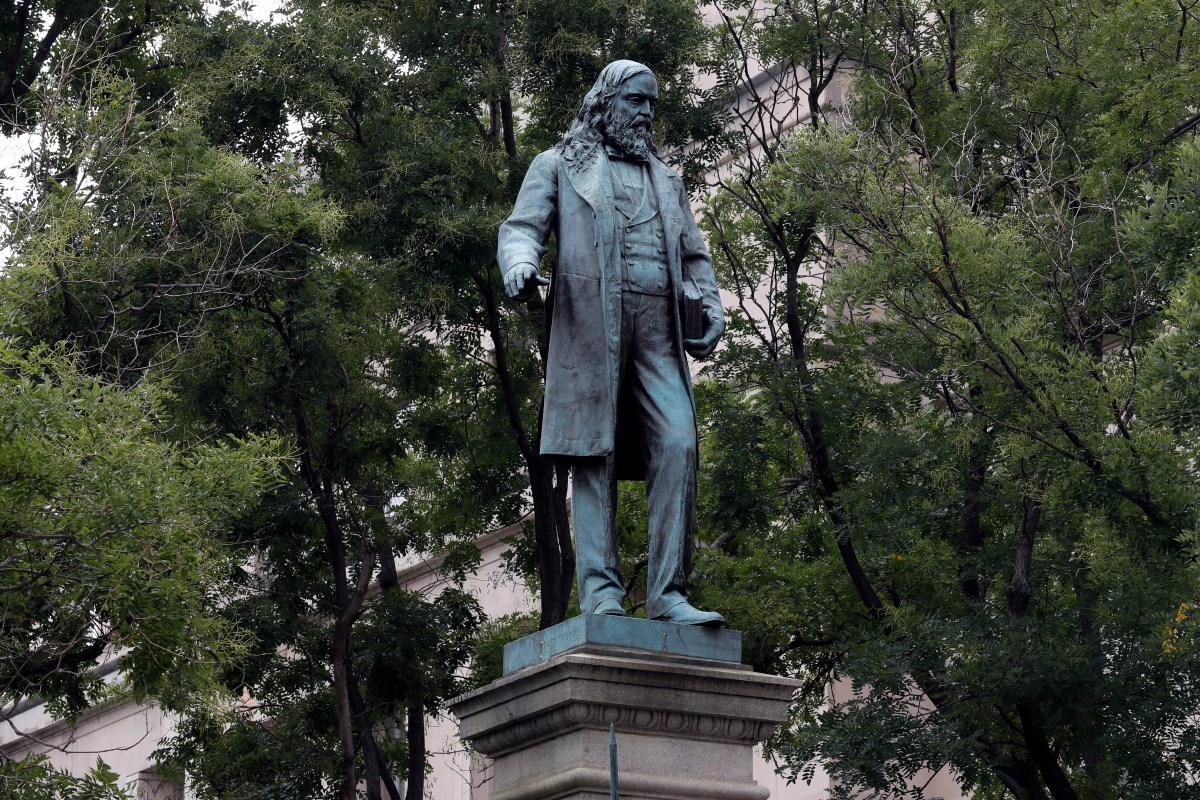
The National Park Service has reinstalled a statue of Brigadier General Albert Pike in Washington, D.C. The statue was put back after being torn down during protests in June 2020, following an order by President Trump to restore historical monuments.
Key Facts
The statue of Albert Pike, a Confederate general, was reinstalled in Washington, D.C.
It was originally taken down and set on fire during protests on Juneteenth 2020.
The statue's reinstallation is part of President Donald Trump's executive order to restore historical monuments.
The National Park Service restored the statue, citing responsibilities under historic-preservation law.
Albert Pike was also notable for his role in Freemasonry and his legal and literary work.
The monument was authorized by Congress in 1898 and dedicated in 1901.
In his military role, Pike was involved in the Confederate command but resigned after less than two years.
President Trump has also acted to restore Confederate generals' names at military bases.
Read the Original
Want the full story? Tap a source to open the original
article.
Senator Lisa Murkowski and congressional Democrats have filed a brief with the Supreme Court challenging President Donald Trump's authority to impose tariffs under the International Emergency Economic Powers Act (IEEPA). They argue that Trump has used IEEPA improperly, as he is the first president to use it for tariffs, which affects businesses and markets. The Supreme Court will hear cases related to this matter in November.
Key Facts
Senator Lisa Murkowski and Democrats have challenged President Trump's authority to impose tariffs using IEEPA.
IEEPA is a law from 1977 that allows the president to address national security threats with economic measures.
Trump is the first president to use IEEPA to impose tariffs, which is contested in court.
Two cases challenge Trump's tariffs, including one from companies claiming a $100 million impact.
Murkowski is the only Republican joining the brief with Democrats, emphasizing the need for congressional approval before imposing tariffs.
36 senators and 171 representatives support the brief against Trump's use of IEEPA for tariffs.
Oral arguments in related Supreme Court cases are scheduled for November 5.
Read the Original
Want the full story? Tap a source to open the original
article.
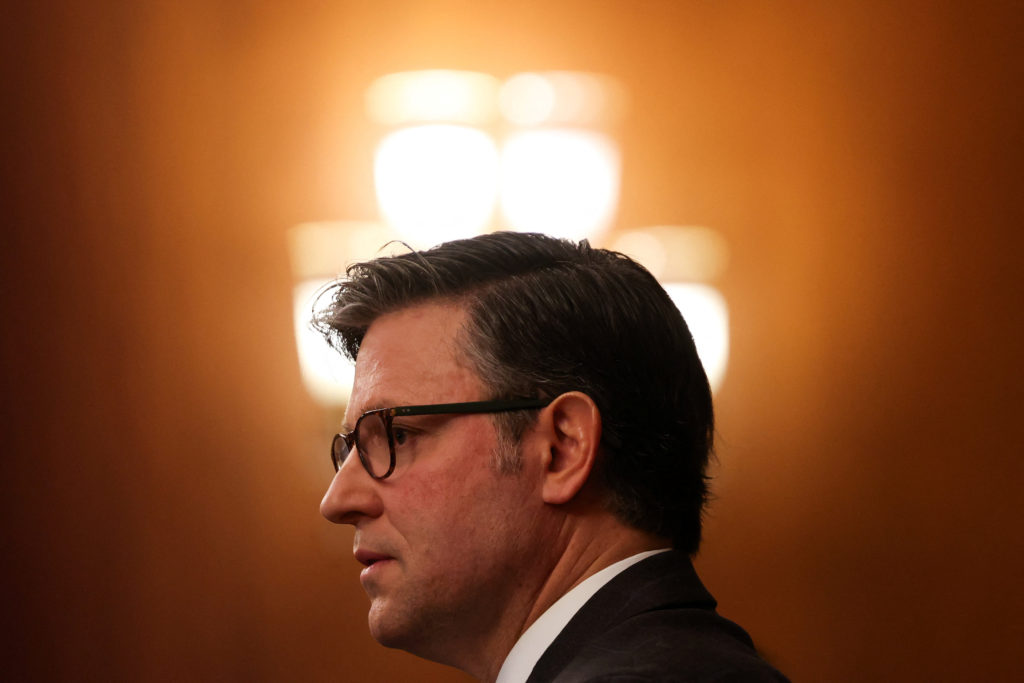
House Speaker Mike Johnson announced that about $5 billion in emergency funds cannot be legally used to pay for SNAP benefits during the government shutdown. President Trump’s administration faces pressure to continue food assistance, but legal restrictions bar using these funds, meant for emergencies like natural disasters. Johnson said the solution depends on Democrats ending the shutdown.
Key Facts
House Speaker Mike Johnson stated $5 billion in contingency funds cannot be used for SNAP benefits during the shutdown.
SNAP stands for Supplemental Nutrition Assistance Program, which provides food aid to eligible Americans.
The Trump administration is under pressure to ensure food aid continues amid the ongoing government shutdown.
A legal review showed that the funds are not legally available for regular SNAP benefits.
The funds are reserved for emergencies, such as natural disasters, according to a Department of Agriculture memo.
Johnson attributed the delay in SNAP benefits to Democrats and urged them to end the shutdown.
Read the Original
Want the full story? Tap a source to open the original
article.
A U.S. green-card holder, Issa Salma Baouna, was denied reentry to the United States due to alleged past legal issues. Officials at the airport in New York informed him he was no longer a lawful permanent resident. Baouna's family is attempting to seek medical treatment for him in Morocco and hopes to bring him back to the United States.
Key Facts
Issa Salma Baouna was a green-card holder and was stopped at JFK airport in New York on March 6.
He was denied reentry to the U.S. and returned voluntarily to Niger after questioning by Customs and Border Protection (CBP).
CBP stated he was inadmissible due to a past removal order by an immigration judge on grounds of fraud and misrepresentation.
Baouna's arrest and charge for an alleged assault in North Carolina in 2002 were dismissed, according to his wife.
After returning to Niger, Baouna fell seriously ill, developing malaria, kidney failure, and liver issues.
His family has applied for various U.S. immigration relief options, but the first request was denied.
Baouna's family disputes the criminal allegations and seeks to return him to the U.S. for medical treatment.
Read the Original
Want the full story? Tap a source to open the original
article.
A proposal in Florida aims to eliminate property taxes on homes by 2027, while keeping taxes that fund schools. The plan, backed by Governor Ron DeSantis, would need approval from the Florida legislature and voters. Critics worry it could lead to reduced local services or increased sales taxes.
Key Facts
The proposal is called HJR 201 and was filed by State Representative Kevin Steele.
It aims to remove property taxes on homes, except for taxes funding school districts.
Governor Ron DeSantis supports the proposal but has criticized multiple plans on the ballot as excessive.
The proposal needs a three-fifths majority in the state legislature and 60% voter approval to pass.
Real estate experts believe eliminating property taxes could negatively affect local funding, especially in rural areas.
The proposal, if passed, would feature on the ballot for either the next general or a special election.
Currently, eight property tax relief plans are being considered, with HJR 201 the only one suggesting a total removal of property taxes.
Read the Original
Want the full story? Tap a source to open the original
article.
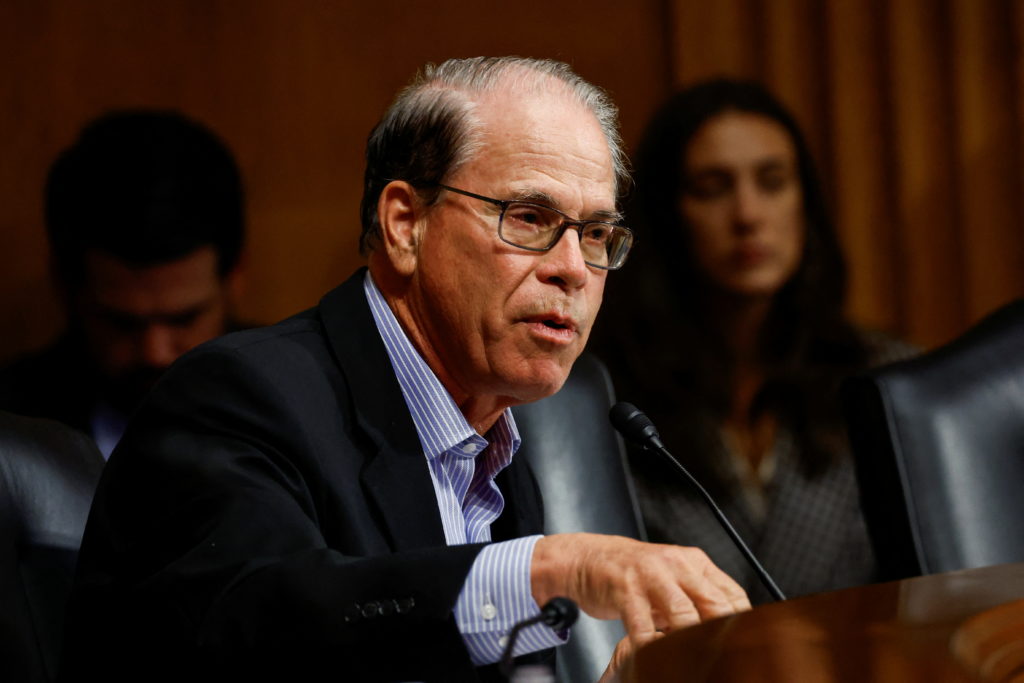
Indiana Governor Mike Braun has asked state lawmakers to meet for a special session on November 3 to redraw the state's congressional maps. This follows pressure from President Donald Trump on Republican governors to create district maps that favor the party. Indiana lawmakers have not moved as quickly on redistricting compared to some other states.
Key Facts
Indiana Governor Mike Braun is a member of the Republican Party.
A special session is set for November 3 to discuss redrawing congressional boundaries.
President Donald Trump is pushing for new district maps that help Republicans in the midterm elections.
Other states like Texas, Missouri, and North Carolina are moving quickly to change their districts.
Indiana has been slower in acting on redistricting compared to these states.
The approval of new maps in Indiana is uncertain due to the GOP Senate's unclear support.
Read the Original
Want the full story? Tap a source to open the original
article.
An investigation is looking into U.S. Attorney Lindsey Halligan's use of an app called Signal to communicate with a journalist about a legal case. The group American Oversight wants to know if using this app broke any rules about keeping government records. They have asked for records of Halligan's messages since September 2025.
Key Facts
Lindsey Halligan is the interim U.S. Attorney for the Eastern District of Virginia.
American Oversight is investigating her use of the app Signal to talk with a journalist.
Signal is an app that lets messages disappear after a set time.
Halligan is accused of discussing a federal case on Signal involving New York Attorney General Letitia James.
Using auto-deleting messages might break federal rules about keeping records.
American Oversight filed a Freedom of Information Act request to get copies of Halligan's messages.
The investigation is similar to an earlier case called "Signalgate" involving other government officials.
The Justice Department confirmed that the messages between Halligan and the journalist were real.
Read the Original
Want the full story? Tap a source to open the original
article.
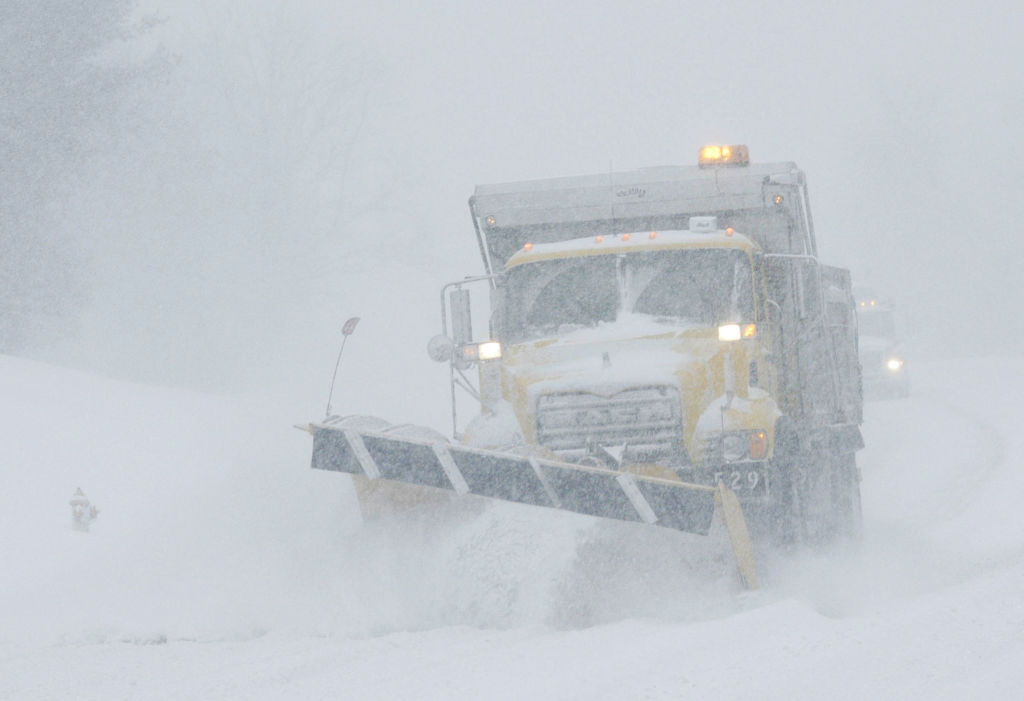
The National Weather Service has issued winter weather warnings across five Western U.S. states, predicting up to 20 inches of snow in some areas. The snow is expected to cause dangerous travel conditions, power outages, and infrastructure issues from Sunday into Monday. The affected states include Oregon, Washington, Montana, Utah, and Wyoming, with severe conditions in high-elevation areas.
Key Facts
Heavy snow of up to 20 inches is forecasted in some parts of Oregon, Washington, Montana, Utah, and Wyoming.
The snow is expected to create hazardous driving conditions and potential road closures.
Strong winds accompanying the snowfall may affect power supplies and infrastructure.
Residents in high-elevation areas are warned to expect difficult travel conditions.
In Oregon and Washington, significant snowfalls are anticipated in high-altitude regions like the Cascades.
Montana's mountainous regions could see up to 6 inches of snow with high winds.
Utah's Wind River Mountains are expected to get up to 20 inches of snow with strong gusts.
Wyoming could experience challenging travel conditions due to snow and high winds, especially on specific highways.
Read the Original
Want the full story? Tap a source to open the original
article.
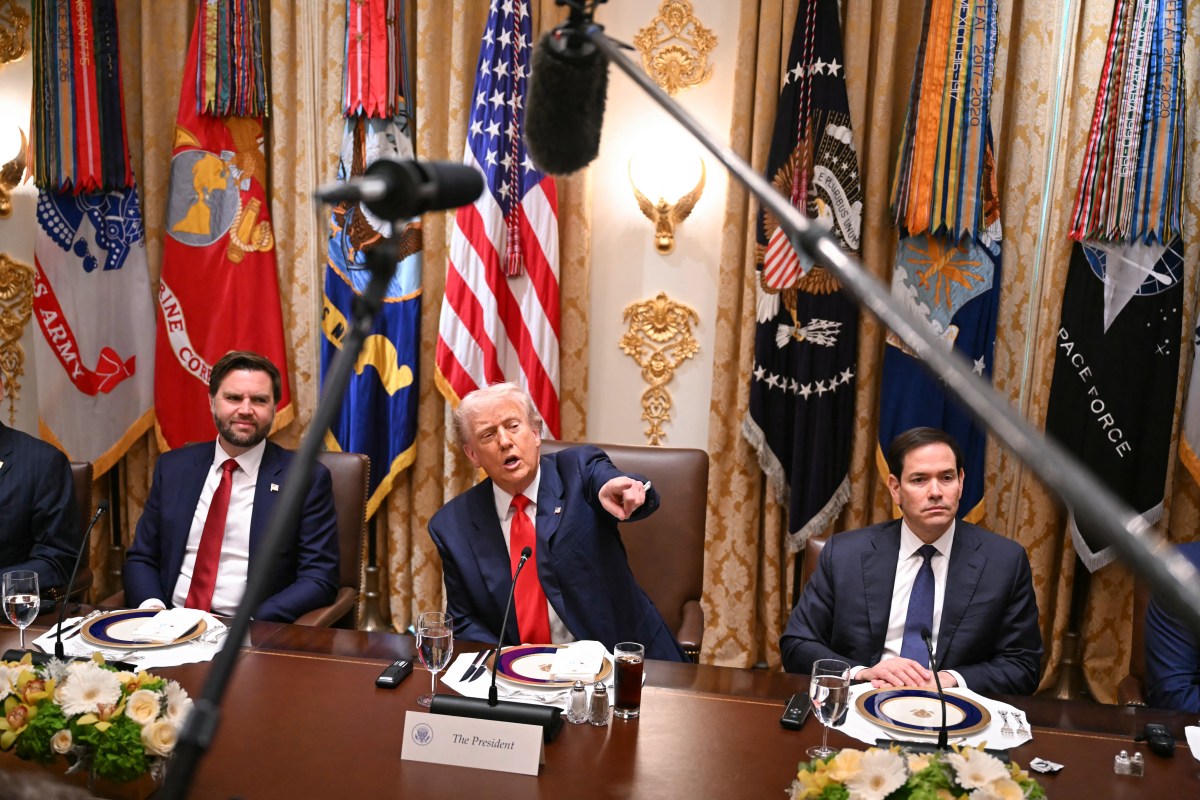
President Donald Trump mentioned Vice President JD Vance and Secretary of State Marco Rubio as possible candidates for the Republican nomination in 2028. Trump, currently serving his second term, ruled himself out as vice president. Speculation regarding Trump pursuing a third term has surfaced, but constitutional rules limit him to two terms.
Key Facts
President Trump suggested JD Vance and Marco Rubio could run for president in 2028.
Trump ruled himself out as a vice presidential candidate.
The U.S. Constitution limits presidents to two terms.
JD Vance is known for his focus on foreign policy and criticizing Democrats.
Vance faced criticism for controversial comments in a text chain.
Marco Rubio, a former senator, is seen as a less expected choice.
Speculation exists about Trump seeking a third term, but it conflicts with constitutional rules.
Trump's mention of potential successors came during a flight to Japan on Air Force One.
Read the Original
Want the full story? Tap a source to open the original
article.
House Speaker Mike Johnson plans to hold a news conference on the 27th day of a government shutdown. During a phone town hall, a caller raised concerns about high insurance costs under the Affordable Care Act. Rep. Andy Harris discussed Republican plans to potentially lower insurance premiums but did not provide specific details.
Key Facts
The government shutdown has lasted for 27 days.
House Speaker Mike Johnson is scheduled for a news conference.
Maryland Rep. Andy Harris is a leader in the House Freedom Caucus.
A caller expressed worries about high health insurance premiums.
The Affordable Care Act is mentioned as a source of insurance coverage.
Rep. Harris suggested Congress might work to lower premiums in the future.
Read the Original
Want the full story? Tap a source to open the original
article.
The FDA issued a Class I risk warning for a nationwide recall of Scott & Jon’s Shrimp Scampi With Linguine due to possible listeria contamination. Demers Food Group LLC recalled the product after the FDA's classification, which means there is a serious health risk. As a precaution, the FDA advised customers to throw away or return the affected product.
Key Facts
The FDA has classified the recall as Class I, indicating a serious health risk.
The recalled product is Scott & Jon’s Shrimp Scampi With Linguine.
Possible contamination involves Listeria monocytogenes, a harmful bacteria.
Affected lots have specific expiry dates and UPC codes.
No illnesses reported as of October 1 due to the product.
Listeria can be severe for young children, the elderly, and pregnant women.
Customers advised not to consume the recalled product and to clean surfaces that may have been in contact with it.
Read the Original
Want the full story? Tap a source to open the original
article.
Bird flu cases are increasing in the United States, partly due to migratory birds spreading the disease. The government is facing challenges in responding to the outbreak because of budget issues, staff shortages, and a government shutdown.
Key Facts
Bird flu has been found in 62 poultry flocks across 17 states, affecting 6.6 million birds.
The virus has also infected mammals like dairy cows and cats in some states.
Staff reductions at the CDC and Department of Agriculture complicate the federal response.
The government shutdown has stopped some activities, like animal health lab meetings.
The bird flu concerns were a test for the Trump administration, which cut a pandemic preparedness office.
Vaccination rates for animals are low, and the government halted funding for a human bird flu vaccine.
In February, $1 billion was allocated to fight bird flu, mainly for farm biosecurity and financial aid to farmers.
Read the Original
Want the full story? Tap a source to open the original
article.
That's the point of this site, and readers keep it that way. Support for any amount and the daily digest lands in your inbox every morning at 7am Eastern.
The U.S. Department of Agriculture (USDA) announced that Supplemental Nutrition Assistance Program (SNAP) benefits for November will not be distributed due to the government shutdown. This affects about 42 million people who rely on these benefits. The funding gap is due to Congress not passing a budget or temporary funding bill.
Key Facts
SNAP benefits will not be paid in November because of the government shutdown.
Congress did not pass a budget or temporary funding before the fiscal year started on October 1.
SNAP is a mandatory program but still needs Congress to approve funding.
The USDA will not use contingency funds to maintain SNAP benefits in November.
About 42 million Americans use SNAP benefits for groceries.
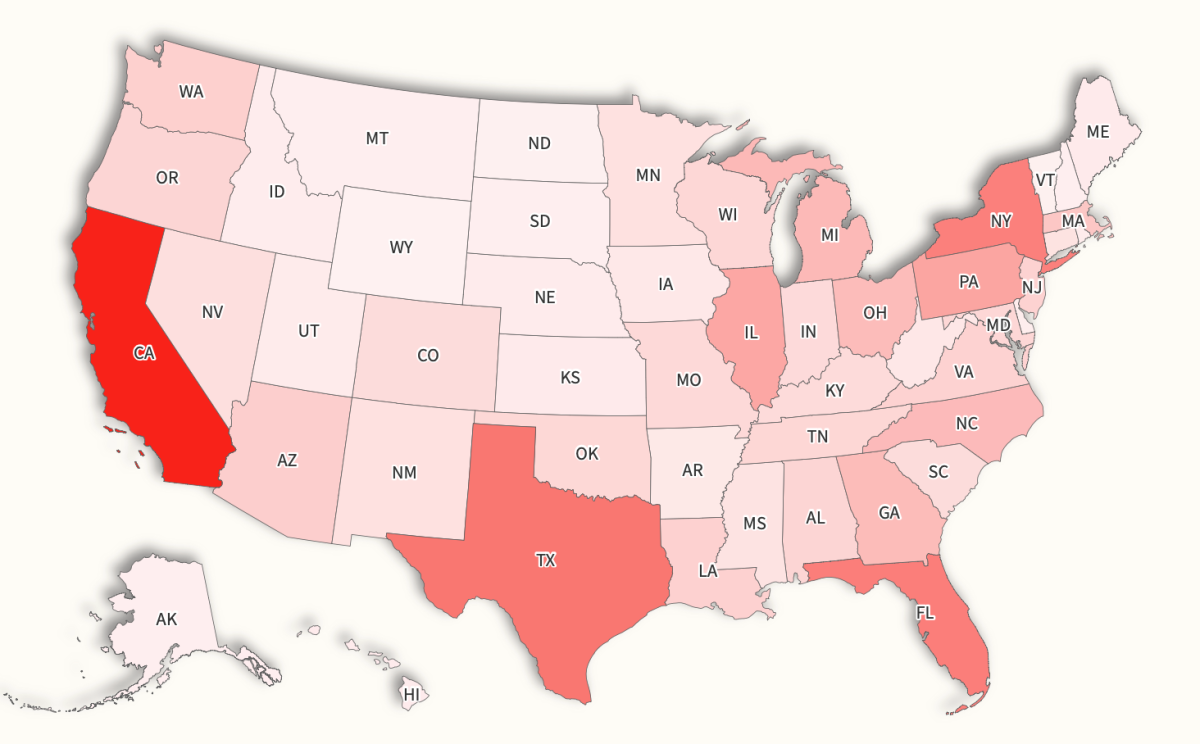
California has the highest number of SNAP recipients at 5.3 million people.
New Mexico has the highest percentage of residents receiving SNAP benefits at 21%.
House Democrats asked the USDA to use contingency funds to provide November benefits.
Read the Original
Want the full story? Tap a source to open the original
article.
Governor Gavin Newsom of California is considering running for President in 2028, with predictions giving him a 23% chance of winning. Newsom is seen as a potential Democratic contender, often opposing President Trump on various issues. Newsom's National profile has grown due to his active involvement in Democratic politics.
Key Facts
Gavin Newsom is the current Governor of California, serving his final term due to term limits.
Newsom recently stated he is considering a run for the U.S. presidency in 2028.
Prediction markets give Newsom a 23% chance of winning the 2028 presidential election.
Vice President JD Vance has a higher current prediction at 30%.
Newsom has publicly opposed President Trump on many issues.
Newsom's prospects in prediction markets have increased from 14% in July to 22% in September.
The broader context of the report highlights the Democratic party's planning for a future beyond 2024 elections.
Read the Original
Want the full story? Tap a source to open the original
article.
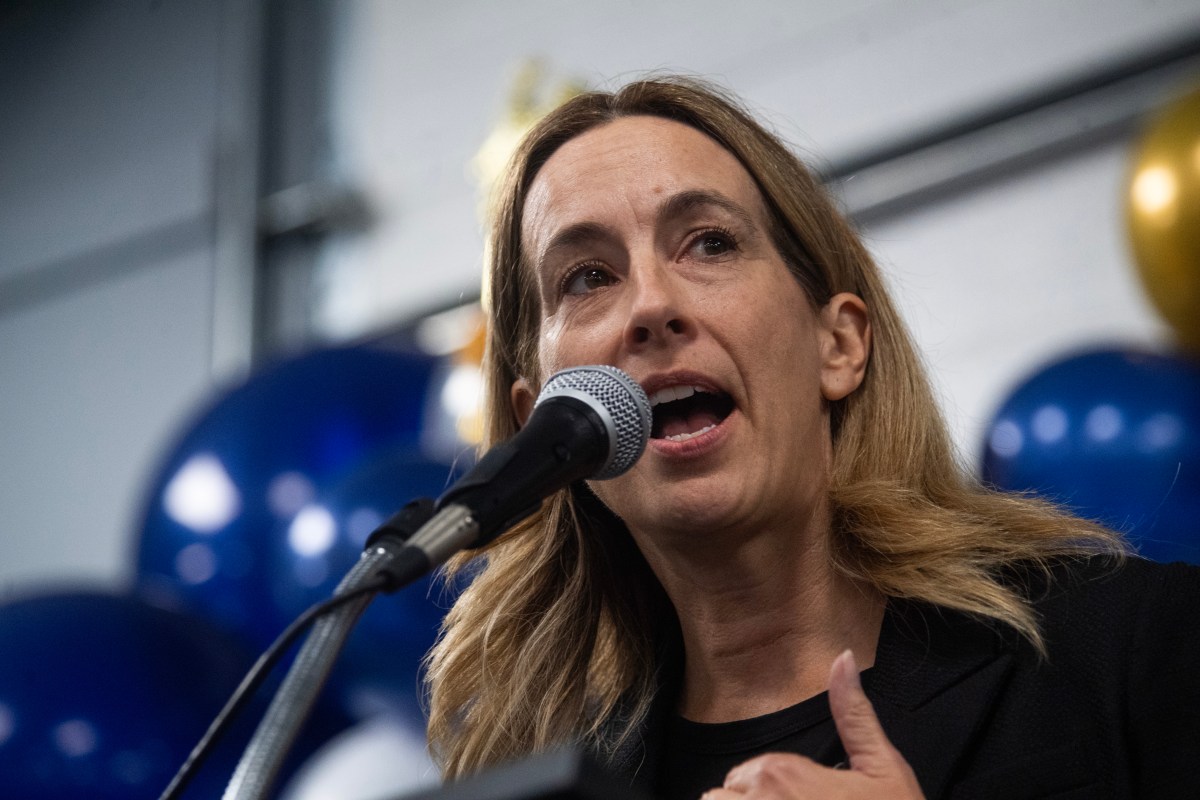
A new poll indicates that Democratic candidate Mikie Sherrill has a slight lead over Republican candidate Jack Ciattarelli in the race for New Jersey governor. The poll surveyed 812 likely voters, with 51.4% supporting Sherrill and 46.5% backing Ciattarelli. The election is set for November 4.
Key Facts
The poll shows Mikie Sherrill with 51.4% support among likely voters.
Jack Ciattarelli has 46.5% support in the same poll.
Only 0.5% of respondents plan to vote for someone else.
About 1.5% of those surveyed are undecided.
The poll included 812 likely voters in New Jersey.
The election for New Jersey governor will take place on November 4.
Mikie Sherrill currently serves in the U.S. House of Representatives.
Jack Ciattarelli is a former member of the New Jersey General Assembly.
Phil Murphy, a Democrat, is the current governor of New Jersey.
Read the Original
Want the full story? Tap a source to open the original
article.
The Department of Homeland Security (DHS) is planning to increase immigration enforcement efforts across the United States. This involves boosting the number of arrests and deportations, supported by additional funding from a new law called the One Big, Beautiful Bill. DHS is also recruiting more agents to help carry out these operations.
Key Facts
DHS plans to increase immigration enforcement with more arrests and deportations.
The One Big, Beautiful Bill provides $45 billion for expanding detention capacity for immigration enforcement.
ICE will receive $14 billion to improve transportation and removal operations of undocumented individuals.
An additional $8 billion is designated to hire 10,000 new deportation officers.
ICE got more than 175,000 job applications and has offered over 18,000 tentative positions.
The DHS aims to fully integrate these new recruits by fiscal year 2029.
ICE's budget will significantly increase, potentially reaching over $100 billion by 2029.
DHS spokesperson noted that about 1.6 million migrants have left the U.S. since January 20, 2021.
Read the Original
Want the full story? Tap a source to open the original
article.
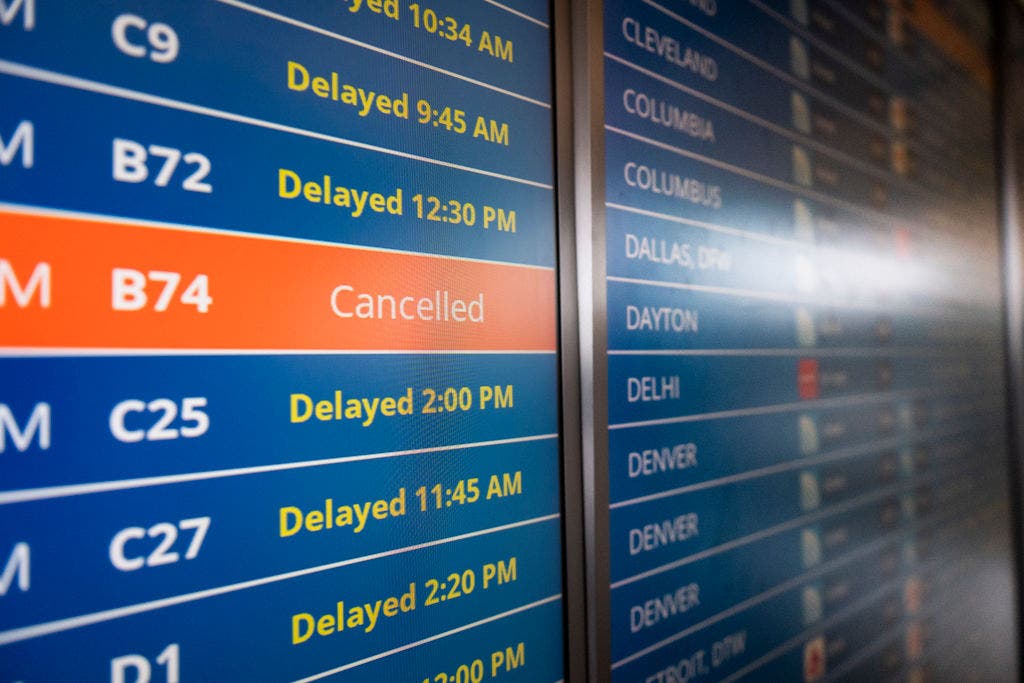
Air travel across the United States faced major delays due to a federal government shutdown, now in its 27th day, causing a shortage of air traffic controllers. Over 8,000 flights were delayed on Sunday, as controllers worked without pay amid the ongoing shutdown.
Key Facts
Over 8,000 flights in the U.S. were delayed on Sunday due to air traffic controller shortages.
The federal government shutdown has lasted for 27 days and affects public services.
Transportation Secretary Sean Duffy said staffing shortages were high in 22 locations.
Southwest Airlines had 2,000 delayed flights; American Airlines had 1,200.
About 13,000 air traffic controllers and 50,000 TSA officers are working without pay.
The FAA is reportedly understaffed by around 3,500 air traffic controllers.
The controllers have started to miss their first full paycheck due to the shutdown.
The shortage predates the shutdown, with many staff expected to work extra hours.
Read the Original
Want the full story? Tap a source to open the original
article.
The U.S. is about to update its dietary guidelines, which could change public health significantly by recommending more pulses like beans and lentils. Pulses are nutritious, help prevent various diseases, and are affordable, but current guidelines suggest eating very little of them. Increasing their recommendation in dietary guidelines could improve health and support American farmers.
Key Facts
The U.S. is set to update its dietary guidelines soon.
Pulses include beans, lentils, chickpeas, and peas.
These foods can help prevent diseases like heart disease, diabetes, and colorectal cancer.
Current guidelines recommend fewer pulses compared to other vegetables.
Increasing pulse consumption in guidelines could boost public health and aid farmers.
Pulses are high in protein and fiber and are affordable compared to other protein sources.
Only 5% of Americans get enough fiber, which is crucial for good health.
Health officials suggest raising pulse intake to 2.5 cups per week in the guidelines.
Read the Original
Want the full story? Tap a source to open the original
article.
President Trump has taken action to remove homeless encampments in Washington, D.C. Despite these efforts, some people continue to live without homes on the streets, making it more difficult for service providers to find and help them.
Key Facts
President Trump intervened federally to remove homeless encampments in Washington, D.C.
Despite these efforts, homelessness remains an issue in the city.
People still live on the streets even after the clearing of encampments.
Service providers struggle to locate and assist the homeless population.
The report suggests ongoing challenges with addressing homelessness in D.C.
Read the Original
Want the full story? Tap a source to open the original
article.
The U.S. government shutdown has lasted four weeks. The Department of Agriculture says that food assistance benefits under the SNAP program will stop on November 1 if the shutdown continues.
Key Facts
The government shutdown has been ongoing for four weeks.
SNAP stands for Supplemental Nutrition Assistance Program, which helps people buy food.
The Department of Agriculture manages the SNAP program.
If the shutdown does not end, SNAP benefits will not be available starting November 1.
Many federal workers have been working without pay during the shutdown.
The announcement was made by the USDA, which is the U.S. Department of Agriculture.
Read the Original
Want the full story? Tap a source to open the original
article.