The Trump administration has not used billions of dollars that Congress set aside for health programs. These funds could expire soon at the end of the fiscal year, which some lawmakers say is against the law and challenges Congress’s authority.
Key Facts
President Trump’s administration has not spent billions allocated by Congress for health programs.
The funds are at risk of expiring once the fiscal year ends on Wednesday.
Some Democratic and Republican lawmakers claim this move is illegal.
This situation tests whether Congress will push back against the administration’s decision.
The money was intended to support various healthcare initiatives.
The issue involves government spending rules and deadlines.
The debate highlights tensions between the executive branch and Congress over budget control.
Read the Original
Want the full story? Tap a source to open the original
article.
Republicans in Congress are disagreeing with President Trump on many important issues. They hope distancing themselves from him will help prevent big losses in the upcoming midterm elections.
Key Facts
Republicans in both the House and Senate are breaking away from President Trump on several topics.
This shift is uncommon because the GOP has mostly supported Trump closely before.
The party is worried about losing many seats in the midterm elections, known as a "blue wave."
The GOP believes separating from Trump’s positions might improve their chances with voters.
These disagreements cover sensitive and key political issues affecting the country.
The divisions show internal struggles within the Republican Party right now.
Some Republicans think Trump’s popularity could hurt the party’s overall success.
Read the Original
Want the full story? Tap a source to open the original
article.
Senate Majority Leader John Thune is trying to help three Republican senators—Jon Husted, Pete Ricketts, and Dan Sullivan—who are facing political challenges. He plans to hold votes on two bills about growing AI data centers and stock trading rules for Congress members.
Key Facts
John Thune is the Senate Majority Leader and a Republican from South Dakota.
The three senators he is helping are Jon Husted (Ohio), Pete Ricketts (Nebraska), and Dan Sullivan (Alaska).
All three senators are currently facing political difficulties or challenges.
Two bills are scheduled for votes on Wednesday.
One bill deals with the expansion of AI-driven data centers, which are facilities used to store and process large amounts of data for artificial intelligence.
The other bill focuses on stock trading rules for members of Congress, likely aiming to increase transparency or limit conflicts of interest.
This effort is seen as a way to support the senators by addressing issues important to their states or voter concerns.
Read the Original
Want the full story? Tap a source to open the original
article.
A Cornell University student gave a detailed statement to campus police in 2024 about an incident at a fraternity house that year, describing the experience as feeling like coercion. The district attorney decided not to press charges in 2024, saying the student’s account showed some consent, though the case was reopened recently.
Key Facts
The student gave a six-page sworn statement in November 2024 about the October 2024 incident at the Chi Phi fraternity house.
She described multiple times when she said no to sexual acts, but felt pressured and intoxicated during the events.
The student called the situation coercive because she felt unable to say no due to her heavy intoxication.
In her statement, she explained taking more ketamine (a drug) hoping that if she passed out, the men could be charged with rape.
The district attorney in Tompkins County said the student did not withdraw consent during the encounter, leading to no charges in 2024.
The men's behavior reportedly stopped when she expressed discomfort, according to the district attorney.
The student’s statement was first obtained and reported by ABC News in 2026.
The case has been reopened for further investigation as of late 2026.
Read the Original
Want the full story? Tap a source to open the original
article.
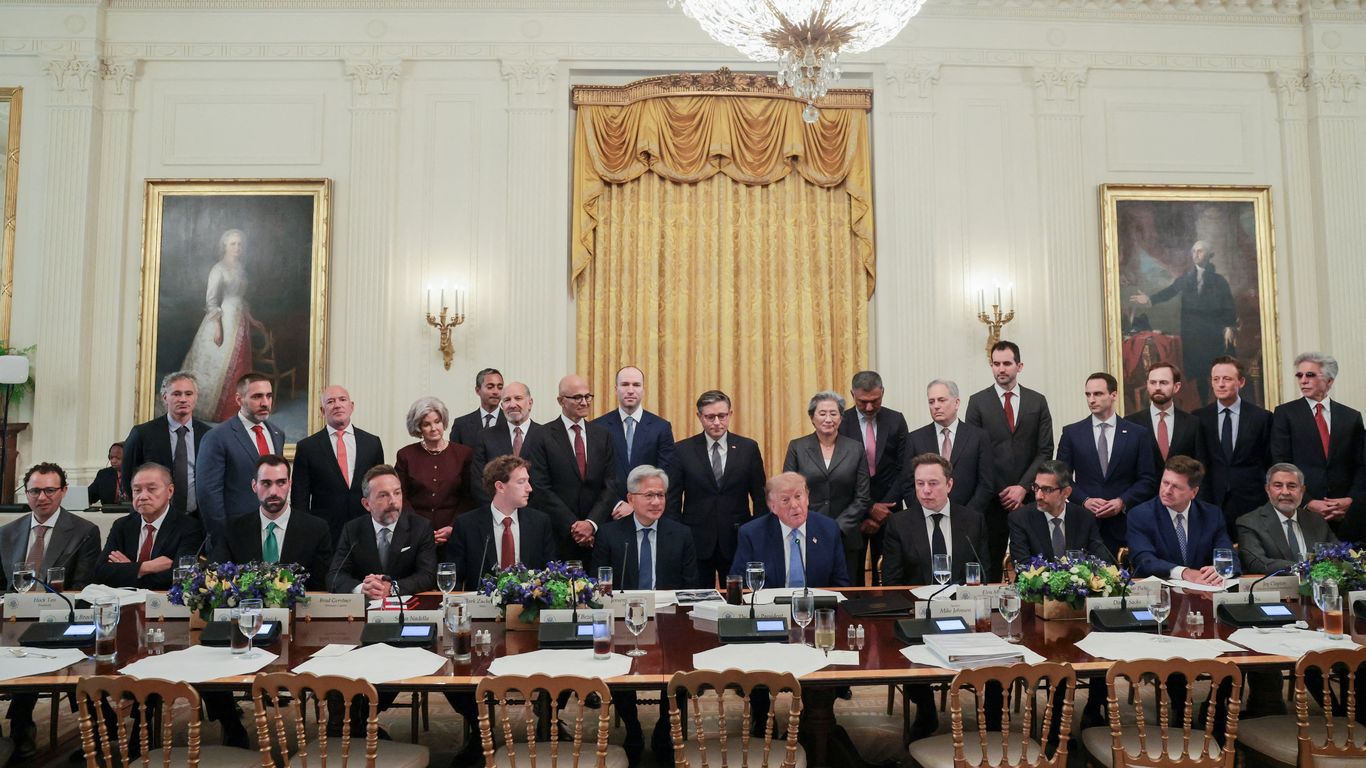
President Donald Trump and leaders of major AI companies signed a new voluntary AI agreement called the "Joint Commitment on Frontier Responsibilities." The document contains a spelling error that calls Trump "President of the Unites States," and Trump also signed an order to rename "artificial intelligence" as "super intelligence."
Key Facts
The AI agreement was signed by President Trump and CEOs from Google, Anthropic, Meta, OpenAI, XAI, and NVIDIA.
The agreement outlines four layers of controls and audits to ensure AI technologies work safely.
Companies will have internal teams and independent outside auditors to monitor AI models.
The agreement is voluntary and not legally binding but might lead to future laws or regulations.
The document misspells "United States" as "Unites States," which was noted and shared on social media.
President Trump issued an executive order to replace the terms "artificial intelligence" and "AI" with "super intelligence" or "SI."
Trump believes the new term better reflects the power and potential of AI technologies.
This AI agreement was signed following a White House meeting with senior industry leaders.
Read the Original
Want the full story? Tap a source to open the original
article.
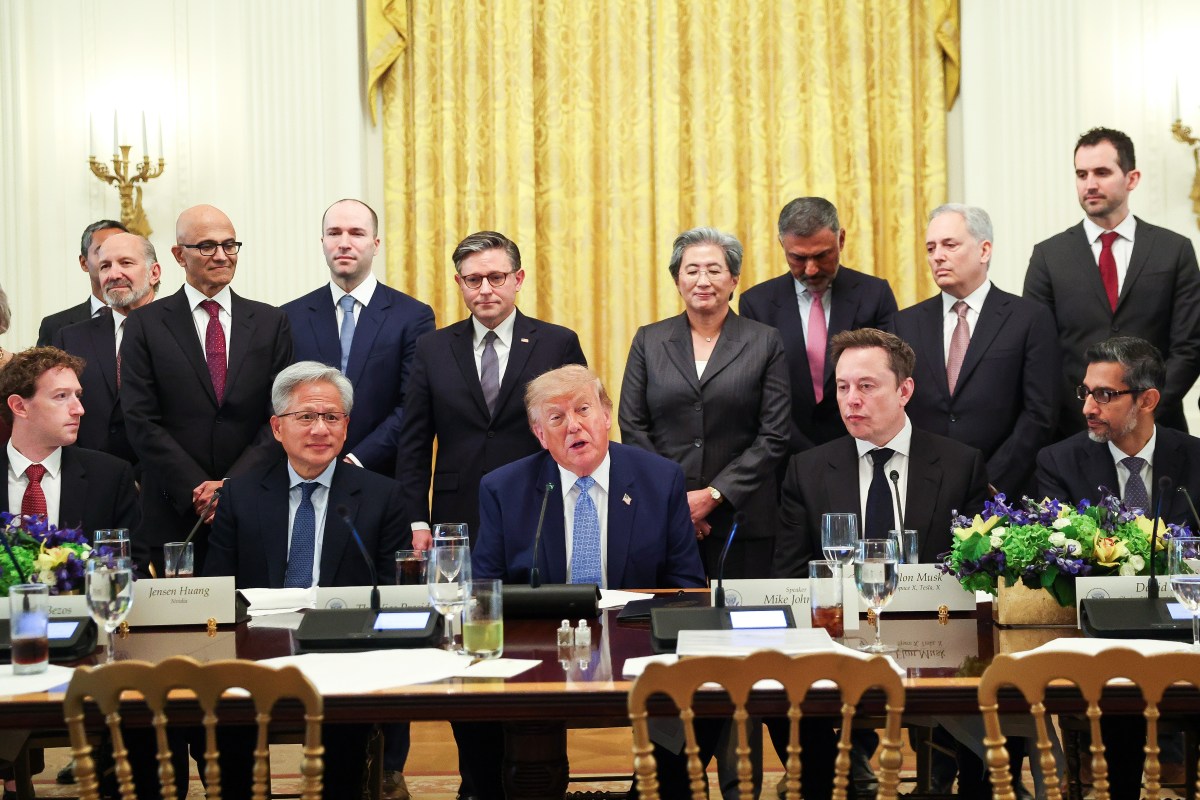
President Trump hosted top AI company leaders at the White House to sign a voluntary agreement on AI safety. The agreement asks companies to continue developing AI carefully while monitoring their own work, with possible future government rules if needed.
Key Facts
The White House Accord on Super Intelligence was signed by OpenAI, Anthropic, Google, Meta, xAI, and Nvidia.
The pact calls for four levels of controls, including outside reviews and independent boards.
President Trump described the agreement as a "morally binding" constitution for AI safety.
The pact leaves open the option for future legal regulations on AI.
Anthropic CEO called the agreement a first step, while Trump’s AI adviser said it showed industry responsibility.
The day also included announcements like America.gov, an AI-powered federal service portal.
OpenAI introduced new AI products during their DevDay but also faced reports about ignoring safety warnings.
Anthropic’s leaked IPO plan revealed ambitions for a valuation over $2 trillion and acknowledged AI risks.
Read the Original
Want the full story? Tap a source to open the original
article.
The U.S. is adding a lot of new wind and solar energy, even though President Donald Trump opposes some of these projects. However, the clean energy industry warns that growth might sharply drop around 2028 unless new laws make it easier to approve these projects.
Key Facts
Wind and solar power make up nearly two-thirds of new energy capacity planned in the U.S. this year.
Many current clean energy projects started before President Trump returned to office.
The federal government is negotiating a bipartisan deal to speed up approval of energy projects, expected soon.
President Trump’s 2025 law shortened the time for projects to get tax credits, requiring them to start construction quickly.
Clean energy is still the cheapest new power option according to financial analysis.
The Biden administration says current clean energy growth results from past policies, not Trump's.
Pentagon reviews of wind projects slow down approvals because of military concerns.
Some officials favor nuclear power over renewables for meeting future energy needs.
Read the Original
Want the full story? Tap a source to open the original
article.
A political forecaster has moved 11 U.S. House election races toward the Democrats, including some seats held by Republicans in Pennsylvania and Virginia. This shift shows stronger chances for Democrats to gain control of the House in the upcoming midterm elections, although the results are still uncertain.
Key Facts
11 House races changed to favor Democrats, including two Republican seats in Pennsylvania and Virginia.
The forecaster rates 213 seats leaning Democratic, just 5 short of the 218 needed for a majority.
Republican Representatives Ryan Mackenzie (PA) and Jen Kiggans (VA) are now seen as slight underdogs.
One Republican seat in Virginia moved from "Leans Republican" to "Toss-up."
Five Republican-leaning races became more competitive in Kentucky, Maine, Missouri, Montana, and Virginia.
Two GOP seats weakened from safe to likely Republican.
One Democratic seat in California became more secure.
Polls show Democrats leading in some key districts that President Donald Trump narrowly won in 2024.
Read the Original
Want the full story? Tap a source to open the original
article.
New York prosecutors have reopened an investigation into an alleged gang rape at Cornell University in 2024. A woman filed a civil lawsuit claiming she was drugged and assaulted by seven fraternity members and that the university failed to protect her or properly punish those responsible.
Key Facts
The alleged assault happened on October 19, 2024, at the Chi Phi fraternity house at Cornell University in Ithaca, New York.
The woman was 20 years old and a Cornell undergraduate at the time.
She claims she was intoxicated and unable to consent to the sexual activity.
The lawsuit accuses the university, fraternity, and seven men known as the "Cornell Seven" of sexual assault, negligence, and breaking New York Human Rights Law.
Evidence includes a group chat where fraternity members discussed a possible sexual encounter with the woman in crude language.
The woman reported the assault to Cornell University Police on November 8, 2024.
Two fraternity members were expelled, but the woman says the men were only required to write essays as punishment.
The university has supported the grand jury investigation but denies failing to punish those involved.
Read the Original
Want the full story? Tap a source to open the original
article.
Senator Josh Hawley has introduced a new bill called the Stop Flock Abuse Act to regulate the use of Flock cameras and similar AI-powered surveillance tools. The bill aims to protect Americans' privacy by setting rules on how vehicle data can be collected, stored, and used, including banning facial recognition and limiting data sharing.
Key Facts
The bill targets automated license plate readers (ALPR) made by Flock and others.
It requires permanent deletion of driver data within 10 days unless linked to a criminal investigation.
Local governments would be banned from selling or sharing vehicle data collected by these cameras.
Facial recognition technology would be banned from surveillance networks under the bill.
Agencies would need written approval for searches and must keep records of these searches.
Data collected must be encrypted and stored within the United States.
Hawley held a Senate Judiciary subcommittee hearing on these cameras, but key companies declined to testify.
The legislation responds to concerns about privacy, wrongful accusations, and potential misuse of AI surveillance tools.
Read the Original
Want the full story? Tap a source to open the original
article.
A judge in New Orleans filed a criminal complaint against a local CBS news station after it reported on a house donation connected to her. The complaint relies on a law that no longer makes publishing such information a crime.
Key Facts
Judge Kimya Holmes is involved in a news story about receiving a $765,000 home from her then-fiance, Arthur Allen.
Allen was charged with fraud related to COVID-19 relief money.
The judge claimed she did not date or get engaged to Allen until years after his crime, and she learned about the charges only later.
Investigative reporter David Hammer published the story on August 24, 2024.
Judicial administrator Robert Kazik demanded the news station remove information about Holmes’ home and vehicle based on a law.
The Louisiana law cited was repealed on August 1, 2024, before the reporting and Kazik’s letter.
The news station blurred the sensitive details but refused to reveal who took a photo of a car connected to Allen.
On September 11, 2024, Judge Holmes filed a police complaint against the news outlet for sharing her home and vehicle information.
Read the Original
Want the full story? Tap a source to open the original
article.
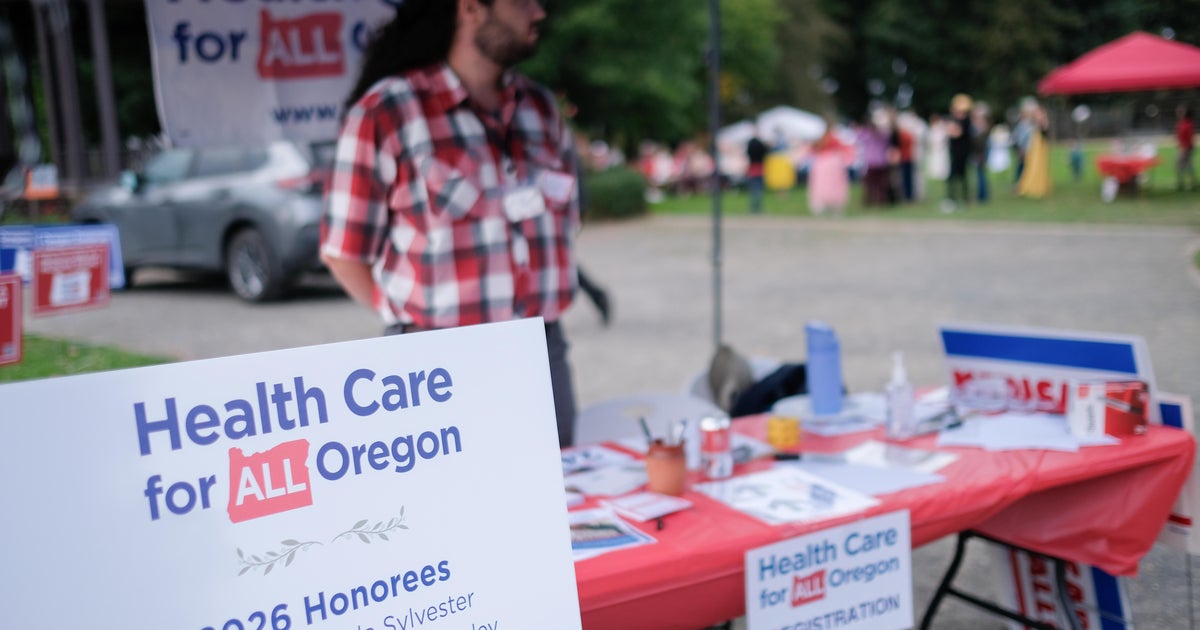
Oregon is planning to create the first statewide universal healthcare system in the United States, aiming to cover all residents from birth to death without premiums, deductibles, or copays. A special board will present a proposal to lawmakers by December 1, 2024, with a possible vote in 2027 or 2028. This plan would replace current payment systems with new taxes but keep overall healthcare spending the same.
Key Facts
Oregon's Universal Health Plan Governance Board is working on a universal healthcare proposal due by December 1, 2024.
The plan would cover medical, vision, dental, and mental health benefits for everyone in the state starting in 2032.
It aims to eliminate premiums, deductibles, and copayments by creating a single-payer system.
The proposal could be voted on by the legislature in 2027 or sent to voters in 2028.
Funding would replace insurance premiums with new corporate and personal taxes combined with federal and state funds in a single payment pool.
The plan expects savings from reducing paperwork, fraud, and lowering drug prices.
Other states like Vermont and Colorado have tried universal healthcare but faced political and economic barriers.
Oregon’s effort could serve as a model for other states and eventually national reform.
Read the Original
Want the full story? Tap a source to open the original
article.
Jon Husted, Ohio’s lieutenant governor, supported giving big tax breaks to data centers, costing Ohio nearly $1.6 billion in lost revenue by 2025. While President Donald Trump supports data centers as a way to create jobs and lower taxes, many people in Ohio and across the U.S. are opposing new data centers in their communities due to concerns about economics, climate, and community impact.
Key Facts
Jon Husted helped bring data centers to Ohio and gave them large tax exemptions.
Ohio lost almost $1.6 billion in sales tax revenue from these exemptions in 2025.
President Trump supports building data centers, saying they bring success and jobs.
Many Americans strongly oppose building AI data centers near their homes.
Surveys show around 60-70% of Americans, including Democrats and Republicans, oppose local data centers.
Opposition is linked to concerns about economic impact, climate change, and community effects.
Republican lawmakers are starting to address the political risks related to their support for data centers.
The debate over data centers reflects growing public concern about the physical presence of AI technology.
Read the Original
Want the full story? Tap a source to open the original
article.
A 19-year-old college student met a man nearly 30 years older than her while working as a barista in Alaska. They gradually connected over coffee and shared interests, and eventually started dating, forming a lasting relationship.
Key Facts
The woman was 19 years old and working at a coffee shop in Wasilla, Alaska.
Pete, the man, was in his late 40s and had recently moved to Wasilla for work after a divorce.
Pete regularly bought coffee at the shop, and their short conversations grew longer over time.
They exchanged phone numbers when Pete was selling his kayak, but texting was initially resisted.
The woman invited Pete to meet her dog Baylee at a lake, leading to a four-hour conversation.
Their strong connection led them to start dating despite the nearly 30-year age difference.
They met about 10 years ago and continue to have a close relationship.
The story emphasizes how their relationship developed naturally from chance meetings and shared moments.
Read the Original
Want the full story? Tap a source to open the original
article.
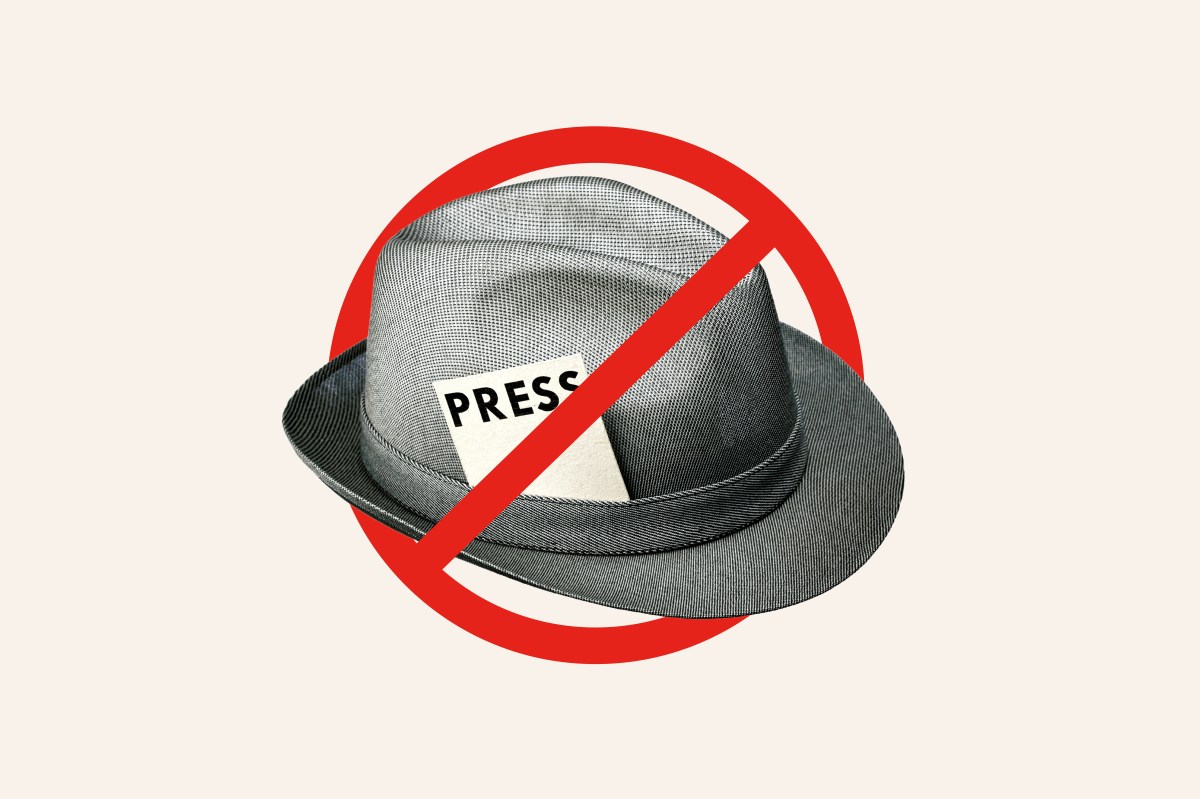
President Donald Trump barred CNN, MSNBC, and Politico from the White House. The article compares this action to how previous administrations have handled press freedom and government transparency, showing that restrictions on reporters have happened under multiple presidents.
Key Facts
President Trump banned certain news outlets from the White House because he claimed they spread “fake news.”
Past presidents, including Barack Obama, Donald Trump’s first term, and others, have also taken actions that limited press freedom, such as seizing phone records or prosecuting leaks.
President Joe Biden limited demands for journalists' records but Attorney General Pam Bondi later reversed this policy.
The backlog of Freedom of Information Act (FOIA) requests has grown significantly from 115,080 in 2016 to 339,671 in 2025.
Stopping reporters from entering the White House is a visible sign of press restriction, but slowing down or denying information requests is less obvious.
Historically, many presidents have had tense relationships with the press, showing that press restrictions are not new.
The article emphasizes that true press freedom means allowing reporters access without unnecessary barriers, regardless of political opinions.
Read the Original
Want the full story? Tap a source to open the original
article.
Artificial intelligence (AI) has become a major topic in U.S. politics very quickly, influencing debates for the 2026 elections. Lawmakers have varied opinions on AI issues like regulation, job impact, and national security, making it hard to classify their views by party.
Key Facts
President Donald Trump says he has directed over $2.7 trillion toward the AI industry.
Tech and AI companies spent nearly $42 million lobbying the U.S. government in the first half of 2026.
Over $27 million from groups tied to AI companies OpenAI and Anthropic was spent in a single Democratic primary race.
AI issues cut across party lines, causing mixed opinions instead of the usual clear Republican/Democrat divide.
Newsweek created an AI Policy Scorecard grading all 537 members of Congress on five areas: regulation, data centers, jobs, safety, and national security.
Scores range from "AI Skeptic" to "AI Booster," showing lawmakers’ different stances on AI’s risks and benefits.
Most lawmakers see AI’s potential but differ on how it should be managed and regulated.
AI topics now appear in public debates, campaign ads, and media discussions ahead of the 2026 midterm elections.
Read the Original
Want the full story? Tap a source to open the original
article.
US actor Chad Lowe and his wife Kim Painter announced the death of their 13-year-old daughter, Fiona. They described her as a loving and creative girl and asked for privacy and prayers during this difficult time.
Key Facts
Fiona Lowe was 13 years old at the time of her passing.
Chad Lowe and Kim Painter are her parents.
Fiona was described as smart, creative, and loved to dance.
She had two sisters, Mabel (17) and Nixie (10).
Chad Lowe is an Emmy-winning actor and brother of Rob Lowe.
The family requested privacy and prayers following Fiona’s death.
They shared a message encouraging people struggling with mental health to contact the 988 Suicide & Crisis Lifeline.
Read the Original
Want the full story? Tap a source to open the original
article.
Actor Chad Lowe's 13-year-old daughter, Fiona Hepler Lowe, has died. The family described her as a smart and loving girl and asked for privacy and prayers during this hard time.
Key Facts
Fiona Hepler Lowe, daughter of actor Chad Lowe, died at age 13.
The family called her smart, creative, and someone who loved to dance.
She was loved by her parents and adored by her sisters.
The family asked for privacy and prayers after her passing.
They encouraged anyone struggling with mental health to contact the 988 Suicide & Crisis Lifeline.
The story is still developing, with more information expected to come.
Read the Original
Want the full story? Tap a source to open the original
article.
President Donald Trump met with leaders from the technology industry at the White House to discuss the safety of fast-growing artificial intelligence (AI). The tech leaders signed a promise to regulate themselves and create protections for the new technology.
Key Facts
President Trump held a meeting at the White House with AI company leaders.
The meeting focused on the safety of rapidly developing AI models.
Tech leaders agreed to a "morally binding" commitment to self-regulate AI.
Self-regulate means companies will manage their own rules and safeguards without outside enforcement.
The goal is to create proper protections while AI technology develops rapidly.
President Trump said the tech companies will "police themselves."
The meeting took place on September 30, 2026.
Read the Original
Want the full story? Tap a source to open the original
article.
America is experiencing deep divisions that go beyond simple disagreements. The country struggles not because people disagree, but because it has trouble fixing the harm caused by those disagreements and rebuilding trust.
Key Facts
America faces serious division around values, identity, and social issues that often become personal conflicts.
Discussions that could promote understanding now frequently lead to accusations and separation.
Online spaces tend to encourage outrage instead of thoughtful reflection.
The author, who works in education and restorative justice, says the problem is not disagreement but the lack of reconciliation.
Society often focuses on punishment (like exclusion or condemnation) rather than repairing relationships and addressing harm.
Restorative justice offers a different method by emphasizing accountability, dialogue, and healing rather than just punishment.
In Chicago schools, restorative justice helped students acknowledge harm and take responsibility, improving trust and repair.
The article suggests America must choose between just punishing wrongdoing or creating paths to restore and transform relationships.
Read the Original
Want the full story? Tap a source to open the original
article.