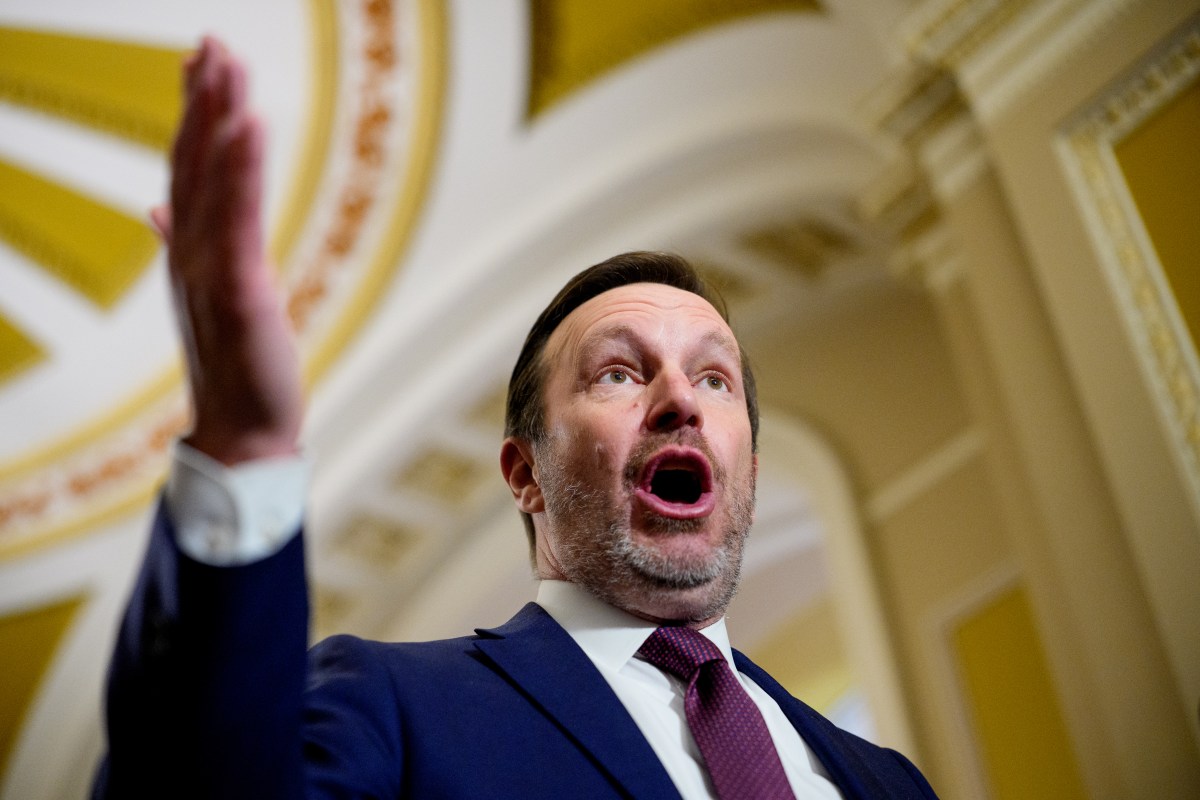
Democratic and Republican Senate candidates in the U.S. agree the conflict with Iran should end, but they differ on how to achieve peace. Democrats want a new, lasting agreement that includes congressional support and strict inspections to ensure Iran follows the rules.
Key Facts
Michigan Democrat Abdul El-Sayed criticized the war in his campaign, blaming it for high gas prices.
Republican Mike Rogers, endorsed by President Donald Trump, wants the war to end quickly but opposed some efforts to limit presidential war powers.
Both Democratic and Republican candidates express a desire to end the conflict with Iran.
Democrats believe a durable peace requires a deal backed by both parties in Congress.
The 2015 Iran nuclear deal failed partly because it had no Republican support, and President Trump withdrew the U.S. from it in 2018.
Democrats want a deal that includes clear inspection terms to verify Iran’s compliance.
The ongoing conflict has caused U.S. military casualties, high costs, and increased fuel prices.
The House passed war-powers resolutions to limit the war, but the Senate rejected one in September.
Read the Original
Want the full story? Tap a source to open the original
article.
Glasgow City Council plans to fire and then rehire over 23,000 staff on new contracts after talks with unions about equal pay changes failed. The changes aim to fix pay discrimination found against mostly women but will reduce wages for about 11% of workers.
Key Facts
Glasgow City Council intends to dismiss and rehire more than 23,000 employees with new contracts starting January 1.
The pay system overhaul follows an eight-year process to correct pay discrimination mainly affecting women.
The council has already paid over £770 million to 19,000 claimants in equal pay claims.
About 63% of employees would get higher pay under the new system, but 11% would see their wages cut.
Job evaluations based on 13 factors such as physical effort and mental skills determined new pay grades.
Some workers face large pay cuts, with the biggest drop estimated at £11,500.
Unions Unison, GMB, and Unite ended talks after Unison refused to ballot members on a pay offer.
Changes in UK employment law will make it unfair dismissal if workers refuse the new contracts after being dismissed.
Read the Original
Want the full story? Tap a source to open the original
article.
This summer set a new heat record in the US, affecting many outdoor workers who face dangerous conditions like extreme heat and dehydration. Federal heat safety rules introduced during the previous administration were frozen early in 2025, and some lawmakers oppose new protections, leaving many workers without strong protections against heat-related health risks.
Key Facts
Outdoor workers face extreme heat, often working on rooftops or in direct sunlight without shade.
The hottest summer in US history increased the risk of heat-related illnesses and deaths among workers.
In January 2025, the federal government froze heat safety rules that would have required water, shade, breaks, and training to protect workers.
Some House Republicans want to block the Department of Labor from creating any new heat protection rules.
States like Florida and Texas have passed laws stopping local governments from making their own heat safety rules.
Business groups, especially in agriculture and construction, oppose the heat safety standards, saying they are burdensome.
Only seven US states currently have enforceable heat safety standards for workers.
Studies show that California’s heat protections have reduced heat-related worker deaths by at least 33% since 2010.
New York City introduced its own heat protection rules after the federal government withdrew its proposed standards.
Read the Original
Want the full story? Tap a source to open the original
article.
In January, the Trump administration started a program called WISeR that uses artificial intelligence to approve or deny certain medical care for Medicare patients. The program has caused many problems like delays, confusing denials, and patient suffering, and government watchdogs say it was set up improperly.
Key Facts
WISeR is an AI-based program for prior authorization of some Medicare medical services.
It began in January in six states: New Jersey, Ohio, Oklahoma, Texas, Arizona, and Washington.
The program covers services such as nerve stimulation, pain injections, neck bone surgery, wound care, and treatments for incontinence and impotence.
Doctors and patients reported long delays and confusing denials, causing pain and frustration.
The Government Accountability Office said the program did not follow proper rules when it started.
One vendor had to auto-approve all requests temporarily to avoid backlogs because the system was not ready.
Another vendor denied more than half of the authorization requests it reviewed.
Lawmakers have tried to get more information and stop the program, but efforts have been blocked by Republicans.
Read the Original
Want the full story? Tap a source to open the original
article.
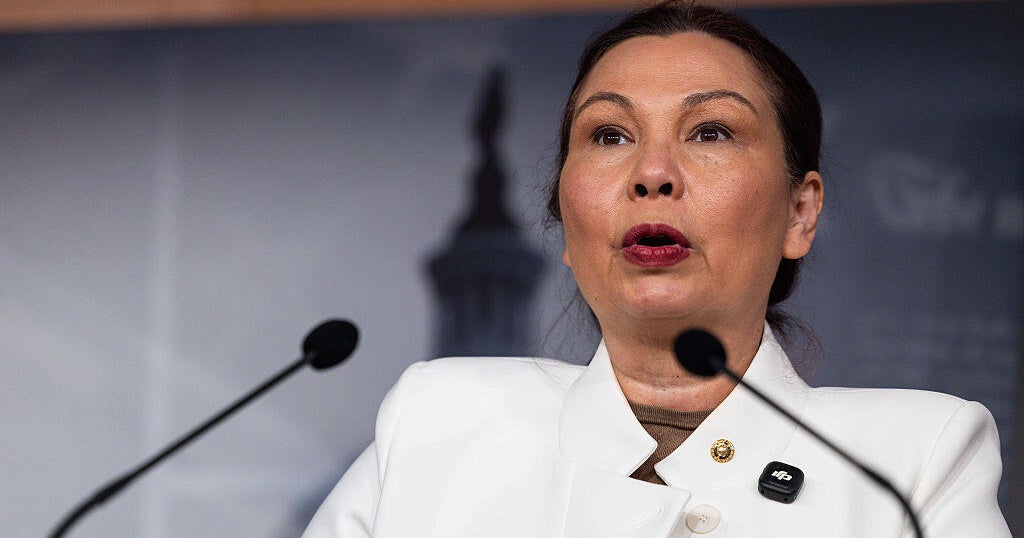
Senator Tammy Duckworth criticized President Trump's plan to turn a new 250-foot triumphal arch near Arlington National Cemetery into a military complex with snipers and drone operations. She urged the FAA and Defense Department to reject the plan, citing safety concerns related to the busy airspace near Ronald Reagan National Airport.
Key Facts
The arch is 250 feet tall and is located close to Arlington National Cemetery.
President Trump announced plans to convert the arch into a military complex with snipers and drone facilities.
The FAA said the arch does not pose a flight hazard for Reagan National Airport.
Senator Duckworth wrote a letter demanding the Pentagon and FAA reject the plan due to airspace safety risks.
The letter references a 2025 midair collision near Reagan airport that killed 67 people.
The National Transportation Safety Board (NTSB) issued 52 safety recommendations after the accident; most remain open.
Duckworth questioned whether the military requested the arch’s conversion and asked for a threat assessment.
Other lawmakers, like Rep. Don Beyer, also expressed concerns about drone operations near the airport.
Read the Original
Want the full story? Tap a source to open the original
article.
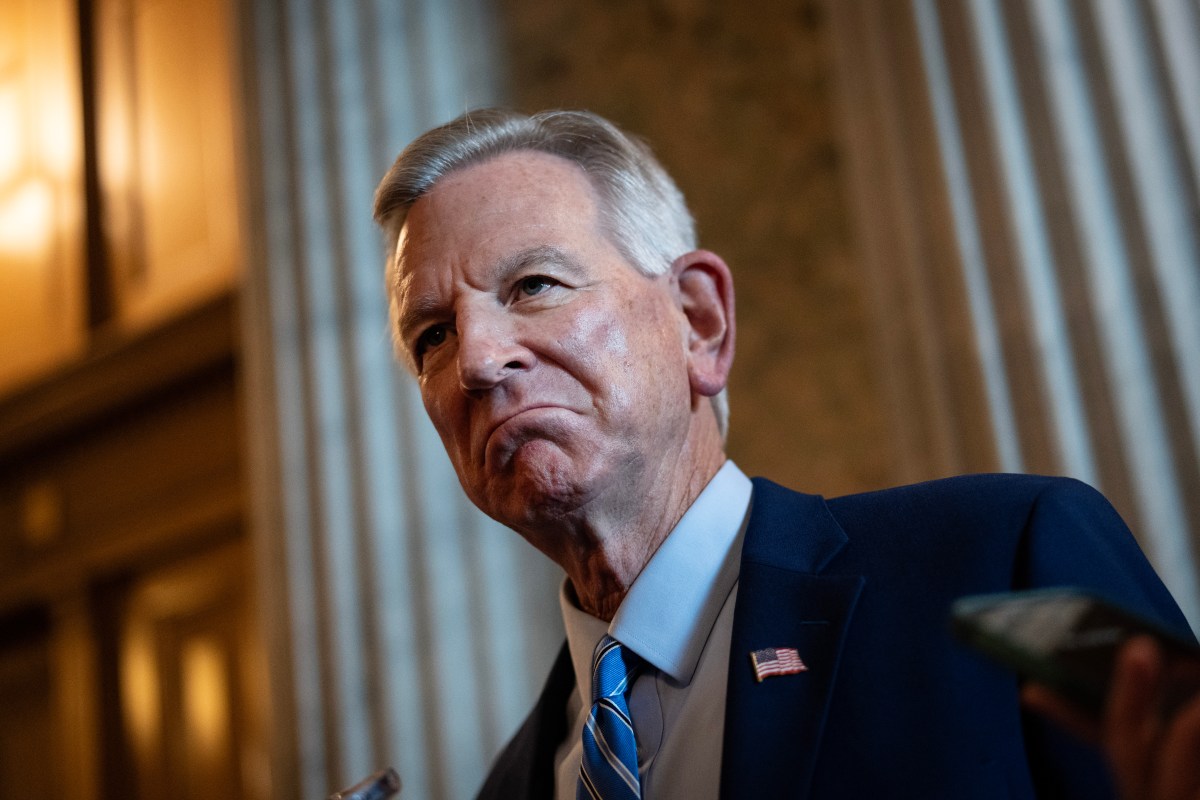
Senator Tommy Tuberville has introduced a bill called the Americans First Immigration Act, which would change many immigration rules in the U.S. It would remove the Diversity Visa Lottery, limit family-based green cards, and create a points system for employment-based green cards based on factors like salary, English skills, and age.
Key Facts
The bill would end the Diversity Visa Lottery, which gives visas by random selection from certain countries.
It would remove parents of U.S. citizens from the immediate-relative green card category, keeping only spouses and children.
Several family-preference immigration categories would be eliminated.
People already in the immigration process could be affected by limits and changes to visa approvals.
The current employment-based green card system would be replaced by a points system, requiring at least 16 points.
Points would be earned for salary, education, English proficiency (must be above the 50th percentile), age (between 18 and 51), military service, and special achievements.
Applicants would need a job offer and a salary at least twice the median wage for their state.
The bill also sets an annual worldwide visa limit for employment-based green cards and excludes certain immigrants based on detention rules.
Read the Original
Want the full story? Tap a source to open the original
article.
The article discusses concerns about how people in America may be mixing up feelings of empathy with the idea of justice. The writer is worried about the impact this confusion could have on the future, especially for the next generation.
Key Facts
The author expresses fear for the future of America.
The concern centers on mixing empathy, which means understanding others' feelings, with justice, which means fairness and following the law.
The worry is that this confusion could affect how society handles important issues.
The author mentions personal concern for their child’s future in this changing environment.
The article highlights a broader cultural and legal debate about how society defines and applies justice.
Read the Original
Want the full story? Tap a source to open the original
article.
A new bill called the Homeownership Promise Act was introduced in the Senate to help first-time homebuyers save for a house down payment. It would give buyers up to $50,000 in federal funds, matching five dollars for every dollar saved in special accounts managed by certified financial institutions.
Key Facts
The bill was introduced by Senators Jeff Merkley and Ron Wyden from Oregon.
It allows first-time buyers of any income level to receive a five-to-one matching grant to save for a home down payment.
Buyers can get up to $50,000 from the federal government for their savings.
Special savings accounts called "Homeownership Promise Accounts" would be set up with certified Community Development Financial Institutions (CDFIs).
Employers and nonprofits can also contribute to these accounts to help buyers save faster.
Homebuyers must complete a housing counseling program approved by the U.S. Department of Housing and Urban Development (HUD).
The home bought must be priced at or below the median home price in the buyer’s area.
The bill aims to address the decline in first-time homebuyers, whose share dropped to 21% last year, and the rising average age of first-time buyers now at 40 years old.
Read the Original
Want the full story? Tap a source to open the original
article.
Robert M. Murphy Jr., former director of sports medicine at N.C. State University, was arrested in Florida on charges of sexual abuse against former male athletes. He faces multiple felony and misdemeanor charges based on allegations covering several years, which resulted in both civil lawsuits and a recent grand jury indictment in North Carolina.
Key Facts
Murphy was arrested in Florida on out-of-state fugitive warrants from North Carolina.
He faces 32 charges, including nine felony counts of sexual contact under the pretext of medical treatment and 23 misdemeanor counts of sexual battery.
The charges relate to alleged abuse from October 2016 to fall 2021 involving 14 identified victims.
The case started with a federal civil lawsuit filed by one athlete four years ago and expanded to include over 30 former athletes.
The allegations include improper touching during medical treatment and intrusive observation during drug testing.
A judge dismissed the civil lawsuit in June due to procedural issues, but the players' attorneys have appealed.
Attorneys for Murphy deny the accusations and state that a prior investigation found insufficient evidence for charges.
Some former athletes claim university officials knew about concerns but did not act to stop Murphy's conduct.
Read the Original
Want the full story? Tap a source to open the original
article.
The U.S. Immigration and Customs Enforcement (ICE) spent over $3 billion in 2023 to buy and plan detention centers, including warehouses it later abandoned. A government watchdog reported that ICE wasted millions of dollars due to poor planning and may lose even more money if the warehouses sell for less than paid.
Key Facts
ICE spent $1.07 billion on 11 warehouses in early 2023, planning to convert them into large detention centers.
Seven of these warehouses are no longer needed, and ICE intends to sell them.
ICE shifted $2.2 billion later to buy four detention centers from CoreCivic, a private prison company.
The Government Accountability Office (GAO) found ICE did not plan for long-term costs and lost $20 million on unused warehouses.
$1.55 billion remains with Chicago Title Insurance, a company holding funds for ICE’s detention acquisitions.
ICE is seeking to double its detention capacity to support President Trump’s mass deportation goals.
ICE recently awarded contracts potentially worth $10 billion to build and expand detention facilities.
A GAO official said urgent planning is needed to avoid further waste; ICE plans a strategic plan due in 2027.
Read the Original
Want the full story? Tap a source to open the original
article.
The U.S. Army Reserve is checking if it can send police, medical, and support units to the Southern Command area, which includes Cuba, within the next few months. This planning happens amid President Trump's focus on pressuring Cuba economically and pushing for political changes.
Key Facts
The Army Reserve is reviewing the availability of six types of military units for possible deployment in 90-120 days.
These units include combat support, logistics, engineers, medical brigades, emergency surgery teams, and military police.
The exact number of troops, destination, or specific mission is not stated in the planning document.
Southern Command covers Central and South America, including the Caribbean region.
Earlier in the year, U.S. forces did reconnaissance around Cuba’s maritime areas.
The Trump administration has increased economic pressure on Cuba and is concerned about Cuba’s relationships with Russia, China, and Iran.
U.S. military planners have looked at options like a large-scale air assault on Cuba, but no decisions have been made.
U.S. officials say no official deployment orders have been given, and operational details are kept confidential for security reasons.
Read the Original
Want the full story? Tap a source to open the original
article.
Rep. Jason Crow, a Democrat from Colorado and former Army Ranger, is introducing a bill to improve trauma care for U.S. military members. The bill aims to support research that learns from battlefield experiences overseas to help service members and veterans.
Key Facts
Rep. Jason Crow represents Colorado and is a former Army Ranger.
He is a member of the House Armed Services Committee.
Crow is introducing a bill focused on battlefield trauma care research.
The bill supports the U.S. military by promoting new methods for treating injuries in combat.
The research will be based on lessons learned from conflicts abroad.
The goal is to improve care for service members and veterans.
The bill is called the Cooperative Overseas Military Battlefield Advancement Act.
Read the Original
Want the full story? Tap a source to open the original
article.
President Donald Trump announced plans to build a triumphal arch near Arlington National Cemetery and the Lincoln Memorial, which would include a top-level military facility along with tourist attractions. This announcement has caused confusion and criticism from lawmakers and experts.
Key Facts
President Trump proposed building a triumphal arch in Washington, D.C.
The arch is to be located between Arlington National Cemetery and the Lincoln Memorial.
It will serve as both a tourist site and a "top grade military complex."
The military complex is described as having storage and rapid response abilities.
Lawmakers and analysts are surprised and puzzled by combining military functions with a public monument.
There has been public pushback and debate about the project's purpose and location.
The announcement came as a surprise over the recent weekend.
Read the Original
Want the full story? Tap a source to open the original
article.
Some Republican senators are worried about President Donald Trump’s warm welcome of Chinese President Xi Jinping in Washington. Their concern comes after news showed Iran used Chinese satellite images to attack U.S. troops in Jordan, and that Iran and China are working more closely on military matters.
Key Facts
President Trump hosted Chinese President Xi Jinping for a two-day summit in Washington.
Republican senators are unhappy with the warm treatment of Xi given recent events.
Iran used satellite images from China to target U.S. troops stationed in Jordan.
Intelligence shows Iran and China are increasing their military cooperation.
The senators’ concerns focus on national security risks from closer China-Iran ties.
The issue highlights tensions over U.S. relations with both China and Iran.
The news emerged just before the summit between the two presidents.
Senators were briefed on the growing military connections between the two countries.
Read the Original
Want the full story? Tap a source to open the original
article.
Internal charts from the Justice Department reveal a sharp drop in the number of lawyers handling civil cases. At the same time, the amount of work in the civil division has increased, making it hard for the department to manage all cases.
Key Facts
The Justice Department’s civil division has seen a significant decrease in staff.
The reduction in attorneys happened during President Donald Trump’s administration.
Caseloads in the civil division have grown, creating more pressure on fewer staff members.
The charts showing this information were accidentally shared and then withdrawn.
The department is struggling to keep up with its legal work in civil cases.
The documents were obtained by The Hill and NewsNation, a related news network.
Read the Original
Want the full story? Tap a source to open the original
article.
In 2000, a reporter in Idaho covered a story about a baby found in a dumpster, which inspired her to help pass Idaho’s safe haven law. This law allows parents to legally and safely give up newborns at places like fire stations. A few years later, the reporter and her husband adopted a baby girl surrendered under this law.
Key Facts
In 2000, a man found a newborn baby’s body in a dumpster in Idaho Falls.
The baby’s biological mother was a young woman who hid her pregnancy and gave birth alone.
Idaho did not have a safe haven law at that time, which allows parents to safely give up infants.
The reporter contacted Idaho State Senator Bart Davis to propose a safe haven law.
Idaho’s safe haven law was signed in 2001, allowing the safe surrender of newborns.
Two years later, a woman surrendered a baby girl at a hospital under the new safe haven law.
The reporter and her husband adopted this baby girl, naming her Lillie.
Years later, a DNA test helped Lillie connect with her biological mother when she was a teenager.
Read the Original
Want the full story? Tap a source to open the original
article.
Zack Polanski, the Green party leader and candidate for a UK byelection, said he is anti-Zionist and believes Zionism involves racism due to the displacement of Palestinians. He faced boos from the audience at a Jewish community event after making these remarks.
Key Facts
Zack Polanski identifies as anti-Zionist and Jewish.
He says Zionism is a form of racism linked to the displacement and genocide of Palestinians.
Polanski says criticizing Israel’s government and land occupation is not antisemitic.
His comments were booed at a Jewish community hustings in Holborn and St Pancras.
The Green party is debating a motion to officially declare Zionism as racism.
There are concerns this motion could alienate Jewish supporters and cause splits in the party.
The Green party conference vote will happen shortly before the Holborn and St Pancras byelection.
Polanski aims to win the seat previously held by Labour leader Keir Starmer.
Read the Original
Want the full story? Tap a source to open the original
article.
President Donald Trump hosted Chinese President Xi Jinping at a formal White House event, highlighting their personal friendship. Although the leaders had private talks, the visit did not result in significant agreements, drawing criticism from Democratic lawmakers who wanted more focus on important issues like Iran, Taiwan, artificial intelligence, and trade.
Key Facts
President Trump gave Chinese President Xi Jinping a grand welcome at the White House.
They praised their personal relationship during a state dinner and other ceremonies.
The two leaders held private, candid discussions behind closed doors.
No major agreements or breakthroughs came from the visit.
Democratic lawmakers criticized the visit for being more about style than substance.
Critics wanted more attention on issues such as Iran, Taiwan, artificial intelligence (AI), and trade.
The visit was described as high-profile and closely watched.
Read the Original
Want the full story? Tap a source to open the original
article.
With 39 days left until the midterm elections, Republican leaders are focused on three main questions: whether their attack ads against Democrats are working, which candidates they must stop supporting due to poor polling, and how actively President Trump will campaign and spend money to help GOP candidates. Republicans have spent much more money than Democrats so far but remain unsure if their efforts will succeed, especially in key races like Texas and Kansas.
Key Facts
Midterm elections are 39 days away.
GOP groups have spent over $450 million on ads, more than twice what Democrats have spent.
President Trump's political team started spending $416 million on ads around Labor Day.
The Texas Senate race is important, with GOP Ken Paxton trailing Democrat James Talarico despite heavy spending.
Republicans may cut funding for struggling candidates in Georgia and North Carolina and move money to Michigan and New Hampshire.
The Kansas Senate race is close, with GOP Sen. Roger Marshall barely leading Democrat Adam Hamilton.
President Trump plans to campaign in 35 key races over the last 30 days before the election.
Some GOP candidates are avoiding close association with President Trump's administration due to its unpopularity in certain areas.
Read the Original
Want the full story? Tap a source to open the original
article.
Rep. Ro Khanna has introduced a nearly $1 trillion plan to create universal childcare in the United States over 10 years. His proposal aims to provide flexible, taxpayer-funded childcare options to help working families, while suggesting ways to pay for it through budget cuts and new taxes.
Key Facts
The plan is called the Free Child Care for America Act and covers a 10-year period.
It proposes three taxpayer-funded childcare options to give families flexibility.
The estimated cost is around $80 to $90 billion per year to make childcare free and support workers' pay.
Funding ideas include ending the war in Iran, a 5% billionaire tax, and cutting $200 billion from the Pentagon budget.
The plan includes grants for states and tribal groups to cover licensed childcare costs.
Khanna wants to increase the supply of childcare services and raise pay for childcare workers.
It emphasizes giving families the choice between different childcare types, including staying at home, rather than favoring one option.
The proposal is part of Khanna’s broader political goals ahead of the 2028 presidential campaign.
Read the Original
Want the full story? Tap a source to open the original
article.