Neutral summaries of your favorite news sources — just the facts.
Your favorite news sources, one neutral feed — we distill their reporting into fact-first
summaries and always link to the original story. How it works
US News
Latest developments and key stories from across the United States
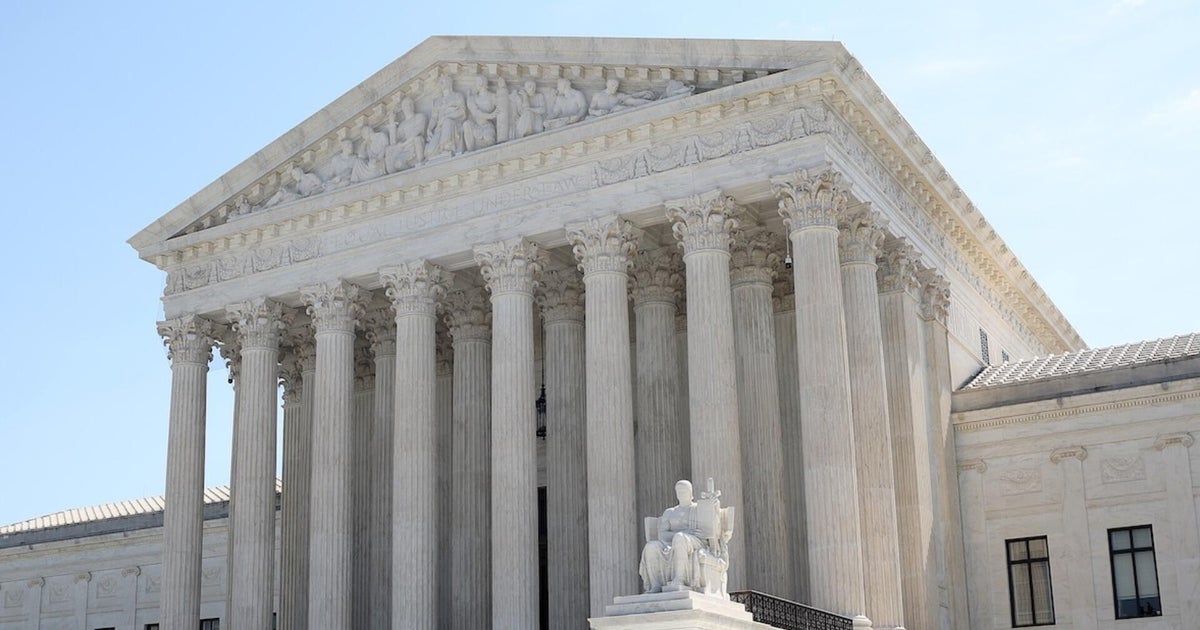
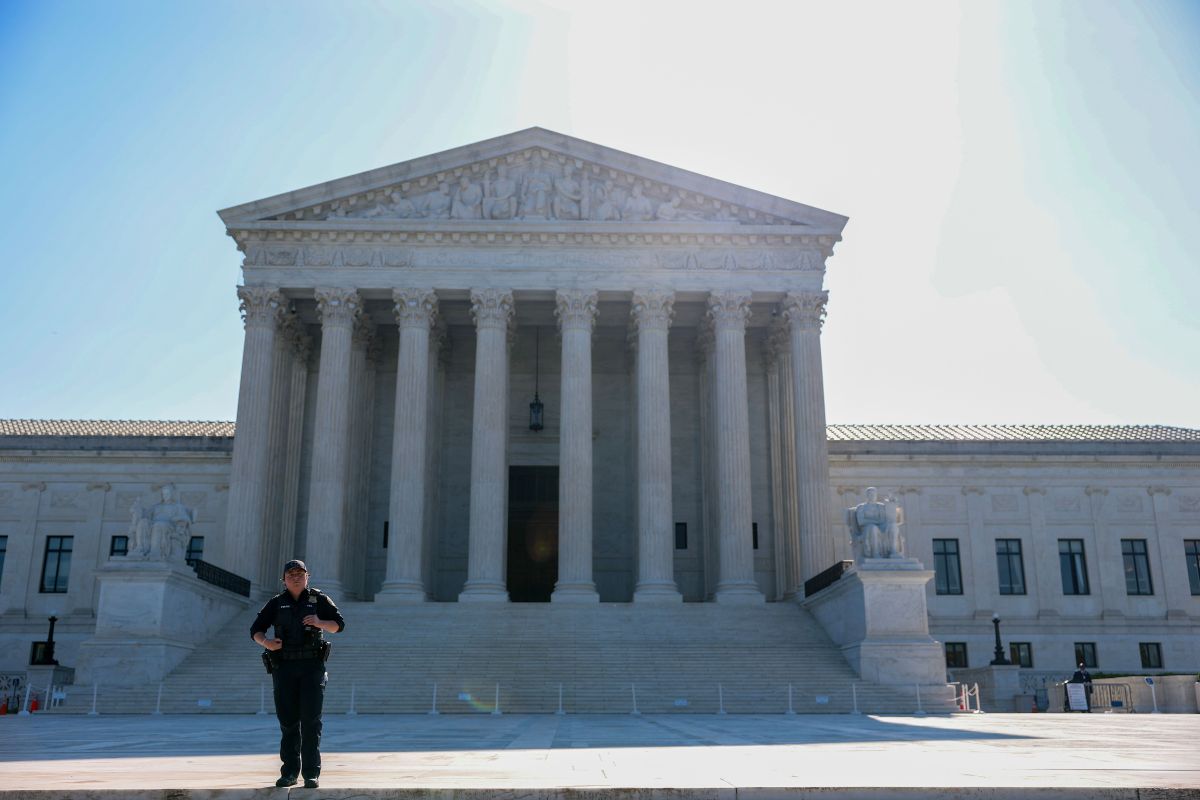
The U.S. Supreme Court rejected President Donald Trump’s attempt to end birthright citizenship. The court also upheld state laws that ban transgender athletes from participating in female sports.
Key Facts
The Supreme Court made its decision on the last day of its current term.
President Trump wanted to stop automatic citizenship for children born in the U.S. (birthright citizenship).
The court ruled against this effort, keeping birthright citizenship intact.
The court also decided that states can keep rules excluding transgender athletes from female sports teams.
These rulings affect immigration and sports policies in the United States.
Birthright citizenship means any child born in the U.S. is automatically a citizen.
The transgender athlete ruling supports states' rights over participation rules in sports.
Read the Original
Want the full story? Tap a source to open the original
article.
The US Supreme Court ruled 6-3 against President Donald Trump’s order to end automatic citizenship for babies born in the United States to parents without permanent legal status. The court confirmed that birthright citizenship is protected by the 14th Amendment, which grants citizenship to anyone born in the US regardless of their parents’ immigration status.
Key Facts
The Supreme Court struck down President Trump’s order targeting birthright citizenship.
Trump's order aimed to stop granting citizenship to children born to parents on temporary visas or without legal status.
The 14th Amendment, passed in 1868, guarantees citizenship to anyone born in the US.
Chief Justice John Roberts wrote that birthright citizenship reflects the promise made by the 14th Amendment’s framers.
The Trump administration argued that some immigrants should not qualify for citizenship based on the phrase “subject to the jurisdiction thereof.”
Trump called the ruling “too bad” and urged Congress to pass laws to limit birthright citizenship.
Trump attended the Supreme Court oral arguments, a first for a sitting US president in an active case.
The issue is politically important ahead of US midterm elections.
Read the Original
Want the full story? Tap a source to open the original
article.
A 31-year-old woman survived after falling 1,500 feet while climbing Mount Shasta in California. Rescue teams found her with injuries and took her to a medical center for treatment.
Key Facts
The woman was climbing Mount Shasta, a tall volcanic peak in the Cascade Range.
She was part of a group of three less-experienced climbers at about 13,000 feet elevation.
She fell 1,500 feet and suffered a possible ankle fracture and other injuries.
Rescue started around noon and involved three forest service climbing rangers and the California Highway Patrol.
Poor weather limited helicopter search, so a ranger climbed on foot to reach her.
The woman was rescued around 5:30 p.m. and taken to Mercy Medical Center Mount Shasta.
Mount Shasta requires mountaineering skills, including use of crampons (spiked shoes), ice axes, and helmets.
Officials reminded climbers that the mountain is challenging and weather conditions can change quickly.
Read the Original
Want the full story? Tap a source to open the original
article.
E Jean Carroll has asked a judge to order President Donald Trump to pay her nearly $5.8 million from a jury verdict that found him liable for sexually abusing and defaming her. The request follows the US Supreme Court’s refusal to hear Trump’s appeal, and Carroll’s lawyers say Trump is trying to delay payment.
Key Facts
A jury found President Trump liable for sexually abusing E Jean Carroll in the 1990s and defaming her after she spoke publicly about the attack in 2019.
Carroll is owed about $5.8 million, including interest, from that verdict.
The US Supreme Court declined to hear Trump’s appeal of the civil case verdict in 2024.
Carroll’s lawyers filed papers asking the court to require Trump to pay the full amount without further delay.
Trump has continued making statements against Carroll and sought to delay the payout while asking the court to reconsider.
Carroll first publicly accused Trump in a 2019 magazine article, describing an assault at a Manhattan department store in 1996.
Trump has denied the allegations and called the case politically motivated and fake.
Trump is also appealing an $83 million defamation award to Carroll from a separate trial in 2024.
Read the Original
Want the full story? Tap a source to open the original
article.
President Donald Trump earned over $2.2 billion in 2025 from his businesses, including crypto ventures, hotels, and branded products, according to a government ethics report. Meanwhile, the US Supreme Court ruled against his executive order that tried to end birthright citizenship, upholding the constitutional right for nearly everyone born in the US to be a citizen.
Key Facts
Trump made more than $1 billion from his crypto-related businesses in 2025.
His total reported earnings last year were over $2.2 billion from various businesses around the world, including investments in China.
Trump also earned millions from selling Trump-branded products such as bibles, sneakers, and watches.
He made tens of millions from licensing and fees connected to hotels, resorts, and condos overseas.
Many of the countries where Trump earns money were negotiating with the US on tariffs and military aid at the same time.
The US Supreme Court struck down Trump’s executive order aimed at ending birthright citizenship, citing the 14th Amendment.
The ruling confirmed nearly all people born on US soil are automatically US citizens, which was a key part of Trump’s immigration agenda.
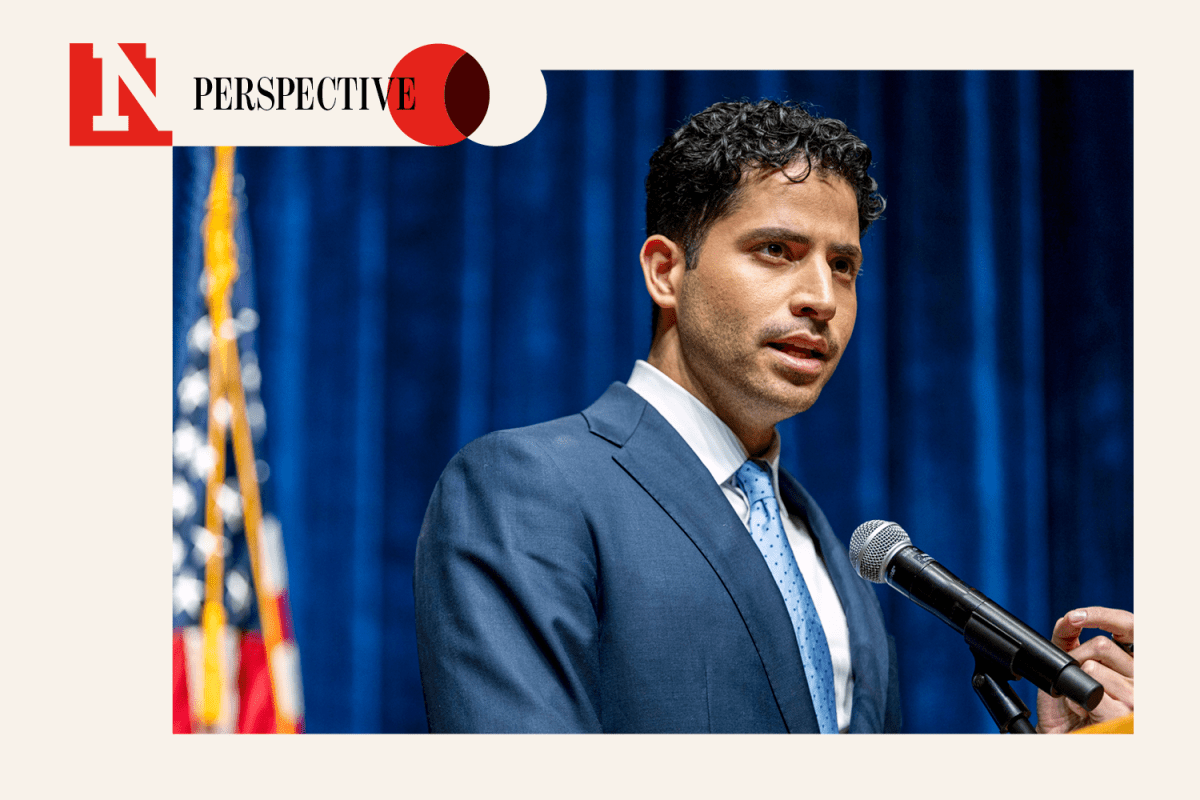
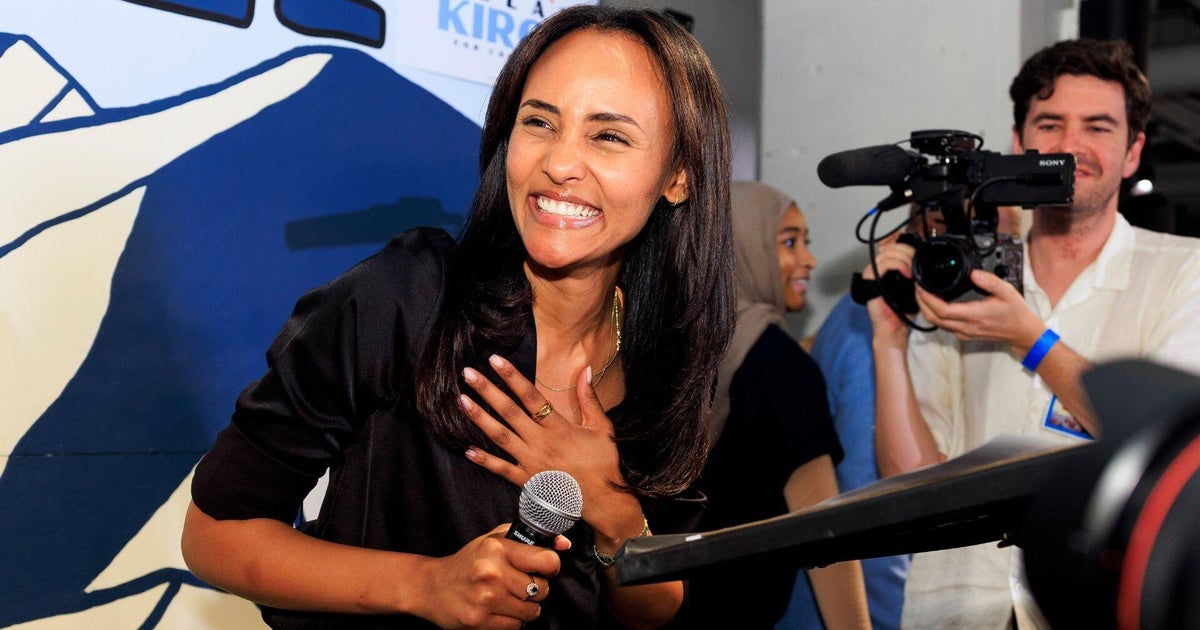
A Democratic socialist named Melat Kiros defeated a 15-term incumbent in Colorado’s primary, marking a shift on the left within the Democratic Party.
Read the Original
Want the full story? Tap a source to open the original
article.
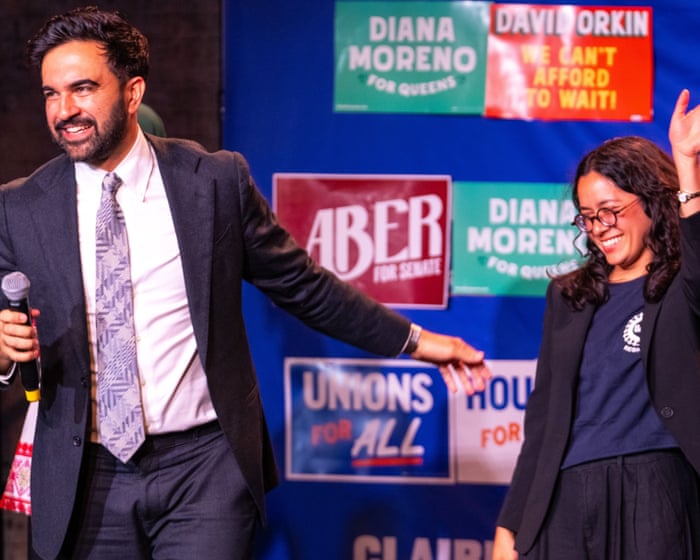
Manny Rutinel won the Democratic primary in Colorado’s 8th Congressional District by a large margin, with significant funding from tech industry donors. Rutinel helped create Colorado’s 2024 law regulating artificial intelligence (AI), and many tech groups supported him because of his pro-regulation stance.
Key Facts
Manny Rutinel won the Democratic primary in Colorado’s 8th District by 26 points.
The district is majority Latino and can influence control of the U.S. House.
Tech industry figures and companies gave large amounts of money to support Rutinel.
Anthropic, Google, Meta, and OpenAI employees donated about $265,000 directly to Rutinel’s campaign.
A super PAC funded by cryptocurrency billionaire Chris Larsen spent nearly $1 million to support Rutinel.
Some established Democrats, including Jaime Harrison, a former chair of the Democratic National Committee, are criticizing democratic socialists who won recent primary elections. These socialists have gained strong voter support, which worries many within the party who have close ties to big corporations.
Key Facts
Jaime Harrison tweeted that democratic socialists who dislike the Democratic Party should not run as its candidates.
Three democratic socialists recently won Democratic primaries for Congress in New York City.
Harrison previously worked as a lobbyist for many large companies like Bank of America, Boeing, and Google.
Other Democrats, including James Carville, have publicly said socialist winners are not true Democrats.
Carville’s recent political strategy calls for Democrats to retreat and let Republicans fail on their own.
Progressive candidates have been winning major local offices in cities such as New York, Seattle, Washington DC, and Los Angeles.
The rise of strong progressive candidates has surprised many in the Democratic Party who are linked to corporate interests.
Changing public opinions, including on issues like support for Israel, are influencing voter preferences in Democratic primaries.
Read the Original
Want the full story? Tap a source to open the original
article.
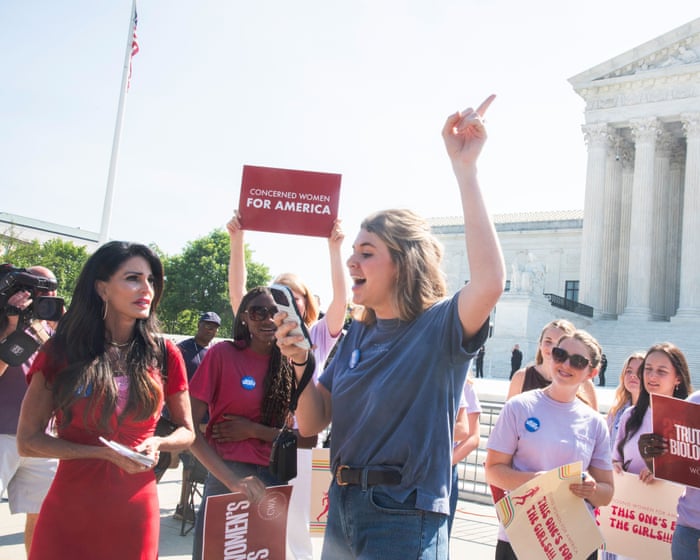
A recent U.S. Supreme Court decision supported state laws that limit transgender students from participating in school sports. Young conservative women, including members of Generation Z, have actively supported these restrictions and have become influential in conservative political movements.
Key Facts
The Supreme Court upheld laws restricting transgender students from sports participation.
These laws focus on maintaining what supporters call “biological reality” in girls' sports.
Penny Young Nance, CEO of Concerned Women for America, praised the ruling as protecting young women.
Generation Z conservative women have played a strong role in pushing these laws at state levels.
These women use some feminist language but support policies that exclude transgender athletes.
Many of these state laws began with Idaho’s 2020 ban, which faced legal challenges from the ACLU.
Young conservative women are active in politics, social media, and advocacy groups supporting these policies.
This trend shows a shift from past conservative women activists who opposed feminist ideas, as today's young conservatives adopt some feminist terms while opposing transgender inclusion.
Read the Original
Want the full story? Tap a source to open the original
article.
This article discusses how the United States marks 250 years since the Declaration of Independence amid ongoing struggles with voting rights, civil rights, and democracy. Activists believe this anniversary is a chance to rethink and rebuild the country’s promise of freedom and equality for all.
Key Facts
The Fourth of July 2026 marks 250 years since the Declaration of Independence.
Many Americans see this anniversary as a moment to reflect on ongoing attacks on voting rights and civil rights.
Activists include workers, lawyers, Indigenous leaders, and organizers, all pushing for major changes.
Chris Smalls, a workers' rights activist, says the U.S. needs to move beyond the two-party political system.
Kristen Clarke, NAACP general counsel, calls for reforms to protect voting rights legally and to change the Supreme Court.
Activists believe the country can be rebuilt into a democracy that truly serves all people, not just the powerful.
There is a call for new laws ensuring everyone has the right to vote regardless of race, background, or economic status.
Read the Original
Want the full story? Tap a source to open the original
article.
The U.S. Supreme Court ruled 7-2 in the Monsanto v. Durnell case, making it harder for farmers with cancer to sue pesticide companies like Bayer-Monsanto over health risks linked to chemicals such as glyphosate. The Court decided that because the Environmental Protection Agency (EPA) approved the pesticide labels, companies are protected from lawsuits even if the warnings were insufficient.
Key Facts
The Supreme Court ruled that pesticide companies cannot easily be sued under state law if their labels were approved by the EPA.
The case involved Bayer-Monsanto’s weedkiller Roundup, which has been linked to cancer in some farmers.
The ruling limits farmers’ legal rights to seek compensation for health problems caused by toxic chemicals.
President Trump’s administration supported Bayer-Monsanto in this case, reversing the previous Biden administration’s stance.
There is growing bipartisan concern about toxic chemicals in food and water, with many Americans wanting banned pesticides removed from U.S. markets.
After the ruling, some members of Congress from both parties pushed to remove legal protections for pesticide companies in farm bill legislation.
The decision might encourage companies to seek wider legal protections in the future, possibly leading to use of more dangerous chemicals.
Some lawmakers are working on laws to hold companies accountable and promote healthier food and fewer toxic pesticides.
Read the Original
Want the full story? Tap a source to open the original
article.
President Donald Trump earned $1.4 billion from cryptocurrency activities in his first year back in office. His financial disclosure revealed these crypto-related earnings.
Key Facts
President Trump returned to office recently.
In his first year back, he made $1.4 billion.
The money came from cryptocurrency ventures.
This information was shown in his financial disclosure.
CBS News reported and explained the earnings.
Cryptocurrency refers to digital money like Bitcoin.
The report was shared via CBS News and their app.
Read the Original
Want the full story? Tap a source to open the original
article.
Melat Kiros, a 29-year-old democratic socialist, won against longtime Representative Diana DeGette in Colorado's First Congressional District. If elected, Kiros may become the first member of Generation Z to serve in the U.S. Congress.
Key Facts
Melat Kiros is 29 years old.
She identifies as a democratic socialist.
Kiros defeated Diana DeGette, a longtime incumbent.
The race took place in Colorado's First Congressional District.
CBS News projected Kiros as the winner.
Kiros could be the first Generation Z member in Congress.
Diana DeGette had previously held the congressional seat for many years.
This news was reported by CBS News and their correspondent Anthony Salvanto.
Read the Original
Want the full story? Tap a source to open the original
article.
Writer E. Jean Carroll asked a federal court to make President Donald Trump pay over $5 million daily after the Supreme Court denied his appeal. The court had previously ruled that President Trump abused and defamed her in the 1990s.
Key Facts
E. Jean Carroll is a writer who accused President Trump of abuse and defamation.
A jury found President Trump was responsible for abusing and defaming Carroll in the mid-1990s.
President Trump appealed the verdict to the Supreme Court.
The Supreme Court rejected President Trump’s request to overturn the verdict.
Carroll’s lawyers then asked a federal court in Manhattan to release more than $5 million per day to her.
The lawsuit is being handled in a federal court in New York City.
The $5.8 million refers to damages owed to Carroll after the legal rulings.
Read the Original
Want the full story? Tap a source to open the original
article.
The Supreme Court mostly supported President Donald Trump’s strict immigration policies but rejected his attempt to end birthright citizenship, which grants U.S. citizenship to anyone born in the country. The court allowed the government to end some protections for people fleeing danger, limit asylum applications, and increase control over green card holders returning from abroad.
Key Facts
The Supreme Court upheld birthright citizenship, confirming that children born in the U.S. are citizens regardless of their parents' immigration status.
President Trump’s administration tried to stop birthright citizenship, signing an order on his first day in office, but it did not take effect due to court challenges.
The court approved ending temporary protections for people escaping war or hardship.
Immigration officers were given more authority in managing green card holders returning to the U.S.
The government was allowed to restrict the number of people who can apply for asylum.
The Supreme Court’s decisions impact immigrants’ ability to live in the U.S. and influence public views on American immigration policy.
Some Republicans responded to the birthright citizenship ruling by wanting to find other ways to limit it.
Advocates for stricter immigration policies say the ruling strengthens the need for more deportations and tighter rules for foreign workers and students.
Read the Original
Want the full story? Tap a source to open the original
article.
A Gallup poll found that 10 percent of US adults experienced a scam last year, either personally or through someone in their household. Nearly three-quarters of these victims said the scams harmed their mental health, and the total financial losses reached an estimated $68 billion in 2025.
Key Facts
6 percent of US adults were personally scammed in 2025; 4 percent were affected indirectly through household members.
Scams caused many victims to become more cautious online and hesitant to do business with unfamiliar companies.
Lower-income adults and those with less education reported higher scam victim rates.
Black and Hispanic adults experienced higher scam rates than white adults.
The average money lost per scam was $5,578, with total losses around $68 billion in 2025.
One in five scam victims faced severe financial difficulties, especially households earning under $80,000 annually.
About 73 percent of scam victims reported negative effects on their mental health.
Nearly 24 percent of US adults say they have been scammed at least once in their lifetime.
Read the Original
Want the full story? Tap a source to open the original
article.
President Donald Trump will attend the opening of the Theodore Roosevelt Presidential Library in North Dakota. His administration has removed protections on over 100 million acres of public lands, which critics say goes against Roosevelt’s legacy of conservation.
Key Facts
Theodore Roosevelt created national parks and protected millions of acres of land during his presidency (1901-1909).
President Trump’s administration has rolled back environmental protections, including those under the Endangered Species Act and for migratory birds.
More than 86 million acres of public lands have lost protections, allowing for development and resource extraction such as oil drilling.
The land losing protections is equal in size to over 70 Grand Canyons or 38 Yellowstone National Parks.
Roosevelt conserved nearly 230 million acres of public lands; Trump’s actions have reversed protections on over 100 million acres.
Trump’s opening of the Roosevelt library is part of the Freedom 250 tour celebrating America’s 250th anniversary.
Nearby Theodore Roosevelt National Park faces staff cuts due to Trump administration policies.
Conservation groups say these rollbacks threaten wildlife, parks, and lands that Roosevelt worked to protect.
Read the Original
Want the full story? Tap a source to open the original
article.
Starting March 2024, Medicare is offering a temporary program to cover certain GLP-1 weight loss drugs for $50 a month for some older adults. The program runs until the end of 2027 and targets people with specific weight and health conditions.
Key Facts
The program is called Medicare GLP-1 Bridge.
It covers certain brand-name GLP-1 drugs approved for weight loss, like Wegovy and Foundayo.
To qualify, people must have Medicare drug coverage and meet BMI criteria (BMI of 35 or higher, or 27+ with another health issue).
The cost for participants is $50 monthly, but this payment does not count toward insurance deductibles or limits.
People who already get GLP-1 drugs for other diseases like diabetes or sleep apnea are not eligible for this program.
The program lasts until December 31, 2027, as permanent coverage by Medicare hasn’t been authorized by Congress.
Beneficiaries must get a prescription and prior authorization from their healthcare provider to join.
Medicare hopes to gather data from this trial to possibly support longer-term coverage in the future.
Read the Original
Want the full story? Tap a source to open the original
article.
President Donald Trump earned over $1.4 billion in income from cryptocurrency-related business during his first year back in office, according to his 2025 financial disclosure. This includes more than $500 million from a company called World Liberty Financial and significant profits from his $TRUMP meme coin.
Key Facts
President Donald Trump’s 2025 financial disclosure shows over $1.4 billion earned from crypto activities in his first year back as president.
Over $500 million of this income came from World Liberty Financial, a financial company.
He also made large earnings from a cryptocurrency called the $TRUMP meme coin.
The financial disclosure provides details about his personal earnings while serving as president.
This is the first year back in office for President Trump after his reelection in 2024.
The report focuses on his income sources related to digital currency and crypto ventures.
Read the Original
Want the full story? Tap a source to open the original
article.
Idaho has become the first U.S. state to make the firing squad its main way to carry out executions. This method is growing in use as other execution methods face problems, but concerns remain about its potential to cause painful deaths.
Key Facts
Idaho’s department of corrections opened a new execution chamber using the firing squad by July 1, 2024.
The state spent over $1 million, including $24,000 on special rifles for the firing squad.
Idaho is the seventh state to allow the firing squad as an execution method.
Four firing squad executions have happened in the U.S. since 2010, with two reportedly botched and causing prolonged suffering.
There are claims some firing squad errors might have been deliberate, though this is not proven.
Idaho switched to firing squads after problems with lethal injections, including a stopped execution due to IV line failures.
Other states using or allowing firing squads include Mississippi, Oklahoma, South Carolina, Utah, Florida, and Tennessee.
The firing squad method involves shooting the prisoner in the heart to cause immediate death.
Read the Original
Want the full story? Tap a source to open the original
article.
Shannon LaNier, a descendant of Thomas Jefferson and Sally Hemings, reflects on the complicated legacy of his family as the U.S. turns 250 years old. He acknowledges Jefferson's role as a founding father who wrote about equality but also points out the contradiction of his owning enslaved people, including Hemings, who bore Jefferson's children.
Key Facts
Shannon LaNier is the sixth great-grandson of Thomas Jefferson and also a descendant of Sally Hemings, an enslaved woman owned by Jefferson.
Jefferson wrote the Declaration of Independence stating "all men are created equal" but owned more than 600 enslaved people.
Sally Hemings joined Jefferson in Paris at age 14 and had several children with him.
Hemings negotiated the freedom of her children, who were to be freed at age 21.
LaNier has worked as a TV personality, actor, and public speaker, and co-authored a book about Jefferson’s family.
As a child, LaNier was initially disbelieved when he said he was related to Jefferson.
He recognizes both Jefferson’s genius and his failure to free more enslaved people.
LaNier honors the resilience of those who were enslaved and views slavery as a difficult part of history that shows strength and survival.
Read the Original
Want the full story? Tap a source to open the original
article.