A woman who killed her baby son and wounded his toddler sister was sentenced to 10 years in prison for infanticide and attempted murder. She was found to have been suffering from postnatal depression and had a history of domestic abuse, which affected her mental state during the crime.
Key Facts
The woman stabbed her eight-week-old son and toddler daughter in July 2021.
The baby boy died, but the girl survived after hospital treatment.
She was convicted in 2023, but the Court of Appeal later found the convictions unsafe and ordered a retrial.
In August 2026, she pleaded guilty to infanticide (killing a child under 12 months by a distressed mother) and attempted murder.
Experts reported she had postnatal depression and was overwhelmed by emotional despair at the time.
The mother’s relationship involved domestic abuse, sexual abuse, and controlling behavior.
The surviving daughter now lives in foster care and faces emotional challenges, such as fear and sensitivity to change.
The woman showed remorse and was considered a victim of modern slavery; she will serve half of her 10-year sentence in prison and half on licence, with conditions including no contact with children under 18.
Read the Original
Want the full story? Tap a source to open the original
article.
An official inquiry found that hospital leaders and doctors at the Countess of Chester hospital in England failed to act on concerns about nurse Lucy Letby, whose actions were linked to the deaths and harm of newborn babies. The inquiry said some babies might have survived or been protected if Letby had been removed sooner and if earlier signs of harm were detected.
Key Facts
Nurse Lucy Letby was convicted of murdering seven babies and attempting to murder seven others at the hospital.
An inquiry led by Lady Justice Thirlwall revealed a failure by hospital management to protect babies on the neonatal unit.
The inquiry found two twins’ deaths and harm to five others could have been prevented with earlier action.
A two-month-old baby and two others who collapsed may have been protected if nurses or doctors had spotted early signs of poisoning.
Letby’s convictions have been challenged but appeals have been rejected; a review of the case is ongoing.
The inquiry criticized hospital leadership for ignoring concerns and delaying police involvement for almost two years.
Families of affected babies were not informed fully and timely about what happened.
Recommendations include installation of 24-hour cameras on neonatal cots and better oversight by health regulators.
Read the Original
Want the full story? Tap a source to open the original
article.
President Donald Trump has imposed tariffs on imports from Canada, and Canada has responded with its own tariffs. These trade measures are hurting important industries in several states that usually support the Republican Party. This economic impact might influence voter decisions in future midterm elections.
Key Facts
President Trump placed tariffs on goods coming from Canada.
Canada has retaliated by adding tariffs on some U.S. products.
The tariffs affect key economic sectors like manufacturing and agriculture.
Several states hit by these tariffs usually vote Republican.
The economic troubles caused by tariffs could influence voters before midterm elections.
Midterm elections take place in the middle of a president’s term to elect members of Congress.
Trade conflicts involve countries taxing imported goods to protect local industries or respond to unfair trade practices.
Economic issues often affect how people vote in elections.
Read the Original
Want the full story? Tap a source to open the original
article.
The Department of Veterans Affairs (VA) will give $1.17 billion in grants to 680 groups across the U.S. to help prevent and reduce homelessness among veterans. The money will fund programs that provide housing support and services for veterans and their families starting in fiscal year 2027.
Key Facts
The VA is awarding $1.17 billion in grants to organizations working to fight veteran homelessness.
The funding covers two programs: Supportive Services for Veteran Families (SSVF) and Grant and Per Diem.
$855 million will go to the SSVF program, helping veterans avoid eviction and find permanent housing.
$318 million will support the Grant and Per Diem program, which funds transitional and specialized housing programs.
Grants are awarded to nonprofits and community groups, not directly to veterans.
These programs offer housing assistance, case management, and support services for vulnerable veterans, including women, elderly, and those with mental illness.
The VA recently reported housing nearly 52,000 homeless veterans in fiscal year 2025, the highest number in seven years.
VA Secretary Doug Collins said the funding aims to help veterans achieve long-term stability and self-sufficiency.
Read the Original
Want the full story? Tap a source to open the original
article.
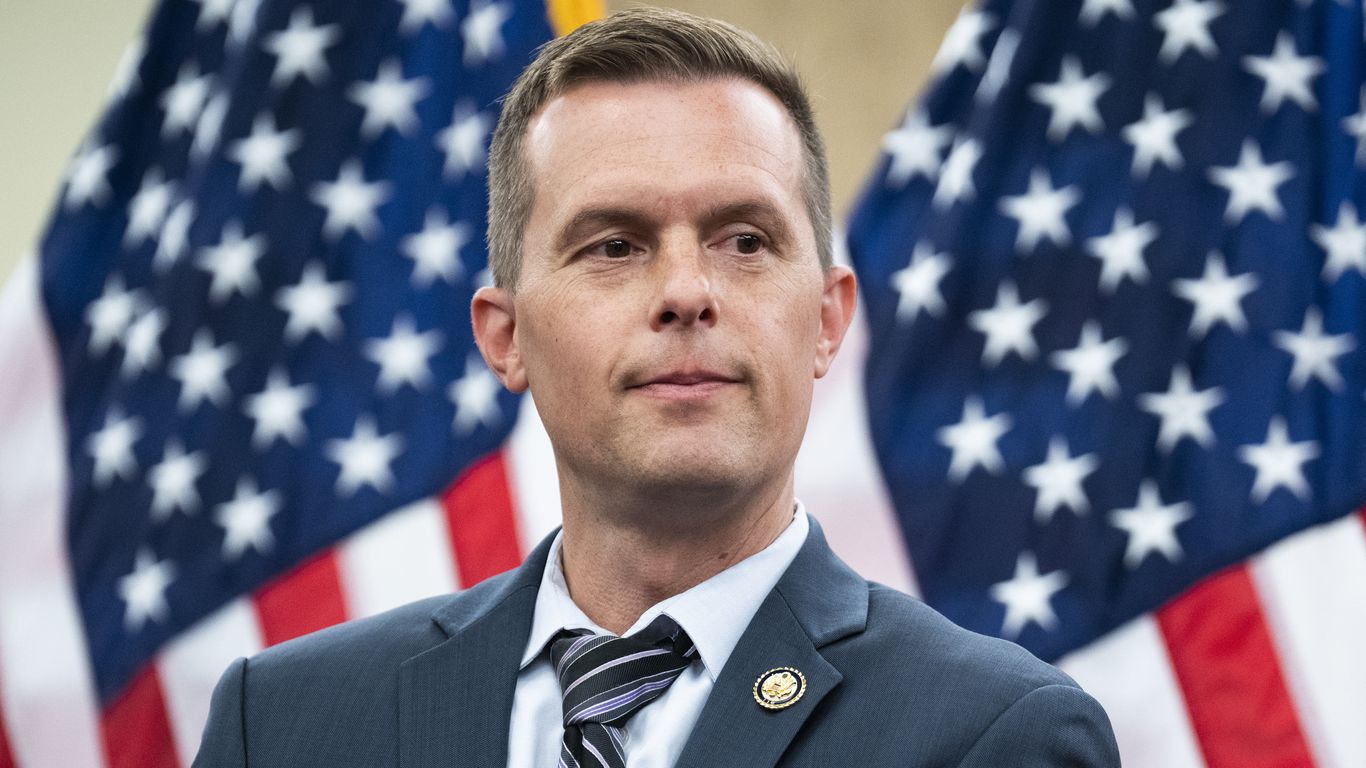
House Democrats are divided on a bill that would allow President Trump to impose tariffs on countries importing Russian oil. Some Democrats oppose the bill because it gives more trade power to the president, while others support it to pressure Russia amid the Ukraine conflict.
Key Facts
The bill is named after Senator Lindsey Graham and focuses on sanctioning Russia and Iran.
It would let President Trump apply tariffs up to 100% on the top five importers of Russian oil.
House Democratic leadership opposes the bill due to concerns about expanding presidential trade powers.
Some Democrats, including Rep. Jared Golden and Rep. Marcy Kaptur, are open to or considering supporting the bill.
The bill passed the Senate with strong bipartisan support and is backed by the White House.
Proposed amendments by Democrats to change trade provisions were rejected by the House Rules Committee.
Republicans may need some Democratic votes to pass the bill in the House.
The key issue for Democrats is balancing support for Ukraine and limiting more trade authority for the president.
Read the Original
Want the full story? Tap a source to open the original
article.
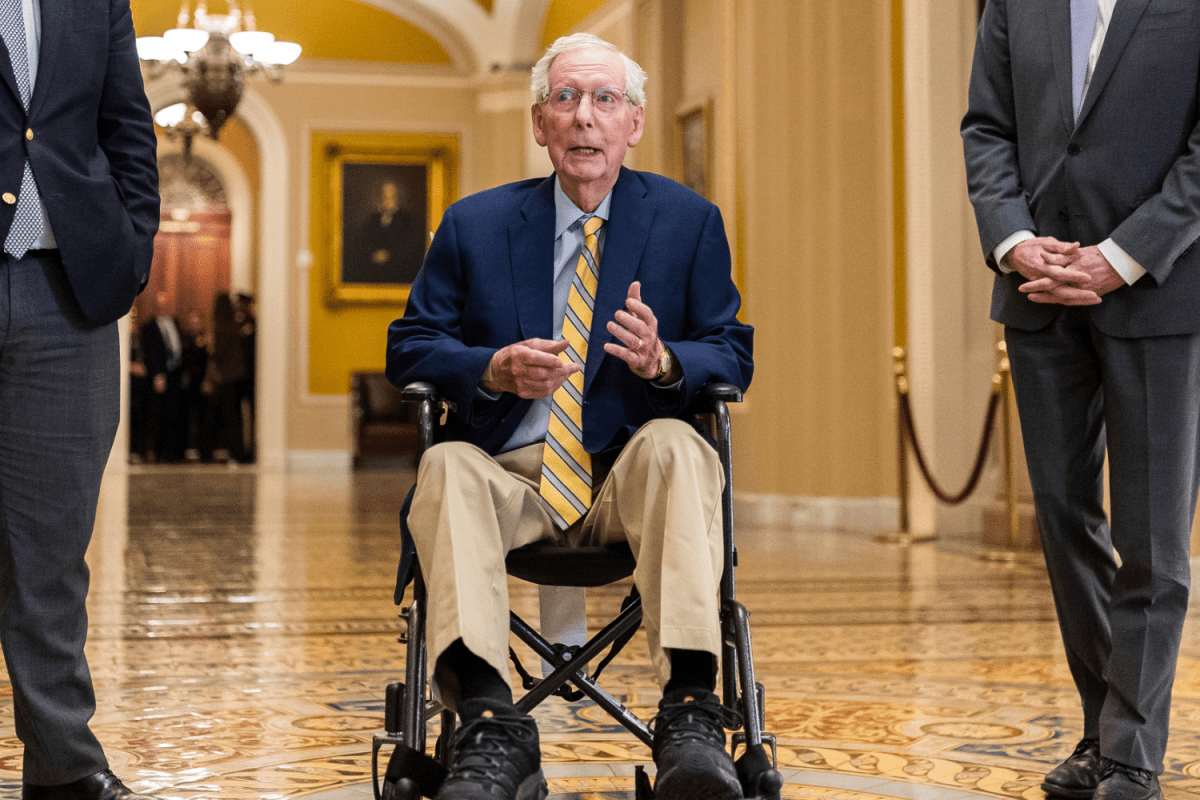
Senator Mitch McConnell returned to the Senate on September 14 after nearly three months away following a fall that led to his hospitalization. He is using a wheelchair and continuing physical therapy but plans to participate in important votes.
Key Facts
Mitch McConnell was hospitalized on June 14 after a fall.
He stayed away from the Senate for about three months to recover.
During his absence, McConnell continued receiving his $174,000 annual Senate salary.
His recovery involved intensive physical therapy aimed at improving strength and preventing future falls.
McConnell was discharged from a rehabilitation facility in August but continued therapy at home.
On returning to Congress, McConnell used a wheelchair and gave a thumbs up to cameras.
He said he is not yet fully recovered but remains involved in Senate work.
McConnell mentioned that his recovery is complicated by lingering effects of childhood polio.
Read the Original
Want the full story? Tap a source to open the original
article.
Julia Curlee, a transgender intelligence official, was fired from her senior role in the National Security Council in March 2025 after being publicly targeted online. She served under President Trump during his first term, stayed on through President Biden’s term, and continued briefly after Trump’s reelection, before being removed due to the administration's anti-trans policies.
Key Facts
Julia Curlee worked as a senior intelligence analyst for the CIA and National Security Council.
She served under President Trump’s first term, then under President Biden, and returned under President Trump’s second term.
Curlee is transgender, which made her vulnerable to the new administration's anti-trans policies.
After being publicly named by a far-right influencer, the White House fired her in March 2025.
Despite being targeted, she completed important national security tasks quietly before her removal.
Curlee has criticized the Trump administration for purging intelligence experts, saying it harmed U.S. national security.
She previously briefed Vice-President Mike Pence and worked on sensitive intelligence programs.
Curlee’s experience highlights tensions between government diversity policies and national security staffing under President Trump.
Read the Original
Want the full story? Tap a source to open the original
article.
The Supreme Court ruled that deporting a non-citizen is not a punishment for their actions. Instead, it is enforcing the rules that applied when the person entered the country.
Key Facts
The Supreme Court made a decision about deportation.
The Court said deportation is not a punishment.
Deportation means following the conditions of entering the U.S.
The ruling focuses on non-citizens (aliens) who are deported.
This interpretation affects how deportation is viewed in law.
The decision refers to legal terms of admission to the U.S.
Read the Original
Want the full story? Tap a source to open the original
article.
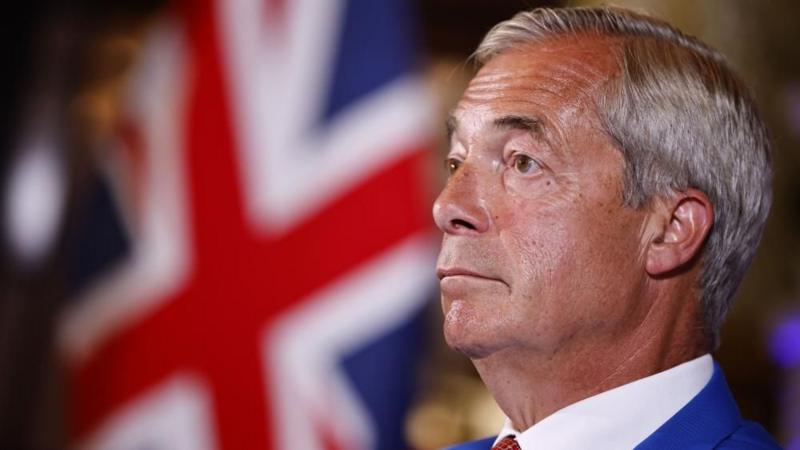
The UK government plans to change rules so political donors must live in the UK to give large amounts of money. This comes after a debate over big donations from British crypto-billionaires who lived abroad. Under the new rules, people living overseas would have a limit on donations and must show a strong connection to the UK.
Key Facts
The government wants to tighten residency rules for political donors in the UK.
Two British crypto-billionaires, Ben Delo and Christopher Harborne, donated £72 million to Reform UK while living abroad.
Current UK law allows British voters living overseas to donate unlimited amounts, but foreign donations are illegal.
New proposals include a £100,000 donation limit backdated to March 25 and require donors to live in the UK for at least 12 months.
Donors above the donation limit must prove a real and ongoing connection to the UK.
The changes are part of amendments to the Representation of the People Bill, now under review in the House of Lords.
Government officials say the rules apply to all parties, not targeting any one group.
Critics want even stricter limits, including a universal donation cap.
Read the Original
Want the full story? Tap a source to open the original
article.
The public inquiry into how nurse Lucy Letby was able to kill babies at a hospital is set to publish its findings soon after several delays. The inquiry focused on hospital staff actions and management, not Letby's guilt, while her convictions and appeals remain under review.
Key Facts
Lucy Letby, a nurse, was convicted in 2023 of murdering seven babies and attempting to murder seven more at the Countess of Chester Hospital’s neonatal unit during 2015–2016.
She received 15 whole-life prison sentences and was twice denied permission to appeal her convictions in 2024.
A public inquiry, led by Lady Justice Thirlwall since September 2023, examined hospital staff conduct and management, not Letby’s guilt or motives.
The inquiry looked at whether hospital managers should have acted sooner on suspicions and how well NHS systems worked in this case.
The inquiry aims to provide answers to victims’ families and improve future hospital safety.
Two experts who supported Letby’s defense with reports doubting some convictions withdrew from her legal team shortly before the inquiry report was published.
The experts questioned whether two babies were poisoned but could not support all the defense arguments used in court.
Inquests into the deaths of the babies will be held in May 2027.
Read the Original
Want the full story? Tap a source to open the original
article.
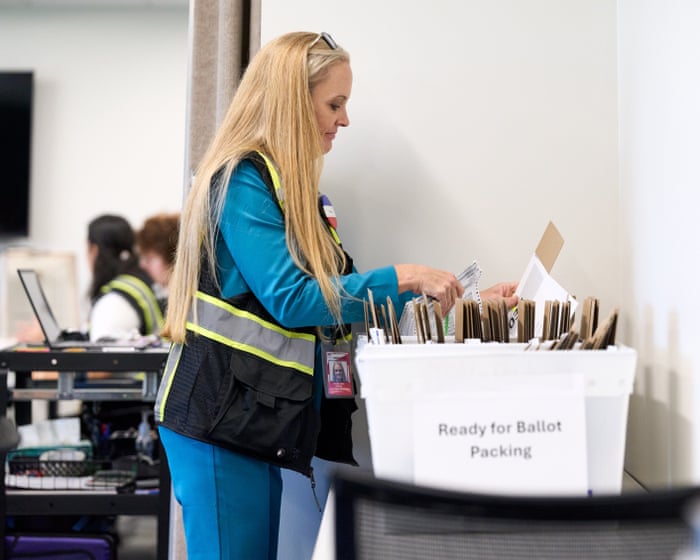
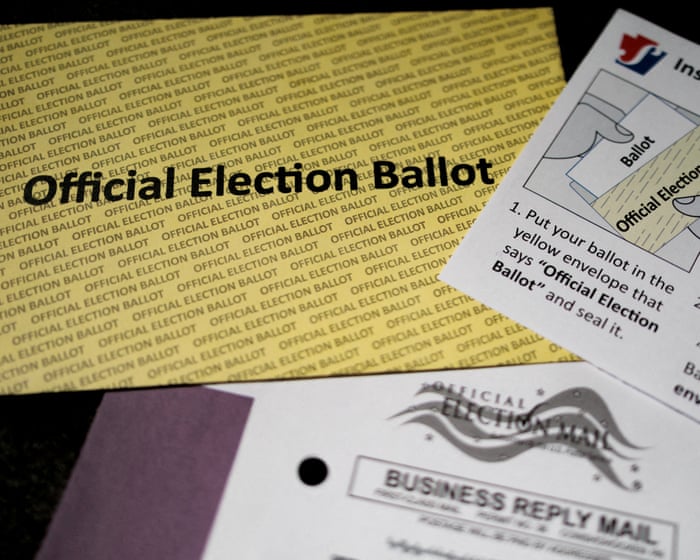
The U.S. Supreme Court rejected President Donald Trump’s attempts to restrict mail-in voting, allowing states to continue using their usual mail ballot procedures. Other news includes concerns raised by a whistleblower about voter fraud investigations, Microsoft’s new AI code of conduct, and political debates over AI regulation and data center water use.
Key Facts
The Supreme Court blocked President Trump’s efforts to limit mail-in voting ahead of the midterm elections.
States can keep sending mail ballots as they have done in past elections.
A Department of Homeland Security whistleblower said investigators were told they could access voter registration data without following state laws and questioned the data’s reliability.
Microsoft released a temporary code of conduct to limit artificial intelligence from doing harmful or sensitive tasks.
Both Democrats and Republicans in Congress want rules to control powerful AI companies, but President Trump dismissed these concerns.
Texas Governor Greg Abbott ordered penalties for data centers that do not report their water use amid drought concerns.
China dismissed calls to limit its AI development but acknowledged potential political risks associated with evolving AI.
Donald Trump Jr and his wife revealed that a Russian oligarch close to Vladimir Putin helped pay for part of their wedding.
Read the Original
Want the full story? Tap a source to open the original
article.
Under President Donald Trump, Immigration and Customs Enforcement (ICE) arrests have reached record highs, with nearly 51,000 arrests in August 2026 alone. Arrests and detentions have increased widely across many U.S. states, especially in the South and Southwest, as part of a larger plan to increase deportations.
Key Facts
ICE arrests rose significantly between July 2025 and July 2026, with Texas having the highest number at 10,331 in July 2026.
Florida nearly tripled its arrests leading to detention, going from 1,938 to 5,501 during the same period.
Other states with notable increases include Arizona, Georgia, New Jersey, Pennsylvania, Tennessee, and Massachusetts.
Some states, like California, Colorado, Rhode Island, and Nevada, saw smaller increases or declines in arrests.
Arrests do not always lead to immediate deportations, as detainees may have ongoing legal cases like asylum claims.
Homeland Security Secretary Markwayne Mullin said ICE set new records for illegal alien arrests for three months in a row.
Large enforcement operations, such as Operation Midway Blitz and Operation Metro Surge, contributed to the rise in arrests in states like Illinois and Minnesota.
Read the Original
Want the full story? Tap a source to open the original
article.
The U.S. Supreme Court rejected former President Trump’s attempt to limit mail-in voting for the midterm elections, allowing states to continue their usual mail ballot procedures. Meanwhile, Congress is increasingly concerned about the potential dangers of artificial intelligence (AI), with many lawmakers pushing for new rules and oversight despite President Trump calling these worries a hoax.
Key Facts
The Supreme Court blocked Trump’s effort to restrict mail-in ballots ahead of the midterms.
States such as Alabama, North Carolina, and Wisconsin were already sending mail ballots before any new rules could be applied.
Election officials from both parties said keeping current mail ballot processes helps maintain safe and accurate elections.
Democrats and Republicans in Congress want new laws and agencies to monitor AI technology.
President Trump dismissed AI concerns as a conspiracy and said the country only needs strong presidential leadership to control AI.
Public surveys show most Americans from both parties support government checks on AI safety and regulation.
Mitch McConnell returned to work after months away from Washington.
California Governor Gavin Newsom said he would not run for president if Kamala Harris decides to run again.
Read the Original
Want the full story? Tap a source to open the original
article.
AJ Swinson works as the coalitions and outreach director for the House Judiciary Committee. Her main job is to connect the committee with outside groups and explain the committee’s work to them.
Key Facts
AJ Swinson is the coalitions and outreach director for the House Judiciary Committee.
She acts as the main contact between the committee and outside allies.
Her role is to help others understand the committee’s actions and reasons.
The House Judiciary Committee deals with legal and justice-related issues in the U.S. government.
Swinson’s work helps build support and communication for the committee’s efforts.
The job involves managing relationships with different stakeholders interested in the committee’s work.
Read the Original
Want the full story? Tap a source to open the original
article.
Raymond O’Mara is a senior staff member working closely with Senate Democratic Leader Chuck Schumer. He has experience working at high levels in both the Senate and the House of Representatives, giving him a broad view of how Congress operates.
Key Facts
Raymond O’Mara is the top policy staffer for Senate Democratic Leader Chuck Schumer from New York.
He has worked in leadership roles in both the Senate and the House of Representatives.
O’Mara has worked in Congress from multiple positions, gaining wide experience.
His role involves shaping and advising on legislative policies for Senate Democrats.
Senate Democratic Leader Chuck Schumer represents the state of New York.
Read the Original
Want the full story? Tap a source to open the original
article.
McKinley Lewis works closely with Senator Rick Scott from Florida as his staff director and deputy chief of staff. Senator Scott is known for supporting election reform and addressing the large U.S. national debt.
Key Facts
McKinley Lewis is a long-time aide to Senator Rick Scott.
Lewis serves as staff director for the Senate Special Committee on Aging.
He is also deputy chief of staff for strategic initiatives for Senator Scott.
Senator Rick Scott is a Republican from Florida.
Scott is a leading conservative voice in the Senate GOP.
He focuses on election reform policies.
Scott works on reducing the U.S. national debt, which is about $40 trillion.
Despite national issues, Scott still focuses on his constituents’ needs.
Read the Original
Want the full story? Tap a source to open the original
article.
David Popp has been a key aide to Senator Mitch McConnell for many years. He worked as communications director for eight years and now serves as a senior adviser to McConnell.
Key Facts
David Popp worked as communications director for Senator Mitch McConnell for eight years.
As communications director, Popp managed the weekly messaging and communication plans.
He worked not just for McConnell but also helped the whole Senate Republican Conference.
Popp is currently a senior adviser to Senator McConnell.
Mitch McConnell is a Republican Senator from Kentucky and Senate Republican Leader.
Read the Original
Want the full story? Tap a source to open the original
article.
Leah Hill works as the legislative director for Senator Cory Booker from New Jersey. She began her career teaching young children in Chicago but moved into politics to address bigger problems she saw in education and society.
Key Facts
Leah Hill is the legislative director for Senator Cory Booker (Democrat from New Jersey).
She started her career as a teacher for first and second graders in Chicago.
She was part of Teach for America, a program that places teachers in low-income schools.
Hill became interested in the political system to help solve larger issues affecting her students and community.
Her work now focuses on making policies at the state and federal level.
Senator Cory Booker represents New Jersey in the U.S. Senate.
Read the Original
Want the full story? Tap a source to open the original
article.
Jessica Hayes worked in Georgia’s 10th Congressional District during the chaotic evacuation from Afghanistan in August 2021 and described it as a meaningful responsibility. She now serves as a senior adviser in Georgia’s 9th District for Representative Andrew Clyde.
Key Facts
Jessica Hayes served in Georgia’s 10th Congressional District during the U.S. evacuation of Afghanistan in 2021.
She described her work during that time as a “holy calling.”
Hayes previously worked for former Representative Jody Hice of Georgia.
Currently, she is a senior adviser for Representative Andrew Clyde in Georgia’s 9th District.
Her experience includes dealing with urgent calls related to congressional duties during a national crisis.
Read the Original
Want the full story? Tap a source to open the original
article.
Marcus Towns works as the member services director for the House Appropriations Committee Republicans. His job involves managing different views within the Republican Party while helping pass funding bills, and strong people skills are important for success.
Key Facts
Marcus Towns is the member services director for House Appropriations Committee Republicans.
The Republican majority in the House is slim, making it hard to pass laws.
Appropriations bills deal with government funding and budgets.
Different viewpoints within the Republican Party make passing these bills more challenging.
Towns says his role requires good personal and communication skills.
The job is influenced by strong personalities.
Read the Original
Want the full story? Tap a source to open the original
article.