Neutral summaries of your favorite news sources — just the facts.
Your favorite news sources, one neutral feed — we distill their reporting into fact-first
summaries and always link to the original story. How it works
US News
Latest developments and key stories from across the United States
John Healey, the UK Labour Party's defence secretary, resigned over disagreements about defence spending. He wanted faster increases in the budget to improve UK safety and had been involved in defence roles since Keir Starmer became Labour leader.
Key Facts
John Healey resigned as UK defence secretary in a letter posted on social media.
Healey cited Starmer's refusal or failure to speed up defence budget increases as his reason for resigning.
Healey aimed for UK defence spending to reach at least 3% of GDP by 2030 and 3.5% by 2035.
He had held defence roles continuously since Keir Starmer became leader of the Labour Party.
Healey led efforts to improve military housing, resulting in a £9 billion overhaul plan.
The Armed Forces Act passed this year provided better protection for military personnel from abuse.
Healey has worked in parliament for nearly 30 years, under multiple Labour leaders.
Despite the resignation, Healey is not seen as seeking the prime minister role and may take another senior government position.
Read the Original
Want the full story? Tap a source to open the original
article.
Supreme Court Justice Clarence Thomas asked the court to review the legal rule called judicial estoppel, which stops people from making conflicting statements in different court cases. He said this rule, which is about 169 years old, may not have a strong legal basis and is applied too widely.
Key Facts
Justice Thomas wrote a separate opinion during a bankruptcy case called Keathley v. Buddy Ayers Construction.
Judicial estoppel prevents people from changing their stories to gain an advantage in court.
The rule dates back to an 1857 Tennessee case but was rarely used for many years.
Federal courts began applying it more often only in recent decades.
Thomas says the rule is now common but lacks clear support from law or Supreme Court decisions.
The rule can block claims even when the cases involved are unrelated and have different parties.
The case involved a man who did not tell the bankruptcy court about a possible lawsuit while repaying his debts.
Lower courts ruled against the man, citing judicial estoppel to stop his later lawsuit.
Read the Original
Want the full story? Tap a source to open the original
article.
The U.S. House of Representatives did not pass a short-term extension for Section 702 of the Foreign Intelligence Surveillance Act (FISA), which allows certain warrantless surveillance. This failure happened just before a scheduled recess, meaning these surveillance powers are set to expire soon.
Key Facts
House Republicans tried to extend Section 702 of FISA with a short-term bill.
The extension would continue warrantless spying authorized under Section 702.
House Democrats did not provide enough votes to pass the bill.
The House is going on a scheduled break the day before the surveillance powers expire.
Section 702 allows government agencies to collect foreign intelligence without a warrant under specific rules.
The issue involves national security and privacy concerns.
Without extension, the surveillance powers will end, affecting intelligence operations.
Read the Original
Want the full story? Tap a source to open the original
article.
The House of Representatives voted against a short-term extension of Section 702 of the Foreign Intelligence Surveillance Act (FISA), which is a key law that allows U.S. intelligence agencies to collect foreign surveillance data. The vote was blocked mainly because Democrats oppose President Trump's decision to appoint Bill Pulte as acting director of national intelligence, putting the law at risk of expiring soon.
Key Facts
The House voted 198-218 to reject a short-term extension of Section 702, which would expire on Friday without congressional action.
Democrats refuse to support the extension until President Trump reverses the appointment of Bill Pulte as acting director of national intelligence.
Bill Pulte has no experience in national security, and Democrats accuse him of using government resources for political purposes.
Before Pulte's appointment, lawmakers were close to agreeing on a longer extension of Section 702, despite ongoing debates about surveillance reform.
Section 702 provides more than half of the information in the president’s daily intelligence briefing and helps prevent national security threats.
The Foreign Intelligence Surveillance Court re-certified Section 702 through 2027, but Congress must renew the law to maintain legal authority.
If the law lapses, intelligence agencies and telecom companies will face uncertainty about surveillance activities.
Some Republicans warn that letting the law expire would be dangerous during major events like the World Cup.
Read the Original
Want the full story? Tap a source to open the original
article.
The Supreme Court ruled 6-3 that federal law does not allow private individuals or groups to sue to undo contracts under the Investment Company Act. Justice Amy Coney Barrett wrote the majority opinion, criticizing the court’s liberal justices for misinterpreting the law and emphasizing that Congress, not courts, decides who can sue.
Key Facts
The case involved whether Section 47(b) of the Investment Company Act lets private parties cancel contracts that break the law.
The court said the law does not create an implied right for private parties to sue in this way.
The ruling reverses lower court decisions that had allowed activist investors to challenge certain fund rules.
The case was brought by Saba Capital, an activist hedge fund, against voting limits in closed-end investment funds.
The Court emphasized that enforcement mostly belongs to the Securities and Exchange Commission (SEC).
Justice Barrett wrote that the dissent relies on a mistaken idea that Congress has a shared private view on this issue.
The decision limits shareholder activism lawsuits by closing a legal route used to challenge fund governance.
The ruling suggests future disputes may shift from courts to regulators like the SEC.
Read the Original
Want the full story? Tap a source to open the original
article.
A recent survey found that only 16 percent of Americans think it is appropriate for President Trump to hold a UFC fight night event on the White House South Lawn. The survey shows that a majority of Americans do not support this event being hosted at the White House.
Key Facts
The event is a UFC fight night planned to take place on the White House South Lawn.
Only 16 percent of Americans approve of President Trump hosting this event at the White House.
The survey was conducted by Reuters and Ipsos.
The poll indicates that most Americans think the event is not appropriate on the White House grounds.
The survey reflects public opinion about the use of the White House for entertainment events during President Trump’s term.
Read the Original
Want the full story? Tap a source to open the original
article.
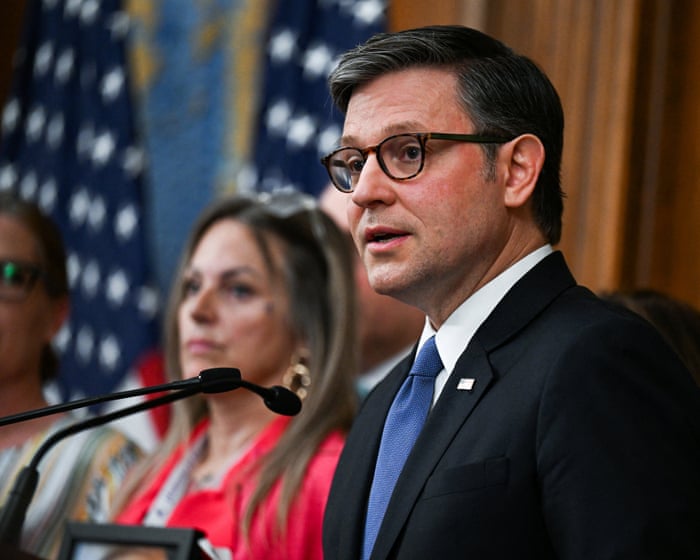
The U.S. House of Representatives did not approve a short-term extension of Section 702 of the Foreign Intelligence Surveillance Act (FISA), which is set to expire on Friday. This section allows the government to conduct certain kinds of foreign surveillance.
Key Facts
The House failed to pass a last-minute short-term extension of Section 702 of FISA.
Section 702 is part of a law that allows government surveillance for national security.
The provision is scheduled to expire on Friday.
The failure to extend the law may affect U.S. intelligence activities.
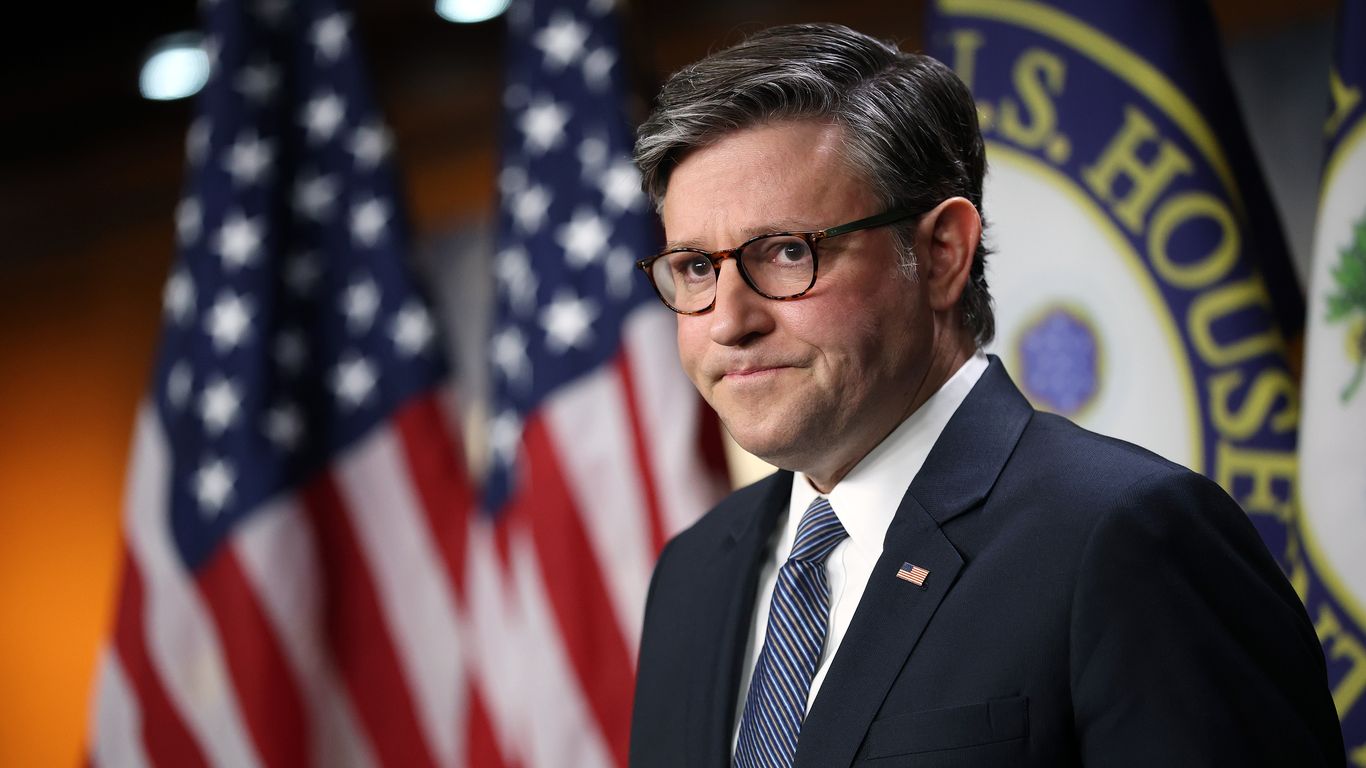
House Speaker Mike Johnson was present as President Donald Trump signed related security legislation the day before.
This is an ongoing story with developments expected soon.
Read the Original
Want the full story? Tap a source to open the original
article.
The article suggests stopping or greatly reducing the practice of drawing political districts to avoid conflicts over redistricting. It argues that minimizing district boundaries could help end ongoing disputes.
Key Facts
Redistricting is the process of drawing political boundaries for elections.
Many disagreements arise from how these districts are drawn.
The article proposes stopping the drawing of districts or drawing fewer districts.
This change aims to reduce political fights over district lines.
The idea focuses on solving ongoing conflicts linked to redistricting.
Read the Original
Want the full story? Tap a source to open the original
article.
The acting head of the CDC said on Wednesday that cuts to U.S. foreign aid under President Trump's administration did not harm the global effort to fight the current Ebola outbreak. Dr. Jay Bhattacharya praised the professionals involved in responding to the outbreak.
Key Facts
Dr. Jay Bhattacharya is the acting director of the CDC.
He spoke on NewsNation’s “Elizabeth Vargas Reports.”
He said there is no proof that USAID aid cuts made the Ebola response worse.
USAID is the United States Agency for International Development, which handles foreign aid.
The Ebola outbreak is ongoing and requires global efforts to control.
Dr. Bhattacharya praised the professionalism and dedication of those working on the Ebola response.
The statement addresses concerns about the impact of budget changes under President Trump’s administration.
Read the Original
Want the full story? Tap a source to open the original
article.
Almost 3,000 patients in England receive care every day in hospital corridors due to a lack of available beds in emergency units. This type of care is considered unsafe and undignified. New NHS England figures show most cases happen in a few trusts, and the health secretary says the government wants to stop this practice.
Key Facts
About 2,241 patients daily spend more than 45 minutes receiving care in corridors in A&E units during May.
An additional 699 patients each day receive care in other unsuitable places like cupboards, toilets, or car parks.
Only 20 NHS Trusts are responsible for more than half of all corridor care cases reported.
Corridor care is defined by lack of privacy, inadequate access to food and water, excessive noise, and poor lighting.
The hospital waiting list increased to 7.22 million in May, with nearly 100,000 people waiting over a year for routine treatment.
The health secretary called corridor care unacceptable and said publishing the data will help target support where it is needed.
Experts warn that current data might not fully capture the scale of corridor care or could be manipulated by some trusts.
NHS leaders emphasize that corridor care has no place in the health system and efforts are underway to eliminate it.
Read the Original
Want the full story? Tap a source to open the original
article.
Federal agencies and the Ultimate Fighting Championship (UFC) are spending at least $60 million to organize a cage fighting event at the White House. The event will happen on the White House South Lawn on Sunday, which is President Trump’s birthday.
Key Facts
The event is a UFC cage fight taking place at the White House.
It will be held on the South Lawn of the White House.
The event costs at least $60 million to organize.
Federal agencies have contributed to the spending.
Money is being used to build the octagon fighting arena.
Funds also cover food purchasing and delivery for the event.
The event date coincides with President Trump’s birthday.
Read the Original
Want the full story? Tap a source to open the original
article.
Defense Secretary Pete Hegseth responded to a reporter’s question about whether a U.S. attack on Iran’s civilian infrastructure would be a war crime. He criticized the question and defended the professionalism of U.S. military personnel.
Key Facts
Defense Secretary Pete Hegseth addressed a question about a possible U.S. strike on Iran’s civilian infrastructure.
A reporter asked if such a strike would count as a war crime.
Hegseth called the question "disingenuous," meaning misleading or unfair.
He defended the people on the U.S. side as professional and focused on their duties.
The exchange highlights ongoing tensions around military actions involving Iran.
The article quotes Hegseth but does not provide more details on the U.S. military’s plans.
The discussion relates to legal and ethical concerns about targeting civilian sites in conflicts.
Read the Original
Want the full story? Tap a source to open the original
article.
Graham Platner won the Democratic primary for the U.S. Senate race in Maine. He will face the current Republican Senator Susan Collins in the general election. The overall Senate race is becoming more favorable for Democrats.
Key Facts
Graham Platner secured the Democratic nomination for Maine’s Senate seat.
The general election will feature Platner against Senator Susan Collins, a Republican.
Susan Collins is the current incumbent senator from Maine.
The Senate election map shows more opportunities for Democrats to gain seats.
Winning the Senate would give Democrats control of the upper chamber of Congress.
The political environment is shifting in a way that benefits Democrats’ chances.
Primary wins like Platner’s impact the overall strategy for both parties in the Senate race.
Read the Original
Want the full story? Tap a source to open the original
article.
First Lady Melania Trump and Treasury Secretary Scott Bessent announced new savings and investment accounts for young people in foster care. This is part of the administration’s ongoing "Fostering the Future Together" program to support youth in foster care.
Key Facts
Melania Trump and Scott Bessent made the announcement on a Thursday morning.
The new accounts are designed to help foster youth save and invest money.
This announcement is a part of the "Fostering the Future Together" initiative.
The initiative aims to provide financial support and opportunities to youth in foster care.
The announcement follows the First Lady’s earlier call for lawmakers to pass related legislation.
The effort is part of President Donald Trump’s administration activities.
Read the Original
Want the full story? Tap a source to open the original
article.
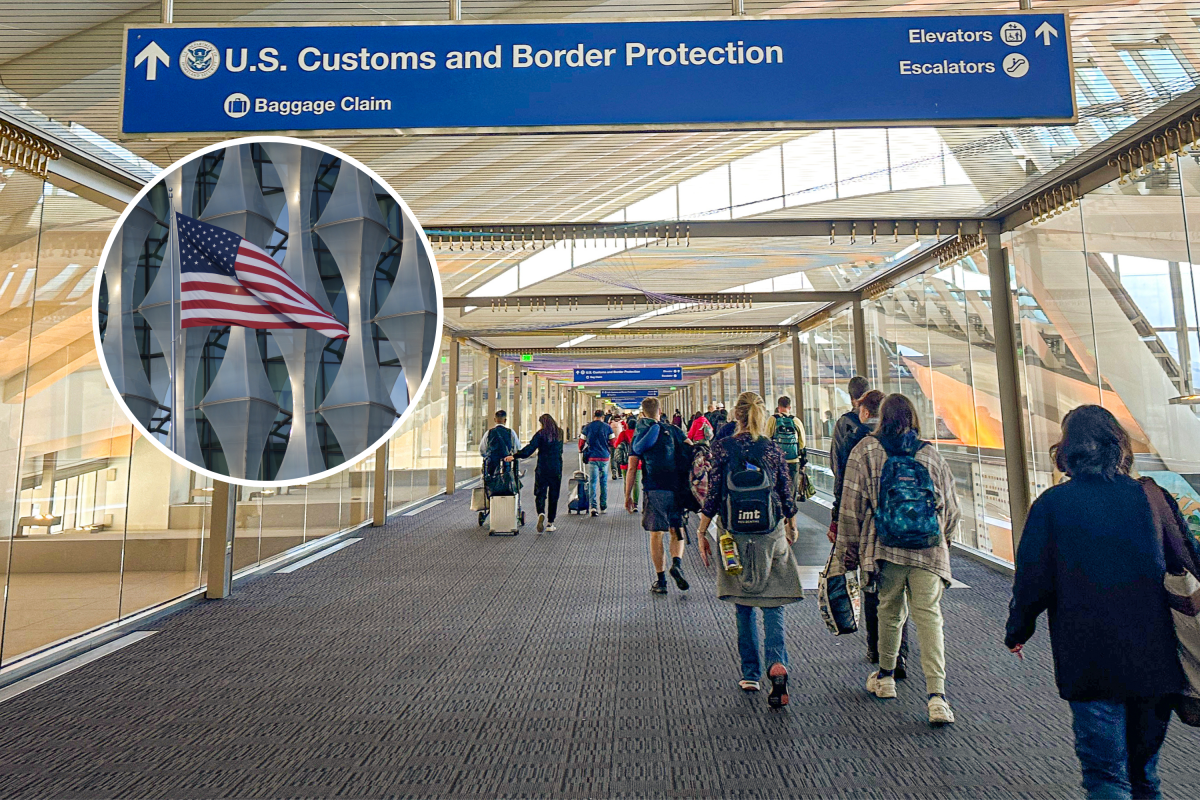
The U.S. State Department has introduced a new $750 fee to let some visa applicants pay for faster interview appointments in a six-month pilot program. This option aims to reduce long delays for tourist visas, but it only speeds up interview scheduling and does not affect visa approval decisions.
Key Facts
The new fee is $750 for expedited interview appointments for B1/B2 tourist visas.
The program runs from July 1 to December 31, 2026.
Applicants must first complete the normal visa application and pay the $185 fee before requesting the faster interview.
Expedited appointments are available only at some U.S. embassies and consulates.
Once a fast-track slot opens, applicants have 5 to 10 minutes to pay the fee; otherwise, the slot goes to someone else.
The fee does not guarantee visa approval or speed up background checks; it only moves the interview sooner.
Total cost for applicants using this option is $935 ($185 standard fee plus $750 expedited fee), and the expedited fee is non-refundable.
This pilot is a response to long wait times, with some countries facing waits of over a year due to high demand.
Read the Original
Want the full story? Tap a source to open the original
article.
The U.S. House of Representatives is expected to vote on a short-term extension of a law called FISA, which allows intelligence gathering abroad. This situation arises because President Donald Trump has not named a permanent intelligence director and continues to support a temporary appointee who lacks experience, causing opposition from Democrats.
Key Facts
FISA stands for the Foreign Intelligence Surveillance Act and enables the U.S. to collect intelligence outside its borders.
President Donald Trump has not appointed a permanent head for the nation's intelligence agencies.
Trump supports Bill Pulte as the temporary director of national intelligence, though Pulte has limited experience in this role.
Democrats oppose renewing Section 702 of FISA unless Trump withdraws Pulte’s appointment and names a permanent director.
The House is expected to vote on a short-term extension of FISA early Thursday.
It is unclear if the House will pass the short-term FISA extension.
The Senate may also vote to extend FISA temporarily to avoid a gap in surveillance authority.
A lapse in FISA could be the first of its kind, affecting U.S. intelligence operations.
Read the Original
Want the full story? Tap a source to open the original
article.
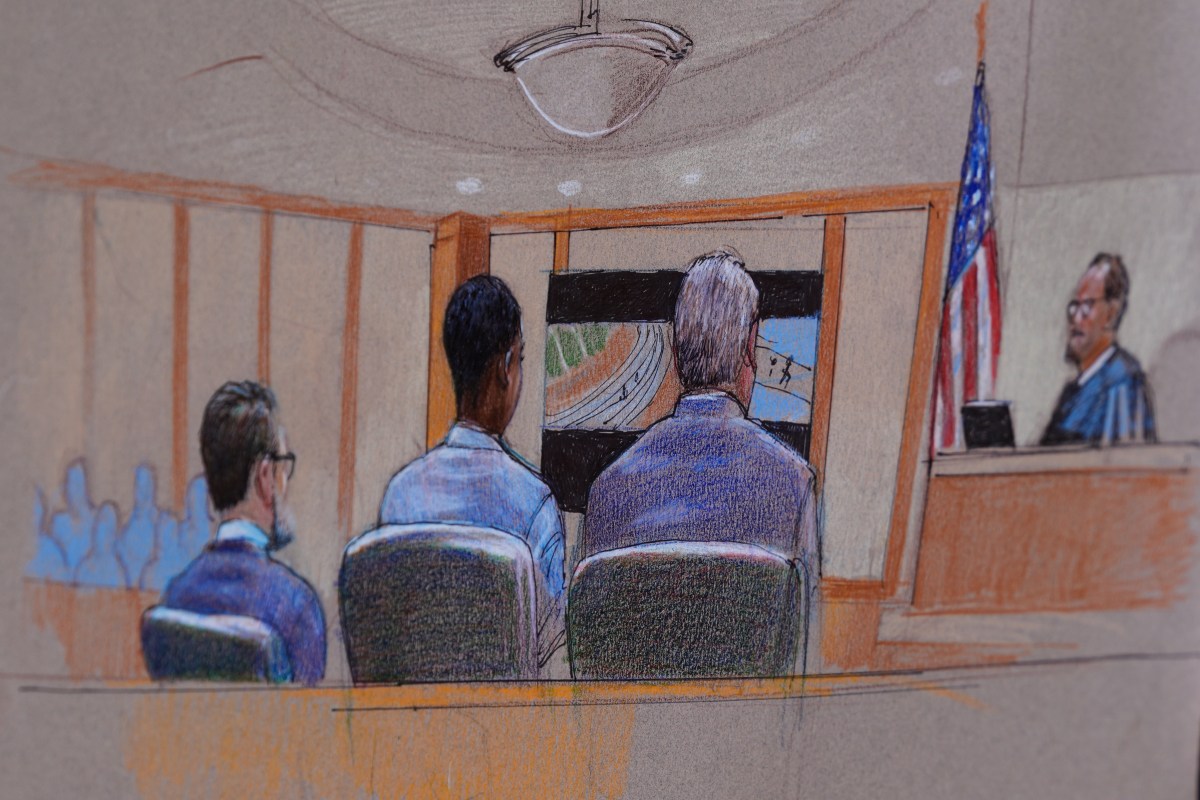
A jury in Collin County, Texas, found Karmelo Anthony guilty of murder for stabbing Austin Metcalf during a high school track meet. Despite a large size difference between the teens, the jury ruled Anthony’s claim of self-defense was not reasonable and sentenced him to 35 years in prison.
Key Facts
Austin Metcalf, 17, was fatally stabbed at a Texas track meet on April 2, 2025.
Karmelo Anthony, 19, stabbed Metcalf once in the chest with a folding knife.
Anthony argued he acted in self-defense, citing a nearly 40-pound weight difference.
Witnesses said Anthony repeatedly warned Metcalf not to touch him and kept his hand in his backpack before the stabbing.
The jury decided the size gap did not justify Anthony’s use of deadly force since Metcalf only pushed him once with little force.
Anthony was charged, tried as an adult, and found guilty of murder.
The jury rejected Anthony’s claim of “sudden passion,” which could have reduced his sentence.
Anthony was sentenced to 35 years in prison.
There were no Black jurors on the panel, a fact noted by advocacy groups but rejected by the district attorney.
Read the Original
Want the full story? Tap a source to open the original
article.
The Center for Medicare and Medicaid Innovation (CMMI) has not succeeded in lowering healthcare costs or improving patient care. A new bill called the Abolish CMMI Act aims to shut down the agency to avoid further use of taxpayer money.
Key Facts
CMMI is a government agency created to test new ways to reduce healthcare costs and improve care.
The agency has not achieved its goals since it started.
The Abolish CMMI Act is a proposed law to end the agency’s work.
Supporters of the bill say CMMI wastes taxpayer dollars.
The debate is part of a larger discussion on healthcare policy in the U.S.
Ending CMMI would affect Medicare and Medicaid programs.
Congress must decide whether to approve the bill.
Read the Original
Want the full story? Tap a source to open the original
article.
The US House of Representatives plans to vote on a short-term extension of a surveillance law called FISA, which lets intelligence agencies monitor foreign communications without a court warrant. Democrats oppose the extension because of President Donald Trump’s appointment of Bill Pulte, a political donor with little security experience, as acting director of national intelligence.
Key Facts
The House will vote on extending section 702 of the Foreign Intelligence Surveillance Act (FISA) before it expires.
Section 702 allows US intelligence agencies to collect foreign communications without a court warrant.
President Trump appointed Bill Pulte, with little national security experience, as acting director of national intelligence.
Democrats say Pulte’s appointment breaks the law requiring extensive security experience for that role.
Democrats are blocking FISA’s extension until there are meaningful reforms to the law.
Republicans seek to pass the extension quickly, needing a two-thirds majority vote, which is unlikely due to Democratic opposition.
The Senate recently failed to pass a longer extension of FISA, with opposition from most Democrats and some Republicans citing civil liberty concerns.
Intelligence committees warned the government to prepare for a possible gap in intelligence collection if the law expires.
Read the Original
Want the full story? Tap a source to open the original
article.
The backlog of asylum appeal cases in the UK has reached a record high, with nearly 87,500 new appeals filed by the end of March 2026. Although the government has reduced the number of asylum cases waiting for an initial decision, the rise in appeals means the overall number of unresolved cases remains high.
Key Facts
Nearly 87,500 asylum appeals were lodged by March 2026, a 70% increase from the previous year.
The number of asylum cases waiting for a first decision dropped from 85,839 in June 2024 to 35,744 by March 2026.
The total backlog of asylum cases, including appeals, was 123,194 in March 2026, higher than the 119,066 cases in June 2024.
The backlog declined from a peak of 141,647 in June 2023 under the previous Conservative government.
The government is working to speed up the appeals process and ensure quick removal of those not allowed to stay.
Labour plans to introduce a new appeals system where independent adjudicators, not judges, will hear appeals.
Official returns of people from the UK stood at 67,188 between July 2024 and March 2026, mostly voluntary rather than enforced deportations.
An enforced deportation is a government action to remove people, usually criminals or those a public threat, while voluntary returns happen without forced removal.
Read the Original
Want the full story? Tap a source to open the original
article.