Fact-first summaries of the news — stay informed, stay grounded.
Your favorite news sources, one calm feed — fact-first summaries that always link to the
original story. No outrage bait, and we tell you when you're caught up. How it works
US News
Latest developments and key stories from across the United States
The Teamsters union leadership is supporting Republican candidates in the 2026 elections even though many union members and local groups back Democrats. This has caused disagreements within the union, with some leaders criticizing the choice to support Republicans.
Key Facts
The Teamsters union has about 1.3 million members.
Sean O’Brien, the Teamsters union president, spoke at the 2024 Republican National Convention, a first for a union president.
Many union members and local groups have supported Democratic candidates, while union leadership supports Republicans.
O’Brien personally donated $1,000 each to two Republican candidates: Scott Brown and Markwayne Mullin.
Teamsters locals in places like New Hampshire and Pennsylvania have endorsed Democrats in races where the national union supports Republicans.
Some union leaders defend supporting Republicans because of their record on labor issues.
The union’s political action committee also backed a Republican candidate, Rob Bresnahan, despite local opposition.
The conflicting endorsements have created tension between union members and leadership.
Read the Original
Want the full story? Tap a source to open the original
article.
The U.S. housing market faced challenges in August with fewer home sales and higher mortgage rates, causing a slowdown. Experts say three key factors to watch in September are whether sellers take their homes off the market, if sellers cut prices more to attract buyers, and how regional differences in the housing market change.
Key Facts
Pending home sales in the U.S. fell 0.2% in August compared to last year, ending an eight-month streak of growth.
Contract signings for home purchases dropped 3.7% year over year in August.
Homes stayed on the market about 60 days in August, roughly the same as last year but slightly longer than July.
Mortgage rates rose from 5.98% in February to 6.66% in August, making borrowing more expensive.
Sellers are reducing asking prices; the median list price was $424,500 in August, down 1% from July and 1.3% from a year ago.
About 20.4% of active home listings had price cuts in August, a slight increase from July.
Sellers are less likely to remove their homes from the market than before, suggesting some acceptance of current conditions.
Regional differences in the housing market may be decreasing, but experts are still watching how this unfolds.
Read the Original
Want the full story? Tap a source to open the original
article.
The U.S. Department of Agriculture announced that starting October 1, 2026, the maximum monthly SNAP benefits will increase for most states to help low-income households buy groceries. However, maximum benefits will decrease for households in Hawaii.
Key Facts
SNAP benefits help low- and no-income households pay for food.
About 37 million people currently receive SNAP benefits in the U.S.
Maximum benefits will increase in the 48 contiguous states and Washington, D.C. starting October 1, 2026.
For example, one-person households will see benefits rise from $298 to $306, and a family of four from $994 to $1,023 per month.
Hawaii will see a decrease in maximum SNAP benefits for all household sizes.
SNAP benefits are based on the USDA’s Thrifty Food Plan, which estimates the cost of low-cost nutritious meals.
Benefits are adjusted based on a household’s income; recipients usually use about 30% of their income for food, and SNAP pays the rest.
Alaska has different SNAP benefit levels depending on whether areas are urban or rural, reflecting different food costs.
Read the Original
Want the full story? Tap a source to open the original
article.
Voters in Independence, Missouri, removed City Councilman John Perkins from office in a special election. This happened because many people opposed a large AI data center project that the council had approved.
Key Facts
About 68% of voters chose to remove Perkins.
Perkins is the third local official to be voted out after supporting the AI data center project.
The data center, called Nebius, is a multibillion-dollar project approved in March.
The project includes billions of dollars in tax incentives to attract investment.
Supporters say the project will help the local economy grow.
Critics say residents’ worries were ignored and the tax deals were too generous.
Two other council members who supported the project were removed in April.
Now, three of the five council members who supported the development are no longer in office.
Read the Original
Want the full story? Tap a source to open the original
article.
A Utah judge ruled that Tyler Robinson can stand trial for the capital murder of conservative activist Charlie Kirk. Robinson is accused of shooting Kirk with a rifle during an outdoor rally, and prosecutors plan to seek the death penalty.
Key Facts
Judge Tony Graf decided Tyler Robinson can face trial for capital murder.
Robinson is accused of shooting Charlie Kirk at an outdoor rally at Utah Valley University on September 10, 2025.
The alleged shooting occurred from a rooftop about 415 feet away from Kirk.
Prosecutors say there is strong evidence, including video and DNA, linking Robinson to the crime.
Robinson faces multiple charges, including aggravated murder and weapon discharge causing serious injury.
Prosecutors will seek the death penalty due to the risk posed to others during the shooting.
The Kirk family released a statement expressing gratitude and a commitment to justice.
Robinson pleaded not guilty to all charges in court.
Read the Original
Want the full story? Tap a source to open the original
article.
The Equal Employment Opportunity Commission (EEOC) plans to stop collecting data on the racial, ethnic, and gender makeup of employees at companies. This data has helped enforce workplace anti-discrimination laws for 60 years by identifying patterns of bias in hiring and promotions.
Key Facts
The EEOC has collected demographic data since the Civil Rights Act of 1964 to spot possible workplace discrimination.
The data includes employee information by race, ethnicity, sex, and job level.
The Trump administration proposed ending this data collection as part of a broader effort against diversity and inclusion policies.
The EEOC now focuses more on discrimination claims by white men and less on cases involving transgender workers.
EEOC staffing is at its lowest in 45 years, making data important for prioritizing investigations.
Critics warn that without this data, it will be harder to find and prove discrimination in workplaces.
EEOC commissioner Andrea Lucas, appointed by President Trump, called the data collection unconstitutional and burdensome.
The EEOC is expected to approve ending the data collection soon.
Read the Original
Want the full story? Tap a source to open the original
article.
Milo Yiannopoulos, a British-born right-wing media figure, was arrested by ICE in Louisiana and deported from the US in 2026. Once influential in conservative media and linked to the rise of President Trump, Yiannopoulos had lost support and was pushed out by other far-right figures aligned with the current administration.
Key Facts
Milo Yiannopoulos was an editor at Breitbart News from 2014 to 2017.
He gained fame by creating controversial online content to provoke strong reactions.
Yiannopoulos was banned from several social media platforms for his remarks.
He resigned from Breitbart and lost a book deal after making controversial statements about child abuse.
Over time, many other right-wing influencers surpassed him in influence.
Yiannopoulos was arrested by ICE in Louisiana and deported in 2026.
Some far-right figures close to President Trump claimed responsibility for reporting him to authorities.
Supporters of the MAGA movement no longer saw Yiannopoulos as part of their core group.
Read the Original
Want the full story? Tap a source to open the original
article.
Republican lawmakers are delaying major decisions like government funding, war money for Iran, and surveillance laws until after the November election. This postponement will lead to a large and complex agenda in the lame-duck session that will be hard to finish before Christmas.
Key Facts
GOP lawmakers are postponing important issues until after the November election.
Key issues delayed include government funding, war funding related to Iran, and surveillance law extensions.
The House recently passed a bill to fund the government.
The delayed work will create a busy lame-duck session after the election.
The lame-duck session is the period between the election and the start of the new Congress.
Lawmakers will face challenges completing all pending business before Christmas.
These delays push difficult budget and policy fights into a shorter time frame.
Read the Original
Want the full story? Tap a source to open the original
article.
President Donald Trump is focusing on lowering costs to attract voters ahead of the midterm elections. He met with oil and gas companies at the White House as oil prices rose.
Key Facts
President Trump is working to address voter concerns about high prices and economic worries.
The midterm elections are about nine weeks away.
Oil prices have recently increased.
Trump held talks with oil and gas retailers and refineries at the White House.
The goal is to find ways to reduce costs and improve affordability for voters.
Economic uncertainty remains a key issue for many people.
Read the Original
Want the full story? Tap a source to open the original
article.
Rising concerns about U.S. government debt are causing more unstable conditions in the bond market. This creates additional challenges for President Trump and the Republican Party as they prepare for the upcoming midterm elections.
Key Facts
Bond market turbulence is increasing due to worries about government debt.
The yield on the 10-year U.S. Treasury note reached its highest level since January 2025.
Higher bond yields generally mean government borrowing costs go up.
The market situation could affect voter opinions before the midterm elections.
President Trump and the GOP face added difficulties because of this economic uncertainty.
The bond market’s instability reflects broader concerns about the U.S. economy.
Midterm elections are scheduled for later this year and will influence control of Congress.
Economic issues often play a role in election outcomes.
Read the Original
Want the full story? Tap a source to open the original
article.
California Governor Gavin Newsom is starting a four-day visit to Southern states but will not visit Georgia. Georgia is important because Senator Jon Ossoff is running for reelection in a key Senate race this November.
Key Facts
Governor Gavin Newsom is touring Southern states for four days.
Georgia is not included in Newsom’s travel plans.
Georgia has an important Senate election in November.
Senator Jon Ossoff is the Democratic candidate trying to win reelection.
The election in Georgia is seen as critical for control of the Senate.
Newsom’s visit comes during the midterm election season.
Read the Original
Want the full story? Tap a source to open the original
article.
As the main primary elections end, experts believe that the Democrats will likely gain control of the U.S. House of Representatives, replacing the current narrow Republican majority. This shift may make a third impeachment of President Donald Trump more likely, but the form or details of such impeachment are not yet clear.
Key Facts
The primary election season is ending, leading into the general election.
Experts, including Nate Silver’s team, predict an 86% chance that Democrats will take control of the House.
Republicans currently hold a very slim majority in the House.
A change in House control could impact efforts to impeach President Donald Trump.
The possibility of a third impeachment is being discussed but the exact nature is uncertain.
The article focuses on U.S. politics and upcoming election consequences.
The general election will decide which party controls the House.
Control of the House affects oversight and legislative power over the President.
Read the Original
Want the full story? Tap a source to open the original
article.
Senator Ed Markey won the Massachusetts Democratic Senate primary with about two-thirds of the vote, defeating Seth Moulton. The campaign included strong debate over transgender athletes in women’s sports, an issue where many Massachusetts voters disagreed with Markey’s position but did not prioritize it over other concerns.
Key Facts
Ed Markey, age 80, won the Democratic Senate primary in Massachusetts on September 1.
Markey focused on transgender athletes competing in women’s sports as a key campaign issue against Seth Moulton.
Moulton expressed concerns about fairness in sports but later supported transgender rights bills and apologized for causing hurt.
Polls show nearly two-thirds of Massachusetts residents believe transgender female athletes should not compete in women’s sports.
Democratic voters were divided on this issue, with about half supporting transgender athletes' participation.
Most Massachusetts voters see the cost of living as a more important issue than transgender athletes in sports.
Historically, Massachusetts voters have supported broader transgender and LGBTQ protections.
The debate over transgender athletes is a culture war issue but did not appear to be decisive in the primary or expected to matter in the general election.
Read the Original
Want the full story? Tap a source to open the original
article.
The Trump administration is moving forward with plans to build more border wall and security barriers along the southern U.S. border, despite opposition from local Texas counties. Officials told local leaders there will be no negotiation on the construction, which will affect public lands and private property, while some legal actions have temporarily paused parts of the work.
Key Facts
President Donald Trump’s team is planning to build hundreds of miles of a 30-foot steel border wall in Texas counties.
Local officials from border counties, including judges and sheriffs, were told wall construction is non-negotiable.
Private landowners and business owners impacted by the construction were not invited to the government meetings.
A federal judge issued a temporary order stopping construction on about 600 miles of the border until the end of the month.
Only about 20-31% of landowners in some Texas counties have agreed to give land access to the government for construction.
The government may use eminent domain, a legal process to take private land, if landowners refuse to cooperate.
Officials said they are exploring technology solutions to reduce illegal border crossings in remote areas.
Some construction, like patrol roads and vehicle barriers in national parks, is causing concern among locals about environmental and tourism impacts.
Read the Original
Want the full story? Tap a source to open the original
article.
The Trump administration attended the G20 Innovation Summit to show U.S. leadership in artificial intelligence (AI), but there are tensions between the Commerce Department and the White House's tech policy office on AI strategy. The U.S. promotes a lighter regulatory approach on AI compared to the European Union, but internal disagreements affect how the government presents its AI policies internationally.
Key Facts
The G20 Innovation Summit included top tech leaders and officials from powerful countries discussing AI.
The White House’s Office of Science and Technology Policy (OSTP) and the Commerce Department disagree on AI policy direction.
OSTP focuses on policy ideas but lacks regulatory power, while Commerce controls key AI regulations.
White House Director Michael Kratsios supports flexible policies that encourage private AI investment.
Commerce Secretary Howard Lutnick emphasized the importance of in-person participation from AI industry leaders at the summit.
Elon Musk, Google DeepMind chairman, Meta CEO, OpenAI CEO, and other tech leaders participated virtually or in person.
There was a miscommunication about discussing data centers, a sensitive topic linked to President Trump’s social media post and local politics.
The U.S. wants other countries to delay strict AI rules while it works on its own AI oversight plans.
Read the Original
Want the full story? Tap a source to open the original
article.
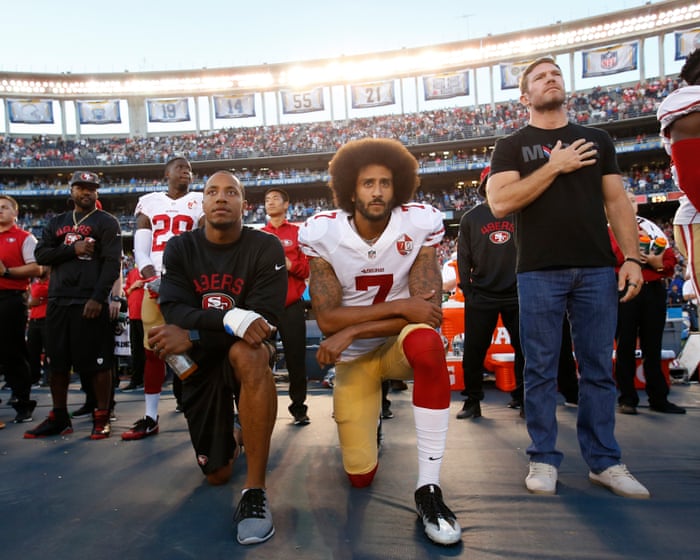
Nate Boyer, a former NFL player and Army Green Beret, planned a tour to support veterans and players but lost funding after a sponsoring company cut ties due to his past meeting with Colin Kaepernick. Boyer initially misunderstood Kaepernick’s anthem protest but later came to understand it as a protest against racial injustice, supporting the right to free speech despite personal feelings.
Key Facts
Nate Boyer is a former NFL long snapper and U.S. Army Green Beret.
He founded MVP (Merging Vets and Players) to help veterans and NFL players transition after their careers end.
A company sponsoring MVP’s planned college football tour withdrew support after discovering Boyer had met Colin Kaepernick.
Kaepernick began protesting during the national anthem in 2016 to highlight racial injustice and police violence.
Boyer initially thought Kaepernick was disrespecting the American flag but later listened to his full explanation.
Kaepernick said he would not stand for a flag representing oppression of Black people and people of color.
Boyer sees Kaepernick’s protest as an important free speech issue and a chance for social discussion.
Boyer was disappointed that the protest caused division instead of unity.
Read the Original
Want the full story? Tap a source to open the original
article.
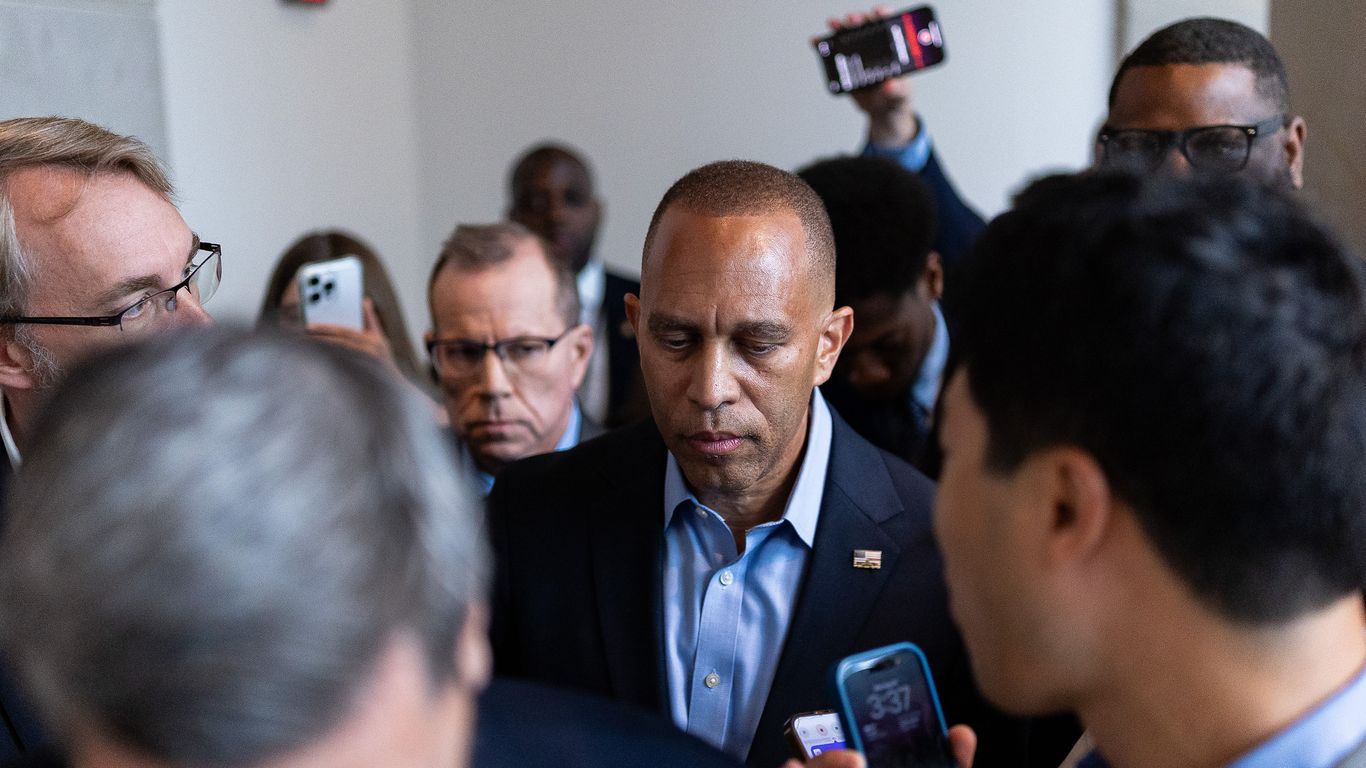
Two moderate House Democrats, Jared Golden and Marie Gluesenkamp Perez, voted with Republicans on a procedural rule that helped advance certain bills. Democratic leaders are upset and considering punishing them for breaking party rules and trust.
Key Facts
Golden and Gluesenkamp Perez voted with Republicans to pass a procedural rule that sets debate terms on a package of bills.
Procedural votes usually follow strict party lines, making their votes unusual.
The bills included a Republican resolution denouncing socialism and praising the GOP's SAVE America Act.
House Minority Leader Hakeem Jeffries and other Democratic leaders announced plans for a formal response.
Golden defended his vote by pointing to a bill he co-authored protecting lobstermen from federal whale regulations included in the rule.
Some Democrats want to strip Golden and Gluesenkamp Perez of committee assignments as punishment.
Golden is retiring at the end of his term; Gluesenkamp Perez is running for reelection in a Republican-leaning district.
Democrats say the vote undermined party unity ahead of the upcoming November midterm elections.
Read the Original
Want the full story? Tap a source to open the original
article.
The Pentagon is going through a major leadership crisis while also facing challenges in military readiness during the Iran war. Pete Hegseth has removed many senior military leaders, leaving key positions vacant and causing concerns about the U.S. military’s ability to handle ongoing and future threats.
Key Facts
Pete Hegseth controls the Pentagon amid the Iran war, overseeing fewer senior leaders and less military equipment than before.
Army Secretary Dan Driscoll resigned after conflicts with Hegseth, leaving the Army without full civilian or military leadership.
Hegseth has fired or forced out more than two dozen top military officers, remaking much of the Joint Chiefs of Staff.
He has personally blocked the promotion of at least 45 officers this year, including many Black, Hispanic, and female officers.
Senior commanders warned that prolonged deployments to the Iran war are harming U.S. military readiness in other regions.
The Navy reported that only about 25% of its destroyers are ready to deploy, with key ships diverted to the Middle East.
Patriot missile supplies are heavily used in the Iran war, reducing availability for NATO and potential conflicts with China.
The Pentagon has not held a press briefing for almost four months and limited public access, despite earlier promises of transparency.
Read the Original
Want the full story? Tap a source to open the original
article.
Executions in the United States have increased recently, especially in Florida, which has led the country with many executions in 2025 and 2026. President Donald Trump supported the use of the death penalty during his administration, while the current administration has paused federal executions.
Key Facts
Florida executed its 14th prisoner in 2025, continuing a recent rise in executions after the COVID-19 pandemic.
In 2025, 47 people were executed in the U.S., with 19 of them in Florida.
In 2026, 24 executions have happened so far, with 10 more planned.
Florida Governor Ron DeSantis has signed many death warrants, leading to a level of executions not seen in decades.
President Trump issued an order encouraging more use of the death penalty and ensuring states have lethal injection drugs.
The Biden administration put a stop (moratorium) to federal executions and reduced sentences for many on federal death row.
The number of death sentences given by courts is decreasing, with more juries choosing life sentences instead of death.
Public opinion is mixed: Gallup shows support for the death penalty is at its lowest since 1972, while Pew Research finds 66% support it for murder convictions but most doubt its effect as a crime stopper.
Read the Original
Want the full story? Tap a source to open the original
article.
A recent Gallup poll shows that 20% of American adults want to leave the U.S. if they could, with nearly 40% of women aged 15 to 44 feeling this way. However, very few Americans actually leave, as shown by under 5,000 citizenship renunciations in 2024, compared to millions living abroad.
Key Facts
20% of American adults say they would like to leave the U.S. if able.
Among women aged 15 to 44, the desire to leave is nearly 40%.
The number of people wanting to leave the U.S. has tripled over the past decade.
Less than 5,000 Americans renounced their citizenship in 2024.
Over 5 million American citizens currently live abroad.
Wealth and resources affect people’s ability to leave the U.S.
The desire to leave the U.S. is higher than in many other parts of the world.
Public complaints about the U.S. often do not lead to actually moving away.
Read the Original
Want the full story? Tap a source to open the original
article.