Neutral summaries of your favorite news sources — just the facts.
Your favorite news sources, one neutral feed — we distill their reporting into fact-first
summaries and always link to the original story. How it works
US News
Latest developments and key stories from across the United States
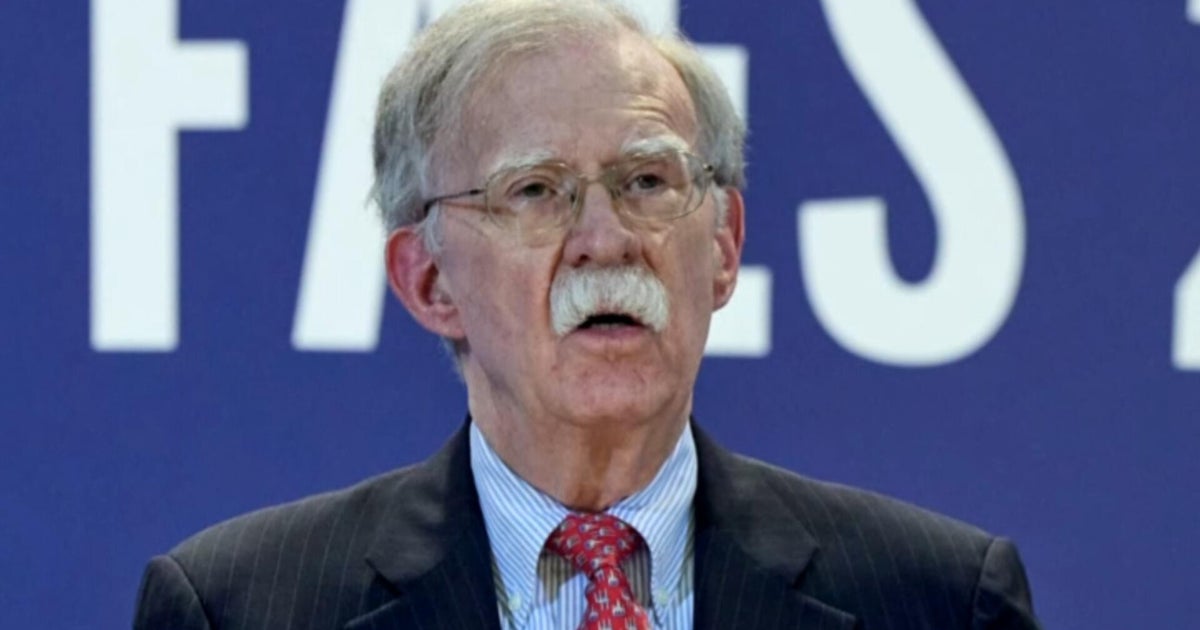
President Donald Trump's former national security adviser, John Bolton, plans to plead guilty to keeping classified national security documents. As part of his agreement, Bolton will pay more than $2 million in fines.
Key Facts
John Bolton served as President Trump's national security adviser.
He is accused of retaining classified national security information.
Bolton plans to plead guilty to one count related to this charge.
He has agreed to pay over $2 million in fines as part of a plea deal.
Bolton was once an ally of President Trump but later became a critic.
The information comes from sources reported by CBS News.
Read the Original
Want the full story? Tap a source to open the original
article.
Senate Republicans narrowly defeated a Democratic effort to block a $1.8 billion fund that President Donald Trump plans to use to pay his allies. The vote was 50-49, with three Republicans joining all Democrats to support the block. The fund relates to payments connected to the January 6 event and has caused some conflict within the Republican Party.
Key Facts
Senate Democrats tried to stop President Trump from creating a $1.8 billion payout fund for his allies.
The amendment to block the fund failed by one vote: 50 against, 49 in favor.
Three Republican senators opposed their party and joined Democrats to support the block.
The fund could be used to pay people connected to the January 6 insurrection.
Senator Chuck Schumer wants a law to stop the fund from being spent ever.
Acting US Attorney General Todd Blanche said the government would not move forward with the fund at this time.
The fund has caused disagreements among Senate Republicans and made negotiations on immigration funding more difficult.
The issue is likely to come up again in Congress before the end of President Trump’s term.
Read the Original
Want the full story? Tap a source to open the original
article.
US officials are working to stop an outbreak of flesh-eating screwworm flies, which were found in the US for the first time since 1966. Their plan includes releasing millions of sterile flies, setting up a quarantine zone near the Texas-Mexico border, and using sniffer dogs to detect the insects.
Key Facts
A screwworm infestation was detected in a calf in La Pryor, Texas, near the Mexico border.
Screwworm larvae hatch from eggs laid in open wounds and eat living flesh, which can kill animals if untreated.
Officials set up a 20-kilometer control zone with quarantines and movement restrictions.
The plan uses sterile insect technique: releasing sterile male flies that mate but produce no offspring.
US and Mexico can currently produce 100 million sterile flies per week, but about 600 million per week are needed.
Since February, around 8 million sterile flies have been released weekly by ground and air.
The risk to humans is low, but cattle ranchers fear heavy damage to beef markets.
Similar sterile fly releases helped control screwworms in Central America in the past.
Read the Original
Want the full story? Tap a source to open the original
article.
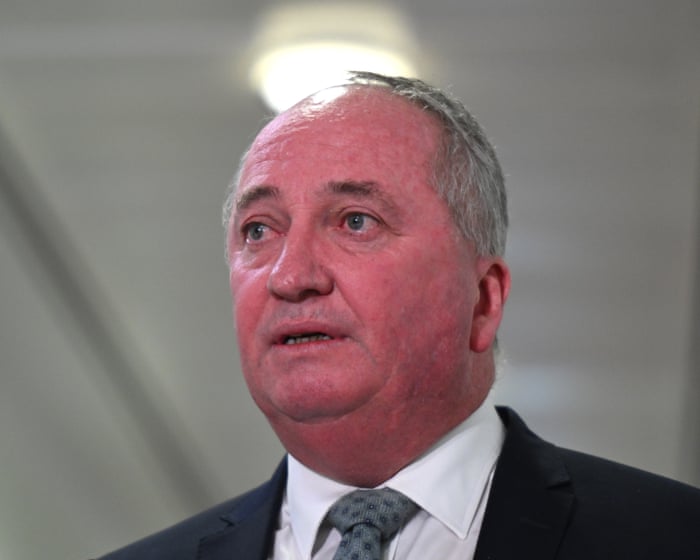
Barnaby Joyce initially said One Nation’s policy would force permanent residents to either become Australian citizens or sell their homes. He later corrected this, clarifying permanent residents would not have to sell their houses, while the policy targets foreign owners who are not permanent residents.
Key Facts
Barnaby Joyce first stated permanent residents must become citizens or risk losing their homes under One Nation’s policy.
The policy aims to stop foreign ownership of Australian housing by non-residents and non-citizens.
One Nation leader Pauline Hanson clarified permanent residents can own homes, but temporary visa holders and overseas foreign owners must sell properties within two years.
After discussion, Joyce changed his position and said permanent residents will not be forced to sell their homes.
The policy requires foreign citizens who are not permanent residents to sell their Australian residential properties.
The policy is still being developed and may change as it moves forward.
Hanson supports transparency and wants clear rules on property ownership to protect Australian buyers.
Read the Original
Want the full story? Tap a source to open the original
article.
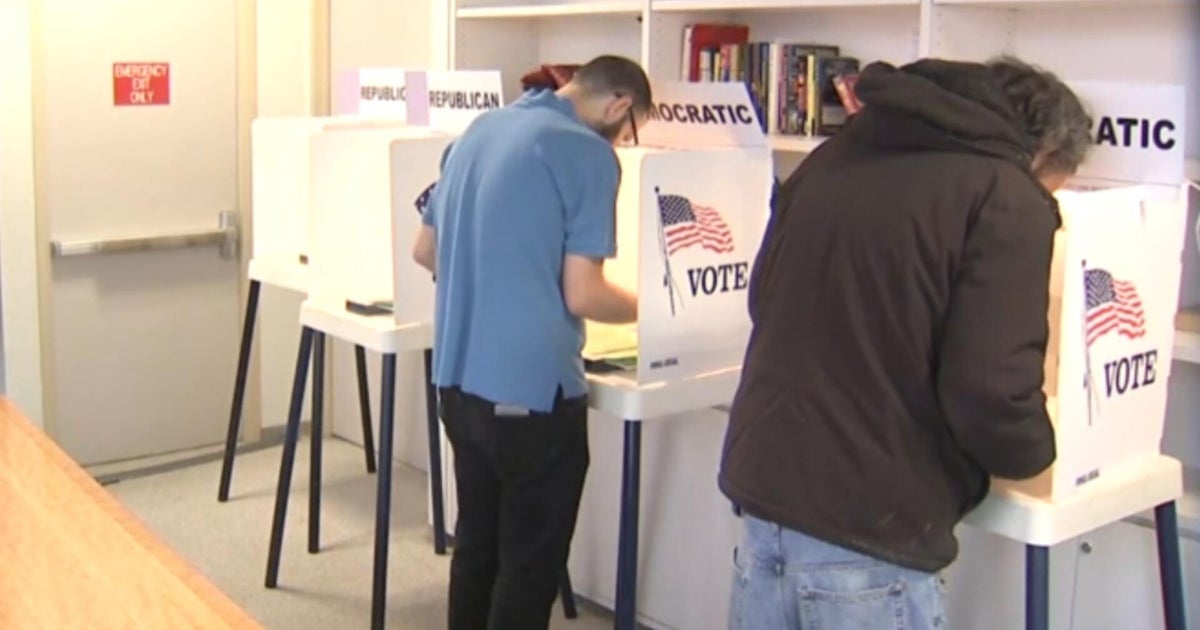
California is still counting votes in its primary elections, which is taking longer than usual. President Donald Trump criticized the state, saying the primary results are rigged, especially concerning mail-in ballots.
Key Facts
California’s primary vote count is still ongoing days after election day.
The delay is happening in several important races across the state.
President Donald Trump accused California of manipulating the election results.
Trump has repeatedly expressed concerns about mail-in voting in past elections.
Mail-in ballots take longer to process because they are verified and counted carefully.
Election officials say counting all votes thoroughly is necessary to ensure accuracy.
California uses mail-in ballots extensively, which can slow down final results.
CBS News is providing updates and analysis on the ongoing vote count.
Read the Original
Want the full story? Tap a source to open the original
article.
The House of Representatives passed a bill to provide over $1 billion in aid to Ukraine and impose sanctions on parts of the Russian economy, despite opposition from Republican leaders. This vote marks the second recent break from President Trump’s foreign policy approach and reflects growing impatience in Congress over the handling of foreign conflicts.
Key Facts
The House voted 226-195 to pass a bill aiding Ukraine with more than $1 billion for security and rebuilding efforts.
The bill also allows for an additional $8 billion in loans to support Ukraine’s defense.
Most Republicans opposed the legislation, viewing it as opposing President Trump’s approach.
The bill passed using a discharge petition, which lets the majority bypass leadership to bring a vote.
This is the second major foreign policy move this week contrasting with President Trump’s stance; the House also approved a resolution to limit U.S. military action against Iran.
Supporters say the bill helps Ukraine negotiate from strength and counters Russian aggression.
Some Republicans, like Don Bacon, supported the bill, calling it a choice between good and evil.
The Senate is unlikely to approve the bill unless endorsed by President Trump, making its final passage uncertain.
The U.S. has provided about $195 billion for Ukraine and related military support so far.
Read the Original
Want the full story? Tap a source to open the original
article.
President Donald Trump plans to nominate Todd Blanche as the permanent attorney general. The Senate is conducting a "vote-a-rama," a fast series of votes on various matters.
Key Facts
President Trump is expected to nominate Todd Blanche as the permanent attorney general.
The attorney general leads the U.S. Department of Justice.
The Senate is holding a "vote-a-rama," which means they are quickly voting on many items.
This news was reported by CBS News during their program "The Takeout with Major Garrett."
The article focuses on U.S. political events involving the government and Senate activities.
Read the Original
Want the full story? Tap a source to open the original
article.
The U.S. House of Representatives passed a bill to send nearly $2 billion in aid to Ukraine and add new sanctions on Russia. Some Republicans joined Democrats to approve the bill, despite opposition from GOP leaders, and the measure now goes to the Senate.
Key Facts
The House voted 226 to 195 to pass the Ukraine aid and Russia sanctions bill.
Eighteen Republicans supported the bill, while most Democrats voted for it; one Democrat opposed it.
The bill includes $1.8 billion in aid for Ukraine and new sanctions targeting Russia’s oil, gas, and financial sectors.
It removes a sanctions waiver that President Donald Trump allowed earlier.
The bill’s passage was forced by a discharge petition, which is a rare tool to bypass party leadership.
The bill now faces a difficult Senate vote, needing 60 votes to pass.
President Donald Trump has vetoed only two measures this term so far.
The White House has not commented on this specific bill yet.
Read the Original
Want the full story? Tap a source to open the original
article.
The U.S. House of Representatives approved a bill to give more than $1 billion in aid to Ukraine and add new sanctions on parts of the Russian economy. The bill also offers $8 billion in defense loans to Ukraine and shows a difference in approach from President Donald Trump’s policies.
Key Facts
The House voted 226-195 to pass the Ukraine aid and sanctions bill.
The law provides over $1 billion for Ukraine’s security and rebuilding efforts.
It includes $8 billion in loans to support Ukraine’s defense.
The bill imposes new sanctions on important parts of Russia’s economy.
The legislation was sponsored by Representative Gregory Meeks from New York.
Some Republican leaders opposed the bill, fearing it might hurt ongoing negotiations.
This vote shows the House acting differently from President Trump on foreign policy.
The day before, the House also passed a resolution to limit U.S. military action against Iran for the first time.
Read the Original
Want the full story? Tap a source to open the original
article.
The article explains who makes the rules for U.S. elections. It highlights ongoing efforts at both state and federal levels to change election rules as voters participate in primary elections.
Key Facts
Election rules in the U.S. are set by a mix of state and federal authorities.
States have a lot of power to decide how elections are run within their borders.
The federal government can set some national guidelines for elections.
Changes to election rules can affect how people vote and how votes are counted.
Primary elections are currently happening where voters choose candidates for the general election.
Legal experts are discussing the impact of these election rules and changes.
Read the Original
Want the full story? Tap a source to open the original
article.
The U.S. House of Representatives approved a bill to provide new military and reconstruction aid to Ukraine, with support from most Democrats and some Republicans. The bill authorizes up to $8 billion in loans and sanctions against Russia but still needs approval from the Senate.
Key Facts
The House used a discharge petition to force a vote on Ukraine aid.
Rep. Gregory Meeks led the effort; the petition took almost a year to gain enough signatures.
The bill passed with a vote of 226 to 195 in the House.
It allows up to $8 billion in military loans and funds for Ukraine’s rebuilding.
The bill adds new sanctions against Russia and supports NATO.
Some Republicans joined Democrats to pass the bill, despite party leadership resistance.
Ukrainian President Zelenskyy has requested more U.S. defense weapons, including missile interceptors.
The bill’s future approval in the Senate is uncertain.
Read the Original
Want the full story? Tap a source to open the original
article.
Some Republican governors in the United States have given June different names instead of Pride Month. They use titles like Nuclear Family Month and Strong Families Month to emphasize traditional family ideas.
Key Facts
June is usually known as Pride Month, celebrating LGBTQ+ communities.
Governors of Indiana and Tennessee called June Nuclear Family Month.
Nuclear Family Month focuses on families with one husband, one wife, and their children.
Alabama's governor named June Strong Families Month.
Alabama's proclamation highlights fathers as "head of the household."
These alternative names align with traditional views of family and parenting.
The alternative names are seen as responses to or replacements for Pride Month.
Read the Original
Want the full story? Tap a source to open the original
article.
The Republican-controlled House approved a bill to provide military aid to Ukraine and impose sanctions on Russia. Eighteen Republicans and one Independent joined Democrats to pass the bill, showing some disagreement with President Trump’s foreign policy.
Key Facts
The House of Representatives is controlled by the Republican Party.
A bill was passed to give military help to Ukraine.
The bill also includes penalties against Russia. These penalties are called sanctions.
Eighteen Republicans voted for the bill, even though President Trump opposes it.
One Independent Representative from California, Kevin Kiley, also voted for the bill.
The bill had strong support from Democrats.
The vote shows some division within the Republican Party on foreign policy.
The bill’s passage is mostly symbolic but sends a message about U.S. support for Ukraine.
Read the Original
Want the full story? Tap a source to open the original
article.
President Donald Trump plans to attend at least one NBA Finals game at Madison Square Garden next week after being invited by New York Knicks owner James Dolan. The NBA said this would make Trump the first sitting president to attend an NBA Finals game.
Key Facts
President Trump is a longtime fan of the New York Knicks and Knicks owner James Dolan.
Trump plans to attend Game 3 on Monday and possibly Game 4 on Wednesday of the NBA Finals.
The Knicks currently lead the series 1-0 after beating the San Antonio Spurs in Game 1.
NBA Commissioner Adam Silver said some former presidents attended NBA Finals but no current president has before Trump.
Silver noted Trump attended Knicks games and NBA drafts before his political career.
Trump praised the Knicks’ defense against Spurs star Victor Wembanyama.
Trump’s attendance will require extra security, affecting fans’ transit and logistics.
New York City Mayor Zohran Mamdani also plans to attend the game but in a different section and will buy his own ticket.
Read the Original
Want the full story? Tap a source to open the original
article.
The National Capital Planning Commission (NCPC), led by appointees of President Donald Trump, voted to address concerns about Trump's proposed 250-foot "triumphal arch" near Arlington National Cemetery. The commission asked for more information and changes before giving final approval, following public criticism and staff recommendations.
Key Facts
The NCPC is responsible for federal government planning in Washington, D.C., and parts of Virginia and Maryland.
President Trump's appointees lead the commission, but staff members raised concerns about the arch project.
The commission did not fully approve the arch but asked the administration to provide additional details, like more visual illustrations from different views.
Nearly 1,700 public comments were submitted about the arch, with most opposing the project.
Critics said the arch is a vanity project and inconsistent with American values and that it could block views of Arlington National Cemetery.
Veterans and relatives of those buried in Arlington expressed worries about respect for the cemetery and how the arch would stand the test of time.
The commission's chair, Will Scharf, urged respectful discussion and said final approval will be considered at a later meeting.
President Trump thanked the commission on social media, but the commission clarified they had not given final approval yet.
Read the Original
Want the full story? Tap a source to open the original
article.
President Donald Trump announced a rally in Washington, D.C., to celebrate America's 250th birthday. This event will take place on the National Mall after some artists canceled their participation in the planned “Great American State Fair.”
Key Facts
President Trump announced a rally in Washington, D.C.
The rally is to celebrate the 250th anniversary of the United States.
The event will happen on the National Mall, a major public space in Washington, D.C.
Several artists previously scheduled to perform at the “Great American State Fair” had dropped out.
President Trump criticized some artists for charging high fees without delivering quality entertainment.
The rally aims to replace or supplement the initial planned musical performances for the celebration.
The “Great American State Fair” is part of the larger 250th birthday plans for the country.
Read the Original
Want the full story? Tap a source to open the original
article.
President Donald Trump announced a $700 million investment to revive the US coal industry. He will use the Defense Production Act, a law that lets the president support key industries during emergencies, to fund the project and create new coal plants and export facilities.
Key Facts
The investment totals $700 million to support the coal industry.
President Trump invoked the Defense Production Act to help finance the project.
$500 million will be used to protect 14 existing coal plants and build a new export terminal in California.
$200 million will fund two new coal plants in Alaska and West Virginia, the first new plants in the US since 2013.
The new coal export terminal in Oakland, California, is expected to create more than 1,400 jobs.
The total investment is expected to support around 14,000 jobs across several states.
The coal plants receiving support are located in Kentucky, North Carolina, Indiana, Tennessee, Arkansas, Arizona, Oklahoma, North Dakota, Wisconsin, and West Virginia.
Rising energy prices, partly due to the war with Iran and the closure of the Strait of Hormuz, prompted the need for this investment.
Read the Original
Want the full story? Tap a source to open the original
article.
A Colorado court reversed the homicide convictions of two paramedics involved in the 2019 death of Elijah McClain, who died after being restrained by police and given ketamine. The court ordered new trials for paramedics Jeremy Cooper and Peter Cichuniec due to errors in jury instructions, while upholding Cichuniec’s assault conviction.
Key Facts
Elijah McClain died in 2019 after police restrained him and paramedics injected him with ketamine.
The case drew attention during the 2020 social justice protests following George Floyd’s death.
Paramedics Jeremy Cooper and Peter Cichuniec were convicted in 2023 of criminally negligent homicide; Cichuniec was also convicted of felony assault.
The appeals court found mistakes in jury instructions on the homicide charges and ordered new trials for those counts.
The assault conviction against Cichuniec was upheld.
Cichuniec was released early from prison in 2024 and sentenced to probation.
Colorado Attorney General Phil Weiser plans to appeal the court’s decision to overturn the homicide convictions.
The International Association of Fire Fighters supports the paramedics, highlighting the difficulty of making quick medical decisions in police custody situations.
Read the Original
Want the full story? Tap a source to open the original
article.
President Donald Trump announced plans to build a new, much larger ballroom at the White House, which has grown to include extra features like an underground hospital and secure military areas. The cost has doubled to $400 million, and Congress has been asked for more money for security despite promises the project wouldn't cost taxpayers.
Key Facts
President Trump announced plans for a new White House ballroom in June last year.
The ballroom will be about 90,000 square feet and seat 650 people, much larger than the current East Room which seats 200.
The project has expanded to include a rooftop drone landing area, underground hospital, bomb shelters, and secret military facilities.
The estimated cost has increased to $400 million, twice the original amount.
Congress has been asked to provide extra funds for security around the new complex.
The entire East Wing, which housed many offices including the First Lady’s, was demolished to make way for the project.
President Trump described the ballroom as important for hosting grand parties, state visits, and national security.
Construction started with digging that revealed plans for three underground levels.
Read the Original
Want the full story? Tap a source to open the original
article.
A judge dropped a murder charge against Aaron Spencer, a Republican candidate for sheriff in Lonoke County, Arkansas. The charge was dismissed because the police lost a dash camera memory card that might have recorded the shooting he was accused of.
Key Facts
Aaron Spencer was charged with second-degree murder for shooting Michael Fosler, who was accused of abusing Spencer’s teenage daughter.
Spencer won the GOP nomination for sheriff while awaiting trial.
The murder charge was dismissed due to police losing critical dash camera evidence.
The camera’s memory card went missing because it was not properly logged and stored.
Spencer claims he shot Fosler to protect his daughter from a predator.
Spencer’s lawyers said the lost evidence could have cleared him.
The judge said police actions were so bad that dismissing the case was necessary.
Spencer plans to focus on fighting sex crimes if elected sheriff.
Read the Original
Want the full story? Tap a source to open the original
article.