Neutral summaries of your favorite news sources — just the facts.
Your favorite news sources, one neutral feed — we distill their reporting into fact-first
summaries and always link to the original story. How it works
World News
Comprehensive coverage of international news and global events
The UK government has faced serious disagreements over its defence investment plan, causing tensions among top ministers. The plan aims to increase military spending but requires budget cuts in other departments, and officials expect to finalize it before an upcoming NATO meeting.
Key Facts
The UK cabinet has experienced strong disagreements over the Defence Investment Plan (Dip).
The plan includes raising defence spending to 2.5% of the UK’s gross domestic product (GDP).
Defence officials say they need about £28 billion more over four years to meet defence review promises.
The Treasury initially refused to approve more than £12 billion extra but later agreed to about £15 billion with some departments reducing their capital budgets.
Energy and transport departments reduced their budgets more, but spending on public transport projects like new buses and trains was protected.
The Treasury will take over a multibillion-pound fighter jet programme as part of the deal.
Increased global conflicts and UK commitments, such as in Ukraine and the Strait of Hormuz, have raised defence costs.
The government aims to announce the Defence Investment Plan before a NATO summit next month.
Read the Original
Want the full story? Tap a source to open the original
article.
John Constable, a famous British landscape painter, also loved music and had a cello made in 1802, which is being played publicly for the first time in 100 years after restoration. The cello was made by John Dunthorne Sr, a friend and neighbor of Constable, and it has been carefully repaired so it can be heard again.
Key Facts
John Constable was a well-known British painter famous for landscapes like The Hay Wain.
Constable also enjoyed playing music and had a personal cello made in 1802.
The cello was crafted by John Dunthorne Sr, who was Constable’s neighbor, friend, and mentor.
Dunthorne was a self-taught artist and maker of musical instruments, including the cello.
The cello was last played publicly about 100 years ago and was badly restored in 1926.
It entered the Ipswich Collection in 1942 but was unplayable until recently.
Friends of Ipswich Museum raised over £4,000 to restore the cello.
Expert restorers James and Sylvie Fawcett repaired the instrument, and cellist Melanie Woodcock played it during restoration.
Read the Original
Want the full story? Tap a source to open the original
article.
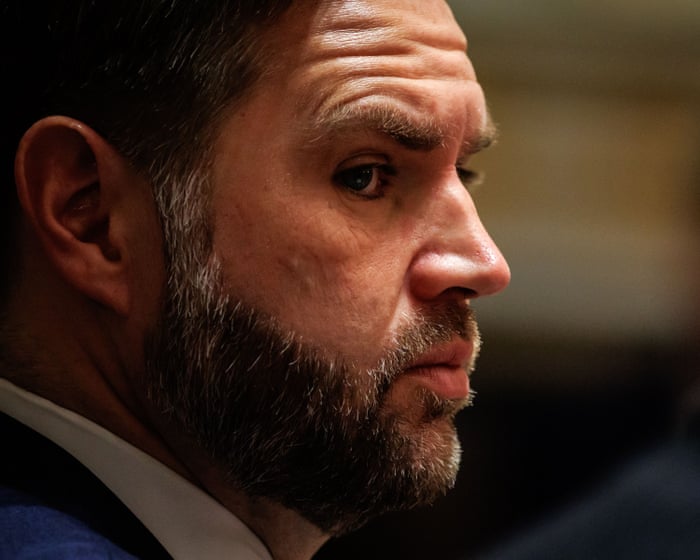
Immigration to the UK has dropped sharply, with fewer people coming and more leaving, partly due to fewer foreign students and workers. Recently, US Vice-President JD Vance criticized European immigration policies, causing political tensions between the US and UK. These comments reflect rising disagreements about immigration and political ideology between the two countries.
Key Facts
Net migration to the UK nearly halved between 2024 and 2025.
The decline is mostly due to foreign students and workers leaving Britain.
US Vice-President JD Vance said that European leaders failed to stop what he called “mass invasion of migrants.”
Vance’s comments targeted immigration policies and implied Britain should have closed its borders earlier.
UK officials publicly criticized Vance’s remarks, as they caused concern in Downing Street.
US Defence Secretary Pete Hegseth linked current immigration to “dangerous ideologies” during a D-Day anniversary speech.
Illegal border crossings in Europe dropped 40% in early 2026.
These events add tension to upcoming NATO talks and UK government plans on social media regulation.
Read the Original
Want the full story? Tap a source to open the original
article.
Pope Leo XIV will visit the Montserrat Monastery and hold a Mass at Barcelona’s Sagrada Familia Basilica during his trip to Spain. The visit connects the region’s ancient religious traditions with the modern architectural marvel of the Sagrada Familia, celebrating the 100th anniversary of architect Antoni Gaudí’s death.
Key Facts
Pope Leo XIV is visiting Montserrat, a sacred mountain monastery in Catalonia, Spain.
Montserrat includes an 11th-century abbey and a 16th-century basilica, attracting about 2 million visitors yearly.
The Black Madonna statue at Montserrat was originally white but darkened over time due to incense and smoke.
The Pope will celebrate Mass at the Sagrada Familia Basilica in Barcelona, known for its unique architecture by Antoni Gaudí.
The Mass commemorates the 100th anniversary of Gaudí’s death.
The Sagrada Familia construction began in 1882 and continues to this day, blending nature themes with Christian scenes.
Pope Leo XIV will speak mostly in Spanish, with some comments in Catalan during his visit.
The visit highlights the mix of historic religious tradition and the global appeal of the Sagrada Familia as both place of worship and tourist destination.
Read the Original
Want the full story? Tap a source to open the original
article.
Iran is facing a severe water crisis caused by years of drought, high water use, and damage to water infrastructure. This crisis has caused lakes and reservoirs, like Lake Urmia, to shrink dramatically and has forced many rural residents to leave their villages due to lack of water.
Key Facts
Iran suffers from extreme water stress, using more than 80% of its renewable water each year.
Lake Urmia, once the largest saltwater lake in the Middle East, has shrunk to less than 10% of its size from the 1990s due to drought, water diversion, and evaporation.
Iran’s water consumption in 2025 exceeded renewable supplies by nearly 13 billion cubic meters.
Agriculture uses about 91% of Iran’s water, but inefficient irrigation wastes much of it.
Many dams near Tehran, including Lar, Latyan, and Mamloo, have seen water levels drop sharply due to drought and high demand.
About 31,000 villages in Iran have been abandoned because of water scarcity.
Currently, 27,000 villages with over 10 million people face water shortages.
Water problems are causing migration from rural areas to major cities like Tehran and Mashhad.
Read the Original
Want the full story? Tap a source to open the original
article.
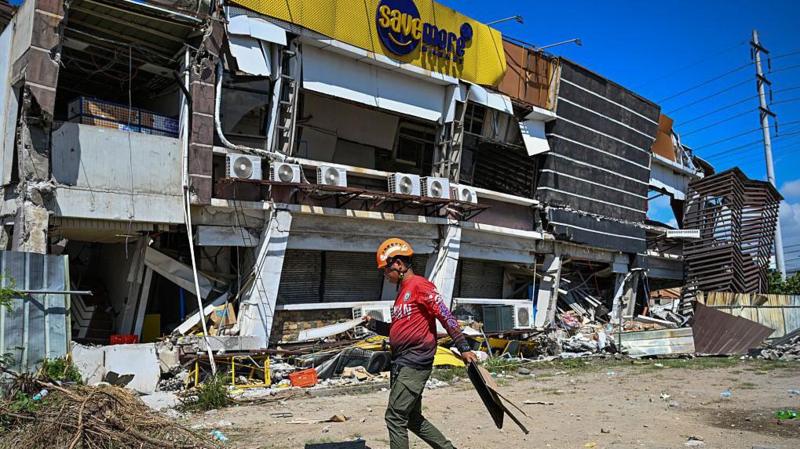
A strong magnitude 7.8 earthquake hit southern Philippines, killing at least 37 people and injuring 400. Rescue teams are searching for survivors amid damaged buildings and landslides, especially in the city of General Santos and Sarangani province.
Key Facts
The earthquake struck near Sarangani province, about 20 km off the coast, early Monday morning.
The city of General Santos was severely damaged, with collapsed buildings and power outages.
At least 13 people died in General Santos, and 18 were killed mostly by a landslide in Sarangani province.
Rescue crews are trying to find people trapped in rubble despite ongoing aftershocks, including a strong 6.5 magnitude one.
About 2,000 houses and 117 government buildings were damaged in several provinces.
Schools and the international airport in General Santos were closed or damaged, disrupting daily life and travel.
Some areas remain accessible only by helicopter due to blocked roads and landslides.
Authorities declared a state of calamity in General Santos to speed up aid and recovery efforts.
Read the Original
Want the full story? Tap a source to open the original
article.
The death of Lyhanna in France highlights serious problems in the country’s judicial system related to protecting children from abuse. Despite multiple complaints and evidence against a suspect over several years, the justice system failed to act properly, showing ongoing gaps between what is known and what is done.
Key Facts
Lyhanna’s death points to "systemic failure" in France's judicial system for child protection.
Complaints and investigations about the murder suspect’s abuse of minors date back to at least 2017.
Medical evidence supported the abuse claims, but authorities did not follow up adequately.
Child protection efforts in France are fragmented, with poor implementation of laws and reports.
Investigations lack resources, and professionals often have insufficient training.
Judicial decisions suffer from heavy workloads and institutional limitations.
Failures occur in prevention, care, training, and legal responses, causing missed chances to protect children.
Advocacy groups call for political accountability and structural reform to prevent such tragedies.
Read the Original
Want the full story? Tap a source to open the original
article.
The 2018-2020 Ebola outbreak in eastern Congo was the second-largest in history, causing over 3,400 cases and 2,200 deaths. Survivors in Beni, Congo, recall fear, misinformation, and community resistance during the outbreak, which was eventually controlled with vaccines. The current Ebola outbreak in the region, caused by a different virus strain, has raised concerns about handling and community acceptance.
Key Facts
The 2018-2020 Ebola outbreak in Congo affected North Kivu, South Kivu, and Ituri provinces, with over 3,400 cases and 2,200 deaths.
Vaccines helped stop the outbreak during that period.
Many people mistakenly believed Ebola was caused by witchcraft or was a political conspiracy.
Survivors faced challenges reintegrating into their communities because of stigma and disbelief.
The city of Beni is near the borders of Uganda and Rwanda and was a central area hit by the outbreak.
A new Ebola outbreak caused by the Bundibugyo virus strain has confirmed 515 infections, 91 deaths, and 12 recoveries.
There is concern about the speed and difficulty of controlling the current outbreak due to misinformation and lack of approved vaccines for this strain.
Health workers during the outbreaks faced attacks and community mistrust.
Read the Original
Want the full story? Tap a source to open the original
article.
A powerful 7.8 magnitude earthquake struck the southern Philippines near Mindanao, killing at least 37 people and injuring nearly 500. The quake damaged thousands of homes and buildings, displaced over 20,000 people, and caused fears of a tsunami, though only minor tsunami effects were reported.
Key Facts
The earthquake hit on Monday morning near Mindanao, the Philippines’ second-largest island.
At least 37 people died, with 4 officially missing and nearly 500 injured.
More than 20,000 people were forced to leave their homes and seek emergency shelter.
The quake caused landslides, building collapses, and falling debris, especially in General Santos city.
About 2,000 houses and 117 government buildings were damaged across several provinces.
A small tsunami with waves up to 1.4 meters was recorded, causing minor damage to six huts on stilts.
The international airport in General Santos closed temporarily, canceling 63 domestic flights except for relief missions.
Rescue operations continued to check buildings for survivors and assess damage.
Read the Original
Want the full story? Tap a source to open the original
article.
Sweden will ban mobile phones in schools starting next academic year to reduce screen time and encourage traditional learning methods like reading books. This move is part of a broader global trend where countries are rethinking the use of digital devices in classrooms to improve students' reading and writing skills.
Key Facts
Sweden’s government decided to ban mobile phones in schools beginning in the fall of the next academic year.
The focus is on increasing reading time and minimizing screen time, especially for preschool and younger students.
Officials noticed a decline in reading and writing abilities among students, prompting the policy change.
Many schools in Sweden had already restricted phone use before the government ban.
Similar measures are being introduced in Denmark and Finland, and countries like Spain and South Korea also limit mobile phone use at schools.
The Los Angeles Unified School District in the U.S. recently introduced screen time limits and bans on some digital content for young students.
Sweden is known for being highly digital and home to companies like Spotify and Ericsson, making this shift significant.
The government allocated about $59 million to support these changes in schools.
Read the Original
Want the full story? Tap a source to open the original
article.
Global spending on nuclear weapons reached a record $119 billion in 2025, with the nine nuclear-armed countries increasing their budgets by nearly $17 billion compared to the previous year. The United States led with the highest spending, followed by China, the United Kingdom, Russia, and France, while all nations continue to plan maintaining their nuclear arsenals for decades.
Key Facts
Total global spending on nuclear weapons in 2025 was $119 billion, up $16.8 billion from 2024.
The nine nuclear-armed countries combined have over 12,000 nuclear warheads.
The United States spent about $69.2 billion, the largest amount by far, increasing its budget by $12.6 billion.
China spent $13.5 billion; the United Kingdom $12.6 billion; Russia $9.5 billion; France $7.7 billion.
India, Pakistan, Israel, and North Korea spent between $656 million and $2.8 billion each.
These countries spent a total of $471 billion over the last five years and plan to keep their arsenals long-term.
The United Nations’ Treaty on the Prohibition of Nuclear Weapons, signed by 99 countries, prohibits nuclear weapons but has no nuclear-armed signatories.
Recent treaties between the US and Russia to limit nuclear arms have expired with no replacement agreements.
Read the Original
Want the full story? Tap a source to open the original
article.
Chinese President Xi Jinping visited North Korea, where he was welcomed with a large ceremony by Kim Jong Un. Their visit highlights the long and sometimes difficult relationship between China and North Korea, which dates back to the 1940s and includes a military alliance during the Korean War.
Key Facts
Xi Jinping arrived in Pyongyang and was officially welcomed by North Korean leader Kim Jong Un and his wife.
The relationship between China and North Korea is often called “as close as lips and teeth,” meaning very close allies.
North Korea and China formed diplomatic ties in 1949, just after each country’s founding.
China entered the Korean War (1950-1953) to support North Korea, helping prevent its defeat but causing many casualties.
In 1961, China and North Korea signed a treaty promising mutual help if either is attacked.
Despite the treaty, China has sometimes been cautious and has not always fully supported North Korea’s actions.
Relations cooled during China’s Cultural Revolution and the time when China improved ties with South Korea in the 1990s.
The visit is the first by Xi to North Korea since 2019 and shows both countries want to maintain their alliance.
Read the Original
Want the full story? Tap a source to open the original
article.
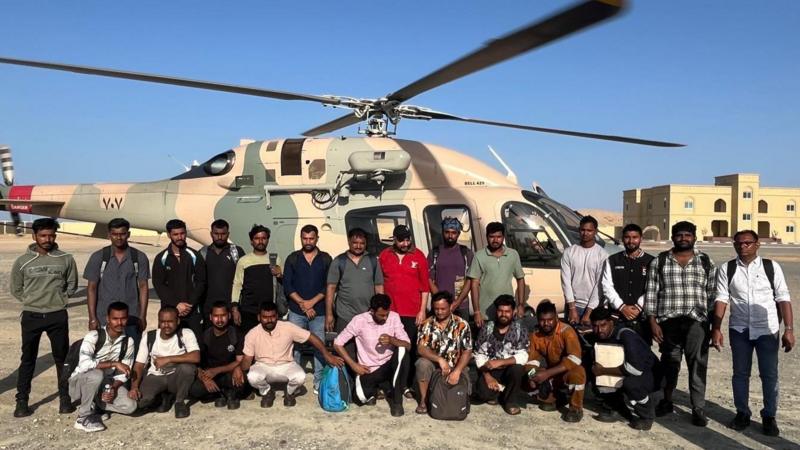
All 24 Indian crew members on the tanker MT Marivex were safely rescued after the ship caught fire off the coast of Oman. The fire happened after US forces struck the tanker, which was said to be trying to reach an Iranian port despite a US blockade.
Key Facts
The tanker MT Marivex caught fire off the coast of Oman on June 8.
All 24 Indian crew members were evacuated safely by helicopters operated by Omani authorities.
The tanker was empty at the time and reportedly tried to sail to an Iranian port, violating a US blockade.
US forces disabled the ship by firing a precision missile into its engine and steering sections.
The incident took place near the Strait of Hormuz, an important ship passage for global energy supplies.
The MT Marivex had previously been sanctioned by the US for alleged links to Iran.
Indian authorities coordinated across agencies to ensure the crew’s safety and support.
The event is part of increased tension and military actions in Gulf waters involving the US, Iran, and Israel.
Read the Original
Want the full story? Tap a source to open the original
article.
In May 2024, a family returned to the Nuseirat refugee camp in Gaza after months of displacement. In June, their apartment was hit during military shelling, causing severe injuries to several family members and forcing them into a hospital overwhelmed with wounded people.
Key Facts
The family had been displaced for seven months before returning to Nuseirat camp in central Gaza.
Their home was destroyed in a January attack, so they rented an apartment near the “yellow line.”
On June 8, 2024, a military shell struck their apartment, seriously injuring multiple family members.
The father was hit by shrapnel in both legs while protecting his young son.
The family struggled for over three hours to get an ambulance as shelling continued nearby.
When taken to Al-Aqsa Martyrs Hospital, they found hundreds of injured people in critical condition.
The hospital had floors covered in blood and many people suffering from severe wounds.
The story highlights the ongoing violence and hardship faced by civilians in Gaza.
Read the Original
Want the full story? Tap a source to open the original
article.
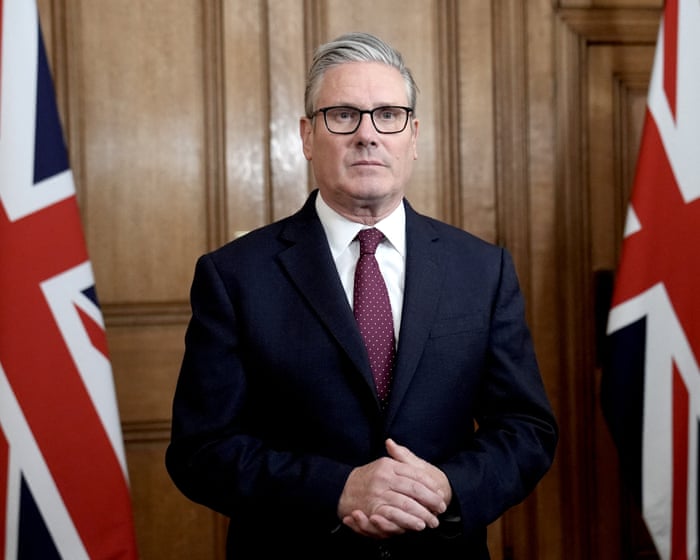
The article discusses how UK Prime Minister Keir Starmer may be working on important policy changes as part of his leadership, rather than simply trying to build a lasting legacy. It compares his situation to past leaders like Theresa May and Rishi Sunak, who pushed key laws before leaving office.
Key Facts
Theresa May set a net zero target into law before leaving office in 2019, beating France to the goal.
Keir Starmer is focusing on defense investment, renewing EU ties, and limiting children's access to social media.
Downing Street officials deny Starmer is rushing to create a legacy and say he is actively doing his job.
Allies say Starmer wants to prove the government can deliver major policy changes, not just focus on legacy.
Starmer may remain Labour leader even if he faces challenges within his party.
Past Prime Ministers often think about legacy as their time in office ends.
Rishi Sunak tried to create a smoke-free generation law before losing power; Labour later made it law.
Read the Original
Want the full story? Tap a source to open the original
article.
Seven Georgian nationals are being tried in Paris for stealing rare Russian books from French libraries. The thefts are part of a larger network of similar crimes affecting libraries across Europe. Some of the accused have already been convicted in other countries, and the stolen books have not been recovered.
Key Facts
Seven Georgians face trial in Paris for stealing rare Russian literary works.
The stolen books include works by famous writers like Alexander Pushkin and Nikolai Gogol.
The thefts occurred in 2023 at libraries in Lyon and Paris, including the National Library of France.
The suspects are charged with criminal conspiracy and theft, facing up to 10 years in prison.
Two defendants are being tried without being present, and warrants are issued for their arrest.
Some accused have been convicted in Lithuania and Estonia for similar crimes.
The thefts triggered a joint European investigation involving Europol and Eurojust.
Investigators believe the thefts may be linked to efforts to return cultural works to Russia amid tense Europe-Russia relations.
None of the stolen books have been recovered so far.
Read the Original
Want the full story? Tap a source to open the original
article.
The UK government plans to introduce stricter rules on how young people use social media but will not ban children under 16 from accessing it entirely. The rules aim to protect children from harmful content, such as nude image sharing and material promoting self-harm, while balancing concerns from parents and lawmakers.
Key Facts
Keir Starmer is expected to announce new social media rules for young people in the UK soon.
The government wants tech firms to block children’s phones from sharing nude images.
A total ban on social media for under-16s is not expected, but regulations will be much stronger.
The UK’s Online Safety Act, in place for 11 months, already requires platforms to stop harmful content reaching children.
New challenges include the rise of AI chatbots and evolving online risks for young users.
There is concern about how fast harmful online trends develop compared to the slower law-making process.
Parents and campaigners think current measures do not go far enough to protect children.
Ongoing research tracks young people’s media use and shows AI play is increasing in their digital lives.
Read the Original
Want the full story? Tap a source to open the original
article.
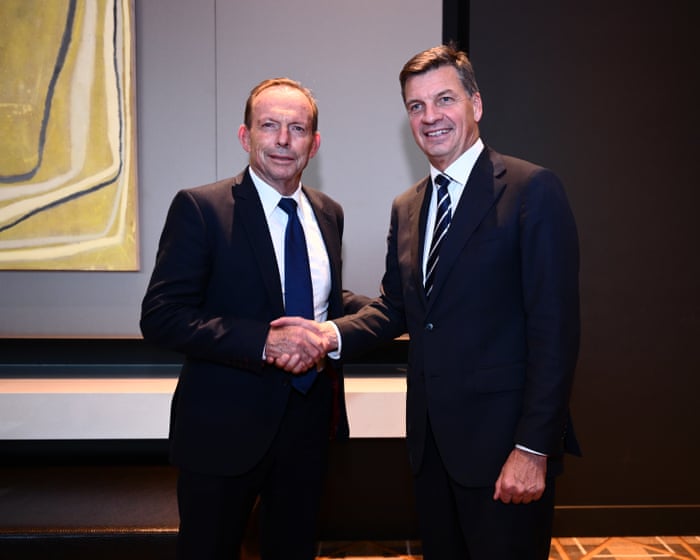
Tony Abbott, the new Liberal party president in Australia, supports working with the One Nation party through preference deals to improve their election chances. Opposition leader Angus Taylor also indicated openness to cooperating with One Nation to defeat the current Labor government.
Key Facts
Tony Abbott backs preference deals between the Liberal party and One Nation.
Angus Taylor, opposition leader, says they will work with anyone to remove the Labor government.
Liberals are worried One Nation could replace them as Australia’s main conservative party.
Liberals have encouraged supporters to preference One Nation before independents in some elections.
Abbott says right-wing parties should preference each other like left-wing parties do.
Abbott and Taylor’s leadership marks a shift to the right for the Liberals.
Labor Prime Minister Anthony Albanese says the Liberals, Nationals, and One Nation are becoming very similar.
Recent polls show One Nation has gained significant popularity, even ahead of Labor at times.
Read the Original
Want the full story? Tap a source to open the original
article.
A strong magnitude 7.8 earthquake hit southern Philippines, causing at least 37 deaths and injuring nearly 500 people. Hundreds of aftershocks continue, damaging homes, schools, and infrastructure, while emergency teams focus on search and rescue.
Key Facts
The earthquake struck Mindanao island in the southern Philippines on Monday morning.
At least 37 people have died and about 487 are injured so far.
Hundreds of aftershocks have followed the main earthquake.
Many buildings collapsed, roads cracked or blocked by landslides, and large areas lost power and phone service.
Around 2,000 homes and 6,000 public schools were damaged.
The quake triggered tsunami warnings in nearby Indonesia and Japan.
The earthquake was caused by movement on the Cotabato Trench, a known source of big quakes.
Government officials, led by President Ferdinand Marcos Jr., have mobilized disaster response teams and flown key staff to affected areas.
Read the Original
Want the full story? Tap a source to open the original
article.
Gabriel Raimondo, who just turned 18, was elected as a Deputy for St Brelade, becoming the youngest first-time member of Jersey's States Assembly. He campaigned mainly on issues about the cost of living and plans to work for a better future on the island.
Key Facts
Gabriel Raimondo was elected Deputy for St Brelade in Jersey at age 18.
He is now the youngest first-time member ever elected to Jersey’s States Assembly.
The previous youngest was Jeremy Maçon, elected at age 21 in 2008.
Raimondo’s campaign focused on the high cost of living on the island.
He aligned with the Value Jersey political movement.
Raimondo put his A-level studies on hold to campaign.
He said the island is losing young people who are leaving for university.
Raimondo used social media to connect with voters and faced online abuse during the campaign.
Read the Original
Want the full story? Tap a source to open the original
article.