A group of Japanese politicians visited Beijing to try to improve relations between Japan and China after recent tensions over Taiwan. The dispute escalated last year when Japan’s Prime Minister warned that a Chinese attack on Taiwan could lead Japan to respond with force, causing China to impose trade and travel restrictions.
Key Facts
Japanese politicians from different parties visited China this week to ease bad relations.
Tensions started after Japan’s Prime Minister said China attacking Taiwan could threaten Japan’s survival and justify military action.
China’s consul general in Osaka responded with harsh language but later deleted the statement.
China banned Japanese seafood imports and restricted exports of dual-use goods and rare earth minerals important for technology and defense.
Dual-use goods are products that can be used for both civilian and military purposes.
The conflict has roots in history, including Japan’s invasion and occupation of parts of China and Taiwan from the late 19th century to World War II.
Japan officially recognized China (PRC) in 1972 and ended diplomatic ties with Taiwan’s government (ROC).
China continues to claim Taiwan, which it has never governed directly.
Read the Original
Want the full story? Tap a source to open the original
article.
The United Nations says that one million children in Afghanistan are facing severe malnutrition that threatens their lives. Overall, 3.7 million children in the country are acutely malnourished, as the nation struggles with ongoing hunger crises caused by war and instability.
Key Facts
One million Afghan children have life-threatening malnutrition.
A total of 3.7 million children in Afghanistan suffer from wasting, which means extreme lack of nutrition.
Malnutrition in Afghanistan is worsening.
Afghanistan has faced repeated hunger emergencies over the past decades.
The problems are linked to civil war and other ongoing crises in the country.
UNICEF, the UN children’s agency, provided these statistics.
The situation represents a serious child health emergency in Afghanistan.
Read the Original
Want the full story? Tap a source to open the original
article.
A flood in Nepal’s northern Rasuwa district caused many people to go missing, including at least three American tourists. The Nepal Tourism Board shared this information while the situation is still being assessed.
Key Facts
Flash floods hit the Rasuwa district in northern Nepal on August 26, 2026.
At least 384 people were reported as missing in the flooding.
Among the missing are three American tourists.
The flood damaged roads and power infrastructure in the area.
Authorities are working to understand how bad the destruction is.
The Nepal Tourism Board provided the missing persons update on the social media platform X.
The situation is ongoing, with more updates expected.
Read the Original
Want the full story? Tap a source to open the original
article.
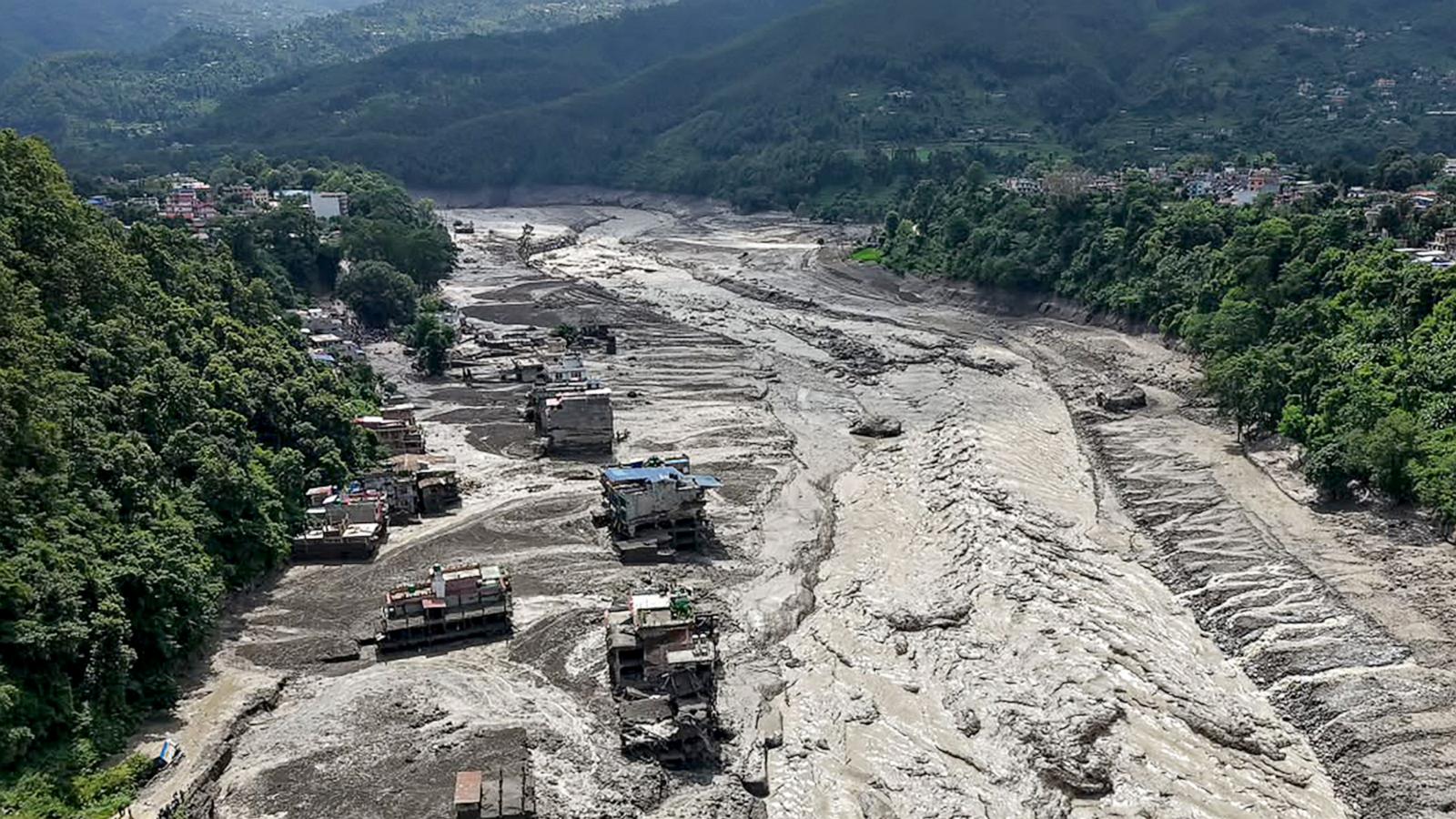
An avalanche of ice and rock in Nepal caused large flash floods, killing at least eight people and leaving hundreds missing, including many tourists. The floods damaged villages, roads, hydropower projects, and prompted rescue requests to India and China.
Key Facts
At least eight people died due to the flash floods caused by an avalanche in Nepal.
Around 384 tourists, including 291 from countries like India, the U.S., the U.K., and Malaysia, are reported missing.
The Bhotekoshi River flooded early Wednesday, destroying villages and infrastructure.
Officials warned residents to avoid the banks of the Bhotekoshi, Trishuli, and Narayani rivers.
Nepal requested help from India and China for rescue operations.
The worst-hit area, Rasuwa district, experienced similar floods last year caused by a glacial lake overflow.
Climate experts said a glacier avalanche blocked the Lhende Khola River, causing sudden flooding.
The Himalayan region is warming faster than other areas, increasing the risk of floods and landslides.
Read the Original
Want the full story? Tap a source to open the original
article.
Canada has responded to U.S. tariffs by imposing its own tariffs on about $20 billion worth of American products, including steel and farm equipment. This action has increased tensions and could affect trade between the two countries shortly before the U.S. midterm elections.
Key Facts
Canada imposed retaliatory tariffs on around $20 billion of U.S. goods.
The targeted American products include steel, dairy, appliances, and farm equipment.
The trade conflict is between Canada and the United States, longtime close trading partners.
This escalation threatens one of the world’s largest trading relationships.
The dispute may increase costs for U.S. businesses and consumers.
The timing is less than three months before the U.S. midterm elections.
Trade tensions have been rising between the two countries.
Read the Original
Want the full story? Tap a source to open the original
article.
The Syrian Democratic Forces (SDF), a Kurdish-led armed group, has officially dissolved. This move is part of an agreement to integrate former SDF fighters into the Syrian government’s forces in Damascus.
Key Facts
The SDF helped defeat the Islamic State with support from the United States.
The group controlled areas in northern and eastern Syria before dissolving.
The dissolution is part of a phased plan agreed upon earlier in 2026 between the SDF and the Syrian government.
The integration plan includes Kurdish fighters joining Syrian state forces.
The U.S. described this agreement as a "historic milestone."
The Syrian government is Islamist-led and based in Damascus.
This agreement aims to unify armed groups under the official Syrian government control.
The announcement was made on August 26, 2026, by the leader of the SDF.
Read the Original
Want the full story? Tap a source to open the original
article.
Israeli forces took control of a vocational training center run by the United Nations for Palestinian refugees in East Jerusalem. The center provides job training to Palestinians from the West Bank, and the raid was criticized by the UN chief.
Key Facts
The vocational training center is managed by the UN agency for Palestinian refugees (UNRWA).
Israeli forces took control of the center on Tuesday, August 26, 2026.
The center is located in a suburb of East Jerusalem called Qalandia.
It offers vocational training to about 340 Palestinians from the occupied West Bank each year.
The center has been operating since 1952.
UNRWA had previously warned that Israeli authorities threatened the Qalandia training center.
UN Secretary-General Antonio Guterres condemned the Israeli raid on the center.
Read the Original
Want the full story? Tap a source to open the original
article.
The Ebola outbreak in the Democratic Republic of Congo (DRC) has reached over 5,500 cases with more than 2,400 deaths. To prevent the virus from reaching the capital city, Kinshasa, officials have increased patrols along the Congo River.
Key Facts
There are at least 5,514 confirmed Ebola cases in the DRC.
The outbreak has caused 2,462 deaths so far.
Authorities are worried that Ebola could spread to Kinshasa, the capital.
To avoid this, they have stepped up patrols along the Congo River.
The Congo River is a major transport route that connects other parts of the country to Kinshasa.
Increased patrols aim to monitor and control river traffic to stop the virus from spreading.
The situation remains serious, and health officials continue to respond to the outbreak.
Read the Original
Want the full story? Tap a source to open the original
article.
A small village in Kenya called Cheporor has seen a large number of people arrive after gold was found nearby. The village is now very busy but does not have enough houses or security for all the newcomers.
Key Facts
Gold was discovered in the village of Cheporor in Kenya.
Thousands of amateur gold seekers have come to the village recently.
The village has grown quickly and looks like a small town now.
There is not enough infrastructure, like housing, for all the new arrivals.
The sudden increase in people has created security problems in the area.
Read the Original
Want the full story? Tap a source to open the original
article.
Dolly Parton, a famous country music singer and actress known for her distinctive voice and style, has died at the age of 80 in Nashville. She was celebrated for her music and personality that connected with many people across different ages and backgrounds.
Key Facts
Dolly Parton was a country music star and actor.
She was known for her strong singing voice and songwriting.
Parton grew up in a log cabin in Tennessee.
She was famous for her colorful costumes, big blond wigs, and confident attitude.
She became loved by people from many generations and places.
Dolly Parton died in Nashville at age 80.
Her appeal went beyond music to include her personality and charm.
News about her death was reported by France 24 on August 26, 2026.
Read the Original
Want the full story? Tap a source to open the original
article.
El Nino has reached its strongest level in a hundred years, causing unusual weather worldwide. Several Central American countries, including Panama, have declared emergencies as the weather pattern disrupts shipping and raises global temperatures.
Key Facts
El Nino is a weather pattern that warms the central and eastern Pacific Ocean’s surface.
It changes global winds and rainfall, leading to unpredictable and extreme weather.
This El Nino is the strongest seen in the last century.
Panama, Honduras, and El Salvador have declared emergencies due to El Nino’s effects.
The Panama Canal has seen reduced shipping because of the weather impacts.
The current year is expected to be the hottest on record, partly due to El Nino.
El Nino can cause droughts, floods, and other severe weather events around the world.
This situation raises concerns for more extreme weather in 2027.
Read the Original
Want the full story? Tap a source to open the original
article.
Mark Carney, the Prime Minister of Canada, gave two important speeches in 2026 that highlighted changes in global politics and trade. He criticized the United States' role in world leadership and ended trade talks with the U.S. after conflicts over tariffs and negotiation tactics.
Key Facts
Mark Carney is the Prime Minister of Canada and a former Goldman Sachs executive and Bank of England governor.
He said the world can no longer rely on the U.S. to lead global peace and order.
Carney called for new alliances between countries with shared values, excluding the U.S. from this group.
He officially stopped trade talks with the U.S. due to U.S. pressure and last-minute demands.
President Donald Trump reacted angrily on social media, insulting Carney and Canadian officials.
Carney emphasized the strong economic ties between Canada and the U.S., including car purchases and natural gas imports.
The speeches used calm, factual language rather than emotional or aggressive rhetoric.
Canada defends its French language protections against U.S. pressure.
Read the Original
Want the full story? Tap a source to open the original
article.
Jack Klein, a New York City construction manager, has been measuring extreme heat in several of Manhattan’s subway stations, where temperatures have reached dangerously high levels. The rising underground heat poses health risks to commuters and subway workers, highlighting challenges in cooling old subway systems amid climate change.
Key Facts
Jack Klein has placed thermometers in seven hot subway stations in Manhattan to track temperatures.
Temperatures in some stations have reached up to 101°F (38°C) with a heat index as high as 132°F (56°C), which considers humidity and can cause heatstroke.
Subway workers face dangerous conditions due to prolonged heat exposure underground.
Many of Klein’s thermometers have disappeared, and he now helps by distributing water and advocating for better cooling measures like fans and seating.
Existing subway fans sometimes blow hotter air, making conditions worse.
New York’s subway system was built over 100 years ago during cooler climate times and faces challenges adapting to current heat levels.
Rising global temperatures due to fossil fuel use are worsening heat problems in public transport systems globally.
Similar issues affect other cities like London, where many subway trains lack air conditioning.
Read the Original
Want the full story? Tap a source to open the original
article.
The value of the Iranian rial has fallen to a record low of over 2 million rials per US dollar, driven by new US sanctions and ongoing economic troubles in Iran. As a result, the prices of basic goods like food, medicine, and childcare have sharply increased, making it harder for Iranian families to afford everyday items.
Key Facts
The Iranian rial dropped past 2 million rials to one US dollar on the free market.
US sanctions aim to pressure Iran’s economy and are the toughest yet.
Basic food prices have risen significantly: tomatoes by 71%, chicken by 74%, and cooking oil by 177%.
The price of insulin has increased by 642%, while essential medicines and baby formula have nearly doubled in cost.
Iranian families face financial strain; for example, childcare costs about $2.50 per day and have become difficult to pay.
The official minimum monthly wage is about $82 to $108, which is low compared to rising living costs.
War damage and a US naval blockade have hurt Iran’s trade and production, adding to economic challenges.
Many Iranians have cut back on non-essential purchases and focus on covering basic needs.
Read the Original
Want the full story? Tap a source to open the original
article.
Canada and the United States are involved in a growing trade dispute. Canada plans to add tariffs, which are taxes on imports, to about 700 products from the U.S. This situation has caused tensions between Canadian Prime Minister Mark Carney and President Donald Trump.
Key Facts
Canada announced new tariffs on roughly 700 U.S. products.
The tariffs are a response to ongoing trade disagreements with the United States.
President Donald Trump and Prime Minister Mark Carney have expressed opposing views in this trade conflict.
The trade war is escalating between the two neighboring countries.
Tariffs are taxes that countries put on imported goods to protect their own industries.
The dispute has made the political relationship between the two leaders more strained.
Read the Original
Want the full story? Tap a source to open the original
article.
Ukrainian forces used long-range drones to strike and completely destroy a major warehouse of Russia’s largest online retailer, Wildberries, for the second time within a month. These drone attacks are part of Ukraine’s ongoing campaign to hit Russian economic and military targets far from the front lines.
Key Facts
Ukrainian drones hit a Wildberries warehouse in the Tambov region southeast of Moscow, causing a large fire that destroyed the facility.
This was the second major attack on the same warehouse in just over a month; the earlier strike killed seven people.
Wildberries is Russia’s biggest online retailer and is comparable in size and importance to Amazon.
Ukrainian officials say the goods sold by Wildberries include items used by the Russian military.
Ukraine has been conducting nightly drone attacks on many targets across Russia to overwhelm air defenses.
Russia reported shooting down 426 Ukrainian drones over 15 regions and Crimea in one night.
Other attacks by Ukraine targeted Russian oil and industrial facilities, damaging key parts of Russia’s economy.
The attacks aim to impact Russia’s military capabilities and create disruption far from the active war zone.
Read the Original
Want the full story? Tap a source to open the original
article.
A flash flood in the Rasuwa district of Nepal killed at least eight people and damaged roads, bridges, and power facilities. Rescue teams including helicopters were sent, but some areas were inaccessible due to high water. The flood also caused casualties and damage across the border in Tibet, China.
Key Facts
At least eight people died from a flash flood in Nepal’s mountainous Rasuwa district.
Roads, bridges, and power projects in the area were damaged or destroyed.
Helicopters were deployed for rescue efforts, but floods made some landings impossible.
Nearby villages and infrastructure by the Bhote Koshi River were washed away.
Tibet experienced major casualties and missing persons after a mudslide at the China-Nepal land crossing.
Electricity production and supply in Nepal were disrupted after damage to hydropower and solar facilities, totaling about 430 megawatts.
Nepal’s Prime Minister and national disaster authorities activated emergency measures, including medical teams and the Red Cross.
Floods in this region are common during monsoon rains and are worsened by climate change, which increases extreme weather events.
Read the Original
Want the full story? Tap a source to open the original
article.
President Donald Trump's approval rating is lower than Canadian Prime Minister Mark Carney’s amid rising tariffs in the U.S.-Canada trade conflict. Canada’s economy, which relies heavily on trade, faces challenges due to tariffs imposed by both countries on various goods.
Key Facts
Trump’s approval rating is 34% with 58% disapproval in the U.S.
Carney’s approval rating is around 51-60% in Canada, depending on the poll.
The U.S. imposed 50% tariffs on C$27.6 billion of Canadian goods starting August 22, including wine, hockey sticks, and cement.
Canada responded with tariffs ranging from 15% to 50% on U.S. products like steel, dairy, and electronics beginning September 8.
Trade is about two-thirds of Canada’s economy and supports nearly 20% of Canadian jobs.
Canadian manufacturers and workers have been negatively affected by the tariffs.
The Bank of Canada says tariffs reduce jobs, productivity, and living standards.
Polls on Trump and Carney were done separately and at different times, so comparisons are not direct head-to-head.
Read the Original
Want the full story? Tap a source to open the original
article.
Ukrainian drone strikes in multiple parts of Russia have killed at least three people and caused a large fire at a Wildberries warehouse in the Tambov region. The attacks have also damaged other industrial facilities, and Russian air defenses report intercepting hundreds of Ukrainian drones.
Key Facts
Ukrainian drones attacked a Wildberries logistics center in the Tambov region, destroying about 100,000 square meters of the facility by fire.
The warehouse fire is equivalent in size to 14 football fields.
Three people died from drone-related incidents: two in the Lipetsk region and one in the Belgorod region.
One person was injured in the Tambov strike.
Another industrial facility in the Nizhny Novgorod region was damaged by drones.
Ukraine has targeted Wildberries and its rival Ozon since mid-July, as they are large players in Russia’s e-commerce market.
Ukraine accuses Wildberries of supporting Russia’s military supply chain, but Russia and the company say the facilities serve civilian purposes.
Russia’s Ministry of Defence stated it destroyed 426 Ukrainian drones overnight, including in Russian-controlled areas of Ukraine.
Read the Original
Want the full story? Tap a source to open the original
article.
More than 40,000 extra deaths have occurred on very hot days in England between 1988 and 2025, according to the Office for National Statistics. Heat-related deaths are rising due to climate change, with vulnerable groups like elderly people and the sick most at risk. This trend is expected to worsen as global temperatures increase.
Key Facts
Over 40,000 more people died on England’s hottest days from 1988 to 2025 than expected.
This figure does not include the summer of 2027, which is on track to have record heat-related deaths.
The UK Health Security Agency reported nearly 2,900 deaths during the May and June 2027 heatwaves.
Older people, children, and those who are sick are more vulnerable to heat.
England’s hospitals saw nearly 2.5 million emergency room visits per month in May, June, and July 2027, with heat cited as a main cause.
London had the highest number of deaths connected to heat, and ambulance calls rose by 25,000 compared to last summer.
Historically, cold days caused more deaths than hot days, but the gap is closing due to rising heat-related deaths.
Europe also experienced at least 35,000 extra deaths during a severe heatwave in June, linked to climate change.
Read the Original
Want the full story? Tap a source to open the original
article.