Neutral summaries of your favorite news sources — just the facts.
Your favorite news sources, one neutral feed — we distill their reporting into fact-first
summaries and always link to the original story. How it works
World News
Comprehensive coverage of international news and global events
The US military shot down two Iranian drones near the Strait of Hormuz, increasing tensions amid ongoing conflict. Iran launched missile attacks on US allies Bahrain and Kuwait, while diplomatic talks continued with Pakistan trying to mediate. Meanwhile, fighting in Lebanon involved Israeli strikes that killed Lebanese soldiers and injured Israeli troops.
Key Facts
The US Central Command said it destroyed two Iranian drones threatening the Strait of Hormuz, a key waterway for global oil shipments.
Iran responded with missile attacks on Bahrain and Kuwait, both US allies in the Gulf region.
Pakistani Interior Minister Mohsin Naqvi visited Tehran carrying a message from Pakistan’s leaders aimed at promoting peace talks.
The US plans to redirect frozen Iranian assets to Gulf countries to help rebuild damage caused by the conflict.
Iran demands the release of $24 billion in frozen assets as a condition for a peace deal.
Some Iranian World Cup team members received US visas, but others were denied due to security concerns.
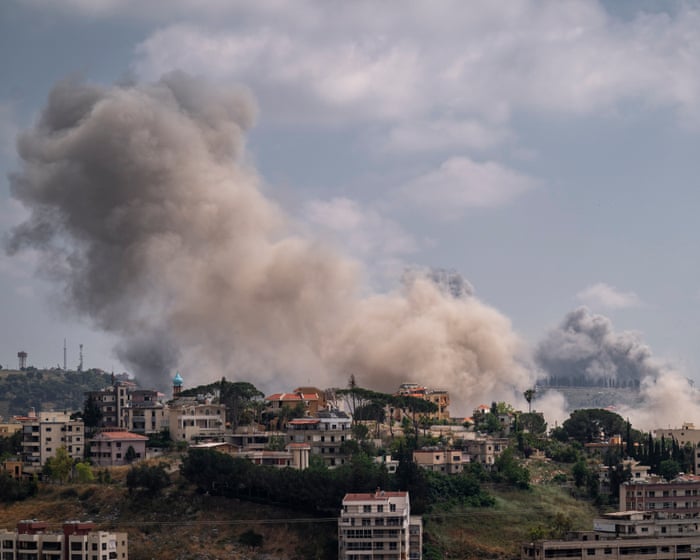
In Lebanon, Israeli strikes killed two Lebanese army officers and a soldier; Israel reported injuries from drone attacks by Hezbollah.
Jordan called on Israel to stop attacks on Lebanon, saying they violate Lebanon’s security and sovereignty.
Read the Original
Want the full story? Tap a source to open the original
article.
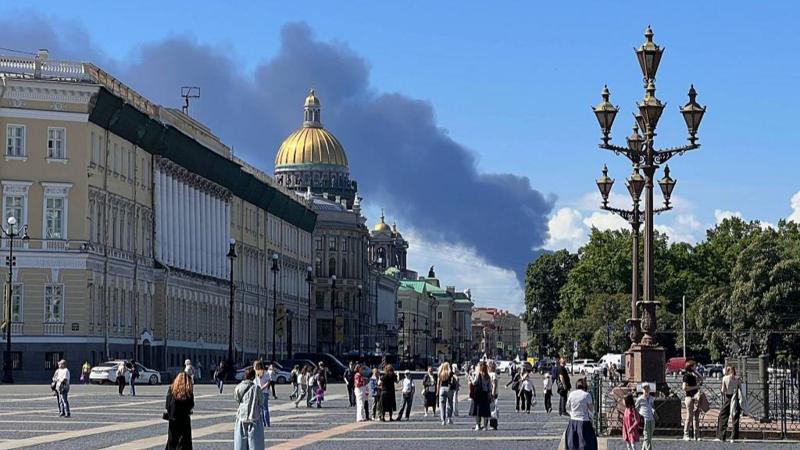
During the International Economic Forum in St Petersburg, Ukrainian drones attacked the city, causing thick smoke and damaging infrastructure. President Vladimir Putin rejected Ukraine’s proposal for peace talks and emphasized Russia’s strength despite ongoing war and sanctions.
Key Facts
Ukrainian drones attacked St Petersburg during the economic forum, creating a large plume of black smoke.
Local officials confirmed infrastructure was damaged but did not provide details.
Ukrainian President Volodymyr Zelensky sent an open letter to President Putin, proposing a peace meeting in a neutral country.
President Putin called Zelensky’s letter rude and refused to meet, urging Russian soldiers to continue fighting.
Putin claimed Russia’s economy is stable despite war and sanctions.
The war between Russia and Ukraine is in its fifth year with heavy losses for Russia.
Long-range Ukrainian drones are increasingly striking deep inside Russian territory.
Russian officials at the forum echoed Putin’s hardline stance on the conflict.
Read the Original
Want the full story? Tap a source to open the original
article.
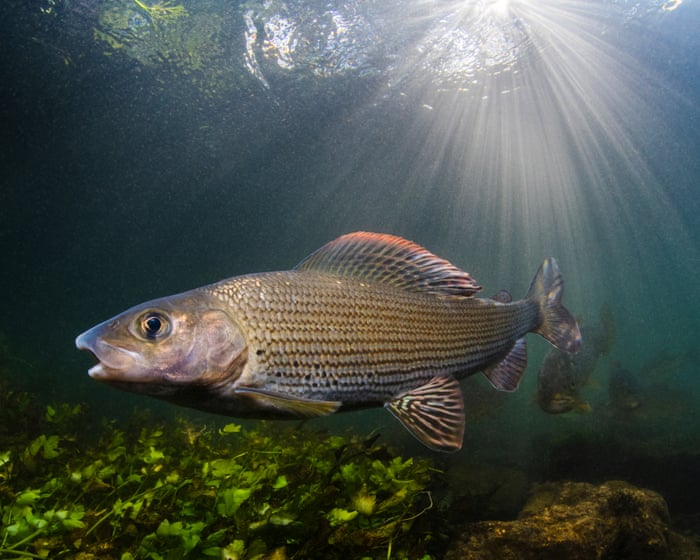
Dr. Marnie Lovejoy has become the first woman to chair the Grayling Society, a group focused on protecting the grayling fish. She aims to encourage more women and young people to enjoy fishing and raise awareness about the importance of grayling fish in river ecosystems.
Key Facts
The grayling is a type of fish known as the “lady of the stream” and lives in clear English chalk streams.
The Grayling Society had never been led by a woman until Dr. Marnie Lovejoy’s appointment.
Fly-fishing and angling have traditionally been male-dominated sports with limited female participation.
Dr. Lovejoy was inspired by a female instructor to start fly-fishing and now wants to attract more women and youth to the sport.
Grayling fish are sensitive to water pollution and serve as an early warning sign of river health problems.
Historically, grayling were wrongly considered pests and were removed from rivers to protect trout.
The society plans to increase outreach using social media like Instagram and hold events to promote fishing.
Youth membership in the Grayling Society is free to encourage younger people to join.
Read the Original
Want the full story? Tap a source to open the original
article.
Chinese President Xi Jinping will visit North Korea next week, his first trip there in almost seven years. The visit aims to strengthen the relationship between China and North Korea, as North Korean leader Kim Jong Un seeks more support amid shifting alliances and growing isolation.
Key Facts
Xi Jinping’s upcoming trip to North Korea is his first visit since 2019.
The visit is part of China’s efforts to reinforce ties with North Korea, a historic ally.
Kim Jong Un has increasingly leaned on Russia for military support during its war in Ukraine.
North Korea wants closer relations with China to improve its economy and reduce isolation.
Kim has tried to balance relationships between China and Russia to gain the most benefits.
The last meeting between Xi and Kim was in September 2025 in Beijing.
North Korea views its alliance with China and Russia as a united front against the U.S.
Economic aid from China is seen as vital for improving North Korea’s living conditions.
Read the Original
Want the full story? Tap a source to open the original
article.
The US military shot down two Iranian drones that threatened ships near the Strait of Hormuz. This event is part of ongoing tensions and clashes between Iran and US-allied forces in the Middle East.
Key Facts
The US destroyed two Iranian one-way attack drones near the Strait of Hormuz.
The drones were targeting international shipping traffic in a crucial waterway.
Iranian forces previously launched drones and ballistic missiles toward US allies such as Kuwait and Bahrain.
The Israeli military intercepted two projectiles coming from Lebanon.
The Iran war has disrupted oil shipments through the Gulf, causing global oil prices to rise.
OPEC+ is meeting to discuss increasing oil production to try to control high prices.
Iran’s World Cup team is traveling to Mexico amid diplomatic tensions with the US that complicated visa approvals.
The conflict in the Middle East has led to casualties and humanitarian concerns, with millions facing food shortages.
Read the Original
Want the full story? Tap a source to open the original
article.
Armenians voted in parliamentary elections amid increasing pressure from Russia, which opposes Armenia moving closer to Western countries. Prime Minister Nikol Pashinyan and his party seek a strong mandate to continue shifting Armenia’s foreign policy toward the West while maintaining balanced relations with all regional powers.
Key Facts
The parliamentary elections took place on June 7, 2026, with Prime Minister Nikol Pashinyan’s Civil Contract party seeking a new mandate.
Russia applied new trade restrictions on Armenian exports and warned against Armenia’s western shift, comparing it to Ukraine’s situation.
Armenian investigators issued arrest warrants against opposition party members accused of vote-buying shortly before the election.
Armenia’s National Assembly requires at least 101 members, elected for five-year terms; parties need at least 4% of votes to get seats.
Seventeen parties and two political blocs participated in the election.
Pashinyan has advocated for a balanced foreign policy involving the U.S., Europe, Russia, Turkey, and Iran.
Western leaders and U.S. President Donald Trump expressed support for Pashinyan.
The opposition includes parties with strong pro-Russian positions.
Read the Original
Want the full story? Tap a source to open the original
article.
North Korea's leader Kim Jong Un and his sister Kim Yo Jong criticized the United States' efforts to make North Korea give up its nuclear weapons. Kim Yo Jong said the U.S. demands are outdated and will not stop North Korea from increasing its nuclear weapons. This statement came just before Chinese President Xi Jinping's visit to North Korea.
Key Facts
Kim Yo Jong, sister of North Korean leader Kim Jong Un, called the U.S. push for denuclearization an "anachronistic dream."
She said the U.S. attempts to challenge North Korea’s status as a nuclear weapons state are not legally binding.
Kim Yo Jong denied U.S. claims that President Trump and Chinese President Xi agreed to denuclearize North Korea during their summit.
North Korea is focusing on expanding its nuclear weapons program.
The collapse of talks between President Trump and Kim Jong Un in 2019 ended hopes for denuclearization diplomacy.
North Korea aims to be recognized internationally as a nuclear state to get sanctions lifted.
Chinese President Xi Jinping visited North Korea for talks with Kim Jong Un, his first visit in seven years.
North Korean state media showed Kim Jong Un visiting missile and nuclear fuel production facilities.
Read the Original
Want the full story? Tap a source to open the original
article.
Two American entertainers made offensive jokes about Palestinians and sexual violence during the Tribeca Film Festival while promoting an Israeli film. Their remarks sparked anger and condemnation.
Key Facts
The incident happened at the Tribeca Film Festival in the United States.
The two people involved are Elon Gold, an actor, and Lizzy Savetsky, an influencer.
They made jokes mocking Palestinians who are allegedly victims of rape and sexual abuse in Israeli prisons.
Their comments caused public outrage and backlash.
The film they were promoting was made in Israel.
The issue relates to serious accusations about treatment of prisoners in Israel.
The festival is a high-profile event for movies and entertainment.
Read the Original
Want the full story? Tap a source to open the original
article.
The article reports on a criminal case where a harmful couple planned to kill a woman named Alyssa Burkett. CBS News correspondent Peter Van Sant covers the details of this crime story.
Key Facts
The story involves a couple who created a plan to kill Alyssa Burkett.
Alyssa Burkett is the targeted victim in this case.
The crime is described as elaborate and premeditated.
The report is by Peter Van Sant for the CBS News program "48 Hours."
The story includes coverage available on the CBS News app and website.
Read the Original
Want the full story? Tap a source to open the original
article.
Ukrainian President Volodymyr Zelensky named a special military unit after the Ukrainian Insurgent Army (UPA), a World War II militia known for killing many ethnic Poles and Jews. This decision has caused strong negative reactions from Polish leaders, increasing tensions between Ukraine and Poland.
Key Facts
President Zelensky gave an elite Ukrainian special forces unit the honorary title of “Heroes of the Ukrainian Insurgent Army” (UPA).
The UPA was the armed group of the far-right Organisation of Ukrainian Nationalists (OUN) in World War II.
The UPA is known in Poland for carrying out massacres of ethnic Poles and Jews, considered by Poland as genocide.
Zelensky also honored Andriy Melnyk, a former OUN leader who supported working with Nazi Germany, by reburying him with state honors.
Polish leaders, including former President Lech Walesa, criticized Zelensky’s actions strongly, with some calling for him to lose a high Polish honor.
Polish officials and historians see the glorification of UPA as harmful and say it helps Russian propaganda that falsely claims Ukraine is controlled by Nazis.
The historical conflict between Poland and Ukraine over borderlands and violence during and after World War II remains a difficult issue.
Zelensky’s praise of nationalist figures contrasts with his own family history of fighting Nazis in the Soviet Red Army.
Read the Original
Want the full story? Tap a source to open the original
article.
The US-Israel war on Iran has lasted 100 days, with ongoing conflict despite a ceasefire in April. The war has caused thousands of deaths, large displacements of people, disruption to shipping in the Strait of Hormuz, and significant effects on global oil prices.
Key Facts
At least 7,000 people have died due to the conflict, including civilians in Lebanon and Iran, as well as Israeli and US soldiers.
Israel controls about one-fifth (2,000 square kilometers) of Lebanon, advancing deeper than officially stated goals.
Over one million people in Lebanon and more than three million in Iran have been displaced by fighting and attacks.
The Strait of Hormuz, a key route for global oil trade, is mostly closed, with only about 7 ships passing daily instead of the usual 100.
The US has imposed a naval blockade on Iranian ports since mid-April, worsening shipping problems.
Global oil prices have almost doubled, rising from about $70 to nearly $120 per barrel at peak, then stabilizing around $100.
146 countries have raised petrol prices due to the oil supply disruptions caused by the war.
The International Energy Agency called this the biggest energy shock ever recorded.
Read the Original
Want the full story? Tap a source to open the original
article.
Armenia held a parliamentary election to decide the future direction of the country, testing Prime Minister Nikol Pashinyan’s move away from Russia toward closer ties with the European Union and the United States. The vote comes amid tensions with Russia, allegations of Russian interference, and recent conflict with Azerbaijan over the Karabakh region.
Key Facts
Armenia held parliamentary elections on June 7, 2026.
Prime Minister Nikol Pashinyan seeks to reduce Armenia’s dependence on Russia and strengthen ties with the EU and the U.S.
Russia views Armenia’s EU ambitions as a threat, similar to Ukraine’s path that preceded Russia’s 2022 invasion of Ukraine.
The 2023 conflict ended when Azerbaijan took control of the Karabakh region, causing many Armenians to leave.
Pashinyan frames the election as a choice between peace with Azerbaijan or a return to war.
Russia has been accused of trying to influence the election through misinformation and economic pressure, including banning some Armenian imports.
Opposition leaders warn against moving too quickly away from Russia, calling it a key economic and security partner.
French President Emmanuel Macron publicly supported Pashinyan during a recent visit, backing Armenia’s shift toward Europe.
Read the Original
Want the full story? Tap a source to open the original
article.
President Donald Trump has made several attempts to stop wars and conflicts in places like Ukraine, Iran, and Gaza but has not succeeded. His efforts to negotiate ceasefires and peace deals have often failed, and fighting continues in many regions.
Key Facts
Trump promised quick peace solutions but conflicts like the war in Ukraine are still ongoing after years.
Trump’s envoys in Russia-Ukraine talks did not visit Kyiv and failed to make progress.
In Iran, Trump declared a ceasefire after a military attack, but fighting and economic problems continue.
A ceasefire in Gaza agreed last October did not lead to peace, and violence continues.
Trump’s peace plans, including rebuilding Gaza or disarming Hamas, have not worked.
Conflicts in Lebanon, Sudan, Yemen, Myanmar, and the Congo also lack effective ceasefires or peace agreements.
Trump sidelined allies and overestimated military force’s ability to resolve political conflicts.
Political disagreements and ongoing violence persist despite peace efforts worldwide.
Read the Original
Want the full story? Tap a source to open the original
article.
Peruvians will vote in a presidential runoff between Keiko Fujimori, a right-wing candidate, and Roberto Sánchez, a leftist congressman. Both face a divided country dealing with high crime, political instability, corruption scandals, and low trust in politicians.
Key Facts
The runoff election is on Sunday in Peru.
Keiko Fujimori, daughter of former president Alberto Fujimori, received 17% of the vote in the first round.
Roberto Sánchez, a former minister and leftist candidate, got 12% in the first round and has rural support.
Pedro Castillo, Sánchez’s predecessor, was ousted in 2022 and sentenced to over 11 years in jail for rebellion.
Polls show a very close race, with Sánchez at 43.8% and Fujimori at 43.2%.
Peru has had eight presidents since 2016, many of whom were not elected and faced accusations of corruption.
Voter turnout is low, with millions abstaining or spoiling their ballots to show discontent.
Many Peruvians distrust politicians due to repeated scandals and political instability.
Read the Original
Want the full story? Tap a source to open the original
article.
Mohammad Baqer Saad Dawood al-Saadi, an Iraqi man, has been charged in a Manhattan court for organizing a series of terrorist attacks on Jewish communities across Europe. The attacks targeted synagogues, schools, and charity ambulances mainly in the UK and Belgium, causing fear but no deaths.
Key Facts
Al-Saadi pleaded not guilty to terrorism-related charges in a New York court.
He is accused of directing 18 attacks from Baghdad between March and April.
Attacks targeted Jewish places like synagogues and schools, and also included vandalism of ambulances in London.
The group claiming responsibility was called Harakat Ashab al-Yamin al-Islamia (HAYI), but it was actually run by al-Saadi alone.
Al-Saadi was previously part of an Iranian-backed Shia militia involved in conflicts in Iraq and Syria.
He reportedly had strong links to senior officials in Iran’s Revolutionary Guard Corps.
The attacks coincided with increased tensions following a US-Israeli operation against Iran.
No fatalities occurred, but the attacks raised concerns about security and rising hostility against Jewish communities.
Read the Original
Want the full story? Tap a source to open the original
article.
Australia’s Prime Minister Anthony Albanese confirmed that the Aukus security pact and the purchase of nuclear-powered submarines from the US are continuing as planned. The Greens party has called for canceling the deal, warning it could involve Australia in a war with China and suggesting Australia should focus on conventional submarines instead.
Key Facts
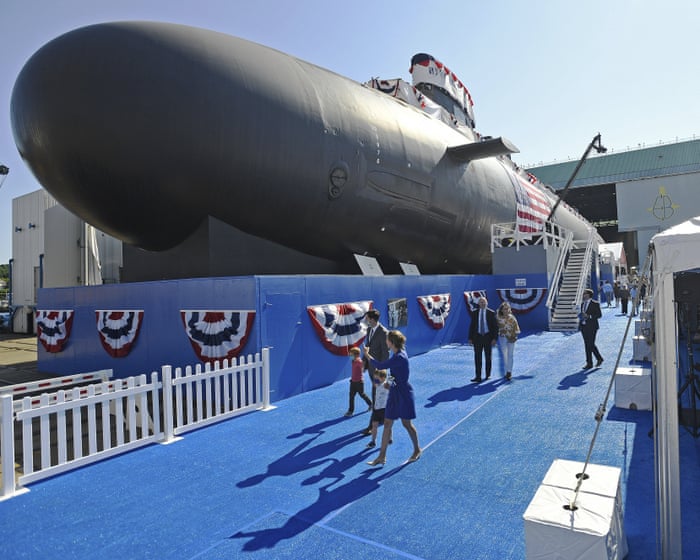
Australia will buy secondhand Virginia-class nuclear submarines from the United States under the Aukus agreement, which also includes the UK.
The deal is worth about $368 billion and is a multi-decade commitment.
The Greens argue that the submarines could draw Australia into a US conflict with China.
Greens’ defense spokesperson David Shoebridge prefers conventional submarines to protect Australia’s borders.
Shoebridge said the main danger is losing Australia’s sovereignty to the US, not China’s military actions.
Prime Minister Albanese rejected the Greens' advice, saying Aukus is "full-steam ahead" and that the US alliance is important.
Australian ministers are set to discuss Aukus and other international relationships with counterparts from the UK, Germany, France, and Finland soon.
The government says buying “in-service” submarines saves money on costs like training and maintenance.
Read the Original
Want the full story? Tap a source to open the original
article.
Peru is holding a presidential runoff election between conservative Keiko Fujimori and leftist Roberto Sanchez. Voters will choose the country's ninth president in 10 years amid concerns about political instability, crime, and distrust in institutions.
Key Facts
The runoff election is between Keiko Fujimori, a conservative, and Roberto Sanchez, a leftist.
Peru has had eight presidents in the last 10 years, reflecting political instability.
The April first-round vote had logistical problems and fraud allegations.
About 27 million Peruvians can vote for a president who will serve a five-year term.
Fujimori is making her fourth attempt to become president; her father was a former president accused of human rights abuses.
Sanchez is a psychologist and former congressman linked to former president Pedro Castillo.
Crime and insecurity are major concerns for Peruvians, with a sharp rise in extortion cases.
Neither candidate has legislative majority support, so the winner will need alliances to govern effectively.
Read the Original
Want the full story? Tap a source to open the original
article.
The United States and Iran have been close to reaching a peace deal several times since the conflict began in late February. Direct talks in Islamabad in April ended without an agreement, with key issues like Iran’s nuclear program and regional violence remaining unresolved.
Key Facts
The conflict started on February 28 with joint US and Israeli strikes on Tehran, called Operation Epic Fury.
Iran retaliated by attacking Israeli and US forces in the Gulf region.
A temporary ceasefire, mediated by Pakistan, began on April 8 but direct talks failed on April 12.
The US delegation in Islamabad was led by Vice President JD Vance and included key advisers; Iran’s team included senior government officials.
Iran demanded Israel stop strikes in Lebanon and the unfreezing of Iranian assets as conditions for peace.
The US demanded Iran commit not to pursue a nuclear weapon long-term.
Iran enriches uranium to 60 percent purity, which is higher than needed for peaceful energy but below weapons-grade; the US and allies worry Iran could quickly reach weapon-ready levels.
No direct talks have taken place since the Islamabad meetings, and fears of renewed fighting remain.
Read the Original
Want the full story? Tap a source to open the original
article.
Chinese President Xi Jinping visited North Korea to meet Kim Jong Un in Pyongyang, marking his first trip there since 2019. The visit reflects China’s concern over North Korea’s growing ties with Russia and the potential impact on regional security.
Key Facts
Xi Jinping rarely travels abroad, with fewer trips since 2019; this visit is unusual and important.
China is North Korea’s main trade partner, accounting for up to 95% of its trade.
North Korea has supported Russia’s military efforts in Ukraine, receiving up to $14.4 billion since 2023.
Much of North Korea’s payment from Russia may have been in the form of military technology and parts.
China is cautious about North Korea gaining advanced military strength, especially from Russia.
North Korea has conducted multiple missile tests this year and recently showed a new AI-guided missile.
Kim Jong Un toured a nuclear materials factory that could boost North Korea’s nuclear abilities.
The Korean Peninsula remains tense, as the Korean War never officially ended.
Read the Original
Want the full story? Tap a source to open the original
article.
Pope Leo made his first visit to Spain, where over 500,000 people gathered in Madrid to see him. The visit is described as historic by local authorities.
Key Facts
Pope Leo visited Spain for the first time as pope.
More than 500,000 people gathered in Madrid to see him.
This visit is considered historic by Madrid authorities.
The event took place on June 6, 2026.
Large crowds showed significant interest and participation in the visit.
Read the Original
Want the full story? Tap a source to open the original
article.