Israeli politicians are focusing their election campaigns on security and regional threats, but they are not addressing the rising national debt caused by ongoing conflicts. Defense spending and war costs have significantly increased Israel’s debt, which reached about $480 billion in 2025, putting pressure on the country’s economy.
Key Facts
Israel’s parliament is preparing for elections in October 2025.
Politicians focus on threats from neighboring countries rather than economic issues.
Israel spent about 350 billion shekels ($118 billion) on wars between 2023 and 2026, excluding the Iran conflict.
Defense spending alone rose from 5.2% of GDP in 2023 to over 8% in 2024.
National debt increased from 1.07 trillion shekels ($365 billion) before October 2023 to around 1.4 trillion shekels ($480 billion) in 2025.
Tax revenues reached a record 509.3 billion shekels ($172.6 billion) in 2025, but expenses for defense and debt servicing are growing faster.
More wealthy Israelis are leaving the country, which may hurt tax revenue.
The ultra-Orthodox population, which receives substantial government welfare and often does not serve in the military, is growing and poses fiscal challenges.
Read the Original
Want the full story? Tap a source to open the original
article.
Kazakhstan is holding a new parliamentary election to choose members of a single-chamber legislature. The election is expected to strengthen the power of President Kassym-Jomart Tokayev and features only parties approved by the state.
Key Facts
Voting started at 7am and will end at 8pm local time.
Over 12 million people out of 20 million can vote.
The new parliament has 145 seats and replaces the previous two-chamber system.
Only seven parties loyal to President Tokayev could field candidates.
Constitutional changes let Tokayev run for president again in 2029.
Tokayev became president in 2019, succeeding Nursultan Nazarbayev.
Tokayev has promoted reforms after protests in 2022 that caused many deaths.
Kazakhstan is rich in oil and exports mainly to Europe through Russia.
Read the Original
Want the full story? Tap a source to open the original
article.
FIFA President Gianni Infantino attended a youth football event in the Caribbean despite requests to stay away during a controversy involving his plan to sell future World Cup profits. The plan was withdrawn after backlash, but Infantino faces opposition from FIFA vice presidents and seeks re-election in 2025.
Key Facts
Gianni Infantino attended an Under-14 football event in the Caribbean amid controversy.
Victor Montagliani, a FIFA vice president, asked Infantino not to attend to avoid distractions from the games.
Infantino posted photos of his meeting with officials from the Dominican Republic at the event.
Infantino proposed selling future World Cup profits to private investors but withdrew the plan after criticism.
The controversy led to the firing of FIFA’s chief operating officer, Kevin Lamour.
Some FIFA vice presidents accuse Infantino of deception and want to end his presidency.
Infantino aims to be re-elected for a fourth term as FIFA president in 2025.
FIFA’s election for president will be held in March 2025 in Morocco, with a November deadline for candidates to enter.
Read the Original
Want the full story? Tap a source to open the original
article.
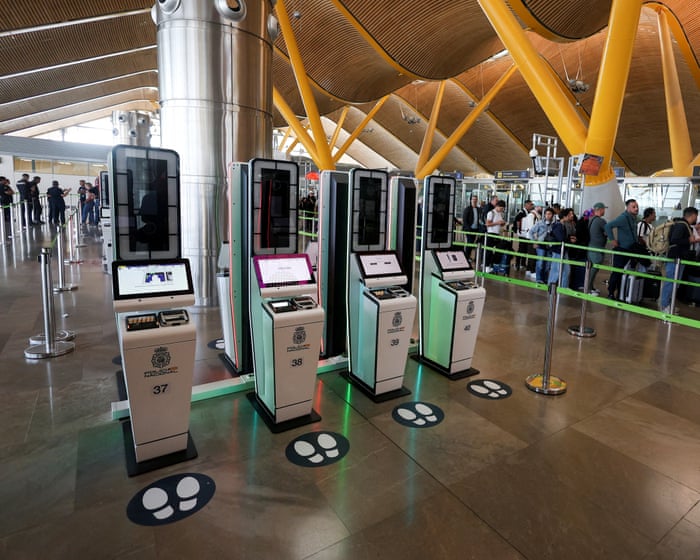
The European Union introduced a new digital system called the Entry and Exit System (EES) to register non-EU travelers when they enter and leave the Schengen area. This system has caused long waits and confusion for travelers from the UK this summer, with some facing delays and errors in their travel records.
Key Facts
The EES requires non-EU citizens to register with their photo and fingerprints when entering and leaving the Schengen zone.
The system has been fully active since April but faced technical problems and caused long queues.
Some travelers have experienced delays up to three hours and missed connecting flights.
Authorities allowed border police to ease rules if queues became too long, but the opt-out expires soon.
A traveler named Martin Farrall had his exit from the Schengen zone not properly recorded, causing errors in his allowed travel days.
Another traveler, Nadia, found the system confusing and experienced very long lines at Frankfurt airport.
The EU has declined calls to pause the system during the busy summer travel season.
Problems include lack of communication between member states and unclear instructions for travelers.
Read the Original
Want the full story? Tap a source to open the original
article.
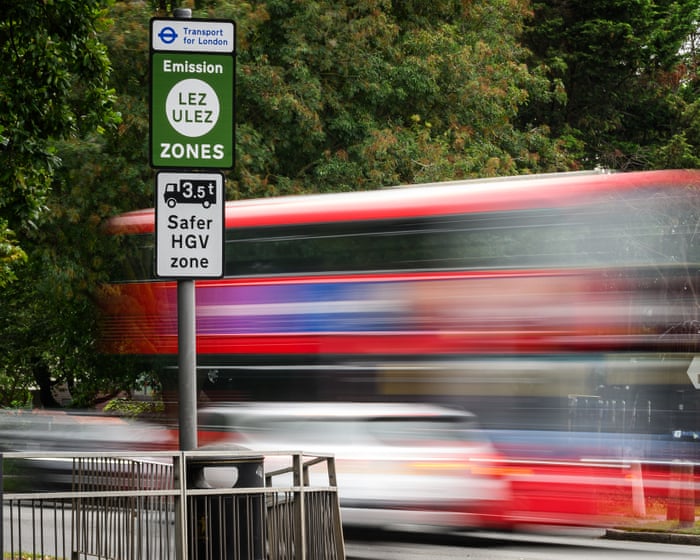
London’s low emission zone (Ulez), which charges fees to polluting vehicles, has improved air quality and children's lung health since its introduction in 2019. Despite clear health benefits, many cities worldwide hesitate to adopt similar policies because of political opposition and different pollution causes.
Key Facts
London introduced the ultra-low emission zone (Ulez) in 2019, expanding it in 2021 and 2023.
Ulez charges £12.50 daily for vehicles that emit high pollution levels.
The Ulez has significantly reduced nitrogen dioxide, a harmful air pollutant.
A study found children's lungs in London have grown stronger since Ulez started.
Air pollution causes millions of deaths yearly and contributes to many health problems, including heart disease, stroke, cancer, and developmental issues.
Different regions have varied air pollution sources, such as coal in China and India and agricultural burning in Southeast Asia.
Effective technology and policies exist to reduce pollution, including renewable energy, electric vehicles, public transport, and city redesign.
Political resistance and cultural factors slow the adoption of clean air policies in many cities.
Read the Original
Want the full story? Tap a source to open the original
article.
Trade talks between the United States and Canada ended without a deal, leading to new tariffs on goods traded between the two countries. President Donald Trump criticized Canada for wanting benefits like a U.S. state but not being one, while Canadian Prime Minister Mark Carney announced tariffs targeting U.S. steel and dairy products.
Key Facts
U.S. tariffs of 50% on about $20 billion of Canadian goods, including hockey sticks and cement, took effect after talks failed.
Canada responded with retaliatory tariffs on U.S. steel and dairy, starting September 8.
President Trump said Canada had charged high tariffs on U.S. farmers and claimed Canada wants “the benefits of being a State, without being one.”
Canadian Prime Minister Carney called the U.S. trade offer unfair and said new U.S. conditions were unacceptable.
U.S. Trade Representative Jamieson Greer said the U.S. had offered to reduce some tariffs to give Canada favorable treatment.
Canada is seeking relief from U.S. tariffs on autos, steel, and aluminum that have hurt its economy and caused job losses.
Talks broke down partly due to late U.S. demands on Canada’s trade deals with other countries and alleged threats to Quebec’s French language and culture.
The White House accused Canada of discriminatory treatment against U.S. alcohol, autos, and dairy products.
Read the Original
Want the full story? Tap a source to open the original
article.
Kazakhstan held early parliamentary elections to form a new single-chamber parliament, the Kurultai, expected to increase President Kassym-Jomart Tokayev’s power. The election follows a constitutional change that lets the president appoint key officials and could allow Tokayev to run for another term.
Key Facts
The election took place on August 23, 2026.
Kazakhstan moved from a two-chamber parliament to a single-chamber body called the Kurultai.
President Tokayev has been in power since 2019 and was previously a Soviet official and UN diplomat.
A March 2026 referendum, supported by 87% of voters, approved constitutional changes strengthening presidential powers.
These changes allow the president to appoint key officials with parliament's approval and reestablish the vice presidency.
The Constitutional Court ruled that the amendments reset Tokayev’s previous terms, allowing him to seek another seven-year term.
The election comes during economic difficulties, including 10.2% inflation and public discontent from tax increases.
Authorities aim to avoid unrest similar to January 2022 protests that turned violent.
Read the Original
Want the full story? Tap a source to open the original
article.
Eastbourne, a seaside town in Britain, faced problems in the Victorian era because it did not have enough public toilets for its many visitors. After a large number of people used an inadequate spot for toilets in 1870, the local council started to build public toilets, although some resisted this. Women’s public toilets were introduced many years later, around 1900.
Key Facts
Eastbourne grew into a popular seaside resort during the Victorian era with thousands of tourists arriving by train.
In 1870, over 1,000 people used a small stable near the pier as a toilet, exposing the lack of public toilets.
The first men’s public toilet was built in 1873 near the seafront on military land, but no sign was put up until 1890.
Some local landowners, like the Duke of Devonshire, opposed public toilets on their land, calling them improper.
The town council was male-led and initially rejected plans for women’s public toilets until around 1900.
The growing number of tourists finally pushed the council to provide necessary public conveniences.
Today, some public toilets in Eastbourne, such as those at Eastbourne Pier, charge £1 to use.
Read the Original
Want the full story? Tap a source to open the original
article.
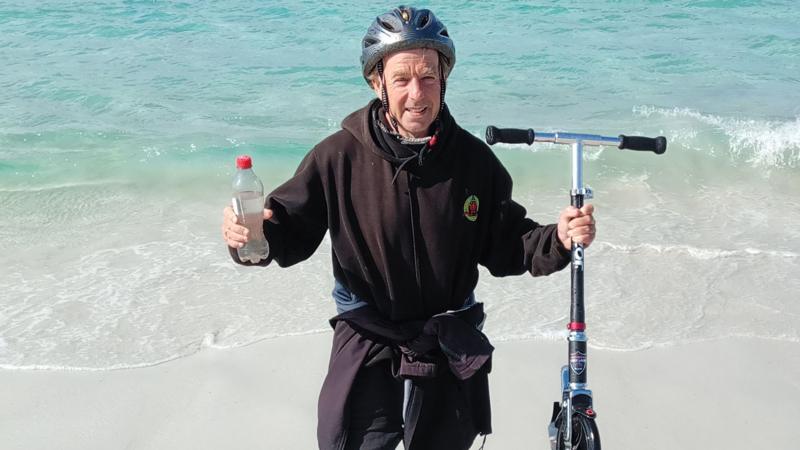
Bob Brown from Cornwall, UK, completed a 2,800-mile journey across Australia on a non-electric kick scooter, traveling from Perth to Sydney. He finished the trip in 31 days and aims to break two Guinness World Records for crossing Australia by scooter and using three different methods: running, cycling, and scootering.
Key Facts
Bob Brown started his scooter journey in July and finished in Sydney on Monday.
The total distance traveled was about 2,800 miles (4,506 km).
He previously ran and cycled across Australia, making him the first person to cross by these three methods.
Brown's goal was to raise £5,000 for three charities: MacMillan Cancer Support, St Luke’s Hospice, and Children’s Hospice South West.
He experienced two accidents during the trip: a collision with a vehicle on day five and a broken handlebar on the last day.
Despite injuries, he completed the journey in 31 days, 4 hours, and 10 minutes.
Brown submitted his records to Guinness World Records and is waiting for official confirmation.
He hopes to inspire young people to spend less time on screens and more time on adventures.
Read the Original
Want the full story? Tap a source to open the original
article.
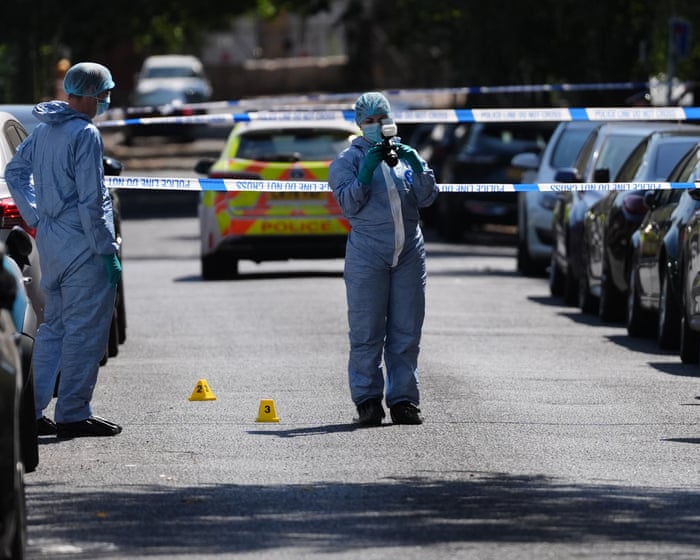
A recent study found that most unsolved murder cases in London involve victims who are non-white, especially black people. Black victims make up a large share of unsolved shootings and stabbings, and police say low trust in law enforcement in these communities makes investigations harder.
Key Facts
Non-white British people were 61% of all murder victims in London from 2019 to 2023.
About 93% of unsolved murder cases during this time involved non-white victims.
Black people were involved in 40% of all homicides but 73% of unsolved murder cases.
83.7% of unsolved shootings and 73.5% of unsolved stabbings involved black victims.
Police say low trust in the police among black communities reduces witnesses coming forward.
Shootings are harder to solve than stabbings and make up a larger share of unsolved murders.
The average age of victims in unsolved cases is 28, younger than the overall average of 36.
From 2015 to 2024, there were 110 unsolved murders out of 1,222 total in London, about 9%.
Read the Original
Want the full story? Tap a source to open the original
article.
Kazakhstan is holding a parliamentary election on August 23 to choose members of its new single-chamber legislature called the Kurultai. This election follows constitutional changes that replaced the old two-chamber parliament and aims to strengthen President Tokayev’s control.
Key Facts
The election is for all 145 seats in Kazakhstan’s new unicameral (single-chamber) parliament.
Parties must get at least 5% of the vote to enter parliament.
The previous parliament had two chambers: the Mazhilis (lower house) and the Senate (upper house).
New laws will now be passed only by the Kurultai and then sent to the president for approval.
Presidents can serve only one seven-year term under the new rules, but President Tokayev can run for a third term because the new system resets his term count.
Seven political parties are competing, including the new Adilet party formed by the former ruling party Amanat.
The Adilet party supports policies to improve incomes, the economy, infrastructure, and digital services.
International observers from about 30 countries will monitor the election to ensure fairness.
Read the Original
Want the full story? Tap a source to open the original
article.
Former Colombian President Gustavo Petro criticized Colombia’s decision to restore diplomatic ties with Israel while Prime Minister Benjamin Netanyahu is in power. Petro called this move supportive of what he described as a genocide in Gaza. The current right-wing Colombian government reestablished relations with Israel two years after Petro cut them off.
Key Facts
Gustavo Petro is the former president of Colombia.
Colombia restored diplomatic relations with Israel after breaking them two years ago.
The restoration happened under Colombia’s new right-wing government.
Petro criticizes this decision as supporting violence against Gaza.
Benjamin Netanyahu is the current Prime Minister of Israel.
Petro describes the situation in Gaza as a genocide.
The diplomatic break was originally made by Petro’s administration.
The article focuses on international relations between Colombia and Israel.
Read the Original
Want the full story? Tap a source to open the original
article.
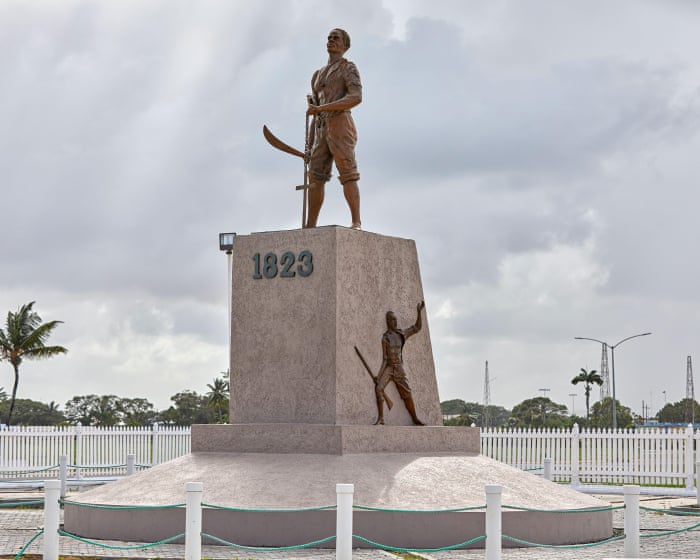
A British company named Sandbach, Tinne and Company continued to illegally traffic enslaved Africans to Guyana for about 40 years after slavery was officially abolished. This discovery comes from a book by Malik Al Nasir and has led to a new research project investigating the financial networks behind slavery.
Key Facts
Britain ended the slave trade in 1807 and banned slavery in most of its empire in 1833.
Sandbach, Tinne and Company received large payments from the British government as compensation for freed enslaved people.
Evidence shows the company continued bringing enslaved Africans to Guyana illegally after slavery ended.
A letter from 1847 describes a ship carrying over 300 people treated as "cargo," indicating illegal trafficking.
The company and families involved were major players in the sugar trade in Guyana and linked to prominent British figures.
John Gladstone, a plantation owner, received the largest individual government payout after abolition.
British taxpayers only finished paying off the debt from these compensation payments in 2015.
The findings have inspired research to better understand how financial networks supported slavery even after it was banned.
Read the Original
Want the full story? Tap a source to open the original
article.
Tourists visiting ancient sites in Athens, Greece, are widely wearing sunhats to protect themselves from strong heat and sun. Hat sales have increased as more visitors face high temperatures and long hours outdoors near the Acropolis.
Key Facts
The Acropolis had about 4.6 million visitors in 2025, a record for Greek tourism.
Many tourists wear different types of hats like straw boaters, Panama hats, baseball caps, and bucket hats.
Athens is experiencing hot weather with temperatures in the mid-30s Celsius (mid-90s Fahrenheit).
Hat sellers report growing demand, with prices ranging from 6 euros to over 100 euros for handmade hats.
Health groups and Red Cross volunteers give out sun protection supplies like sunscreen, water, and hats at the Acropolis.
The increased use of hats reflects greater awareness of sun dangers such as ultraviolet exposure and heat stroke.
Even a carriage horse near the Acropolis has been seen wearing a hat for sun protection.
Local hatmakers use traditional methods to produce stylish sunhats for tourists.
Read the Original
Want the full story? Tap a source to open the original
article.
A bomb exploded in Sevastopol, Crimea, killing Robert Shageev, a Russian naval commander, on August 13. Margarita Reutt, a 32-year-old woman from Sochi, was arrested and accused of carrying out the attack for Ukrainian intelligence, which she reportedly admitted to.
Key Facts
The bomb was hidden in a rubbish bin and exploded as Robert Shageev, a deputy commander in the Russian Black Sea fleet, walked by.
Shageev had previously been a commander of Ukraine’s only submarine before switching to Russia after Crimea’s annexation in 2014.
Margarita Reutt was detained shortly after the explosion in Sochi, about 300 miles from Sevastopol.
Investigators found a remote control they believe was used to detonate the bomb.
Russian security services say Reutt confessed and claimed she was promised payment in cryptocurrency and documents to leave Russia after the attack.
Friends describe Reutt as warm and adventurous, with growing dissatisfaction toward Russia before the event.
Russian authorities quickly accused Ukrainian intelligence of orchestrating the attack, but Kyiv has not commented.
Similar attacks on Russian military officers have been linked to Ukraine since the start of the invasion.
Read the Original
Want the full story? Tap a source to open the original
article.
Canada’s provincial leaders and Prime Minister Justin Trudeau responded strongly after U.S. President Donald Trump placed 50% tariffs on $20 billion worth of Canadian goods. British Columbia Premier David Eby said President Trump cannot be trusted in trade matters.
Key Facts
The U.S. imposed a 50% tax on $20 billion of goods imported from Canada.
This move was made by U.S. President Donald Trump.
Canada’s Prime Minister Justin Trudeau spoke out against these tariffs.
Several Canadian provincial premiers also criticized the decision.
British Columbia Premier David Eby said President Trump is not reliable in trade relations.
The tariffs are part of a trade conflict between the U.S. and Canada.
This disagreement affects trade between the neighboring countries.
The tariffs target specific goods from Canada to the U.S.
Read the Original
Want the full story? Tap a source to open the original
article.
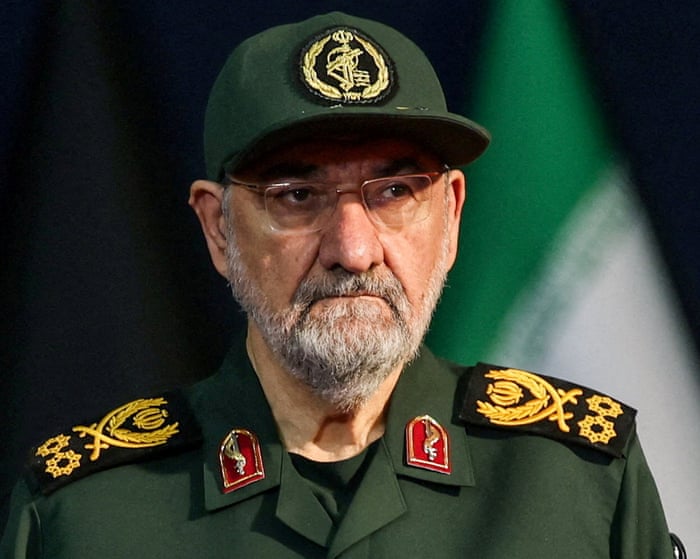
Iran’s new security chief warned neighboring countries not to join U.S. efforts to hurt Iran’s economy and threatened to target their interests if they do. Meanwhile, President Trump has suggested declaring the Strait of Hormuz, a key oil shipping route, as U.S. territory amid ongoing tensions and sanctions against Iran.
Key Facts
Mohsen Rezaei was appointed as Iran’s supreme national security council leader and has a hardline stance.
Rezaei warned neighbors that join the U.S. economic campaign against Iran will be seen as enemies and targeted.
Iran has previously targeted only U.S. military bases but may strike U.S. economic interests abroad if sanctions continue.
President Trump announced a new U.S. campaign to isolate Iran’s economy and threatened economic consequences for countries helping Iran.
Trump repeatedly mentioned wanting to declare the Strait of Hormuz as U.S. territory; this strait handles about 20% of the world’s oil supply.
The UAE recently suspended all trade and financial links with Iran due to U.S. pressure.
China criticized the U.S. sanctions campaign, saying it won’t solve Middle East conflicts.
France and Saudi Arabia plan to discuss developing alternative oil routes that bypass the Strait of Hormuz.
Read the Original
Want the full story? Tap a source to open the original
article.
In rural Chad, solar-powered Telemedan kiosks let people see doctors remotely, reducing long and costly trips to distant towns. These kiosks provide basic health checks with the help of local operators and connect patients to doctors through the internet or phone networks.
Key Facts
Traveling to see a doctor in Chad can be expensive and difficult for people living in rural areas.
Telemedan kiosks use solar power, so they work without reliable electricity.
Local operators help patients take measurements like blood pressure and temperature before a doctor joins the consultation remotely.
The kiosks can store patient information offline and sync when internet access returns.
Patients without internet can book appointments using a simple phone service called USSD.
Telemedan consultations cost between $2 and $15, much less than typical travel and medical expenses.
The project started in 2021 and now operates 37 kiosks in 11 provinces, reaching around 143,000 people.
The program is expanding by using artificial intelligence to help detect diabetic eye disease.
Read the Original
Want the full story? Tap a source to open the original
article.
That's the point of this site, and readers keep it that way. Support for any amount and the daily digest lands in your inbox every morning at 7am Eastern.
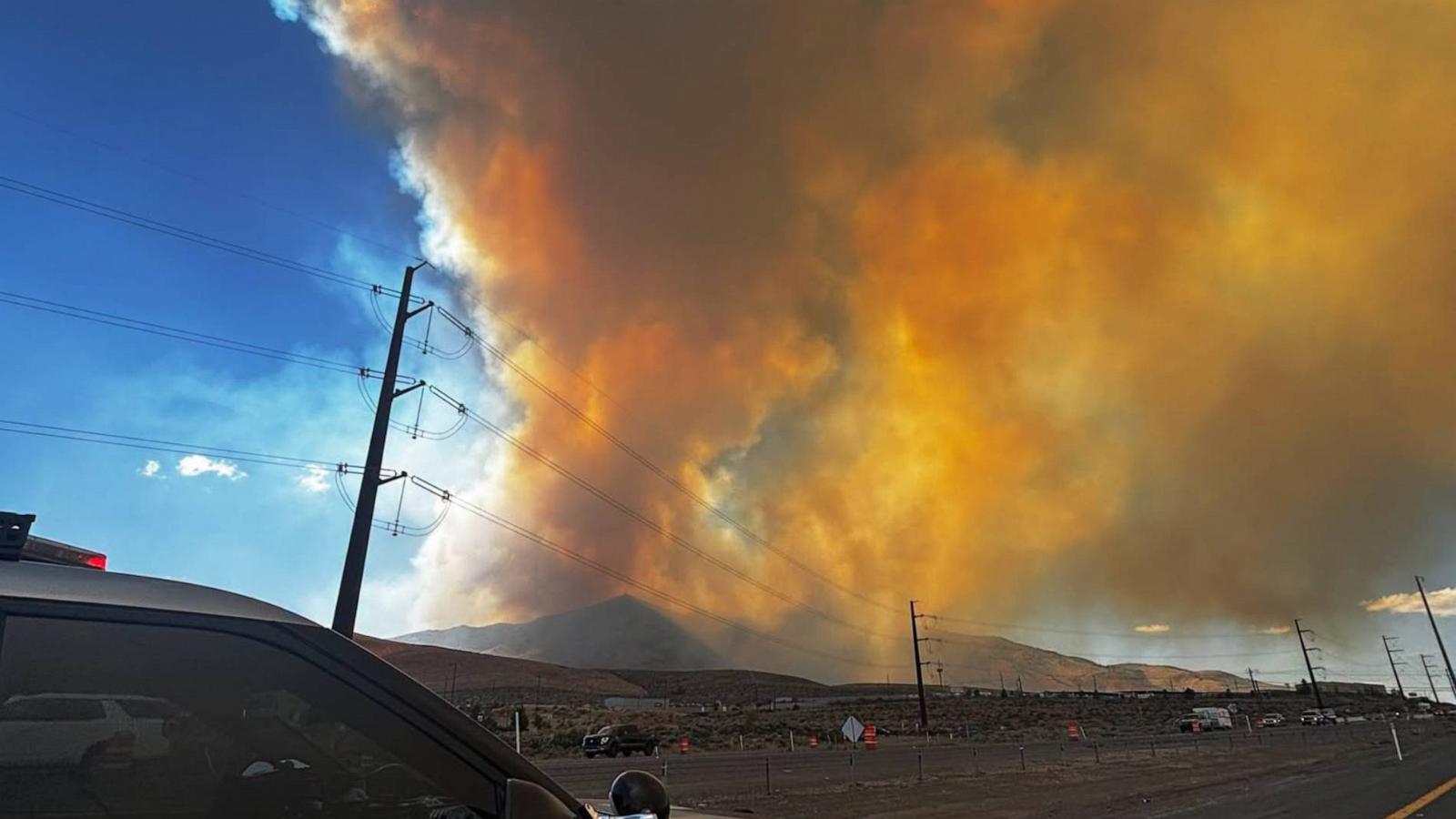
A wildfire called the Hawk Fire quickly grew to over 8,000 acres near Reno, Nevada. The fire threatened about 1,000 homes and caused evacuations as strong winds pushed the fire toward residential areas.
Key Facts
The Hawk Fire started on a hillside just outside Reno, Nevada.
It expanded rapidly to more than 8,000 acres in size.
Around 1,000 homes were at risk from the fire.
Authorities ordered evacuations to protect residents.
Wind played a major role in spreading the fire quickly.
Firefighters faced challenges saving homes due to the fire’s speed.
Residents were advised to leave early if told to evacuate and prepare emergency bags.
The fire was moving northeast as of Saturday evening.
Read the Original
Want the full story? Tap a source to open the original
article.
The union representing Boston Symphony Orchestra musicians has approved the first strike in the orchestra’s 145-year history. This decision comes as their current contract expires and talks with management have not reached an agreement.
Key Facts
The Boston Musicians’ Association union authorized a strike for the first time ever.
Their three-year contract with the orchestra ends at 11:59 p.m. Sunday.
The Boston Symphony Orchestra plans to open its season on September 17.
Relations have been tense since the orchestra decided to end the contract of music director Andris Nelsons after 13 years.
The union says management has not accepted their request for a mediator to help with negotiations.
The union wants a fair contract to restore trust after recent disagreements.
The orchestra’s management has not yet commented on the strike authorization.
Read the Original
Want the full story? Tap a source to open the original
article.