Turkish President Recep Tayyip Erdogan urged Russia and Ukraine to stop attacks on civilian ships in the Black Sea. Erdogan and Ukrainian President Volodymyr Zelenskyy agreed to work on a grain corridor, while U.S. Secretary of State Marco Rubio said the United States is reviewing proposals to help resume grain shipments.
Key Facts
Erdogan and Zelenskyy met in Istanbul and discussed Black Sea security.
Erdogan said attacks on civilian vessels were unacceptable, regardless of who carried them out.
Zelenskyy said he and Erdogan agreed to work on a Black Sea grain corridor.
Turkiye has sent Russia and Ukraine a proposal to stop attacks on shipping, but Ankara said neither side had acted on it.
Rubio said there was growing international interest in a limited Black Sea ceasefire to protect grain and energy shipments.
Rubio said the United States was reviewing proposals from Turkiye and India to restart grain shipments.
Erdogan said Turkiye was ready to support diplomatic efforts to end the Russia-Ukraine war.
The Kremlin said the next round of Russia-Ukraine-U.S. talks was planned for November in the United Arab Emirates.
Read the Original
Want the full story? Tap a source to open the original
article.
Tens of thousands of young people joined demonstrations across Germany on Saturday, organized by the group “GenZ regelt!” They called for more education funding and protested the cost of living; most marches were peaceful during the day, but clashes broke out in several cities in the evening.
Key Facts
Demonstrators gathered in cities across Germany on October 31, 2026.
The group “GenZ regelt!” organized the nationwide protests.
Protesters called for more funding for education and raised concerns about the cost of living, school conditions and government spending cuts.
The marches drew inspiration from youth movements in France and Italy.
Police said some protesters threw fireworks, stones and bottles at officers and emergency workers.
Police used water cannon and pepper spray in cities including Frankfurt, Hamburg, Cologne and Leipzig.
Several police officers were injured, and police made several arrests.
Demonstrators in Berlin carried signs including “Merz must go,” referring to Chancellor Friedrich Merz.
Read the Original
Want the full story? Tap a source to open the original
article.
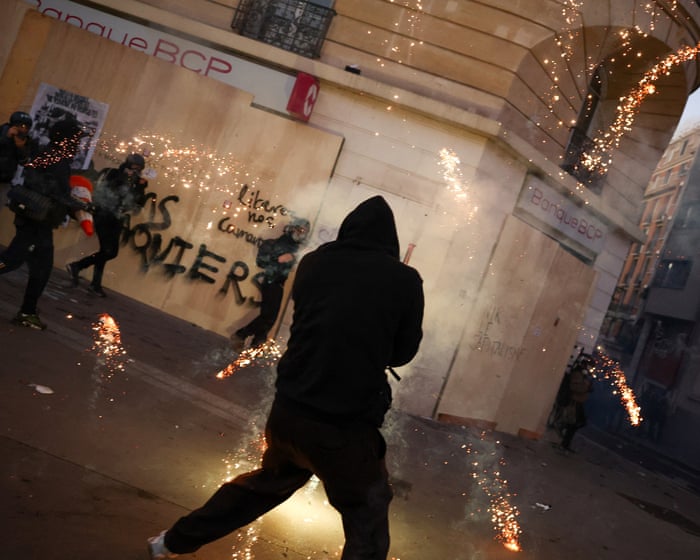
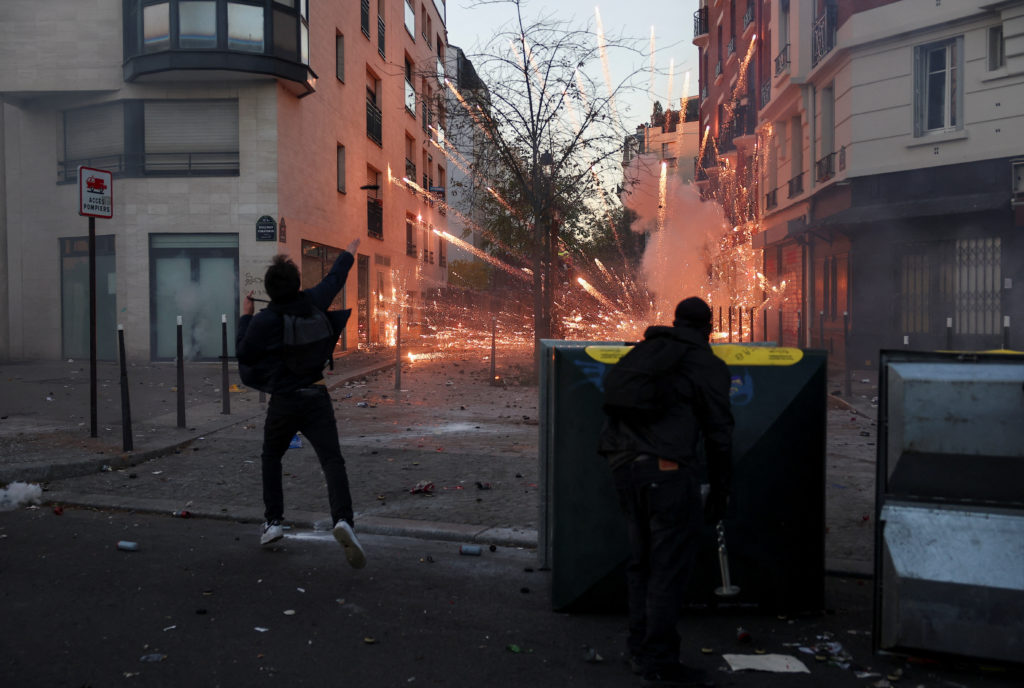
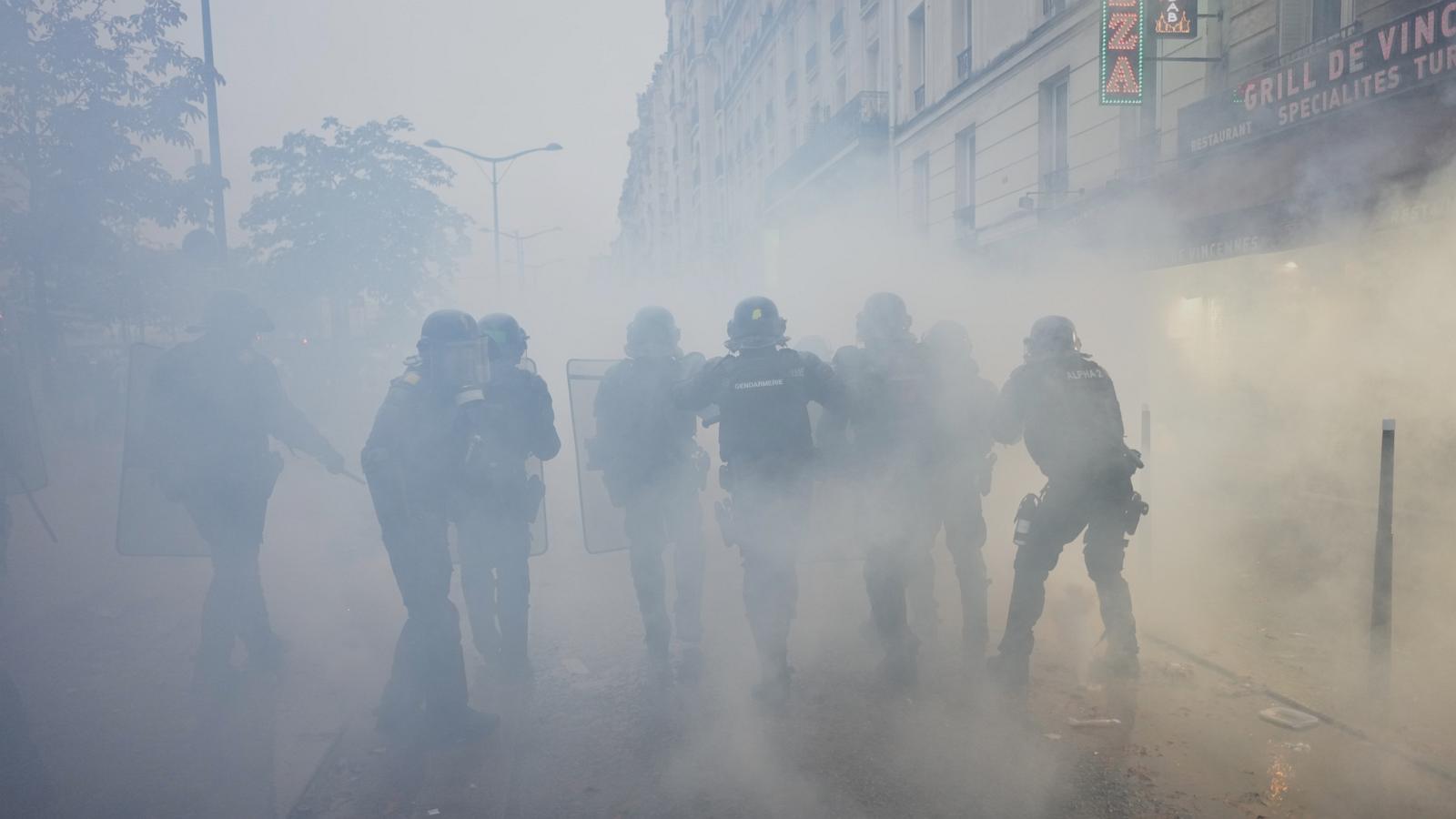
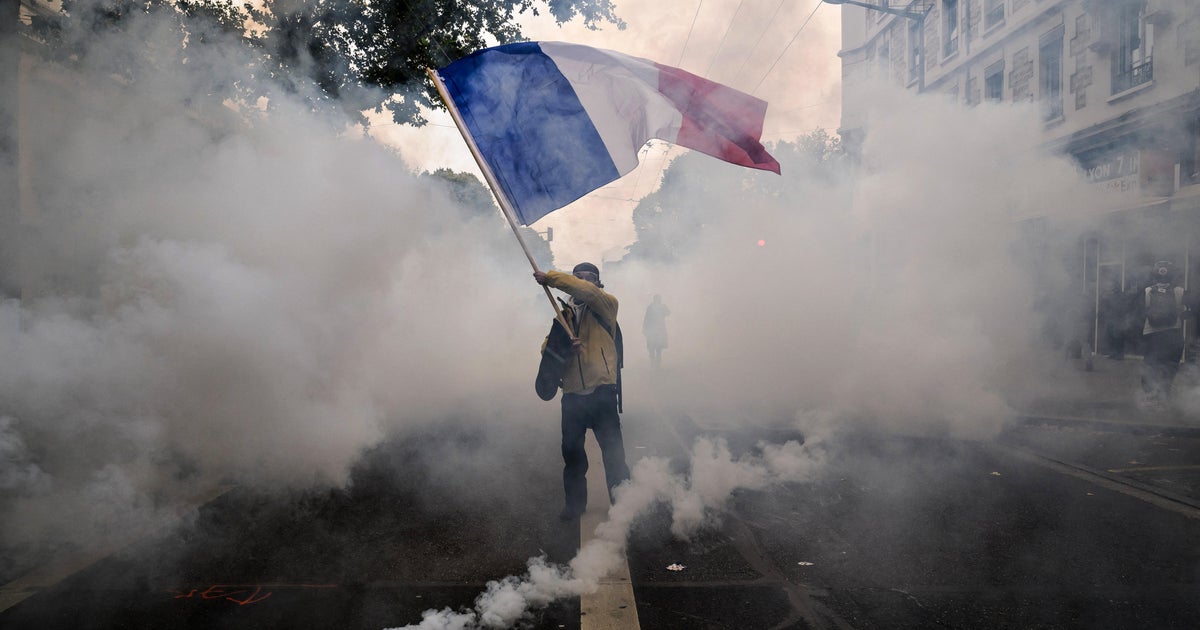
Police fired tear gas and clashed with protesters on the outskirts of Paris during the third weekend of nationwide demonstrations over the rising cost of living and poor public services. France’s interior ministry said more than 320,000 people demonstrated nationwide and at least 290 were arrested.
Key Facts
The demonstrations took place for a third weekend across France.
Protesters cited the rising cost of living and poor public services.
Police fired tear gas and clashed with protesters on the outskirts of Paris.
France’s interior ministry reported more than 320,000 participants nationwide.
At least 290 protesters were arrested, according to the ministry.
Police estimated that about 70,000 people joined the demonstration in Paris.
Authorities prepared for the protests after violence, rioting and looting two weeks earlier.
Read the Original
Want the full story? Tap a source to open the original
article.
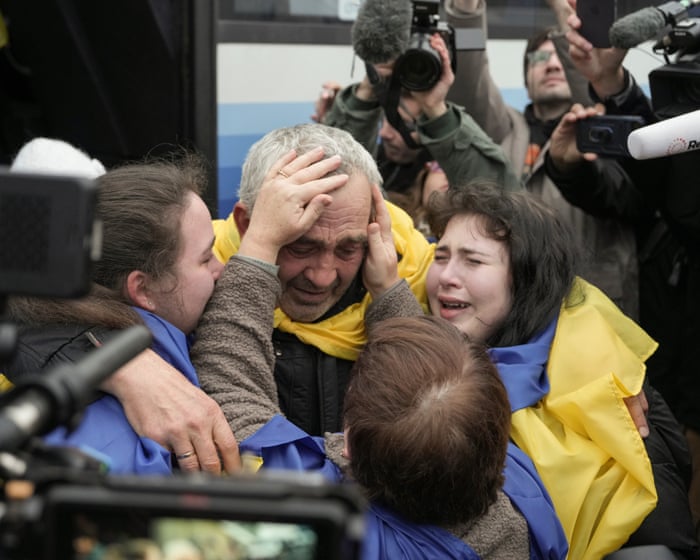
Hundreds of residents evacuated from Russian-occupied Oleshky in Ukraine’s Kherson region and arrived in Chernihiv on Saturday. Evacuees described worsening shelling, shortages of food and dangerous travel routes, while worrying about residents still in the city.
Key Facts
Russia seized Oleshky during the first days of its full-scale invasion of Ukraine in February 2022.
Residents said shelling, drone attacks and mines made daily life and escape dangerous.
Olha and Viacheslav said they crossed minefields earlier this month while looking for food.
A humanitarian ceasefire in the Kherson region enabled an evacuation, according to the article.
Residents had a four-hour window on Friday to leave; 25 buses were arranged for up to 750 evacuees.
The evacuees travelled through Russian-occupied territory to southern Russia, then flew to Belarus before reaching Chernihiv.
Authorities estimated that up to 6,000 people remained in Oleshky and nearby areas, including about 1,700 in the city itself.
Read the Original
Want the full story? Tap a source to open the original
article.
Palestinian farmers in Beita, in the occupied West Bank, harvest olives before dawn while watching for Israeli settlers and preparing to flee in case of an attack. The article says more than 200 settler attacks have been recorded since September and describes olive harvesting as a dangerous activity for Palestinians.
Key Facts
Farmers in Beita begin picking olives at 5 a.m.
Farmers place stones on roads as barricades.
Farmers keep watch for Israeli settlers while harvesting.
They prepare to flee if they are attacked.
More than 200 settler attacks have been recorded since September.
The article identifies the area as the occupied West Bank.
Read the Original
Want the full story? Tap a source to open the original
article.
A temporary truce in Ukraine’s Kherson region enabled civilians to leave Russian-occupied Oleshky and cross into Ukrainian-held territory, where families and aid groups welcomed them. Ukrainian officials have not disclosed how many people evacuated, while Melania Trump said the convoy could safely evacuate more than 750 people.
Key Facts
The rescue operation began on Friday, and evacuees crossed into Ukrainian-held territory on Saturday.
The truce began early Tuesday and was expected to last through Sunday evening.
Residents described shortages of staple food and dangers from drones and landmines in Oleshky.
About 2,000 people were estimated to remain in the city when the truce took effect; they could leave for Ukrainian- or Russian-held territory or stay with replenished supplies.
Ukrainian authorities have withheld the number of evacuees and details of their route.
Melania Trump said on Friday that the humanitarian convoy could safely evacuate more than 750 people.
Ukraine’s human rights ombudsman said evacuees ranged from just over one year old to 94 and brought pets.
Relatives and volunteers from the Red Cross, Doctors Without Borders and World Central Kitchen met evacuees at the border.
Read the Original
Want the full story? Tap a source to open the original
article.
The analysis argues that transactional support from the Trump administration helped Javier Milei and Nasry Asfura win narrow victories. It contrasts that support with punitive measures applied to Brazil, which it says contributed to the defeat of pro-Washington candidates.
Key Facts
The article examines recent elections in several countries.
It says transactional support from the Trump administration helped Javier Milei win a narrow victory.
It says the same kind of support helped Nasry Asfura win a narrow victory.
It says the administration applied punitive measures to Brazil.
It links those measures to the defeat of pro-Washington candidates in Brazil.
Read the Original
Want the full story? Tap a source to open the original
article.
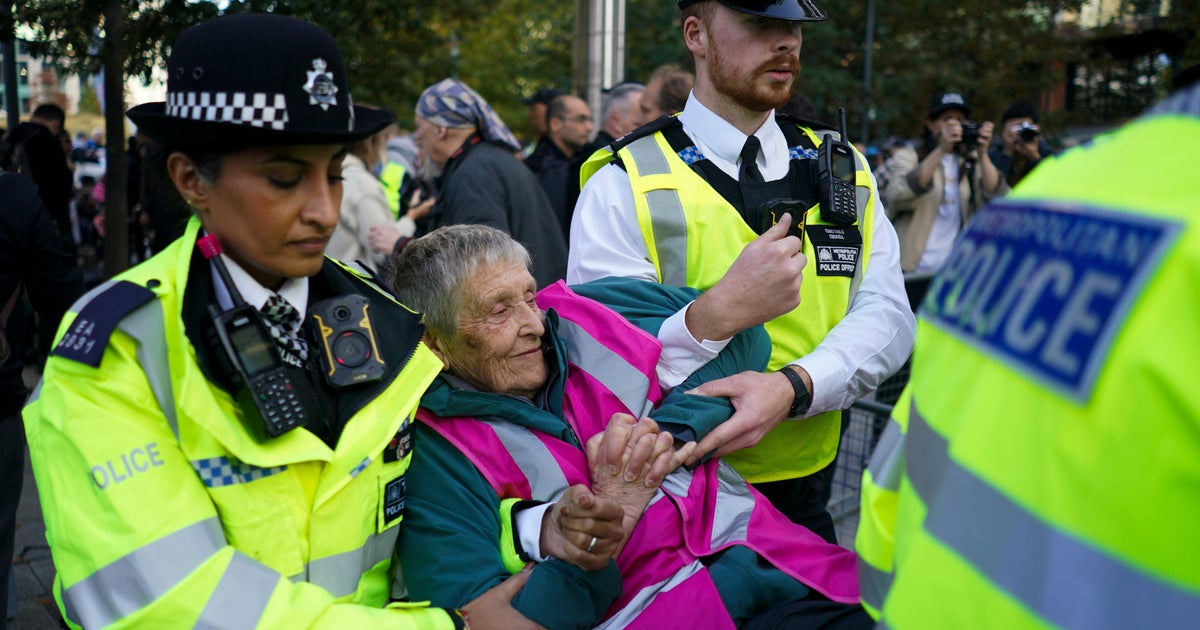
London police arrested at least 48 people at a protest against the UK’s ban on Palestine Action. The rally took place before a Supreme Court appeal challenging the group’s proscription, which took effect in July 2025.
Key Facts
Hundreds of people gathered outside the US embassy in London on Saturday to protest the ban.
The Metropolitan Police said most arrests were for expressing support for a proscribed organisation and that arrests were continuing.
Palestine Action was designated a terrorist organisation under UK law in July 2025.
The Supreme Court is scheduled to hear an appeal challenging the proscription on Wednesday.
Protesters also gathered outside the US consulate in Edinburgh; the article reported no arrests there.
Defend Our Juries said Saturday’s arrests brought the total detained for defying the ban to more than 4,000 since July 2025.
Labour MP John McDonnell and Amnesty International UK called for the government to reverse the proscription.
Read the Original
Want the full story? Tap a source to open the original
article.
Ukrainian residents who had been trapped for years in Russian-occupied Oleshky reached Ukrainian-controlled territory. They reunited with family members during an evacuation carried out under a U.S.-backed local ceasefire.
Key Facts
The evacuees were residents of Oleshky, a city under Russian occupation.
Some residents had been trapped in the city for years.
The evacuees arrived in Ukrainian-controlled territory.
The evacuation took place during a U.S.-backed local ceasefire.
Families reunited with the evacuees after they arrived.
Read the Original
Want the full story? Tap a source to open the original
article.
Hundreds of thousands of people protested across France for a third straight weekend over living costs and problems in schools. Clashes broke out in Paris and other cities, where police used tear gas; demonstrations also took place in Germany and other European countries.
Key Facts
A coalition of youth groups and unions estimated that nearly 500,000 people joined the protests, including 200,000 in Paris.
French authorities estimated the turnout at 320,000 nationwide, including 70,000 in Paris.
In Paris, some protesters set fire to bins and street furniture, while masked people threw paving stones at police.
France’s Interior Ministry said at least 290 people had been arrested nationwide.
About 70,000 police officers and gendarmes were deployed across France.
The protests began last month with students opposing neglected school buildings, teacher shortages and an admissions system they said disadvantaged poorer students.
Prime Minister Sebastien Lecornu met with student unions and said the government was considering measures to ease living costs.
In Germany, thousands protested, and police used water cannon in Cologne; demonstrations were also reported in other European cities.
Read the Original
Want the full story? Tap a source to open the original
article.
About 320,000 people joined protests across France over the cost of living, inequality and public services, according to the interior ministry. Most marches were peaceful, but masked groups clashed with police in several cities, who used tear gas, stun grenades and water cannon to disperse crowds.
Key Facts
The interior ministry estimated that about 320,000 people took part in rallies nationwide, down from 410,000 the previous weekend.
About 70,000 people marched in Paris, following a route on the city’s southeastern outskirts.
In Paris, masked rioters threw paving stones and at least one incendiary device at police, according to reports in French media.
The Paris police prefecture said several hundred rioters attacked officers with projectiles, including a Molotov cocktail.
Police used tear gas in Paris and Lyon, and water cannon against an unauthorized protest in Toulouse.
The demonstrations brought together students, trade unions and Yellow Vest protesters.
Student protesters said they planned school and university blockades on Tuesday and Thursday, followed by a workers’ and unions’ demonstration on 5 November.
The protests followed widespread street violence and looting during a mass demonstration on 17 October.
Read the Original
Want the full story? Tap a source to open the original
article.
Police arrested 48 people at a protest outside the U.S. Embassy in London on Oct. 31, where demonstrators showed support for Palestine Action, which the U.K. has outlawed as a terrorist organization. The protest took place ahead of a Nov. 4 Supreme Court appeal against the group’s designation; a separate vigil in Edinburgh led to no reported arrests.
Key Facts
More than 100 people took part in the London protest, according to the article.
The Metropolitan Police said 48 people had been arrested and most arrests involved expressing support for a proscribed organization.
The U.K. outlawed Palestine Action last year; membership in or support for the group can carry a prison sentence of up to 14 years.
Police Scotland said it was reviewing evidence and investigating people at the Edinburgh vigil who appeared to show support for a proscribed organization.
Palestine Action is appealing its designation at the Supreme Court on Nov. 4.
The U.S. government announced sanctions against Palestine Action in August and designated it a terrorist group.
Palestine Action was founded in 2020 and says it seeks to disrupt companies it considers enablers of Israel’s military.
Read the Original
Want the full story? Tap a source to open the original
article.
Israeli attacks and related incidents killed at least four Palestinians in Gaza on Saturday, while Gaza’s Health Ministry reported six deaths and 26 injuries over the previous 48 hours. The ministry says 1,580 Palestinians have been killed and 5,711 injured since the October 2025 ceasefire began. UN human rights officials warned that Israeli actions were displacing Palestinians and damaging civilian infrastructure; talks to end the conflict have stalled.
Key Facts
A strike on the Nuseirat refugee camp killed Palestinian teacher Diaa Abu al-Rous, al-Awda Hospital said.
Arafat al-Arair died from injuries suffered in an Israeli strike on a vehicle in Gaza City’s Tel al-Hawa neighbourhood, a source at al-Shifa Hospital said.
Two girls died from injuries after their tent caught fire at a displaced people’s camp in al-Mawasi; the cause of the fire was unclear.
Gaza’s Health Ministry reported six deaths and 26 injuries over 48 hours.
The ministry says 1,580 people have been killed and 5,711 injured in Gaza since the October 2025 ceasefire began.
The UN human rights office said Israeli actions were forcing Palestinians into a shrinking area and destroying civilian infrastructure.
The Israeli military is working to expand its control over 70 percent of Gaza, following an order from Prime Minister Benjamin Netanyahu in May.
Talks on a permanent end to the war and reconstruction have stalled amid disputes over Hamas disarmament and an Israeli withdrawal.
Read the Original
Want the full story? Tap a source to open the original
article.
Benjamin Netanyahu and Gadi Eisenkot are competing to form a governing coalition in Israel’s Knesset. The article says accusations of foreign interference have continued, while officials dismiss them as efforts to undermine the election results.
Key Facts
Netanyahu and Eisenkot are seeking to form a governing coalition.
The coalition would govern through Israel’s Knesset.
The article reports continuing accusations of foreign interference.
Officials are dismissing the accusations as attempts to undermine the election results.
Al Jazeera correspondent Mohammad Saleh is reporting on the latest developments.
Read the Original
Want the full story? Tap a source to open the original
article.
Residents evacuated from Russian-occupied Oleshky returned to Ukraine on Saturday during a localized ceasefire brokered by the United States. The agreement took effect Tuesday and was due to last through Saturday.
Key Facts
The evacuees came from Oleshky, a city under Russian occupation.
They arrived back in Ukraine on Saturday.
A localized ceasefire enabled the return.
The United States brokered the agreement.
The ceasefire took effect on Tuesday and was scheduled to end Saturday.
The article says first lady Melania Trump secured the halt in fighting earlier this month.
Residents could choose whether to be transported.
Read the Original
Want the full story? Tap a source to open the original
article.
France saw a third consecutive weekend of protests over living costs, education and other grievances, with the government estimating that 320,000 people took part nationwide on Saturday. Most marches were peaceful, though earlier demonstrations had included riots and looting; youth-led rallies were also reported in Germany and Italy.
Key Facts
The French government estimated that 320,000 people protested nationwide on Saturday, down from 410,000 on Oct. 24 and more than 500,000 on Oct. 17.
Organizers gave higher turnout estimates than the government.
Authorities deployed about 70,000 police and gendarmes across France.
Police moved the main Paris march to the city's edge; the Interior Ministry estimated that 70,000 people attended it.
The protests began with high school students objecting to neglected school buildings, teacher shortages and an admissions system they viewed as unfair to disadvantaged students.
Labor unions and other groups joined the demonstrations with demands that included concerns about living costs and fuel prices.
Police imposed restrictions in parts of Paris, including overnight limits around Place de la République and Les Halles, and a separate curfew for unaccompanied minors near the Champs-Elysees.
Authorities said previous protests were largely peaceful but included episodes of rioting and looting; police used tear gas, dispersion grenades and water cannons.
Read the Original
Want the full story? Tap a source to open the original
article.
Pope Leo XIV urged governments to keep humans responsible for decisions involving force and to take steps toward banning lethal autonomous weapons. His appeal comes ahead of November talks in Geneva, where states will review an international convention on conventional weapons.
Key Facts
Leo said the future of AI depends on choices made by the people who develop, deploy and regulate it.
He called for decisions affecting life, freedom and the use of force to remain under effective human oversight.
The pope urged states meeting in Geneva in November to take concrete steps toward banning lethal autonomous weapons.
Lethal autonomous weapons can identify and attack targets with limited or no direct human control.
UN Secretary-General António Guterres and International Committee of the Red Cross President Mirjana Spoljaric called for rules restricting autonomous weapons.
Guterres and Spoljaric said the November review conference offers a chance to begin negotiating a legally binding agreement.
Former Anthropic and OpenAI researcher Jacob Coxon resigned in September and criticized the companies' pursuit of advanced AI, according to the article.
OpenAI chief executive Sam Altman has warned that AI development could go badly if people lose control or power becomes concentrated.
Read the Original
Want the full story? Tap a source to open the original
article.
Iranian Supreme Leader Mojtaba Khamenei warned the United States and Israel that any new attack would prompt an immediate response. U.S. Secretary of State Marco Rubio said President Donald Trump had not decided whether to order further strikes, while Iran’s foreign minister said there were no plans for talks with Washington as Qatar-mediated contacts continued.
Key Facts
Khamenei delivered his warning at a meeting with senior Iranian military commanders, the first such meeting reported since he became supreme leader in March.
Khamenei ordered commanders to update Iran’s target list to include assets belonging to what he called the “American-Zionist enemy.”
Trump has warned of possible military action after U.S. midterm elections scheduled for early next week.
Israeli Prime Minister Benjamin Netanyahu has described a chance to topple Iran’s government as a “historic, one-time opportunity.”
Rubio said Trump had made no decision about new strikes when speaking at a G20 press conference in Atlanta on Saturday.
Qatar is mediating indirectly between Iran and the United States, but Iran’s top diplomat said there were no plans for talks.
The article says Iran has restricted shipping through the Strait of Hormuz, a waterway that normally carries about one-fifth of global oil consumption.
Read the Original
Want the full story? Tap a source to open the original
article.
France’s government estimated that 320,000 people, mostly young protesters, joined demonstrations across the country on Oct. 31 over living costs and education. The marches were largely peaceful, but authorities deployed about 70,000 police and gendarmes amid concerns about disorder after earlier protests turned violent.
Key Facts
The Oct. 31 demonstrations were the third consecutive weekend of protests.
The government estimated 320,000 people protested nationwide, including 70,000 in Paris.
Government estimates put turnout at more than 500,000 on Oct. 17 and 410,000 on Oct. 24.
Authorities deployed about 70,000 police and gendarmes across France.
Organizers’ estimates of protest turnout were much higher than the government’s figures.
Paris authorities moved the main march outside the city center and restricted access to some areas overnight.
The protests began with high school students’ concerns about school buildings, teacher shortages and university admissions.
Youth-led demonstrations were also reported in Germany and Italy.
Read the Original
Want the full story? Tap a source to open the original
article.
Thousands of people marched across France on Saturday to protest rising living costs, inequality, and police violence. Most demonstrations were peaceful, though police clashed with protesters in several cities; authorities reported fewer arrests than the previous week.
Key Facts
France’s interior ministry estimated that about 320,000 people demonstrated nationwide.
Police estimated that about 70,000 people marched in Paris.
Police reported 27 arrests by 2:00 p.m., compared with 217 arrests a week earlier.
Police used tear gas in Lyon and water cannon at an unauthorized protest in Toulouse; demonstrators also clashed with police in Marseille.
The protest movement has expanded to include demands for civil-liberty protections and the right to protest.
Student protesters said police had not authorized a march through central Paris and vowed to organize more school and university blockades the following week.
Presidential elections are less than six months away, and far-right leader Marine Le Pen is leading polls, according to the article.
France’s government faces limited room for additional spending as the economy nears recession and the country comes under pressure to reduce its debt.
Read the Original
Want the full story? Tap a source to open the original
article.