Ukraine carried out a large drone attack against targets in Russia, killing at least six people. Russian officials reported shooting down hundreds of drones, including many aiming for Moscow.
Key Facts
Ukraine launched hundreds of drones targeting Russia on Sunday.
At least six people died because of the attacks.
Russia said its defense forces destroyed 822 drones overnight.
About 600 drones were reportedly heading toward the Russian capital, Moscow.
Five people were killed in the Rostov region of southwestern Russia.
Three towns in the Rostov region were attacked.
An 83-year-old man died when a drone struck a private home near Moscow.
The attack is one of the largest aerial assaults in the ongoing conflict.
Read the Original
Want the full story? Tap a source to open the original
article.
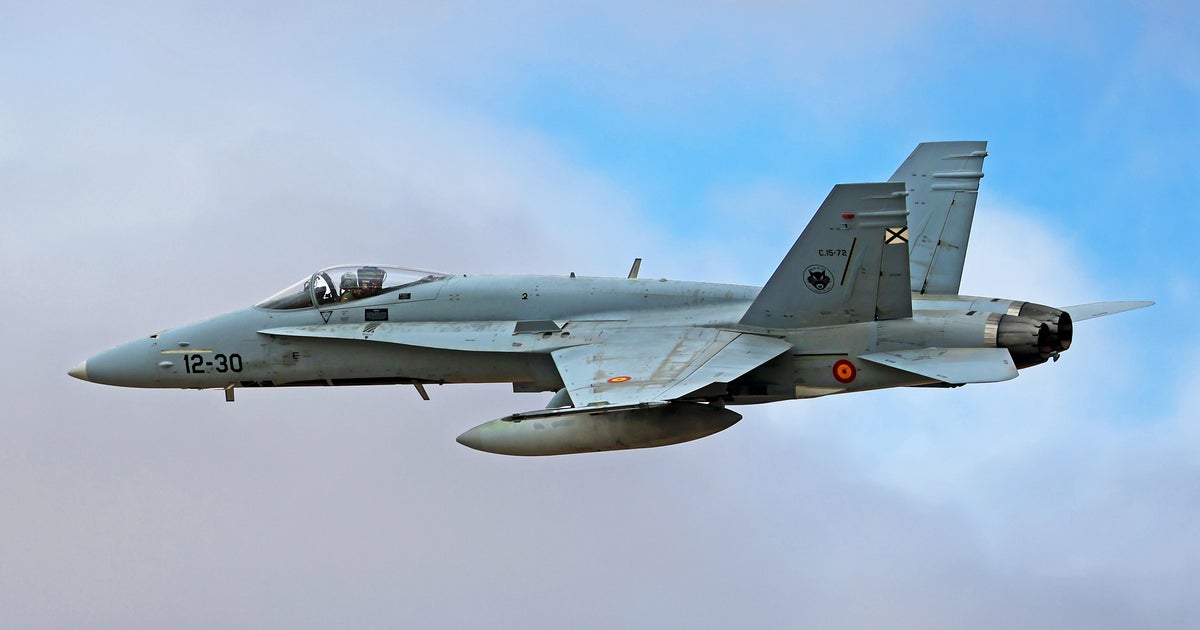
A Spanish fighter jet shot down a drone that entered Romanian airspace near the borders with Ukraine and Moldova. The drone was destroyed over a sparsely populated area, highlighting security challenges for NATO countries near the conflict in Ukraine.
Key Facts
The incident happened early on August 16, 2026, near Romania’s border with Ukraine and Moldova.
A Spanish F-18 fighter jet, operating on NATO duty, intercepted and shot down the drone.
The drone crossed into Romanian airspace from Moldova.
Debris from the drone fell in an unpopulated area in the Galati region of Romania.
Romania’s eastern border is close to conflict zones and has seen drone debris from attacks on Ukraine.
This was not Romania’s first drone interception since the start of Russia’s war in Ukraine in 2022.
Similar drone interceptions have been reported in other NATO countries along Ukraine’s eastern border, including Poland, the Baltic states, and Latvia.
NATO jets from different countries continue to monitor and defend airspace in the region.
Read the Original
Want the full story? Tap a source to open the original
article.
Many rivers in Europe are shrinking due to worsening droughts this summer. Satellite images show lower water levels, dry soil, and dying plants in several countries, causing problems for farming, shipping, and water use.
Key Facts
About half of Europe’s land is experiencing drought, with 9% in an alert state.
Rivers like the Loire (France), Po (Italy), Rhine (Germany), and Danube (Hungary) have reached record-low water levels.
Satellite images show larger exposed riverbeds with sand and gravel replacing water.
Surrounding farmland and vegetation are turning brown and dry due to the lack of water.
The Rhine River’s low levels have stopped some ships from traveling, impacting shipping and tourism.
The Garonne River in France required early intervention to support water levels for the first time since 1993.
The Po River basin faces serious pressure on water supply for farming and energy.
The European Commission’s Joint Research Centre and the Global Drought Observatory are monitoring these conditions.
Read the Original
Want the full story? Tap a source to open the original
article.
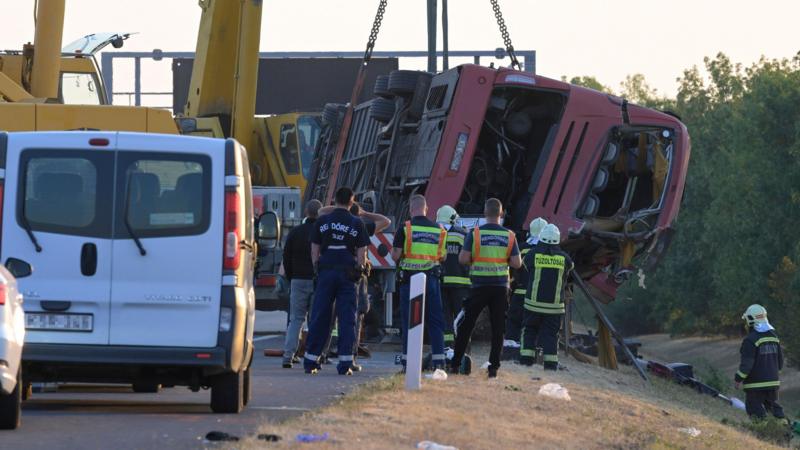
A passenger bus traveling in Hungary crashed early on Sunday, overturning in a ditch and killing 12 people. Police believe the driver may have fallen asleep, and several others were seriously injured.
Key Facts
The crash happened on a highway between Mezokeresztes and Mezonagymihaly, about 140 kilometers east of Budapest.
The bus had Polish license plates.
The accident occurred around 1 a.m. local time on Sunday.
Police suspect the driver fell asleep, leading to the crash.
Twelve people died in the bus accident.
At least 10 others were seriously hurt, according to Hungary’s Prime Minister Péter Magyar.
Rescue teams responded quickly to the scene.
The Prime Minister expressed condolences to the victims’ families.
Read the Original
Want the full story? Tap a source to open the original
article.
A Polish tourist bus went off a Hungarian motorway early Sunday morning, killing twelve people and injuring many others. The bus overturned after the driver likely fell asleep, and emergency services have been working to rescue passengers trapped under the vehicle.
Key Facts
The accident happened on the M3 motorway in Hungary, near Budapest.
The bus had 57 passengers and 2 drivers onboard.
Twelve passengers died in the crash.
Thirty-five people have been rescued so far.
Emergency workers used cranes to lift the bus and free those trapped underneath.
One person has life-threatening injuries, nine have serious injuries, and 37 have minor injuries.
The driver is in police custody.
Hungary’s Prime Minister expressed condolences to victims’ families.
Read the Original
Want the full story? Tap a source to open the original
article.
Neuroscientist Jared Cooney Horvath warns that using screens and digital tools in schools may harm children’s learning and brain development. He points to declining IQ scores and test results since 2000, linking these trends to the rise of educational technology in classrooms.
Key Facts
Jared Cooney Horvath is a neuroscientist and former teacher concerned about screen use in education.
He says children today are less cognitively capable compared to past generations.
Around the year 2000, IQ scores and international test scores began to drop despite more school time.
Educational technology (edtech) is a large industry, worth about £6.5 billion annually in the UK and $400 billion in the US.
The widespread use of laptops in schools increased especially after 2010 and surged during the Covid pandemic.
In the US, 88% of school districts now provide one computer per student.
Data from the Pisa international student assessment shows students who use computers more than six hours a day scored lower on tests.
Some experts caution that more research is needed to prove that screen use causes poorer test performance, noting moderate use might help.
Read the Original
Want the full story? Tap a source to open the original
article.
This year’s exam season has caused large protests in several countries due to cheating, leaked exam papers, and problems with digital exam marking. The biggest crisis happened in India, where a leaked exam paper affected millions and led to the education minister's resignation. Similar unrest and errors have appeared in Mexico and Portugal, raising questions about how exams are handled worldwide.
Key Facts
In Mexico, nearly 60,000 university applicants had to retake exams after suspected cheating.
Portugal’s attempt to digitize exam marking caused serious errors and protests, leading to calls for the education minister’s resignation.
India faced a massive exam paper leak affecting millions of students, linked to multiple student suicides.
The Indian education minister resigned because of the scandal.
A youth protest group in India called the Cockroach Janta party led nationwide demonstrations.
Experts say the pressure on students is higher due to the importance of exams for future success and a tough economy.
Illegal businesses, called the “education mafia,” sell stolen exam papers in several countries.
Countries are responding to cheating concerns by banning some uses of AI or teaching students about AI ethics.
Read the Original
Want the full story? Tap a source to open the original
article.
A strong earthquake with a magnitude of 7.7 struck Indonesia's Flores island, killing 48 people and injuring more than 100. Thousands of residents fled their homes, and emergency aid began arriving to help those affected by the damage and disruptions.
Key Facts
The earthquake happened early on Saturday and was followed by at least 341 aftershocks.
Around 5,000 people evacuated their homes due to the quake.
At least 914 houses were severely damaged; hundreds more had minor damage.
Dozens of public facilities, including schools, health centers, and government offices, were affected.
Some areas lost electricity and telecommunications, with emergency roads blocked.
The Indonesian government deployed helicopters, planes, ships, and over 50,000 aid packages to assist victims.
Survivors urgently need tents, food, medicine, blankets, clean water, and generators.
The European Union offered support via satellite monitoring to aid search and rescue operations.
Read the Original
Want the full story? Tap a source to open the original
article.
A NATO fighter jet from Spain shot down a drone that entered Romanian airspace near the borders with Ukraine and Moldova. The drone debris fell in an unpopulated area, and such incidents have been happening repeatedly due to the ongoing conflict involving Russia and Ukraine.
Key Facts
The drone entered Romanian airspace from Moldova early Sunday morning.
A Spanish F-18 fighter jet, on NATO duty, intercepted and shot down the drone.
Debris fell near the Romanian border with Ukraine, in an unpopulated area.
Similar drone incursions into neighboring countries' airspace have occurred regularly since 2023.
Authorities believe some drones are Ukrainian but get hijacked by Russian forces using electronic interference.
Romania has found drone fragments on its soil after Russian attacks on Ukrainian ports along the Danube River.
Last week, Ukraine denied causing a drone explosion near a gas pipeline in Bulgaria after the drone crossed from Romania.
Other NATO countries like Latvia have also shot down drones crossing their airspace, blamed on Russian electronic warfare.
Read the Original
Want the full story? Tap a source to open the original
article.
Mexican avocado pickers in Michoacán quickly returned to work after a U.S. security alert that had stopped avocado exports to the U.S. was lifted. Though the restart of exports and increased security brought relief and hope, some in the industry remain concerned about ongoing violence in the region.
Key Facts
The U.S. issued and then lifted a security alert affecting Michoacán, Mexico, a key avocado-producing area.
The alert caused a temporary halt in avocado exports to the United States.
After the alert was lifted, avocado orchards and packing plants reopened and U.S. inspectors resumed certifying the fruit.
About 200,000 people work in Michoacán’s avocado industry.
Michoacán is known for cartel activity, including groups designated as terrorist organizations by the U.S.
The security alert did not specify the exact threat but caused anxiety due to local crime and extortion.
Workers get paid daily and faced income loss while exports were paused.
Some producers hope increased security will reduce violence, while others worry peace will be temporary.
Read the Original
Want the full story? Tap a source to open the original
article.
People in Gaza face a severe shortage of lighters, which are essential for starting fires used in cooking and heating. Due to ongoing restrictions and the war, buying or replacing lighters has become very expensive and difficult, forcing families to share or repair old ones.
Key Facts
A lighter is crucial for making fire to cook, heat water, and bake bread in Gaza.
Before the war in October 2023, people could buy lighters cheaply, but now a single lighter costs between $27 and $33.
Many families can’t afford new lighters and often repair or share one lighter between several households.
Without lighters, some people have to eat cold food or borrow fire from neighbors.
The shortage is linked to restrictions by Israel on goods entering Gaza, including items called "dual-use" that could be used for both civilian and military purposes.
The UN and Gaza's Chamber of Commerce report ongoing blockages at crossings that limit supplies and cause prices to rise.
Some residents have switched to using clay ovens, which require more effort to light without lighter fuel or gas.
The war and siege have worsened living conditions and made basic resources like lighters very hard to obtain.
Read the Original
Want the full story? Tap a source to open the original
article.
Israel is preparing for important general elections on October 27. These elections focus on deep questions about democracy, government power, and how the state should be run, with current conflicts and security concerns playing a strong role in voters’ decisions.
Key Facts
Israel’s general elections are scheduled for October 27, 2026.
Traditional election issues about peace with Palestinians have shifted to widespread hostility and rejection of a two-state solution.
Israeli Jewish voters are debating the state’s democratic values, government legitimacy, and visions for Israel’s future.
Palestinian citizens of Israel hope for a government that will reduce violence and lawlessness in their communities.
Critics highlight concerns about Prime Minister Netanyahu’s influence, including the appointment of loyalists and weakening of state institutions like the army and intelligence agencies.
The October 7, 2023 Hamas attacks, which killed 1,139 people, remain central to Israeli public thought and politics.
Netanyahu has resisted calls for an inquiry into the security failures of October 7 and used ongoing conflicts to delay corruption trials against him.
The 2023 judicial overhaul aimed to reduce the judiciary’s oversight of the government, raising questions about democracy and government power in Israel.
Read the Original
Want the full story? Tap a source to open the original
article.
Firefighters in eastern Belgium are fighting one of the country’s largest wildfires, which has burned over 2,700 hectares of land in the High Fens nature reserve. Hundreds of villagers were evacuated as the fire spread rapidly, with help arriving from EU helicopters and water bombers.
Key Facts
The wildfire started on Friday, August 14, 2026, in the High Fens park near the German border.
It has burned more than 2,700 hectares (about 6,700 acres) by Saturday, growing from just 80 hectares.
The area includes fragile peatlands and pine forests, similar to those damaged by wildfires in 1911.
Around 600 people from nearby villages, including Sourbrodt and Buetgenbach, were told to evacuate.
A gym in Malmedy municipality was set up to shelter evacuees and provide basic needs like food and water.
Belgium activated the EU civil protection system to get extra help, including helicopters and water bombers from the Netherlands and Sweden.
The wildfire season is starting earlier and reaching northern areas, linked to climate changes.
The difficult and uneven terrain is making it hard for firefighters to get close and control the fire on the ground.
Read the Original
Want the full story? Tap a source to open the original
article.
A livestream showing Alaskan brown bears catching salmon at Brooks Falls in Katmai National Park has become very popular, with 7.3 million views between June and August. The livestream is run by Explore.org and helps people learn about and appreciate wildlife.
Key Facts
The bearcam shows brown bears catching sockeye salmon as they move upstream.
Viewership increased by 70% compared to the same period last year.
More than a dozen bears can be seen at the falls at the same time.
The livestream started in 2012 to help people connect with nature from home.
Watching the bears may encourage people to support wildlife conservation.
Fans of the livestream often recognize and track individual bears.
One bear named Otis was seen eating 42 salmon in a few hours.
The annual Fat Bear Week competition where the public votes on the fattest bear will begin soon.
Read the Original
Want the full story? Tap a source to open the original
article.
A news report from CBS News covers a murder in a parking garage where the killer used spray paint to block security cameras. The report is presented by correspondent Natalie Morales.
Key Facts
The incident took place in a parking garage.
The killer wore a mask.
The killer spray painted security cameras to stop them from recording.
The case is being reported by CBS News.
Natalie Morales is the news correspondent covering the story.
The coverage is available on the CBS News App and website.
Read the Original
Want the full story? Tap a source to open the original
article.
Colombia’s new President Abelardo de la Espriella asked U.S. President Donald Trump to temporarily suspend tariffs on Colombian products after a deadly earthquake killed nearly 300 people in western Colombia. The earthquake destroyed thousands of homes, and De la Espriella said relief from tariffs would help Colombian businesses as the country works on recovery.
Key Facts
A 7.4-magnitude earthquake struck western Colombia, especially hitting the cities of Cali and Pereira.
Nearly 300 people died, and about 13,000 homes were destroyed by the earthquake.
U.S. tariffs on Colombian goods increased from 10% to 12.5% on July 24, shortly before the quake.
Colombia’s president requested President Trump to suspend these tariffs temporarily to aid business recovery.
President Trump and De la Espriella spoke for about 10 minutes, with Trump offering condolences.
De la Espriella is a right-wing leader who took office after leftist Gustavo Petro.
Colombia has joined an anti-cartel alliance called the "Shield of the Americas," led by the U.S. and including other Latin American countries.
The new president plans a military alliance with the U.S. and Israel to help fight guerrilla groups in Colombia.
Read the Original
Want the full story? Tap a source to open the original
article.
Heavy rain caused a flood and landslide in a small village in northwestern Spain, killing two elderly women and injuring two babies. Rescue teams responded quickly, and one missing man was found safe. This extreme weather event follows weeks of heatwaves and wildfires in Spain.
Key Facts
The flood and landslide happened in Manzanedo de Valdueza, a rural village in Castile and Leon, Spain.
Two women, around 60 and 80 years old, died in the disaster.
Two babies were injured with bruises but survived.
A man in his 80s was reported missing but was later found unharmed.
Emergency services, including firefighters, police, and ambulances, responded to the scene.
The flood was caused by heavy rain after weeks of hot weather and wildfires in Spain.
The flood also damaged nearby areas, including the village of Bouzas.
The region had experienced severe wildfires in 2025, making it vulnerable to extreme weather events.
Read the Original
Want the full story? Tap a source to open the original
article.
A strong magnitude 7.7 earthquake hit eastern Indonesia, killing at least 51 people and forcing about 5,000 to leave their homes. Rescue teams are working to clear blocked roads and reach survivors, while many buildings have been damaged or destroyed.
Key Facts
The earthquake struck near Flores Island in East Nusa Tenggara province early Saturday morning local time.
It had a depth of 10 km (6.2 miles) and was followed by 341 aftershocks.
At least 51 people died, 36 were seriously injured, and 77 had minor injuries.
Over 5,000 people evacuated or were displaced, sheltering in places like sports arenas and tents.
About 157 houses were destroyed and nearly 200 more were damaged, with power outages affecting petrol stations.
Rescue efforts are challenged by blocked roads from landslides and difficult island geography.
More than 3,500 military and police personnel are helping with the response.
Officials are considering declaring a state of emergency to provide more aid and resources.
Read the Original
Want the full story? Tap a source to open the original
article.
There are no ads, so there is no reason to bait you. Readers who chip in keep it that way. Most choose $3.99/month, and get the daily digest every morning.
Russian missile and drone strikes killed at least one woman and wounded several others in Kryvyi Rih, Ukraine. Meanwhile, a Spanish NATO jet shot down a drone that entered Romanian airspace, marking the fourth such incident this year.
Key Facts
A woman was killed and six people wounded in attacks on Kryvyi Rih, the hometown of Ukraine’s President Zelenskyy.
Kyiv faced ballistic missile attacks that caused one injury and fires in non-residential areas.
A Spanish F-18 jet shot down a drone over Romania during a NATO air policing mission.
This is the fourth drone Romania has shot down in 2024; the drones often come from near the Russia-Ukraine conflict zone.
Russia continues near-daily missile and drone strikes across Ukraine, targeting civilian and military sites.
The UN reported July as the deadliest month for civilians in Ukraine since 2022 with over 400 killed.
Russia reported defending against a large Ukrainian drone attack on Moscow, with over 100 drones downed and three people wounded.
Ukraine says its strikes inside Russia are responses to Russian attacks on its towns and infrastructure.
Read the Original
Want the full story? Tap a source to open the original
article.
Athens is cleaning its Panathenaic Stadium, a historic marble stadium first rebuilt for the 1896 modern Olympics, for the first time in over 100 years. Workers are carefully removing dirt, organic matter, and stains using low-pressure water and steam without harming the marble.
Key Facts
The Panathenaic Stadium is made completely of white marble.
It was rebuilt for the first modern Olympic Games in 1896.
This is the stadium’s first thorough cleaning in more than a century.
Cleaning uses low-pressure water and steam to avoid damaging the marble.
Dirt, organic material, chewing gum, high heel marks, and soft drink stains are being removed.
The marble comes from the same source as that used in the Acropolis.
The stadium serves as the Olympic flame’s starting point for the Los Angeles 2028 Games.
The cleaning reveals changes caused by weather, visitors, and time.
Read the Original
Want the full story? Tap a source to open the original
article.