Neutral summaries of your favorite news sources — just the facts.
Your favorite news sources, one neutral feed — we distill their reporting into fact-first
summaries and always link to the original story. How it works
World News
Comprehensive coverage of international news and global events
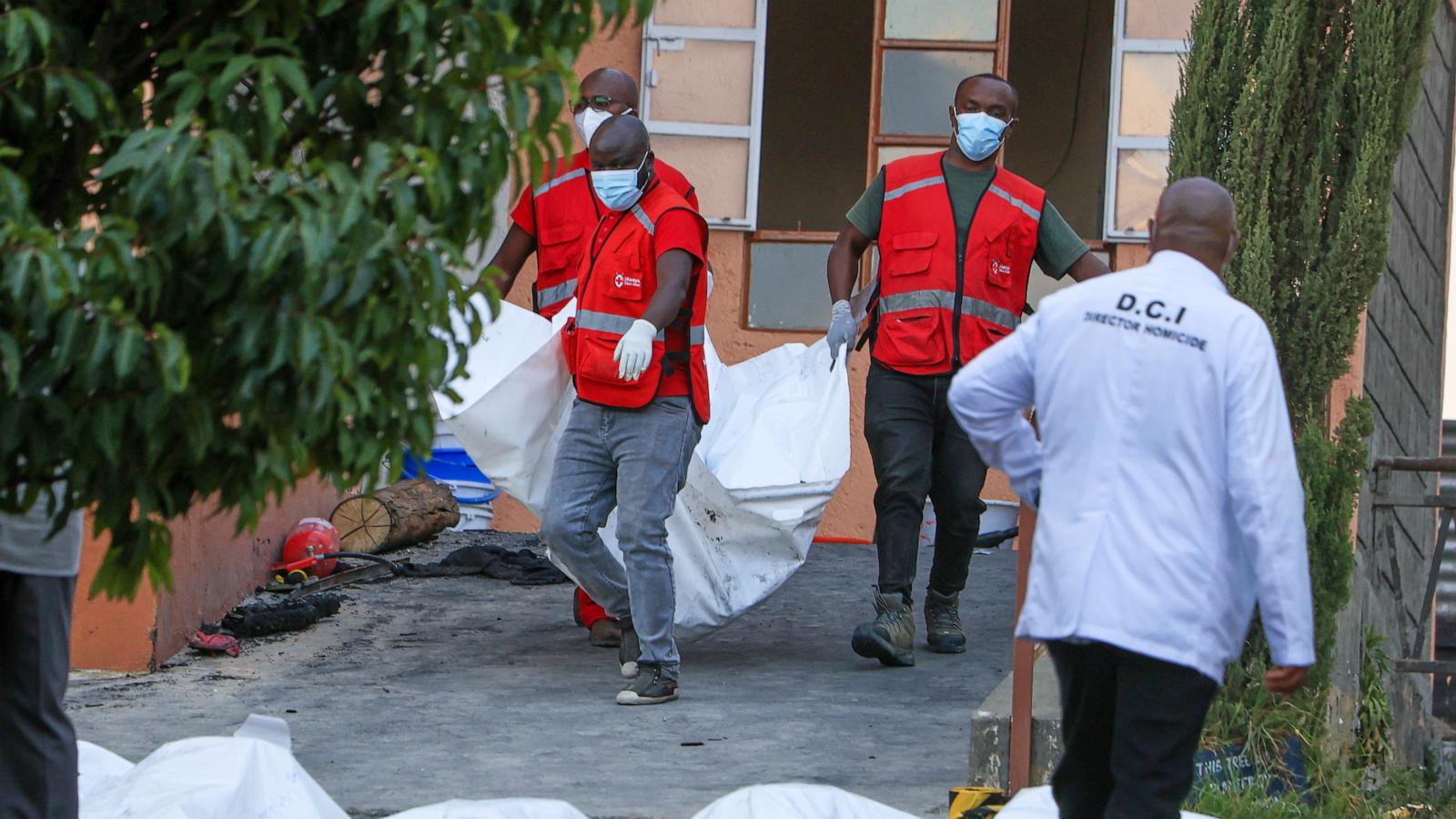
A fire broke out late at night in a dormitory at Utumishi Girls' Academy Senior School in Gilgil, Kenya. The fire killed 16 students and injured 79 others, according to the Kenyan government.
Key Facts
The fire happened just after midnight at a girls' secondary school in Gilgil, Kenya.
The fire lasted for more than two hours.
16 students died in the fire.
79 students were injured.
The school affected is called Utumishi Girls' Academy Senior School.
The Education Minister of Kenya, Julius Migos, provided the information about the fire.
The incident took place in the Rift Valley region of Kenya.
Read the Original
Want the full story? Tap a source to open the original
article.
Kenyan police have arrested eight female students suspected of starting a fire at a girls' boarding school that killed 16 students and injured 79 others. Authorities are investigating the motive and reviewing evidence including interviews and CCTV footage.
Key Facts
A fire destroyed a dormitory at Utumishi Girls School in central Kenya on May 28, 2026.
Sixteen students died, and 79 others were injured in the fire.
Eight female students were arrested on suspicion of arson (setting the fire on purpose).
Police questioned 30 students and interviewed staff and witnesses.
Forensic teams are analyzing CCTV footage to understand how the fire started.
Parents have not received clear information about the arrests or student releases.
The victims’ bodies were taken for DNA testing to confirm their identities.
School fires in East Africa are common due to crowded conditions and lack of firefighting tools; causes sometimes include electrical problems or student discipline issues.
Read the Original
Want the full story? Tap a source to open the original
article.
In May 2016, Hissen Habre, a former dictator of Chad, was sentenced for human rights abuses and crimes against humanity. His trial was held in Senegal by an African court with African judges, marking the first time such a court tried an African leader for these crimes. This case set a global example for justice.
Key Facts
Hissen Habre was the dictator of Chad.
He was put on trial for human rights violations and crimes against humanity.
The trial happened in Senegal.
It was the first African court set up with African judges to try an African dictator.
The legal process lasted 18 years before the trial concluded.
This trial inspired justice efforts worldwide.
The court and trial focused on victims from Africa.
The case is considered an important precedent in international law.
Read the Original
Want the full story? Tap a source to open the original
article.
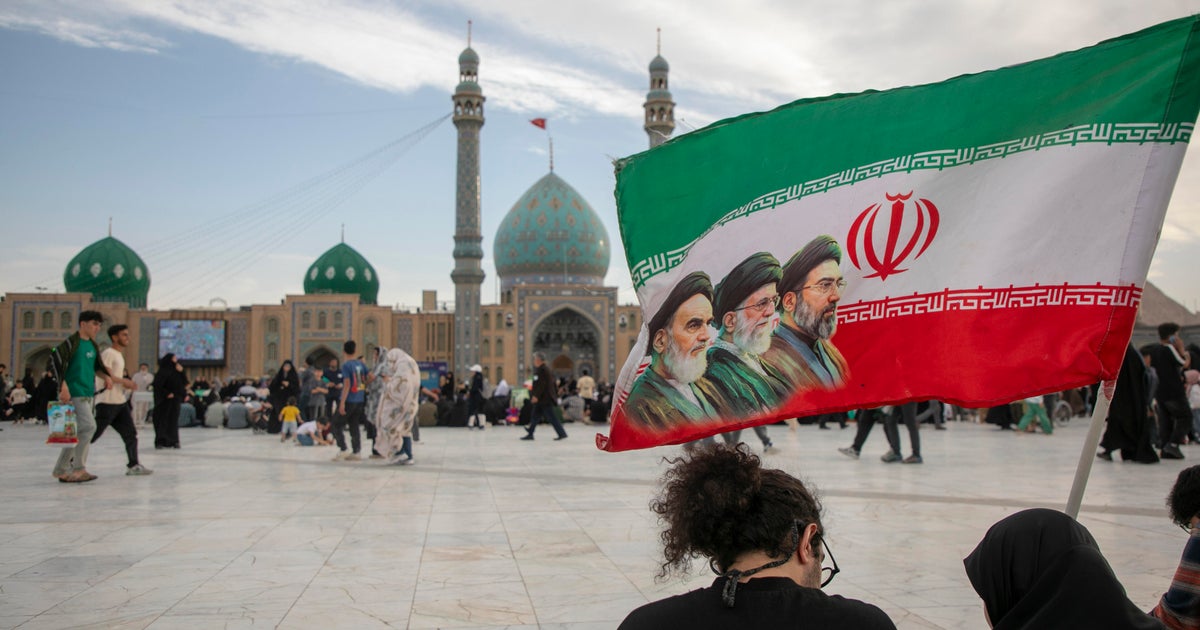
The United States and Iran are in indirect talks to agree on a 60-day ceasefire after months of conflict. Despite this, both sides accuse each other of breaking the truce, including a recent exchange of fire. The U.S. also threatened sanctions against Oman if it supported new controls in the Strait of Hormuz, a strategic waterway.
Key Facts
The U.S. and Iran are near a deal on a 60-day ceasefire after three months of conflict.
Both countries accused each other of violating the ceasefire following recent exchanges of fire.
The conflict began with U.S. and Israeli strikes on Iran.
Talks between the U.S. and Iran have been indirect and mediated by third parties.
The U.S. warned Oman against helping impose a toll system in the Strait of Hormuz.
Sanctions were threatened by the U.S. against anyone involved in the toll system in the strait.
The Strait of Hormuz is an important shipping route in the Middle East.
This ceasefire agreement is the most serious attempt to stop fighting since April.
Read the Original
Want the full story? Tap a source to open the original
article.
Three sisters were found dead in the sea near Brighton beach in May. Police do not suspect anyone else was involved, but the exact cause of their deaths is still unknown. An inquest is ongoing to gather more information.
Key Facts
The sisters were Jane Adetoro (36), Christina Walters (32), and Rebecca Walters (31).
They lived in Uxbridge, west London, and were found in the sea off Brighton beach on May 13.
Emergency services were called around 5:45 a.m., and all three were declared dead at the scene or shortly after.
Police say there is no evidence of foul play or involvement of other people at this time.
Postmortem exams have not yet determined the cause of death, and further medical tests are underway.
The sisters’ father expressed deep grief and shared memories of them.
A fundraiser for their funerals raised nearly £44,000 from over 2,000 donors.
Police are reviewing CCTV and questioning local businesses to understand the sisters’ last movements.
The inquest will continue on October 8 to investigate the circumstances further.
Read the Original
Want the full story? Tap a source to open the original
article.
In the run-up to the Makerfield byelection in the UK, two right-wing parties, Reform UK and Restore Britain, have engaged in public disagreements. The parties competed for support, with endorsements and criticisms exchanged, including from public figures like Elon Musk and Nigel Farage.
Key Facts
Restore Britain’s leader, Rupert Lowe, claimed his candidate had 24.6% support in a local poll, while another poll showed only 7% for Restore Britain and 40% for Reform UK.
Nigel Farage said Reform UK’s candidate, Robert Kenyon, was the only serious challenger to Labour’s Andy Burnham.
Elon Musk appeared to support Restore Britain by reposting tweets from Rupert Lowe.
Robert Kenyon deleted social media posts that endorsed inappropriate comments about broadcaster Carol Vorderman, which caused controversy.
Reform UK and Restore Britain candidates and supporters exchanged public insults and accusations.
Messages from Restore Britain’s spokesperson to a Reform UK member led to claims of “dirty politics.”
Robert Kenyon’s commitment to Brexit was questioned due to past social media posts, though Reform UK said he did vote for Brexit.
Read the Original
Want the full story? Tap a source to open the original
article.
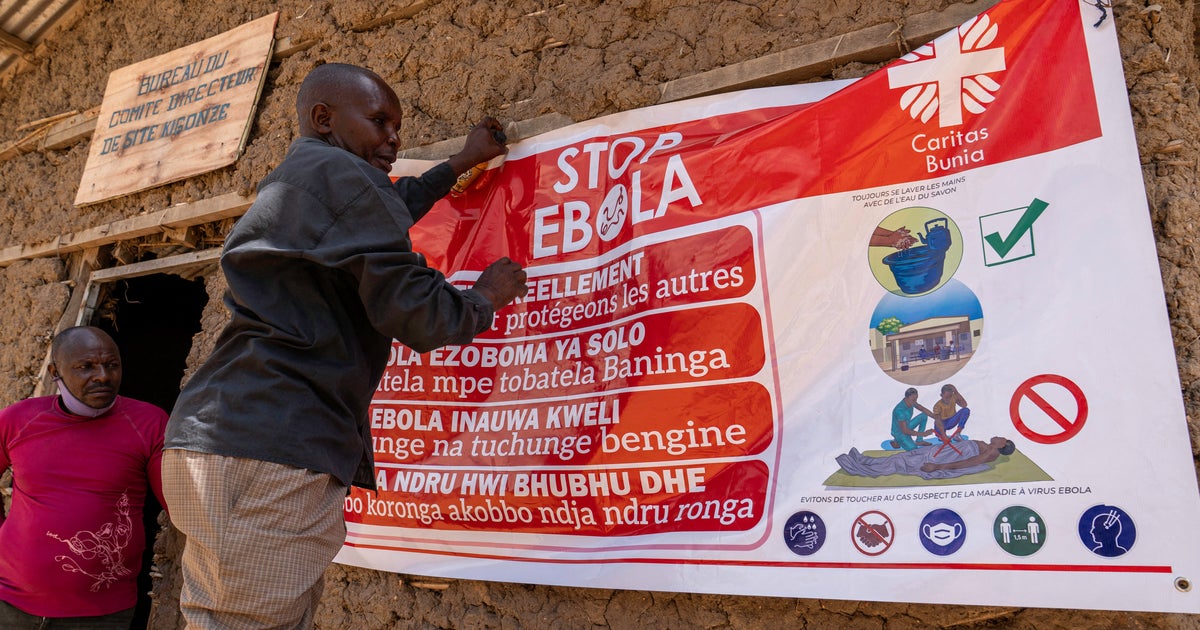
A Kenyan court has temporarily stopped the opening of a U.S.-run Ebola quarantine center at Laikipia Air Base. The center was planned to isolate Americans arriving from Congo, where there is a major Ebola outbreak, but concerns about secrecy and legal issues led to the court ruling.
Key Facts
The center was supposed to open to quarantine up to 50 Americans exposed to Ebola from Congo.
It would be run by U.S. medical staff at Laikipia Air Base, about 124 miles from Nairobi.
The U.S. said the center aims to give quick and high-quality care without sending patients all the way back to the U.S.
No Americans were reported to be sent to the center as of the court ruling.
Kenya has not reported any Ebola cases from the current Congo outbreak.
A Kenyan rights group filed the petition, citing concerns over secrecy and constitutional issues.
Kenyan doctors’ union opposed the center, saying it risks Kenyan citizens’ lives.
The Kenyan government has 48 hours to respond to the court’s order.
Read the Original
Want the full story? Tap a source to open the original
article.
The U.S. military has carried out strikes on boats suspected of drug trafficking in the Caribbean Sea and eastern Pacific Ocean, resulting in at least 199 deaths. Some survivors of initial strikes were killed in follow-up attacks or died at sea, raising legal and humanitarian questions about the campaign.
Key Facts
The strikes began in September under President Trump's administration and target suspected drug trafficking boats.
At least 199 people have died, including 22 who initially survived strikes but later died or were hit again.
Three people survived two separate strikes this month, according to the U.S. military.
U.S. Southern Command informs the U.S. Coast Guard about survivors, who then notify countries near the strike locations.
Mexico's navy has received alerts about these strikes but reported no survivors recently.
Some lawmakers question whether follow-up strikes on survivors may violate war laws.
The Pentagon plans to review whether military targeting rules were followed, but not the legal basis of the strikes.
Families of people killed in these strikes have filed lawsuits and complaints alleging wrongful killings.
Read the Original
Want the full story? Tap a source to open the original
article.
The United States and Iran are close to reaching a deal to extend a ceasefire, reopen the Strait of Hormuz, and continue negotiations on Iran’s nuclear program, but no agreement is finalized yet. Iranian officials denied reports of a completed deal, and Vice President JD Vance said talks are still ongoing.
Key Facts
The U.S. and Iran are negotiating a deal that could extend the current ceasefire by 60 days.
The deal may involve reopening the Strait of Hormuz, a key waterway for oil shipments.
Discussions also include Iran’s nuclear program and other difficult issues.
Vice President JD Vance said the U.S. and Iran are "very close" but have not finalized an agreement.
Iranian state media reported that no deal has been finalized or confirmed.
The memorandum of understanding has not been shared with mediators or the public.
The tentative agreement is pending approval from President Donald Trump.
Meanwhile, Israel and Lebanon are planning security talks at the Pentagon related to border tensions.
Read the Original
Want the full story? Tap a source to open the original
article.
A Canadian man, Kenneth Law, who sold suicide kits online to people in many countries including the UK, will not be extradited to the UK to face charges. UK authorities say he will be sentenced in Canada for all his crimes after he pleads guilty to aiding suicide and sending kits internationally.
Key Facts
Kenneth Law sold around 1,200 suicide kits to people in about 40 countries.
At least 286 kits were sent to the UK, resulting in 112 deaths.
Law faces charges in Canada, and murder charges were dropped in a plea deal.
UK law enforcement decided not to extradite Law after his Canadian court case finishes.
Families of victims in the UK are unhappy with this decision and feel justice is not served.
UK agencies said they want Law punished fully in Canada through one court process.
Some family members and campaigners want stronger UK action and a public inquiry.
A pro-suicide website linked to Law's activities still operates online, raising concerns.
Read the Original
Want the full story? Tap a source to open the original
article.
An Australian court has scheduled an appeal hearing in August for Erin Patterson, who was sentenced to life in prison for poisoning three relatives with toxic mushrooms. The court will also hear a prosecutor appeal about Patterson’s sentence length.
Key Facts
The appeal hearing will be held on August 19 and 20 in the Supreme Court of Victoria, Australia.
Erin Patterson was sentenced to life in prison in September for killing three relatives using poisonous mushrooms.
Prosecutors want a harsher sentence, arguing Patterson should not be eligible for parole.
Patterson’s lawyers say there were legal mistakes during the trial and unfair treatment related to the jury and evidence.
Patterson was found guilty of murdering her estranged husband’s parents and his aunt, and of trying to kill her aunt’s husband.
The poisoning case involved a lunch with beef Wellington that contained toxic mushrooms.
Over 250 journalists followed the trial, and the sentencing was broadcast live.
Patterson claims the poisoning was accidental and denies intentionally killing anyone.
Read the Original
Want the full story? Tap a source to open the original
article.
Colombians will vote to choose a new president and vice president in an election seen as a test of President Gustavo Petro’s policies. Petro, a former guerrilla fighter, has worked on peace talks and major social and economic reforms during his time in office.
Key Facts
The election is scheduled for Sunday.
Voters will select both a new president and vice president.
President Gustavo Petro is finishing his term.
Petro was once part of the M-19 guerrilla group in the 1970s and 1980s.
He has led peace negotiations with Colombia’s remaining rebel groups.
Petro has pushed for changes in labor laws and other social reforms.
The election results will show public support for Petro’s agenda.
The vote is described as a high-stakes test of the current government’s direction.
Read the Original
Want the full story? Tap a source to open the original
article.
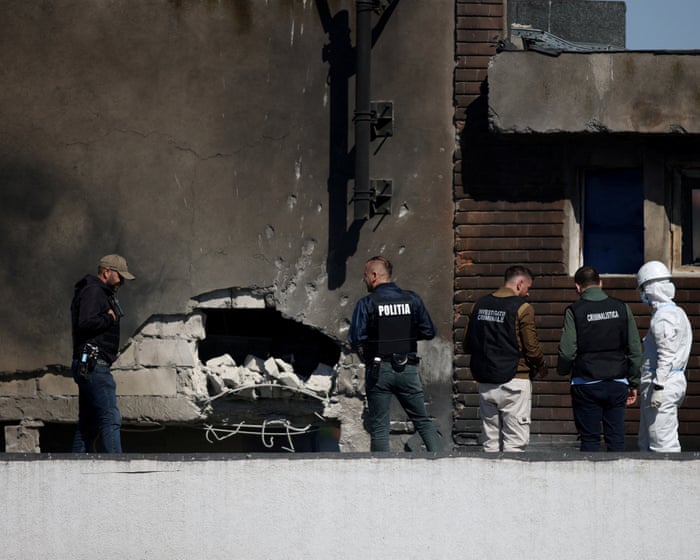
A Russian drone hit an apartment building in Romania, a member of NATO, injuring two people. This event is part of expanding cross-border incidents related to the ongoing war in Ukraine and caused strong reactions from NATO and the European Union.
Key Facts
A Russian drone struck an apartment block in Romania early on Friday.
Two people were wounded in the drone attack.
Romania is a member of NATO and shares a border near the conflict zone in Ukraine.
NATO and the European Union officially condemned the attack.
Several NATO countries near Ukraine and Russia, including Romania, Latvia, Estonia, and Poland, face increasing drone incursions.
These drone incidents reflect spillover effects from the war in Ukraine into neighboring countries.
The attack raises concerns about the security of NATO borders in the conflict region.
The source of this news is France 24, with reports from Kyiv.
Read the Original
Want the full story? Tap a source to open the original
article.
Israeli Prime Minister Benjamin Netanyahu has ordered the Israeli army to take control of 70 percent of the Gaza Strip. This move goes against the terms of a ceasefire that began in October, which required Israeli forces to stay behind a specific boundary line.
Key Facts
Israeli Prime Minister Benjamin Netanyahu gave the order to expand military control in Gaza.
The Israeli army will take control of 70 percent of the Gaza Strip.
A ceasefire started in October set a "yellow line" as a boundary between Israeli and Hamas-controlled areas.
The new order breaks the ceasefire agreement by pushing beyond that boundary.
The Gaza Strip is a densely populated area governed mainly by Hamas.
The conflict between Israel and Hamas has led to ongoing violence and military actions.
The situation is part of wider regional tensions involving Lebanon, Iran, and other neighboring countries.
Read the Original
Want the full story? Tap a source to open the original
article.
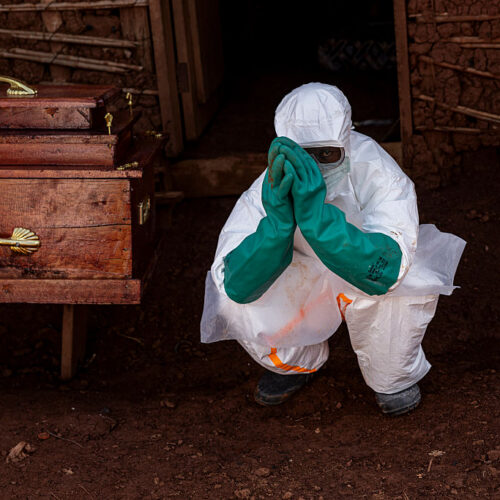
The Trump administration cut funding for a research network studying dangerous viruses like Ebola, which has limited efforts to fight a current outbreak in the Democratic Republic of the Congo. The Centers for Research in Emerging Infectious Diseases (CREID) had sites in Africa that would normally help with testing and tracking viruses but had to stop work after funding was halted.
Key Facts
CREID is a network created by the National Institutes of Health in 2020 to study viruses that can spread from animals to people.
The network included 10 sites worldwide, including in Central and East Africa, where outbreaks like Ebola often happen.
CREID received about $82 million in funding over five years, which was cut in June 2024 by the Trump administration.
The funding stop was justified by officials saying the research was “unsafe for Americans” and not a good use of money.
CREID helped with diagnostics and virus tracking but now cannot contribute directly to fighting the 2024 Ebola outbreak in the DRC.
The current outbreak is caused by the Bundibugyo strain of Ebola, different from previously common strains.
One CREID center linked to the EcoHealth Alliance lost funding partly due to conspiracy theories related to COVID-19’s origins.
Officials at health agencies and the White House did not provide comments on the funding cuts.
Read the Original
Want the full story? Tap a source to open the original
article.
Israel carried out deadly air strikes in southern Lebanon and near Beirut, killing several people including children. This escalation happened despite a ceasefire and ahead of planned talks between Lebanon and Israel, facilitated by the United States.
Key Facts
Israel launched air strikes in southern Lebanon and near Beirut.
The attack near Beirut killed a woman and two children.
At least 14 people, including three children, died in the strikes in southern Lebanon.
The strikes represent an expansion of Israel’s military actions in Lebanon.
Lebanon and Israel are preparing for military talks at the Pentagon on Friday.
Additional US-brokered talks between the two countries are scheduled for early next week.
The violence occurred despite an existing ceasefire agreement.
The situation is part of ongoing conflicts involving Israel and its neighbors.
Read the Original
Want the full story? Tap a source to open the original
article.
Israel has started a digital system to register land ownership in the occupied West Bank, which Palestinian authorities say threatens their land rights. Palestinian groups are urging people not to cooperate with Israeli land registration efforts and are calling on the international community to intervene.
Key Facts
Israel launched an online “Land Registry and Settlement of Rights” platform to update property ownership in the West Bank.
Palestinian authorities describe this as a dangerous step that violates Palestinian historical and legal claims to their land.
The Palestinian Jerusalem Governorate and the Colonization and Wall Resistance Commission (CRRC) have called on Palestinians to avoid engaging with Israeli land registration efforts.
The Israeli Security Cabinet began an aggressive plan in May 2025 to fully register West Bank lands under Israeli control.
Israel’s parliament approved a symbolic measure in July 2025 calling for annexation of the West Bank.
Registration started in February 2026 for about 58% of Area C, the part of West Bank under full Israeli control.
The Israeli Land Registry now manages property rights, sales permits, and fees in Area C.
There are around 700,000 Israeli settlers in the West Bank and East Jerusalem; settlement expansion and settler violence have increased since October 2023.
Read the Original
Want the full story? Tap a source to open the original
article.
The United States and Iran have reportedly agreed to extend a ceasefire, reopen shipping through the Strait of Hormuz, and lift some U.S. sanctions on Iran. However, the agreement is not yet final, and talks will continue to address Iran's nuclear program.
Key Facts
The U.S. and Iran have agreed to extend a ceasefire in their conflict.
Shipping will be allowed again through the Strait of Hormuz, a key waterway for global oil transport.
The United States plans to lift some sanctions and end a blockade on Iran.
The deal has not been finalized as of late May 2026.
Further negotiations will focus on Iran’s nuclear program.
The conflict has caused concerns about a global energy crisis.
Related tensions continue in the region, including Israeli strikes near Beirut and ongoing conflicts in Gaza.
Read the Original
Want the full story? Tap a source to open the original
article.
NATO’s secretary general, Mark Rutte, said the alliance is ready to defend all its land after a Russian drone hit a building in Romania, injuring two people. Romania held emergency meetings and summoned Russia’s ambassador following the attack.
Key Facts
A Russian drone struck an apartment building in Galați, Romania, injuring two people.
NATO condemned the attack and said it will defend every part of its member countries’ territory.
Romania’s president called an emergency meeting of the national defense council after the drone incident.
Romania’s foreign ministry summoned Russia’s ambassador to discuss the attack.
Sweden announced it will give 16 Gripen fighter jets to Ukraine by next year and sell 20 more of the latest model afterwards.
Ukrainian President Volodymyr Zelenskyy visited a Swedish airbase during the announcement.
The article also mentioned other global conflicts, including Israeli military moves in Gaza and an anti-crime taskforce in Memphis linked to President Trump.
Read the Original
Want the full story? Tap a source to open the original
article.
WHO Director-General Tedros Adhanom Ghebreyesus visited the Democratic Republic of Congo (DRC) to discuss the ongoing Ebola outbreak. He asked countries around the world to provide more help to fight the epidemic and stop it from spreading further.
Key Facts
The Ebola outbreak is currently affecting the Democratic Republic of Congo.
Tedros Adhanom Ghebreyesus is the head of the World Health Organization (WHO).
He traveled to the DRC to see the situation firsthand.
He emphasized the need for more support from the international community.
The goal is to help local health workers control the outbreak.
Increasing aid can prevent the spread of Ebola to other countries.
Ebola is a serious virus causing severe illness in humans.
Read the Original
Want the full story? Tap a source to open the original
article.