Neutral summaries of your favorite news sources — just the facts.
Your favorite news sources, one neutral feed — we distill their reporting into fact-first
summaries and always link to the original story. How it works
World News
Comprehensive coverage of international news and global events
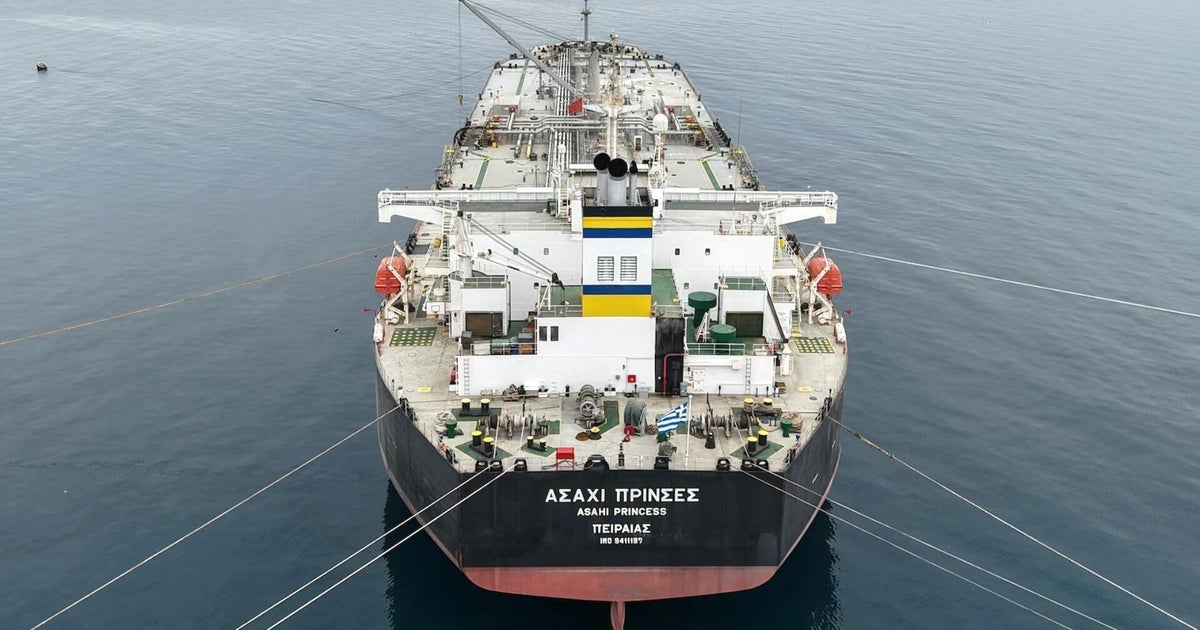
The article reports ongoing problems with the global supply chain at the Strait of Hormuz due to the continuing conflict involving the U.S. and Israel with Iran. These supply chain disruptions affect the flow of goods through this critical shipping route.
Key Facts
The Strait of Hormuz is a key shipping passage for global trade.
A war involving the U.S., Israel, and Iran is taking place.
This conflict is causing supply chain issues at the Strait of Hormuz.
Nick Vyas from the Kendrick Global Supply Chain Institute provides expert insight.
The problems are affecting the movement of goods worldwide.
The conflict is still ongoing with no resolution yet.
Supply chain troubles here can lead to wider economic impacts globally.
Read the Original
Want the full story? Tap a source to open the original
article.
Brazil’s state oil company Petrobras announced new drilling for oil and gas in the western Amazon rainforest, marking the first such activity there in ten years. President Luiz Inacio Lula da Silva attended the event, despite previously urging global leaders to reduce fossil fuel use at the COP30 climate conference.
Key Facts
Petrobras, Brazil’s main oil company, started drilling new wells in the Amazon rainforest.
This is the first new drilling in the Amazon by Petrobras in a decade.
President Lula was present at the event announcing the new drilling.
Lula hosted the COP30 UN climate conference in November, focusing on reducing fossil fuel use.
At COP30, Lula called on world leaders to create plans to move away from fossil fuels.
The new drilling is located in the western part of the Amazon, a sensitive environmental area.
The announcement shows Brazil’s interest in increasing oil and gas production despite climate concerns.
Read the Original
Want the full story? Tap a source to open the original
article.
The war in Gaza has seriously harmed vulnerable groups, especially children with Down syndrome. Many health and education services for these children have stopped, making it hard for them to get the care they need.
Key Facts
Children with Down syndrome in Gaza face chronic health problems like poor blood circulation, cataracts, and breathing difficulties.
These children need ongoing medical care, which is now harder to access due to the war.
Health and education services specifically for children with Down syndrome have largely collapsed during the conflict.
The Right to Live Society, a Palestinian nonprofit, works to help children with Down syndrome and autism in Gaza.
The war has increased challenges for the most vulnerable groups in the area, including children with special needs.
Families and specialists report serious difficulties in providing necessary care during the conflict.
The situation remains critical for these children and their families as they recover from the war's damage.
Read the Original
Want the full story? Tap a source to open the original
article.
President Donald Trump announced plans to support U.S. energy companies in entering Central Asia markets. He mentioned an upcoming agreement with Armenia and a project called the Trump Route for International Peace and Prosperity aimed at improving the South Caucasus region.
Key Facts
President Trump wants to help U.S. energy companies access Central Asia.
An agreement with Armenia is being planned.
The project is called the Trump Route for International Peace and Prosperity.
This project aims to develop the South Caucasus region.
The initiative is intended to promote peace and economic growth in the area.
The focus is on international cooperation involving the U.S. and Armenia.
Central Asia is a region with growing interest for energy and trade.
The announcement was made during the current presidential term of Donald Trump.
Read the Original
Want the full story? Tap a source to open the original
article.
Iran fired missiles at a US military base after the base launched a strike on Iran’s port city of Bandar Abbas earlier the same day. This exchange is the most serious since a ceasefire started in April and happens while peace talks are ongoing to end the war and reopen the Strait of Hormuz.
Key Facts
Iranian state TV showed missiles being launched at a US air base.
The missile strike came after the US base attacked Bandar Abbas, an Iranian port city.
This is the most intense military exchange since a ceasefire began in April.
Talks are currently underway to end the conflict and reopen the strategic Strait of Hormuz.
The Strait of Hormuz is a key waterway for global oil shipments.
The incident escalates tensions between Iran and the United States.
The timing suggests the conflict and negotiations are closely linked.
Read the Original
Want the full story? Tap a source to open the original
article.
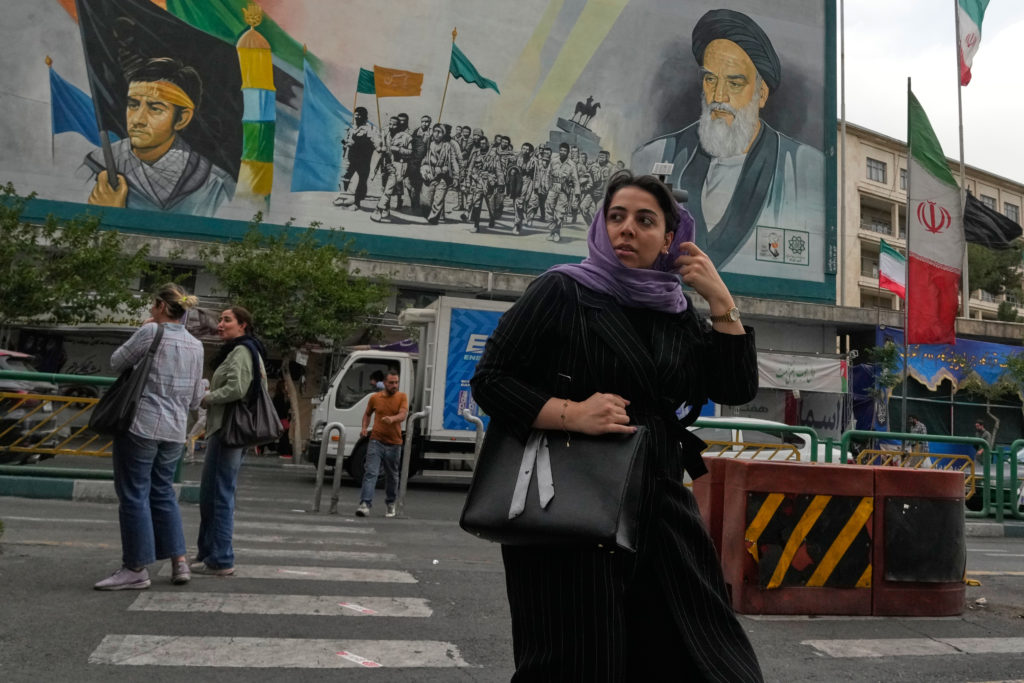
After nearly three months without global internet access, Iran has partially restored its connection to the outside world. However, many users report very slow speeds, limited website access, and ongoing restrictions, while some Iranians are relieved to reconnect with family and friends after the blackout imposed following U.S. strikes.
Key Facts
Iran's internet was mostly shut down for almost three months following U.S. strikes on February 28, 2026.
During the shutdown, Iranians could only access the national intranet, a local network with access to state-approved sites and apps.
Internet access partially returned on May 28, 2026, reaching about 60 percent connectivity.
Many websites remain blocked, some apps like WhatsApp are restricted, and internet speeds are very slow.
Data is expensive, costing some users almost as much as a month’s average salary.
The partial restoration has allowed families to reunite digitally for the first time in months.
Iranians have increasingly used local messaging and service apps during the shutdown.
Some people remain cautious about using Iranian apps and the limited internet access.
Read the Original
Want the full story? Tap a source to open the original
article.
The U.S. military said Iran broke a ceasefire by firing missiles that Kuwait intercepted. Kuwait was attacked after the U.S. struck Iran, and Iran claimed it was retaliating for U.S. strikes against its forces.
Key Facts
The U.S. military accused Iran of breaking a fragile ceasefire.
Kuwait reported coming under missile attack, which it intercepted.
The attack happened after U.S. airstrikes against Iran.
Iran said it fired missiles at a U.S. base in another Gulf country in response.
Kuwait called Iran’s missile attack “blatant aggression.”
The incident increased tensions and risks to ongoing peace talks.
The U.S. called Kuwait one of its top allies in the Persian Gulf.
The U.S. Central Command called Iran’s missile attack an “egregious ceasefire violation.”
Read the Original
Want the full story? Tap a source to open the original
article.
A top British intelligence official says that almost 500,000 Russian soldiers have died in the war with Ukraine. This information highlights the heavy losses suffered by Russian forces during the conflict.
Key Facts
The U.K. spy chief reported nearly 500,000 Russian military deaths in the Ukraine war.
The statement was made by a high-ranking British intelligence leader.
The data refers specifically to Russian soldiers killed during the ongoing conflict.
The war is between Russia and Ukraine.
The information was shared publicly through a news report on CBS.
Read the Original
Want the full story? Tap a source to open the original
article.
President Donald Trump issued a warning that included the threat to bomb Oman, a U.S. ally in the Middle East. This happened during a time of increased tensions in the Strait of Hormuz, a strategic waterway important for global oil transport.
Key Facts
President Trump made a threat to bomb Oman.
Oman is an ally of the United States in the Middle East.
The warning came amid rising tensions in the Strait of Hormuz.
The Strait of Hormuz is a key route for shipping oil worldwide.
CBS News reporters Charlie D’Agata and Aaron Navarro covered the story.
The situation involves conflict or potential conflict related to Iran.
The news was shared through CBS News and its app.
Read the Original
Want the full story? Tap a source to open the original
article.
Two brothers, Jordan and Cian Adams, completed running 33 marathons in 33 days, starting with the London Marathon and then running one marathon in each of Ireland’s 32 counties. They raised £1.5 million to support research into frontotemporal dementia, the disease that took their mother’s life and that they are genetically likely to develop.
Key Facts
Jordan and Cian Adams are brothers from Redditch, Worcestershire, England.
They ran 33 marathons in 33 days, beginning with the London Marathon.
After the London Marathon, they ran one marathon in each of the 32 counties across Ireland.
Their mother died at age 52 from frontotemporal dementia (FTD), a brain disease.
The brothers carry a rare gene that makes it likely they will develop FTD in their 40s.
They raised £1.5 million for dementia research through this challenge.
The final marathon finished in Merrion Square, Dublin, with hundreds of supporters present.
They received a congratulatory letter from the Prince of Wales for their achievement.
Read the Original
Want the full story? Tap a source to open the original
article.
Yemen’s former president Abd-Rabbu Mansour Hadi has died at age 80 in Riyadh, Saudi Arabia, where he lived in exile. Hadi led Yemen’s internationally recognized government during a long civil war and stepped down in 2022, handing power to a new leadership council.
Key Facts
Abd-Rabbu Mansour Hadi was Yemen’s president who lived mostly in exile after fleeing house arrest by Houthi rebels.
He died on Thursday at his home in Riyadh, Saudi Arabia, at age 80.
Hadi led Yemen’s government from exile for about eight years during a civil war and famine.
He stepped down in April 2022, transferring power to the Presidential Leadership Council.
The civil war in Yemen started after Iranian-backed Houthis took control of the capital Sanaa in 2014.
The war has killed hundreds of thousands of people, both directly and indirectly.
Around 19.5 million Yemenis needed humanitarian aid last year according to the United Nations.
Hadi took office in 2012 after being vice president and was the sole candidate in his election, winning 99.8% of the vote.
He is survived by his wife and six children.
Read the Original
Want the full story? Tap a source to open the original
article.
A new documentary called "What's the Story, Wishbone?" explores the history of the PBS children's show "Wishbone" and its unexpected end. The documentary features interviews with the original team, including producer Betty A. Buckley, who discusses the show's lasting appeal and respect for its young audience.
Key Facts
"Wishbone" was a popular PBS show in the 1990s featuring a dog named Soccer who acted out classic stories.
The show aired 50 episodes and a finale movie called "Wishbone's Dog Days of the West."
The new documentary "What's the Story, Wishbone?" looks at how the show became popular and why it was suddenly cancelled.
Betty A. Buckley produced both the original series and the new documentary.
Buckley emphasized the show's respect for children, treating them seriously as viewers.
The documentary is airing now on Public Television Stations and will be available for digital purchase on June 10.
The show "Wishbone" remains popular and culturally important decades after it first aired.
Read the Original
Want the full story? Tap a source to open the original
article.
A debate in France highlights the need to create climate change policies that are fair and consider how they affect poor people. Experts say climate actions should help everyone and avoid putting extra costs on those with fewer resources.
Key Facts
Climate policies need to be designed with fairness in mind.
Poor and vulnerable groups can be negatively affected by some climate measures.
François Gemenne, an expert, emphasizes the importance of equitable climate strategies.
The discussion took place on France24’s program "The Debate."
The goal is to tackle climate change without increasing inequality.
The debate included ideas about balancing environmental goals with social justice.
Similar concerns are part of global discussions on climate action.
Read the Original
Want the full story? Tap a source to open the original
article.
The U.S. Treasury Department imposed sanctions on the Persian Gulf Strait Authority (PGSA), an Iranian agency created to manage the Strait of Hormuz. The U.S. sees this agency as part of Iran’s Islamic Revolutionary Guard Corps trying to control this important shipping route.
Key Facts
The U.S. Treasury Department sanctioned the PGSA on Wednesday.
The PGSA is a new organization formed by the Iranian government this month.
Its purpose is to manage the Strait of Hormuz, a key waterway in the Persian Gulf.
The U.S. says the PGSA is linked to Iran’s Islamic Revolutionary Guard Corps (IRGC).
The IRGC is accused of trying to earn money from controlling the Strait.
The Strait of Hormuz is a major global shipping route for oil and goods.
Sanctions are aimed at stopping Iran’s influence over this strategic area.
Read the Original
Want the full story? Tap a source to open the original
article.
Iraq’s government warns that the poisonous datura plant, also called devil’s trumpet, is spreading quickly and harming crops. This plant contains toxic chemicals that can affect people, animals, and plants, although it has been used in medicine for centuries. Scientists are surprised at how fast it adapts and grows in new places like Iraq.
Key Facts
The Iraqi Ministry of the Interior alerted farmers about an invasion of the datura plant.
Datura, also known as jimsonweed or thorn apple, has white or purple trumpet-shaped flowers and green prickly fruit.
The plant contains toxic chemicals affecting the nervous system of humans, animals, and plants.
Despite being poisonous, datura produces important medicinal chemicals used in eye treatments and motion sickness medicines.
The plant originally comes from Central America and spread worldwide after European explorers brought it to new lands.
Scientists found datura can live in many climates, including cold and warm places, which is unusual for invasive plants.
In Iraq, the plant thrives in nitrogen-rich soil near rivers and the hot, semi-dry weather.
Datura can quickly adapt to new environments, helped by less farming activity caused by Iraq’s conflicts.
Read the Original
Want the full story? Tap a source to open the original
article.
"The Breadwinner" is a new family comedy directed by Eric Appel. It stars comedian Nate Bargatze as a car salesman who must take care of his three daughters after his wife becomes successful on the show "Shark Tank." The film features several well-known comedians and opens in theaters on May 29.
Key Facts
Nate Bargatze makes his first feature film appearance in "The Breadwinner."
He plays a car salesman who becomes a stay-at-home dad.
His wife’s invention is featured on "Shark Tank," giving her a big opportunity.
Eric Appel, the director, has previous experience with TV comedies like "The Office" and "Brooklyn Nine-Nine."
The movie is a comedy suitable for families.
Other comedians in the film include Will Forte, Zach Cherry, Kumail Nanjiani, and Colin Jost.
The film focuses on the relationship between the father and his three daughters.
"The Breadwinner" will be shown only in movie theaters starting May 29.
Read the Original
Want the full story? Tap a source to open the original
article.
Italian police seized more than €200 million in cash, companies, and luxury assets linked to Matteo Messina Denaro, a late Sicilian Mafia boss. Messina Denaro was arrested in 2023 after being on the run for decades and died shortly after in jail.
Key Facts
Matteo Messina Denaro was a top boss of the Sicilian Mafia, also known as Cosa Nostra.
He was arrested in 2023 while leaving a clinic for cancer treatment and died soon after in custody.
Police seized assets worth over €200 million, including villas, cars, companies, and cash.
The seized wealth came from more than 40 years of drug trafficking and other crimes.
The investigation covered multiple countries like Spain, Switzerland, and the Cayman Islands.
Three people were arrested and eight companies, including real estate firms, were linked to the illegal funds.
More than 150 officers used advanced tools like drones, thermal scanners, and digital tracking to find hidden money and cryptocurrency.
Officials said this operation aims to stop the Mafia from regaining power and influence worldwide.
Read the Original
Want the full story? Tap a source to open the original
article.
The United States carried out missile strikes near Bandar Abbas, Iran’s key port city, hitting drone control sites and shooting down four Iranian drones. These attacks have increased tensions around the Strait of Hormuz, a vital waterway for global oil trade, despite a fragile ceasefire between the U.S. and Iran since April 8.
Key Facts
Bandar Abbas is a major port city on Iran’s southern coast near the Strait of Hormuz.
The Strait of Hormuz is a very narrow but crucial sea passage where about 20% of the world’s oil and gas passes through.
The city is home to Iran’s main naval base for both its conventional navy and the Islamic Revolutionary Guard Corps (IRGC) navy.
The IRGC navy uses fast boats to challenge ships passing through the strait without its permission.
Since April 8, a ceasefire has been in place, but tensions and attacks, including explosions and military strikes, continue.
President Donald Trump stated that no one would control the Strait of Hormuz amid ongoing U.S.-Iran negotiations.
Iran claims the U.S. violated the ceasefire by attacking Bandar Abbas and responded by firing on an American airbase nearby.
Bandar Abbas plays a key role in Iran’s economy because most of Iran’s oil shipments go through the nearby Strait of Hormuz.
Read the Original
Want the full story? Tap a source to open the original
article.
US President Donald Trump said he is not yet happy with the terms being negotiated in a deal with Iran. Despite a fragile ceasefire in place since early April, there have been recent attacks and missile interceptions in the Gulf region, while diplomatic talks continue in the background.
Key Facts
A ceasefire between the US and Iran has lasted since April 8, longer than the previous active fighting phase.
The US recently struck a "ground control site" in Bandar Abbas, Iran, prompting Iran’s Revolutionary Guard to attack a US air base.
A ballistic missile fired by Iran was intercepted over Kuwait, considered a violation of the ceasefire by the US Central Command.
The US shot down five Iranian drones near the Strait of Hormuz, a key shipping route.
Iranian state media reported a draft 14-point deal demanding the lifting of US naval blockades and US troop withdrawals near Iran.
The White House called the reported draft deal false and President Trump said he is not yet satisfied with the proposals.
President Trump warned Iran that failure to comply with US demands could lead to war again.
The US Treasury sanctioned Iran’s new authority overseeing traffic through the Strait of Hormuz, linking it to Iran's Revolutionary Guard’s activities.
Read the Original
Want the full story? Tap a source to open the original
article.
French singer and actor Patrick Bruel faces accusations of sexual assault from about 30 women. The case is raising questions in France about whether people can separate an artist's work from their personal actions, the right to be presumed innocent, and how laws about the time limit for reporting crimes apply.
Key Facts
Around 30 women have accused Patrick Bruel of sexual assault.
Bruel is both a singer and an actor in France.
The scandal is known in France as the "Affaire Patrick Bruel."
The situation sparks debate on separating an artist’s work from their personal behavior.
It also raises legal questions about the presumption of innocence until proven guilty.
France’s statute of limitations, which sets how long after a crime charges can be filed, is being tested by this case.
This scandal is part of a larger conversation related to the #MeToo movement in France.
The case has attracted attention in French media and culture discussions.
Read the Original
Want the full story? Tap a source to open the original
article.