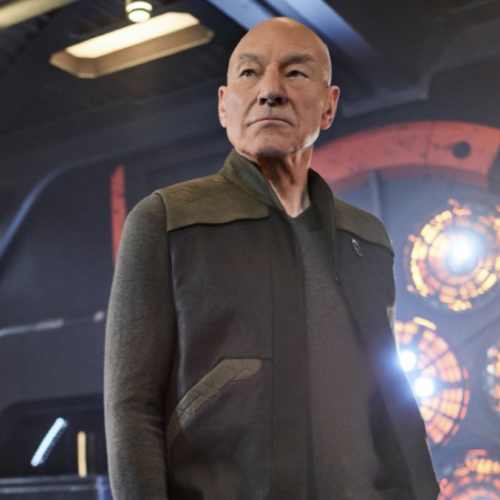
The article reports that actor Sir Patrick Stewart died at age 86 at his Los Angeles home after living with Alzheimer’s disease and Lewy body dementia. It recounts his theater career and his best-known roles as Jean-Luc Picard in Star Trek: The Next Generation and Charles Xavier in the X-Men films.
Key Facts
Stewart’s representatives said he died at home in Los Angeles, surrounded by family and friends.
The representatives said he had Alzheimer’s disease and Lewy body dementia.
Stewart was born in Yorkshire, England, in 1940, and became interested in acting at age 12.
He began his professional acting career in 1959 in a production of Treasure Island.
A television producer noticed Stewart while he was teaching Shakespeare at UCLA and recommended him for Star Trek: The Next Generation.
Stewart played Captain Jean-Luc Picard in Star Trek: The Next Generation, which ended in 1994.
He played Professor Charles Xavier in the 2000 film X-Men and reprised the role in six more films.
His family asked that memorial contributions go to the Johns Hopkins Alzheimer’s Disease Research Center Fund or the Alzheimer’s Foundation of America Caregiver Resources.
Read the Original
Want the full story? Tap a source to open the original
article.
The US approved a proposed $2.1 billion sale of 500 Patriot PAC-3 missiles to Ukraine. European allies and Canada will fund the purchase, with no US funds involved, but the missiles are new builds and are unlikely to arrive quickly.
Key Facts
The US State Department approved the proposed sale of 500 Patriot interceptor missiles to Ukraine.
The missiles are PAC-3 models, designed to intercept incoming threats including ballistic missiles.
The State Department put the sale price at $2.1 billion.
Canada, Germany and Norway will contribute through the JUMPSTART program, alongside funding tied to the European Union’s Ukraine Support Loan.
Lockheed Martin will be the principal contractor.
Ukraine has said it is critically low on Patriot missiles and has been waiting for deliveries.
The article says the order is for newly produced missiles, not existing stock, and gives US production at about 600 missiles per year.
The State Department said the sale would not use US funds.
Read the Original
Want the full story? Tap a source to open the original
article.
Three masked suspects entered real estate executive Derek Morton’s home in Toronto’s Bridle Path neighborhood early Thursday, shot Morton and his two daughters, and struck his wife with a hammer. The family members received emergency care, and police are searching for the suspects, whom they believe are men in their 20s.
Key Facts
Toronto police said the suspects entered the home through a rear door at about 03:44 EST on Thursday.
Morton said the attackers were armed with handguns and a hammer and demanded valuables.
Three family members were shot, and all four were attacked with a hammer, according to Morton.
Police said two victims remain in hospital.
Police listed the victims’ ages as 75, 64, 28 and 26 but did not identify them.
Investigators said they believe the family was targeted because they lived in an affluent neighborhood.
Police have not said whether the suspects took anything from the home.
Toronto police said residents should expect increased patrols in the area.
Read the Original
Want the full story? Tap a source to open the original
article.
A U.S. Treasury Department report says the Trump administration’s economic pressure campaign is severely damaging Iran’s economy. Treasury Secretary Scott Bessent called the campaign successful during a Wednesday appearance on CNBC.
Key Facts
The Treasury Department released the report on Friday.
The report says U.S. economic isolation is decimating Iran’s economy.
The Trump administration began the campaign, called Operation Economic Outcast, at the end of August.
Treasury Secretary Scott Bessent discussed the campaign on CNBC on Wednesday.
Bessent said the effort had been very successful.
The article title reports that Iran’s inflation has reached 90 percent.
Read the Original
Want the full story? Tap a source to open the original
article.
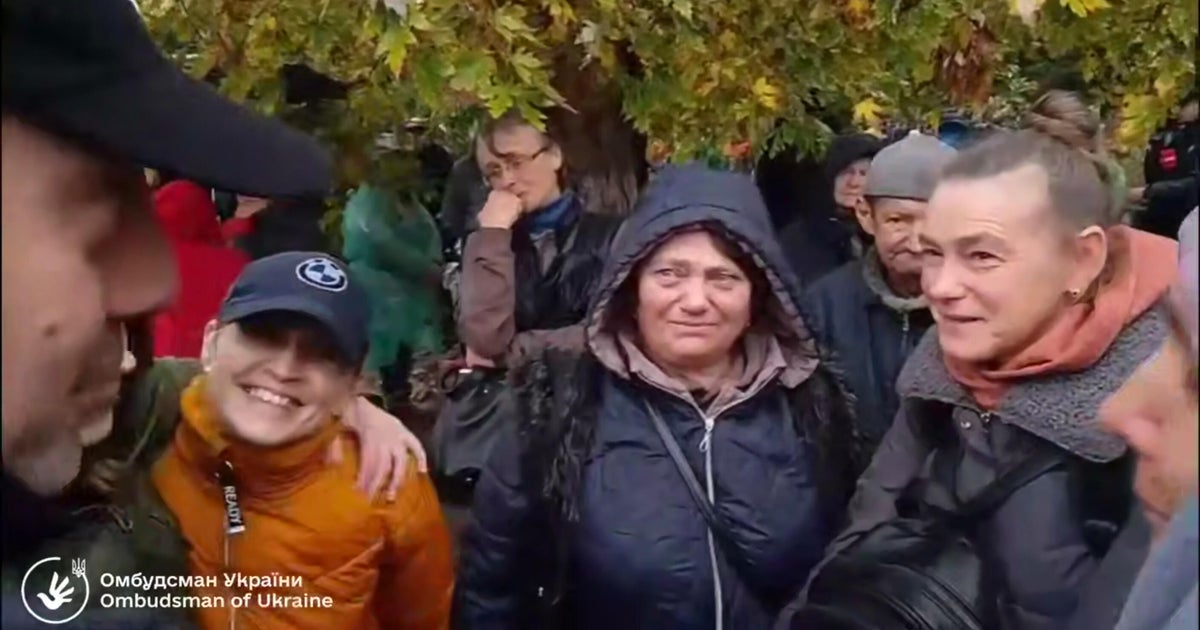
Residents left Russian-occupied Oleshky on October 30 during a U.S.-brokered ceasefire. Ukrainian official David Arakhamia said evacuees and a Ukrainian delegation were traveling to Anapa, Russia, then planned to fly to Belarus and return to Ukrainian-controlled territory by bus.
Key Facts
Russia captured Oleshky in 2022, and the town lies near the front line in southern Ukraine.
The article reports months of food and medicine shortages in Oleshky.
Ukrainian and Russian officials visited the town and helped deliver aid and organize departures.
Russia said the operation ended without incidents; its human rights ombudsman said 25 buses and nine ambulances were used.
Neither side disclosed how many people left Oleshky.
The ceasefire was due to end on Sunday evening, October 31, according to the article.
Oleshky's population fell from about 24,000 before the war to about 2,000.
Read the Original
Want the full story? Tap a source to open the original
article.
Switzerland’s Federal Supreme Court upheld Alieu Kosiah’s 20-year prison sentence for war crimes committed during Liberia’s first civil war, but overturned his conviction for crimes against humanity. The court said Swiss law did not recognize that offense until 2011, so it could not apply to acts from 1993 to 1995.
Key Facts
Kosiah, a former Liberian rebel commander, was convicted in 2021 of war crimes committed between 1993 and 1995.
The court upheld the maximum 20-year prison sentence for violations of the laws of war.
It acquitted Kosiah of crimes against humanity under the principle that criminal laws cannot apply retroactively.
Switzerland introduced the crime of crimes against humanity into its law in 2011.
The 2021 court ruling found that Kosiah ordered or took part in killing 17 civilians and two unarmed soldiers.
The court also found him guilty of crimes including rape, deploying a child soldier, looting and mistreating civilians.
Kosiah settled in Switzerland in the late 1990s and was arrested in 2014.
Read the Original
Want the full story? Tap a source to open the original
article.
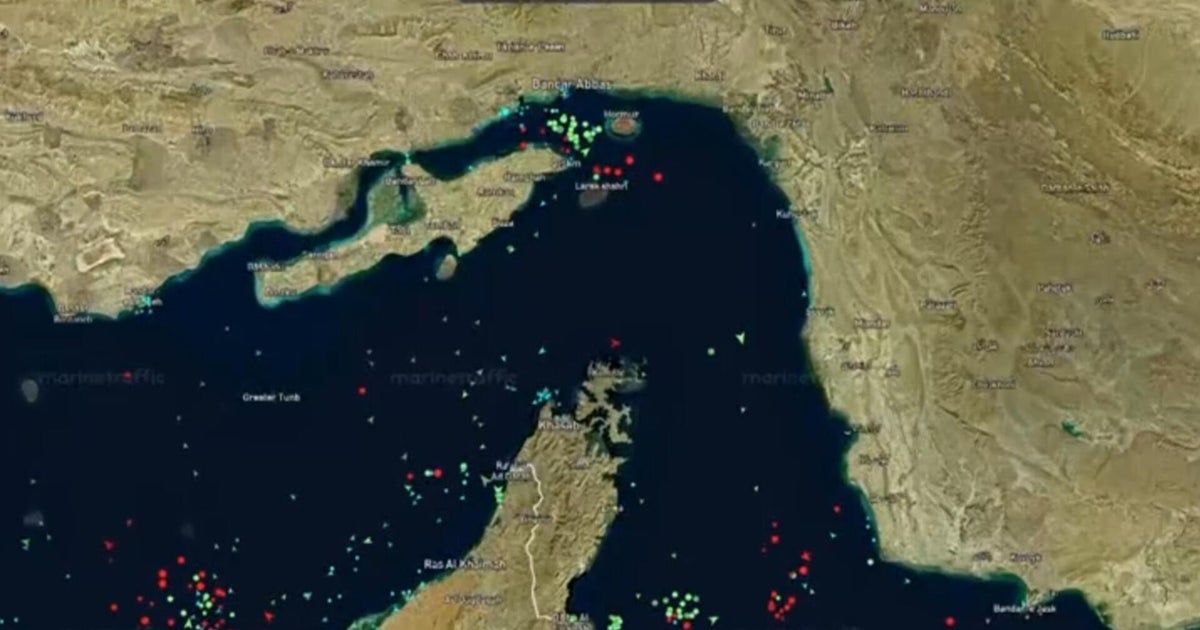
The head of U.S. Central Command says Iran’s navy has been destroyed and the main routes through the Strait of Hormuz are clear. CBS News correspondent Courtney Kealy reports on the claims; the article provides no supporting details.
Key Facts
The U.S. Central Command chief said Iran’s navy was destroyed.
The chief said the main routes through the Strait of Hormuz are clear.
CBS News correspondent Courtney Kealy reports on the statements.
The article is a brief video report and gives no further details.
Read the Original
Want the full story? Tap a source to open the original
article.
Nearly 200 nations approved two agreements at the COP17 biodiversity summit in Yerevan after nearly two weeks of negotiations that ran into overtime. The agreements aim to help countries meet the goal of halting biodiversity loss by 2030, though the final texts were not immediately released.
Key Facts
Delegates adopted the agreements on Friday, October 30, 2026.
The summit took place in Yerevan, Armenia.
A 2022 global pact set targets to halt biodiversity loss by 2030.
The UN warned that countries were falling short on goals such as protecting 30 percent of land and oceans, reducing pollution, and increasing conservation funding for poorer countries.
Negotiators debated reforming subsidies and other incentives that support activities harmful to nature, including fossil fuels, intensive agriculture, and overfishing.
Countries also disagreed over where to find additional funding for global conservation.
The article estimates that restoring ecosystems and protecting species and habitats requires an additional $700 billion per year.
A draft proposal invited countries outside the developed-country donor group to contribute voluntarily to conservation funding.
Read the Original
Want the full story? Tap a source to open the original
article.
Poland’s government has moved to pursue criminal charges against Constitutional Tribunal President Bogdan Święczkowski and Vice-President Bartłomiej Sochański, escalating a dispute over control of the court. Opposition Law and Justice supporters protested in Warsaw as riot police guarded the building, while Prime Minister Donald Tusk said the government was acting to restore the rule of law.
Key Facts
Justice Minister Waldemar Żurek requested that Święczkowski and Sochański lose their immunity from prosecution so criminal charges could be brought.
The Constitutional Tribunal said the two men remained its legally appointed senior justices and described the actions against them as a coup d’état.
Tusk said his government’s actions were part of its effort to reverse changes made under the previous Law and Justice government.
President Karol Nawrocki, backed by Law and Justice, has refused to swear in five judges elected by parliament since March.
The Venice Commission said Nawrocki should swear in the five judges so they could serve on the court.
The European Court of Human Rights and the Court of Justice of the European Union previously ruled that three judges appointed under the Law and Justice government had been improperly elected.
Poland’s parliamentary elections are scheduled for next year.
Read the Original
Want the full story? Tap a source to open the original
article.
King Charles visited Independence Park in Georgetown, Guyana, to remember the 1823 Demerara Slave Rebellion and its victims. During his Caribbean tour, he also met local children and Second World War veterans, while protesters called for reparations; he will not apologize or offer compensation during the visit.
Key Facts
The 1823 rebellion involved thousands of enslaved people and was violently suppressed by British colonial authorities.
At Independence Park, the King read a sign noting that the site had been used for public executions of enslaved people.
Guyana’s Culture Minister Steven Jacobs accompanied the King during the visit.
Protesters outside a later engagement called for reparations and said the United Kingdom benefited from slavery.
The UK government’s position is that the King will not apologize for Britain’s role in the slave trade or offer reparations during the visit.
Seven pipers from Scotland’s National Piping Centre performed with traditional Guyanese drummers in Georgetown.
The King met Guyanese Second World War veterans Donald Grant, 99, and James Samuel, 100.
Read the Original
Want the full story? Tap a source to open the original
article.
The U.S. hosts of the G20 foreign ministers’ meeting in Atlanta skipped the traditional group photo after several diplomats objected to appearing alongside Russian Foreign Minister Sergey Lavrov. Lavrov’s attendance brought tensions over Russia’s ongoing military actions into the two-day gathering.
Key Facts
The meeting took place in Atlanta.
The gathering lasted two days.
Russian Foreign Minister Sergey Lavrov attended.
Several top diplomats objected to being photographed with Lavrov.
The U.S. hosts decided not to hold the traditional “family photo.”
The article links the tensions to Russia’s ongoing military actions.
Read the Original
Want the full story? Tap a source to open the original
article.
The United States canceled the traditional G20 foreign ministers’ group photo after European officials said they would not appear alongside Russian Foreign Minister Sergey Lavrov. The Atlanta meeting is focused on global crises, including the wars in Ukraine and Iran, but no joint statement is expected.
Key Facts
German Foreign Minister Johann Wadephul said European partners would not take part in a group photo with Lavrov.
Lavrov attended the meeting while under Western sanctions imposed after Russia’s 2022 invasion of Ukraine.
Ukraine was not invited to the meeting.
EU foreign policy chief Kaja Kallas said she would urge G20 partners to support Ukraine and pursue accountability for Russian actions.
US Secretary of State Marco Rubio called for cooperation on economic and geopolitical crises affecting trade, energy, food supplies and freedom of navigation.
No joint statement is expected; Washington plans to publish a chair’s summary instead.
China sent Executive Vice Foreign Minister Ma Zhaoxu, while South Africa was excluded by Washington.
The Atlanta meeting is the final ministerial gathering under the US G20 presidency before leaders meet in Miami on December 14 and 15.
Read the Original
Want the full story? Tap a source to open the original
article.
Ukrainian and Russian humanitarian delegations began evacuating residents from Russian-occupied Oleshky on Oct. 30 under a temporary local ceasefire. The planned route takes evacuees through Russia and Belarus before they return to Ukraine on Saturday; aid deliveries are also underway.
Key Facts
Oleshky is in Ukraine’s Kherson region and has been occupied by Russia since the early days of the war.
A temporary ceasefire was arranged for Oct. 28 through Nov. 1 to allow aid deliveries and evacuations.
Ukraine’s Human Rights Ombudsman Dmytro Lubinets led the Ukrainian delegation in Oleshky.
The convoy included 25 buses, and ambulances brought food and medicine.
Local authorities said about 2,000 people remained in the city.
Ukrainian officials and residents voiced concern that Russia could use humanitarian missions to move troops or resources.
Fighting continued elsewhere: a Russian strike on a Dnipro train station killed at least 14 people, and a Russian attack on Kyiv’s energy grid left hundreds of thousands without power.
Ukraine struck a Russian oil refinery for the first time in two weeks, according to the article.
Read the Original
Want the full story? Tap a source to open the original
article.
U.S. Secretary of State Marco Rubio urged G20 officials meeting in Atlanta to work together against threats to the economic order. The United States scrapped the traditional group photo after several European officials objected to being pictured with Russia’s Sergei Lavrov.
Key Facts
G20 officials met in Atlanta.
Marco Rubio urged officials to work together to confront threats to the economic order.
The United States scrapped the traditional G20 group photo.
Several European officials objected to being pictured with Sergei Lavrov.
Sergei Lavrov was identified as Russia’s representative.
Read the Original
Want the full story? Tap a source to open the original
article.
Families in Port Sudan face persistent water shortages and high prices, worsened by the collapse of the Arbaat Dam and the arrival of people displaced by Sudan’s war. Repairs have restored parts of the water network, but many households still rely on costly deliveries from vendors.
Key Facts
Amina Khalafallah spends about 10,000 Sudanese pounds a day on water for herself and her four children, equal to her monthly salary over 30 days.
Her home in Port Sudan’s Deim Mayo neighbourhood is not connected to a piped water network, so she buys water from street vendors.
The African Development Bank reported that Port Sudan’s water supply met less than 40 percent of demand.
The Arbaat Dam, which once supplied half of Port Sudan’s daily water needs, collapsed after heavy rain and flooding in August 2024.
The dam’s collapse damaged pipelines and wells and left some neighbourhoods dependent on water delivered by truck.
Water distributor Ahmed Osman said the cost of a 50,000-litre tanker rose from about 450,000 to 1.5 million Sudanese pounds after the war began.
The UNDP said restoration work included drilling or rehabilitating 15 boreholes, laying 17 kilometres of pipelines, and installing solar-powered pumps.
Read the Original
Want the full story? Tap a source to open the original
article.
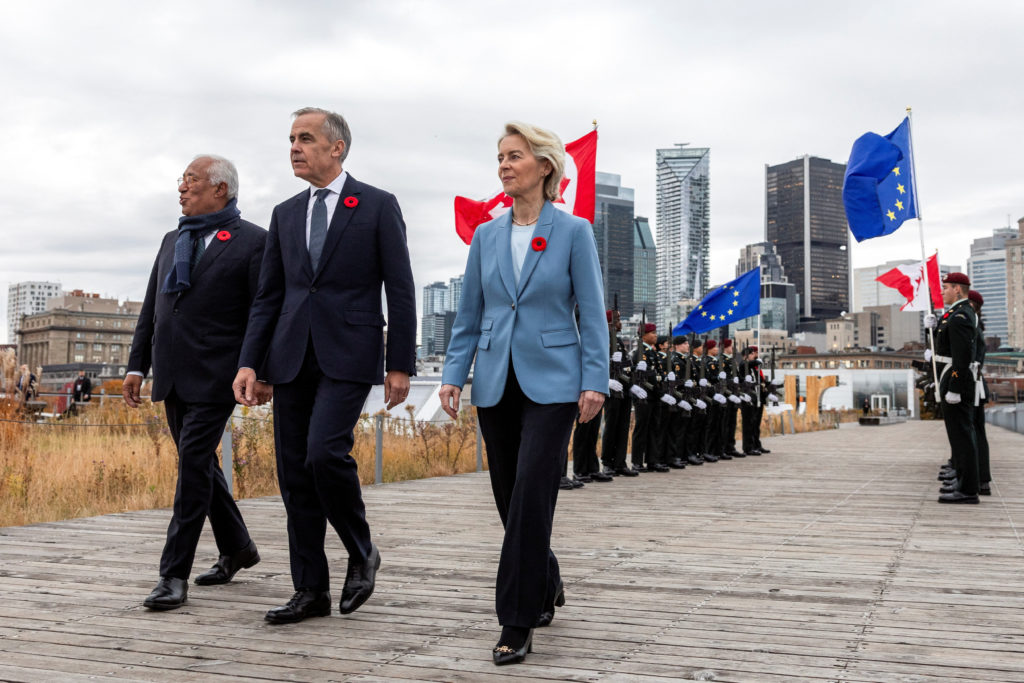
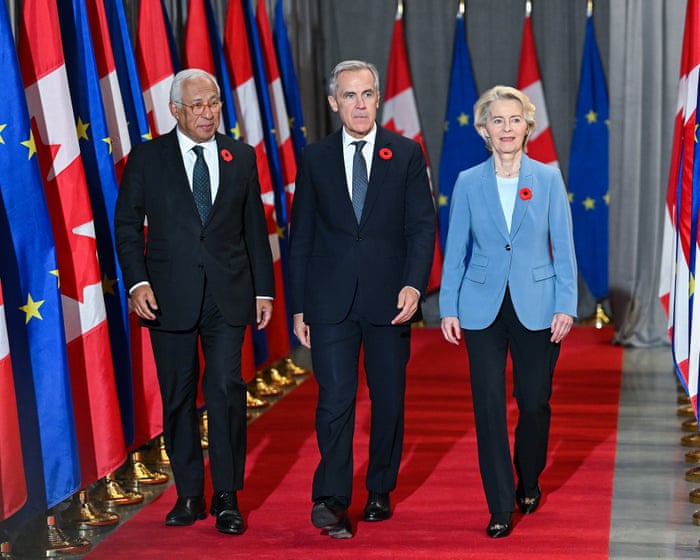
The European Union and Canada agreed to deepen cooperation at a summit in Montreal, including through a digital trade deal and more than 20 proposed measures. The plans cover critical minerals, artificial intelligence, support for Ukraine and student exchanges, as Canada pursues closer ties with the bloc amid trade tensions with the United States.
Key Facts
Prime Minister Mark Carney hosted the Canada-EU summit in Montreal with European Commission President Ursula von der Leyen and European Council President Antonio Costa.
Canada and the EU described their goal as an “Alliance for the Future”; the term “associate member” has no legal basis and is contested by some EU states.
The two sides signed a digital trade deal and said they had established more than 20 measures to strengthen cooperation.
The European Investment Bank plans to invest in critical Canadian resources, particularly raw minerals.
Canada announced it would join the EU’s 90 billion euro support loan for Ukraine, with an initial contribution of 500 million euros.
Canada and the EU said they would start negotiations to expand Canada’s participation in Erasmus+, the EU student exchange programme.
The two sides also agreed to advance cooperation on the security and safety of artificial intelligence.
Read the Original
Want the full story? Tap a source to open the original
article.
After Israel’s general election produced no overall majority, Benjamin Netanyahu accused Palestinian Israeli parties of election fraud and taking money from Qatar. The parties deny the claims, Israel’s Electoral Commission says it found no evidence of fraud, and Qatar denies involvement. The report asks whether Netanyahu is trying to prevent those parties from joining an opposition coalition that could unseat his Likud party.
Key Facts
Israel’s general election produced no overall majority.
Benjamin Netanyahu accused Palestinian Israeli parties of stealing votes and receiving funding from Qatar.
The accused parties denied wrongdoing.
Israel’s Electoral Commission found no evidence of fraud.
Qatar denied involvement.
The report raises the possibility that Netanyahu’s accusations aim to deter the parties from joining an opposition coalition against Likud.
Read the Original
Want the full story? Tap a source to open the original
article.
Canadian Prime Minister Mark Carney said he expects Canada and the European Union to finish negotiating a close partnership in June. The proposed relationship would fall short of EU membership, and the joint declaration launching a new alliance did not use the term “associate member.”
Key Facts
Carney said Canadian ministers and European commissioners will meet in March to advance the negotiations.
The two sides agreed to define an “ever-closer association” by their next summit in 2027.
Canada and the EU concluded substantive negotiations on a digital trade agreement to ease business activity and data transfers across the Atlantic.
Canada and the European Investment Bank concluded negotiations on an agreement to encourage investment in Canadian critical minerals.
Canada will take part in a European supercomputing initiative.
The two sides also concluded negotiations on a competition agreement and will explore linking their instant-payment systems.
The leaders launched the Alliance for the Future to expand cooperation on trade, research and security.
Read the Original
Want the full story? Tap a source to open the original
article.
Pakistan’s military spokesman said the country is “cautiously optimistic” about efforts to mediate between Iran and the United States and revive a ceasefire. He pointed to recent visits by Pakistan’s army chief and regional officials to Tehran, while warning that unnamed parties could undermine negotiations.
Key Facts
Pakistani military spokesman Lieutenant General Ahmed Sharif Chaudhry said there were positive signs in mediation efforts.
Pakistan Army chief Field Marshal Asim Munir visited Tehran twice this month, including a trip on Monday.
Saudi Defence Minister Prince Khalid bin Salman and Turkish intelligence chief Ibrahim Kalin joined Munir on Monday.
Qatari mediators arrived in Tehran as regional efforts continued to revive the ceasefire.
Chaudhry declined to say what the delegation discussed in Tehran or whether the United States supported the visit.
Pakistan, Saudi Arabia, and Turkey signed the Mecca Joint Defence Agreement on August 7; it treats an attack on one signatory as an attack on all.
Chaudhry said the agreement does not bar new members and that Pakistan’s political leadership would decide whether to send more troops to Saudi Arabia.
Read the Original
Want the full story? Tap a source to open the original
article.
Canada and the European Union announced the Alliance for the Future, a partnership aimed at strengthening economic, technology and security ties. The leaders also agreed to discuss deeper market integration and a possible associate membership for Canada, with its scope to be addressed at a 2027 summit.
Key Facts
Canadian Prime Minister Mark Carney and European Commission President Ursula von der Leyen announced the alliance in Montreal after a two-day summit.
Canada agreed to contribute to a €90 billion support loan for Ukraine.
The leaders said future talks would explore a more integrated market, fewer trade and travel restrictions, and expanded educational opportunities.
Canada and the EU announced an agreement giving Canada access to European supercomputers for training AI models.
Carney cited a planned merger of Canada’s Cohere and Germany’s Aleph Alpha as a way to reduce reliance on U.S. AI companies.
Canada and the EU discussed possible associate membership for Canada, but said they would define its scope at a 2027 summit.
The article says Canada’s federal government announced a stake in Cohere worth up to C$1.6 billion.
Read the Original
Want the full story? Tap a source to open the original
article.