Neutral summaries of your favorite news sources — just the facts.
Your favorite news sources, one neutral feed — we distill their reporting into fact-first
summaries and always link to the original story. How it works
World News
Comprehensive coverage of international news and global events
An Austrian paraglider survived a scary mid-air crash when a small plane damaged her parachute, but she safely used her backup chute to land. In Senegal, President Bassirou Diomaye Faye appointed a new prime minister after firing his former mentor. Meanwhile, Pope Leo XIV issued a letter warning about risks from artificial intelligence and called for government rules.
Key Facts
An Austrian paraglider’s parachute was torn by a Cessna plane during flight over the Alps.
The paraglider used a backup parachute and landed safely, suffering only minor injuries.
Senegal’s President Bassirou Diomaye Faye replaced Prime Minister Ousmane Sonko with economist Ahmadou Al Aminou Lo.
Faye and Sonko’s relationship broke down over how to deal with Senegal’s public debt and IMF aid.
Sonko is popular in parliament, which could make governing tough for Faye.
Pope Leo XIV released an encyclical warning about dangers of artificial intelligence (AI).
The pope urged governments to regulate private AI companies and protect jobs and children from harmful AI.
The encyclical builds on earlier papal letters addressing social and ethical issues.
Read the Original
Want the full story? Tap a source to open the original
article.
Palestinians in Gaza are experiencing a difficult Eid holiday due to the ongoing war damaging their livestock industry. Restrictions by Israel on importing live animals and closing border crossings have also stopped many from making the pilgrimage to Mecca.
Key Facts
The Eid holiday in Gaza starts on Tuesday evening.
The war has destroyed much of Gaza’s livestock sector.
Israel is not allowing live animals to be brought into Gaza.
This makes the traditional animal sacrifice for Eid nearly impossible.
Restrictions on crossing borders prevent many Palestinians from traveling to Mecca for the pilgrimage.
Gaza faces tough conditions because of continued conflict and border controls.
The situation affects the religious and cultural practices of Palestinians during Eid.
Read the Original
Want the full story? Tap a source to open the original
article.
Since October 7, 2023, Israel’s workforce has changed because many Palestinian workers have lost their work permits or have been sent out of the country. This shift is affecting the economies of both Israel and the Palestinian territories.
Key Facts
The changes began after October 7, 2023.
Many Palestinian workers in Israel had their work permits revoked.
Some Palestinian workers were deported from Israel.
The number of Palestinian workers in Israel has dropped significantly.
This workforce change affects both Israel’s economy and the Palestinian economy.
The reduction of Palestinian labor impacts sectors that relied on their work.
The situation is a result of new policies following events on October 7, 2023.
The article discusses the broader economic effects of these labour shifts.
Read the Original
Want the full story? Tap a source to open the original
article.
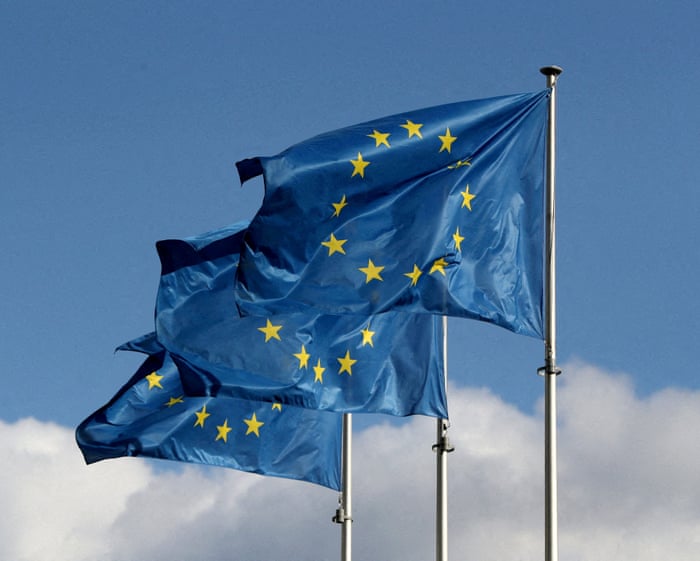
The European Union is considering delaying new member countries’ veto rights for several years to help speed up the process of admitting more countries, especially from the western Balkans. This plan aims to prevent future blocks on important decisions and make enlargement easier to manage, while talks continue about Ukraine’s possible associate membership.
Key Facts
The EU may deny new members, like Moldova and western Balkan countries, the right to veto decisions for a limited time after joining.
Montenegro is the frontrunner to join the EU by 2028, with accession talks entering their final phase.
The move follows problems with Hungary blocking some EU decisions under its former government.
A temporary ban on veto rights would be included in accession treaties but must be limited to avoid creating unequal member states.
Germany’s Chancellor Friedrich Merz called for new ideas to speed up western Balkan countries’ EU membership and proposed associate membership for Ukraine without voting rights.
Ukraine’s President Zelenskyy rejected partial membership, demanding full and equal EU membership.
The EU aims to admit new members by 2030, with Montenegro, Albania, and Moldova as key candidates.
There is concern about approval in current member states like France, where support for enlargement is low.
Read the Original
Want the full story? Tap a source to open the original
article.
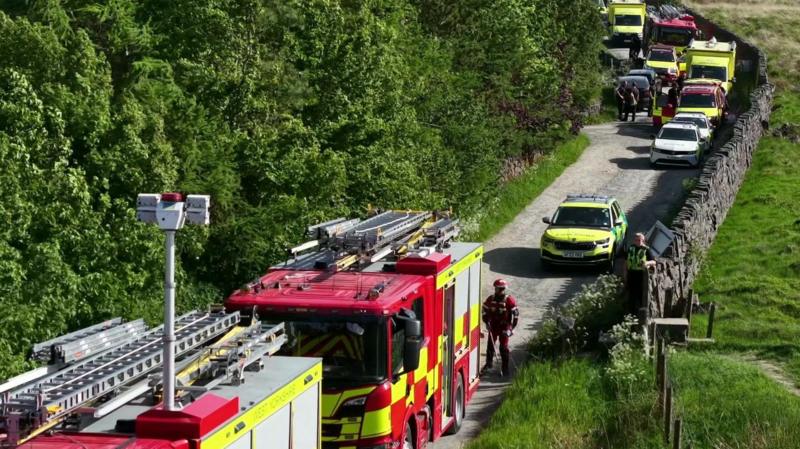
Four teenagers died after drowning in lakes and reservoirs at different beauty spots in England during a hot Bank Holiday weekend. Police and emergency services carried out searches and investigations at each location, and families have urged people to be careful around water.
Key Facts
A 13-year-old boy died after being pulled from Leadbeater Dam in Halifax, West Yorkshire.
A teenage girl was found dead in the water at Kingsbury Water Park in Warwickshire.
A teenage boy’s body was recovered from a lake in Rother Valley Country Park, South Yorkshire.
On Sunday, a 15-year-old boy named Declan Sawyer drowned at Swanholme Lakes near Lincoln.
Temperatures in the UK reached record highs during the Bank Holiday.
Police are investigating the deaths and advising people to be cautious near water.
Emergency services involved included police, fire and rescue, and ambulance crews.
Families of the victims are receiving support and have warned others about water dangers.
Read the Original
Want the full story? Tap a source to open the original
article.
In France, some immigrant students who have completed technical high schools are receiving deportation orders instead of job offers. These students arrived as children on nonstudy visas and lose protection after turning 18, causing difficulties in continuing their education or working.
Key Facts
Some immigrant students in Saint-Denis, a poor suburb of Paris, are getting deportation orders despite finishing technical high school programs.
Mariem, 19, arrived from Tunisia at age 12 and studied for seven years, but received a deportation order in April.
Mohammed, 19, arrived from Morocco at age 14 and is enrolled in a technical electrical engineering program, but was told he did not have the proper visa.
Students who came to France as children on tourist or other nonstudy visas are protected from deportation until age 18 but not after.
An adviser estimated around 50 students in one school faced undocumented or deportation situations; the problem affects many technical schools nearby.
France reduced work permits for high school graduates starting January 2025, aiming to limit backlog and tightening rules.
The number of visas and work permits issued has dropped by over 40% and 50% respectively.
France issued more deportation orders than any EU country from 2023 to 2024, though not all are enforced.
Some students have waited up to three years for visa paperwork approval, preventing them from continuing education or employment.
Read the Original
Want the full story? Tap a source to open the original
article.
A bridge collapsed in China, causing a car to fall into the river below. The car had broken down and could not move backward, but the people inside managed to get out before the floodwaters carried the car away.
Key Facts
A bridge in China collapsed due to flooding.
A car fell from the collapsed bridge into the river.
The car had broken down and could not reverse.
The occupants of the car exited safely before it was swept away.
The floodwaters were strong enough to carry the car downstream.
An eyewitness recorded the event.
Local media reported the incident.
Read the Original
Want the full story? Tap a source to open the original
article.
Ultraviolet (UV) radiation from the Sun helps the body make vitamin D but too much UV can harm the skin and eyes, increasing the risk of skin cancer and aging. The UV Index measures how strong the UV rays are, helping people know when to protect themselves by using sunscreen, clothing, and shade.
Key Facts
UV radiation comes from the Sun and helps the skin produce vitamin D.
High UV exposure can damage skin cells’ DNA, causing skin cancer and aging.
The UV Index (UVI) shows how strong UV radiation is, with higher numbers meaning more risk.
In the UK, typical summer UV levels are around 5-6; levels above 8 are rare.
Sunscreen with SPF 30+ and at least 4-star UVA protection is recommended, especially when UV levels are medium or higher.
Sunscreen should be applied 30 minutes before sun exposure and reapplied every two hours or after swimming or sweating.
Wearing protective clothing, sunglasses, and staying in shade during peak sun hours (11 am to 3 pm) helps reduce UV damage.
Even on cloudy or windy days, UV rays can still cause skin damage.
Read the Original
Want the full story? Tap a source to open the original
article.
Scientists discovered a new species of small blue octopus 5,900 feet under the sea near the Galapagos Islands. They used CT scans to study the octopus’s body without harming it and named it Microeledone galapagensis.
Key Facts
The octopus was found near Darwin Island in the Galapagos, about 5,900 feet underwater.
It is tiny enough to fit in the palm of a hand and has a rare blue color on top and deep purple underneath.
Scientists from the Charles Darwin Foundation and the Field Museum in Chicago studied the octopus.
They used thousands of X-ray images to create a 3D model of the octopus’s insides without cutting it open.
The octopus belongs to the Megaleledonidae family but is much smaller and has unique physical traits.
Its color pattern helps it hide from predators by covering its prey with its dark webbing.
New octopus species are often found in deep, unexplored parts of the ocean, which cover much of the Earth’s surface.
This discovery is part of ongoing research about octopus species found worldwide.
Read the Original
Want the full story? Tap a source to open the original
article.
China and Pakistan have agreed to strengthen their strategic partnership and work together on developing a major economic corridor and the Gwadar port. They also discussed boosting security for Chinese projects in Pakistan and promoting peace efforts in the Middle East.
Key Facts
China and Pakistan reached a broad agreement to deepen their all-weather strategic cooperation.
They plan to improve the China-Pakistan Economic Corridor (CPEC), including upgrading the Karakoram Highway and developing Gwadar port as a regional hub.
Pakistan will take measures to increase security for Chinese workers and investments following past attacks.
Both countries support a multipolar world and oppose unilateral actions by other nations.
China praised Pakistan’s role in mediating a temporary ceasefire in the US-Israel conflict related to Iran.
Pakistan reaffirmed its support for China’s claim over Taiwan, opposing any move toward Taiwan’s independence.
Both countries oppose using regional territories for attacks by groups like the Pakistan Taliban (TTP) and East Turkestan Islamic Movement.
China and Pakistan welcomed efforts to increase dialogue with Afghanistan to enhance regional stability.
Read the Original
Want the full story? Tap a source to open the original
article.
Iran and the United States continue to negotiate through middlemen, but no deal has been reached yet. Despite recent attacks and military actions, a fragile ceasefire remains since April 8, while Iran’s economy faces many difficulties including inflation and a naval blockade.
Key Facts
The US military struck missile sites and Iranian boats that were trying to place mines in southern Iran.
Iran’s military responded with fire, and Iranian state media reported casualties.
The ceasefire between Iran and the US has held since April 8 despite these incidents.
Iran’s national currency, the rial, rose over 5% this week but is still near historic lows.
Tehran’s stock market index has improved, recovering some losses from earlier in the year.
Iran’s economy is under pressure from US actions, a blockade of southern ports, and worsened relations with the UAE.
Essential goods like food and medicine are prioritized by the Iranian government despite rising prices and inflation.
Iran has had a near-total internet shutdown, the longest ever in any country, which has hurt jobs and businesses.
Read the Original
Want the full story? Tap a source to open the original
article.
The Ebola outbreak is still spreading in the Democratic Republic of Congo (DR Congo) and nearby countries have closed their borders to stop it. These border closures and restrictions are causing economic problems for many people who can no longer work or trade as usual.
Key Facts
The Ebola virus outbreak continues in DR Congo with rising numbers of cases.
Neighboring countries have closed borders to prevent Ebola from spreading.
Border closures are affecting people's jobs and businesses.
The economic impact goes beyond those who are sick with Ebola.
Health authorities are adapting burial practices to deal with the outbreak safely.
Ten other African countries are considered at risk of Ebola spreading further.
Uganda has confirmed new Ebola cases linked to DR Congo.
The outbreak is causing public health challenges and economic strain in Central Africa.
Read the Original
Want the full story? Tap a source to open the original
article.
A heat dome is causing very high temperatures in western Europe, especially in France and the United Kingdom. This weather pattern happens when warm air gets trapped in one place, and climate change is making these heat domes stronger and longer-lasting.
Key Facts
A heat dome is pushing up temperatures in parts of western Europe.
France and the United Kingdom are experiencing this heat dome now.
Heat domes trap hot air over an area, causing intense heat.
Climate change is making heat domes more severe.
Similar heat domes have caused heatwaves in India and wildfires in Canada.
Temperatures in some places affected by heat domes can go above 45°C (113°F).
The phenomenon is natural but worsened by human-caused climate change.
Read the Original
Want the full story? Tap a source to open the original
article.
The Israeli army has ordered people to leave 10 villages in southern Lebanon as it prepares for new military attacks. Despite a ceasefire, Israel and the militant group Hezbollah continue to exchange attacks, and Israeli leaders have called for stronger military actions.
Key Facts
Israel issued evacuation orders for 10 villages in southern Lebanon.
The Israeli army is preparing for more strikes against targets in Lebanon.
Israel and Hezbollah have been exchanging fire despite a ceasefire agreement.
Two far-right Israeli ministers want tougher military action in Lebanon.
Prime Minister Benjamin Netanyahu has ordered an increase in military efforts against Hezbollah.
The situation remains tense in the Middle East with ongoing conflicts involving Israel and Lebanon.
Read the Original
Want the full story? Tap a source to open the original
article.
Senegal's National Assembly voted to make ousted Prime Minister Ousmane Sonko the speaker of parliament, just days after President Bassirou Diomaye Faye removed him from the prime minister role. This move is part of a growing power struggle between the two leaders amid ongoing political tensions.
Key Facts
President Bassirou Diomaye Faye fired Prime Minister Ousmane Sonko and dissolved the government due to rising conflict.
The National Assembly reinstated Sonko as a member and elected him speaker of parliament.
Sonko’s party, Pastef, holds a strong majority in parliament with 130 out of 165 seats.
President Faye appointed Ahmadou Al Aminou, an economist, as the new prime minister after Sonko’s removal.
Sonko was barred from running in the 2024 presidential election because of a defamation conviction.
The political clash relates to how to handle Senegal’s large public debt, with Faye favoring international aid and Sonko supporting a local approach.
The opposition called Sonko’s election as parliament speaker an “institutional coup.”
Sonko previously generated strong support from young voters and was once President Faye’s mentor.
Read the Original
Want the full story? Tap a source to open the original
article.
The U.S. military carried out strikes on missile sites and boats in southern Iran on May 25, calling the attacks acts of self-defense. At the same time, President Donald Trump said talks with Iran about a possible agreement were going well, with the deal possibly close, involving issues around enriched uranium.
Key Facts
The strikes targeted missile launch sites and boats laying mines in southern Iran.
The U.S. military described the attacks as acts of “self-defense.”
President Donald Trump said on social media that the negotiations with Iran were “proceeding nicely.”
The potential agreement between the U.S. and Iran could be finalized in days.
President Trump is shifting toward Iran’s position regarding the destruction of enriched uranium, a key issue in the talks.
These are the first U.S. strikes since a ceasefire was in place.
The strikes and talks happened during a sensitive time in U.S.-Iran relations.
The article references ongoing mistrust and unresolved nuclear issues in the negotiations.
Read the Original
Want the full story? Tap a source to open the original
article.
A train hit a school minibus in Buggenhout, Belgium, on Tuesday morning. Several people were hurt or possibly killed, but the exact numbers have not been confirmed by officials.
Key Facts
The accident happened around 8:08 a.m. near a railway crossing in Buggenhout, Belgium.
A train crashed into a school minibus carrying children.
The minibus was heavily damaged and found lying on its side after the collision.
Emergency teams responded quickly and worked at the scene.
Belgian authorities have not confirmed the number of casualties.
The train was close to its next stop, about one kilometer from the crash site.
The interior minister expressed condolences and wished strength to the injured and their families.
Officials described the crash as a violent and serious incident.
Read the Original
Want the full story? Tap a source to open the original
article.
Sonny Rollins, a famous jazz saxophone player known as the "Saxophone Colossus," died on May 25 at the age of 95. He was one of the most important saxophonists in jazz history and famous for his long and powerful solos.
Key Facts
Sonny Rollins passed away on May 25, 2026, at age 95.
He was called the "Saxophone Colossus."
Rollins was part of a group of legendary jazz saxophone players, including Charlie Parker, Coleman Hawkins, and John Coltrane.
He was known for his long, energetic saxophone solos.
Rollins helped define the sound and style of jazz saxophone improvisation.
He is considered one of the greatest jazz saxophonists ever.
The article mentions his influence on music and US culture.
Read the Original
Want the full story? Tap a source to open the original
article.
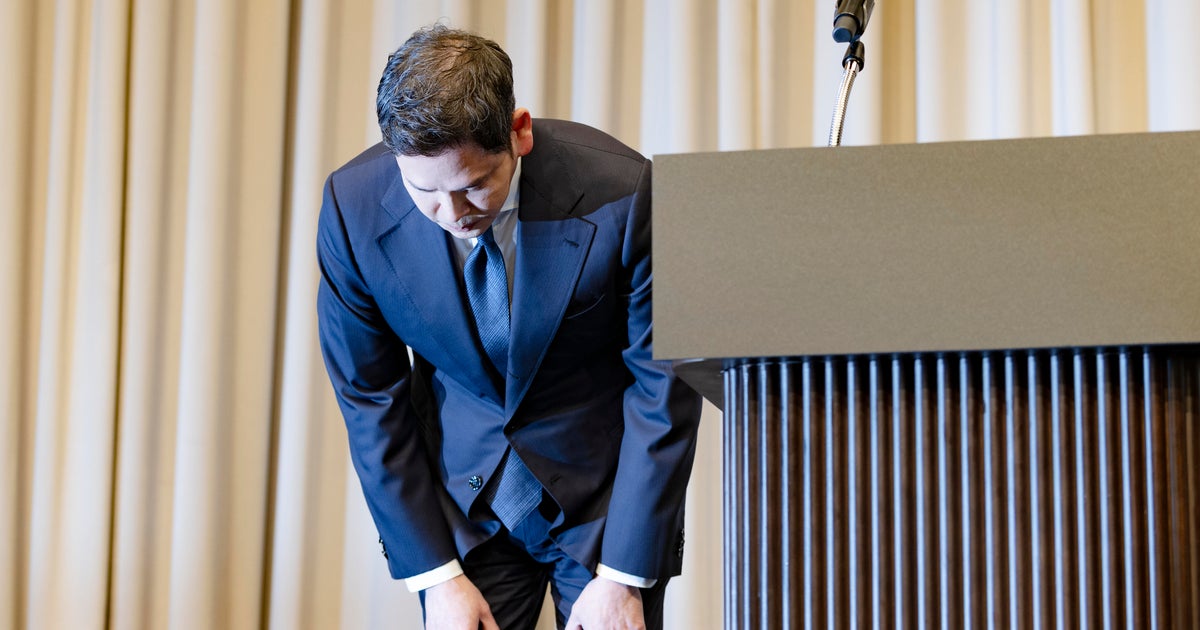
The boss of Starbucks Korea apologized twice after a marketing campaign offended many people by linking a product promotion to a tragic military crackdown in 1980. The campaign referenced a violent event in Gwangju where many pro-democracy protesters were killed, causing public outrage and leading to the firing of the Starbucks Korea chief executive.
Key Facts
Starbucks Korea promoted a large tumbler as a "tank" and called May 18 "Tank Day," the anniversary of a deadly military crackdown on protesters in Gwangju in 1980.
The campaign used the slogan "Thwack it on the table!," which many saw as insensitive, referencing a police cover-up related to a tortured student activist.
The campaign caused public anger, leading Starbucks Korea’s owner, Shinsegae Group Chairman Chung Yong-jin, to apologize twice publicly.
The marketing campaign was canceled quickly, and Starbucks Korea’s CEO was fired.
Police began an investigation after complaints from families of the crackdown victims.
Shinsegae officials said they had no proof that staff intended to mock the victims, but some employees resisted cooperating with the internal review.
Government officials criticized Starbucks, affecting sales and causing some to boycott the chain.
The 1980 Gwangju crackdown resulted in about 200 deaths officially, with activists saying the true number was higher.
Read the Original
Want the full story? Tap a source to open the original
article.
Senegal’s President Bassirou Diomaye Faye appointed Ahmadou Al Aminou Lô as the new Prime Minister on May 25, 2026. Lô is a former central banker who worked at the Central Bank of West African States. This change follows the dismissal of the previous Prime Minister, Ousmane Sonko, amid discussions about the country’s debt.
Key Facts
Senegal appointed a new Prime Minister on May 25, 2026.
The new Prime Minister is Ahmadou Al Aminou Lô, a senior economist.
Lô formerly worked at the Central Bank of West African States.
The previous Prime Minister, Ousmane Sonko, was dismissed after serving since 2024.
The dismissal came during debates about Senegal’s national debt.
The announcement was made by President Bassirou Diomaye Faye.
This leadership change occurred amid political tensions in Senegal.
Read the Original
Want the full story? Tap a source to open the original
article.