Wiza Bondele, a health worker in Congo, is trying to slow down the largest Ebola outbreak in history by disinfecting areas, checking temperatures, and enforcing safety rules. Despite the high risk of infection and ongoing outbreak, he and many other front-line workers have not been paid since the outbreak began in May 2026.
Key Facts
The Ebola outbreak is happening mainly in Ituri province, eastern Congo.
It is the fastest-growing Ebola outbreak ever recorded.
Over 4,000 cases and more than 1,800 deaths have been reported so far.
The outbreak is linked to the Bundibugyo virus, for which there are no approved vaccines or treatments.
Many health workers, including Bondele, have not received their promised monthly salary of $510.
Payment problems and attacks on health workers have caused some to stop working, which hurts efforts to control the disease.
Bondele has experience from a previous Ebola outbreak in Congo (2018-2020) and returned to help.
Health workers are registering for mobile money payments as officials say they will pay them eventually.
Read the Original
Want the full story? Tap a source to open the original
article.
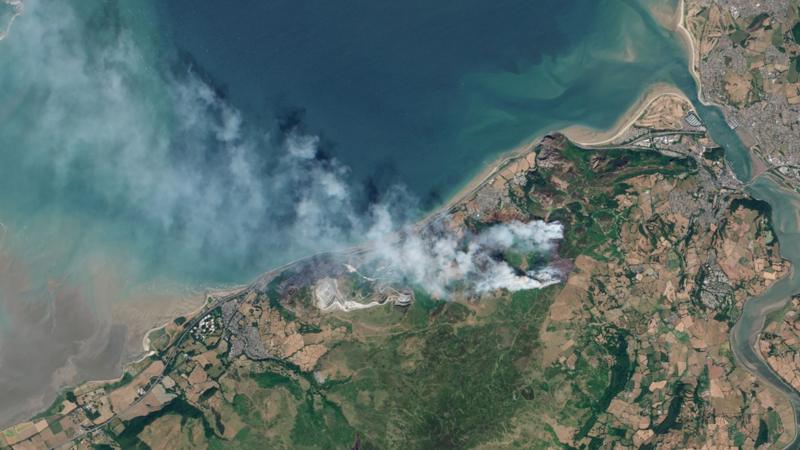
Wildfires in Wales during 2026 have caused severe damage to natural habitats, with some areas taking hundreds of years to recover. The fires destroyed large tracts of land, including valuable peat soils that grow very slowly and help prevent flooding.
Key Facts
Wildfires in Wales in 2026 burned thousands of acres, including over 2,000 acres in the Rhinogydd mountains.
Some fires forced villagers to evacuate, such as in Conwy county.
Peat soils, which grow about 1 millimeter per year, were incinerated, meaning some areas may take centuries to recover.
Loss of soil reduces the land’s ability to hold water, increasing flood risk.
The 2026 wildfire season in Wales is described as the worst on record by Natural Resources Wales.
Some areas damaged in earlier fires, like one in 2018, still show no full plant recovery.
Climate change effects, such as milder winters, may contribute to more intense fires and pest outbreaks.
The fires were visible from space and created smoke detectable many miles away.
Read the Original
Want the full story? Tap a source to open the original
article.
A heatwave in South Korea has caused temperatures to reach a record high of 42.5°C (108.5°F). Since mid-May, 14 people have died due to the extreme heat, according to local health authorities.
Key Facts
South Korea is experiencing a record-breaking heatwave.
Temperatures reached 42.5°C (108.5°F) on Sunday.
The heat is affecting the entire Korean Peninsula.
The Korea Disease Control and Prevention Agency reported 14 heat-related deaths since mid-May.
The heatwave is causing health risks for people in the region.
This is an unusually high temperature for South Korea.
Read the Original
Want the full story? Tap a source to open the original
article.
Several countries in central and eastern Europe, including Slovakia, Austria, and Hungary, have broken temperature records amid ongoing extreme heat and drought. This weather has caused wildfires, low river levels affecting power plants, and health concerns, highlighting the impact of climate change in the region.
Key Facts
Slovakia recorded a new high temperature of 42°C (108°F) in Dolné Plachtince.
In Poland, two coal power plants shut down due to low water levels in the Vistula River, removing about 1.3 gigawatts of power capacity.
Around 11,900 heat-related deaths have occurred in Germany this summer, according to official estimates.
Climate activists in Germany protested the government for not doing enough to address risks from extreme heat.
Hungary’s nuclear power plant is starting to operate again as water levels slightly improve, but electricity consumption cuts are still needed.
The extreme heat and drought are linked to the climate crisis and are putting pressure on people, infrastructure, and wildlife.
Wildfires have burned about 500,000 hectares in the EU this year, mostly in Spain and France, with 292,000 hectares burned in Ukraine.
Experts call for faster development of wind and solar power to reduce water use and protect energy and water resources.
Read the Original
Want the full story? Tap a source to open the original
article.
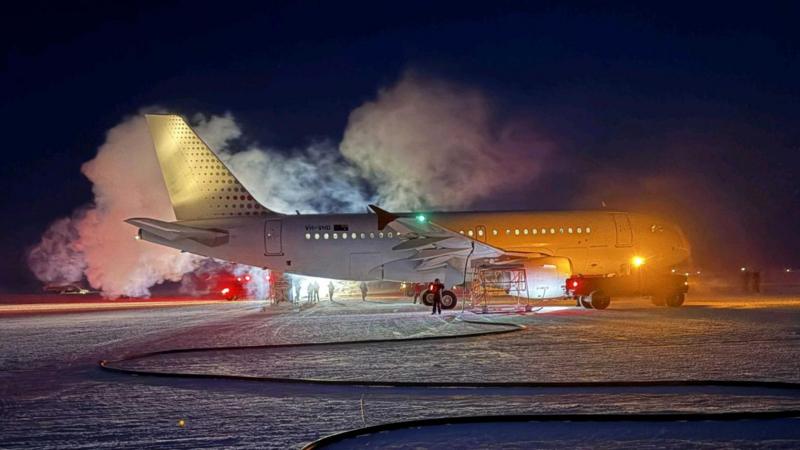
An American was flown from the U.S. McMurdo Station in Antarctica to a hospital in New Zealand in a rare rescue mission during the Antarctic winter. The flight, operated by an Australian crew using an Airbus A319, faced extreme cold and darkness, making the journey very challenging.
Key Facts
The rescue flight took place on July 31, flying from Hobart, Australia, to McMurdo Station in Antarctica.
The aircraft used was an Airbus A319 Long Range, called Snowbird 1.
Temperatures at the landing site reached as low as minus 43 degrees Celsius (minus 45.4 degrees Fahrenheit).
The rescue happened during Antarctic winter when the sun is absent for months, making conditions very dark and cold.
The patient, an American, was transferred the same day to Christchurch Hospital in New Zealand in serious condition.
Weather conditions worsened after the landing, making the rescue more urgent and rare.
The flight crew said conditions were very close to the limits of what the aircraft could handle.
Previous Antarctic medical evacuations had occurred but not during such extreme midwinter darkness and cold.
Read the Original
Want the full story? Tap a source to open the original
article.
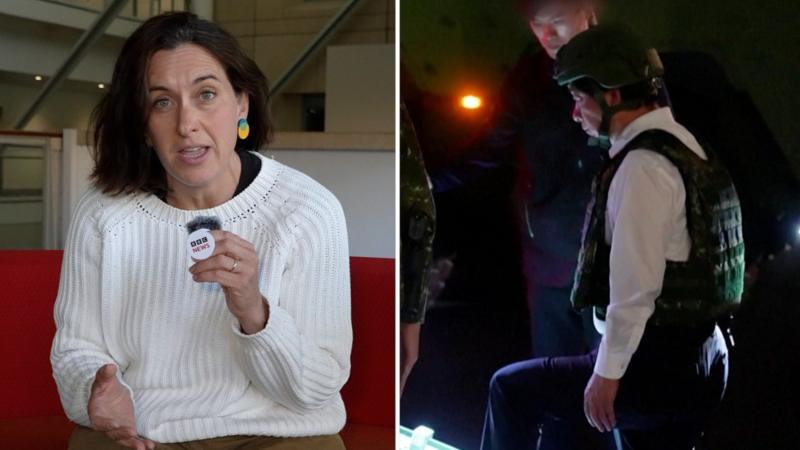
Taiwan’s President William Lai took part in a nighttime emergency evacuation drill during Taiwan’s Han Kuang military exercises. These drills aim to prepare Taiwan for the possibility of a Chinese invasion.
Key Facts
The drills took place between August 5 and August 14.
President William Lai participated in an emergency evacuation drill at night.
Han Kuang is Taiwan’s annual set of military exercises.
The exercises focus on preparing Taiwan’s defense against a potential attack from China.
Taiwan conducts these drills regularly to improve readiness and response.
The situation is related to tensions between Taiwan and China.
The exercise was covered by BBC journalist Katy Watson.
The drills simulate real emergency conditions to test the military and government response.
Read the Original
Want the full story? Tap a source to open the original
article.
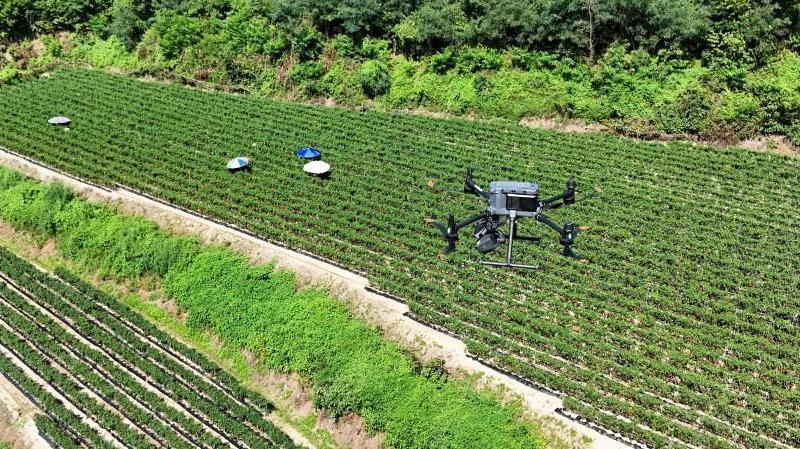
South Korea is facing an extreme heatwave, with temperatures reaching a record 42.5°C (108.5°F) and causing at least 23 deaths so far this year. The government is using drones to warn farmers, distributing water, canceling outdoor events, and providing shelter in air-conditioned airports to protect vulnerable people.
Key Facts
Temperatures in South Korea’s south reached a historic high of 42.5°C (108.5°F) this week.
At least 23 people have died from heat-related illnesses, and around 2,500 have visited emergency rooms since mid-May.
President Lee Jae Myung declared the heatwave a "national disaster" and ordered all public agencies to respond.
Drones with loudspeakers and thermal cameras are used to warn and help elderly farmers in rural areas.
Trucks distribute free cold water in public places like parks and markets.
Many outdoor activities and events, including baseball games and ceremonies, have been canceled for safety.
Airports with air conditioning, like Incheon Airport, serve as shelters for vulnerable people like the homeless and elderly.
A mobile app called Geuneulro helps people find the shadiest walking routes to avoid direct sun exposure.
Read the Original
Want the full story? Tap a source to open the original
article.
Turkish President Recep Tayyip Erdogan visited Saudi Arabia for a one-day working trip amid ongoing regional tensions. He met with Saudi Crown Prince Mohammed bin Salman and Pakistani Prime Minister Shehbaz Sharif to discuss closer cooperation, including a possible three-way defense agreement involving Turkey, Saudi Arabia, and Pakistan.
Key Facts
This was Erdogan’s second visit to Saudi Arabia in 2026.
The visit came after the start of the US-Israel war on Iran, which has increased regional tensions.
Erdogan met with Saudi Crown Prince Mohammed bin Salman and Pakistani Prime Minister Shehbaz Sharif.
The leaders are expected to discuss maritime security, defense cooperation, and the impact of the US-Israel conflict with Iran.
Reports suggest the three countries might sign a new joint defense pact, expanding an existing Saudi-Pakistan agreement.
Saudi Arabia recently launched a multinational maritime security initiative in the Red Sea area, supported by Turkey and Pakistan.
The region faces ongoing attacks linked to the war on Iran, including missile and drone strikes by Iran on US and Gulf state bases.
Saudi Arabia is also experiencing increased tensions with Yemen’s Houthi group, which targets Saudi ships in the Red Sea.
Read the Original
Want the full story? Tap a source to open the original
article.
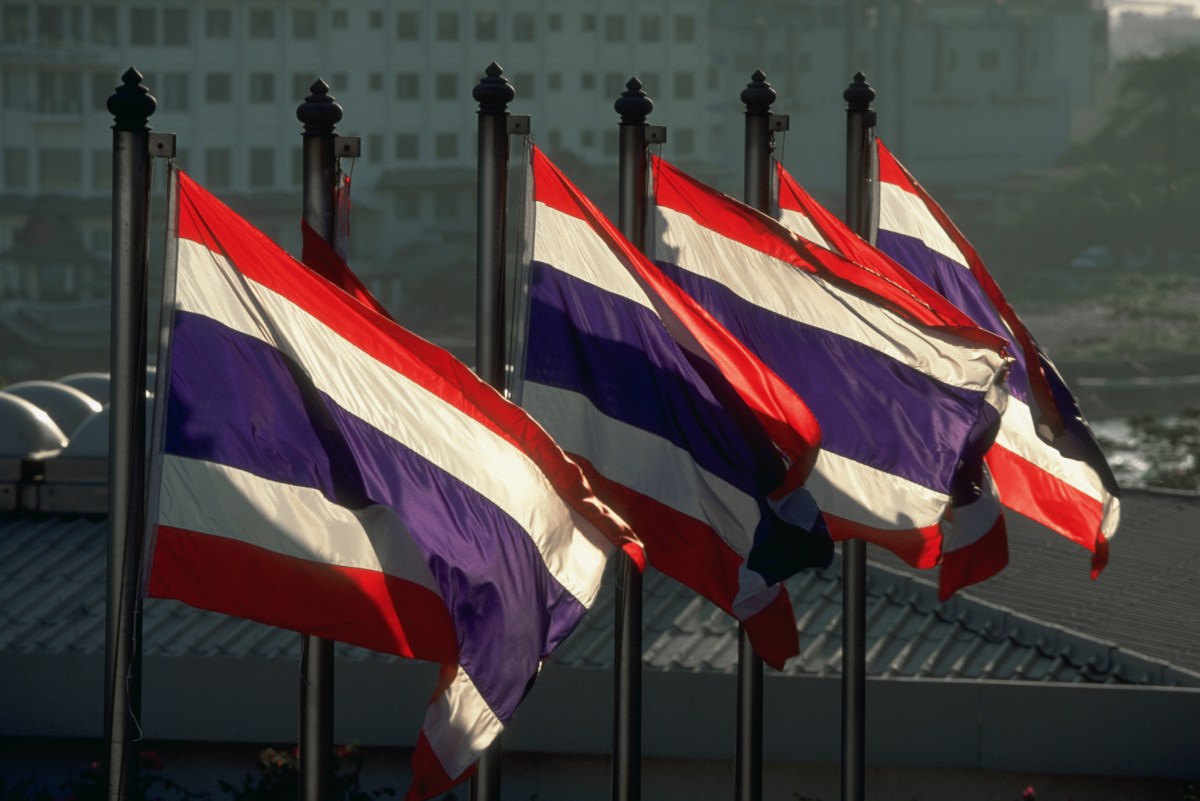
A student opened fire at a school in Nonthaburi province, near Bangkok, Thailand. The police have not yet confirmed how many people were killed or the motive behind the shooting, and the investigation is still ongoing.
Key Facts
The shooting took place in Bang Kruai district, Nonthaburi province, just north of Bangkok.
The suspected shooter is a student at the school.
The number of victims and details about them have not been confirmed.
Authorities have not shared information on the possible motive.
The event is part of ongoing investigations.
Similar school shootings have occurred earlier this year, including one in British Columbia, Canada.
The U.S. State Department was contacted for comment on the incident.
More information is expected as the story develops.
Read the Original
Want the full story? Tap a source to open the original
article.
A student at Debsirin Nonthaburi School in Thailand shot and killed a teacher and injured four others before killing himself. The shooting happened near Bangkok and caused panic among students and staff.
Key Facts
The shooting took place at Debsirin Nonthaburi School in the Bang Kruai district, near Bangkok.
One teacher was killed and four other people were injured in the incident.
The gunman was identified as a student who later took his own life.
Around 3,100 students and 147 teachers attend this school.
A student described hearing multiple gunshots and initially mistaking them for firecrackers.
In recent years, Thailand has experienced other deadly school shootings.
Thai gun laws are strict, with up to 10 years in prison for illegal firearm possession.
New rules require medical checks for gun buyers or license renewals after past shootings.
Read the Original
Want the full story? Tap a source to open the original
article.
Fifteen elephants in Kenya’s Amboseli National Park died recently from suspected cyanide poisoning after eating tomatoes from nearby farms. Farmers near the park disagree with the claim that their crops caused the deaths, as investigations continue into how the poison entered the area.
Key Facts
Fifteen elephants died within one month in Kenya’s Amboseli National Park area.
Tests found cyanide in the elephants and tomatoes in their stomachs.
The elephants showed signs of paralysis and breathing problems before dying.
Farmers near the park say they have never purposely poisoned wildlife.
Local communities often face crop losses because elephants enter farms during dry seasons.
Kenya has increased its elephant population to over 36,000 by reducing poaching and protecting habitats.
Officials are still investigating how cyanide reached the ecosystem where wild animals and farms coexist.
Authorities warn farmers to be careful when using pesticides.
Read the Original
Want the full story? Tap a source to open the original
article.
Police in Thailand responded to a shooting at Debsirin Nonthaburi School in Nonthaburi province, near Bangkok. Several people were reported injured, and the shooter was still inside the school.
Key Facts
The shooting occurred at a high school in Nonthaburi province, Thailand.
The school involved is Debsirin Nonthaburi School.
The incident took place on a Friday.
Several people were injured during the shooting.
Police confirmed they were responding to the situation.
The shooter was still inside the school when reports were made.
The Royal Thai Police spokesperson provided limited information.
Thai news outlets reported on the injuries and ongoing situation.
Read the Original
Want the full story? Tap a source to open the original
article.
Staying informed here is free for everyone. If it's worth something to you, pay what you want. Supporters also get the daily digest by email every morning.
President Donald Trump is considering a deal with Iran to reopen the Strait of Hormuz, a key waterway for global oil trade. The main challenge is Iran’s demand for some control over the strait, which Trump has so far rejected, but increased economic pressures may lead him to compromise.
Key Facts
The Strait of Hormuz is a critical route where about 20% of the world’s oil passes.
Iran wants partial control and fees for using the strait after a war with the U.S. and Israel that began over five months ago.
President Trump has ruled out any agreement that would solidify Iran’s control over the waterway.
Despite many U.S. attacks, Iran still can threaten ships with drones and missiles.
The conflict has contributed to high gasoline prices and could affect the U.S. midterm elections.
Some experts say Trump may be willing to compromise due to economic pressures and the urgency to resolve the crisis.
Trump said the U.S. military has large weapons stockpiles and criticized leaks about shrinking inventories.
A recent Cabinet meeting discussed Iran, but details were not publicly shared.
Read the Original
Want the full story? Tap a source to open the original
article.
Iran may try to stop shipments from the U.S. and Israel passing through the Strait of Hormuz. Iran is working with Oman to reopen the waterway for commercial ships, while its parliament considers a law to block vessels it sees as hostile.
Key Facts
Iran could block U.S. and Israeli ships from the Strait of Hormuz.
The Strait of Hormuz is a vital waterway for global shipping.
Iran and Oman have a joint plan to reopen the strait for commercial traffic.
Iran’s parliament is reviewing a bill to block “hostile” ships from passing through.
The bill aims to target vessels linked to countries Iran considers enemies.
The Strait of Hormuz connects the Persian Gulf to the Arabian Sea.
Control over this strait affects global oil and trade routes.
The situation reflects ongoing tensions between Iran, the U.S., and Israel.
Read the Original
Want the full story? Tap a source to open the original
article.
Officials decided not to release cool water from Lake Powell, a Colorado River reservoir, to protect a threatened fish called the humpback chub. This decision aims to avoid harming hydropower electricity production, which is already under strain due to low water levels and drought.
Key Facts
The Bureau of Reclamation will not release cold water from Glen Canyon Dam in northern Arizona in 2024.
Releasing cold water would reduce electricity from hydropower turbines, as those turbines are not in the cold, deep sections of the reservoir.
Lake Powell is only about 23% full because of years of water overuse and evaporation caused by rising temperatures.
Warm water released downstream helps smallmouth bass, an invasive fish, to survive and spawn, threatening native fish like the humpback chub.
The humpback chub is a threatened species living downstream from the dam.
Past cool water releases in 2024 and 2025 helped stop smallmouth bass from spawning.
Temperatures below the dam have regularly been above 60°F (15.5°C), a point when cool water releases are usually considered.
Officials plan to continue other efforts like removing invasive fish and improving river habitats to protect native species.
Read the Original
Want the full story? Tap a source to open the original
article.
Heavy monsoon rains have caused severe flooding in India’s Assam state, displacing thousands of people since July. The floods have resulted in at least 87 deaths so far.
Key Facts
Severe flooding began in Assam, northeastern India, due to heavy monsoon rains starting in July.
More than one million people have been affected by the floods.
At least 87 people have died because of the flooding.
Thousands of residents have been forced to leave their homes.
The state of Assam is one of the areas hardest hit by the floods.
The flooding has disrupted daily life and posed challenges for relief efforts.
Read the Original
Want the full story? Tap a source to open the original
article.
Nigerian security forces have freed 308 people who were kidnapped in separate incidents in northern Niger and Kwara states. Kidnapping for ransom by armed groups and bandits is a serious problem in Nigeria. Families of the rescued people are now recovering from their experience.
Key Facts
308 people were rescued by Nigerian security forces.
The kidnappings happened in northern Niger and Kwara states in Nigeria.
These kidnappings were carried out by armed groups and bandits.
Kidnapping for ransom is a growing crisis in Nigeria.
The rescued individuals are currently with their families who are helping them recover.
The report was given by Al Jazeera’s Ahmed Idris, who had exclusive access to the recovery sites.
Read the Original
Want the full story? Tap a source to open the original
article.
Four men were arrested after a violent event took place near Pontypool in south Wales on Thursday evening. Three men were taken to the hospital, with two in serious condition, and police are investigating the incident.
Key Facts
The incident happened around 7:15 pm in Pontnewydd, near Pontypool, south Wales.
Four men were arrested in connection with the violent disorder.
Two of the arrested men are currently held in police custody.
Three men were taken to the hospital, with two in critical condition.
Firearms officers and the police air service were called to the scene.
Police have closed the road between Mill Road and Hospital Road in both directions.
Officers are asking the public for any information or footage from around 7:00 to 7:30 pm.
Police said they will investigate thoroughly and do not accept this kind of violence in the community.
Read the Original
Want the full story? Tap a source to open the original
article.
An Australian aviation team completed a difficult rescue mission to fly a sick US expedition member from Antarctica to New Zealand for medical care. The flight happened near the winter solstice in extreme cold and total darkness, with temperatures around -43°C.
Key Facts
The rescue took place last Friday after a medical evacuation request from McMurdo Station in Antarctica.
The team used an Airbus A319 plane, nicknamed Snowbird 1, specially refitted for medical evacuation in 24 hours.
The plane took off from Hobart, Tasmania, and landed on an ice runway at McMurdo Station in very harsh conditions.
Temperatures at the landing site were about -43°C (-45.4°F), with total darkness due to the time of year.
The patient was safely flown to Christchurch, New Zealand, and is now recovering well.
The mission required a 12-hour weather delay before a safe window allowed takeoff.
Skytraders said this was likely the closest flight to the winter solstice a civilian plane has made in Antarctica.
The operation involved pilots, meteorologists, planners, runway staff, and medical personnel working together to handle the difficult environment.
Read the Original
Want the full story? Tap a source to open the original
article.
An Israeli military raid in the Qalandiya refugee camp in the occupied West Bank injured at least 51 Palestinians. Israeli forces demolished shops, imposed curfews, and detained dozens while continuing operations in neighboring areas amid ongoing tensions in the region.
Key Facts
At least 51 Palestinians were injured during the Israeli raid in the Qalandiya refugee camp.
Israeli forces demolished commercial shops near Qalandiya checkpoint and imposed a curfew on Kafr Aqab.
Medical teams reported hospitalizing 35 Palestinians for serious injuries, including beatings and tear gas inhalation.
Ambulance crews faced restrictions but managed to evacuate patients needing urgent care like dialysis.
Israeli soldiers fired stun grenades at journalists and detained many Palestinians, including children and women.
Similar raids occurred in the city of Jenin, with at least two Palestinians shot or assaulted.
Human rights groups say Israeli military and settler attacks on Palestinians have increased dramatically in recent months.
A UN inquiry found Israeli authorities often fail to stop settler violence and sometimes support it.
Israeli officials have legalized or established many illegal settlements and provided settlers with firearms.
Some Western countries have sanctioned Israeli settlers and officials linked to violence against Palestinians.
President Donald Trump revoked some US sanctions on Israeli settlers accused of attacking Palestinians after his return to office last year.
Read the Original
Want the full story? Tap a source to open the original
article.