Nechirvan Barzani, president of Iraq’s Kurdish region, visited Syrian President Ahmed al-Sharaa in Damascus, marking the first Kurdish leader’s visit since President Bashar al-Assad was ousted. They discussed ways to improve relations, focus on Kurdish rights in Syria, and integration of the Kurdish-led Syrian Democratic Forces (SDF) into the Syrian government.
Key Facts
Barzani led a high-level delegation to Damascus to meet Syrian President Ahmed al-Sharaa.
Talks focused on enhancing cooperation between Erbil (Kurdistan Regional Government) and Damascus.
Discussions included Kurdish language rights, administrative autonomy, and implementation of Decree No. 13 in Syria.
The Syrian Democratic Forces (SDF), mostly Kurdish, are negotiating with Damascus on their future role in Syria’s military and politics.
Syria seeks to learn from Kurdistan’s experience in Kurdish language education and teacher training.
Barzani also met with Kurdish officials and SDF commanders in Syria during the visit.
The Kurdish region in Iraq shares a long border with Syria and hosts many Syrian refugees.
Stability in Syria is important to prevent the return of ISIS, reduce refugee flows, and boost Erbil’s political influence with Baghdad and Ankara.
Read the Original
Want the full story? Tap a source to open the original
article.
The Reform party has proposed using the navy to stop migrants crossing the English Channel in small boats. They plan to send military personnel to return migrants to France, even if France objects. This proposal comes as the party faces criticism over finances and leadership issues.
Key Facts
Reform party announced a plan to use the navy to stop small boat crossings of the English Channel.
The plan includes sending military personnel to accompany migrants back to France.
The proposal suggests overriding any French objections if needed.
Reform’s opponents say the plan is not practical or workable.
The Reform party has recently faced scrutiny over donations and finances.
Around 60,000 migrants attempted to cross into Spanish territory from Morocco recently, causing a migration crisis in Ceuta.
Discussion on this topic involved BBC and Politico reporters and specialists.
The proposal and migration issues are part of ongoing political debates and challenges in Europe.
Read the Original
Want the full story? Tap a source to open the original
article.
Romania’s military used explosives to blow up part of the Danube riverbed. This action helped redirect water to the Cernavoda Nuclear Power Plant, which faced risks due to very low river levels during a long drought and extreme heat.
Key Facts
The Danube river reached record-low water levels because of a severe drought and high temperatures.
Romania’s military detonated a section of the riverbed to change the flow of water.
The goal was to send more water to the Cernavoda Nuclear Power Plant.
The nuclear plant needed extra water to operate safely.
This action was taken to protect the plant during environmental stress.
Read the Original
Want the full story? Tap a source to open the original
article.
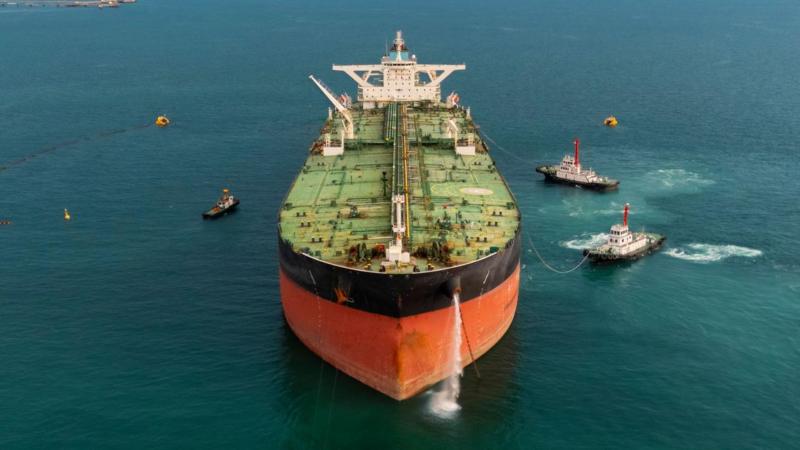
The threat to oil tankers in the Middle East is the highest since the Iran war began, with attacks increasing on key shipping routes like the Red Sea and the Strait of Hormuz. These attacks, including those by Yemen’s Houthi fighters, have caused many ships to avoid these areas or turn off tracking devices to stay safe.
Key Facts
Fewer ships are passing through the Strait of Hormuz, dropping from over 100 daily before the war to about 8 recently.
About 20% of the world's oil and gas normally moves through the Strait of Hormuz.
A calm period after a US-Iran peace deal saw increased traffic, but new strikes have reduced it again.
Many ships turn off transponders to avoid being detected when passing through dangerous areas.
Yemen’s Houthi fighters have attacked Saudi oil tankers in the Red Sea, blocking Saudi ports there since July 20.
The risk area for tanker traffic now includes parts of Saudi waters and the Red Sea, making navigation harder.
Around half the usual number of ships now pass through the southern Bab el-Mandeb strait, with some also turning off their trackers.
Iran denies negotiating a deal to reopen the Strait of Hormuz but is talking with Oman about security.
Read the Original
Want the full story? Tap a source to open the original
article.
Around 60,000 migrants crossed from Morocco into the Spanish enclave of Ceuta last week, causing tensions in the European Union (EU) over immigration policies. Spain called for a meeting of EU interior ministers to discuss the situation after some countries, like Italy and Denmark, suggested suspending Spain from the Schengen Area, a zone allowing free travel between most European countries.
Key Facts
About 60,000 people entered Ceuta, a Spanish territory in North Africa, from Morocco in a short time.
Spain sent nearly all the migrants back to Morocco after they crossed the border illegally.
Reports of migrant deaths vary: Spain says at least 72 died, Morocco says 11, and a Moroccan human rights group says nearly 130 victims.
Italy and Denmark proposed suspending Spain from the Schengen Area because of Spain’s handling of the crisis.
Spain requested an urgent video meeting with EU interior ministers to discuss the problem.
The EU recently updated immigration laws to manage rejected asylum seekers outside EU borders in “return hubs.”
EU President Ursula von der Leyen emphasized that protecting EU external borders is a shared responsibility.
This event is larger than the 2021 migration crisis in Ceuta and has caused divisions within the EU on immigration policy.
Read the Original
Want the full story? Tap a source to open the original
article.
A court in New Delhi cleared the former head of India’s wrestling federation, Brij Bhushan Sharan Singh, of sexual harassment and stalking charges filed by female wrestlers. The court found problems with witness statements and decided there was not enough proof to convict Singh.
Key Facts
Brij Bhushan Sharan Singh was accused by five female wrestlers of groping and demanding sexual favors, which he denied.
The case began in 2020 and caused protests led by top Indian wrestlers like Vinesh Phogat and Sakshi Malik.
Singh was charged in 2024 but finished his term and was not re-nominated; his son later won Singh’s political seat.
The court cited inconsistencies and contradictions in witness statements as reasons for acquittal.
Female wrestlers protested for months in 2023, including sit-ins and public demonstrations in New Delhi.
Olympic wrestler Bajrang Punia returned a civilian award and Sakshi Malik retired from wrestling to protest Singh’s leadership.
After the verdict, Singh’s supporters celebrated with firecrackers and flowers.
The wrestlers plan to appeal the court’s decision and continue their legal fight.
Read the Original
Want the full story? Tap a source to open the original
article.
A French boy who was seriously injured after being thrown from a balcony at London’s Tate Modern art gallery in 2019 has been released from the hospital and returned to school. His family said he is making progress and has a smile again after intensive rehabilitation.
Key Facts
The boy was six years old when he was pushed from a 30-metre (100-foot) balcony at Tate Modern by then-teenager Jonty Bravery in August 2019.
He suffered severe injuries, including a brain bleed and many broken bones.
After nearly seven years, the boy left the hospital and briefly returned to school before summer holidays.
His family described him as “our little knight” and shared updates on a GoFundMe page raising money for his medical care.
The crowdfunding has raised more than £500,000 to help cover treatment costs.
The boy is still undergoing therapies like physiotherapy, speech therapy, and neuropsychology.
To celebrate, his family is planning a tandem paragliding flight and a seaside trip.
Jonty Bravery pleaded guilty to attempted murder and was sentenced to life with a minimum of 15 years. He has also been punished for attacks on hospital staff.
Read the Original
Want the full story? Tap a source to open the original
article.
A wooden bridge in the village of Hombo, eastern Democratic Republic of Congo, collapsed on June 3, 2026. Although several people fell into the river, no deaths were reported. The bridge connected two parts of the village that belong to different administrative sectors and was important for both daily travel and food supply.
Key Facts
The bridge in Hombo collapsed on June 3, 2026, causing at least seven people to fall into the river.
No fatalities were reported from the collapse.
The village is divided by the Luhoho River into two parts belonging to different administrative sectors.
The bridge was crucial for local trade, including transport of food between the two sides.
The collapse has led to food shortages in parts of the village.
Locals built a fragile makeshift bridge to restore access but it is unsafe and may collapse.
Residents have called on the Congolese government for help to repair or replace the bridge.
Many bridges and roads in the Walikale territory, where Hombo is located, are in poor condition.
Read the Original
Want the full story? Tap a source to open the original
article.
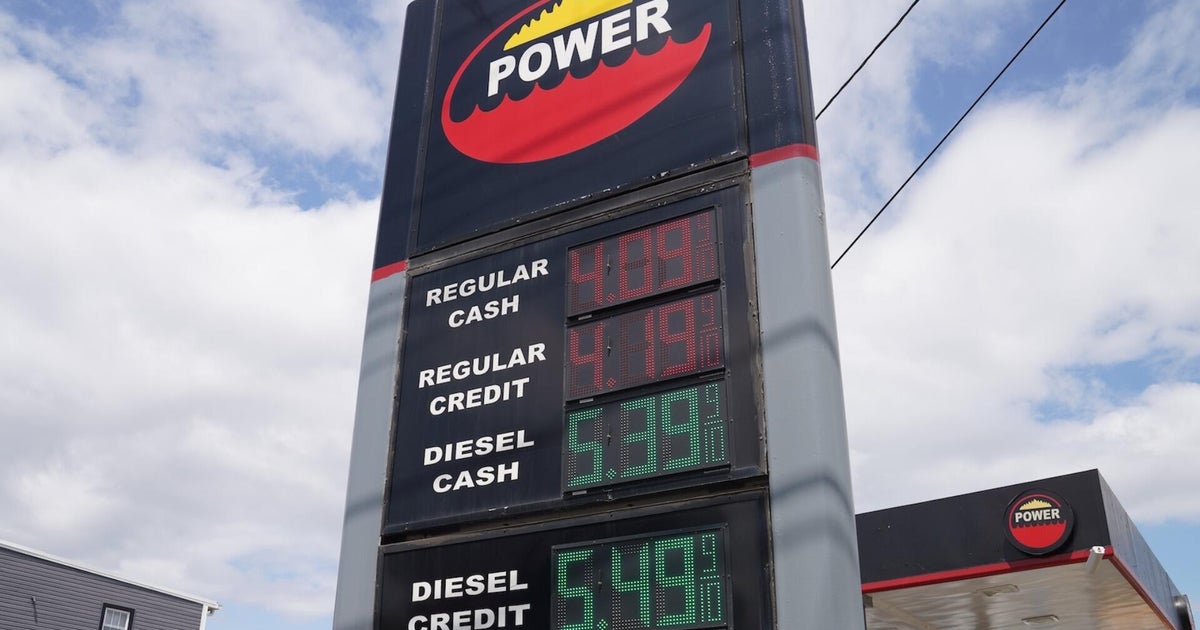
Oil prices fell on Monday after President Donald Trump canceled a planned strike on Iran and announced the start of diplomatic talks. Iran denied that any talks had begun.
Key Facts
Oil prices dropped on Monday.
President Trump canceled a planned strike against Iran.
President Trump said the U.S. was beginning diplomatic talks with Iran.
Iran denied the claim that talks had started.
The situation caused some confusion in the market.
The news was reported by CBS News and The Wall Street Journal.
The Japanese yen's situation also affected market concerns.
Read the Original
Want the full story? Tap a source to open the original
article.
Ilana Jacqueline suffered from undiagnosed repeated infections and severe pain for 19 years until her mother, a TV producer, created a show about medical mysteries that helped secure her diagnosis of primary immune deficiency disease. Now 36, Jacqueline manages her condition with weekly treatments and advocates for patients with rare diseases.
Key Facts
Ilana Jacqueline had chronic infections and pain for 19 years without a diagnosis.
Her mother, working as a TV producer, pitched a new show to research rare diseases and find answers.
Jacqueline was finally diagnosed with primary immune deficiency disease (hypogammaglobulinemia).
The disease means her body cannot produce essential immune system proteins to fight infections.
She has lasting organ damage from untreated infections but receives weekly immunoglobulin treatments.
These treatments require plasma donations from about 10,000 donors each time.
The TV series led to Jacqueline’s diagnosis and helps raise awareness about rare diseases.
Jacqueline now works as a patient advocate to support others with rare medical conditions.
Read the Original
Want the full story? Tap a source to open the original
article.
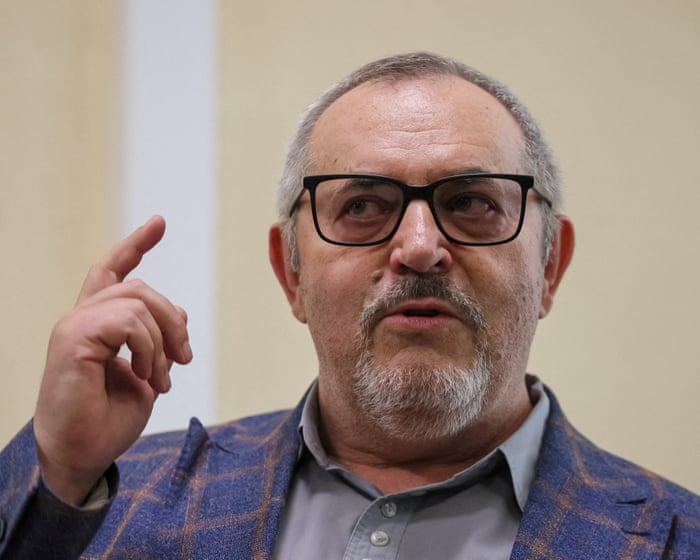
Boris Nadezhdin, a well-known Russian politician who opposes the war in Ukraine, has left Russia and gone to Paris. He faced government pressure, including being labeled a "foreign agent," detained, and blocked from running in the September parliamentary elections.
Key Facts
Boris Nadezhdin is a 63-year-old Russian liberal politician who openly opposes the war in Ukraine.
He ran a presidential campaign in 2024 but was banned from running by Russian election authorities.
Nadezhdin was labeled a "foreign agent" by the Russian justice ministry, which brings extra government controls and stigma.
He was briefly detained last month on a minor charge, seen as an attempt to stop his election candidacy.
A conviction related to extremism charges also prevented him from participating in the upcoming parliamentary elections.
Nadezhdin left Russia for Paris due to increasing risks and pressure from authorities.
Since Russia’s invasion of Ukraine in 2022, the Kremlin has increased crackdowns on dissent, imprisoning critics and forcing many to flee.
The September elections are expected to be controlled by the Kremlin, excluding real opposition voices.
Read the Original
Want the full story? Tap a source to open the original
article.
The article mentions Richard Tice is under investigation by a parliamentary watchdog. It also refers to reports about Andy Burnham’s visit to Dover and about changes to the constitution. Readers are invited to send questions and watch related video content on YouTube.
Key Facts
Richard Tice is being investigated by parliament’s standards watchdog.
There is a report on Andy Burnham’s trip to Dover.
Another report covers constitutional reform.
The article encourages readers to send comments and questions by email.
Politics Weekly content is available on the Guardian’s YouTube channel.
The article includes a photograph taken by Toby Melville from Reuters.
Read the Original
Want the full story? Tap a source to open the original
article.
On the biggest stories we show what the outlets agree on and where they differ. Readers keep that going, and get the daily digest by email every morning. Most choose $3.99/month.
July 2026 was the driest month ever recorded in southern England and Wales, with very little rainfall and high temperatures. The extreme dry and hot weather is linked to the climate crisis and has caused droughts, water shortages, and wildfires in parts of Europe.
Key Facts
July 2026 was the driest month in southern England and Wales since records began nearly 200 years ago.
England received only 6.5mm of rain in July, which is 10% of the usual amount for the month.
Wales also had its driest and one of its warmest Julys on record.
Half of England and all of Wales were declared officially in drought.
About 40% of people in England are under restrictions that limit water use, like hosepipe bans.
The dry, hot conditions are connected to the climate crisis caused by fossil fuel use.
Large wildfires affected parts of Europe, including Greece and France, worsened by the dry weather.
Some major rivers in Europe, like the Danube, are experiencing very low water levels.
Read the Original
Want the full story? Tap a source to open the original
article.
Thousands of people tried to cross from Morocco into the Spanish enclave of Ceuta, leading to deaths and a political debate in Europe. The event was quickly used by far-right groups and some political leaders to push anti-immigration and anti-Muslim messages, while Israel’s government linked the situation to a wider struggle against radical Islam and migration.
Key Facts
Thousands of people attempted to cross from Morocco into Ceuta, a Spanish territory in North Africa.
Dozens of people died during the attempt to cross.
Far-right groups on social media spread the hashtag #StopIslam and described the event as an "Islamic invasion."
Some European politicians used the event to call for stricter border controls.
Italy reintroduced border checks with Spain following the crisis.
Israeli Prime Minister Benjamin Netanyahu framed Israel and Europe as allies fighting against radical Islam and mass migration.
European far-right leaders like Viktor Orban, Geert Wilders, and Marine Le Pen support Israel while pushing anti-immigration policies.
This political narrative shifts debate away from Israel’s actions in Gaza toward fears about immigration and Muslim political influence in Europe.
Read the Original
Want the full story? Tap a source to open the original
article.
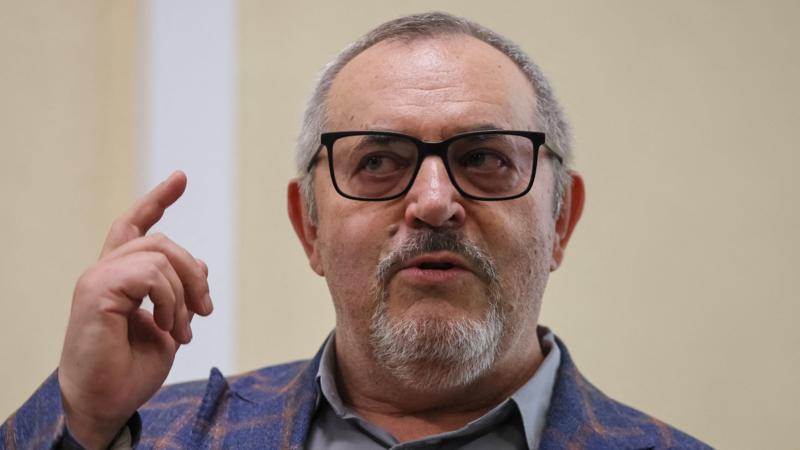
Boris Nadezhdin, a Russian anti-war politician who tried to run against President Putin, said he fled Russia after being labeled a "foreign agent." He posted a video from Paris saying he is safe but unsure of his next steps.
Key Facts
Boris Nadezhdin wanted to run for president on an anti-war platform but was blocked due to alleged faulty signatures.
In 2024, he planned to run for the Russian parliament but was declared a "foreign agent" by the government.
He was accused of spreading false information and showing "extremist symbols," including a brief image of Alexei Navalny.
Nadezhdin claims these charges are politically motivated to stop him from running in elections.
He fled Russia and posted a video from Paris confirming he is alive and free.
Nadezhdin’s anti-war stance includes ending the conflict with Ukraine and improving Russia’s relations with the West.
President Putin won a fifth term in 2024 and can remain in power until 2036 due to constitutional changes.
Many opposition figures in Russia are jailed, exiled, or unable to run, leaving little political competition for Putin.
Read the Original
Want the full story? Tap a source to open the original
article.
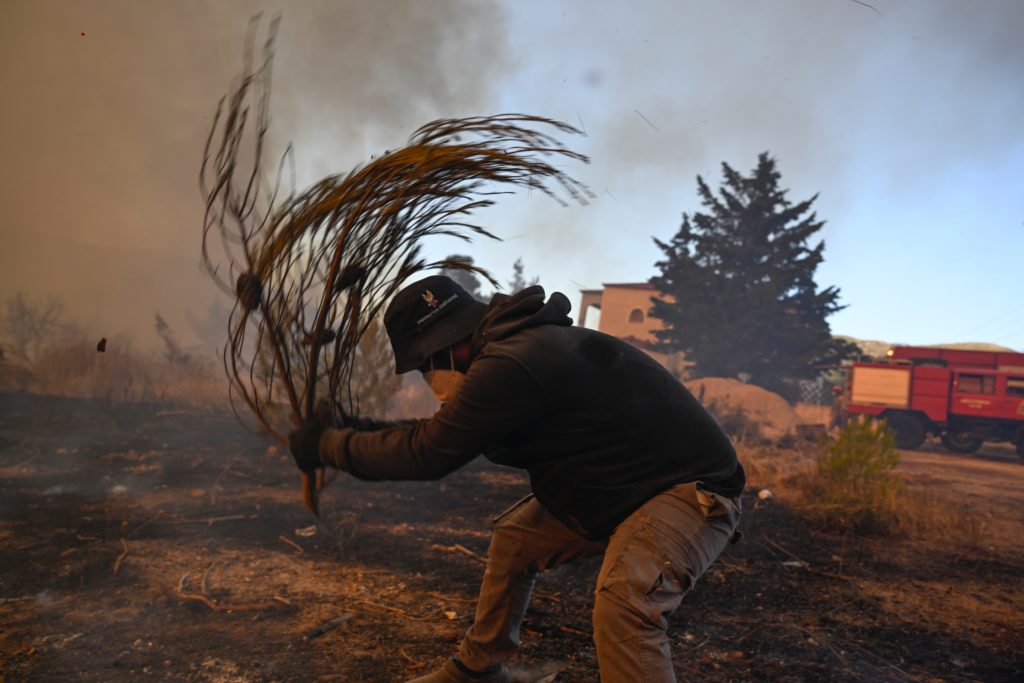
Europe experienced a very hot and dry summer, causing large wildfires in Greece and France, and drought in the UK. Many people were evacuated, and firefighting efforts involved planes and helicopters, though a collision between two helicopters near Athens resulted in two deaths.
Key Facts
Wildfires near Athens spread quickly, forcing over 1,000 people to evacuate, including some rescued by boat.
Two firefighting helicopters collided near Athens, killing two crew members and injuring two others.
The fire in Greece was caused by a faulty power line from a wind farm; two contractors were arrested for negligent arson.
France experienced its largest wildfire on record, burning about 420 square kilometers and causing evacuations of over 224,000 people.
Thousands of evacuees in France were allowed to return home as the large wildfire there was brought under control.
The UK recorded its driest July in nearly 200 years, with parts of Wales and England officially in drought conditions.
Europe is warming faster than any other continent, leading to drier vegetation and more intense wildfires during heat waves.
Strong winds and high temperatures continue to raise fire risks, especially around Athens and southern Greece.
Read the Original
Want the full story? Tap a source to open the original
article.
A 48-year-old man named Benjamin Lewis was detained in hospital after leaving dead animals outside churches in the New Forest, Hampshire, England. Lewis, who believed drinking blood would make him live forever like a vampire, was arrested following police investigations that involved watching churches on important satanic dates.
Key Facts
Benjamin Lewis dumped dead sheep and deer outside churches in the New Forest area.
The animals were stolen from farmers or killed on roads.
Lewis believed that drinking blood would keep him alive and prevent him from going to hell.
Police monitored churches on dates important to satanic beliefs to catch him.
Lewis was arrested after DNA from a lamb linked him to the crimes.
He admitted to harassing people in a way that upset them for religious reasons and stealing lambs.
Victims included parishioners and farmers who were frightened and upset by his actions.
Lewis was held in hospital for mental health treatment and apologized to those affected.
Read the Original
Want the full story? Tap a source to open the original
article.
Firefighters in Greece have been fighting a large wildfire near Athens for four days. The fire is being fueled by strong and changeable winds, and five firefighters have died in fires across the country since last week.
Key Facts
A wildfire northwest of Athens, Greece, has been burning for four days.
Strong and unpredictable winds are making the fire worse.
Five firefighters have died fighting fires in Greece since last week.
The wildfire is part of a larger problem with fires across Greece.
The situation has caused people to evacuate from affected areas.
The fires are taking place during a period of extreme heat and drought.
Greek authorities are continuing efforts to control the wildfire.
The event highlights issues related to climate and weather conditions in the region.
Read the Original
Want the full story? Tap a source to open the original
article.
Each summary links back to the original reporting, so you can check the work. Support that, and get the daily digest every morning. Most choose $3.99/month.
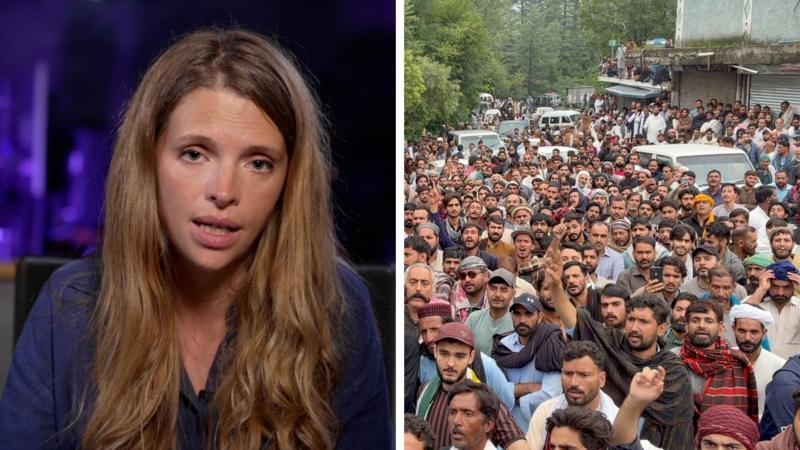
Dozens of people have died in clashes between security forces and protesters in Pakistan-administered Kashmir over the past two months. The protests, led by the Joint Awami Action Committee (JAAC), demand rights like better healthcare and electricity, but the government calls JAAC a banned, armed group aiming to disrupt regional elections.
Key Facts
The city of Rawalakot in Pakistan-administered Kashmir has been sealed off after violent protests.
The protests started following a government crackdown and have resulted in many deaths.
The JAAC is leading the protests and demands improvements in basic services such as healthcare and electricity.
The Pakistani government banned the JAAC in June, calling it a foreign-funded terrorist group.
JAAC denies being terrorists and says it is peaceful, funded by people from the Kashmir community living abroad.
Authorities claim the JAAC wants to disrupt upcoming elections and is armed.
The BBC is the first media outlet allowed inside Rawalakot to report on the situation.
The protests relate to broader tensions in the Kashmir region, which involve Pakistan and India.
Read the Original
Want the full story? Tap a source to open the original
article.
Israeli Prime Minister Benjamin Netanyahu’s office expressed serious security concerns about a proposed deal to disarm Hamas, a group in Gaza. These concerns were shared with the White House as part of discussions connected to President Trump’s Board of Peace plan for rebuilding the Gaza Strip.
Key Facts
Israel is worried about a plan to disarm Hamas, a group in Gaza.
The disarmament deal is part of conditions linked to rebuilding Gaza.
President Trump’s Board of Peace is involved in proposing this deal.
Netanyahu’s office officially stated their security concerns on Monday.
Doron Spielman, a spokesman for Netanyahu, communicated these worries to the media.
The concerns have been shared with the White House.
The plan aims to help reconstruct the Gaza Strip.
Security is a top priority for Israel in this proposal.
Read the Original
Want the full story? Tap a source to open the original
article.