The U.S. military struck multiple targets in Iran overnight, hitting military and missile sites as a response to a recent missile attack on a U.S. base in Jordan. Iran’s Islamic Revolutionary Guard Corps (IRGC) announced plans to retaliate, and suspected Iranian strikes also hit Kuwait and Jordan, causing casualties including the death of a worker in Kuwait.
Key Facts
U.S. Central Command (CENTCOM) targeted Iranian military command centers, missile and drone facilities, and coastal defense sites.
President Donald Trump said Iran would be “hit very hard” after the IRGC attacked a U.S. base in Jordan.
Explosions were reported in several Iranian locations including Qeshm island, Fars province, Kish island, Bushehr province, Khuzestan province, and Hormozgan province.
A missile strike on a residential building on Qeshm island killed three people, including a couple and their two-year-old child, and injured others.
Iran’s IRGC vowed to retaliate against the United States.
Suspected Iranian missile strikes targeted Kuwait and Jordan, with one fatality at a Chinese company building in Kuwait.
Some areas experienced power outages after the attacks, but key transport services like Kish island’s airport remained operational.
Search and rescue efforts are ongoing in damaged residential areas, with people trapped under rubble.
Read the Original
Want the full story? Tap a source to open the original
article.
The US military carried out a large number of strikes against Iran in response to Iranian missile attacks on American bases in Jordan. President Donald Trump promised a strong reaction after Tehran's assault, increasing tensions in the Middle East and reducing chances for peace talks.
Key Facts
The US launched a heavy wave of military strikes against Iran on July 30, 2026.
These strikes were in retaliation for Iran firing missiles at US bases located in Jordan.
The missile attack on Jordan was Tehran’s first regional strike in several days.
President Donald Trump vowed to respond hard against Iran after the Jordan attack.
The fighting in the Middle East resumed after nearly a week-long pause.
Iran’s allied groups in the region have joined the conflict, escalating tensions.
The recent violence has hurt the possibility of quick peace negotiations between the US and Iran.
Read the Original
Want the full story? Tap a source to open the original
article.
Olivia Dean has been nominated for the 2026 Mercury Prize for her album The Art of Loving, while Lily Allen was not included on the shortlist despite critical success for her album West End Girl. Other nominees include Sir Paul McCartney, Suede, Jade, Raye, Nia Archives, and newcomer Dove Ellis.
Key Facts
Olivia Dean’s album The Art of Loving is nominated for the 2026 Mercury Prize.
Lily Allen’s album West End Girl, a well-reviewed break-up record, was not shortlisted.
Sir Paul McCartney, aged 84, received his first Mercury Prize nomination for The Boys of Dungeon Lane.
The Mercury Prize awards £25,000 for outstanding albums.
Other nominees include Suede, Jade, Raye, Nia Archives, and new artist Dove Ellis.
The shortlist was chosen by a panel of 12 judges including musicians and critics.
The winner will be announced on 22 October at Newcastle’s Utilita Arena.
Olivia Dean has previously been nominated for the Mercury Prize for her debut album Messy.
Read the Original
Want the full story? Tap a source to open the original
article.
After the fall of the al-Assad regime in December 2024, many Syrians who had fled abroad started returning to Syria. Among them is Yasseen Tasabehji and his family, who moved from Canada to reopen their lives and contribute to rebuilding Syria. Despite challenges like economic difficulties, many returnees are hopeful about the future.
Key Facts
The al-Assad regime fell in December 2024 after a rebel operation took over major Syrian cities.
Yasseen Tasabehji and his family moved to Canada in 2010 but decided to return to Syria in 2025.
The Tasabehji family opened a climbing gym in Damascus and runs programs to support young Syrians.
About 1.5 million Syrians have returned to the country since President al-Assad fled Damascus.
Many returnees are optimistic despite rising energy costs and economic problems.
The World Bank estimates Syria needs at least $216 billion for reconstruction.
The new Syrian government removed sanctions that previously hurt the economy.
Some returnees may move back abroad if conditions improve, such as those who left Lebanon due to conflict.
Read the Original
Want the full story? Tap a source to open the original
article.
Meghan Markle’s popularity in the UK dropped to a new low in a recent poll, with more people disliking her than liking her. Her net approval rating went down from minus 21 to minus 43 between the first and second quarters of 2026.
Key Facts
Meghan Markle’s net approval rating in the UK was minus 43 from April to June 2026.
She was liked by 18% and disliked by 61% of people in that period.
Her approval rating fell by 22 points compared to the first quarter of 2026.
Netflix stopped being a partner in her lifestyle business, As Ever, in March 2026.
Meghan and Prince Harry visited Australia in April 2026 and Geneva in May 2026.
Britain remains an important market for her lifestyle brand despite her move away from the UK in 2020.
Prince Harry is showing more interest in the UK; Birmingham was chosen to host the 2027 Invictus Games.
The Sussex family visited Britain in July 2026 and met King Charles III for the first time since 2022.
Read the Original
Want the full story? Tap a source to open the original
article.
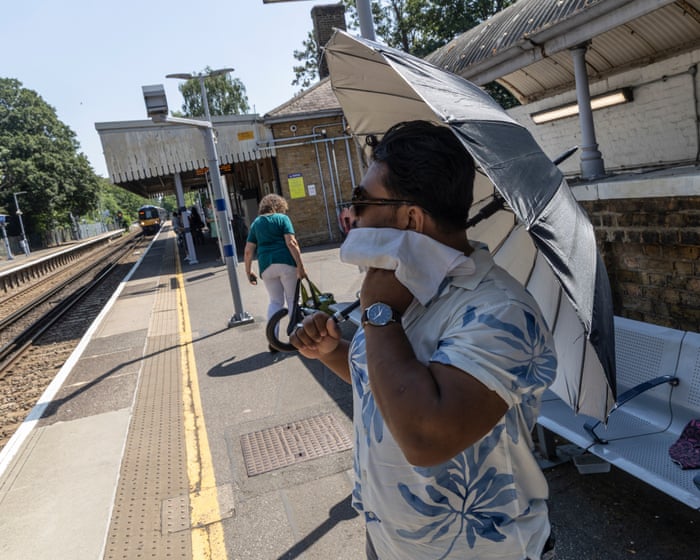
The number of deaths linked to heatwaves in England has nearly doubled in 2026 compared to the previous year. There were about 2,877 heat-related deaths during heatwaves in May and June, with experts urging action to reduce greenhouse gas emissions and protect vulnerable groups.
Key Facts
England saw an estimated 2,877 deaths connected to heatwaves in May and June 2026.
This figure is almost twice as high as deaths from heatwaves in June to August 2025.
Around 753 deaths occurred during the heatwave from May 24-27.
Another 2,124 deaths happened during the heatwave from June 21-28.
The June heatwave caused three days of red warnings, the highest alert level for danger to life.
Older people, young children, and those with health problems are most at risk during heatwaves.
Experts called for urgent steps to reduce greenhouse gas emissions to slow global heating.
The current death numbers are nearly reaching the record set by heatwaves in 2022.
Read the Original
Want the full story? Tap a source to open the original
article.
A 25-year-old named Jonathan Peralta Jr. lost most of his teeth due to advanced gum disease, which caused severe bone loss in his mouth. After diagnosis, he had to get all his remaining teeth removed and replaced with full-mouth dental implants, and now he shares his story to raise awareness about gum disease.
Key Facts
Jonathan Peralta Jr. was 25 years old when he faced severe bone loss from periodontal (gum) disease.
Periodontal disease damages the bone and tissues supporting teeth and can lead to tooth loss.
Despite wearing retainers after Invisalign treatment, he noticed his teeth loosening and gaps appearing.
A dental evaluation showed bone loss typical of someone around 65 years old.
Only one tooth fell out naturally; the rest had to be extracted due to the damage.
He received full-mouth dental implants to replace his lost teeth.
The experience affected his confidence and mental health but motivated him to educate others.
Common signs of gum disease include bleeding, red or swollen gums, receding gums, loose teeth, and new gaps between teeth.
Read the Original
Want the full story? Tap a source to open the original
article.
The University of Cape Town (UCT) lost 250 million rand ($15.2 million) in donor funding after passing two resolutions about Israel’s war on Gaza. The university rejected a donor condition to adopt a specific definition of anti-Semitism tied to Israeli policy, leading to funding withdrawals linked to wealth accumulated during apartheid in South Africa.
Key Facts
UCT lost 250 million rand ($15.2 million) in donations after adopting two resolutions on the Israel-Gaza war.
The Donald Gordon Foundation withdrew 200 million rand ($12.1 million) in committed funds for a neuroscience institute.
Other donors withheld 50 million rand ($3 million), including about 15 million rand ($910,000) annually for student bursaries.
The resolutions called for a Gaza ceasefire, humanitarian aid, captive returns, and rebuilding Gaza’s education system.
UCT barred academics from working with research groups linked to the Israeli military but did not target Israeli or Jewish scholars by identity.
The Donald Gordon Foundation demanded UCT adopt the 2016 IHRA definition of anti-Semitism, which UCT rejected and replaced with the Jerusalem Declaration supporting free academic speech and Palestinian rights.
The foundation’s fortune originated from Liberty Life, a company tied to apartheid-era economic policies that favored white South Africans.
South Africa remains highly unequal, with many Black students dependent on bursaries due to historical apartheid injustices affecting wealth and education access.
Read the Original
Want the full story? Tap a source to open the original
article.
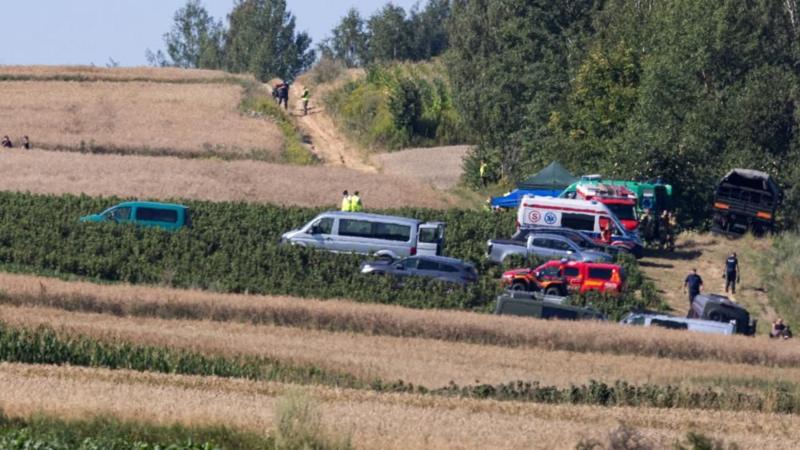
A missile that created a large crater deep inside Poland near the village of Tarnawa Kolonia is believed to be a Russian Kh-101 missile. Polish officials are investigating to confirm the missile’s type and origin after it flew over Polish territory during Russian attacks on Ukraine.
Key Facts
The missile landed about 100 km from the Ukraine-Poland border near Tarnawa Kolonia.
Polish Prime Minister Donald Tusk said it was likely a Russian Kh-101 missile but they need full confirmation.
Ukraine’s acting Foreign Minister said the missile crossed into Poland during a Russian strike on Ukraine.
Poland detected the missile early Thursday and sent an F-16 jet to intercept it, but it disappeared from radar.
About 20 Russian drones and missiles have previously entered or landed in Poland since the war started in 2022.
Air raid sirens sounded in Polish towns nearby due to Russian attacks on Ukraine.
There were no reported casualties from the missile hitting Poland.
The incident is being taken seriously amid ongoing tensions related to the war in Ukraine.
Read the Original
Want the full story? Tap a source to open the original
article.
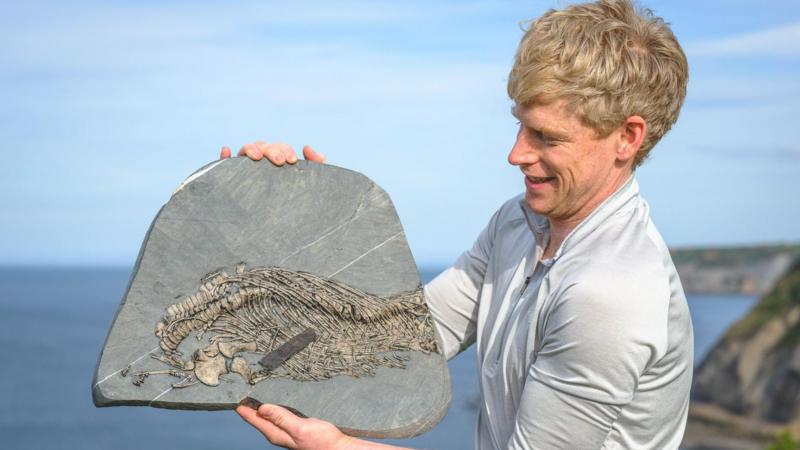
A mountaineer named Matthew Myerscough survived an avalanche and then took up fossil hunting to help him recover from trauma. While searching on beaches in Wales, he discovered a rare sea dragon fossil that had never been found in Wales before.
Key Facts
Matthew Myerscough was caught in an avalanche on Snowdon in 2014, where he was buried under snow for 20 minutes.
He developed post-traumatic stress disorder (PTSD) after the accident.
To manage his stress and recovery, Myerscough began fossil hunting on beaches at Lavernock Point in the Vale of Glamorgan.
He found a plesiosaur jawbone, a marine reptile fossil from the Jurassic period, about 200 million years old.
This fossil, identified as a rhomaleosaurus or “sea dragon,” had not been found in Wales before.
Myerscough works as a civil engineer and compares fossil hunting to mindfulness activities like yoga or watching a film.
He has written a book called "In Search of Sea Dragons" about the experience of finding fossils.
Research on the fossil is still ongoing with the National Museum Cardiff.
Read the Original
Want the full story? Tap a source to open the original
article.
Hadi Matar, who stabbed author Salman Rushdie in 2022, has been found guilty of federal terrorism charges in New York. He is already serving a 25-year prison term for the attack and may face life imprisonment for the new charges related to support for a terrorist group.
Key Facts
Hadi Matar stabbed Salman Rushdie during a public event in New York in 2022, leaving Rushdie partially blind.
Matar was sentenced to 25 years in prison in May 2023 for the attack.
A jury found Matar guilty of additional terrorism charges, including supporting Hezbollah, a group designated as terrorist by the U.S.
Prosecutors said Matar was inspired by a fatwa issued by Iran’s former leader in 1989 calling for Rushdie’s death.
Matar reportedly discussed the fatwa in messaging apps before the attack.
Salman Rushdie testified in court about the attack during the trial.
Iran denies any relation to the stabbing incident.
Rushdie has written a memoir about his experience called "Knife: Meditations After an Attempted Murder."
Read the Original
Want the full story? Tap a source to open the original
article.
China has greatly influenced global oil prices during the Iran war by cutting its oil imports by over 40%. China managed this without harming its economy by using domestic energy sources and electric vehicles, helping to keep global oil prices lower despite the conflict.
Key Facts
The Iran war started on February 28, leading to a spike in oil prices.
China reduced its crude oil imports by more than 40% compared to the previous year.
China avoided economic harm by using domestic reserves of coal, oil, and natural gas.
Increased use of coal, renewable energy, and electric vehicles helped China lower oil demand.
China's lower oil buying lessened the global price shock caused by the war and the closure of the Strait of Hormuz.
Other countries also helped by releasing oil reserves and increasing exports, especially from the U.S.
Analysts say China acts as a major "swing demand" player, adjusting its oil buying to impact global prices.
Early signs in July suggest China may begin to increase its oil purchases again.
Read the Original
Want the full story? Tap a source to open the original
article.
Staying informed here is free for everyone. If it's worth something to you, pay what you want. Supporters also get the daily digest by email every morning.
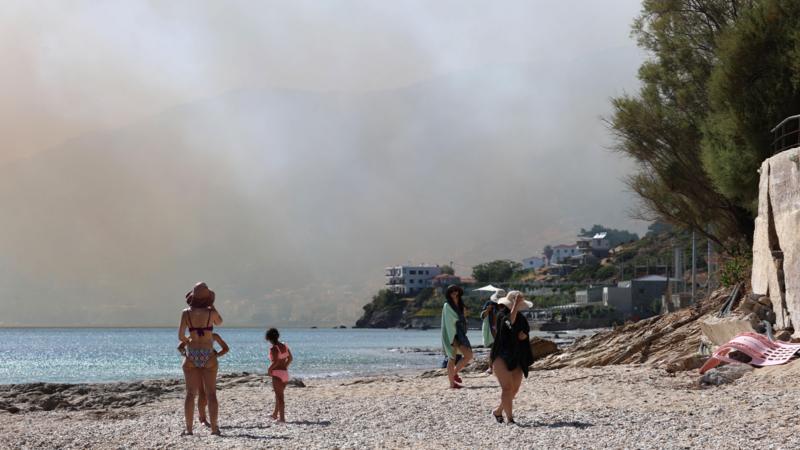
Thousands of people have been evacuated from the Greek island of Crete due to large wildfires fueled by strong winds. The fires have destroyed homes and farmland, and three firefighters have died while battling the blazes in Greece. Similar wildfires and evacuations are occurring in Spain, Portugal, and Turkey as Europe faces extreme heat and dry conditions.
Key Facts
About 8,000 people were evacuated overnight in Rethymno, Crete, where winds reached 125 km/h.
Two firefighters died on Crete near Krya Vrysi, and a third died near Gytheio in southern Greece.
The wildfire in Rethymno has a front over 15 km long and has destroyed homes and farmland.
224 firefighters with 53 engines, 11 special units, and 2 aircraft are working to control the fires in Crete.
In Spain, 600 people were evacuated near Zamora due to wildfires, and thousands returned home near Madrid after fires stopped spreading.
Portugal reported five injuries from fires in Valpaços; Turkey evacuated hundreds of homes but most fires are under control.
France’s largest fire since 1949, burning 42,000 hectares, did not spread for three days thanks to cooler weather and rain.
Europe faces widespread extreme heat and drought, worsening fire risks as summer temperatures reach over 40°C (104°F).
Read the Original
Want the full story? Tap a source to open the original
article.
Russian attacks across Ukraine have killed at least 14 people and wounded many others, especially in the Dnipropetrovsk and Lviv regions. Ukraine’s President Volodymyr Zelenskyy called for stronger protection against these attacks and said support from other countries is needed to save lives.
Key Facts
At least 14 people died and dozens were injured in recent Russian attacks in Ukraine.
The heaviest damage happened in the eastern Dnipropetrovsk area and western Lviv region.
Russia launched over 70 missiles, many of which were ballistic, and more than 280 attack drones.
Ukrainian air defenses destroyed over 260 of these drones.
President Zelenskyy said delays in getting anti-ballistic missiles increased damage and casualties.
Zelenskyy stressed that protecting Ukrainians from missile attacks requires help from multiple countries.
Russia claimed its air defenses shot down 258 Ukrainian drones overnight.
A fire broke out at a Wildberries online retailer depot, injuring one person and causing around 200 workers to evacuate.
Read the Original
Want the full story? Tap a source to open the original
article.
A strong earthquake in Japan has killed 34 people and badly damaged buildings, including a shopping mall. Many survivors are suffering as hot weather, reaching up to 38°C (100°F), makes rescue and recovery harder.
Key Facts
The earthquake happened two days before the report.
The death toll reached 34 people.
A shopping mall collapsed and emergency workers are searching for survivors.
Homes and bridges were destroyed or damaged by the quake.
Fires broke out in several places.
Tens of thousands of people lost power and water.
The heatwave with temperatures up to 38°C is making life difficult for survivors and rescuers.
Rescue teams continue working despite tough weather conditions.
Read the Original
Want the full story? Tap a source to open the original
article.
The US military carried out strong strikes against Iran on July 30, 2026. These attacks were a response to Iran’s earlier attacks on US bases in Jordan, as fighting in the Middle East increased again.
Key Facts
The US launched powerful military strikes on Iran on July 30, 2026.
These strikes were retaliation for Iran’s attacks on US military bases in Jordan.
There had been nearly a week without fighting before these new attacks.
The renewed violence reduced hopes for peace talks or negotiations.
The conflict involves Iran and its allied groups (proxies) in the Middle East.
The fighting is part of a wider war happening in the Middle East region.
Other news mentioned includes different global events but are unrelated to this incident.
Read the Original
Want the full story? Tap a source to open the original
article.
Russian missile and drone strikes killed at least eight people and injured more than a dozen across Ukraine. The attacks involved 74 missiles and 284 drones, hitting locations including the capital, Kyiv, and the city of Poltava.
Key Facts
At least eight people were killed in Russian strikes across Ukraine.
More than a dozen others were wounded in the attacks.
The strikes included 74 missiles and 284 drones according to Ukraine’s air force.
The capital city Kyiv was among the locations hit.
The city of Poltava also experienced casualties from the attacks.
Ukrainian officials have renewed calls for allies to send air defense equipment.
The attacks occurred overnight and caused significant damage and injuries.
Ukraine’s government is seeking more support to protect against future strikes.
Read the Original
Want the full story? Tap a source to open the original
article.
This article is about the 3rd arrondissement, a neighborhood in Paris. It highlights the area's mix of old history and modern creativity, including historical sites, museums, and local culture.
Key Facts
The 3rd arrondissement is one of the oldest neighborhoods in Paris.
It is part of the Marais district but is quieter and more local.
The area has medieval history, including connections to the Knights Templar.
It is known for creative people like fashion designers.
The neighborhood features interesting and unusual museums.
The article is part of a series exploring different Paris neighborhoods.
Read the Original
Want the full story? Tap a source to open the original
article.
There are no ads, so there is no reason to bait you. Readers who chip in keep it that way. Most choose $3.99/month, and get the daily digest every morning.
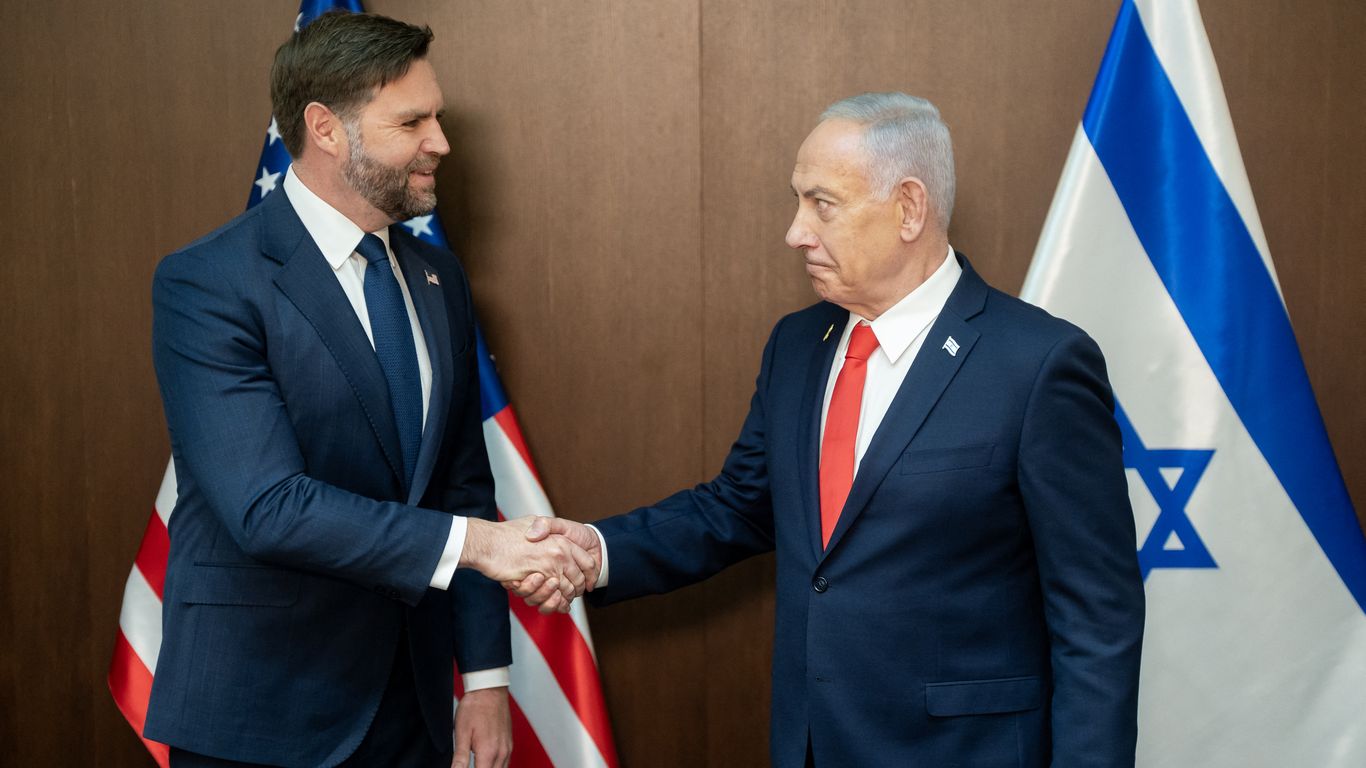
U.S. Vice President Vance and Israeli Prime Minister Benjamin Netanyahu had a direct meeting in Washington to discuss their disagreements. The two leaders have clashed over war policies and U.S.-Iran negotiations, with tensions rising over public criticisms and political actions.
Key Facts
Vice President Vance has been critical of Prime Minister Netanyahu, especially regarding the ongoing war and Iran deal.
Vance played a key role in defending a U.S.-Iran memorandum of understanding that Netanyahu opposed.
Netanyahu did not publicly oppose the Iran agreement but hoped it would fail, which it eventually did.
The two met at Blair House in Washington for a frank and direct conversation to try to clear the air.
Netanyahu was unhappy with Vance’s public criticism and questioned his loyalty to President Trump.
Vance accused some Israeli officials of trying to influence U.S. policy against diplomacy and prolong the war.
Vance made unproven claims about Jeffrey Epstein’s connections to Israeli intelligence, which drew criticism.
The meeting reflects ongoing tension between U.S. and Israeli leadership during conflict and diplomatic efforts.
Read the Original
Want the full story? Tap a source to open the original
article.
FIFA plans to create a new commercial company called FIFA Forward Enterprise (FFE) to manage the rights and operations of its major soccer events, including the World Cup. This company would raise billions from investors, including one led by Joshua Kushner, who is related to President Donald Trump through family ties, but FIFA would keep control over all sports decisions.
Key Facts
FIFA announced a plan to form a $20 billion commercial subsidiary called FIFA Forward Enterprise (FFE).
FFE would handle commercial rights and event operations for FIFA tournaments like the World Cup.
The subsidiary aims to raise about $4.2 billion from investors who would hold minority stakes without controlling power.
FIFA would keep control over football governance, tournament formats, and sporting decisions.
Thrive Eternal, founded by Joshua Kushner (President Trump’s son-in-law Jared Kushner’s brother), is expected to lead the investor group.
FIFA opened a representative office at Trump Tower in New York, announced with FIFA President Gianni Infantino and President Trump.
Jared Kushner is not an investor in the plan, and Joshua Kushner has no role in the Trump administration.
The proposal would increase funding available to FIFA’s 211 member associations through a new investment program.
Read the Original
Want the full story? Tap a source to open the original
article.