Neutral summaries of your favorite news sources — just the facts.
Your favorite news sources, one neutral feed — we distill their reporting into fact-first
summaries and always link to the original story. How it works
World News
Comprehensive coverage of international news and global events
Lebanon’s Prime Minister Nawaf Salam visited Damascus in Syria as both countries face Israeli attacks and occupation. This visit reflects a new approach where Syria treats Lebanon as an equal partner, following the fall of President Bashar al-Assad’s regime in 2024.
Key Facts
Lebanon’s Prime Minister Nawaf Salam visited Syria’s capital, Damascus, for the second time since 2024.
Both Lebanon and Syria are experiencing ongoing Israeli attacks and occupation in parts of their territories.
Syria ended its previous political and military control over Lebanon, symbolized by suspending the Lebanese-Syrian Higher Council.
President Bashar al-Assad fled Syria in December 2024 after opposition forces took control, ending five decades of family rule.
Syria under al-Assad was isolated internationally and heavily sanctioned due to its civil war and internal repression.
Syria’s new government, led by Ahmed al-Sharaa, opposes Hezbollah, a Lebanese group that previously supported al-Assad.
Hezbollah lost its land route to Iran for funding and weapons after al-Assad’s fall.
Syria aims to reintegrate into the international community and seek a more equal relationship with Lebanon.
Read the Original
Want the full story? Tap a source to open the original
article.
Tensions and violence increased in Jerusalem and the West Bank during a week marked by Jerusalem Day and Nakba commemorations. Israeli settlers, sometimes protected by the military, attacked Palestinian communities, resulting in deaths, property damage, and forced displacements.
Key Facts
On Jerusalem Day, tens of thousands of nationalist Israelis marched in East Jerusalem, attacking Palestinian shops and residents.
Israeli authorities restricted entry to the Al-Aqsa Mosque compound, allowing settler visits that violated long-standing religious rules.
Far-right Israeli officials made provocative statements and actions at religious sites in Jerusalem.
Over 2,200 settler incursions into the Al-Aqsa area were reported in one week.
A 16-year-old Palestinian boy was shot and killed during a settler attack on villages near Ramallah; ambulances were blocked from reaching him quickly.
Settlers stole livestock and damaged property, including burning a mosque and multiple vehicles in various villages.
Another 16-year-old Palestinian was killed by Israeli forces in the West Bank, with emergency medical help prevented from arriving.
Seven Palestinian families were forcibly displaced from their homes during this period amid escalating settler violence.
Read the Original
Want the full story? Tap a source to open the original
article.
A Russian attack damaged important port facilities in the Ukrainian city of Izmail on the Danube River, which is key for grain exports. Meanwhile, Russian forces shot down four Ukrainian drones heading to Moscow as fighting between the two countries continues despite a recent ceasefire agreement.
Key Facts
Izmail, Ukraine’s largest Danube port, was hit by a Russian strike damaging its infrastructure.
Ukrainian defenses destroyed most Russian drones targeting areas around Izmail, protecting civilians.
Russian authorities reported shooting down four Ukrainian drones near Moscow.
Previous attacks by Russia on Izmail’s port happened on May 2.
A Russian drone attack in Kharkiv rescue operation saved two people; one may still be trapped.
Ukrainian drone attacks in Russia have caused deaths and injuries, including one woman killed in Kursk region.
Russia is conducting military exercises involving over 64,000 personnel and missile launches as preparation for nuclear forces.
Russian President Putin is visiting China to mark 25 years of their friendship treaty and discuss energy cooperation.
Read the Original
Want the full story? Tap a source to open the original
article.
President Donald Trump postponed a planned military attack on Iran after requests from Gulf leaders, citing new diplomatic talks underway. Iran stated it is negotiating with dignity and will not surrender, while tensions continue with military actions near Iran and ongoing violence in Lebanon.
Key Facts
President Trump delayed an attack on Iran after appeals from Qatar, Saudi Arabia, and the UAE.
Serious behind-the-scenes negotiations between the US and Iran are taking place.
Iranian officials said talks do not mean giving up their rights or surrender.
Iran’s military hit groups near the Iraq border linked to the US and Israel.
Iran may require permits for fibre-optic cables passing through the Strait of Hormuz.
Pakistani officials are mediating indirect talks between the US and Iran.
Violence in Lebanon continues despite a US-brokered ceasefire extension, with over 3,000 deaths reported.
US Treasury extended a sanctions waiver for Russian oil cargoes to help vulnerable countries amid global price rises.
Read the Original
Want the full story? Tap a source to open the original
article.
President Donald Trump said he stopped a planned attack on Iran after leaders from Qatar, Saudi Arabia, and the United Arab Emirates asked him to pause it to allow peace talks. He warned that the military is ready to launch a full attack if a good deal is not reached.
Key Facts
President Trump announced on Truth Social that Gulf states asked to delay the Iran strike.
The Gulf countries involved are Qatar, Saudi Arabia, and the United Arab Emirates.
Trump said the goal is to prevent Iran from having nuclear weapons.
The military is prepared to attack quickly if talks fail.
Iran’s military says Pakistan shared Tehran’s latest offer with the US.
Previous threats of strikes on Iran by Trump were withdrawn at the last moment.
The conflict is causing higher oil and fertilizer prices due to disruptions in the Strait of Hormuz.
The US blockade of Iranian ports has not forced Iran to make major concessions despite Iran’s economic problems.
Read the Original
Want the full story? Tap a source to open the original
article.
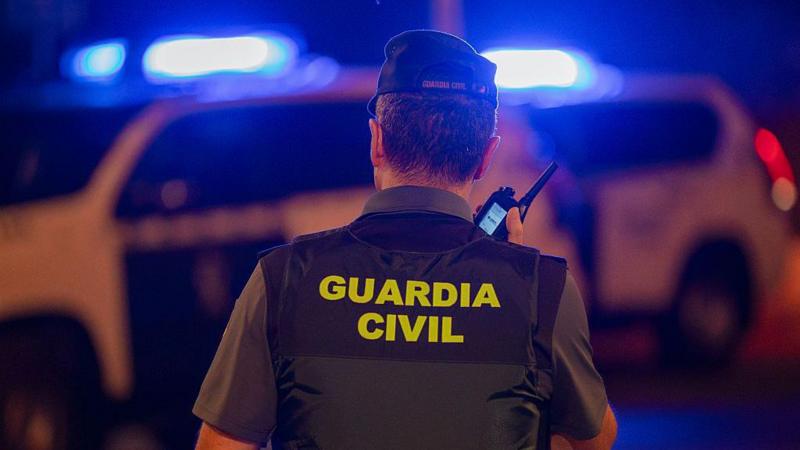
A 25-year-old man in southern Spain has been arrested for killing his parents and injuring four others in a shooting. Among the injured are two young children, including the suspect’s seven-month-old son.
Key Facts
The shooting happened at 11:00 pm local time on Monday in El Ejido, near Almería, Spain.
Two people died in the attack; the suspect’s parents were killed.
Four other people were seriously injured and taken to the hospital.
Two of the injured are very young children, one about seven months old and the other 18 months old.
A 60-year-old man is also among those injured.
The suspect briefly fled but later surrendered to police.
Spanish police are investigating the case and trying to find out why the shooting happened.
Mass shootings are rare in Spain; only four have been recorded from 2000 to 2023 according to a European gun crime tracker.
Read the Original
Want the full story? Tap a source to open the original
article.
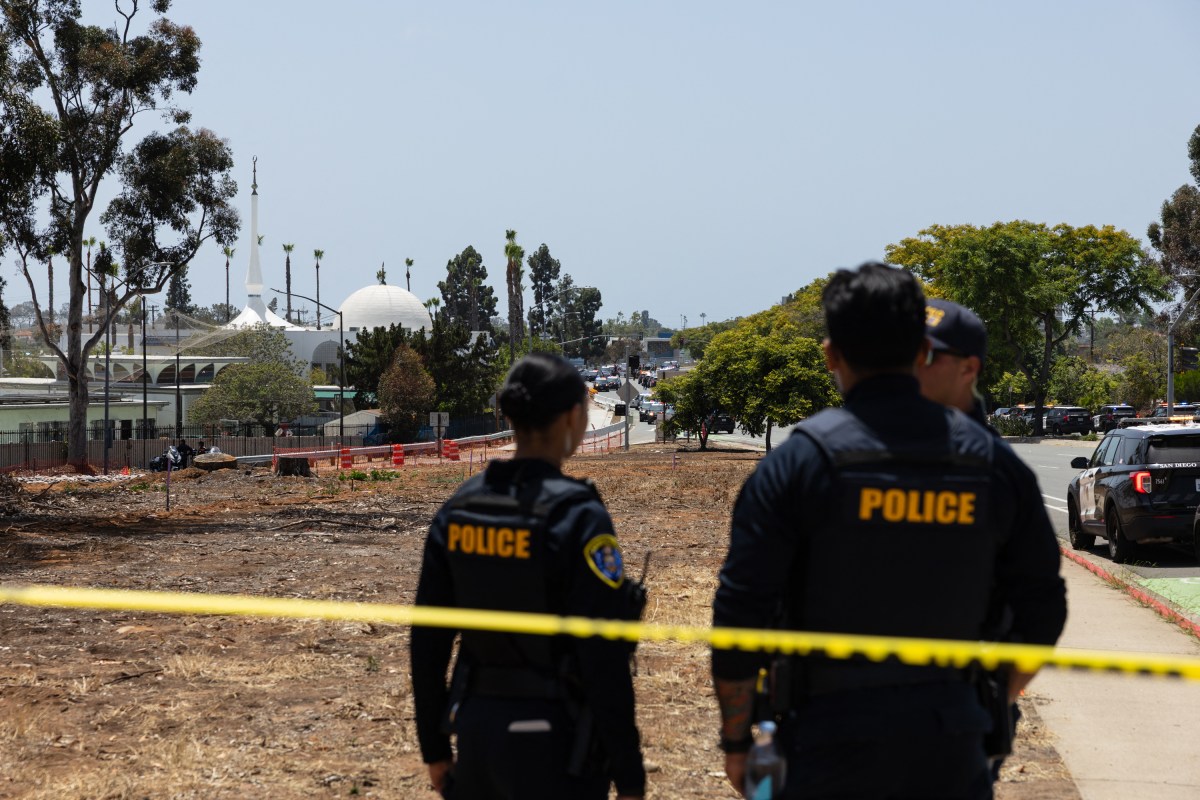
Two teenagers, Cain Clark and Caleb Vazquez, are suspected of shooting three men dead at a mosque in San Diego before one of them died by suicide. Officials are investigating the attack as a possible hate crime but have not confirmed the suspects' motives.
Key Facts
The shooting happened at the Islamic Center of San Diego in the Clairemont neighborhood.
Three men were killed during the attack.
One suspect died from a self-inflicted gunshot wound a few blocks away.
The suspects are reported to be Cain Clark, age 17, and Caleb Vazquez, age 18.
Cain Clark was a virtual high school student and wrestler set to graduate soon.
Clark attended the San Diego Unified School District’s iHigh Virtual Academy since 2021.
Police have not officially confirmed the suspects’ names or their motives.
San Diego Police Chief said the shooting is being investigated as a hate crime.
Read the Original
Want the full story? Tap a source to open the original
article.
India and the five Nordic countries—Norway, Sweden, Finland, Iceland, and Denmark—are holding their third high-level summit in Oslo to strengthen strategic and trade ties. The leaders will discuss trade, climate change, energy security, and global geopolitical issues such as Russia’s war on Ukraine and conflicts impacting the Middle East.
Key Facts
The India-Nordic summit in Oslo brings together Prime Minister Narendra Modi and leaders from Norway, Sweden, Finland, Iceland, and Denmark.
This is the third summit; previous ones were in Stockholm (2018) and Copenhagen (2022).
Trade topics include technology, green energy, industrial machinery, pharmaceuticals, and textiles.
India’s trade with the Nordic countries was $19 billion in 2024.
The summit discusses new areas like space, defence, the Arctic, and sustainable blue economy sectors.
Nordic countries are leaders in digital innovation, clean energy, and climate solutions that match India’s development goals.
Modi’s visit marks the first by an Indian prime minister to Norway in 43 years.
The summit aims to boost trade and investment and support supply chains after recent trade agreements between India, the EU, and Nordic-linked countries.
Read the Original
Want the full story? Tap a source to open the original
article.
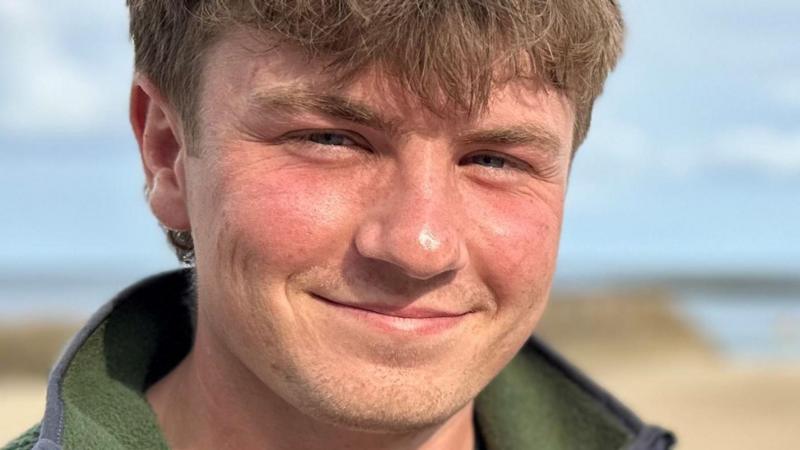
Two brothers, Euan and Andrew Gray, were caught in a rip current at Longsands beach in North Tyneside but survived by using a floating technique taught by the Royal National Lifeboat Institution (RNLI). Euan was later rescued by lifeboat crews, and now he promotes water safety to help others survive similar situations.
Key Facts
Euan Gray (22) and his brother Andrew (19) were caught in a strong rip current in May 2025.
They used the RNLI's Float to Live method, which involves tilting the head back, relaxing, and floating on the back without panicking.
Andrew reached nearby rocks on his own, but Euan was rescued by the Cullercoats RNLI lifeboat crew.
The brothers learned the floating technique from their father years earlier at a local swimming pool.
The RNLI recorded around 50 cases in 11 years where floating helped save people from drowning.
The RNLI advises swimmers caught in rip currents to swim parallel to the shore if they can, and always use the floating method first.
Euan and Andrew are running daily half marathons in May to thank their rescuers and raise awareness about the safety campaign.
In 2024, there were 193 accidental drownings in the UK, with men aged 20-29 being the highest-risk group.
Read the Original
Want the full story? Tap a source to open the original
article.
The UK Department for Culture, Media and Sport (DCMS) has called for a full investigation into rape and sexual misconduct allegations made by women involved in the TV show Married at First Sight UK. Channel 4 has removed past seasons of the show and begun an external review after claims that some participants were harmed during filming.
Key Facts
Two women said they were raped by their on-screen husbands during the show, and a third reported non-consensual sex.
One woman said she was threatened with an acid attack by her on-screen husband.
The women told the BBC they had not reported these incidents to the police.
Channel 4 took down all past seasons of Married at First Sight UK from its streaming service following the allegations.
Channel 4 initiated an independent review into how it cares for people appearing on its shows.
Channel 4 and the production company CPL say they followed welfare protocols and deny wrongdoing.
The DCMS said all allegations should be reported and investigated properly, holding people responsible if crimes were committed.
MPs will question former Channel 4 chief executive Alex Mahon about the show in an upcoming committee meeting.
Read the Original
Want the full story? Tap a source to open the original
article.
The NHS has introduced an artificial pancreas device for people with type 1 diabetes, helping to reduce gaps in treatment access between different ethnic and economic groups. This device combines a glucose sensor, an insulin pump, and a computer algorithm to better control blood sugar levels and ease diabetes management.
Key Facts
The artificial pancreas is a hybrid closed-loop system with three parts: a continuous glucose monitor, an algorithm, and an insulin pump.
It reduces the mental effort needed to manage diabetes, especially at mealtimes and overnight.
Previously, minority ethnic groups and people from poorer backgrounds had less access to diabetes technology like glucose monitors.
Since the NHS started the artificial pancreas rollout, uptake differences between deprived and less deprived groups and between ethnic groups have dropped to about 3%.
Around 32,000 children have received the device in the first two years, covering about 72% of those eligible.
The program will expand to include all children and adults eligible for the device.
Users report life-changing benefits, such as fewer hospital visits and easier insulin management, even when cultural or personal challenges exist.
Advocacy groups highlight the UK as a global leader in this technology and emphasize the need for equal access across all UK regions.
Read the Original
Want the full story? Tap a source to open the original
article.
The British reality TV show Married at First Sight U.K. was removed from TV and online after two women who appeared on the show said they were raped by their on-screen husbands. A third woman also claimed she experienced a non-consensual sexual act. The show involved strangers marrying at first meeting and testing their relationship, but these marriages were not legally binding.
Key Facts
Married at First Sight U.K. is a reality dating show where strangers marry upon first meeting.
Two women who were participants said they were raped by their husbands from the show.
A third woman alleged she was subjected to a non-consensual sexual act.
The show was aired by Channel 4 in the United Kingdom.
Channel 4 removed the show from all broadcast and streaming services.
The channel also deleted the show’s social media accounts.
Channel 4 was informed of the allegations in April, which were denied by the accused participants.
The channel is concerned about the privacy and care of all people involved and did not provide more details.
Read the Original
Want the full story? Tap a source to open the original
article.
Russia will hold nuclear military exercises from May 19 to May 21, lasting three days. These drills will involve testing and readiness checks of Russia's nuclear forces.
Key Facts
The nuclear drills are scheduled to take place from May 19 to May 21, 2026.
The exercises focus on Russia's nuclear weapons forces.
The drills involve testing readiness and operation of nuclear weapons systems.
This event is part of Russia's ongoing military activities.
The announcement was made on May 19, 2026.
No specific locations within Russia were mentioned for the drills.
The drills may affect international security and military tensions.
Russia often uses such exercises to demonstrate military strength.
Read the Original
Want the full story? Tap a source to open the original
article.
President Donald Trump has delayed a planned military strike on Iran after requests from Middle East allies, saying serious talks are now happening. Despite strong U.S. pressure, Iran has not changed its stance on its nuclear program, missile development, or support for groups in the region, while maintaining control over the Strait of Hormuz, a key oil shipping route.
Key Facts
President Trump postponed a major military strike on Iran at the request of Gulf Arab allies.
Trump said “serious negotiations” are underway and hopes for a lasting deal.
Trump warned the military to be ready for a full attack if no acceptable deal is reached.
Iran has not agreed to stop its nuclear program, missile development, or regional support for proxies.
The Strait of Hormuz, vital for global oil shipments, remains under Iranian control.
The U.S. also has a blockade on Iranian ports, affecting global oil markets and raising gasoline prices.
Rising fuel prices in the U.S. could impact voter sentiment ahead of November midterm elections.
Trump’s usual strategy of economic and military pressure has been less effective with Iran compared to other countries like Venezuela and Cuba.
Read the Original
Want the full story? Tap a source to open the original
article.
The United States has increased pressure on Cuba after President Nicolás Maduro of Venezuela was captured in early 2025. The U.S. government is preparing criminal charges against former Cuban leader Raúl Castro, escalating tensions with Cuba during President Donald Trump’s second term. Meanwhile, talks and some limited cooperation between the two countries have taken place amid ongoing political challenges.
Key Facts
Venezuela’s President Nicolás Maduro was captured in a military operation early in 2025.
The U.S. Justice Department plans to seek charges against former Cuban leader Raúl Castro.
Tensions between the U.S. and Cuba rose as part of a broader U.S. strategy against countries allied with Maduro.
President Trump warned the Cuban government and suggested a “friendly takeover” of Cuba might be possible.
Raúl Castro’s grandson met secretly with U.S. officials for talks with Cuban leaders.
Cuba’s President Miguel Díaz-Canel rejected calls to resign and denied any justification for a U.S. military attack.
Sanctioned oil shipments reached Cuba after a three-month gap amid an energy crisis on the island.
Both countries confirmed talks aimed at resolving bilateral differences despite ongoing hostilities.
Read the Original
Want the full story? Tap a source to open the original
article.
The United Arab Emirates (UAE) has faced multiple drone and missile attacks during the ongoing war involving Iran, affecting its economy, especially oil exports and tourism. A recent drone strike targeted the UAE’s only nuclear power plant but caused no injuries or radiation leaks, highlighting ongoing risks despite a fragile ceasefire.
Key Facts
The UAE is a key ally of the United States and Israel in the Middle East.
Iran has launched more missile and drone attacks on the UAE than any other country during the war.
The attacks and Iran’s control over the Strait of Hormuz have cut the UAE’s oil and gas exports by more than half.
Tourism and international business in the UAE have slowed down because of the conflict.
The UAE plans to build a new oil pipeline to reduce dependence on the Strait of Hormuz.
The UAE left the OPEC oil group to increase its energy production over a longer time.
A drone strike recently hit the UAE’s sole nuclear power plant at Barakah, causing a fire but no radiation release.
The UAE government has warned Iran against threats and stated it may respond with military action if needed.
Read the Original
Want the full story? Tap a source to open the original
article.
Russian President Vladimir Putin is visiting China to meet with Chinese leader Xi Jinping shortly after U.S. President Donald Trump’s trip to Beijing. The visit highlights China’s effort to keep strong ties with both Russia and the United States, focusing on economic cooperation and important international issues.
Key Facts
Putin’s visit to China is scheduled for two days, Tuesday and Wednesday.
The visit occurs less than a week after President Trump’s visit to Beijing.
China aims to maintain stable relations with the U.S. while preserving strong ties with Russia.
Putin and Xi will discuss economic cooperation and key regional and global matters.
The trip marks the 25th anniversary of the Sino-Russian Treaty of Friendship signed in 2001.
Putin called the Russia-China relationship “unprecedented” and said it plays a key global role.
Putin and Xi have referred to each other as “old friend” and “dear friend,” showing strong diplomatic respect.
Kremlin officials say Putin’s visit was planned before Trump’s trip and is not connected to it.
Read the Original
Want the full story? Tap a source to open the original
article.
Scientists found high levels of toxic chemicals called PFAS, or "forever chemicals," in the soil, water, and sea life in the Solent strait off southern England. These chemicals come from wastewater plants, landfills, and military sites, and many samples had pollution much higher than safe limits. The UK government plans to study this problem more and consider limits, while the EU is moving toward banning most PFAS chemicals.
Key Facts
PFAS are long-lasting chemicals used in products like non-stick pans, waterproof clothes, and food packaging.
Researchers found PFAS pollution up to 13 times above safe levels in some water samples from the Solent strait.
The chemicals entered the environment mainly from treated wastewater from Southern Water's plants, as well as from old landfills and military areas near the coast.
Many marine animals, like fish and porpoises, had PFAS levels above legal limits, and most English surface waters failed a new EU test for combined chemical toxicity.
Wastewater plants currently cannot remove PFAS from water, making bans at the source important to stop pollution.
The European Union is planning a wide ban on PFAS, except for some critical uses like medicine.
The UK government said it will consult on setting PFAS limits and publish a plan to understand and reduce exposure to these chemicals.
Environmental groups stress the need for strong action and better monitoring of combined chemical effects.
Read the Original
Want the full story? Tap a source to open the original
article.
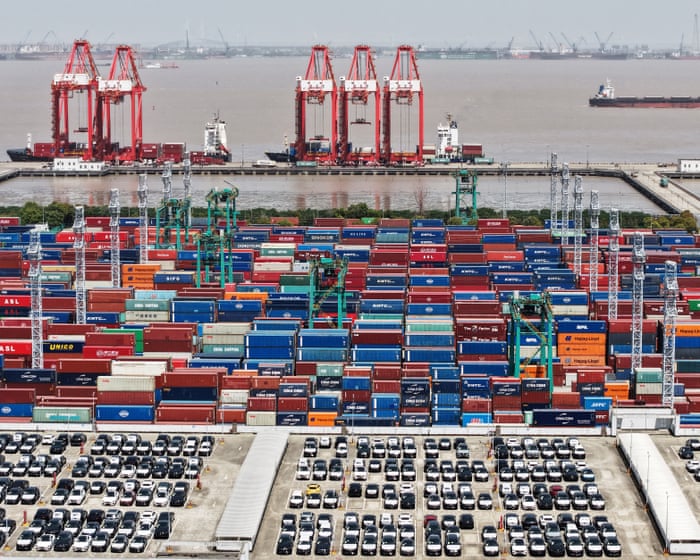
Europe is becoming more dependent on imports of components from China, which is causing concern about local factories closing and job losses. European leaders are planning urgent talks to find ways to reduce this reliance and protect local industries.
Key Facts
Europe imports a large volume of industrial components from China, increasing dependence.
This trend is compared to the “China shock” in the US 25 years ago, when China’s trade growth led to many local jobs being lost.
The European Union is considering rules requiring companies to buy critical parts from at least three different suppliers.
Chinese products benefit from government subsidies and a currency exchange rate that makes them cheaper.
Europe lost 22,000 jobs in Germany’s machinery industry last year due to competition from Chinese imports.
Some key ingredients and raw materials used in industries like pharmaceuticals and plastics mostly come from China.
EU tariffs of up to 35% on Chinese electric vehicles have been offset by changes in currency exchange rates.
European officials are meeting soon to discuss measures to address these trade and dependency issues.
Read the Original
Want the full story? Tap a source to open the original
article.
Plaid Cymru has become the largest party in the Welsh parliament after recent elections, ending Labour’s nearly 30-year dominance. The party is seeking more powers for Wales, while Labour suffered from low support and criticism over its handling of public services and relations with the UK government.
Key Facts
Plaid Cymru won the most seats in the Welsh parliament (Senedd) but did not get an absolute majority.
Labour, previously dominant in Wales for over a century, lost significant support and is no longer in government.
Plaid Cymru called for justice, infrastructure, and welfare powers to be given to the Welsh Senedd.
First Minister Rhun ap Iorwerth gave an impromptu speech to thousands of supporters with Welsh flags in Cardiff, marking a historic moment.
Labour’s decline is linked to issues like long NHS waiting lists and public services not recovering well after the pandemic.
There has been frustration in Wales over London’s handling of Welsh affairs, including infrastructure projects and refusal to devolve powers.
The relationship between the Welsh government and UK government under Keir Starmer has been seen as less cooperative than hoped.
Reform UK came second in the elections, showing shifting political support in Wales.
Read the Original
Want the full story? Tap a source to open the original
article.