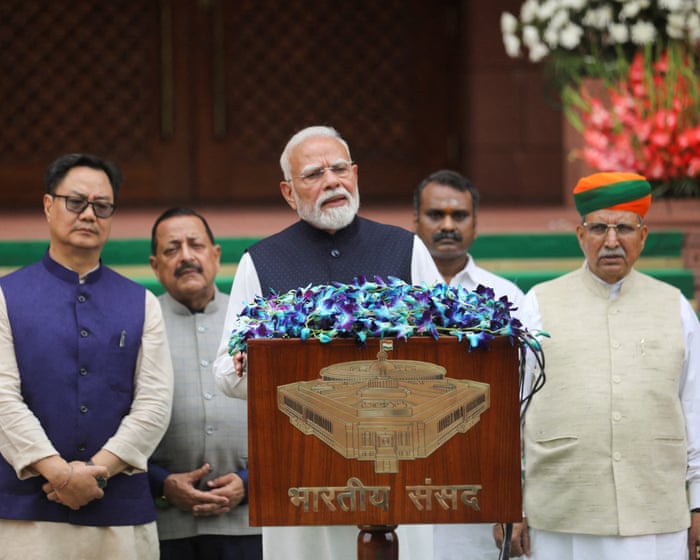
Thousands of young people in India protested against the education system and the government, demanding the resignation of the education minister, who stepped down. The protests, called the "Cockroach protests," began as a joke addressing insults by a top judge but grew into a larger movement criticizing Prime Minister Modi and his party over issues like education, corruption, and job shortages.
Key Facts
Thousands gathered in Delhi to protest, leading to Education Minister Dharmendra Pradhan's resignation.
The protests are named "Cockroach protests," inspired by a judge's comment calling unemployed youth "cockroaches."
The movement uses humor and parody to criticize Prime Minister Narendra Modi and his party, the BJP.
The protesters formed the Cockroach Janta party (CJP), listing demands including education reform.
India has many young people who face poor university conditions and limited job opportunities despite better education.
Exam papers in India are often leaked and sold, allowing wealthy people to unfairly pass tests.
Parents sometimes go into debt or sell land to pay for their children’s costly exam preparations.
The protests have challenged Modi’s image of being infallible and shown cracks in his 12-year political rule.
Read the Original
Want the full story? Tap a source to open the original
article.
Pakistan-administered Kashmir (Azad Jammu and Kashmir) has experienced violent protests and unrest since June, affecting daily life and security. The region is holding elections for its 45-seat legislative assembly, but the future of 12 seats reserved for refugees from Indian-administered Kashmir is highly contested and a major source of tension.
Key Facts
Since early June, about 40 people died in clashes between protesters and security forces in Pakistan-administered Kashmir.
Protests have included sit-ins and road blockades, with banks closed for two weeks and internet services suspended in most areas.
The Jammu Kashmir Joint Awami Action Committee (JAAC), leading the protests, was banned and its leaders arrested or underground.
Protesters’ demands expanded from cheaper flour and electricity to abolishing the 12 refugee seats in the local assembly.
The 45-seat assembly includes 33 seats from local areas and 12 reserved for refugees from Indian-administered Kashmir.
Elections are held in three phases, with voting dates on July 27, August 2, and August 10, depending on the region.
The local government says removing the 12 refugee seats would require a constitutional amendment; JAAC wants them abolished immediately.
The refugee seats have historical and constitutional backing dating back to arrangements made since 1947 and formalized in laws and the 1974 Interim Constitution.
Read the Original
Want the full story? Tap a source to open the original
article.
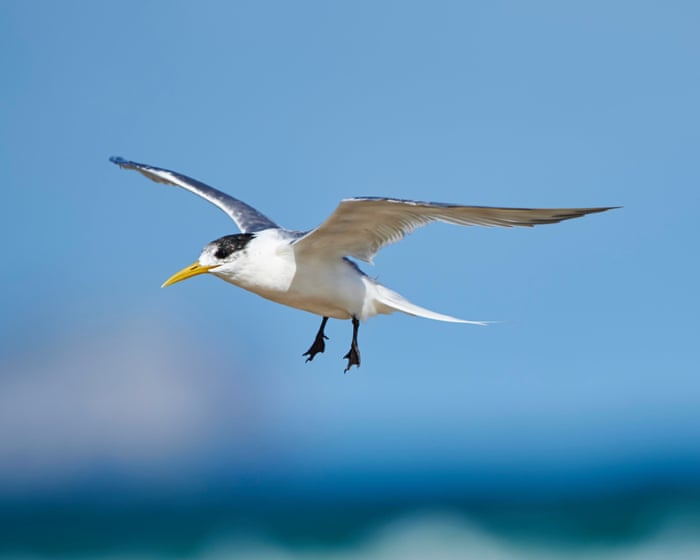
South Australia has found seven new possible cases of deadly H5 bird flu in wild greater crested terns, indicating the disease might be spreading among local birds. Authorities are testing samples to confirm this and are monitoring the situation closely, but no cases have been found in farms or poultry so far.
Key Facts
Seven possible new cases of H5 bird flu were found in greater crested terns in South Australia’s Limestone Coast area.
These birds were found dead or sick near Cape Jaffa, Southend Jetty, and Port MacDonnell.
If confirmed, these cases would bring South Australia's total to 14 bird flu cases, mostly in greater crested terns.
No bird flu has been detected in poultry or agricultural industries yet.
Experts warn that bird flu could spread more as the spring breeding season begins when birds gather in large groups.
BirdLife Australia says greater crested terns nest in colonies and interact with other coastal birds, raising the risk of further spread.
The government is increasing monitoring and testing to understand how the virus is moving.
Health officials say the risk to human health remains low and there are no large bird deaths currently.
Read the Original
Want the full story? Tap a source to open the original
article.
Yuri Kawakami-Shotton promotes Stoke-on-Trent’s pottery and culture to visitors from Japan. She runs tours at the Spode Museum and has helped a local tea room bring their products, like scones, to Japan, increasing interest in the region’s pottery and food.
Key Facts
Yuri Kawakami-Shotton organizes tours showcasing Stoke-on-Trent pottery to Japanese visitors.
She was inspired to promote the city after learning some pottery companies were struggling.
Japanese customers enjoy the authentic English dinner sets made in Stoke-on-Trent.
The Spode Museum manager appreciates Yuri’s role in attracting Japanese visitors both in person and virtually.
The Rabbit Hole Tea Room, included in her tours, held a pop-up event in Japan in 2023.
During the pop-up event, The Rabbit Hole sold 2,000 scones daily, far more than usual.
Stoke-on-Trent is known as the Potteries for its pottery industry.
The article highlights ongoing efforts to keep the region’s pottery culture alive and promote it internationally.
Read the Original
Want the full story? Tap a source to open the original
article.
French President Emmanuel Macron is holding a crisis meeting with his top officials to address large wildfires spreading in southern France. At the same time, Spain’s Prime Minister Pedro Sanchez is visiting areas affected by new fires in eastern Spain, where many people have had to leave their homes.
Key Facts
Wildfires in southern France have worsened due to drought and heatwave conditions.
Over 115,000 hectares (about 284,000 acres) have burned in France this year.
President Macron is organizing a special government meeting to manage the crisis.
Spain is also facing new wildfires near Valencia, forcing thousands to evacuate.
Spanish Prime Minister Pedro Sanchez is personally visiting the fire-affected areas.
French authorities have mobilized the military to help combat the fires, especially near Bordeaux.
The wildfires are described by officials as “unprecedented” in their scale and impact.
Both countries are dealing with ongoing challenges of drought and water shortages.
Read the Original
Want the full story? Tap a source to open the original
article.
Bristol has a long history with hot air balloons, starting in 1967 with the Bristol Belle. Every year, the city hosts the Bristol International Balloon Fiesta, featuring many unusual shaped hot air balloons that attract crowds.
Key Facts
Bristol is known as the birthplace of modern hot air balloons since 1967.
The Bristol International Balloon Fiesta is held annually, with the 48th event scheduled for August 7-9.
Special shaped balloons include the Scottish Piper, Slick the Dragon, and Oggy the Friendly Dragon.
Action Man is a complex balloon design that looks like a figure mid-skydive but now mostly stays tethered.
Astro the Alien and Astrina the Alien are popular alien-themed balloons piloted at UK balloon festivals.
The Orient Express balloon represents a train and comes from the Netherlands.
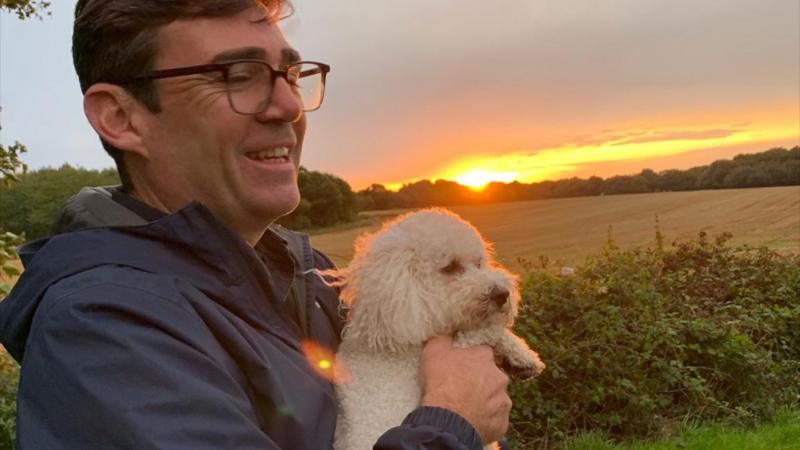
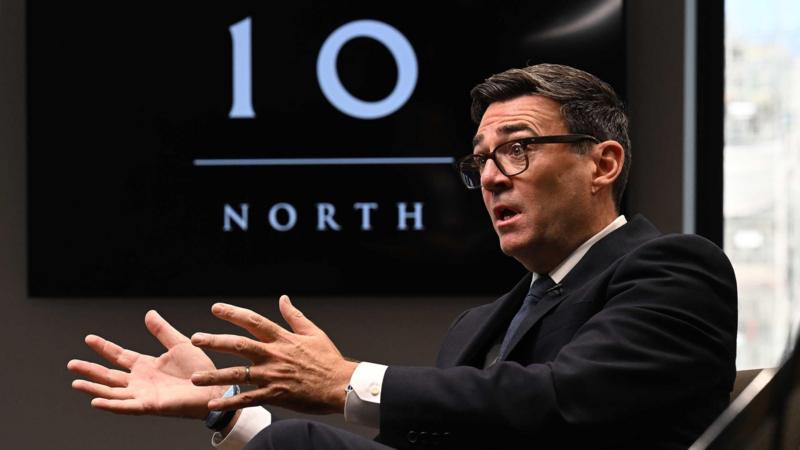
UK Prime Minister Andy Burnham said his dog Axel will stay in Greater Manchester and will not move to the official UK Prime Minister's residence, 10 Downing Street. Burnham added that Axel might not get along with Larry, the cat who has lived at 10 Downing Street for 15 years.
Key Facts
Andy Burnham is the UK Prime Minister.
His dog is named Axel and is a poodle mix.
Axel will remain in Greater Manchester, not move to 10 Downing Street.
Larry is a cat who has lived at 10 Downing Street for 15 years.
Burnham thinks Axel and Larry would not get along.
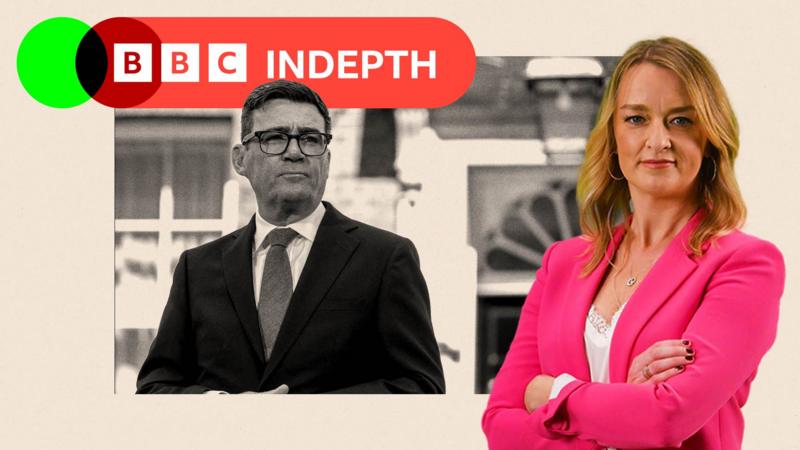
The information was shared during an interview with Laura Kuenssberg.
The interview is available on BBC iPlayer and BBC One.
Read the Original
Want the full story? Tap a source to open the original
article.
Andy Burnham has become the new prime minister of the United Kingdom, and BBC reporter Laura Kuenssberg was given special behind-the-scenes access during his first week in office. Burnham’s leadership style is described as approachable and communicative, but he faces major challenges like social care reform, managing debts, and international relations including dealing with U.S. President Donald Trump.
Key Facts
Andy Burnham is the 59th prime minister of the UK.
He was welcomed with applause by Downing Street staff as he entered No 10.
Burnham prefers a more personal style, often stopping to talk and engaging actively on social media.
The BBC was given access to Burnham at three key moments: becoming Labour leader, entering No 10, and at his Manchester office.
Burnham focuses on social care reform and wants to improve government communication.
His government has made announcements like cutting VAT on energy bills and tax breaks for pubs, but the funding details remain unclear.
Burnham acknowledged challenges including relations with U.S. President Donald Trump, defense funding, and social issues like immigration.
Despite his friendly style, Burnham faces pressures from the UK’s debts and demographic changes.
Read the Original
Want the full story? Tap a source to open the original
article.
Prime Minister Andy Burnham said the UK's National Health Service (NHS) will fail if social care is not fixed. He plans to speed up a review of social care and wants to change rules around benefits to reduce government welfare costs.
Key Facts
Burnham warned the NHS will collapse without reforming social care.
He aims to create significant changes to the social care system but gave no exact timeline.
Burnham wants to speed up the Casey Commission's review on social care, originally set to report in 2028.
Social care helps people live independently but is not free like the NHS.
People with savings over £23,250 in England and Northern Ireland do not get automatic help with care costs.
Conservative Kemi Badenoch wrote to Burnham opposing tax rises or more borrowing to fund social care reform.
Burnham said benefit conditions might be stricter to encourage more people to work.
He acknowledged some benefit recipients need more support and should not be blamed.
Read the Original
Want the full story? Tap a source to open the original
article.
Protests have erupted in Tripoli, Libya, over long power cuts and high electricity costs. Demonstrators blocked roads, closed government offices, and called for changes in Libya’s political leadership due to poor services and ongoing political issues.
Key Facts
Protesters in Tripoli blocked roads and public buildings to protest prolonged power outages and expensive electricity.
The protests spread to several districts, including Janzour, Souq Al-Jumaa, Sater Turba, and Tajoura.
Demonstrators shut down the offices of the state telecom company Libyana and the Ministry of Foreign Affairs.
The Souq Al-Jumaa Movement aims to paralyze the government and demands an end to corruption and the current political institutions.
In Tajoura, residents protested at the power station and municipal council because of power cuts and poor public services.
Power outages in Tripoli have lasted up to 10 hours some days due to electricity supply problems amid a heatwave.
The Government of National Unity did not comment on the protests immediately.
A White House adviser recently spoke with Libya’s prime minister about unifying the country and security cooperation.
Read the Original
Want the full story? Tap a source to open the original
article.
Wildfires in the Castellon area of eastern Spain have burned over 4,300 hectares of land. More than 15,000 people have had to leave their homes because of the fires.
Key Facts
The wildfires are in Castellon province in eastern Spain.
More than 4,300 hectares have been damaged by the fires.
Over 15,000 residents have been evacuated from their homes.
Firefighters are actively working to control the wildfires.
The evacuation helps keep people safe from the danger of the fires.
Read the Original
Want the full story? Tap a source to open the original
article.
Thousands of people gathered in Rawalakot, a city in Pakistan-administered Kashmir, and marched towards Muzaffarabad as protests continued. The protests focus on government issues and election changes, with over 45 people killed and hundreds injured since June.
Key Facts
Protests are happening in Pakistan-administered Kashmir.
People gathered in Rawalakot and marched to Muzaffarabad.
The unrest is about governance problems and election reforms.
More than 45 people have died since the protests started.
Hundreds of people have been injured during the unrest.
The protests began in June and are still ongoing.
Read the Original
Want the full story? Tap a source to open the original
article.
Staying informed here is free for everyone. If it's worth something to you, pay what you want. Supporters also get the daily digest by email every morning.
The Sudanese army has taken back a key highway connecting Khartoum and el-Obeid from the Rapid Support Forces (RSF). This route is important for moving troops and supplies and will stop the RSF from capturing the city of el-Obeid, which is currently under siege.
Key Facts
The Sudanese army regained control of the Al Sadarat highway on Sunday after fighting the RSF.
The highway links Sudan’s capital, Khartoum, to the city of el-Obeid in North Kordofan state.
This road helps the army move soldiers, weapons, fuel, and supplies faster.
The RSF had controlled most of the 350 km highway since April 2023.
About half a million people are trapped in el-Obeid, facing drone attacks and a humanitarian crisis.
Retaking the highway reduces RSF’s chance to take full control of western Sudan.
The conflict has caused around 40,000 deaths and displaced over 14 million people, according to the World Health Organization.
UN reports say women and girls face danger from drone strikes and sexual violence in el-Obeid.
Read the Original
Want the full story? Tap a source to open the original
article.
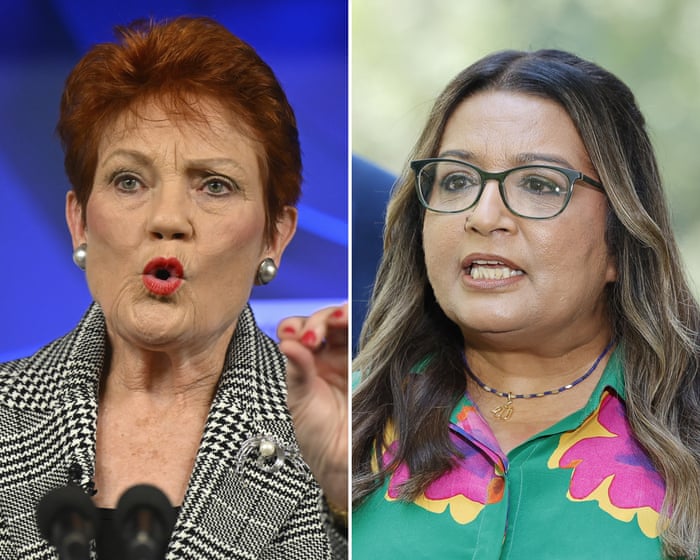
A court confirmed that Pauline Hanson broke racial discrimination laws with a 2022 tweet targeting Greens senator Mehreen Faruqi. Hanson’s appeal against the ruling was rejected by federal court judges.
Key Facts
Pauline Hanson tweeted that Mehreen Faruqi should “pack your bags and piss off back to Pakistan.”
A judge found Hanson’s tweet was seriously offensive and intimidating and broke the Racial Discrimination Act.
Hanson appealed the decision but lost when three federal court judges upheld the ruling.
Mehreen Faruqi was present in court for the appeal decision, but Hanson did not attend.
The case tested whether such racist behaviour is unlawful and also whether it conflicts with political speech rights.
Hanson argued her free speech was threatened by the ruling, but the court disagreed.
Faruqi called the decision a landmark win against racism and said it would encourage others to stand up against discrimination.
The legal focus was on section 18C of the Racial Discrimination Act, which bans offensive racial conduct.
Read the Original
Want the full story? Tap a source to open the original
article.
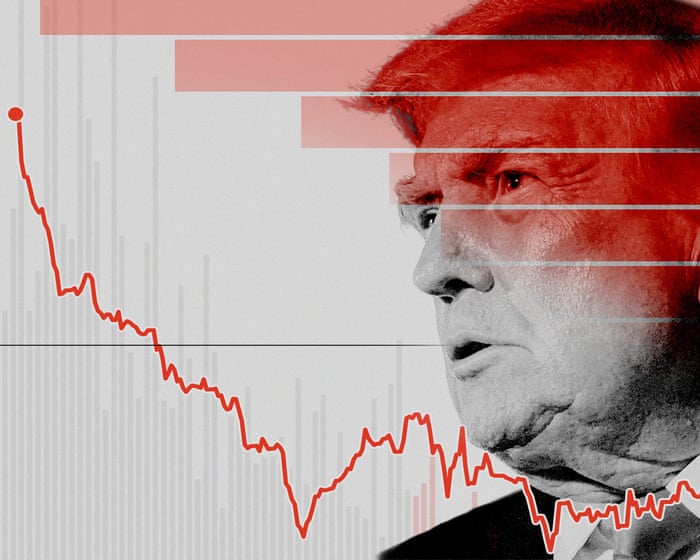
The US and Iran have been exchanging military strikes for nearly six months despite recent attempts at peace talks. President Trump faces a difficult situation because Iran controls a key shipping route, making it hard to end the war. The conflict has caused high military spending, rising oil prices, and economic problems worldwide.
Key Facts
The US and Iran signed the Islamabad Memorandum last month to try to end the war, but fighting continues.
The US has increased airstrikes against Iran, and Iran has attacked US bases in response.
The conflict now affects areas from the Gulf to the Red Sea, including blockades by the Houthis.
Iran controls the Strait of Hormuz, a crucial route for shipping oil.
The US has lost 18 troops in the conflict so far.
The war has cost the US nearly $40 billion, with the Pentagon requesting an additional $67 billion.
Oil prices have risen more than 40% since the war began, causing higher fuel costs worldwide.
Rising energy costs have triggered protests in several countries, impacting economies globally.
Read the Original
Want the full story? Tap a source to open the original
article.
Sudan’s army has taken back full control of the Al Sadarat highway that connects the capital, Khartoum, to the city of El Obeid. El Obeid had been under siege by the paramilitary group called the Rapid Support Forces.
Key Facts
The Al Sadarat highway links Khartoum and El Obeid.
The highway was blocked due to fighting between Sudan’s army and the Rapid Support Forces.
Sudan’s army now controls the entire highway again.
El Obeid city had been surrounded by the Rapid Support Forces.
The control of the highway is important for movement and supplies between the two cities.
The Rapid Support Forces are a paramilitary group that opposes Sudan’s army.
Fighting between these groups has caused disruption in parts of Sudan.
Read the Original
Want the full story? Tap a source to open the original
article.
Russian forces attacked several cities in Ukraine with missiles and drones, killing at least six people, including a child in Chernihiv. In response, Ukrainian forces also launched strikes on Russian-occupied areas, killing four civilians in Horlivka. Both sides deny targeting civilians, but casualties have increased sharply in 2026.
Key Facts
Russia launched seven ballistic missiles and 136 drones targeting cities including Kyiv, Chernihiv, Zaporizhzhia, and Kharkiv.
A Russian drone hit a supermarket in Chernihiv, killing two people, including a nine-year-old girl, and injuring 25 others.
Ukrainian officials reported deaths and injuries from drone and glide bomb attacks in Kharkiv, Zaporizhzhia, and Sloviansk.
Ukrainian drone strikes killed four civilians in the Russian-occupied city of Horlivka and wounded emergency workers.
Russian authorities said Ukrainian drones hit Belgorod, a city inside Russia, injuring 12 people including children.
The United Nations reported 1,396 Ukrainian civilians killed and 7,978 wounded in the first six months of 2026, while 250 civilians were killed and 1,596 wounded in Russia.
Both Moscow and Kyiv deny intentionally targeting civilians despite rising casualties.
Peace talks led by the United States have stalled as Russia controls large parts of eastern and southern Ukraine.
Read the Original
Want the full story? Tap a source to open the original
article.
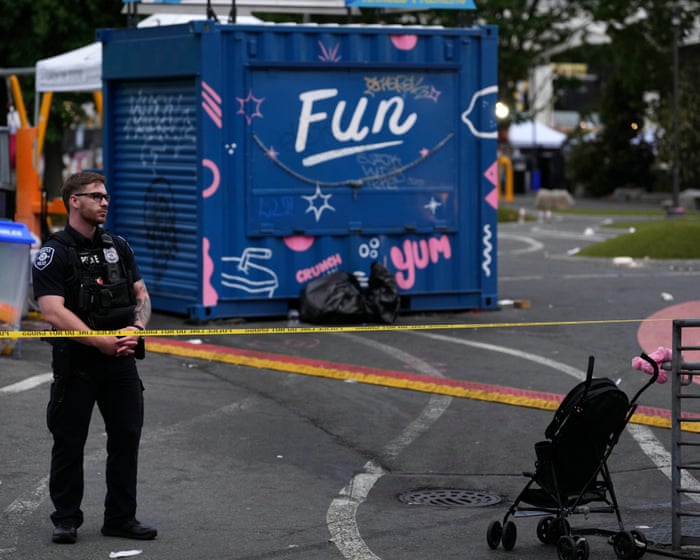
Two people died and five others were injured in a shooting at the Bite of Seattle food festival near the Space Needle on Sunday evening. Medical staff treated four victims, including a toddler, and police asked people to stay away from the area after the shooting.
Key Facts
The shooting happened during the Bite of Seattle food festival at Seattle Center.
Two people were killed and five others were wounded.
Four victims were taken to Harborview Medical Center, including a toddler and adults.
One victim was in critical condition.
Witnesses described chaos with people running, hiding, and falling during the shooting.
The festival has been held every year since 1982.
Approximately 350,000 people usually attend the event over three days.
Police urged the public to avoid the area after the shooting occurred.
Read the Original
Want the full story? Tap a source to open the original
article.
Britain’s new Prime Minister Andy Burnham will host Ukrainian President Volodymyr Zelensky on his first meeting with a foreign leader since taking office. The visit highlights strong UK support for Ukraine amid ongoing conflict with Russia and includes discussions on defense cooperation and new military technology.
Key Facts
PM Andy Burnham took office on July 20, 2026, and Zelensky’s visit is the first by a foreign leader since then.
Zelensky will urge Britain to increase defense spending to help Ukraine amid intensified fighting with Russia.
Burnham will visit a British naval base with Zelensky to meet military personnel training Ukrainians.
The UK will share technology called "Stone Cloak," a small electronic jammer that disrupts Russian air defenses.
"Stone Cloak" is part of a 100-year UK-Ukraine partnership signed in January 2025 and has already been sent to Ukraine.
Zelensky expressed interest in a "drone deal" and plans to build a drone factory in Britain to strengthen military cooperation.
The visit precedes Zelensky’s trip to Washington D.C. for talks with U.S. officials.
Both sides stressed their commitment to a strong and long-lasting partnership to support Ukraine in the conflict with Russia.
Read the Original
Want the full story? Tap a source to open the original
article.
Oil prices dropped on Monday after the United States paused its strikes on Iran, creating a chance for diplomacy. Iran also stopped its retaliatory attacks, raising hopes for talks on reopening a key shipping route, the Strait of Hormuz.
Key Facts
The US stopped attacking Iran for three days after 13 nights of strikes.
Iran halted its retaliatory military actions in the Gulf region.
The pause aims to allow diplomatic talks to resume regarding the Strait of Hormuz.
The Strait of Hormuz is a vital passage for global oil shipping.
Iran and Oman are discussing ways to keep shipping safe through the strait.
Iran-backed Houthi rebels attacked Saudi ships in the Bab al-Mandeb Strait, another important shipping route.
Oil prices had risen above $100 per barrel last week amid fears of conflict disrupting supply.
News of the attack pause and talks caused oil prices to fall sharply, easing market concerns.
Read the Original
Want the full story? Tap a source to open the original
article.