Neutral summaries of your favorite news sources — just the facts.
Your favorite news sources, one neutral feed — we distill their reporting into fact-first
summaries and always link to the original story. How it works
World News
Comprehensive coverage of international news and global events
The article discusses how ordinary people are increasingly creating and sharing news themselves, rather than relying on traditional news outlets. It highlights frustration with mainstream media and how citizen journalism is rising to fill that gap.
Key Facts
The phrase "I'm as mad as hell, and I'm not going to take this anymore" comes from the 1976 movie "Network."
The author feels that traditional media often follow biased scripts and ignore important stories.
Citizen journalism means regular people report news using social media and other tools.
This change is happening because many people want real, honest stories.
Citizen journalists use smartphones and the internet to share news quickly.
Legacy media refers to old, established newspapers, TV, and radio companies.
The rise of citizen journalism shows the public's desire for more direct and diverse information sources.
Read the Original
Want the full story? Tap a source to open the original
article.
Israeli lawmakers voted to create a special tribunal that can livestream trials and impose the death penalty on Palestinians accused of involvement in the Hamas attack on October 7, 2023. This tribunal operates under a 1950 law related to genocide prevention and is separate from earlier laws allowing the death penalty for murdering Israelis.
Key Facts
The new tribunal will try Palestinians suspected of taking part in the October 7 Hamas attack.
The vote passed unanimously among those present, with 93 in favor and 27 absent or abstaining.
The tribunal can impose the death penalty, which Israel rarely uses and last did in 1962.
Trials will be livestreamed and held in Jerusalem, aiming for transparency but raising concerns about fairness and making trials a public spectacle.
Defendants can appeal, but appeals go to a special court, not regular courts.
Human rights groups warn the law could make it easier to apply the death penalty and may bypass fair trial protections.
The bill compares Hamas to Nazis and refers to the historic Eichmann trial, which is controversial.
Hamas criticized the law, saying it justifies Israeli actions in Gaza.
Read the Original
Want the full story? Tap a source to open the original
article.
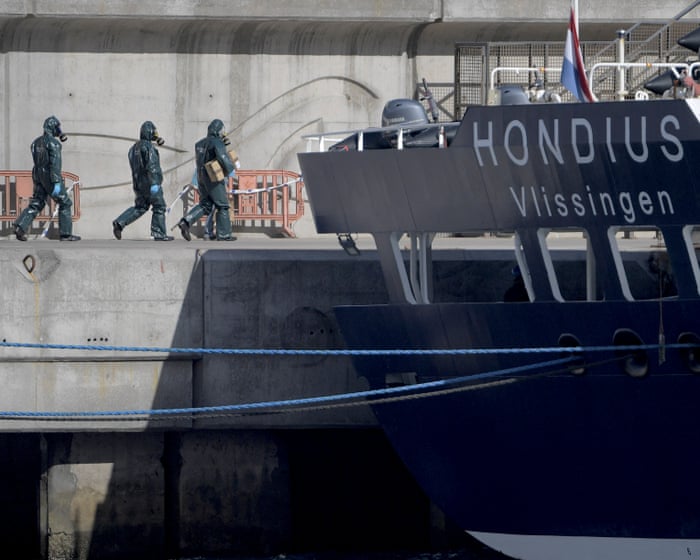
France has reported its first hantavirus case and has taken strict health measures to contain the virus. Five passengers from the cruise ship HV Hondius are isolated, but the virus has not spread beyond the ship.
Key Facts
France confirmed its first case of hantavirus, a virus usually spread by rodents.
The infected person and four other passengers from the HV Hondius cruise ship are isolated at Paris's Bichat hospital.
French health authorities are following World Health Organization guidance closely.
No hantavirus cases have been confirmed in people who were not on the cruise ship.
The virus has not spread beyond the cruise ship, but long incubation periods make it hard to be sure.
The critical date for possible spread from the passengers could be May 19.
French media emphasize that this outbreak is not Covid-19 and stress coordinated public health efforts.
Elsewhere in the article, British politics and the Cannes Film Festival are mentioned but are not related to the hantavirus story.
Read the Original
Want the full story? Tap a source to open the original
article.
Hantavirus is a virus spread by rodents that can cause serious illness but has no specific cure. Experts, including virologist Muhammad Munir, say that while hantavirus can be dangerous, it is unlikely to cause a global pandemic like Covid-19.
Key Facts
Hantavirus is transmitted mainly through contact with rodents or their waste.
The virus has a long incubation period, meaning symptoms may take time to appear after infection.
There is no specific treatment or cure for hantavirus infections.
Health officials evacuated passengers from the MV Hondius ship after at least seven hantavirus cases were confirmed.
The first hantavirus death on the ship was reported by the crew captain.
Experts believe that the virus is unlikely to spread in a way that causes a pandemic similar to Covid-19.
Covid-19 safety measures are currently not considered necessary due to hantavirus.
Read the Original
Want the full story? Tap a source to open the original
article.
Historian Achille Mbembe says Africa’s long rule by older leaders is ending, mainly in people’s attitudes. He explains that Africa is going through big changes with young people, women, and others pushing for new forms of democracy and stronger, more confident societies.
Key Facts
Achille Mbembe spoke at the Africa Forward Summit at Strathmore University.
He is a well-known historian and political thinker focused on Africa’s postcolonial future.
Mbembe says the “rule of gerontocracy” (leadership by old people) is ending in how people think.
Africa is experiencing complex changes: struggles and efforts to create new democracies happen at the same time.
Young people, women, intellectuals, and civil society groups are playing bigger roles in shaping Africa’s future.
Mbembe believes Africa’s future should build on its existing strengths, not on what it lacks.
He warns that Africa’s new independence could either become a fight over resources or lead to more open societies.
Read the Original
Want the full story? Tap a source to open the original
article.
The European Union (EU) has agreed to impose new sanctions on Israeli settlers because of violence against Palestinians in the West Bank. The EU also decided to sanction leaders of the Palestinian group Hamas. Israel has rejected the sanctions, calling them unfounded.
Key Facts
On May 12, 2026, EU foreign ministers approved new sanctions targeting Israeli settlers.
The sanctions respond to violence against Palestinians in the West Bank region.
Sanctions were also applied to leaders of Hamas, a Palestinian militant group.
The EU’s decision followed a change in the Hungarian government, which had previously blocked such measures.
Israel condemned the EU sanctions, describing them as baseless.
The West Bank is a disputed area where Israeli settlers and Palestinians live.
The EU seeks to discourage violence and promote peace efforts in the region.
This action is part of ongoing international responses to the Israeli-Palestinian conflict.
Read the Original
Want the full story? Tap a source to open the original
article.
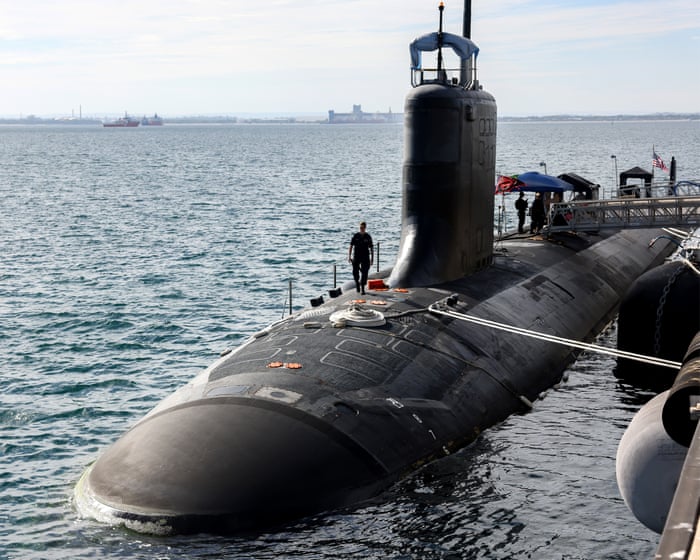
Australia’s budget for its Aukus nuclear submarine program has increased by over $430 million for the next four years. The Australian Submarine Agency will receive more money and staff to manage these submarines, but Australia still lacks a site for safely storing nuclear waste from the subs.
Key Facts
The Australian Submarine Agency’s budget will rise from $385 million to $512 million next year.
Staff numbers at the agency will grow by 37%, from about 883 to 1,209 people.
The total funding for the agency over four years will increase from $1.7 billion to over $2.13 billion.
The Aukus deal is a security agreement between Australia, the US, and the UK to deliver nuclear-powered submarines to Australia.
Australia has not yet found a permanent location to store nuclear waste from these submarines, which remains dangerous for thousands of years.
The 2026-27 budget allocates nearly $12 million to help plan long-term nuclear waste management.
The US plans to sell Australia three Virginia-class submarines, but US shipbuilding delays could affect this plan.
The UK is designing a new class of nuclear-powered submarines for Australia, called the SSN Aukus.
Read the Original
Want the full story? Tap a source to open the original
article.
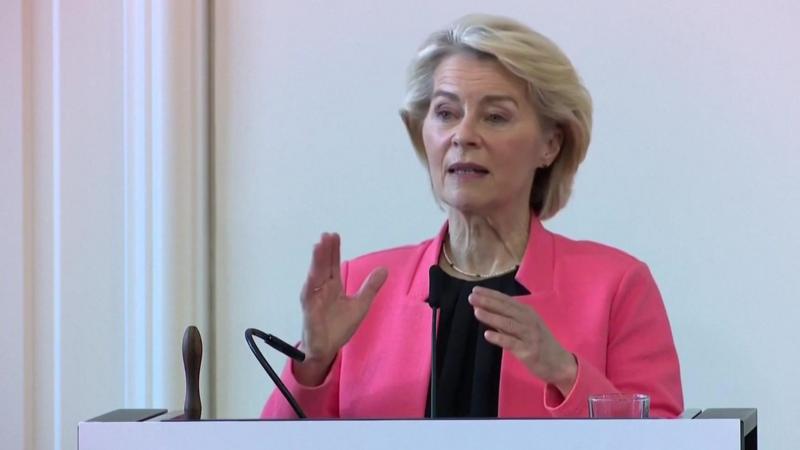
European Commission President Ursula von der Leyen has proposed delaying children's access to social media in Europe and plans new laws to protect minors online. Several European countries and others worldwide are considering or have introduced social media age limits to prevent harm to children.
Key Facts
Ursula von der Leyen announced plans for legislation to protect children online, with expert advice expected by July.
Several EU countries, including France, Spain, Portugal, Germany, and Denmark, have proposed or are working on age limits for social media use.
Australia was the first country to ban social media access for under-16s in December 2023.
Rules being considered include bans, age verification systems, and restrictions on harmful content and addictive algorithms.
The EU enforces child safety rules through the Digital Services Act and has found some social media platforms like Meta’s Instagram and Facebook in breach for allowing under-13s.
TikTok has also been warned about addictive design features and faces possible fines by the EU.
The US government, under President Trump, has criticized the EU’s actions, calling them attacks on American tech companies.
Von der Leyen emphasized that social media should not have unrestricted access to young people, aiming to protect childhood.
Read the Original
Want the full story? Tap a source to open the original
article.
European ministers will discuss plans to send rejected asylum seekers to third countries outside Europe. They will also consider a political declaration affirming countries’ rights to control their borders and limit the use of certain human rights laws to avoid removals.
Key Facts
The meeting will take place in Moldova and include discussions at a multilateral (many countries) level.
The plan aims to remove people who entered Europe irregularly and send them to “hubs” outside Europe.
Some ministers, including the UK Home Secretary Shabana Mahmood, want to change how the European Convention on Human Rights (ECHR) is applied.
The ECHR protects rights like freedom from torture and family life, which asylum seekers have used to challenge removals.
Human rights groups warn that weakening the ECHR could harm vulnerable people like refugees.
The UK’s previous plan to send asylum seekers to Rwanda was cancelled after courts ruled Rwanda unsafe.
The EU is also exploring return hubs with countries like Denmark, Austria, and Germany involved.
The political declaration is expected to be non-binding and will be discussed further by member countries.
Read the Original
Want the full story? Tap a source to open the original
article.
The World Health Organization (WHO) has warned countries to prepare for more cases of hantavirus after an outbreak on the cruise ship MV Hondius. Spain helped by allowing the ship to dock and evacuating passengers, while the WHO recommended quarantines and monitoring to stop the virus from spreading.
Key Facts
The hantavirus outbreak occurred on the MV Hondius cruise ship traveling from Argentina to Cape Verde.
Three passengers died from the virus, including a Dutch couple and a German national.
There have been nine confirmed cases of the Andes strain of hantavirus, including a French woman and an American.
The virus is mainly spread by wild rodents but can sometimes pass from person to person during close contact.
The WHO recommends a 42-day quarantine and close monitoring of people who were in contact with infected passengers.
The incubation period (time from infection to symptoms) can be six to eight weeks, so more cases may appear soon.
Spain allowed the ship to dock in Tenerife and coordinated the safe evacuation of over 120 passengers and crew members.
WHO praised Spain’s leadership and solidarity in dealing with the outbreak after Cape Verde refused the ship permission to dock.
Read the Original
Want the full story? Tap a source to open the original
article.
UK Prime Minister Keir Starmer is facing increasing pressure from members of his own party to resign. Despite calls for his departure after a junior minister resigned, Starmer and his supporters continue to focus on governing to avoid political unrest.
Key Facts
Keir Starmer is the Prime Minister of the United Kingdom.
Some ministers and members of Parliament want him to step down.
A junior minister recently resigned and called again for Starmer to resign.
Starmer and his supporters believe resigning would cause political chaos.
Labour won a big election victory two years ago, but the party is now divided.
The situation is causing visible tension within the Labour Party.
Starmer has told his leadership team he is continuing with his work as Prime Minister.
Read the Original
Want the full story? Tap a source to open the original
article.
The war in Sudan has caused massive destruction, killing tens of thousands and leaving millions hungry and displaced. Cities like Khartoum are heavily damaged, with many people suffering from disease, starvation, and poverty as the conflict continues.
Key Facts
Sudan’s capital, Khartoum, is almost empty and extensively destroyed by shelling and air attacks.
Official death toll is over 58,000, but estimates suggest up to 150,000 people may have died.
Many people are dying not only from violence but also from disease outbreaks such as cholera and yellow fever.
About 29 million Sudanese, or 62% of the population, do not have enough food.
Nearly half of local community kitchens providing food have closed due to lack of funds and supplies.
Fighting has intensified recently, with drone attacks targeting hospitals and schools.
Infrastructure like schools, hospitals, and electricity in Khartoum is severely damaged or limited.
There is fear that Sudan could split into two countries if the war in the west continues.
Read the Original
Want the full story? Tap a source to open the original
article.
Kenyan conservationists are working to bring back a rare antelope species called the mountain bong. This antelope, known as the "ghost of the forest" because it blends well into its surroundings, had almost disappeared due to diseases in the 1960s.
Key Facts
The mountain bong is a rare type of antelope found in Kenya.
It is nicknamed the "ghost of the forest" because it can hide easily in the wild.
Many mountain bongs died from diseases during the 1960s.
Conservationists in Kenya are now reintroducing this species into its natural habitat.
Efforts aim to increase the population of this rare animal.
The project is part of broader wildlife and nature preservation in Kenya.
Reintroduction means placing animals back into the wild where they once lived.
Read the Original
Want the full story? Tap a source to open the original
article.
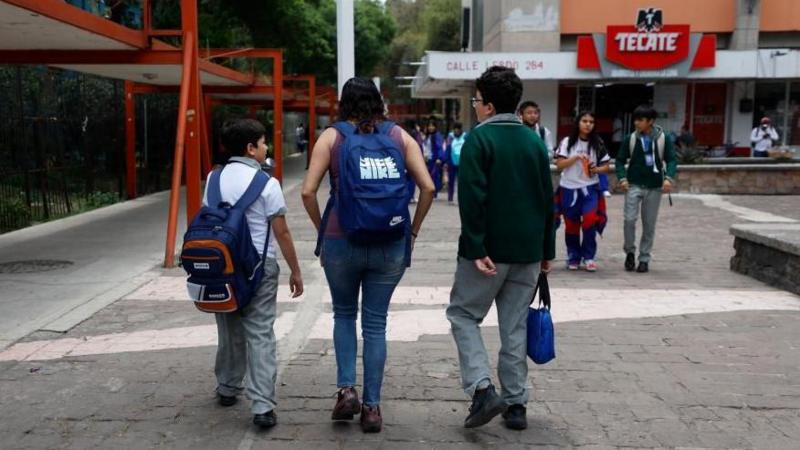
Mexico has decided not to end its school year early as initially planned to reduce traffic during the FIFA World Cup and a heatwave. After parents raised concerns about the disruption, classes will continue until 15 July, instead of finishing on 5 June.
Key Facts
Mexico planned to end the school year early to ease traffic during the World Cup and a heatwave.
The early end date was set for 5 June, more than a month before the usual finish.
Parents strongly opposed this change, worried it would hurt their children’s education and cause childcare problems.
The education minister first announced the early end on 7 May but called it a proposal after backlash.
After more talks with parents and experts, the government canceled the plan.
Classes will now finish on 15 July, the usual date.
Mexico is co-hosting the FIFA World Cup with the U.S. and Canada from 11 June to 19 July.
The government promised good security for visitors despite recent violence after the death of a drug cartel leader.
Improvements on Mexico City’s stadium and airport are on track for the event.
Read the Original
Want the full story? Tap a source to open the original
article.
At the Africa Forward Summit, historian Joseph-Achille Mbembe said that the old system where older men hold power in Africa has ended in the minds of the people. He highlighted that Africa is going through many changes led by young people, women, and civil society, aiming to create stronger and more open societies.
Key Facts
Joseph-Achille Mbembe spoke at the Africa Forward Summit at Strathmore University.
Mbembe described the end of "gerontocracy," meaning rule by older men, in Africa.
He said this change is already happening in how people think, even if institutions have not fully changed yet.
Africa is experiencing many changes at once, mixing difficult challenges with new democratic efforts.
These changes are driven by young people, women, intellectuals, and civil society groups.
Mbembe warned that Africa’s future depends on avoiding conflicts over resources.
He emphasized building Africa’s future based on its existing strengths, not what it lacks.
The summit included talks about African sovereignty and new partnerships with countries like France and Kenya.
Read the Original
Want the full story? Tap a source to open the original
article.
Leaders from Africa met in Kenya for the Africa Forward summit, which aims to showcase Africa's potential and attract investments. France co-hosted the event, pledging over 23 billion euros in investments, while also broadening its focus toward English-speaking African countries.
Key Facts
The Africa Forward summit took place over two days at the University of Nairobi in Kenya.
More than 20 heads of state attended the summit.
France and Kenya co-hosted the event.
Over 23 billion euros in investments were promised during the summit.
This is the first time the summit was held in an English-speaking African country.
France is shifting its attention toward English-speaking African nations as its influence in former colonies decreases.
The summit aims to promote partnerships and economic opportunities in Africa.
President Emmanuel Macron of France and President William Ruto of Kenya both participated in the summit.
Read the Original
Want the full story? Tap a source to open the original
article.
Over 370 Afghan civilians were killed and nearly 400 injured in cross-border violence between Taliban forces and the Pakistani military in early 2026, according to a United Nations report. The majority of deaths came from air strikes, including one air raid on a drug treatment hospital in Kabul that killed at least 269 people.
Key Facts
At least 372 Afghan civilians died and 397 were injured in clashes between Taliban forces and Pakistan’s military from January to March 2026.
More than half the deaths were from air strikes, including a March 16 attack on a Kabul drug rehabilitation hospital for men.
At least 269 people died and 122 were wounded in the hospital airstrike; many bodies were badly burned.
13 women, 46 children, and 313 men were among the casualties reported by the UN.
Pakistan accuses the Taliban government of harboring armed fighters from the Pakistan Taliban (TTP), which Kabul denies, and Afghanistan accuses Pakistan of supporting hostile groups.
A female Afghan NGO worker and her young son were killed during the fighting despite a ceasefire agreement.
Since ceasefire talks in China in April, violence has decreased but not fully stopped; seven civilians were killed in shelling at a university in late April.
The UN urged both sides to stop targeting health facilities and civilian areas in compliance with international law.
Read the Original
Want the full story? Tap a source to open the original
article.
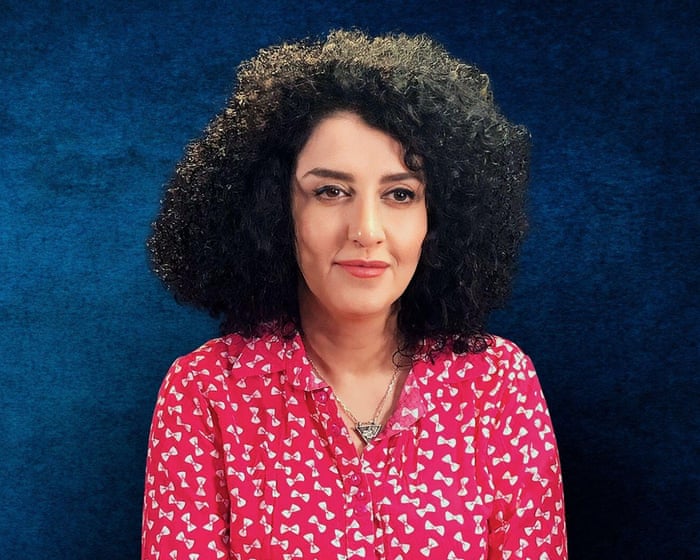
More than 110 Nobel laureates have asked Iran to release Narges Mohammadi, a human rights activist and Nobel peace prize winner, who is seriously ill in prison. She was taken to a hospital due to her worsening health, but her supporters worry she will be sent back to prison instead of being freed.
Key Facts
Narges Mohammadi won the 2023 Nobel peace prize for her work on women’s rights in Iran.
She was moved to Tehran’s Pars hospital on May 10 because her health worsened.
In prison, she suffered severe weight loss, unstable blood pressure, and heart problems.
Evidence suggests she had a heart attack and was found unconscious in her cell.
Over 110 Nobel laureates, including experts in chemistry, physics, medicine, and peace, signed a statement calling for her immediate release.
Her son said temporary hospital care is not enough; she needs permanent freedom and long-term medical treatment.
Mohammadi has been jailed many times since 1998 for protesting against the death penalty and hijab laws.
She faces more than 44 years in prison and 154 lashes from multiple sentences.
Read the Original
Want the full story? Tap a source to open the original
article.
Police in Sicily are investigating an illegal horse race where spectators fired guns, including Kalashnikov rifles, into the air. Authorities seized the horses involved and closed down the stables, while questioning several people as the investigation continues.
Key Facts
The illegal horse race took place near the town of Palagonia, close to Catania in eastern Sicily.
Spectators followed the race on scooters and fired pistols and Kalashnikov rifles into the air.
Police worked with veterinarians to identify and remove the horses from unsafe conditions.
Two men, aged 40 and 45, were reported to prosecutors in connection with the event.
Illegal horse racing is common in Sicily, Calabria, and Campania and is linked to mafia groups like Cosa Nostra, Camorra, and ’Ndrangheta.
These illegal races generate large amounts of cash through betting and demonstrate mafia control over local areas.
Horses used in these races often come from legal racing but are misused and mistreated.
From 1998 to 2024, over 4,300 people were reported and more than 1,400 horses seized in connection with illegal horse races in Italy.
Read the Original
Want the full story? Tap a source to open the original
article.
A bomb exploded in a busy market in Sarai Naurang, Pakistan, killing at least nine people and injuring about 30. The attack happened near the Afghanistan border, and no group has yet claimed responsibility.
Key Facts
The explosion was caused by a bomb hidden in a rickshaw in Sarai Naurang, Lakki Marwat district.
Nine people died, including two traffic police officers and one woman.
Around 30 people were wounded; many were taken to hospitals in Bannu.
There was no immediate claim of responsibility for the blast.
Days earlier, 21 police officers were killed in a separate attack in Bannu district.
Pakistan blames the Pakistan Taliban (Tehrik-e-Taliban Pakistan or TTP) for recent violence.
The Afghan Taliban government denies sheltering TTP fighters or allowing attacks from its soil.
Violence and cross-border clashes between Pakistan and Afghanistan have increased since the Afghan Taliban came to power.
China attempted to mediate talks to reduce violence, but clashes continue at a lower level.
Read the Original
Want the full story? Tap a source to open the original
article.