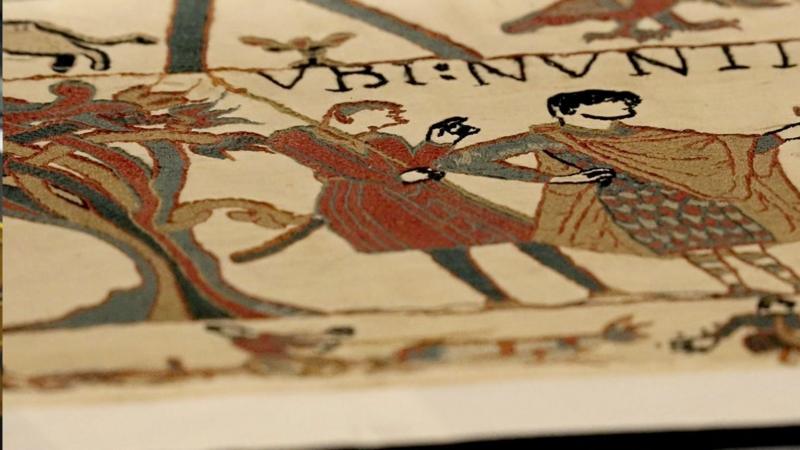
The Bayeux Tapestry, a nearly 1,000-year-old artwork telling the story of the Norman Conquest of England in 1066, has been moved from France to the British Museum in London. French and British experts found the tapestry to be in excellent condition after carefully transporting and inspecting it.
Key Facts
The Bayeux Tapestry is an 11th-century embroidery that tells the story leading up to the Norman Conquest in 1066.
It has been temporarily moved from the Bayeux Museum in Normandy, France, to the British Museum in London.
French and British conservators worked together to check and protect the tapestry before it is displayed in September.
The tapestry is 70 meters long and about 50 centimeters high, made of colored yarn embroidered on linen.
It was transported carefully, with protective padding, and shows no signs of damage.
French Culture Minister Catherine Pégard praised the careful handling and said the tapestry remains in a "wonderful state."
British Museum chair George Osborne highlighted the joint effort of French and British experts to preserve the tapestry.
Experts believe the original creators were likely in England, possibly Canterbury, and their work shows impressive detail and skill.
Read the Original
Want the full story? Tap a source to open the original
article.
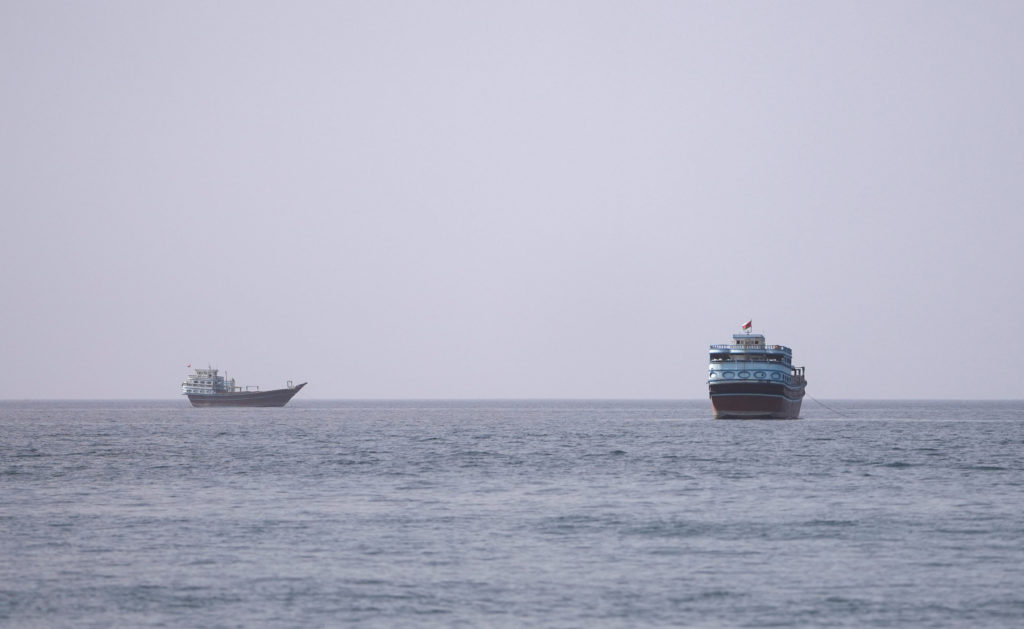
Pirates hijacked a tanker named MT Astana in the Gulf of Aden near Yemen. This is the second ship seized by pirates off Yemen’s coast since May, and attacks have been increasing after a period of decline.
Key Facts
The tanker MT Astana was taken over by seven pirates off Yemen’s coast.
The ship sails under the Tanzanian flag and was headed to Bosaso port in Puntland.
Pirates set off from near the Puntland port town of Garacad before the attack.
This is the second ship hijacked in the area since May, after the MT Eureka.
There were also two pirate boardings in the Indian Ocean in April.
The Gulf of Aden is less protected than the Indian Ocean by naval forces.
Pirates are becoming more active again after almost disappearing three years ago due to security efforts.
The UK maritime safety body warned other ships to be careful when traveling through the area.
Read the Original
Want the full story? Tap a source to open the original
article.
Lauren Laverne, a radio and TV presenter, has revealed she was diagnosed with smouldering myeloma, a blood and bone marrow disorder. She shared her diagnosis to raise awareness and explained that her condition does not require treatment now but will need regular monitoring.
Key Facts
Lauren Laverne announced her diagnosis of smouldering myeloma, a disorder with abnormal blood plasma cells in bone marrow.
She recovered from cancer less than two years ago and said the new condition is unrelated to that illness.
Smouldering myeloma can sometimes develop into blood cancer but her risk is low.
The condition is chronic, has no cure, and weakens the immune system.
Laverne will undergo regular blood tests, MRIs, and bone marrow biopsies to monitor her health.
She plans to take a short holiday before returning to work.
Laverne thanked her support network and her doctor, who found the condition early due to low iron levels.
The charity Blood Cancer UK offers support and information for people with similar blood disorders.
Read the Original
Want the full story? Tap a source to open the original
article.
Ukrainian President Volodymyr Zelensky removed defense minister Mykhailo Fedorov after conflicts with military leaders. Fedorov was known for advancing drone technology, and his firing has raised concerns that Ukraine might lose an important advantage in its fight against Russia.
Key Facts
President Zelensky fired Mykhailo Fedorov, Ukraine’s defense minister, after clashes with General Oleksandr Syrskyi.
Fedorov was a strong supporter of drone technology, which has helped Ukraine in the war.
Many Ukrainians, including some military officials, protested against Fedorov’s removal.
Ukraine’s use of drones has become internationally known and helped it strike Russian oil sites far from the front lines.
Russia, relying on oil sales to fund its war, is facing fuel shortages partly due to these attacks.
Ukraine recaptured over 600 square kilometers from Russia since early 2026, showing slow but steady progress.
Ukrainian troops have used advanced technology like armed sea drones and robots in combat missions.
Experts say firing Fedorov could harm Ukraine’s defense efforts during a critical phase of the war.
Read the Original
Want the full story? Tap a source to open the original
article.
Iranian military forces said they launched missile and drone attacks at U.S. targets in several Gulf countries. This came after U.S. strikes in Iran that killed at least eight people.
Key Facts
Iranian forces used missiles and drones to attack U.S. targets.
The attacks took place in Qatar, Kuwait, Bahrain, Oman, Jordan, and Syria.
These actions happened after U.S. attacks in Iran overnight.
The U.S. strikes in Iran resulted in the deaths of at least eight people.
This is the biggest increase in conflict since an agreement was signed on June 17.
Read the Original
Want the full story? Tap a source to open the original
article.
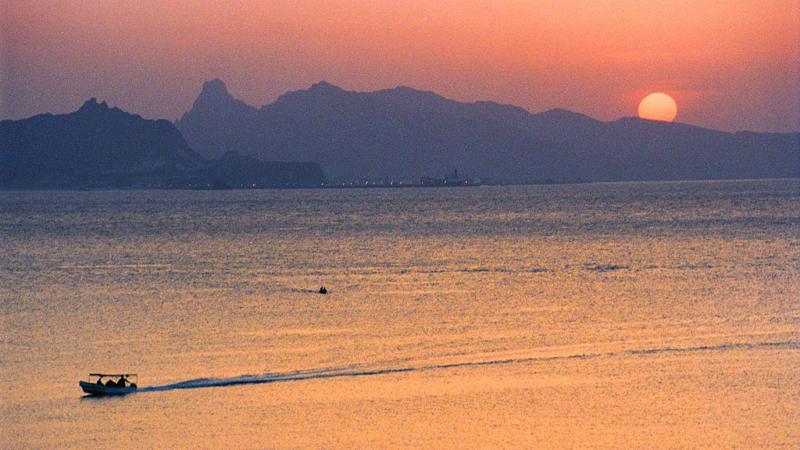
Three small islands near the Strait of Hormuz are important for controlling access to a key waterway used for shipping oil and gas. Iran controls these islands and has turned them into military bases, which has become a focus in the growing U.S. military actions against Iran.
Key Facts
The islands are Abu Musa, Greater Tunb, and Lesser Tunb.
Iran took control of these islands in 1971 from what is now the United Arab Emirates.
These islands are located where the Persian Gulf meets the Strait of Hormuz.
The Strait of Hormuz is a major route for global oil and natural gas shipments.
About 20% (a fifth) of all oil and natural gas passes through this strait during normal times.
Iran uses these islands as military bases (garrisons).
The U.S. military campaign against Iran has increased attention on these islands.
Read the Original
Want the full story? Tap a source to open the original
article.
A strong earthquake with a magnitude of 7.3 hit near the southern coast of Mexico's Chiapas state on July 17, 2026. The quake caused shaking in nearby Guatemala and El Salvador and led to a tsunami warning, but no immediate damage or injuries were reported.
Key Facts
The earthquake measured 7.3 in magnitude and struck at a depth of about 15 kilometers (9.4 miles).
It occurred near the coast of Chiapas, Mexico, close to Guatemala.
The US Tsunami Warning System issued an alert for possible tsunami waves up to 1 meter high within 300 km (186 miles) of the epicenter.
Mexican authorities said tsunami waves were not expected to rise more than half a meter and advised people to avoid beaches for safety.
Aftershocks between magnitude 5 and 6 were felt in Mexico, Guatemala, and El Salvador.
People in Guatemala and El Salvador evacuated buildings and followed safety protocols during the quake.
No immediate reports of damage or casualties have been confirmed.
The event reminded residents of recent earthquakes in Venezuela that caused severe damage.
Read the Original
Want the full story? Tap a source to open the original
article.
A landslide in Pengshui county, Chongqing, China, killed eight people and left at least 34 missing. Rescuers are working to find survivors and provide aid to more than 1,100 displaced residents.
Key Facts
The landslide occurred around 9:10 a.m. local time on a Friday in Pengshui county, Chongqing.
Eight people died, and 34 are still unaccounted for after the landslide.
More than 1,100 people were forced to leave their homes due to the disaster.
Ten people were rescued from the debris, including two who are seriously injured.
Water, electricity, and gas were cut off within a one-kilometer radius to prevent further damage.
Over 800 rescuers are working at the site, and the government sent more than 8,000 relief items like tents and emergency kits.
Authorities have allocated 50 million yuan (about $7.36 million) for disaster relief and support.
Chinese President Xi Jinping urged officials to manage the rescue carefully and investigate the cause of the landslide.
The area is known for steep and unstable terrain, and dangerous rocks remain near the disaster site.
A similar landslide happened earlier in July in Gansu province, killing 21 people.
Read the Original
Want the full story? Tap a source to open the original
article.
A strong earthquake with a magnitude of 7.3 occurred near the Mexico-Guatemala border, shaking areas from Mexico City to El Salvador. Officials reported no immediate serious damage or injuries, and authorities are monitoring coastal regions for possible tsunami risks.
Key Facts
The earthquake hit the southern Pacific coast of Mexico near the Guatemala border.
It had a magnitude of 7.3, according to the U.S. Geological Survey (USGS).
The epicenter was 48 kilometers (30 miles) southwest of Aquiles Serdan, near Chiapas, Mexico.
The quake was measured at a depth of 15 kilometers (9 miles).
A smaller earthquake occurred just before the main quake, farther out in the ocean.
Residents in Tapachula, Mexico, felt the earthquake gradually getting stronger, leading them to evacuate buildings safely.
Officials, including the mayor of Suchiate, are watching coastal areas for possible tsunami threats.
No severe damage or casualties have been reported so far.
Read the Original
Want the full story? Tap a source to open the original
article.
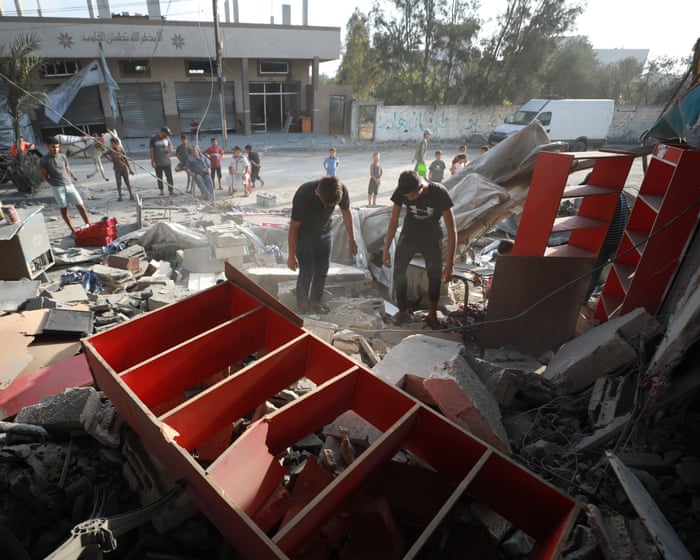
Israeli attacks in the Gaza Strip have killed at least 14 Palestinians, including mourners at a funeral procession targeted by a drone strike. Despite a ceasefire agreement that began nine months ago, Israeli strikes on Gaza have increased, causing deaths and injuries among civilians.
Key Facts
At least 14 Palestinians were killed in multiple Israeli attacks across Gaza.
A drone strike hit a funeral procession near Ahmad Yassin Mosque, killing eight people.
Additional attacks killed civilians in Beit Lahia, Az-Zawayda, al-Sawarha, Gaza City, and near Khan Younis.
More than 40 Israeli strikes occurred in Gaza last month, the highest number since the ceasefire started.
The ceasefire has been broken frequently, with near-daily Israeli attacks reported.
A research group named ACLED tracks the increase in Israeli strikes on Gaza.
Israeli drones are active throughout Gaza’s skies, contributing to ongoing destruction.
Since the ceasefire began, about 274 Palestinian children have been killed, averaging one child per day.
Read the Original
Want the full story? Tap a source to open the original
article.
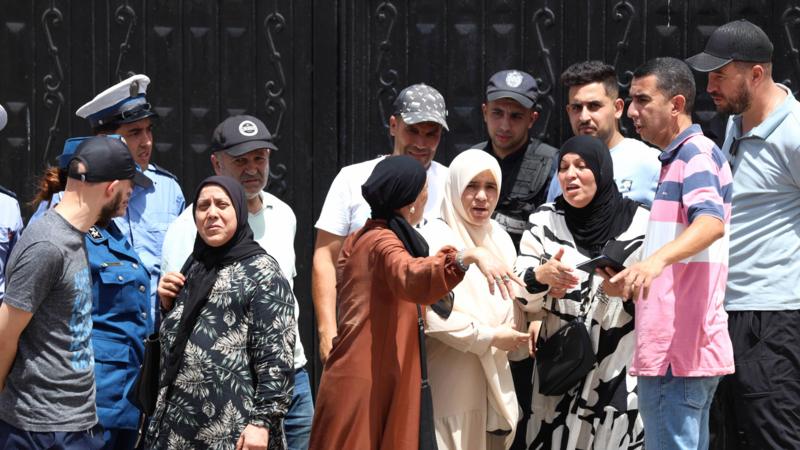
A fire at a children’s orphanage in Algiers, Algeria, was caused by an electrical spark from a faulty air conditioner. The blaze killed 11 people and injured 19, including children, while firefighters worked for hours to control the fire.
Key Facts
The fire happened early Thursday morning in an orphanage located in Mohammadia, a suburb of Algiers.
Police said the fire started due to an electrical spark from a malfunctioning air-conditioning unit.
11 people died, including children and a carer who worked at the orphanage.
19 people were injured and taken to hospitals for burns, smoke inhalation, and shock.
Five children with limited mobility were safely rescued from the fire.
Algeria is experiencing a severe heatwave, which led to heavy use of air conditioning.
Officials and opposition parties called for a transparent investigation and nationwide review of fire safety in public care homes, hospitals, and schools.
Social media and some news outlets criticized the response to the fire and questioned supervision and leadership during the emergency.
Read the Original
Want the full story? Tap a source to open the original
article.
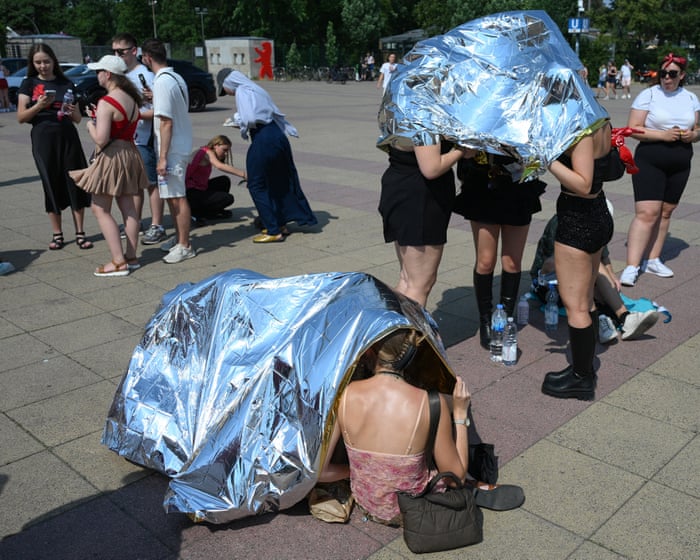
A heatwave in the Paris region during June 2026 caused deaths to more than double the usual amount, reaching around 3,000. Most of the extra deaths were people over 65 years old, and authorities linked the extreme temperatures to climate change.
Key Facts
The Paris region recorded 1,565 more deaths than expected between June 22 and 28, 2026.
The total death toll during this period was about 3,000 in the region.
People over 65 made up more than 80% of these additional deaths.
The heatwave lasted 14 days and was more intense than the deadly 2003 heatwave in France.
Heat-related deaths include direct causes like dehydration and delayed effects appearing days later.
The heatwave broke temperature records and affected multiple European countries.
Scientists said such severe heatwaves would be almost impossible without human-caused climate change.
The overall number of deaths across France during the June heatwave is expected to rise above initial estimates.
Read the Original
Want the full story? Tap a source to open the original
article.
An Israeli airstrike hit a funeral in the Gaza Strip, killing at least seven people and injuring 22, according to a local hospital. The strike occurred during an ongoing conflict between Israel and Hamas, despite a ceasefire agreement reached in October.
Key Facts
The strike targeted a funeral for a Palestinian killed in an earlier Israeli attack.
At least seven people died and 22 were injured, reported by Al-Awda hospital in the Nuseirat refugee camp.
There was no immediate response from the Israeli military about the strike.
Israel and Hamas agreed to a ceasefire in October to stop their two-year-long conflict, but violence has continued.
Since the ceasefire, more than 1,123 people have died in Gaza, according to Gaza's health ministry.
The war began after a Hamas attack on southern Israel on October 7, 2023, which killed about 1,200 Israelis and took 251 hostages.
Israel’s attacks on Gaza have killed over 73,000 Palestinians, including those after the ceasefire.
An independent UN inquiry reported that Israel has deliberately targeted Palestinian children, which it called genocide.
Read the Original
Want the full story? Tap a source to open the original
article.
Broadcaster Lauren Laverne has shared that she has smouldering myeloma, a blood and bone marrow disorder that can sometimes turn into blood cancer. She feels well right now and does not need treatment but will have regular check-ups.
Key Facts
Lauren Laverne is a 48-year-old BBC presenter on shows like Desert Island Discs and 6 Music.
She was diagnosed with smouldering myeloma, an early stage of a blood and bone marrow disorder.
Smouldering myeloma shows no symptoms and usually does not need treatment at first.
This condition can develop into myeloma, a type of blood cancer, but her risk is low.
Laverne was previously diagnosed with cancer two years ago and recently received an all-clear.
She will be monitored with tests like blood checks, MRIs, and bone marrow biopsies.
Laverne thanked her doctor for early detection after noticing low iron levels.
She plans to take a short holiday and then return to work as usual.
Read the Original
Want the full story? Tap a source to open the original
article.
The Trump administration is sending dozens more military refueling planes to Israel as it considers expanding attacks on Iran. President Trump is reviewing plans for a larger offensive against Iranian sites and may decide to escalate military action soon.
Key Facts
The U.S. informed Israel it will send dozens more refueling planes to support possible military operations.
President Trump is considering a bigger offensive targeting Iran’s infrastructure and nuclear facilities.
Recent U.S. strikes targeted Iranian bridges near Bandar Abbas, a key location for Iranian military logistics.
Iran has increased attacks on U.S. bases in several Middle Eastern countries, including Jordan, Iraq, and Syria.
About 30 U.S. refueling planes are currently at two Israeli airports; more planes are expected to arrive soon.
The U.S. prefers to operate these planes from Ben Gurion Airport, which is safer than other regional bases.
Israeli Prime Minister Netanyahu warned Iran that any attack on Israel will lead to a strong retaliation.
There is domestic tension in Israel about the presence of U.S. planes at Ben Gurion Airport due to its impact on civilian flights and political concerns before elections.
Read the Original
Want the full story? Tap a source to open the original
article.
The European Commission suggested changing its main system to reduce greenhouse gas emissions, the European Union Emissions Trading System (ETS). While aiming to meet stricter climate goals by 2040, critics warn the proposal could weaken efforts by giving companies easier ways to pollute and lowering permit costs.
Key Facts
The ETS is Europe’s main tool for cutting planet-heating gas emissions, helping reduce emissions by 47% since 2005.
The European Commission wants to revise the ETS to align with Europe’s goal of cutting emissions by 90% by 2040.
Some heavy industries would receive free pollution permits for a longer time, and the number of pollution permits will decrease more slowly.
The ETS would expand to cover municipal waste, aiming to increase recycling and reduce burning trash.
Flights within 5,000 km of Europe would be included, affecting flights to North Africa and the Middle East but not longer flights to places like China or the U.S.
Private jets would be included in the ETS for the first time, ending a prior exemption.
Critics say the changes could weaken the ETS, letting companies pollute more cheaply and slowing investment in clean technology.
The European Commission is concerned about industries moving abroad due to competition from countries with lower standards and heavy subsidies.
Read the Original
Want the full story? Tap a source to open the original
article.
Andy Burnham is preparing to become the new UK prime minister on Monday and is finalizing his cabinet team. He plans to focus on big changes like reforming social care and devolving power from London to other parts of the country.
Key Facts
Andy Burnham will become UK prime minister on Monday, succeeding Sir Keir Starmer.
He has not yet announced his cabinet members but plans to do so on Monday.
Ed Miliband and Shabana Mahmood are rumored candidates for chancellor.
Burnham’s government intends to reform the social care system in England, which currently is not free and often costly for individuals.
He supports devolving power from the UK capital to regional areas.
Burnham rejects the economic policies of the past 40 years and aims to reindustrialize the country.
He wants to unite the Labour Party and avoid internal conflicts.
Conservative Party officials have suggested Burnham should explain his plans to Parliament before it recesses in September.
Read the Original
Want the full story? Tap a source to open the original
article.
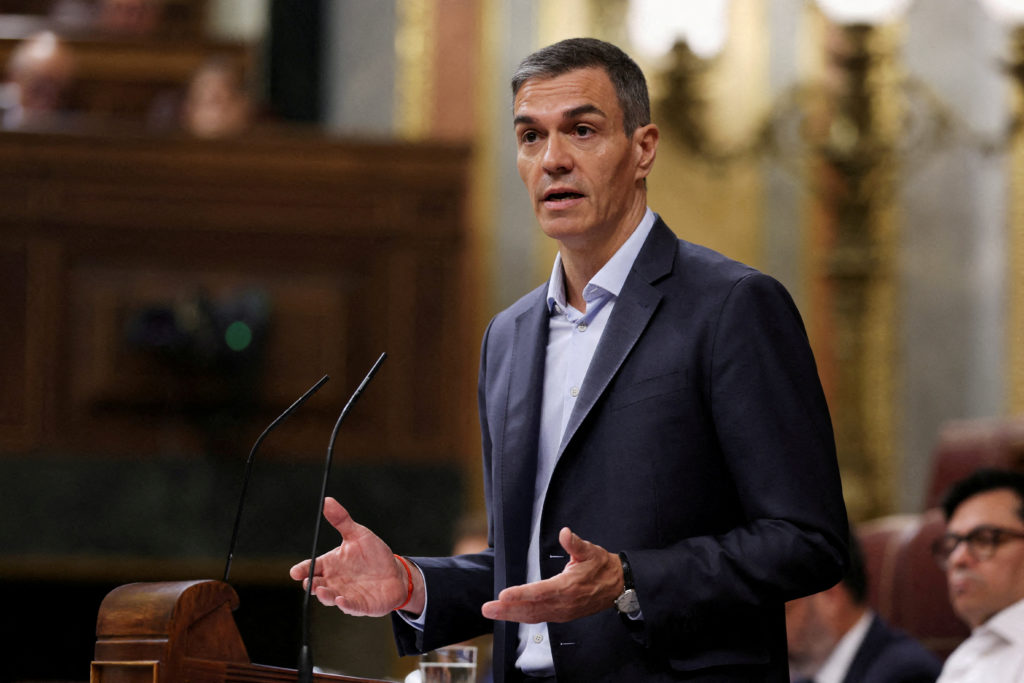
Spanish Prime Minister Pedro Sánchez will attend the World Cup final between Spain and Argentina in New Jersey. U.S. President Donald Trump and Spanish King Felipe VI are also expected to watch the game, while Argentine President Javier Milei will not attend.
Key Facts
The World Cup final is between Spain and Argentina.
Pedro Sánchez, Spain’s Prime Minister, plans to attend the match.
King Felipe VI of Spain will also watch the game in East Rutherford, New Jersey.
U.S. President Donald Trump will be at the final.
Sánchez and Trump have disagreed on global issues like the Iran war and military support.
Argentine President Javier Milei will not attend because of superstition.
Milei will watch the game from home.
Argentina is trying to defend its World Cup title, having won three times before.
Read the Original
Want the full story? Tap a source to open the original
article.
The Grand Mosque of Paris, opened in 1926, was built to honor Muslim soldiers who died for France in World War I. Over its 100 years, it has served not only as a place of worship but also played a role in France’s colonial history, acting as a center of cultural connection and political significance for Muslims and Jews in France.
Key Facts
The Grand Mosque of Paris is located in the Latin Quarter and was inaugurated on July 15, 1926.
It was created to honor over 100,000 Muslim soldiers who died fighting for France during World War I.
The mosque features Hispano-Moorish architecture, including a 33-meter minaret and designs inspired by Arab-Andalusian palaces.
It has been a historic monument in France since 1983 and is both a religious site and tourist attraction.
The mosque played a strategic role during French colonial times, including monitoring Muslim populations and during the Algerian War.
It served as a safe place for Jews persecuted during German occupation in World War II.
Algerian immigrants and nationalist groups initially viewed the mosque with suspicion, seeing it as a tool of French control.
Over time, the mosque became a cultural and religious hub for Muslim communities in France.
Read the Original
Want the full story? Tap a source to open the original
article.
The 2026 World Cup has changed the image of football by making it feel more like a luxury or high-end event. This change, driven by celebrity involvement, has raised ticket demand and prices compared to past tournaments.
Key Facts
The 2026 World Cup is described as a unique event, different from previous tournaments.
Celebrity participation has increased the tournament's glamour and appeal.
Football is now presented more like a luxury product.
Ticket demand for the games has gone up.
Ticket prices have become higher.
The information was shared during a debate on France24 by David Webber.
Read the Original
Want the full story? Tap a source to open the original
article.