Neutral summaries of your favorite news sources — just the facts.
Your favorite news sources, one neutral feed — we distill their reporting into fact-first
summaries and always link to the original story. How it works
World News
Comprehensive coverage of international news and global events
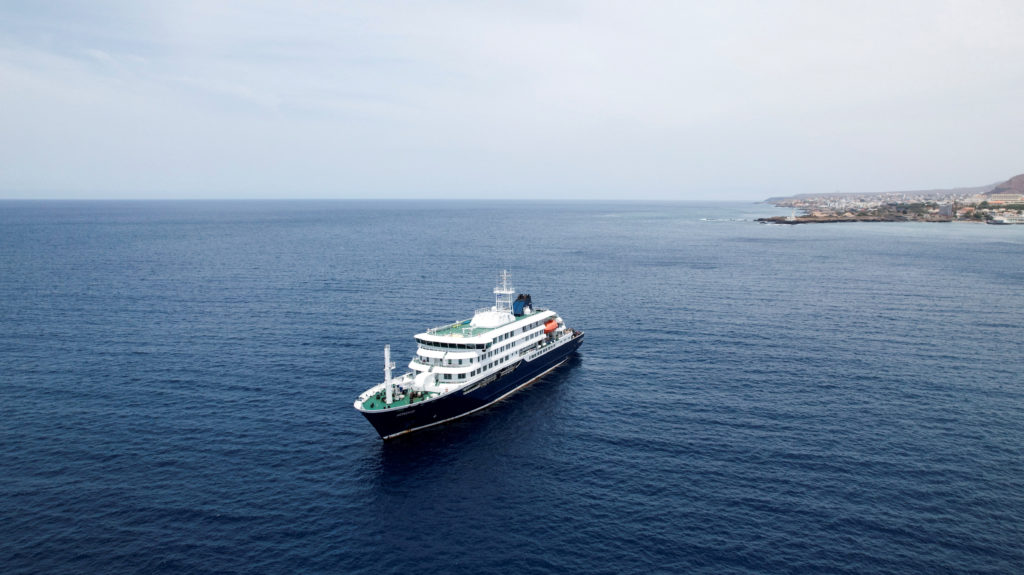
Six extra passengers joined a cruise ship with a hantavirus outbreak several days after the first death on board, according to the ship operator Oceanwide Expeditions. Three people have died so far, and many countries are monitoring passengers who disembarked, but no wider spread of the virus has been reported.
Key Facts
The ship set sail from Ushuaia, Argentina, on April 1 with 114 passengers.
Six more passengers boarded at Tristan da Cunha on April 15, bringing the total to 120 at St. Helena.
Three people (a Dutch couple and a German woman) have died from hantavirus on the ship.
The World Health Organization (WHO) confirmed hantavirus infection on May 2.
Passengers disembarked at St. Helena on April 24 without initial contact tracing.
More than 140 passengers and crew are currently on board, heading to Tenerife in the Canary Islands.
Hantavirus mainly spreads from rodent droppings and rarely between people, though the Andes virus strain may spread person-to-person in rare cases.
Several countries, including the U.S., are monitoring former passengers; none show symptoms so far.
Read the Original
Want the full story? Tap a source to open the original
article.
Reform UK has won many local council seats in England, taking control of new areas and making gains in both Conservative and Labour strongholds. Party leader Nigel Farage called the results a historic change in British politics, with Reform now competitive across much of the UK.
Key Facts
Reform UK won hundreds of local council seats and took control of more councils in England.
The party gained control of its first London borough, Havering.
Reform made gains in Essex, Suffolk, and took seats from Labour in the Midlands and northern England.
Labour lost control of some councils due to Reform’s increased support.
Newcastle-under-Lyme council control passed from the Conservatives to Reform UK.
Reform UK is also expected to perform well in upcoming Scottish and Welsh parliament elections.
The party is strongest in areas that voted heavily to leave the EU (Brexit) in 2016.
Counting of election results is ongoing in Scotland, Wales, and many English councils.
Read the Original
Want the full story? Tap a source to open the original
article.
Nigel Farage, a close ally of President Donald Trump, led his Reform UK party to major wins in local elections across Britain, while Prime Minister Keir Starmer's Labour Party lost many seats. The elections came amid public worries about the economy and a scandal involving a Labour politician’s links to Jeffrey Epstein.
Key Facts
Nigel Farage’s Reform UK party won control of a London council and gained over 300 council seats nationwide.
Labour lost hundreds of council seats, especially in northern England and the Midlands.
The elections reflected public concern over the cost-of-living crisis with rising taxes and energy bills.
Farage said the results showed a historic shift in British politics toward Reform UK.
Prime Minister Keir Starmer took responsibility for Labour’s losses but said he would not resign.
Labour faced criticism linked to appointing and then dismissing Peter Mandelson as UK ambassador to the US over Epstein-related controversies.
Mandelson had a long-standing friendship with Jeffrey Epstein and had encouraged Epstein’s early release in 2008.
Electoral results increased pressure on Labour’s leadership amid economic challenges like inflation and low growth.
Read the Original
Want the full story? Tap a source to open the original
article.
The Masallam family lives in the West Bank village of Khirbet al-Marajim, a small, historic area. They face ongoing challenges like attacks from settlers and military pressures but stay united by farming, family traditions, and strong community ties.
Key Facts
The Masallam family home shows signs of attacks, such as dents from a settler’s axe.
About 15 people live in the family compound, spread across three small homes.
The village, Khirbet al-Marajim, is a small hamlet near the town of Duma in the central West Bank.
The family has lived in the area for generations, farming and raising animals.
Settlers target the Masallam household to try to gain control of nearby land and pastures.
Thabet, a 24-year-old family member, acts as the contact person during settler or military incidents, coordinating with relatives and activists.
Despite hardship, the family maintains cultural traditions like making cheese, singing folk songs, and sharing tea.
The family home is a visible sign of their presence and resistance to displacement in the region.
Read the Original
Want the full story? Tap a source to open the original
article.
Spanish health officials are preparing to evacuate more than 140 people from a cruise ship infected with hantavirus as it arrives in the Canary Islands. Several passengers have died, and countries including the U.S. and the U.K. are working to repatriate their citizens and trace contacts. The World Health Organization says the overall risk to the public remains low.
Key Facts
The cruise ship MV Hondius, flagged in the Netherlands, is arriving at Tenerife in the Canary Islands.
More than 140 passengers and crew members are on board; some have died from hantavirus.
Spanish authorities plan to isolate and carefully evacuate people from the ship.
The U.S. is sending a plane to bring back its 17 citizens; the U.K. will also evacuate about two dozen British nationals.
Hantavirus usually spreads through contact with rodent droppings but the Andes variant on the ship may rarely spread between people.
Health officials worldwide are tracing passengers who left the ship to prevent further spread.
The WHO tested a flight attendant who had contact with a sick passenger; her test was negative, lowering fears of wider transmission.
Cases have been confirmed or suspected in several countries, including the Netherlands, South Africa, and the U.K.
Read the Original
Want the full story? Tap a source to open the original
article.
A 67-year-old widow was found dead inside her mansion in Beverly Hills, initially thought to have fallen over a railing. After forensic experts examined the scene, authorities began to suspect that her death might not have been an accident.
Key Facts
The woman was 67 years old and lived in Beverly Hills.
She was found dead on the floor below a staircase inside her mansion.
At first, it seemed she had fallen over the railing.
Investigators conducted forensic tests on the scene.
The forensic evidence raised questions about whether her death was accidental.
The case is now believed to be suspicious rather than a simple fall.
The authorities are continuing to investigate to find the cause of death.
Read the Original
Want the full story? Tap a source to open the original
article.
A recent analysis found that students at England’s top universities are more than twice as likely to face sexual harassment compared to those at less selective universities. The survey showed high rates of harassment especially in courses like medicine and veterinary science, but the reasons for these differences are not yet clear.
Key Facts
35% of students at high tariff (most selective) universities reported experiencing sexual harassment.
Just over 17% of students at low tariff (less selective) universities reported sexual harassment.
Medium tariff universities had a 26% harassment rate among students.
Courses with high entry requirements such as medicine and veterinary sciences showed hotspots for harassment and assault.
The Office for Students (OfS) conducted the analysis but did not investigate reasons behind the variation.
High tariff universities often include Russell Group institutions, known for research and medical schools.
Women reported much higher rates of sexual harassment and assault compared to men.
Students living away from home for university reported more exposure to harassment than those living at home or studying remotely.
Read the Original
Want the full story? Tap a source to open the original
article.
The United States is expecting a reply from Iran today regarding a peace proposal aimed at ending the war. This information was shared by U.S. Secretary of State Marco Rubio.
Key Facts
The U.S. has made a peace proposal to Iran.
The proposal’s goal is to end an ongoing war.
Iran’s response to this proposal is expected today.
Marco Rubio, the U.S. Secretary of State, announced the timing of the response.
The news was reported by CBS News journalists Aaron Navarro and Holly Williams.
Read the Original
Want the full story? Tap a source to open the original
article.
Sir David Attenborough has created many important natural history documentary series over more than 70 years. His programmes, like "Life on Earth" and "The Blue Planet," show the story of life on Earth and the oceans, teaching people about animals and the environment in ways never done before.
Key Facts
"Life on Earth" (1979) was the first series to show animal behavior filmed worldwide with Attenborough presenting on location.
The series had up to 500 million viewers globally and made Attenborough a well-known figure.
"The Trials of Life" (1990) filmed never-before-seen animal behaviors, including chimpanzees using tools and hunting together.
"The Blue Planet" (2001) was the first extensive series about ocean life, showing a wide variety of sea creatures.
"Blue Planet II" (2017) raised awareness about ocean pollution caused by plastic.
Attenborough’s documentaries combine science and wildlife filming to educate and inspire viewers about nature and climate issues.
The BBC has made many of these series available on BBC iPlayer for people to watch online.
Read the Original
Want the full story? Tap a source to open the original
article.
Nine countries, including Ukraine and Turkey, are currently trying to join the European Union (EU). While many EU members are happy about the expansion, some worry about how war or corruption in certain candidate countries might affect the process.
Key Facts
The nine candidate countries are North Macedonia, Montenegro, Serbia, Albania, Bosnia-Herzegovina, Moldova, Ukraine, Georgia, and Turkey.
Iceland is considering reapplying for EU membership.
Some EU members want to slow down or reconsider fast-track membership for countries affected by war or corruption.
A debate about the EU enlargement strategy took place in the European Parliament on March 10, 2026.
The expansion shows the EU remains attractive to many countries in Eastern Europe and beyond.
Concerns focus on maintaining stability and integrity within the EU during this growth.
Read the Original
Want the full story? Tap a source to open the original
article.
Australian musician Ben Abraham talked about his music career and the artists he has worked with, like Sara Bareilles and Ben Platt. He shared his experiences with both good and challenging times in music and expressed his hope to impact others positively through his songs.
Key Facts
Ben Abraham is an Australian singer and songwriter.
He has collaborated with singers Sara Bareilles and Ben Platt.
He discussed his music journey on CBS Mornings.
He mentioned experiencing highs and lows in his career.
Abraham hopes his music can make a positive difference.
Read the Original
Want the full story? Tap a source to open the original
article.
The article explains why the United Arab Emirates (UAE) and Israel are developing closer ties. Their growing partnership is based on shared interests and regional security concerns.
Key Facts
The UAE views Israel as a trustworthy strategic partner.
Both countries face common challenges in their region.
Cooperation between Israel and the UAE includes political and security areas.
The warming ties aim to improve stability and economic links.
This relationship reflects changing dynamics in the Middle East.
The UAE and Israel signed an agreement known as the Abraham Accords in 2020.
The two nations continue to build on their diplomatic and trade connections.
Read the Original
Want the full story? Tap a source to open the original
article.
Botswana’s former President Festus Mogae has died at age 86. He led Botswana from 1998 to 2008, was known for good governance, strong economic growth, and efforts to fight HIV/AIDS.
Key Facts
Festus Mogae served as Botswana’s third president from 1998 to 2008.
He handed over power peacefully to Vice President Ian Khama, showing political stability.
Mogae was an economist by training and worked in Botswana’s civil service after independence in 1966.
He previously served as finance minister and vice president before becoming president.
Mogae tackled HIV/AIDS when Botswana had one of the highest infection rates worldwide.
His government adopted one of Africa’s most complete programs to control HIV/AIDS.
He won the Ibrahim Prize in 2008 for leadership during difficult times.
After retiring, he helped oversee the peace process in South Sudan as head of a monitoring commission.
The government announced three days of national mourning after his death.
Read the Original
Want the full story? Tap a source to open the original
article.
John Swinney, leader of the Scottish National Party (SNP), declared victory in the recent Scottish Parliament elections, expecting the SNP to remain the leading party. Scottish Labour leader Anas Sarwar admitted defeat and blamed national dissatisfaction for their loss, while the Scottish Greens hoped for their first constituency wins.
Key Facts
John Swinney said the SNP would be the main party after the election and looked forward to forming the next Scottish government.
Scottish Labour lost badly, with leader Anas Sarwar acknowledging the party failed to overcome voter dissatisfaction.
Sarwar supported asking UK Labour leader Keir Starmer to resign due to poor election results.
The election focused more on national mood than on specific issues like health, schools, and homelessness, according to Sarwar.
The Scottish Greens aimed to win their first constituency seats, targeting areas like Edinburgh Central and Glasgow.
The Liberal Democrats won the first declared seat in Orkney with a high vote, but lost Shetland to the SNP after holding it for 27 years.
SNP won several seats early but with less overall support than in past elections, partly due to votes splitting with the new Reform UK party.
The Scottish Parliament election results were unpredictable, partly because of shifting support between parties.
Read the Original
Want the full story? Tap a source to open the original
article.
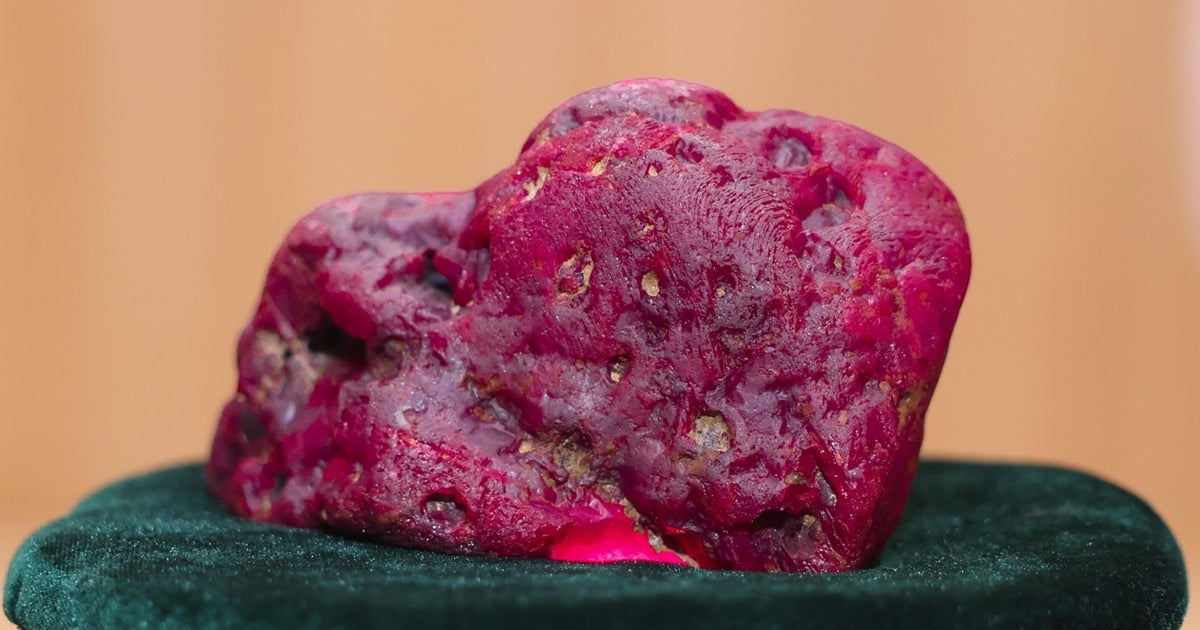
Miners in Myanmar found a huge ruby weighing 11,000 carats near the town of Mogok. It is the second-largest ruby ever found in the country and is considered very valuable due to its color and quality.
Key Facts
The ruby weighs about 4.8 pounds (11,000 carats).
It was discovered in mid-April near Mogok, a major gem mining area.
This ruby is smaller than a 21,450-carat stone found in 1996 but more valuable because of its color and clarity.
Myanmar produces around 90% of the world’s rubies.
Gem mining in Myanmar is a major source of money for the military and some ethnic armed groups.
The region where the ruby was found has seen fighting due to ongoing civil conflict.
The ruby is displayed at the president’s office in the capital, Naypyitaw.
President Min Aung Hlaing, who leads Myanmar’s military government, recently viewed the ruby.
Read the Original
Want the full story? Tap a source to open the original
article.
Janice Cart, founder of Tiny Spoon Chef, shares a recipe for cornmeal crusted french toast with black pepper bacon. This easy recipe is suggested as a good choice for a special Mother's Day breakfast.
Key Facts
The recipe features french toast with a crunchy cornmeal crust.
It is served with black pepper bacon.
Janice Cart is the creator of the recipe and runs Tiny Spoon Chef.
The recipe was shared on CBS News as part of "The Dish: Recipe" series.
The recipe is recommended for Mother's Day.
The content is accessible through the CBS News app and website.
Read the Original
Want the full story? Tap a source to open the original
article.
Climate change is making allergy seasons longer and more severe across much of the Northern Hemisphere. Rising temperatures and increased carbon dioxide help plants produce more pollen, which worsens allergy symptoms for millions of people.
Key Facts
About 25% of U.S. adults and 20% of children have seasonal allergies.
Climate change causes earlier spring blooms and longer growing seasons, increasing pollen production.
Higher carbon dioxide levels can boost pollen amounts by up to 200% by the end of the century.
Some areas like the Ohio River Valley and Pacific Northwest expect high tree pollen levels this spring.
Ragweed and other plants flower longer due to warmer temperatures and delayed frosts.
Mold allergies are rising because climate change increases humidity and flooding, helping mold grow.
Allergy symptoms are becoming more intense and harder to control with usual treatments.
Natural disasters linked to climate change, such as hurricanes, can worsen allergy conditions.
Read the Original
Want the full story? Tap a source to open the original
article.
In April 2026, Russian forces lost about 116 square kilometers of territory in Ukraine, the first significant loss since Ukraine’s August 2024 attack into Russia's Kursk region. Despite these losses, the war continues with Russia still making small advances in some priority areas.
Key Facts
Russia lost around 116 square kilometers of land to Ukraine in April 2026.
The lost areas include parts of Sumy region north of Kharkiv and Zaporizhzhia province.
Russia’s overall advance has slowed down significantly since late 2025.
Russia uses infiltration tactics to create an impression of constant progress, but many of these areas are not fully under Russian control.
These territorial changes are tactical moves, not a full retreat by Russian forces.
Both sides are testing each other’s defenses at different points along the front.
Russia faces difficulties recruiting soldiers, lowering the quality of its troops.
Ukraine uses drones more on the front line and has launched deeper strikes on Russian infrastructure.
Russia’s communication has suffered after losing access to Starlink satellite services.
Read the Original
Want the full story? Tap a source to open the original
article.
Iran accused the United States of provoking military conflicts instead of choosing diplomatic solutions. Both Iran and the US reported attacks near the Strait of Hormuz, a key route for global oil shipments, while the US and Iran prepare for possible talks to end ongoing hostilities.
Key Facts
Iran’s Foreign Minister Abbas Araghchi said the US chooses "reckless military adventure" over diplomacy.
Clashes involved missile, drone, and small boat attacks on US warships, and US attacks on Iranian vessels near the Strait of Hormuz.
The Strait of Hormuz is a vital waterway, carrying about 20% of the world’s oil and natural gas.
The US has imposed a naval blockade on Iranian ports and paused a military operation to free stranded ships in the area.
An Iranian cargo ship caught fire, and sailors were injured in a recent attack near Minab, Iran.
The United Arab Emirates engaged ballistic missiles and drones launched from Iran, causing injuries.
US President Donald Trump stated that the US destroyed Iranian drones, missiles, and small boats and warned Iran to quickly sign a deal.
US Secretary of State Marco Rubio said Iran is expected to give a response to US proposals soon, aiming to end the conflict.
Read the Original
Want the full story? Tap a source to open the original
article.
A Greenlandic woman, Keira Alexandra Kronvold, won a high court case declaring that Danish authorities’ removal of her newborn baby was illegal. The court ruled that the parenting tests used on Greenlandic parents were outdated and violated their rights under international law.
Key Facts
Kronvold’s daughter Zammi was taken away two hours after birth in November 2024 after Kronvold underwent parenting competency tests.
The tests were aimed at assessing if parents were “civilised enough” but were later banned for Greenlandic people by the Danish government in May 2024.
The Danish high court found the removal illegal and against the 1989 International Labour Organization convention on Indigenous peoples’ rights.
The ruling recognized that the parenting tests were outdated and culturally unsuitable for Greenlandic people.
Despite the ruling, Kronvold has not yet been reunited with her daughter due to a new evaluation system.
The case may help other Greenlandic parents separated from their children and could lead to apologies or compensation.
The United Nations has indicated that Denmark’s treatment of Kronvold might be ethnic discrimination.
This ruling marks the first time the Danish high court has addressed these issues affecting Greenlandic parents and their children.
Read the Original
Want the full story? Tap a source to open the original
article.