Neutral summaries of your favorite news sources — just the facts.
Your favorite news sources, one neutral feed — we distill their reporting into fact-first
summaries and always link to the original story. How it works
World News
Comprehensive coverage of international news and global events
Japan's Prime Minister Sanae Takaichi is working to change the country's pacifist constitution, which limits its military actions. This move marks a shift away from Japan's long-standing anti-war position and has led to protests across the country.
Key Facts
Prime Minister Sanae Takaichi wants to revise Japan's pacifist constitution.
The current constitution restricts Japan from engaging in war.
Changing this would allow Japan to have a more active military role.
The government feels this change is needed due to regional security concerns.
Many people in Japan oppose the change and are protesting.
The BBC's Tokyo correspondent Kurumi Mori reported on these developments.
The issue is causing national debate about Japan's defense and peace policies.
Read the Original
Want the full story? Tap a source to open the original
article.
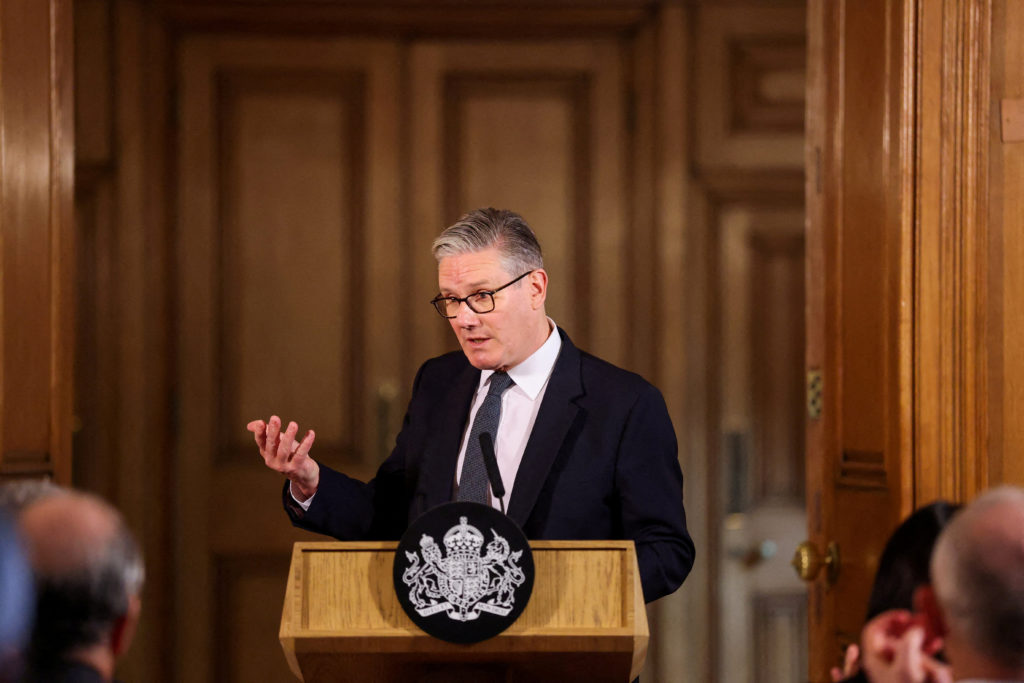
British voters are voting in local elections that could speed up the end of Prime Minister Keir Starmer’s time in office. His Labour Party is expected to lose many seats amid low popularity caused by economic problems and political controversies.
Key Facts
The elections are for local councils in England and devolved parliaments in Scotland and Wales.
Labour is defending about 2,500 seats on English local councils and may lose more than half.
Starmer’s government has struggled with the economy, public services, and the cost of living.
His decision to appoint Peter Mandelson as ambassador to Washington faced strong criticism.
Rival parties like Reform UK and the Green Party are expected to gain votes.
A poor election result could lead to a leadership challenge within Labour.
Any leadership challenger needs support from 80 Labour members in Parliament to trigger a contest.
The Conservative Party is also unpopular after 14 years of rule ending in 2024.
Read the Original
Want the full story? Tap a source to open the original
article.
Seven cases of hantavirus, including two confirmed, appeared on a cruise ship near Cape Verde, with three deaths reported. Experts say hantavirus’s high deadliness actually limits its spread because people get very sick quickly and do not pass it on easily before symptoms show.
Key Facts
Seven hantavirus cases were reported on the MV Hondius cruise ship in May.
Two cases were confirmed by lab tests; five were suspected.
The strain involved is called Andes virus, which can spread from person to person.
Three infected people died, and one patient is in critical condition.
Hantavirus spreads poorly between humans, even in close quarters like a ship.
Unlike viruses such as COVID-19, hantavirus does not spread before symptoms appear.
The virus takes days or weeks to cause symptoms, after which patients become very sick.
Experts say this slow and inefficient transmission stops hantavirus from becoming a pandemic.
Read the Original
Want the full story? Tap a source to open the original
article.
Labour faces major losses in England’s local elections, which could affect Keir Starmer’s future as prime minister. Starmer warned voters against supporting Reform and the Greens, while Labour hopes to show some gains in London and limit losses elsewhere. The Scottish National Party is expected to maintain power in Scotland, and Labour may lose ground in Wales.
Key Facts
Labour may lose over 1,500 local council seats in England, which would be a serious setback.
Pollsters predict Labour could lose as many as 1,900 seats, roughly 75% of their current total.
Starmer said Reform’s Nigel Farage and Greens’ Zack Polanski cannot handle the current global challenges.
Labour hopes to keep some London councils like Westminster and Wandsworth, which usually vote Conservative.
The SNP is predicted to win a fifth term in the Scottish parliament but might need Green support to govern.
Labour is likely to lose seats in the Scottish parliament and could lose power in Wales to Plaid Cymru.
Calls for Starmer’s resignation may come from some Welsh and Scottish politicians after poor results.
Some Labour leaders and MPs are cautious about pushing for new leadership right now.
Read the Original
Want the full story? Tap a source to open the original
article.
Russia’s Foreign Ministry has warned diplomatic missions in Kyiv to evacuate their staff quickly if Russia launches a large strike on the city. This warning comes amid tensions around Russia’s Victory Day celebrations on May 9, with both sides accusing each other of breaking ceasefires and preparing for possible attacks.
Key Facts
Russia told diplomats in Kyiv to be ready to leave if Moscow hits the city with mass strikes.
The warning relates to possible Ukrainian attempts to disrupt Russia’s May 9 Victory Day events, marking the Soviet win in World War II.
Russian Foreign Ministry spokeswoman Maria Zakharova urged diplomats to take the threats seriously.
Ukraine’s President Volodymyr Zelenskyy made statements seen as hostile by Russia, speaking at a European summit in Armenia.
Zelenskyy said Russia is moving air defenses closer to Moscow for the parade, which could open chances for Ukrainian long-range strikes.
Both Ukraine and Russia have announced ceasefires around the May 9 celebrations but accuse each other of violations.
Russia’s Victory Day parade will be smaller and without military equipment due to security concerns like drone threats.
Read the Original
Want the full story? Tap a source to open the original
article.
The Venice Biennale art fair has faced protests and criticism after allowing Russia to participate despite the ongoing war in Ukraine. Activist groups Pussy Riot and FEMEN staged demonstrations condemning Russia's presence, while officials and others debated boycotts and ethical concerns surrounding Russia's return.
Key Facts
Russia returned to the Venice Biennale for the first time since it invaded Ukraine.
Pussy Riot (a Russian punk protest group) and FEMEN (a Ukrainian-founded group) protested at the event against Russia's participation.
Protesters accused Russia of using culture and art as part of "hybrid warfare" to influence the West.
The European Commission condemned Russia's inclusion and threatened to cut €2 million in funding for the Biennale.
Italy’s culture minister will not attend the event, but Deputy Prime Minister Matteo Salvini supports Russia's participation.
The entire international jury resigned over a statement related to countries with leaders wanted by the International Criminal Court, including Russia and Israel.
Protests also targeted the Israeli exhibit, with leaflets accusing it of being a "Genocide Pavilion."
The Biennale's president criticized calls to exclude Russia and Israel, saying the event should remain a global meeting place for art.
Read the Original
Want the full story? Tap a source to open the original
article.
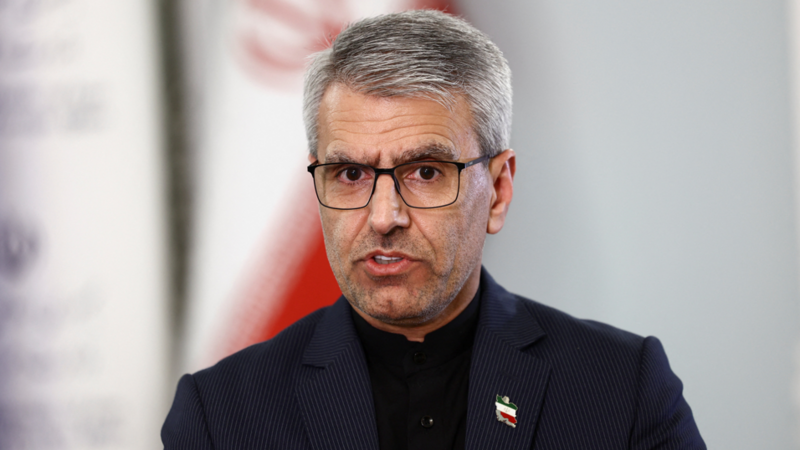
Iran is reviewing a U.S. proposal aimed at ending the current conflict, with plans to share its response through Pakistani mediators. President Donald Trump said the U.S. has had good talks with Iran recently and there is a chance for a deal to be made.
Key Facts
The U.S. has proposed a 14-point memorandum as a basis for peace talks with Iran.
The proposal includes suspending Iranian nuclear activities, lifting some sanctions, and reopening the Strait of Hormuz for free shipping.
Iran is still considering the U.S. proposal and will communicate its views via Pakistan.
Pakistan is working to turn a ceasefire into a permanent peace agreement.
Some Iranian officials criticized the U.S. proposal, calling it unrealistic and warning of strong responses if concessions are not made.
President Trump confirmed ongoing positive discussions and suggested a deal could be reached soon.
Trump paused a U.S. operation intended to ensure safe shipping through the Strait of Hormuz, which Iran had effectively blocked.
Iran’s nuclear program remains a major issue in talks between the two countries.
Read the Original
Want the full story? Tap a source to open the original
article.
President Donald Trump said he had positive talks with Iran and that a deal to end the conflict might happen soon. Iran is still reviewing a US proposal that could stop the war and include limits on Iran’s nuclear program and the reopening of the Strait of Hormuz, an important shipping route.
Key Facts
President Trump said Iran should stop its nuclear program and reopen the Strait of Hormuz.
Trump warned that the US might resume bombing Iran if talks fail.
Iran’s Foreign Ministry said no formal response has been given yet and called reports of a close deal exaggerated.
Pakistan is acting as a mediator between the US and Iran in the talks.
A one-page memorandum to end the conflict is reportedly close to agreement but details differ from Iran’s 14-point plan.
Iran’s officials criticized the US proposal, calling it unrealistic and more like a wish list.
The US insists Iran cannot have a nuclear weapon and wants to keep the region stable.
Israeli Prime Minister Netanyahu supports removing all enriched uranium from Iran to stop nuclear bomb development.
Read the Original
Want the full story? Tap a source to open the original
article.
The U.S. and Iran are working on a short, one-page agreement to reduce fighting and create a basis for future talks about Iran’s nuclear program. This effort is part of ongoing discussions during a long period of conflict between the two countries.
Key Facts
The proposal is a one-page memorandum aimed at ending hostilities.
It is intended to create a framework for future negotiations on Iran’s nuclear activities.
U.S. officials are involved in drafting and discussing this proposal.
The talks come after months of conflict and a stalemate between the U.S. and Iran.
A source close to the discussions shared details with journalist Kellie Meyer.
The document aims to simplify and speed up peace talks.
Both sides appear to be negotiating the terms of this document carefully.
Read the Original
Want the full story? Tap a source to open the original
article.
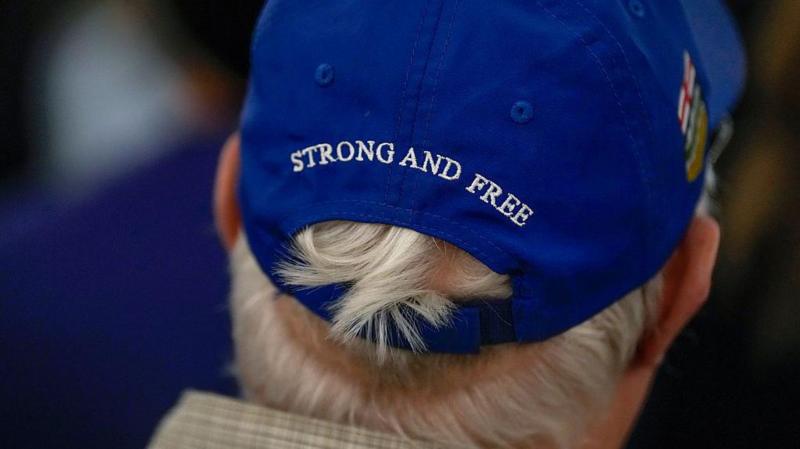
A group in Alberta, Canada, claims to have collected enough signatures to hold a vote on whether the province should become independent from Canada. Although the petition has exceeded the required number of signatures, legal challenges and verification processes could delay or stop the referendum.
Key Facts
Alberta secessionists submitted about 302,000 signatures, more than the 178,000 needed to consider a referendum.
Alberta Premier Danielle Smith said she would allow the referendum but does not support independence herself.
The referendum would ask voters if Alberta should leave Canada to become an independent state.
Elections Alberta must verify the petition, and a court ruling has slowed this process.
Indigenous groups have filed a legal challenge, saying independence could violate their treaty rights.
Polls show around 30% of Alberta residents support independence, so the vote’s outcome is uncertain.
The movement is driven by frustrations with federal government decisions, especially about environmental rules affecting Alberta’s oil industry.
Alberta’s population is about 5 million, with many feeling culturally and economically different from the rest of Canada.
Read the Original
Want the full story? Tap a source to open the original
article.
Israel bombed the southern suburbs of Beirut, Lebanon, marking the first attack there since a ceasefire began on April 17. The strikes caused significant damage to buildings and killed at least 13 people as attacks continued in southern and eastern Lebanon.
Key Facts
Israel bombed Beirut’s southern suburbs for the first time since April 17 ceasefire.
The bombing caused heavy damage to a multi-storey building in a crowded neighborhood.
At least 13 people were killed in Lebanon due to Israeli airstrikes on Wednesday.
Israeli attacks continued in southern and eastern parts of Lebanon.
The ceasefire between Israel and Lebanon-related groups had been in effect since April 17.
Read the Original
Want the full story? Tap a source to open the original
article.
The United Arab Emirates (UAE) criticized Iran for talking about a “military solution” amid ongoing talks with the U.S. to reduce conflict in the Middle East. Iranian Foreign Minister Abbas Araghchi made statements related to tensions near the Strait of Hormuz.
Key Facts
The UAE Ministry of Foreign Affairs condemned Iran’s comments about a “military solution.”
Iran issued these statements as talks with the U.S. aimed at reducing hostilities were underway.
Iranian Foreign Minister Abbas Araghchi posted on the social platform X about recent events in the Strait of Hormuz.
The Strait of Hormuz is a key waterway in the Middle East, important for international shipping.
The talks between the U.S. and Iran focus on easing tensions in the Middle East region.
The UAE opposes any military approach to solving political conflicts in this area.
Both Iran and the UAE are influential countries in the Middle East with differing views on regional security.
Read the Original
Want the full story? Tap a source to open the original
article.
A new report says foreign groups, including Russia and the US, are trying to influence Alberta’s separatist movement by spreading messages online that promote independence for the Canadian province. Researchers see this as a risk to Canada’s democracy and national security. The report comes as Alberta may hold a vote on separating from Canada later this year.
Key Facts
Foreign actors like Russia and the US are promoting Alberta separatism online.
These efforts use social media, fake accounts, and AI-created content to spread separatist ideas.
The report warns this interference threatens Canada’s democratic process and national unity.
Alberta separatist supporters have gathered enough signatures to trigger a referendum vote.
Only about 25% of Albertans currently support independence based on opinion polls.
Researchers say foreign interference mixes real local concerns with outside political goals.
Some US officials have met with Alberta separatist leaders and expressed support.
A referendum vote could happen as soon as October 19, 2024, but the path after that is unclear.
Read the Original
Want the full story? Tap a source to open the original
article.
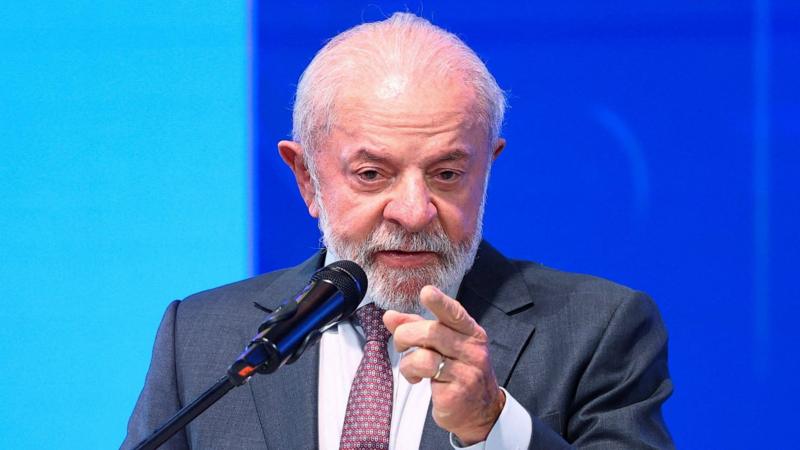
President Donald Trump will meet Brazil’s President Luiz Inácio Lula da Silva at the White House to talk about trade tariffs, the economy, and fighting organized crime. The visit is important because the two leaders have had disagreements, especially over tariffs on Brazilian goods and recent political issues.
Key Facts
President Trump will host Brazil’s President Lula at the White House on Thursday.
They will discuss tariffs, other economic issues, and ways to fight organized crime.
The United States previously set a 40% tariff on Brazilian goods, later reduced by Trump.
Trump wrote a letter asking Brazil to drop criminal charges against former President Jair Bolsonaro.
Bolsonaro, a Trump ally, was convicted of trying to overthrow Brazil’s government and jailed for 27 years.
Lula won the 2022 election, defeating Bolsonaro, and is running for another term this year.
The leaders met earlier in Malaysia and at the United Nations last year.
Brazilian Vice President Geraldo Alckmin said the talks will include a pact against organized crime.
Read the Original
Want the full story? Tap a source to open the original
article.
A cruise ship with a hantavirus outbreak evacuated three sick passengers and set off for the Canary Islands with about 150 people still on board. The World Health Organization (WHO) confirmed several cases and deaths, and health officials are monitoring those remaining on the ship, who show no symptoms.
Key Facts
Three patients with hantavirus or suspected infection were evacuated from the ship, including the ship’s British doctor.
The ship left Cape Verde heading to the Canary Islands with nearly 150 people isolated in their cabins.
Three people died from the outbreak, and one body remains on the ship.
Eight cases have been recorded, with five confirmed by lab testing.
Hantavirus usually spreads through rodent droppings and rarely spreads from person to person.
The virus found is the Andes virus, common in South America’s Argentina and Chile.
The Dutch couple may have contracted the virus while bird-watching in Ushuaia, Argentina, before boarding the ship.
Passengers and crew on the ship currently have no symptoms, and the Canary Islands arrival is not considered a public risk by health authorities.
Read the Original
Want the full story? Tap a source to open the original
article.
Russia has started turning off mobile internet in Moscow and other cities. Officials say this is to prevent drone attacks before the May 9 Victory Day parade, which will be smaller than usual for safety reasons.
Key Facts
Russia is shutting down mobile internet in Moscow and other cities.
The reason given is to stop potential drone threats.
The shutdowns are happening before the May 9 Victory Day parade.
The parade will be smaller this year due to security concerns.
Authorities have linked the internet restrictions directly to safety and security measures.
Read the Original
Want the full story? Tap a source to open the original
article.
Australia’s child protection workers are under investigation after concerns about how they handled the case of a missing 5-year-old girl, Kumanjayi Little Baby, who was found dead and whose suspected killer has been charged. A man was charged with hate speech related to a neo-Nazi protest in New South Wales, and mining company BHP lost a UK court appeal regarding its responsibility for a 2015 dam collapse in Brazil.
Key Facts
Three child protection workers in Australia were suspended after an investigation found they may not have followed proper procedures involving the case of Kumanjayi Little Baby, a 5-year-old girl recently found dead.
Jefferson Lewis, 47, has been charged with the murder of Kumanjayi Little Baby.
A 32-year-old man was charged with publicly inciting racial hatred following a neo-Nazi rally outside the New South Wales parliament where offensive slogans were displayed.
The hate speech charge relates to a law introduced in New South Wales in 2025 aimed at stopping public racial hatred.
The National Socialist Network, involved in the neo-Nazi protest, disbanded before new federal laws targeting hate groups were considered.
BHP, an Australian mining company, lost a UK court appeal that upheld its legal responsibility for a 2015 dam collapse in Brazil, which caused major environmental damage and loss of life.
The dam collapse is considered Brazil’s worst environmental disaster, causing toxic sludge to kill 19 people and force thousands from their homes.
The legal ruling against BHP could result in significant financial consequences for the company.
Read the Original
Want the full story? Tap a source to open the original
article.
Félix Tshisekedi, the President of the Democratic Republic of Congo, said he might accept serving a third term if the people want it, following a constitutional change. This statement comes amid debates about presidential term limits in the country.
Key Facts
Félix Tshisekedi is the current President of the Democratic Republic of Congo.
He mentioned the possibility of a third term in office if approved by the people.
This would require a constitutional referendum, meaning a vote to change the country's laws.
The topic of term limits is a sensitive political issue in Congo and elsewhere.
Tshisekedi’s comment suggests a potential shift in the country’s political rules.
The article also mentions a French court reopening a genocide investigation related to Rwanda.
Burkina Faso is facing allegations of secret detentions and abuse of a journalist.
The focus of the article is mainly on Tshisekedi’s statement about presidential terms.
Read the Original
Want the full story? Tap a source to open the original
article.
Corruption in diplomacy has existed for many years, including in the United States where political donors often receive ambassador positions regardless of qualifications. Recently, under President Donald Trump’s administration, some diplomats and envoys engaged in openly mixing government roles with private business deals involving foreign governments, attracting international attention.
Key Facts
Selling diplomatic passports, bribery, and mistreatment of workers are examples of corrupt practices in diplomacy.
U.S. presidents from both major parties have long given ambassador roles to major campaign donors, often without proper qualifications.
The U.S. has punished other countries for corruption but itself has a history of political patronage in diplomacy.
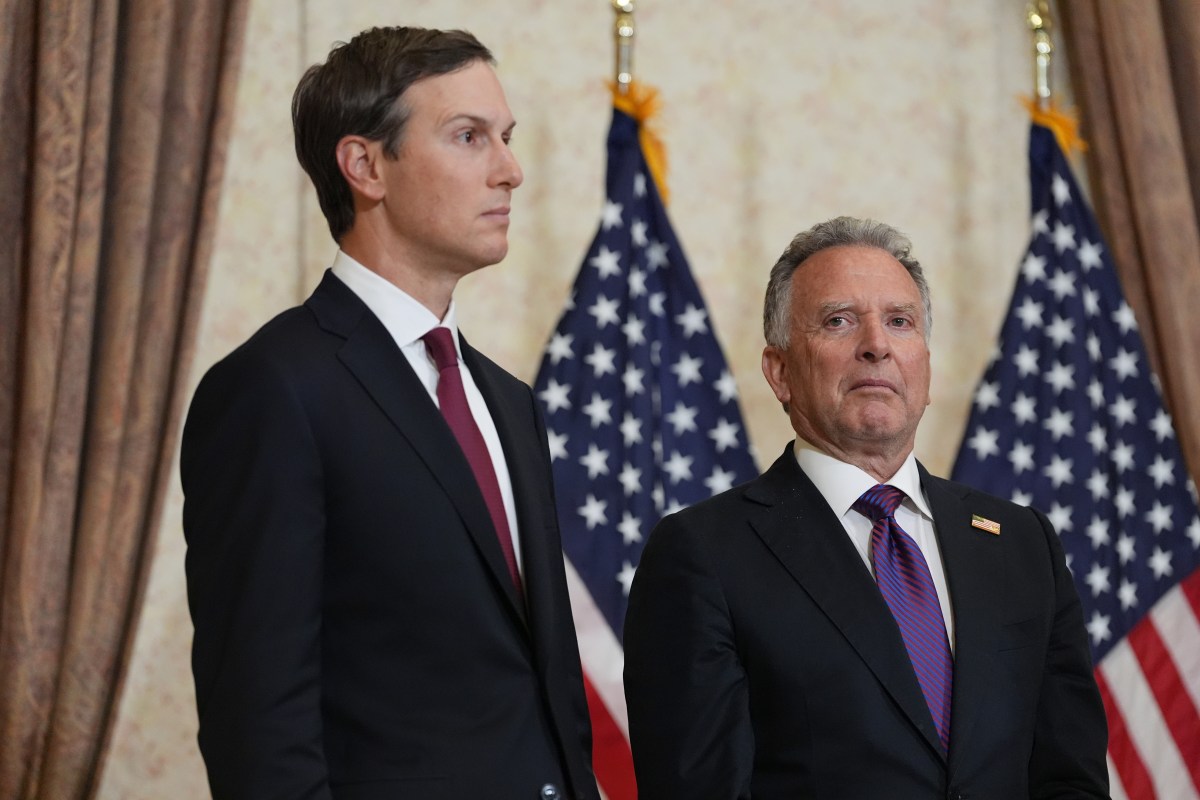
Under President Trump, officials like Jared Kushner and Steve Witkoff sought large investments for their private companies from countries they negotiated with on behalf of the U.S.
Qatar gifted President Trump a Boeing 747 aircraft worth about $400 million, symbolizing unusual generosity linked to diplomacy.
Some countries, especially in Asia, Africa, and the Middle East, have adapted to or tolerated this apparent corruption, while others openly disapprove.
Foreign governments view the U.S. as a continuing global power, influencing their decision to accept these practices.
Public visibility of these actions is unusual and may lead to more acceptance of such behavior in diplomacy.
Read the Original
Want the full story? Tap a source to open the original
article.
President Donald Trump said the U.S. and Iran have had positive talks and hopes to reach a peace deal soon. The U.S. is waiting for Iran’s response to a proposal aimed at stopping the war and starting detailed nuclear talks, but no agreement has been made yet.
Key Facts
The U.S. sent Iran a one-page agreement to end the war and create a framework for nuclear negotiations.
Iran's reply is expected within 1-2 days, but no deal is finalized yet.
The deal would include Iran stopping nuclear enrichment, the U.S. lifting sanctions, and both sides easing restrictions near the Strait of Hormuz.
Negotiations involve U.S. envoys Steve Witkoff and Jared Kushner and Iranian officials, with Pakistan mediating.
Iran’s Supreme Leader Mojtaba Khamenei is involved but remains hidden for security reasons.
President Trump said if Iran rejects the deal, the U.S. may increase bombing efforts.
Israel is coordinating closely with the U.S. and supports removing Iran’s enriched nuclear material.
The Israeli military struck Hezbollah targets in Beirut, which Iran wants to stop as part of the talks.
Read the Original
Want the full story? Tap a source to open the original
article.