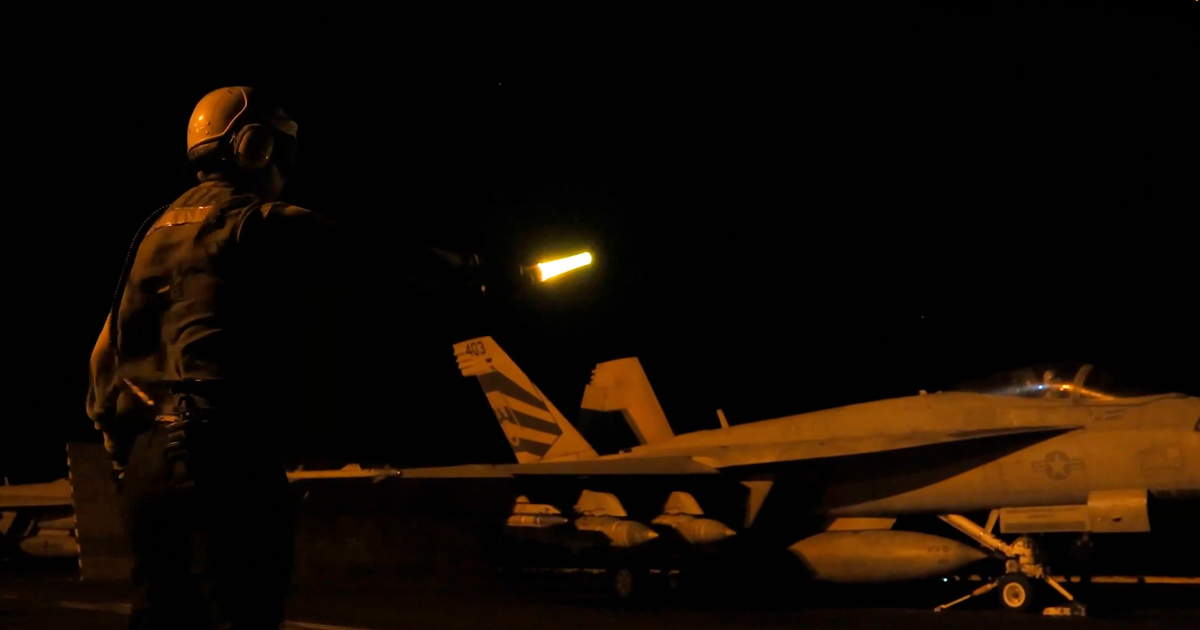
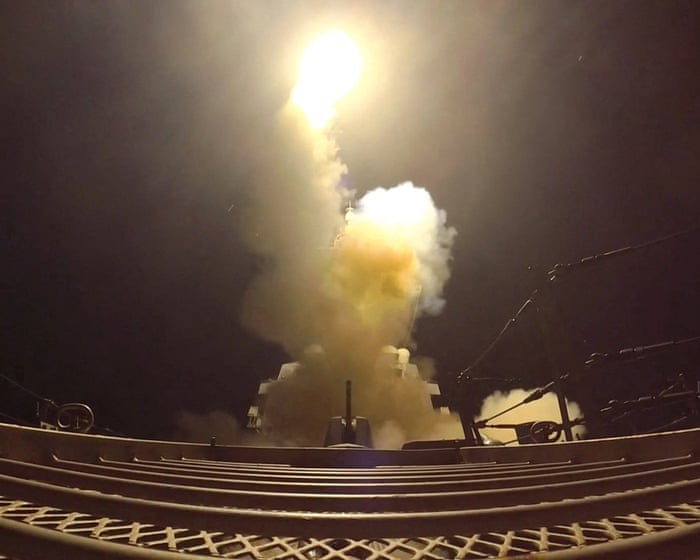
The United States carried out new military strikes against Iran, targeting several sites across the country, prompting Iran to launch attacks on US military targets in the Gulf region. These events have worsened tensions and put the current ceasefire and peace talks between Washington and Tehran in danger.
Key Facts
The US Central Command said the strikes targeted Iran’s air defense, radar sites, missile and drone capabilities, and small boats.
The US used fighter jets, naval vessels, and special one-way attack drones in the operation.
Iran reported casualties and damage in Khuzestan province from the US strikes.
Iran’s Revolutionary Guard attacked US military sites in Bahrain, Oman, and Kuwait in response.
Bahrain and Jordan issued alerts after Iranian missile activity nearby.
The US and Iran had agreed to a ceasefire in June and aims to reopen the Strait of Hormuz, a key global shipping route.
The Strait of Hormuz is crucial because about 20% of the world’s energy exports pass through it.
President Donald Trump wants to lower oil prices, while Iran insists ships use routes close to its coast to maintain control of the strait.
Read the Original
Want the full story? Tap a source to open the original
article.
A 10-year Finnish study found that a common knee surgery to trim damaged cartilage does not help middle-aged or older patients with knee pain and may cause faster arthritis and more surgeries. The study suggests physical therapy as a safer first option, and surgery should be considered only carefully.
Key Facts
The study followed patients for 10 years after either real knee surgery or fake surgery with only a skin incision.
Patients having the actual surgery showed worse pain and faster arthritis progression compared to those who did not.
The study focused on people with degenerative cartilage tears, common in those over 50, not injuries from accidents.
Similar procedures in Finland have dropped by 90%, while U.S. rates have decreased more slowly, about 4% per year.
Medicare data shows knee surgeries decreased from about 169,000 in 2014 to 91,000 in 2024.
Experts recommend trying physical therapy before considering surgery for degenerative meniscus tears.
Regional differences exist in U.S. surgery rates, with more surgeries in the South than the Northeast.
A European and U.S. orthopedic committee says either surgery or non-surgical treatment can work, but physical therapy should come first.
Read the Original
Want the full story? Tap a source to open the original
article.
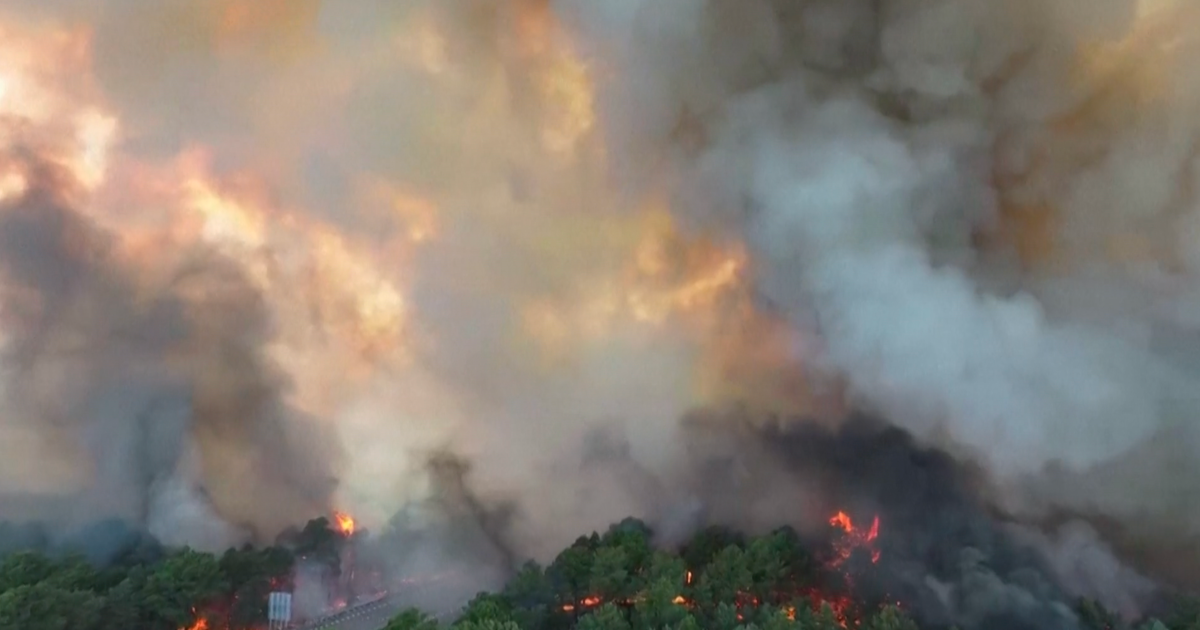
A large fire broke out in the Fontainebleau forest near Paris, involving around 400 firefighters to control it. The fire caused road closures and train disruptions just before a major national holiday and the start of the summer holiday season in France.
Key Facts
The fire occurred in the Fontainebleau forest, located in the Ile de France region near Paris.
About 400 firefighters were called to fight the blaze.
The fire happened on Sunday, July 12, 2026.
The event affected transportation with closed highways and disrupted train services.
This happened just before France’s national holiday on July 14.
The summer holiday travel period was beginning, increasing the impact of disruptions.
Fontainebleau forest is known as the “lungs of greater Paris” because it helps clean the air.
France has faced several heatwaves in 2026, increasing fire risks.
Read the Original
Want the full story? Tap a source to open the original
article.
Tensions between the United States and Iran have risen again with Iran attacking ships using a route defined by the U.S. in the Strait of Hormuz, a key waterway for global oil shipping. Although the strait remains open, these attacks increase uncertainty as negotiators attempt to find a lasting peace agreement.
Key Facts
The Strait of Hormuz is a vital shipping route for oil transportation.
Iran has struck ships that follow a U.S.-defined path through the strait.
The strait has not been completely closed despite the attacks.
Recent hostilities are part of ongoing conflict between the U.S. and Iran.
Negotiations are ongoing to reach a peace deal to keep this route safe.
The situation raises concerns about stability in the Middle East region.
The attacks come amid broader tensions including previous U.S. strikes and Iranian actions.
Read the Original
Want the full story? Tap a source to open the original
article.
At least 27 people died and many others were injured in a fire at a pub in Bangkok, Thailand, on July 13, 2026. The fire began during a musician's performance, who saw smoke coming from a circuit breaker before an explosion happened.
Key Facts
The fire occurred early on July 13, 2026, at a pub in Bangkok.
At least 27 people lost their lives in the fire.
Dozens of people were taken to hospitals with injuries.
A musician performing at the pub noticed smoke from a circuit breaker just before the explosion.
Rescue teams worked to extinguish the fire at the scene.
The incident attracted international news attention.
The cause of the fire is linked to electrical issues near the circuit breaker.
Authorities are investigating the full details of the event.
Read the Original
Want the full story? Tap a source to open the original
article.
Typhoon Bavi hit China’s eastern coast in Zhejiang province, causing strong waves that damaged houses. The storm led to power and phone outages, and more than two million people were moved to safer places before the storm arrived.
Key Facts
Typhoon Bavi struck Zhejiang province on China’s eastern coast.
Large waves from the typhoon hit and damaged homes.
The storm caused power outages and disrupted phone services.
Over two million residents were evacuated ahead of the typhoon.
Authorities took safety measures to protect people from the storm.
Read the Original
Want the full story? Tap a source to open the original
article.
Fighting between the U.S. and Iran has continued for a second week, centered around control of the Strait of Hormuz, a key shipping route. The U.S. has launched multiple strikes on Iranian targets after Iran attacked a container ship, while Iran has responded by targeting Gulf countries hosting U.S. forces and firing missiles at Jordan.
Key Facts
Iran claimed attacks on Bahrain, Oman, and Jordan, hitting radar systems and U.S. military sites.
Jordan reported shooting down four Iranian missiles that entered its airspace, with no injuries or damage.
The U.S. conducted strikes on Iranian military targets, including air defenses, radar sites, and naval vessels, using fighter aircraft and drones.
The U.S. Central Command said Iran does not control the Strait of Hormuz, despite Iran's claims it is closed.
Oil prices rose nearly 5% due to the rising tensions, with Brent crude near $80 per barrel.
The conflict follows an Iranian attack on a container ship that set it on fire and caused a crew member to go missing.
Iran's foreign ministry said U.S. strikes have undone recent diplomatic efforts and increased insecurity in the region.
President Donald Trump ordered these strikes to hold Iranian forces accountable.
Read the Original
Want the full story? Tap a source to open the original
article.
The United States carried out a third major air strike on Iran between July 12 and 13, 2026, following President Donald Trump’s end to a ceasefire. Iran responded by attacking U.S. military bases in Jordan, Bahrain, and Kuwait, increasing tensions in the Middle East.
Key Facts
The U.S. launched three major air strikes against Iran within two days in July 2026.
President Donald Trump declared the ceasefire with Iran over before these strikes.
Iran retaliated by targeting U.S. bases located in Jordan, Bahrain, and Kuwait.
The recent U.S. strikes are among the largest since the ceasefire ended.
These actions have escalated conflict risks between the U.S. and Iran in the region.
Military activity in the Middle East is increasing amid ongoing political tensions.
Israel recently warned the U.S. about a possible Iranian plot to assassinate President Trump.
Iran is showing signs of shifting leadership style after the funeral of its former leader Khamenei.
Read the Original
Want the full story? Tap a source to open the original
article.
Iran’s Revolutionary Guards attacked U.S. military sites in Bahrain and Kuwait and struck targets in Oman and Jordan in response to recent U.S. strikes on Iranian military locations. The attacks come amid heightened tensions over control of the strategic Strait of Hormuz, a major route for global oil shipments.
Key Facts
Iran targeted American military facilities in Bahrain and Kuwait and destroyed radar systems in Oman.
Iranian forces also struck fuel tanks and ammunition depots at a Jordanian air base.
Jordan intercepted and shot down four missiles fired from Iran.
Kuwait’s military intercepted hostile aerial targets in its airspace.
The conflict escalated after U.S. strikes hit dozens of Iranian military sites, including missile and drone equipment.
Iran claims sovereignty over the Strait of Hormuz, while the U.S. insists it does not control the waterway.
A 60-day interim deal to pause the conflict and allow negotiations is deteriorating.
President Trump stated the Strait remains open but said U.S. forces are using force to keep it accessible to commercial ships.
Read the Original
Want the full story? Tap a source to open the original
article.
A man was thrown into the air by a bull bison at Yellowstone National Park's Bridge Bay Campground. The man was seriously injured and emergency services were called, while the National Park Service has warned visitors to keep a safe distance from bison.
Key Facts
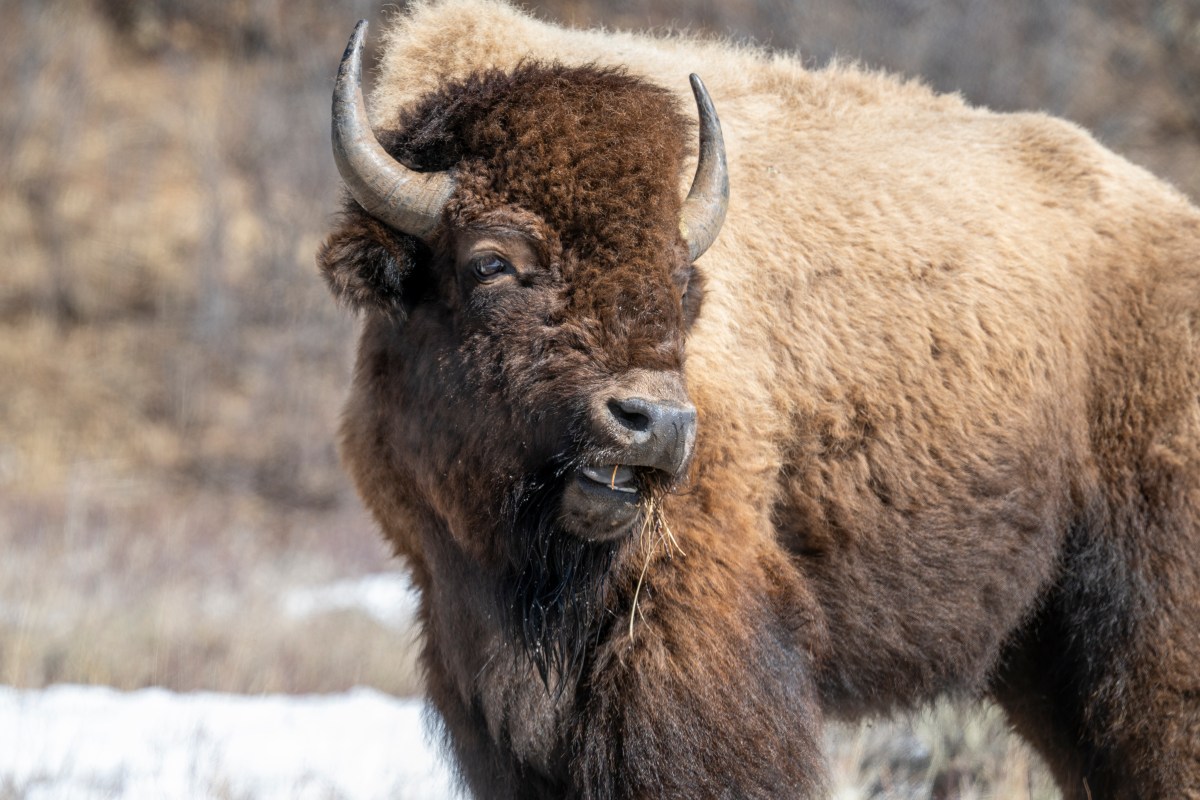
A bull bison tossed a tourist about 8 feet into the air at Yellowstone National Park.
The incident occurred at Bridge Bay Campground, south of Fishing Bridge.
A professional photographer captured the event on video and said the people involved kept a safe distance initially.
The bison got agitated by a passing vehicle and charged the man, causing significant injuries.
Onlookers, including the photographer, frightened the bison away by making loud noises and appearing large.
Yellowstone authorities warn visitors to stay at least 25 yards (about 23 meters) away from bison.
Bison can run much faster than humans and are responsible for more injuries in the park than other animals.
This is the second reported bison attack on a person in Yellowstone this year.
Read the Original
Want the full story? Tap a source to open the original
article.
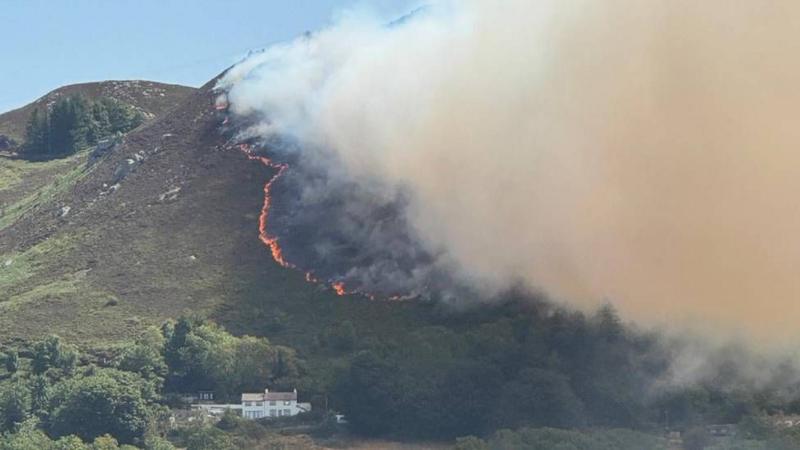
A wildfire near Conwy Mountain in north Wales has led to the evacuation of 36 homes. Firefighters are working to contain the fire, which has spread across about 200 acres, and residents are advised to keep windows and doors closed due to the ongoing heatwave.
Key Facts
The wildfire started near Conwy Mountain and Sychnant Pass in Conwy county.
Around 200 acres of land have been affected by the fire.
Thirty-six homes in Capelulo were evacuated as a precaution.
Fire crews used water from a nearby river to help fight the fire.
Firefighters operated with eight fire trucks, four narrow access vehicles, and two wildfire units.
The fire is expected to spread further due to hot and dry weather conditions.
One person was taken to hospital; no other serious injuries reported.
Local police have closed roads to help contain the fire and protect people.
Read the Original
Want the full story? Tap a source to open the original
article.
A large fire is burning in the Fontainebleau forest south of Paris, causing some people to evacuate their homes and disrupting train and highway traffic. This fire is part of several wildfires in western Europe during a strong heat wave with very high temperatures.
Key Facts
The fire is in the Fontainebleau forest, about 70 kilometers (42 miles) from Paris.
Residential neighborhoods near the fire were evacuated.
Train services at Gare de Lyon were disrupted but started returning to normal.
A section of the A6 highway southeast of Paris was closed due to fire risk.
Two planes that drop water and hundreds of firefighters are working to control the fire.
France is under its third heat wave this summer, with temperatures over 40°C (104°F) in some areas.
Southern France has had large fires affecting thousands of hectares and even disrupted the Tour de France.
Europe is warming twice as fast as the global average, increasing the risk of wildfires.
Read the Original
Want the full story? Tap a source to open the original
article.
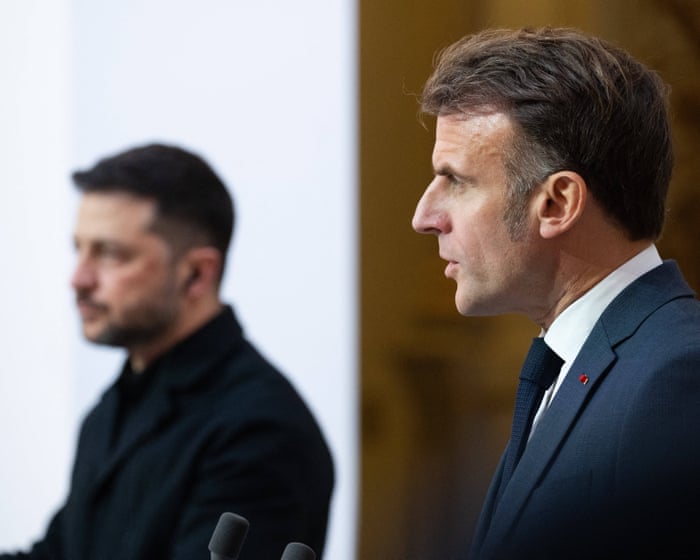
French President Emmanuel Macron will host a meeting in Paris with over 20 European leaders to discuss supporting Ukraine and increasing pressure on Russia. Earlier, Macron met with Ukraine’s President Volodymyr Zelenskyy, Germany’s Friedrich Merz, and Britain’s Keir Starmer, followed by a joint press conference. France will also summon the Russian ambassador over a reported Russian cyberattack on Europe, and EU foreign ministers are meeting to discuss new sanctions against Russia.
Key Facts
President Macron is hosting a meeting in Paris called the Coalition of the Willing with more than 20 European leaders.
The talks focus on helping Ukraine and pushing Russia to negotiate after Ukraine’s recent military gains.
Macron met earlier with Ukraine’s President Zelenskyy, Germany’s Friedrich Merz, and Britain’s Keir Starmer.
France’s foreign minister said France will summon the Russian ambassador over a cyberattack campaign against at least 10 European countries.
France plans to sanction nine individuals and four organizations linked to the Russian FSB security service.
EU foreign ministers are meeting in Brussels to discuss the 21st package of sanctions against Russia but have not yet agreed on all measures.
Lithuania’s foreign minister highlighted disagreement over banning Russian maritime services and limiting Russian liquefied natural gas imports.
The talks are happening just before France’s Bastille Day holiday on July 14, 2026.
Read the Original
Want the full story? Tap a source to open the original
article.
More than 2,700 deaths in England and Wales have been linked to record-breaking heatwaves in May and June. Scientists say climate change made these heatwaves stronger and caused temperatures to be several degrees higher than they would have been without global warming.
Key Facts
Around 550 heat-related deaths happened between May 21 and 29.
Nearly 2,200 deaths were linked to heatwaves from June 18 to 28.
The highest temperatures reached 35.1°C (95.2°F) in May and 37.7°C (99.9°F) in June in England.
Researchers used weather data and death statistics to estimate heat-related deaths.
The UK Health Security Agency will release official numbers soon.
Climate change caused temperatures to be as much as 4°C (7.2°F) hotter.
The UK government has been warned it is not ready to handle climate change impacts.
Heatwaves across Europe in late June caused over 10,000 extra deaths, mostly in people aged 65 and older.
Read the Original
Want the full story? Tap a source to open the original
article.
The UK has started testing a new Ebola vaccine developed quickly after a recent outbreak in the Democratic Republic of the Congo. The vaccine uses a technology similar to the Oxford/AstraZeneca Covid vaccine and will soon be given to healthy volunteers in early trials.
Key Facts
Scientists at the University of Oxford developed the Ebola vaccine in eight weeks after an outbreak was declared on May 17.
The vaccine targets the Bundibugyo species of Ebola, which has caused previous outbreaks and lacks approved treatments or vaccines.
Early trials will involve 50 healthy adults aged 18 to 55 in the UK, with volunteers monitored for a year.
The vaccine uses a harmless chimpanzee cold virus to deliver a small part of the Ebola virus genome to stimulate the immune system.
Similar to the Covid vaccine method, the vaccine does not cause infection but helps the body prepare to fight Ebola.
The vaccine has been tested on animals and is produced by the Serum Institute of India, with about 620,000 doses ready for use.
The UK drug regulator has approved human trials after reviewing safety and effectiveness data.
Researchers are also preparing to test the vaccine in Africa, near affected areas.
Read the Original
Want the full story? Tap a source to open the original
article.
A South Korean court sentenced former President Yoon Suk Yeol to two years in prison for illegally receiving free opinion polling services from a political broker. Yoon denies the charges and is currently involved in multiple legal cases, including appealing a life sentence for his role in a 2024 insurrection linked to his martial law declaration.
Key Facts
Yoon Suk Yeol received illegal polling services worth about 270 million won ($179,800) without paying.
The court found Yoon broke political funding laws by accepting 14 rounds of polling for free.
Yoon allegedly influenced the nomination of a former lawmaker to repay the political broker.
Yoon denies requesting the polls or promising anything in exchange.
He is facing eight legal cases, including appealing a life sentence for planning an insurrection in 2024.
The life sentence relates to his short martial law declaration during the 2024 crisis.
A prior supreme court ruling sentenced Yoon to seven years in prison for obstructing an arrest.
The two-year prison sentence can be appealed.
Read the Original
Want the full story? Tap a source to open the original
article.
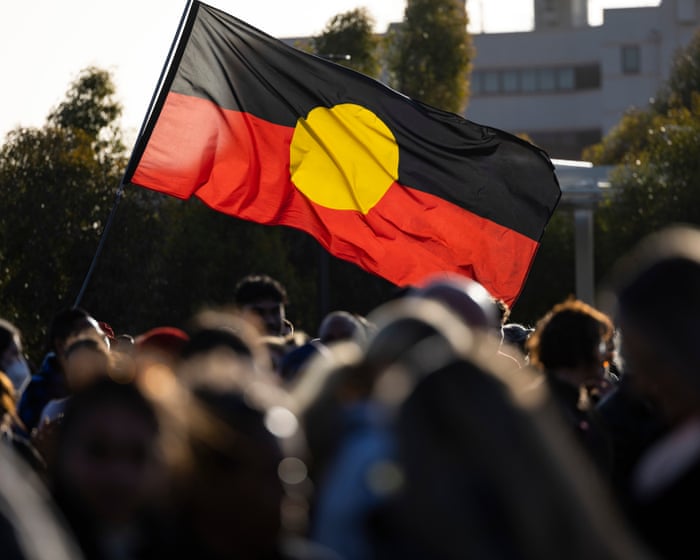
At an Invasion Day rally in Perth, a homemade bomb was thrown into a crowd of about 2,000 people, injuring none but causing fear and trauma. Members of the Indigenous community told a federal inquiry they felt ignored by police and politicians after the incident, which was later treated as a terrorism case.
Key Facts
On January 26, a device filled with ball bearings, screws, and other projectiles was thrown into a crowd at Perth’s Invasion Day rally.
The crowd had about 2,000 people, mainly Indigenous Australians.
Perth man Liam Alexander Hall was charged with terrorism offenses and is in custody; his lawyers say he plans to plead not guilty by reason of insanity.
Indigenous witnesses said they felt dismissed by police and authorities after the attack.
Police declared the incident a terror attack nine days later.
Organizers warned police about possible threats from far-right groups before the event but had little communication with them.
Politicians and non-Indigenous leaders did not publicly condemn the attack promptly.
Former Indigenous affairs minister Ken Wyatt said that recent political events have increased racism and hate against Indigenous people.
Read the Original
Want the full story? Tap a source to open the original
article.
A large wildfire is burning in the Fontainebleau forest near Paris, spreading quickly and forcing evacuations and highway closures. Firefighters, supported by planes, are working to control the fire during a heatwave affecting the region.
Key Facts
The fire began late Sunday afternoon about 40 miles southeast of Paris.
It has spread over approximately 1,900 acres and is still growing.
Around 15 homes in the village of Vaudoue were evacuated.
About 400 firefighters are working to contain the fire.
Firefighting planes were used during the day but had to stop at night.
A major highway and high-speed rail line in the area were partially closed.
This fire comes amid the Paris region’s third heatwave since May.
Scientists link recent heatwaves in Europe to climate change, noting they would have been nearly impossible without it.
Read the Original
Want the full story? Tap a source to open the original
article.
Sam Neill, a well-known actor from New Zealand and Australia, died suddenly at age 78. Many actors, directors, and leaders praised his talent, kindness, and impact on the film industry and environment.
Key Facts
Sam Neill died suddenly on Monday at the age of 78.
He was known for his roles in films like Dead Calm and Dean Spanley.
Australian director Phillip Noyce described Neill as a gentleman with a strong reputation.
New Zealand Prime Minister Christopher Luxon said Neill helped build the country’s film industry over 50 years.
Australian Prime Minister Anthony Albanese and other artists praised his talent and character.
Friends highlighted his humor, kindness, and generosity.
Neill was also an environmentalist who worked to protect New Zealand’s land and marine life.
The New Zealand Department of Conservation called him a passionate champion for the environment.
Read the Original
Want the full story? Tap a source to open the original
article.
Retired US General Mark Kimmitt has said that new attacks in the Strait of Hormuz could lead the United States and Iran into a larger conflict. The Strait of Hormuz is a strategic waterway important for global oil shipping.
Key Facts
Mark Kimmitt is a retired US General.
He warns about renewed attacks in the Strait of Hormuz.
The Strait of Hormuz is a key route for oil transport.
Increased tensions there could escalate conflict between the US and Iran.
The situation could involve more countries in the region.
The warning highlights risks of current disputes turning into wider fighting.
Read the Original
Want the full story? Tap a source to open the original
article.