A leaked set of documents revealed that Russia ran a secret campaign called "Project Afrika" to spread propaganda in French-speaking media in West and Central Africa. Between June and November 2024, Russian agents placed 644 articles in at least 35 media outlets, spending over $300,000 to influence public opinion, especially in Senegal.
Key Facts
"Project Afrika" is a Russian operation targeting African online media with propaganda and disinformation.
The campaign produced 644 articles published from June to November 2024.
At least 35 media outlets in West and Central Africa published these articles.
The operation spent more than $300,000 during this period.
The Russian group behind it was originally created by the Wagner Group and later taken over by Russian secret services in 2023.
The campaign focused on promoting anti-France and anti-Ukraine messages.
Senegalese media outlet PressAfrik published 13 of the propaganda articles.
Some journalists named in the documents denied involvement, calling the evidence fake.
Read the Original
Want the full story? Tap a source to open the original
article.
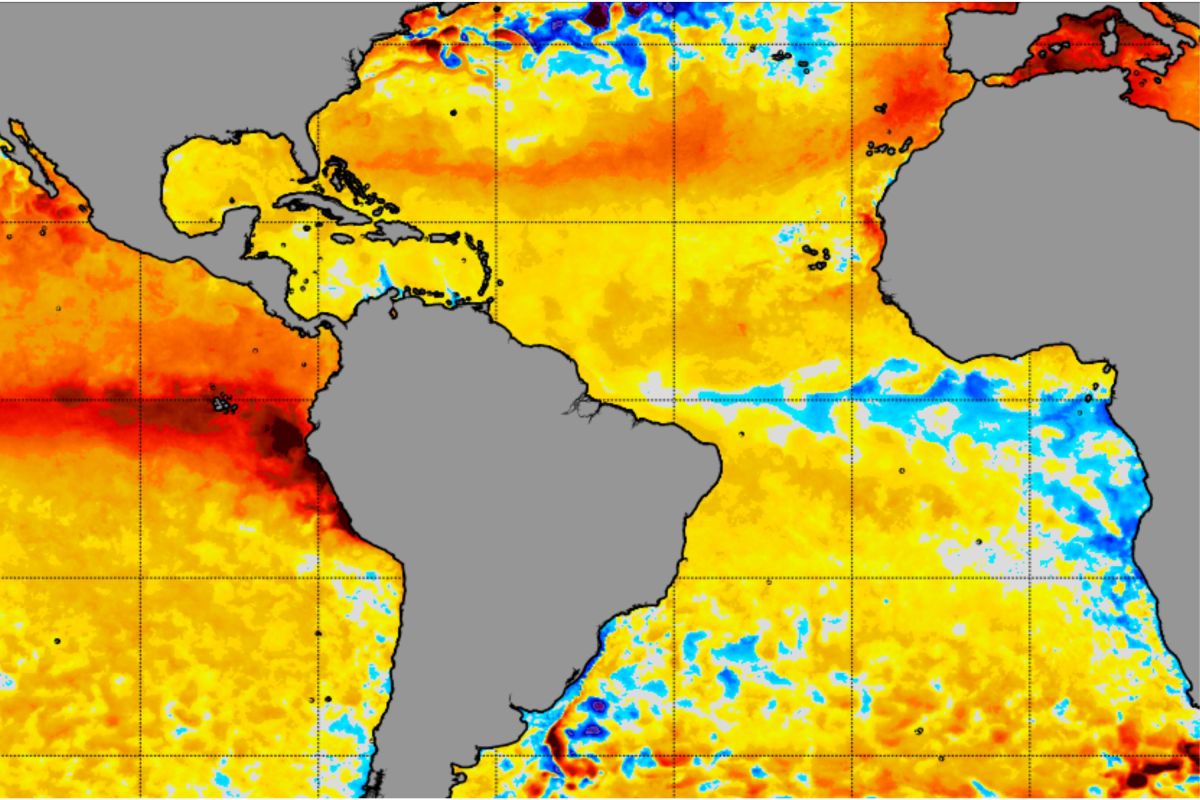
A rare weather situation is happening with a cooling event in the Atlantic Ocean called Atlantic Niña, while a warming event called El Niño is growing in the Pacific Ocean. This combination could reduce the number and strength of hurricanes in the Atlantic this season by creating conditions that make it harder for storms to form.
Key Facts
Atlantic Niña is a cooling of sea surface temperatures in the eastern equatorial Atlantic Ocean.
El Niño is a warming of sea surface temperatures in the central and eastern Pacific Ocean.
Both events together create higher air pressure, sinking air, stronger winds, and less rain in key hurricane development areas.
This can act as an "atmospheric shield," reducing chances for Atlantic hurricanes.
Strong Atlantic Niña events in summer are unusual and happen rarely.
NOAA predicts El Niño will continue to strengthen through early 2027.
Despite these effects, dangerous hurricanes can still occur even in suppressed seasons.
The last very damaging hurricane during an El Niño year was Hurricane Andrew in 1992.
Read the Original
Want the full story? Tap a source to open the original
article.
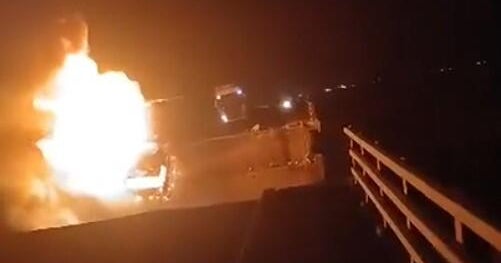
The United States and Iran increased their attacks across the Middle East, targeting military and civilian locations. The conflict involves strikes on infrastructure such as bridges, ports, and water facilities, especially around the strategic Strait of Hormuz.
Key Facts
Fighting between the US and Iran escalated despite a recent agreement aimed at ending their conflict.
The US attacked Iranian bridges and a tower at an important port in southern Iran.
Iran struck US allied countries like Qatar and Kuwait, damaging a water desalination plant in Kuwait.
Iranian forces reported casualties from US strikes, including deaths and injuries.
Iran’s Revolutionary Guards said their military would continue strikes until US operations near the Strait of Hormuz stop.
Iran asked citizens to reduce electricity use after power facilities were hit.
The conflict began in February 2026 following US and Israeli attacks on Iran and Iran’s retaliatory actions.
Both sides see compromises as weakness, which continues to fuel the fighting despite its risks.
Read the Original
Want the full story? Tap a source to open the original
article.
The Church of England’s General Synod has decided to seriously consider statements from Palestinian Christians about the situation in Palestine. This decision led to criticism from some pro-Israel groups and religious leaders in the UK, but the Church’s vote shows a shift toward engaging with Palestinian voices and seeking peace.
Key Facts
The Church of England’s General Synod agreed to engage with major Palestinian Christian statements, including Kairos Palestine II.
The Synod called for a review of the Church’s investments related to the Occupied Palestinian Territory.
The motion passed with strong support from bishops, clergy, and church members.
Some pro-Israel groups, like the Board of Deputies of British Jews, strongly opposed the decision.
Critics accused the Church of enabling anti-Semitism and harming Christian-Jewish relations, which the article rejects.
The Church did not officially endorse the Palestinian documents, only decided to listen and engage with them.
Palestinian suffering in Gaza was described as severe and well-documented by international experts and witnesses.
Some religious leaders criticized the Church for this decision instead of focusing on ending violence and supporting humanitarian aid to Gaza.
Read the Original
Want the full story? Tap a source to open the original
article.
A recent report from the U.S. National Academies of Science says that climate attribution science, which studies how much climate change influences extreme weather events, has improved a lot over the past decade. The report explains how this science can help update important safety rules but also notes some limits and warns that some fossil fuel interests oppose this work because it could lead to legal responsibility for damages.
Key Facts
Climate attribution science analyzes how human-caused greenhouse gas emissions affect the chance and strength of extreme weather events like heat waves and heavy rain.
The science compares weather events under current conditions with how often they would occur without human influence, using computer climate models.
The field has become more reliable and mainstream in the last ten years.
Understanding climate’s role in extreme weather helps update building codes, disaster planning, and infrastructure design.
The National Academies of Science produced this report to explain the current state of climate attribution science to policymakers.
Some weather events still challenge attribution methods and need more research.
The fossil fuel industry opposes this science because it might increase their legal liability for climate damages.
Some lawmakers are threatening to cut funding for the National Academies because of this dispute.
Read the Original
Want the full story? Tap a source to open the original
article.
The United States has carried out repeated military strikes on southern Iran, targeting civilian infrastructure such as bridges, a railway station, and residential areas. Iran has responded with missile attacks on US bases in the region, escalating tensions despite a recent ceasefire agreement and ongoing negotiations.
Key Facts
The US has launched six consecutive nights of attacks on southern Iran’s infrastructure.
Targets include a railway station, residential neighborhoods, bridges, water facilities, and food storage buildings.
Bandar Abbas, a key naval city near the Strait of Hormuz, has been severely damaged, with casualties reported.
Iran’s military struck a US base in Bahrain in retaliation.
Several Gulf countries have activated air defense systems following missile and drone attacks.
The US and Iran signed a ceasefire agreement a month ago but accuse each other of breaking it.
The US resumed a naval blockade of shipping going to and from Iranian ports amid rising tensions over the Strait of Hormuz.
There is debate over whether the US attacks are aimed at military targets, preparing for invasion, or increasing pressure by disrupting civilian infrastructure.
Read the Original
Want the full story? Tap a source to open the original
article.
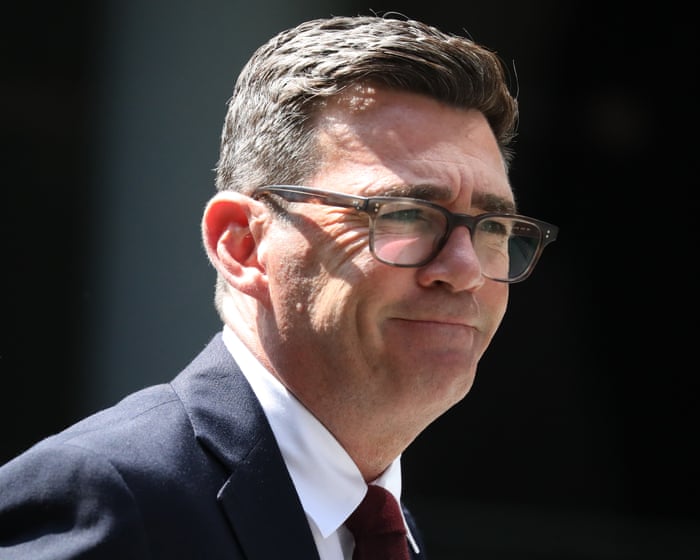
Andy Burnham has been elected leader of the UK’s Labour Party, making him the next Prime Minister after Keir Starmer steps down. Burnham plans to shift power from London to other regions and aims to stop the rise of the Reform UK party.
Key Facts
Andy Burnham became leader of the Labour Party on July 17, 2026.
He will replace Keir Starmer as Prime Minister of the UK next week.
Burnham is known as the "King of the North" for defending Greater Manchester’s interests as mayor.
He promises to reduce inequality by moving power away from London to other regions.
Burnham wants to stop the growth of the Reform UK party, a populist group led by Nigel Farage.
Reform UK has been leading opinion polls but has recently faced criticism for funding sources.
Labour party members supported Burnham strongly to improve their chances in future elections.
Burnham has a few years before the next general election to start delivering his plans.
Read the Original
Want the full story? Tap a source to open the original
article.
Andy Burnham has been chosen as the new leader of the Labour party in the UK. This makes him set to become the British prime minister soon, replacing Keir Starmer.
Key Facts
Andy Burnham is now the leader of the Labour party.
He received strong support from Members of Parliament (MPs), trade unions, and party groups.
Burnham is the only candidate to replace Keir Starmer as leader.
Keir Starmer is expected to officially hand over power to Burnham at Buckingham Palace on Monday.
Burnham will give a speech outside Downing Street on the same day.
He will appoint his cabinet members in the afternoon.
Burnham plans to introduce new policies soon, focusing on helping with the cost of living.
Read the Original
Want the full story? Tap a source to open the original
article.
A quarter of France's small rivers have dried up due to low rainfall and three heatwaves. Water restrictions affect 100 regions, and some people rely on water deliveries. In other news, the UK government took control of its last steel factory to save jobs, which led to strong criticism from China, and scientists aim to restore a dried lake in Central Asia to reduce CO2 emissions.
Key Facts
25% of small waterways in France have dried up after low rain and heatwaves.
100 French departments face water restrictions; some residents get water delivered.
An emergency French agriculture bill plans to increase water storage to support farming.
Climate and nature groups warn that increased water storage may worsen competition for water.
The UK government nationalized British Steel's last plant in Scunthorpe to protect 4,000 jobs.
China criticized the UK nationalization, saying it hurt the Chinese company Jingye Group.
Spanish scientists hope to refill the Aral Sea to reduce CO2 gas released from the dry lakebed.
In the UK, a beaver named Steve McQueen has successfully raised offspring after relocating.
Read the Original
Want the full story? Tap a source to open the original
article.
The article explains that procrastination is common and can take different forms based on personality or feelings. Experts say understanding the reasons behind procrastination and using simple strategies like mindfulness and breaking tasks into small steps can help people manage it better.
Key Facts
About one in five people regularly procrastinate.
Researchers identify nine types of procrastinators, such as dreamers, rebels, hedonists, and perfectionists.
Procrastination often happens to avoid unpleasant feelings related to a task, not the task itself.
Brain studies show the emotional part of the brain reacts faster to threats than the thinking part, which can lead to procrastination.
Experts suggest recognizing the emotions involved, using relaxation techniques, and being kinder to yourself.
Breaking big tasks into smaller steps and starting with easy actions can help overcome procrastination.
Sometimes, postponing a task can be helpful if problems resolve on their own.
Taking action is more important than waiting for motivation to begin work.
Read the Original
Want the full story? Tap a source to open the original
article.
The World Eskimo Indian Olympics (WEIO) is an annual event in Fairbanks, Alaska, where Indigenous athletes from Alaska, Greenland, Siberia, and Canada compete in traditional Arctic games. These ancient games, originally practiced to build survival skills, have survived colonization and are now celebrated to preserve culture and community.
Key Facts
WEIO is held every year in Fairbanks, Alaska, attracting hundreds of Indigenous athletes.
Competitions include traditional games like the two-foot high kick and the dene stick pull.
The two-foot high kick started as a way for distant messengers to signal successful whale hunts.
Nicole Johnson set the women’s world record in the two-foot high kick in 1989 and continues to compete and support the event today.
The games are open to Indigenous participants who are at least 12 years old, with some competing into their 70s.
Indigenous communities practiced these games secretly during colonization when cultural expression was suppressed.
In recent years, the games have grown, with nearly 3,000 spectators attending last year’s event.
Community leaders like Kyle Worl emphasize preserving these traditions to pass down Indigenous knowledge and culture to younger generations.
Read the Original
Want the full story? Tap a source to open the original
article.
Japan’s parliament passed a new law making it a crime to damage or disrespect the national flag in public. People who do this and cause others strong discomfort can face up to two years in prison or a fine.
Key Facts
The law punishes public acts like burning, stomping, or throwing mud on Japan’s flag, the Hinomaru.
Penalties include up to two years in prison or a fine of up to 200,000 yen ($1,250).
The law also covers livestreaming these acts when they cause “extreme discomfort or disgust” to others.
Japan previously had laws protecting foreign flags but not its own until now.
The law does not apply to images of the flag in art, digital media, anime, manga, video games, or small paper flags used in children’s meals.
Critics say the law is vague and threatens free speech, especially for political protests.
Over 150 academics warned the law could limit political expression.
Japan’s flag has a complex history tied to its aggressive past and differs from many democratic countries’ flags in symbolism.
Read the Original
Want the full story? Tap a source to open the original
article.
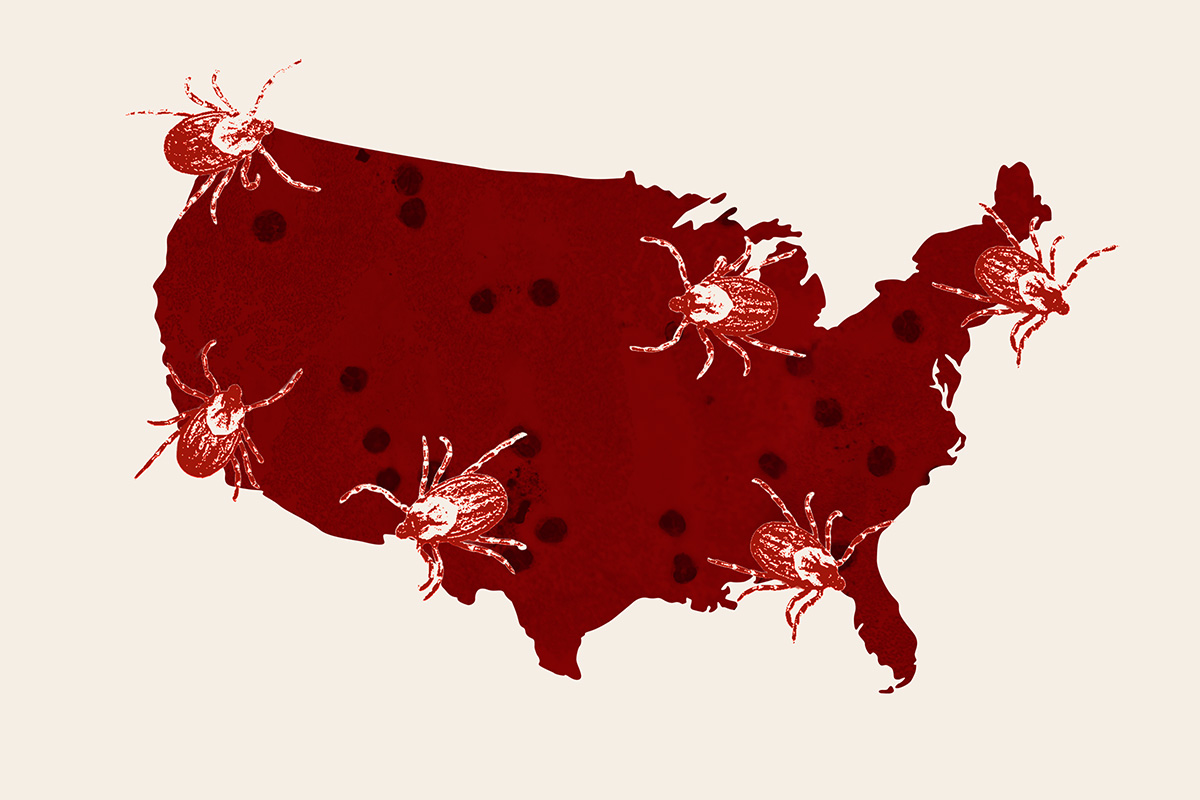
A type of disease spread by ticks is becoming more common in the U.S., including some that do not show the usual warning signs like a rash. Scientists have discovered that certain tick-borne viruses can hide from the immune system, making them harder to detect and fight. Experts are watching these changes closely to better understand the risks.
Key Facts
Tick-borne diseases in the U.S. are increasing, partly due to climate change and expanding tick habitats.
Anaplasmosis is one such disease; it causes fever and aches but usually does not cause a rash, so it can be missed.
Orthornairoviruses are a family of viruses carried by ticks that can cause severe illness, including hemorrhagic fever.
These viruses use proteins called OTUs to remove immune system signals, helping them avoid detection.
A virus called PCTNV, found in Pacific Coast ticks, has a strong ability to evade the immune system in lab tests.
The Pacific Coast tick already bites humans and spreads other diseases, raising concerns about possible PCTNV infection.
More research is needed to confirm if people are being infected by this new virus.
Experts stress the importance of awareness about different types of ticks and the diseases they might carry.
Read the Original
Want the full story? Tap a source to open the original
article.
A Mexican journalist named Josue Martinez was shot and killed in a drive-by attack in Puebla, where he reported on security issues. Authorities are investigating the murder, with his work as a possible reason for the killing, amid growing violence against journalists in Mexico.
Key Facts
Josue Martinez worked as a journalist focusing on security and major local events in Puebla, Mexico.
He was killed near his home by two attackers on a motorcycle while his 13-year-old son was nearby.
The Puebla state government condemned the murder and called for a thorough investigation.
Martinez was also known as "The Jaguar" and had a background as a lawyer before becoming a journalist.
Mexico is known as one of the most dangerous countries for journalists, with many killed or attacked in recent years.
At least nine journalists were killed in Mexico in 2025, making it the second most dangerous country for reporters that year.
Previous killings and attacks on journalists have occurred in other states like Veracruz, highlighting ongoing risks.
Groups like Reporters Without Borders and the Committee to Protect Journalists report high levels of violence and impunity for crimes against journalists in Mexico.
Read the Original
Want the full story? Tap a source to open the original
article.
Russia has recruited nearly 3,000 soldiers from African countries to fight in the war in Ukraine. About one in six of these recruits has died so far, with many coming from Cameroon, Ghana, Egypt, and Kenya.
Key Facts
Russia is recruiting African soldiers to fight in Ukraine’s conflict.
Almost 3,000 African recruits have been identified.
About 1 in 6 of these recruits has died in the fighting.
The affected countries include Cameroon, Ghana, Egypt, and Kenya.
The information comes from a platform linked to Ukraine’s Ministry of Defence.
This recruitment highlights the involvement of African individuals in the Ukraine war.
The report was shared by France 24 and journalist Bastien Renouil.
Read the Original
Want the full story? Tap a source to open the original
article.
A woman received a phone call that her dog, Abbott, had died unexpectedly while on a treadmill at doggy daycare. Abbott had been rescued and fostered to give him a better life, but his sudden death left the family grieving deeply.
Key Facts
The dog named Abbott died on a treadmill at doggy daycare less than an hour after being dropped off.
Abbott was a senior shih tzu mix rescued from being euthanized after his previous owner died.
He had health issues including surgery on a leg mass and dental surgery but was improving with his foster family.
The family noticed Abbott was calm, confident, and quirky, and he helped the family members become more active.
Abbott’s vet had confirmed he was in good health for his age before his death.
The dog’s death was sudden and unexpected, creating a strong emotional impact on his foster family.
The woman coped with grief by spending time outdoors and reflecting in nature.
Her husband, who was away on a work trip during Abbott’s death, had a worsening cough and health issues during this time.
Read the Original
Want the full story? Tap a source to open the original
article.
India has introduced its first hydrogen-powered train, called the NaMo Green Rail, to help reduce pollution and promote clean energy. The train, designed and built in India, will run daily on a 90 km route between Jind and Sonipat in Haryana, producing only water vapor and heat as emissions.
Key Facts
The NaMo Green Rail is India's first domestically built hydrogen-powered train.
Prime Minister Narendra Modi inaugurated the train before its first trip.
The train runs two return trips daily on a 90 km route in Haryana state.
It has 10 coaches and seats about 2,600 passengers, with a top speed of 75 km/h.
The hydrogen train emits only heat and water vapor, unlike diesel trains which produce pollution.
Hydrogen trains are used in countries like Japan, China, the U.S., and Germany.
India aims to make its railways net-zero in carbon emissions by 2030.
The train supports India’s broader efforts to expand clean energy and reduce carbon emissions.
Read the Original
Want the full story? Tap a source to open the original
article.
Iran's Revolutionary Guard claimed attacks on several U.S. military bases in the Middle East, including sites in Syria, Kuwait, Oman, Bahrain, and Jordan. The U.S. has responded with strikes on Iranian targets, and tensions have caused ship crews to avoid passing through the Strait of Hormuz due to safety fears.
Key Facts
Iran's Islamic Revolutionary Guard Corps (IRGC) said it attacked multiple U.S. military bases in the Middle East on Friday.
Targets included bases in Syria, Kuwait, Oman, Bahrain, and Jordan.
The U.S. military has conducted six nights of strikes on Iranian military targets in response.
There are no independent confirmations from U.S. officials about the damage claimed by Iran.
Ship crews are avoiding the Strait of Hormuz because of safety concerns after the U.S.-Iran ceasefire ended.
A maritime risk expert said the situation has returned to a "worst case scenario" with many vessels unwilling to travel through the strait.
Attacks have disrupted power and water stations in Kuwait and caused injuries in Qatar.
Tensions have contributed to higher oil prices worldwide.
Read the Original
Want the full story? Tap a source to open the original
article.
A leaked set of secret documents revealed that Russia ran a propaganda campaign called "Project Afrika" targeting West and Central African media. This operation placed hundreds of articles spreading Russian views, including anti-France and anti-Ukraine messages, in African news outlets from June to November 2024.
Key Facts
"Project Afrika" is a Russian campaign to influence African public opinion through media.
The campaign published 644 articles in at least 35 media outlets in West and Central Africa.
Russia spent over $300,000 on planting these articles.
The operation was first started by the Wagner Group mercenaries, then taken over by Russian secret services in 2023.
Senegalese media outlets, like PressAfrik, unknowingly published Russian propaganda articles.
Some articles were prepared and delivered ready to publish by local intermediaries for a payment between $250 and $700 each.
A Cameroonian journalist named in the documents denied involvement and called the papers fake.
This operation is part of Russia’s broader strategy to expand influence in Africa and push specific political messages.
Read the Original
Want the full story? Tap a source to open the original
article.
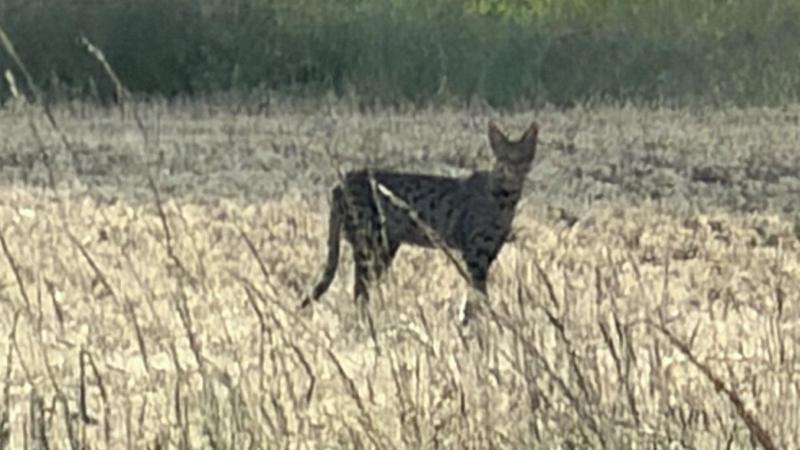
A big cat called a Savannah cat was found in a plant pot in a garden after being missing for about two months near Norwich, England. The cat was injured and taken to a vet, and it was confirmed to belong to a local owner.
Key Facts
The escaped Savannah cat had been missing since May and was found in mid-July.
It was discovered injured in a plant pot in a backyard in Bramerton, near Norwich.
The cat is a mix between a serval (a wild African cat) and a domestic cat.
The cat’s name is Blaze, and it was microchipped, which helped identify the owner.
Blaze had a broken paw and a chest wound when caught.
The cat had been spotted roaming in the countryside, about four miles from its home.
Owners of some wild cats need a special licence, but it was believed the owner of this F2 generation Savannah cat did not require one.
There are a few exotic cats like Savannahs and servals registered in private homes in South Norfolk.
Read the Original
Want the full story? Tap a source to open the original
article.