Fact-first summaries of your favorite news sources — stay informed without the doomscroll.
Your favorite news sources, one calm feed — fact-first summaries that always link to the
original story. No outrage bait, and we tell you when you're caught up. How it works
World News
Comprehensive coverage of international news and global events
Photographer Peter van Agtmael has spent over 20 years capturing images of war, working closely with US soldiers in Iraq and Afghanistan. His photo book, "Look at the U.S.A.: A Diary of War and Home," shows how these wars affect life in America by combining pictures of conflict with everyday scenes from the country.
Key Facts
Peter van Agtmael is a photographer who has documented wars for more than two decades.
He worked alongside US soldiers in Iraq and Afghanistan.
His work focuses both on battlefields and the effects of war on life in the United States.
Van Agtmael’s photo book is titled "Look at the U.S.A.: A Diary of War and Home."
The book pairs war images with photos of everyday American life after 9/11.
His work highlights the connection between wars abroad and their impact at home.
He discussed his work in an interview on the show Perspective by FRANCE 24.
Read the Original
Want the full story? Tap a source to open the original
article.
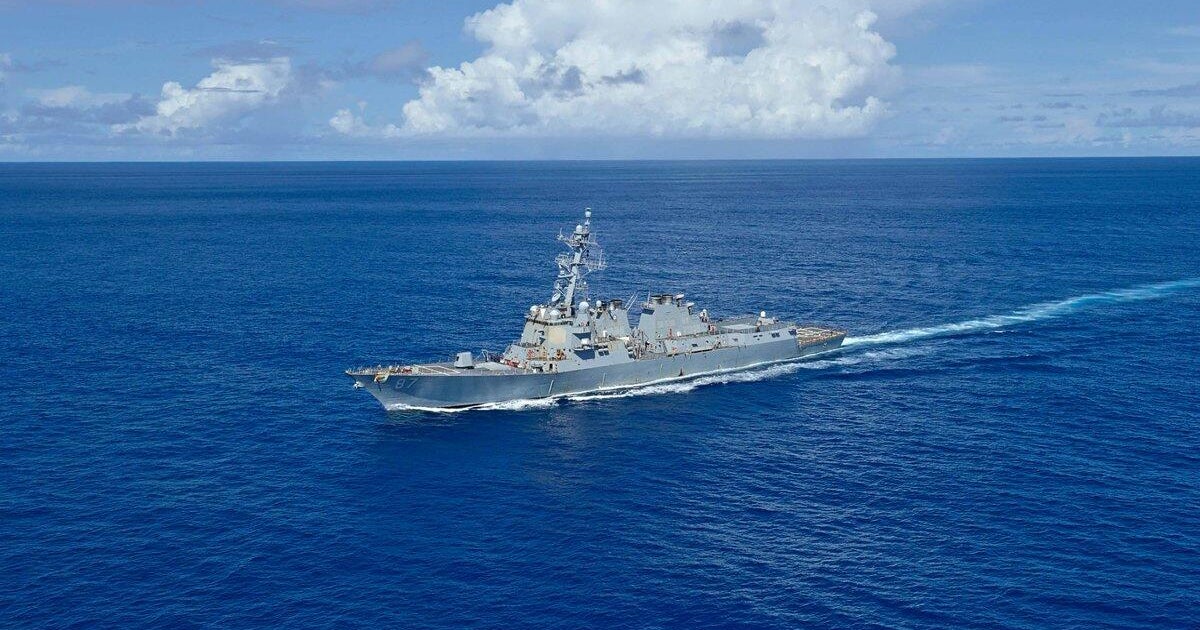
U.S. Central Command (Centcom) rejected a report from Iranian state media that said Iranian missiles hit a U.S. warship. Centcom stated that no U.S. ship was damaged or attacked.
Key Facts
Iranian state media claimed Iran’s Islamic Revolutionary Guard Corps hit a U.S. warship with two missiles.
Centcom posted on social media that this claim was not true.
Centcom confirmed no U.S. ships were hit or damaged.
The statement was made early Monday morning on the platform X.
The incident involved military forces from the U.S. and Iran.
The report highlights ongoing tensions and conflicting information between the two countries.
Read the Original
Want the full story? Tap a source to open the original
article.
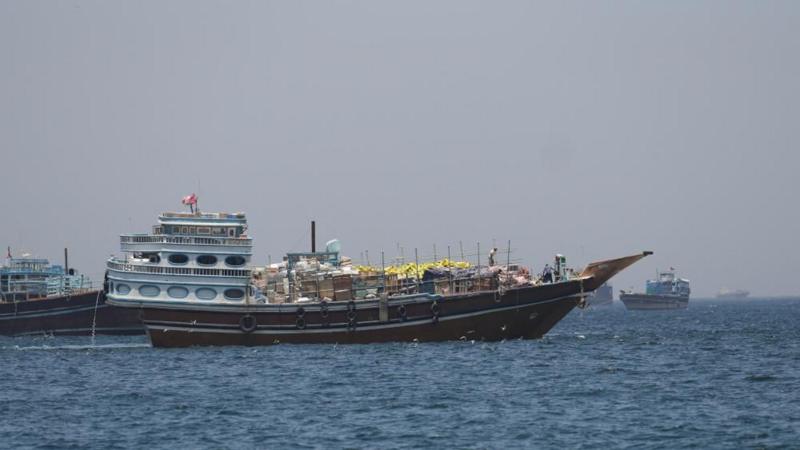
President Donald Trump announced "Project Freedom," a plan where the US will help ships stuck in the Strait of Hormuz due to Iran's blockade after recent US and Israeli air strikes on Iran. The US said it aims to guide these ships safely through the waterway, but Iran warned it would attack any foreign military forces entering the area without permission.
Key Facts
The Strait of Hormuz has been mostly blocked since the US and Israel attacked Iran by air.
About 20% of the world’s oil and liquefied natural gas passes through this Strait.
Iran closed the Strait in response to these attacks.
President Trump said the US will help guide ships trapped in the Strait so they can move safely.
The US said this is a humanitarian effort as many ships have low food and supplies on board.
Iran’s military threatens to attack any foreign military forces entering the Strait without coordination.
The US Central Command announced it would deploy warships, aircraft, drones, and 15,000 personnel to support the operation.
The United Arab Emirates reported a drone attack on one of its oil tankers in the Strait, but no injuries were reported.
Read the Original
Want the full story? Tap a source to open the original
article.
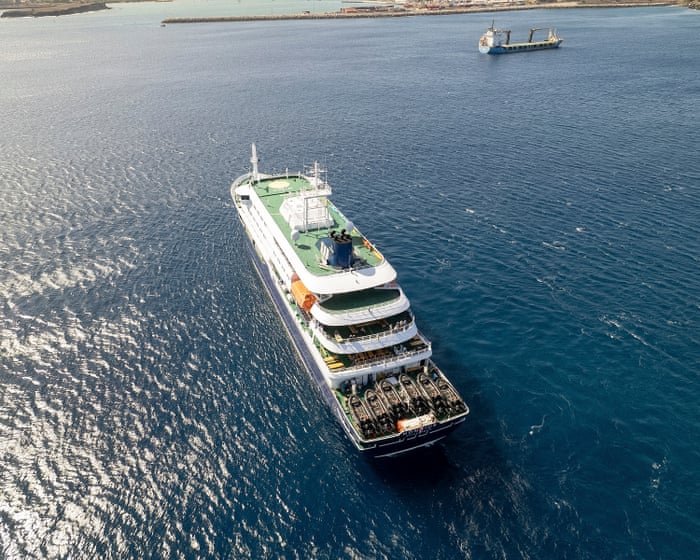
Cape Verde officials have stopped a cruise ship suspected of carrying a hantavirus outbreak from docking in their ports after three passengers died. Health authorities from multiple countries are working together to monitor the situation and provide medical care to those affected.
Key Facts
Three passengers on a cruise ship have died from a suspected hantavirus outbreak.
The cruise ship, named MV Hondius, carries 147 passengers and crew.
Hantavirus is a rare respiratory virus usually found in rodents.
Cape Verde blocked the ship from docking to protect public health.
One infected passenger is in intensive care in South Africa.
The ship left Argentina about three weeks ago and is flagged in the Netherlands.
Health officials from Cape Verde, the Netherlands, the UK, and South Africa are coordinating a response.
Efforts include medical evacuation of sick passengers and repatriation of deceased and crew members.
Read the Original
Want the full story? Tap a source to open the original
article.
Hezbollah has started using fibre optic drones in its conflict with Israel. These drones are hard to jam, which changes how battles happen in southern Lebanon and Israel. A ceasefire was made in April, but fighting is still happening.
Key Facts
Hezbollah launched rocket attacks at Israel in early 2026.
Israel responded with airstrikes and ground actions in southern Lebanon.
Hundreds of thousands of people were displaced due to the conflict.
Hezbollah now uses fibre optic drones that avoid Israeli electronic jamming.
Fibre optic drones send information through thin glass cables, making them harder to block than radio-controlled drones.
A US-brokered ceasefire started in mid-April 2026.
Despite the ceasefire, clashes and strikes continue in some areas of southern Lebanon.
The conflict is connected to broader regional tensions involving Iran.
Read the Original
Want the full story? Tap a source to open the original
article.
India's Bharatiya Janata Party (BJP), led by Prime Minister Narendra Modi, has won a major victory in the West Bengal state election. This marks the first defeat of Mamata Banerjee's 15-year rule and is seen as a major political shift in a state that was previously resistant to the BJP's influence.
Key Facts
West Bengal has over 100 million voters, making its election very significant in India.
The BJP had previously gained strong support in other parts of India but struggled in West Bengal until now.
Mamata Banerjee's Trinamool Congress (TMC) ruled West Bengal for 15 years before this election.
The BJP won more than 44% of the popular vote in West Bengal this time.
The BJP's rise in Bengal took about a decade, unlike faster gains in other states like Tripura and Assam.
TMC still has a strong local organization and grassroots support in Bengal.
Other state elections also saw changes: Tamil Nadu replaced the ruling party with a new one led by a former actor; Kerala ended its last Communist-led government; Assam re-elected the BJP.
This election shows a spreading influence of the BJP beyond its traditional strongholds.
Read the Original
Want the full story? Tap a source to open the original
article.
Austria expelled three staff members from the Russian Embassy in Vienna after suspecting them of spying using antennas on diplomatic buildings. These antennas reportedly allowed Russia to intercept data from international organizations based in Vienna.
Key Facts
Austria expelled three Russian Embassy employees for suspected espionage.
The spying allegedly involved antennas on embassy roofs used to intercept satellite internet data.
The intercepted data came from international organizations located in Vienna, such as the UN and the International Atomic Energy Agency.
Austria's Foreign Minister said diplomatic immunity should not protect spying activities.
Russia refused to waive the diplomats’ immunity, which led Austria to expel the staff.
Austria is updating its espionage laws to better protect international organizations.
Russia called Austria’s decision “outrageous” and warned it would respond strongly.
Austria has recently expelled more Russian diplomats despite its usual policy of military neutrality.
Read the Original
Want the full story? Tap a source to open the original
article.
A 19-year-old man named Omar Majed was charged with a bomb hoax after causing a large evacuation at Birmingham's Utilita Arena during a Peter Kay show. He was removed from court due to disruptive behavior and will appear again in early June.
Key Facts
Omar Majed, aged 19, is charged with giving false information about a bomb to the police.
He allegedly entered the arena without a ticket and suggested a bomb was present.
Nearly 13,000 people had to leave the arena during Peter Kay’s show because of the hoax.
No suspicious items or bombs were found after searches by the police.
Majed was removed from his court hearing after acting disruptively.
He did not enter a plea and was kept in custody following the hearing.
The next court appearance is scheduled for 1 June at Birmingham Crown Court.
Peter Kay’s show was interrupted about 45 minutes into the performance.
Read the Original
Want the full story? Tap a source to open the original
article.
In Indonesia, nearly one million children and teenagers are reported to have a habit of online gambling, with more than 80,000 players under the age of 10. Although gambling is illegal in the country, many young people become addicted, partly due to poverty, and some cases have led to suicides in 2024.
Key Facts
About 1 million minors in Indonesia are involved in online gambling.
Over 80,000 online gamblers in Indonesia are younger than 10 years old.
Gambling is illegal in Indonesia, a Muslim-majority country.
Young players often see gambling as a quick way to escape poverty.
In 2024, there were multiple suicides linked to online gambling in Indonesia.
Authorities are concerned about the growing addiction among youth.
The issue is considered a serious social and public health problem.
Read the Original
Want the full story? Tap a source to open the original
article.
Mark Carney, Canada’s prime minister, said Europe can lead the rebuilding of the international system based on rules. The European Political Community met in Armenia amid concerns about U.S. commitment to NATO and global tensions, including Russia’s war in Ukraine and U.S. troop withdrawals from Germany.
Key Facts
Mark Carney is the first non-European leader to attend the European Political Community (EPC) meeting in Yerevan, Armenia.
Carney said Europe will not accept a harsher, more selfish world and can rebuild a rules-based international order.
The EPC meeting happens during rising global tensions and doubts about the U.S. commitment to NATO after President Trump announced removing 5,000 troops from Germany.
Keir Starmer, U.K. prime minister, said that key alliances like NATO are more strained than desired and future cooperation is crucial for years to come.
French President Emmanuel Macron emphasized Europe’s reliability and the need to reduce dependence on other countries, including China, for critical resources.
Ukrainian President Volodymyr Zelenskyy warned that Russia faces a critical summer choice: expand the war or seek diplomacy, urging ongoing sanctions and European involvement in talks.
EU foreign policy chief Kaja Kallas called for a stronger European role in NATO and said the timing of U.S. troop withdrawals was surprising.
German Chancellor Friedrich Merz, who criticized U.S.-Iran talks, did not attend the summit.
Read the Original
Want the full story? Tap a source to open the original
article.
A monster truck lost control at a car show in Colombia and drove into a crowd. This accident killed at least three people, including a 10-year-old girl, and injured about 40 others.
Key Facts
The incident happened at a car show in Colombia.
A monster truck lost control and hit spectators.
At least three people died, one of them a 10-year-old girl.
Around 40 people were hurt in the accident.
The event was being watched by many onlookers.
Read the Original
Want the full story? Tap a source to open the original
article.
A Palestinian official, Mustafa Barghouti, said that Israel is not following a ceasefire agreement in Gaza that the United States helped arrange. He accused Israel of breaking the ceasefire and causing more suffering. Barghouti asked the international community to put pressure on Israel through sanctions.
Key Facts
Mustafa Barghouti, a Palestinian official, spoke about the ceasefire in Gaza.
The ceasefire was arranged with help from the United States under President Donald Trump.
Barghouti said Israel is not following the terms of the ceasefire.
He claimed Israel's actions seem to increase suffering in Gaza.
Barghouti called on the global community to impose sanctions on Israel to enforce the ceasefire.
The ceasefire agreement is intended to stop fighting in Gaza.
There are ongoing violations reported despite the agreement.
Read the Original
Want the full story? Tap a source to open the original
article.
The United States announced a plan called "Project Freedom" to help commercial ships stuck near the Strait of Hormuz. The U.S. military will provide guidance and increased security to allow ships to pass safely through the area.
Key Facts
The U.S. will assist commercial ships stranded near the Strait of Hormuz.
The effort is called "Project Freedom."
The U.S.-led Joint Maritime Information Center set up an enhanced security zone in Omani waters.
The plan may include guided-missile destroyers, over 100 aircraft, and 15,000 military personnel.
Details about the exact help or ship escorts have not been fully shared.
The Strait of Hormuz is a key passage affecting the global economy.
President Donald Trump announced this U.S. operation.
Read the Original
Want the full story? Tap a source to open the original
article.
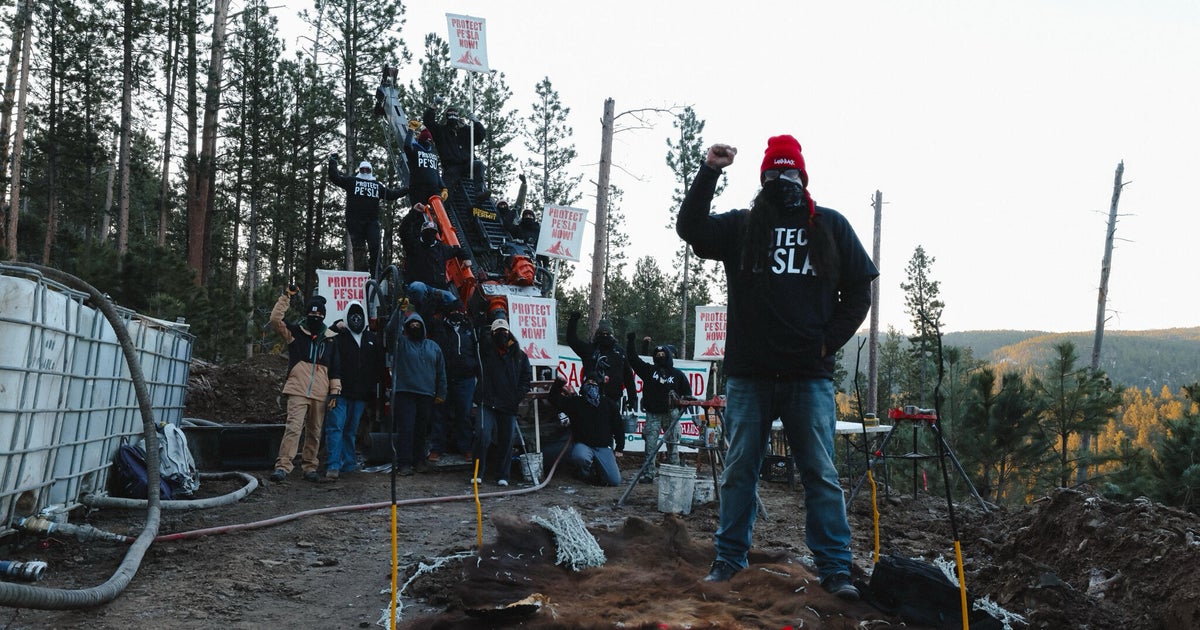
Nine Native American tribes from South Dakota, North Dakota, and Nebraska are suing the U.S. government to stop exploratory drilling for graphite near a sacred site called Pe'Sla in the Black Hills. The tribes say the government did not consult them or conduct an environmental review before approving the mining project, which they say violates federal laws protecting historic and cultural places.
Key Facts
Nine Native American tribes filed a federal lawsuit against the U.S. Forest Service and Department of Agriculture.
The lawsuit aims to stop graphite drilling near Pe'Sla, a sacred meadow used for tribal ceremonies in the Black Hills.
The drilling project began in late April 2026 by Pete Lien & Sons, a mining company based in Rapid City.
Pe'Sla is considered sacred by Sioux tribes who have used it for ceremonies for more than 2,000 years.
The tribes say the government approved the project without proper consultation or an environmental review.
Parts of Pe'Sla have been owned by Sioux tribes since 2012 through land purchases.
The tribes argue that the mining could harm their cultural and religious use of the land.
The lawsuit claims the government violated the National Historic Preservation Act and the National Environmental Policy Act.
Read the Original
Want the full story? Tap a source to open the original
article.
Ukraine’s anti-drone system, called Sky Map, is being used in the Gulf region to detect and defend against Iranian drones. Ukrainian-made interceptor drones, which are cheaper and reusable, help shoot down these one-way attack drones, and Ukrainian experts are training US forces on this technology in Saudi Arabia.
Key Facts
Iranian Shahed drones are one-way attack drones that target energy and military sites in the Gulf and Israel.
Each Shahed drone costs $20,000 to $50,000, while US interceptor missiles to shoot them down cost about $4 million each.
Shahed drones are loud and fly low, making them hard to detect early by traditional systems.
Ukraine has developed interceptor drones that chase and destroy attack drones and can be reused.
Ukrainian President Zelenskyy visited Saudi Arabia, the UAE, and Qatar to offer drone defense help and signed 10-year defense agreements with these countries.
The US military is using Ukraine’s Sky Map drone detection system at a Saudi air base with Ukrainian officers training US personnel.
Ukrainian interceptor drones include the Sting, which is fast and uses thermal cameras, and the P1-Sun, a 3D-printed interceptor drone.
Several countries have adopted drone designs inspired by the Iranian Shahed drone.
Read the Original
Want the full story? Tap a source to open the original
article.
Lebanon is experiencing a fragile ceasefire while its president plans a possible historic meeting with Israeli Prime Minister Netanyahu in Washington, pressured by U.S. President Donald Trump. The conflict involves Israel’s military occupation of southern Lebanon, historical claims over the land, and long-standing tensions rooted in past wars, massacres, and political divisions.
Key Facts
Lebanon is currently under a fragile ceasefire amid ongoing tensions with Israel.
President Joseph Aoun may meet Israeli Prime Minister Benjamin Netanyahu in Washington for the first time ever.
Israel occupies parts of southern Lebanon and aims to create a “security zone” south of the Litani River, covering 10% of Lebanon’s territory.
Israeli forces continue bombing and preventing civilians from returning to their homes in the occupied area.
Historical documents from 1918-1919 show early Israeli leaders claimed land extending to the Litani River as part of Israel.
In 1948, the Israeli army killed over 80 villagers in the Lebanese village of Hula with little resistance; this was one of several massacres near the border.
The 1948 Arab-Israeli conflict caused about 100,000 Palestinian refugees to flee to Lebanon.
Southern Lebanon’s Shia population faced neglect in public services in the 1960s, fueling political mobilization during later conflicts.
Read the Original
Want the full story? Tap a source to open the original
article.
The UK Labour government plans to make state-owned land more nature-friendly by planting trees in prisons and restoring peat bogs on military lands. This includes creating green bridges for wildlife and adding solar panels on government buildings to help the environment and improve prisoner welfare.
Key Facts
Tree nurseries may be built on prison grounds to assist prisoner welfare.
Military land could be turned into heathland or peat bogs to restore natural habitats and reduce flooding.
The Department for Transport plans to add more green bridges near roads and railways to help wildlife cross safely.
Solar panels might be increased on government buildings as part of environmental efforts.
Environment Secretary Emma Reynolds supports these projects as part of a broader plan to restore nature.
Labour faces criticism from the Green party over environmental priorities, which Reynolds denies.
Reynolds criticized the Green party for opposing solar farms and power pylons needed for clean energy.
Some government deals with the EU may drop promises like banning foie gras imports to reduce trade barriers.
Read the Original
Want the full story? Tap a source to open the original
article.
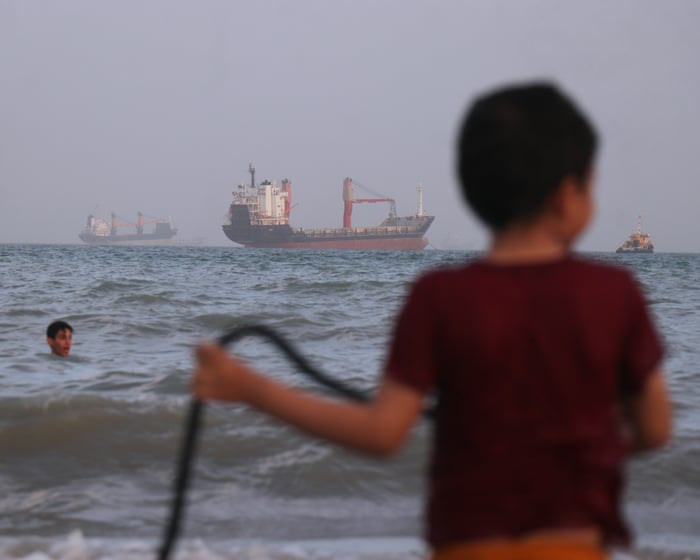
The US has started a project called “Project Freedom” to help ships stuck in the Gulf of Hormuz navigate safely through a new southern route. Iran insists that any ship moving through the strait must coordinate with its military, creating tension over the passage of vessels in the area.
Key Facts
The US announced “Project Freedom” to guide ships trapped by the Iran war through a southern route of the Strait of Hormuz.
President Donald Trump said the project aims to help crews on hundreds of ships stuck in the Gulf since the conflict began.
US Central Command will support the project with military resources but will not escort ships directly.
A new “enhanced security area” south of usual shipping lanes has been set up, passing through Omani waters.
Ships must coordinate with Omani authorities by radio when using the new route.
Iran demands all ships coordinate with its armed forces and warns against unauthorized transit, considering it a security threat.
More than 850 ships and about 20,000 sailors are currently trapped in the Gulf due to the conflict and blockades.
French President Emmanuel Macron said the strait can only reopen through coordinated efforts between the US and Iran, rejecting unilateral military actions.
Read the Original
Want the full story? Tap a source to open the original
article.
Three passengers on an Atlantic cruise ship have died, and three others are sick due to a possible hantavirus outbreak. This rare virus is usually spread by rodents through their urine, droppings, or saliva and has a death rate of about 40%.
Key Facts
Three people died on a cruise ship in the Atlantic Ocean from a suspected hantavirus infection.
Another three passengers on the same ship are reported to be ill.
Hantavirus is a rare disease that spreads mainly through contact with rodents or their waste.
The virus can be deadly in about 40% of cases.
The affected cruise ship was at sea when the cases were reported.
Hantavirus is not commonly spread from person to person.
Authorities are investigating the outbreak to confirm the cause and manage the situation.
The outbreak highlights the risk of rare diseases in close living environments like ships.
Read the Original
Want the full story? Tap a source to open the original
article.
Iran has warned it will use force against any ship passing through the Strait of Hormuz without its permission, opposing a U.S. plan announced by President Trump to escort commercial ships through the waterway. The U.S. military has launched "Project Freedom" to guide trapped vessels, while European countries have urged for a coordinated approach and expressed reluctance to join a military operation until a peace deal is reached.
Key Facts
Iran threatens to attack ships that transit the Strait of Hormuz without military permission.
President Trump announced "Project Freedom," a U.S. military effort to escort commercial ships through the strait.
The U.S. military involves 15,000 forces and over 100 aircraft in the operation.
Iran offered a 14-point peace proposal, but President Trump indicated he might reject it.
CENTCOM denied Iranian claims that a U.S. warship was hit by missiles near the strait.
French President Emmanuel Macron called for U.S.-Iran coordination to reopen the Strait of Hormuz and said France will not join unclear military actions.
Iran’s Revolutionary Guard requires ships to follow specific transit rules or face force.
Dozens of commercial ships have been stuck in the Gulf due to tensions between Iran and combined U.S.-Israeli military actions.
Read the Original
Want the full story? Tap a source to open the original
article.