Fact-first summaries of your favorite news sources — stay informed without the doomscroll.
Your favorite news sources, one calm feed — fact-first summaries that always link to the
original story. No outrage bait, and we tell you when you're caught up. How it works
World News
Comprehensive coverage of international news and global events
Israel carried out several air strikes in southern Lebanon, killing at least 10 people despite a ceasefire declared two weeks earlier. Hezbollah, a Lebanese armed group, said it will continue attacks on Israeli forces near the border, while both sides report ongoing fighting and casualties.
Key Facts
At least 10 people were killed in Israeli air strikes across southern Lebanon.
The strikes targeted towns including Shoukine, Kfar Dajjal, Lwaizeh, Nabatieh, and Siddiqine.
Israel says its attacks aim at Hezbollah, a group allied with Iran, but many victims are civilians.
At least 44 people died in Israeli attacks in the last two days alone.
Lebanon’s total death toll since the war began on March 2 is at least 2,618.
Over one million people in Lebanon have been displaced by the fighting.
Hezbollah has used drones to attack Israeli troops and says it will continue strikes.
A ceasefire announced on April 17 is mostly ignored, with fighting continuing.
China, holding the UN Security Council presidency, called on Israel to stop bombing Lebanon.
Israel’s Prime Minister Netanyahu faces pressure at home to end the ceasefire and continue military actions.
Read the Original
Want the full story? Tap a source to open the original
article.
Activists from the Global Sumud Flotilla arrived in Istanbul after Israeli forces stopped their ship while it was on the way to Gaza with aid supplies. The organisers said they were treated badly while held by Israeli authorities.
Key Facts
The activists were part of the Global Sumud Flotilla carrying aid to Gaza.
Israeli forces intercepted the aid convoy at sea before it reached Gaza.
The activists were detained by Israeli authorities after the interception.
Organisers reported mistreatment during their detention.
After being released, the activists returned to Istanbul, Turkey.
Read the Original
Want the full story? Tap a source to open the original
article.
People around the world held rallies on May Day, also called International Labour Day. They asked for higher pay, shorter work hours, and improved job conditions. These events occurred amid worries about the global economy caused by the U.S.-Israeli conflict with Iran and rising energy prices.
Key Facts
May Day is a day when workers and unions show support for labor rights.
Rallies took place worldwide with participation from workers and activists.
The main demands were better wages, fewer working hours, and safer work environments.
The ongoing conflict involving the United States, Israel, and Iran is affecting the global economy.
Rising energy costs are adding to economic concerns.
Trade unions led many of the demonstrations.
The events highlight global worker solidarity during economic uncertainty.
Read the Original
Want the full story? Tap a source to open the original
article.
The BBC confirmed the cast for the second series of The Celebrity Traitors, a game show where celebrities try to find hidden "traitors" while staying in a Scottish castle. The show features actors, comedians, and singers competing for up to £100,000 for charity, following its first series that attracted large UK TV audiences.
Key Facts
The Celebrity Traitors is a reality game show filmed in a Scottish castle.
Celebrities must identify traitors among them, who secretly eliminate other players.
The second series includes Oscar-winner Richard E Grant, Michael Sheen, Bella Ramsey, and others.
Comedians like James Acaster and Joe Lycett are also part of the new lineup.
The first series averaged 14.9 million viewers in the UK, with a peak of 15.4 million at the finale.
The show drew strong viewership from young people aged 16-24.
The game inspired a two-hour immersive experience, board and card games, and branded cloaks.
A stage version of the show will open in London in 2027, produced by Studio Lambert and Neal Street Productions.
Read the Original
Want the full story? Tap a source to open the original
article.
The recent war in the Middle East, related to Iran, is causing problems far beyond the region. In Sudan, the conflict has disrupted important shipping routes, making it hard for aid groups to deliver food and medicine to millions of people who need help.
Key Facts
The Middle East war involves Iran and is affecting many countries globally.
Sudan faces worsening shortages of medicine and food because of the conflict.
Shipping routes used to deliver aid are disrupted due to the war.
Millions of people around the world rely on aid shipped through these routes.
Aid organizations report major challenges in reaching those in need because of these disruptions.
Sudan is already struggling from previous conflicts before this recent crisis.
The situation highlights how conflicts in one region can impact humanitarian aid in distant places.
Read the Original
Want the full story? Tap a source to open the original
article.
Ukraine has been using drones to attack oil facilities inside Russia. These strikes aim to reduce Russia’s oil exports, which help pay for its war in Ukraine, but the overall economic effect is still unclear. Ukraine is also trying to encourage more young people to join the military by offering higher pay and promises of phased demobilization.
Key Facts
Ukrainian drones have targeted oil facilities deep inside Russia.
The goal is to reduce Russia’s oil exports, a major source of war funding.
The full economic impact of these attacks is not yet known.
The war between Russia and Ukraine has lasted four years.
Ukraine faces difficulty in recruiting young people for its military.
To attract recruits, Ukraine offers higher pay and phased demobilization (gradual release from service).
The conflict continues despite temporary ceasefires and prisoner exchanges.
Read the Original
Want the full story? Tap a source to open the original
article.
A senior Iranian military officer said new fighting with the United States is likely, following President Donald Trump’s rejection of Iran’s latest peace offer. Talks between Iran and the US remain frozen while the war has been paused since April, with both sides accusing each other of not committing to negotiations.
Key Facts
A senior Iranian officer stated that renewed conflict with the US is likely.
President Trump said he was not satisfied with Iran’s latest negotiating proposal.
Iran submitted the new proposal to Pakistan, which is acting as a mediator.
The war started by the US and Israel in February has been paused since April 8.
US and Iranian talks have stalled after one failed peace round in Pakistan.
Iran controls the Strait of Hormuz, blocking major shipping routes for oil and gas.
The US has imposed a counter-blockade on Iranian ports.
Both Iran and the US accuse each other of bad faith and failure to keep promises.
Read the Original
Want the full story? Tap a source to open the original
article.
President Donald Trump said he is not happy with Iran’s latest offer to start peace talks. A top Iranian official warned that fighting between the United States and Iran might start again because Washington rejected the proposal. A fragile ceasefire between the two countries has been in place for about three weeks.
Key Facts
President Donald Trump expressed dissatisfaction with Iran’s recent peace offer.
A senior Iranian official said fighting could resume after the U.S. rejected the negotiation proposal.
The United States and Iran have a fragile ceasefire that has lasted three weeks.
The news involves ongoing tensions between the U.S. and Iran.
The situation remains tense with no new agreement reached yet.
The article includes keywords such as Donald Trump, Iran, and Middle East.
The ceasefire is described as fragile, meaning it could break easily.
Read the Original
Want the full story? Tap a source to open the original
article.
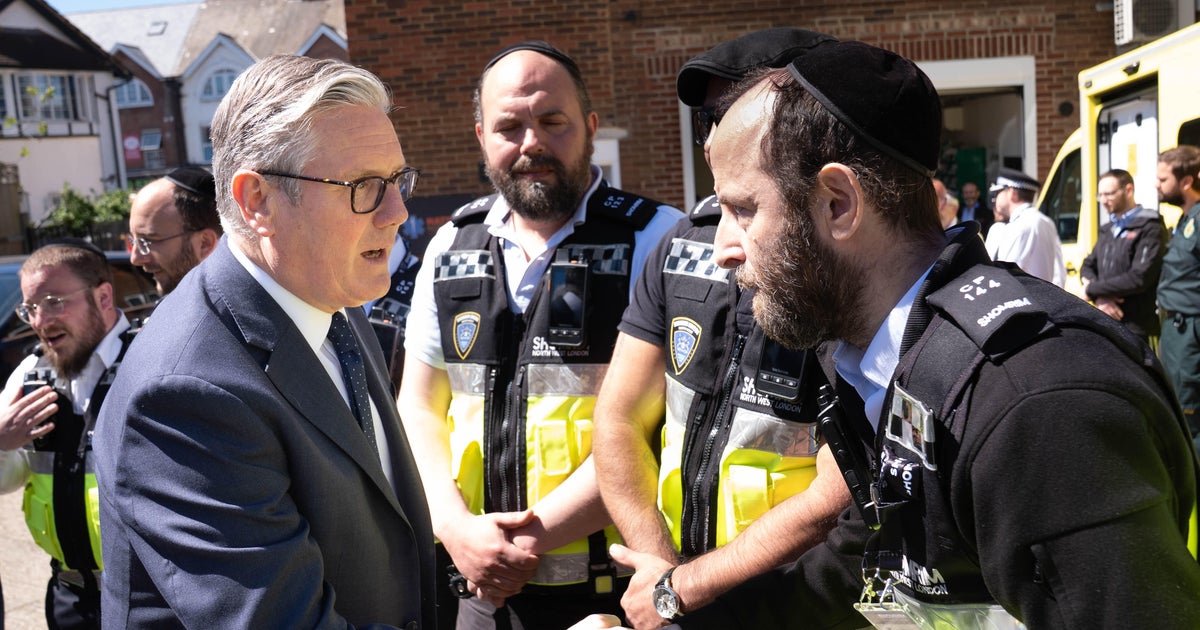
Britain’s Prime Minister Keir Starmer called for stronger action against certain chants at pro-Palestinian protests amid rising antisemitic attacks. The concern grew after two Jewish men were stabbed in London, with police treating the attack as terrorism and raising the national terror threat level.
Key Facts
Prime Minister Starmer wants some protests about Gaza to be banned if they include hateful chants like "globalize the intifada."
Two Jewish men were stabbed in Golders Green, a London area with a large Jewish community; a man was charged with attempted murder.
Recent attacks include arson at synagogues and other Jewish sites in London.
British police say British Jews face the highest level of threat ever, from many extremist groups across the political and religious spectrum.
The UK terror threat level was raised from substantial to severe after the stabbing incident.
The increase in antisemitic incidents follows the Hamas attack on Israel and the ongoing Gaza war.
The Community Security Trust charity recorded 3,700 antisemitic incidents in the UK in 2025, compared to 1,662 in 2022.
Officials link social media to making antisemitism more widespread and accepted.
Read the Original
Want the full story? Tap a source to open the original
article.
The article suggests that the Black Sea Grain Initiative from 2022 could serve as a model for creating a similar plan focused on fertilizer shipments through the Strait of Hormuz. This would help ensure a steady supply of fertilizers to global markets.
Key Facts
The Black Sea Grain Initiative began in 2022 to support grain exports.
The initiative helped keep grain moving during conflicts in the Black Sea region.
A similar approach could be used to secure fertilizer shipments in the Strait of Hormuz.
The Strait of Hormuz is a key waterway for global shipping, especially for energy and raw materials.
Fertilizer supplies are critical for global agriculture and food production.
Disruptions in fertilizer shipments can affect food prices and availability worldwide.
Creating a "Hormuz fertilizer initiative" could promote stability in fertilizer trade.
The article calls for international cooperation to protect and maintain fertilizer shipments.
Read the Original
Want the full story? Tap a source to open the original
article.
A young humpback whale stranded near Germany’s Baltic coast was rescued and released into the North Sea off Denmark by rescuers using a water-filled barge. Despite the rescue, experts said the whale’s health was poor and its chances of survival were low.
Key Facts
The whale, nicknamed Timmy or Hope, was stranded on a sandbank near Wismar Bay, Germany, for nearly six weeks.
Rescuers transported the 10-meter-long whale on a flooded barge to the North Sea, where it swam away freely.
Experts warned the whale was weak, had skin blemishes, and might have been entangled in a fishing net.
The International Whaling Commission and German ocean experts advised against rescue, saying the whale’s chance to live was small.
The rescue was funded by two wealthy individuals willing to pay any cost to save the whale.
German authorities initially gave up, but public interest led to approval of the private rescue effort.
The whale has been fitted with a tracker to monitor its movements after release.
Danish authorities said they will not intervene if the whale becomes stranded again, calling beaching a natural event.
Read the Original
Want the full story? Tap a source to open the original
article.
NATO is reviewing the United States’ plan to withdraw about 5,000 troops from Germany. The US says this move reflects changing military priorities and may lead to Europe taking more responsibility for its own security.
Key Facts
The US plans to pull roughly 5,000 troops out of Germany over the next 6 to 12 months.
NATO is working with the US to understand the details of this troop withdrawal.
The decision comes amid tensions involving the US, Germany, and the conflict with Iran.
President Donald Trump criticized Germany’s Chancellor Friedrich Merz and called NATO ineffective.
A former US diplomat said the shift shows the US is focusing more on threats from China than Europe.
Germany’s Defence Minister said Europe needs to do more for its own defense and is already improving its military.
NATO members agreed to increase defense spending to up to 5% of their budgets at last year’s summit.
NATO officials say they are confident Europe and NATO will remain strong despite the US troop changes.
Read the Original
Want the full story? Tap a source to open the original
article.
President Donald Trump criticized the US Navy for acting like pirates while enforcing a blockade on Iranian ports amid ongoing tensions. Despite a ceasefire, the US imposed a blockade on Iran’s ports and the Strait of Hormuz, with Trump warning that the conflict could escalate if peace talks fail.
Key Facts
President Trump said the US Navy seized an Iranian ship, cargo, and oil during the blockade, comparing their actions to pirates.
The US and Israel attacked Iran on February 28, leading to Iranian retaliatory strikes on Israel and US bases in the Gulf.
Iran blocked the Strait of Hormuz, an important route for 20% of the world’s oil and gas supply.
A ceasefire started on April 8, but the US imposed a blockade on Iranian ports and the Strait of Hormuz on April 13.
Trump expressed dissatisfaction with Iran’s latest peace proposal and warned of potential military action.
Iran’s military said the US is not committed to an agreement, making war likely again.
Iran’s Foreign Ministry called the US-Israel actions a “war of choice” and urged Americans to demand accountability from President Trump’s administration.
The US War Powers Resolution deadline for congressional approval of the conflict passed without action, with legal experts saying the administration is avoiding Congress’s authority.
Read the Original
Want the full story? Tap a source to open the original
article.
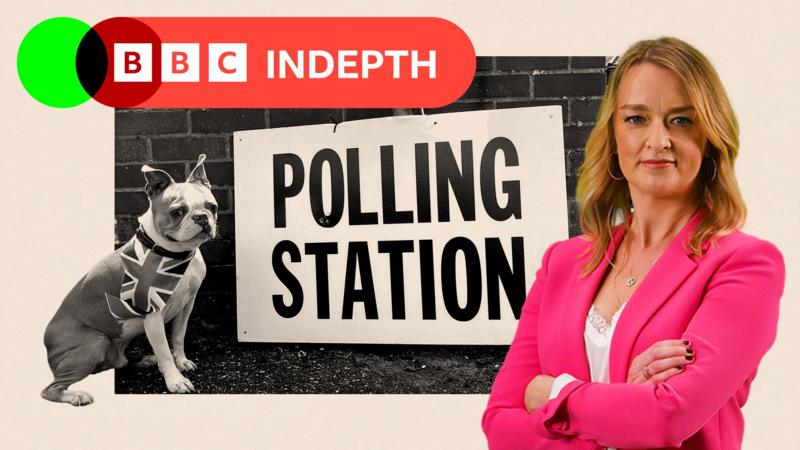
Next week's elections in the UK will test the strength of several political parties as they compete for local council seats. The Reform party is currently leading in polls and is expected to gain many seats, possibly overtaking the Conservatives as the main party on the right. Labour's leader, Keir Starmer, is focused on national issues and resisting internal challenges to his leadership.
Key Facts
The UK holds local elections next week, with about 5,000 council seats contested.
The Reform party has led UK-wide polls for over a year and is expected to gain a large number of council seats.
Reform aims to become the top party not only in England but also in Scotland and Wales.
Nigel Farage’s Reform party could replace the Conservatives as Labour’s main opposition.
Labour leader Keir Starmer rejects calls to set a public timeline for stepping down.
Starmer’s team is focused on national issues and opposing President Trump’s policies on cost of living.
The Green party hopes to increase seats, especially in London, potentially drawing votes away from Labour.
The election results could reshape the UK political landscape beyond just the question of the prime minister’s future.
Read the Original
Want the full story? Tap a source to open the original
article.
Only 3% of suicides linked to domestic abuse in England and Wales between 2020 and 2025 have led to prosecutions. Families of victims often face difficulties in getting police to investigate or take their evidence seriously, and experts warn that many abusers go unpunished.
Key Facts
From 2020 to 2025, 553 people died by suicide after suspected domestic abuse in England and Wales.
Only 17 prosecutions related to these suicides have been made during this time.
In 2025, people in abusive relationships were more likely to kill themselves than be killed by their partner.
Lee Milne was the first person in Britain convicted of killing a partner who died by suicide linked to abuse, with a verdict of culpable homicide in Scotland.
No similar manslaughter convictions have been reached by juries in England and Wales for such cases.
Police often close domestic abuse investigations after a victim’s suicide without explanation.
The domestic abuse commissioner said there is inconsistent police work and a lack of thorough investigations.
Families report challenges in getting police to review evidence and investigate properly after abuse-related suicides.
Read the Original
Want the full story? Tap a source to open the original
article.
The article compares cultural differences between the United States and the United Kingdom, focusing on how both countries have distinct social behaviors and political styles. It highlights visits between leaders, differences in food culture, and contrasting approaches to public decorum and politics.
Key Facts
The US and UK have a long but currently strained alliance often called the “special relationship.”
King Charles visited the White House during President Donald Trump’s term, noticing changes like a beehive shaped like a mini-White House.
The author describes British “Daddies Favorite Brown Sauce,” a condiment with a mysterious mix of ingredients including vinegar and molasses.
British food culture and customs are quite different from American ones, which tend to be bolder and less traditional.
British culture tends to value politeness and decorum more than American culture, where political and media figures often display more aggressive or dramatic behavior.
The UK has been stricter in reacting to political scandals, such as those involving Jeffrey Epstein, compared to the US.
British society is influenced by a strong class structure, while American culture often celebrates breaking rules and dramatic personalities.
Read the Original
Want the full story? Tap a source to open the original
article.
Zambia canceled the world's largest human rights and technology conference, RightsCon 2026, just days before it was set to start. The government said the event did not fit with national values, causing disappointment among activists and organizers who had planned for months.
Key Facts
RightsCon 2026 was planned to be held in Lusaka, Zambia, from May 5-8.
The event focused on human rights in the digital age, including issues like online hate, internet shutdowns, AI, and surveillance.
Over 2,600 people, including activists and experts, were expected to attend.
Zambia's government said the conference needed more time to align with the country's values and policies.
Some believe pressure from China influenced the cancellation, especially since some Taiwanese delegates were involved.
Rights groups say this is part of a pattern of reducing free speech and assembly ahead of Zambia’s August 2026 elections.
The cancellation damages Zambia’s international reputation and disappoints many who had spent time and money preparing to attend.
The RightsCon organizer, Access Now, called the cancellation an example of global efforts to limit civil society activity.
Read the Original
Want the full story? Tap a source to open the original
article.
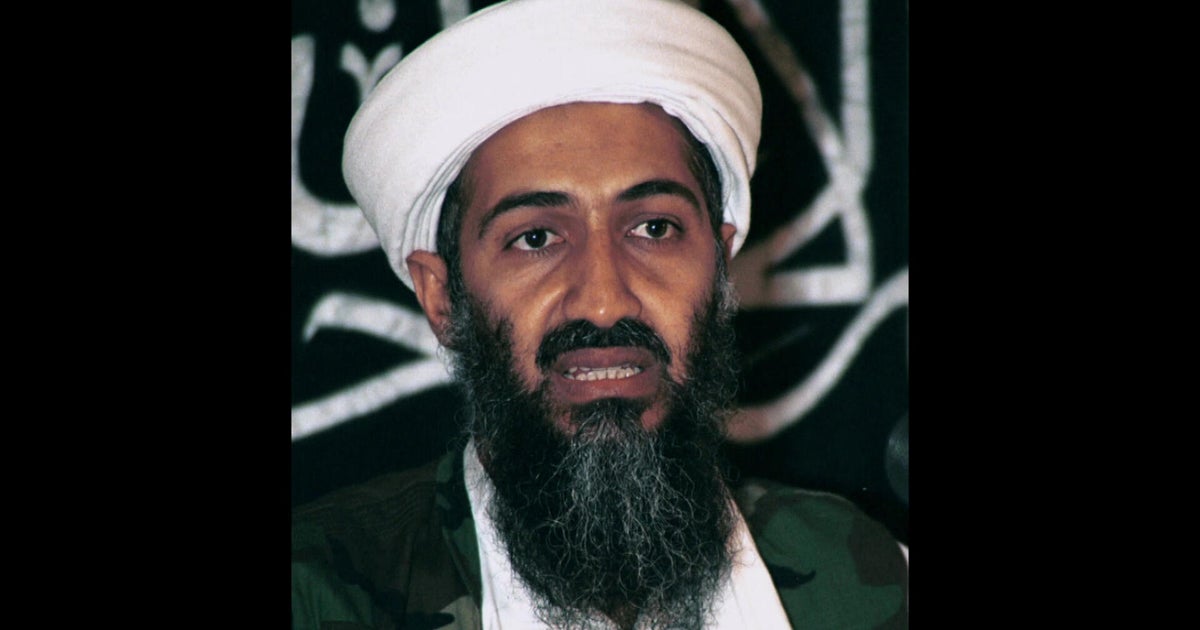
The article recalls a 2012 interview with a retired Navy SEAL who was part of SEAL Team 6. He described the May 2011 mission that led to the death of Osama bin Laden in Abbottabad, Pakistan.
Key Facts
The interview took place in 2012 with a retired Navy SEAL from SEAL Team 6.
The SEAL described the operation called Neptune Spear.
The mission happened in May 2011.
It targeted Osama bin Laden's compound in Abbottabad, Pakistan.
The operation resulted in killing Osama bin Laden.
SEAL Team 6 is a special U.S. Navy group trained for difficult missions.
The interview was shown by CBS News on 60 Minutes.
Read the Original
Want the full story? Tap a source to open the original
article.
Gen Z is being called the “Christopher Columbus generation” because many of their popular trends and discoveries are actually things that have existed for a long time. The name refers to Columbus “discovering” America despite it already being inhabited, drawing a comparison to Gen Z “discovering” old ideas as if they are new.
Key Facts
The “Christopher Columbus generation” nickname is used to describe Gen Z’s habit of popularizing old ideas as if they are new.
Examples include trends like “quiet quitting” (doing the bare minimum at work), “silent walking” (walking without technology), and the “Coke float” (ice cream in soda).
Searches for these terms spiked significantly in recent years, even though the concepts are much older.
The term “quiet quitting” saw a 100% search increase in August 2022, “Coke float” had the same increase in February 2026, and “silent walking” rose in March 2026.
Critics say this nickname highlights a lack of awareness by Gen Z about historical and cultural context.
Some older people see Gen Z’s surprise over things like Madonna’s fame as an “exposure gap” rather than just a generational gap.
The comparison to Christopher Columbus points to how Columbus is said to have “discovered” America despite it already being inhabited by indigenous peoples.
The debate is ongoing about whether this nickname fairly describes Gen Z’s behavior or if it is an overgeneralization.
Read the Original
Want the full story? Tap a source to open the original
article.