Fact-first summaries of your favorite news sources — stay informed without the doomscroll.
Your favorite news sources, one calm feed — fact-first summaries that always link to the
original story. No outrage bait, and we tell you when you're caught up. How it works
World News
Comprehensive coverage of international news and global events
China’s ambassador to the United Nations, Fu Cong, called for a review of the decision to end the UN peacekeeping mission in Lebanon, known as UNIFIL. He expressed concern about ongoing conflict and urged Israel to stop attacks on Lebanon.
Key Facts
China wants the UN Security Council to reconsider ending UNIFIL’s mission in Lebanon.
UNIFIL was created after Israel’s 1978 invasion and expanded after the 2006 war with Hezbollah.
The Security Council decided last year to withdraw UNIFIL peacekeepers by December 2026.
Since March 2, Israeli attacks on Lebanon have killed over 2,600 people and displaced more than one million.
At least six UNIFIL peacekeepers have died and many have been injured during recent fighting.
UN Secretary-General Antonio Guterres condemned attacks on UN peacekeepers carrying out safety tasks.
China is waiting for a UN report in June before deciding its official position.
China’s ambassador said most Security Council members agree UNIFIL should not withdraw now.
Read the Original
Want the full story? Tap a source to open the original
article.
President Donald Trump rejected Iran’s recent peace proposal, saying it included terms he could not accept. The US has imposed new sanctions on companies helping Iran’s oil exports, warned about maritime activities near the Strait of Hormuz, and maintains a strong military presence in the region. Meanwhile, tensions continue with casualties reported in Iran and Lebanon amid ongoing conflict and diplomatic efforts.
Key Facts
President Trump said Iran’s peace proposal included unacceptable demands.
The US warned ships paying fees to Iran in the Strait of Hormuz could face sanctions.
New US sanctions targeted companies linked to Iranian oil exports, including a firm in China.
A poll shows 61% of Americans think using military force against Iran was a mistake.
Fourteen Iranian soldiers died while defusing unexploded bombs in Zanjan province.
Iran's IRGC Navy plans to enforce new rules to control nearby coastal waters.
The US approved over $8.6 billion in military sales to Israel and Gulf allies.
Lebanon reported 12 deaths from Israeli strikes despite a ceasefire, with officials claiming attacks are increasing.
Read the Original
Want the full story? Tap a source to open the original
article.
Red squirrels in England are at risk of disappearing within 25 years, with only about 15,000 left in the country. A wildlife group, Save Our Reds, has created a petition asking the government to take stronger, coordinated actions to protect these squirrels and control the invasive grey squirrel population.
Key Facts
Red squirrels in England are close to extinction, with only 15,000 remaining there.
The total UK population of red squirrels is estimated between 120,000 and 160,000.
Grey squirrels from North America carry a virus deadly to red squirrels that contributed to their decline.
Habitat loss and weak enforcement of protections also harm red squirrel survival.
Save Our Reds has gathered over 75,000 signatures urging urgent protective measures.
The group wants a national plan to manage grey squirrels, develop vaccines against squirrelpox, and support fertility control research.
The government says it monitors red squirrels and controls grey squirrel numbers to help red squirrels thrive.
Forestry England manages forests with sustainable methods to support wildlife, including red squirrels.
Read the Original
Want the full story? Tap a source to open the original
article.
Iran has presented a new proposal to help restart peace talks with the United States about the ongoing conflict. The talks have stalled, and both sides are trying to find a way to end the war and reduce tensions.
Key Facts
Iran shared a new plan aimed at moving forward stalled peace talks with the U.S.
The conflict between Iran and the U.S. continues to affect global supply chains.
The U.S. administration stated that the war is "terminated" and does not require further Congressional approval.
There is a 60-day deadline for the U.S. Congress to approve an extension related to the Iran war.
Recent violence in the region resulted in at least 15 deaths in southern Lebanon.
The Hormuz Strait, a key global shipping route, is affected by the conflict, impacting food and other imports worldwide.
The proposal from Tehran is part of ongoing efforts to prevent further escalation in the Middle East.
Read the Original
Want the full story? Tap a source to open the original
article.
The US embassy in London warned American citizens to be careful after the UK raised its national threat level to “severe,” meaning an attack is highly likely in the next six months. The warning advises people to stay alert in public, avoid certain places, and change travel routines to stay safe amid rising threats.
Key Facts
The UK raised its national threat level from “substantial” to “severe,” the second-highest level.
“Severe” means a terrorist attack is highly likely within six months.
MI5 cited a rise in threats from Islamist and Extreme Right-Wing individuals and groups in the UK.
There has been an increase in attacks and threats targeting Jewish and Israeli people and places.
Recently, two Jewish men were stabbed in London, and synagogues have been attacked.
The US embassy advised American citizens to avoid schools, churches, tourist spots, and transport hubs.
Americans were also told to change travel routes and times to make their movements less predictable.
This is the second security alert from the US embassy in the UK within a few weeks.
Read the Original
Want the full story? Tap a source to open the original
article.
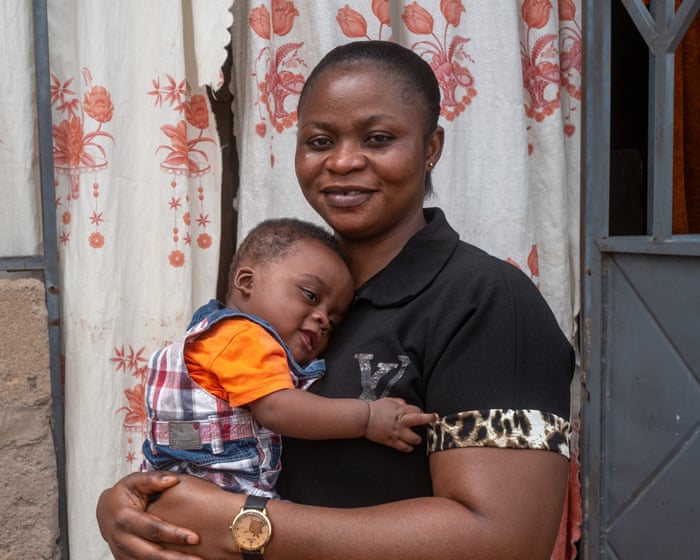
The World Health Organization (WHO) has approved the first malaria drug made specifically for babies. This drug, called Coartem Baby, can treat infants as small as 2 kg and is expected to help reduce malaria deaths in young children, especially in parts of Africa.
Key Facts
Malaria infects up to 18% of children under six months in some African areas.
In 2024, 610,000 people died from malaria, with about 75% of those deaths in children under five in Africa.
Before this, babies were treated with versions of malaria drugs meant for older children, raising risks of incorrect dosing and side effects.
Coartem Baby comes as cherry-flavored tablets that dissolve in liquids such as breast milk.
WHO granted the drug prequalification, meaning it meets international safety and quality standards.
The drug contains artemether and lumefantrine and was developed by Novartis and the Medicines for Malaria Venture (MMV).
Research showed babies can catch malaria despite earlier beliefs about immunity passed from mothers.
The treatment is already used in countries like Ghana and is being provided at mostly not-for-profit prices in regions where malaria is common.
Read the Original
Want the full story? Tap a source to open the original
article.
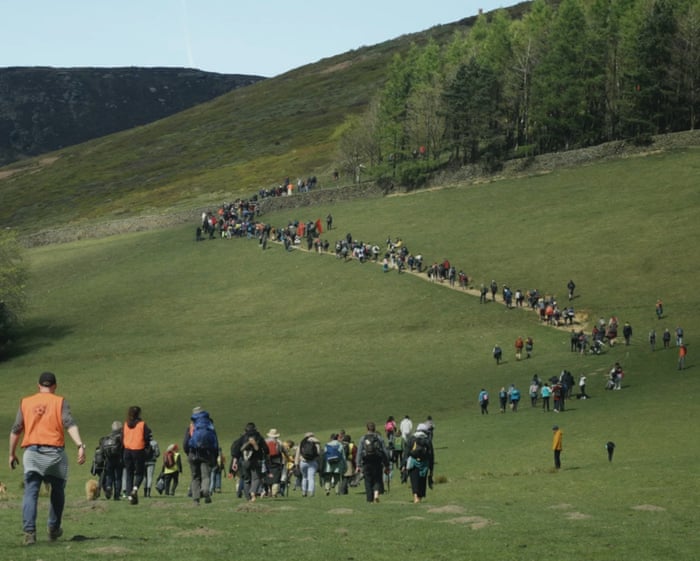
A new documentary highlights growing support in England for public rights to access private land, similar to laws in Scotland that allow people to walk, camp, and explore nature responsibly. The film follows campaigners pushing for these "right to roam" laws after recent protests, including those over wild camping on Dartmoor.
Key Facts
The public currently has access to only about 8% of land in England.
The right to roam movement in England started about five years ago, inspired by a famous 1932 mass trespass on Kinder Scout in the Peak District.
A recent court case in Devon initially allowed landowners to block wild camping on part of Dartmoor but was overturned by the UK Supreme Court following public protests.
Campaigners want laws like Scotland’s 2003 Land Reform Act, which permits responsible access to most land and water for activities like walking, cycling, and camping.
The 2003 Scottish law requires people to use the land responsibly, which helps protect the environment.
Some landowners, such as John Grant in Scotland, support responsible public access, but others worry about safety, costs, and damage caused by visitors.
Farmers have raised concerns about risks like open gates, threatened livestock, and disturbed crops caused by some visitors.
The documentary "Our Land" aims to start a public conversation on land access rights and will be shown in cinemas starting 8 May.
Read the Original
Want the full story? Tap a source to open the original
article.
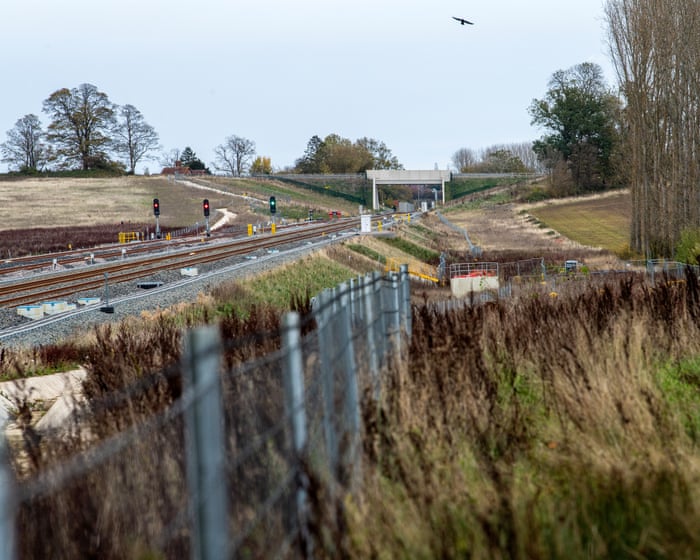
The new East West Rail line between Oxford and Milton Keynes is finished and running freight trains but has not yet started passenger services, despite plans to do so. Delays are caused by contract issues, train modifications, staff training, and negotiations over staffing, with no clear date announced for passenger trains to begin.
Key Facts
The East West Rail line connects Oxford to Milton Keynes and Cambridge.
Freight trains have been running since late 2024, but no passenger trains are in service.
Passenger service was expected to start in early 2025 but has been delayed multiple times.
The Department for Transport says the delay is partly due to contract interruptions caused by the 2024 general election.
Chiltern Railways, the operator, needs to complete train modifications, station handover, and staff training.
Unions oppose driver-only trains, causing staffing negotiations to continue.
Local people and officials are frustrated because passenger trains were promised to support new homes and job access.
Protests and petitions have been organized by residents affected by the delay.
Read the Original
Want the full story? Tap a source to open the original
article.
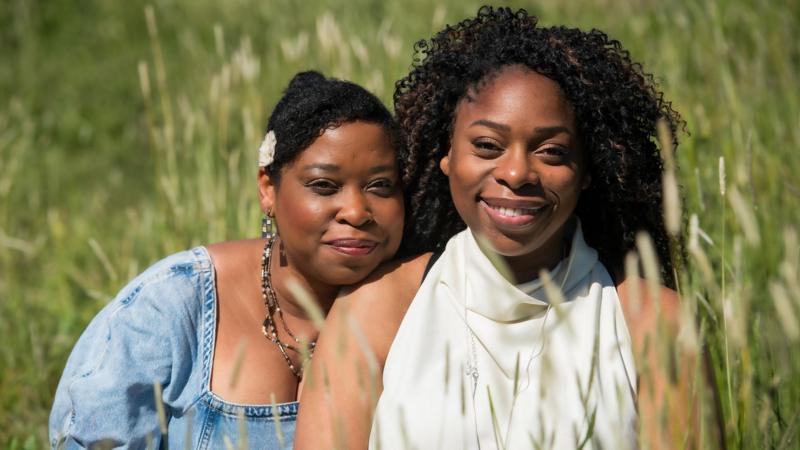
Twin sisters Michelle and Lavinia Osbourne were born minutes apart in 1976 but have different fathers. Their unique situation is due to a rare biological event called heteropaternal superfecundation, where two eggs from one cycle are fertilized by sperm from different men.
Key Facts
Michelle and Lavinia Osbourne are non-identical twins with different fathers.
They were born in Nottingham, UK, in 1976, just minutes apart.
Heteropaternal superfecundation is very rare and involves one woman releasing multiple eggs fertilized by sperm from different men in the same cycle.
Only about 20 cases of this phenomenon have been recorded worldwide.
Their mother was young and had a difficult childhood involving abuse and foster care.
The twins had a tough upbringing, often separated and raised by others.
Their mother named a man called James as their father, but DNA tests showed he was only Lavinia’s father, not Michelle’s.
Michelle discovered the truth through a DNA test after suspecting differences in their paternal lines.
Read the Original
Want the full story? Tap a source to open the original
article.
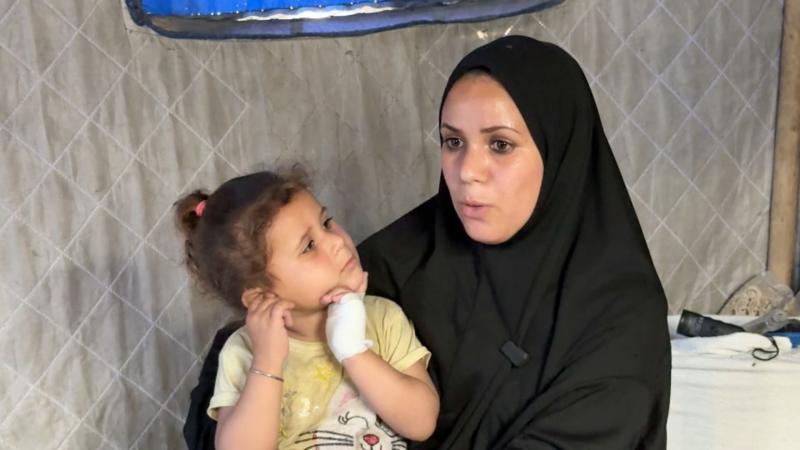
Camps for displaced people in Gaza are facing serious problems with rats, weasels, and other pests. These animals are biting residents, spreading disease, and thriving in the large piles of rubbish and sewage around overcrowded camps. Aid groups and the UN warn that urgent health actions and large-scale cleanup efforts are needed to prevent a public health crisis.
Key Facts
A newborn baby and other vulnerable people have been bitten by rats and weasels in Gaza’s displaced persons camps.
Rodents and pests are visible in 80% of the places where about 1.45 million displaced Gazans live.
Rats and weasels carry diseases that can cause infections, skin and respiratory illnesses, and food poisoning.
The destroyed living conditions, including piles of rubbish and running sewage, have created ideal breeding grounds for pests.
No major reconstruction or delivery of temporary homes has occurred since the war and ceasefire deal over six months ago.
Aid workers say a large-scale cleanup and pest control campaign is urgently needed, along with repair of water and sanitation systems.
The Israeli body controlling Gaza crossings says it is working with international groups to improve sanitation there.
Many families keep watch at night to protect children and their belongings from pest attacks.
Read the Original
Want the full story? Tap a source to open the original
article.
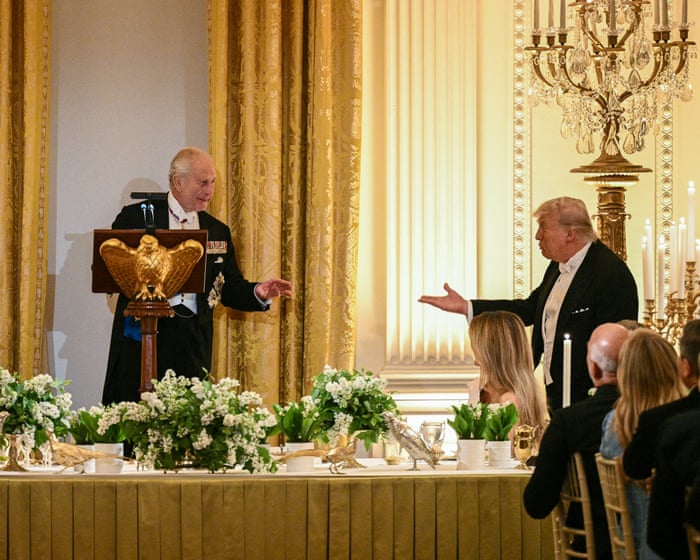
King Charles visited Washington and spoke to the U.S. Congress about the historical ties between the UK and the U.S. He encouraged Americans to remember their shared past, maintain unity, and continue acting as a positive moral force in the world.
Key Facts
King Charles joked about history at a White House banquet with President Donald Trump.
He addressed Congress, emphasizing the importance of U.S.-UK friendship and shared values.
Charles referenced the Magna Carta and the English Bill of Rights as influences on U.S. democracy and law.
He highlighted the importance of checks and balances on executive power.
The king reminded Americans of support from allies during events like 9/11.
He urged the U.S. to appreciate and support its European allies, including helping Ukraine.
Charles’s speech aimed to inspire Americans to overcome current political challenges.
He connected historical lessons to present-day issues without directly criticizing President Trump.
Read the Original
Want the full story? Tap a source to open the original
article.
Jews in Golders Green, London are observing Shabbat under tighter security following a recent stabbing attack, which police call a terrorist incident. Many Jewish people feel unsafe wearing religious items like the kippah in public and face fears of further antisemitic violence.
Key Facts
Two Jewish men were seriously injured in a stabbing attack in Golders Green on Wednesday.
The attacker, Essa Suleiman, was charged with attempted murder.
Many Jews are hiding their kippahs (traditional skullcaps) in public for safety reasons.
Synagogues have increased security with barriers, guards, and volunteers wearing protective gear.
Jewish families continue Shabbat rituals but with heightened concerns about safety.
There has been a rise in antisemitic incidents in recent months, including attacks on Jewish sites.
Some community members fear repeat or copycat attacks after recent violence.
The attack has caused deep anxiety and a sense of isolation among British Jews.
Read the Original
Want the full story? Tap a source to open the original
article.
Many developed countries are now experiencing more deaths than births. This is because people are living longer, and fewer children are being born, which affects populations, economies, and public services.
Key Facts
In 2024, 21 of 27 European Union countries had more deaths than births.
Countries across Asia and the Americas, like Japan and South Korea, also show this trend.
In the UK, deaths are expected to outnumber births every year starting in 2026.
The UK’s population will still grow for a while but may peak around 2054 before declining.
A fertility rate of about 2.1 children per woman is needed to keep a population stable; the UK rate is about 1.44.
Fewer children mean fewer students, causing some schools and child-related businesses to close or struggle.
An aging population leads to more spending on pensions, health, and social care, putting pressure on younger workers.
Older populations tend to invest more cautiously, which can slow economic growth.
Read the Original
Want the full story? Tap a source to open the original
article.
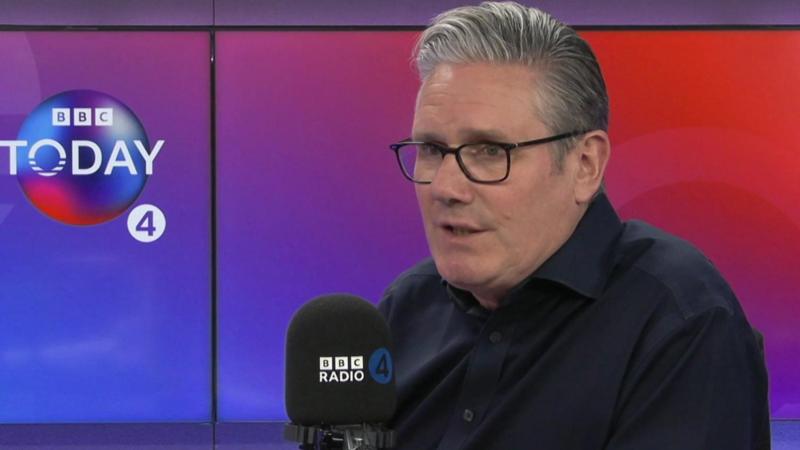
The UK Prime Minister, Sir Keir Starmer, said some protests might need to be banned, especially pro-Palestinian marches, because of concerns about repeated impacts on the Jewish community. This follows recent violent attacks against Jewish people and calls from officials and community leaders to review protest rules.
Key Facts
The Prime Minister supports the right to peaceful protest but worries about the repeated effect of pro-Palestinian marches on Jews.
Two Jewish men were stabbed in north London recently; police called it a terror attack.
The government is reviewing laws about public order and hate crime but has not yet published the findings.
The government’s independent terrorism reviewer asked for a pause on pro-Palestinian marches, citing antisemitic language concerns.
The Chief Rabbi asked for a temporary ban on these protests after recent attacks.
Some groups oppose linking protests to violence and warn against limiting freedom of speech.
Police can limit or ban protests that cause serious public disorder with government approval.
The government recently approved banning a march in London for the first time since 2012.
Read the Original
Want the full story? Tap a source to open the original
article.
The United States, led by President Donald Trump, imposed new sanctions on Cuba targeting key sectors of its economy and officials accused of corruption or human rights abuses. Cuba’s government condemned the sanctions as illegal and harmful, blaming them for fuel shortages and power blackouts that affect daily life.
Key Facts
President Trump signed an executive order imposing sanctions on Cuba’s energy, defense, financial, and security sectors.
The sanctions also target individuals accused of human rights abuses or corruption.
Cuban Foreign Minister Bruno Rodriguez called the sanctions illegal and abusive, saying they punish the Cuban people.
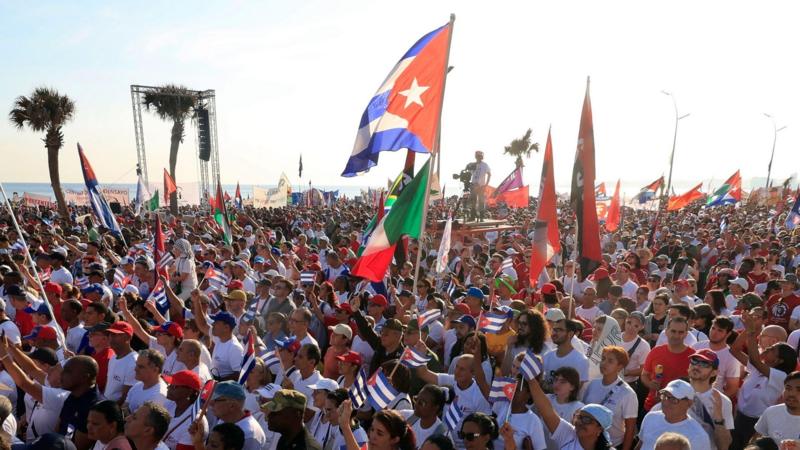
Protests took place in Havana on International Workers Day against the US embargo and its impact on fuel shortages.
Cuba is facing widespread blackouts and fuel shortages, disrupting hospitals, transportation, and schools.
Only one Russian oil tanker has reached Cuba since the US blockade started.
President Trump threatened tariffs on countries that supply oil to Cuba.
The US has had an economic embargo on Cuba since 1960 after Cuba’s 1959 revolution led by Fidel Castro.
Read the Original
Want the full story? Tap a source to open the original
article.
President Donald Trump said that US forces are acting like pirates by taking control of Iranian ships and their cargo near the Strait of Hormuz. The US has kept a blockade on Iran’s ports and has seized at least three ships flagged to Iran.
Key Facts
President Donald Trump described US forces as “like pirates” in their actions near Iran.
US forces have taken control of Iranian ships and cargo near the Strait of Hormuz.
The US is maintaining a blockade on Iran’s ports.
At least three ships flying the Iranian flag have been seized by the US.
The Strait of Hormuz is a strategic waterway important for shipping and oil transport.
The US military is enforcing restrictions on Iranian maritime activities in this area.
Read the Original
Want the full story? Tap a source to open the original
article.
A 45-year-old man, Guido Reichstadter, climbed to the top of Washington’s Frederick Douglass Memorial Bridge to protest the war on Iran. He spoke about his protest to the news outlet Al Jazeera from the bridge.
Key Facts
The protester is 45 years old.
His name is Guido Reichstadter.
He is on top of the Frederick Douglass Memorial Bridge in Washington.
The reason for his protest is the war on Iran.
He spoke to Al Jazeera while at the protest site.
The protest is focused on international conflict involving Iran.
Authorities have not been mentioned in the report.
Read the Original
Want the full story? Tap a source to open the original
article.
The Cuban government strongly condemned new sanctions imposed by President Donald Trump, calling them unfair and harmful to the Cuban people. The sanctions aim to pressure Cuba by targeting individuals linked to its government and security forces amid rising tensions between the two countries.
Key Facts
President Donald Trump issued new sanctions against Cuba, focusing on individuals supporting the Cuban government and security forces.
Cuba’s Foreign Minister called the sanctions “unilateral coercive measures” that punish the Cuban people collectively.
The Cuban government said the measures violate international law, specifically the United Nations Charter.
The US claims Cuba is a “safe haven” for groups like Hezbollah, a Lebanese armed group.
Earlier, Trump declared a national emergency over what he calls a threat from Cuba and imposed tariffs related to Cuba’s oil supply.
Cuba is facing serious fuel shortages causing frequent power outages across the country.
The US Senate recently blocked a resolution that would have required Congressional approval before any US military action against Cuba.
Tensions between the US and Cuba have increased following alleged US plans to abduct Venezuela's President and threats to Cuba’s government.
Read the Original
Want the full story? Tap a source to open the original
article.
In the town of Apam, Ghana, there is a tree called Santseo that was planted hundreds of years ago by Nana Asumbia, a royal and spiritual leader. The tree marks where her family and followers settled after traveling from the Akwamu Kingdom, using tree planting to choose where to live.
Key Facts
The tree, called Santseo, means "Under" in the Fanti language because people settled under its shade.
It was likely planted in the 13th Century by Nana Asumbia, a royal figure and chief priest.
Nana Asumbia led a group from Akwamufie, the capital of the Akwamu Kingdom, who moved westward and settled in Apam.
The group planted seedlings at stops along their journey to test if a place was suitable for settlement; if the tree grew, they stayed.
The tree species is Piliostigma thonningii, known for surviving in tough environments and for traditional uses like medicine.
The tree stands between Fort Patience (built in 1697) and the Apam Methodist Church, linking different parts of Ghana’s history.
The family home in Apam has been built around the tree, showing its importance to the community.
Oral history and a worn plaque commemorate Nana Asumbia and her descendants in the area.
Read the Original
Want the full story? Tap a source to open the original
article.
Peru is investigating a human trafficking scheme that tricked its citizens with fake job offers to fight for Russia in the war against Ukraine. About 600 Peruvians were reportedly recruited under false promises and at least 13 have died on the front lines.
Key Facts
Peru’s public prosecutor is probing alleged human trafficking involving false job offers to work in Russia.
Victims were told they would work as security guards or in other jobs with salaries of $2,000 to $3,000 per month.
Instead, many were sent to fight in Russia’s military operation in Ukraine.
So far, 13 Peruvians have died and roughly 600 were recruited since October 2025.
Peru’s Foreign Ministry requires citizens to get permission before joining foreign militaries and has asked Russia for information on those serving.
The Russian embassy in Peru admitted Peruvians signed contracts to join the Russian army.
Families of recruited Peruvians protested, demanding their relatives be brought home.
Other countries have also raised concerns about Russia’s recruitment of foreign fighters, including African nations and North Korea.
Read the Original
Want the full story? Tap a source to open the original
article.