Fact-first summaries of your favorite news sources — stay informed without the doomscroll.
Your favorite news sources, one calm feed — fact-first summaries that always link to the
original story. No outrage bait, and we tell you when you're caught up. How it works
World News
Comprehensive coverage of international news and global events
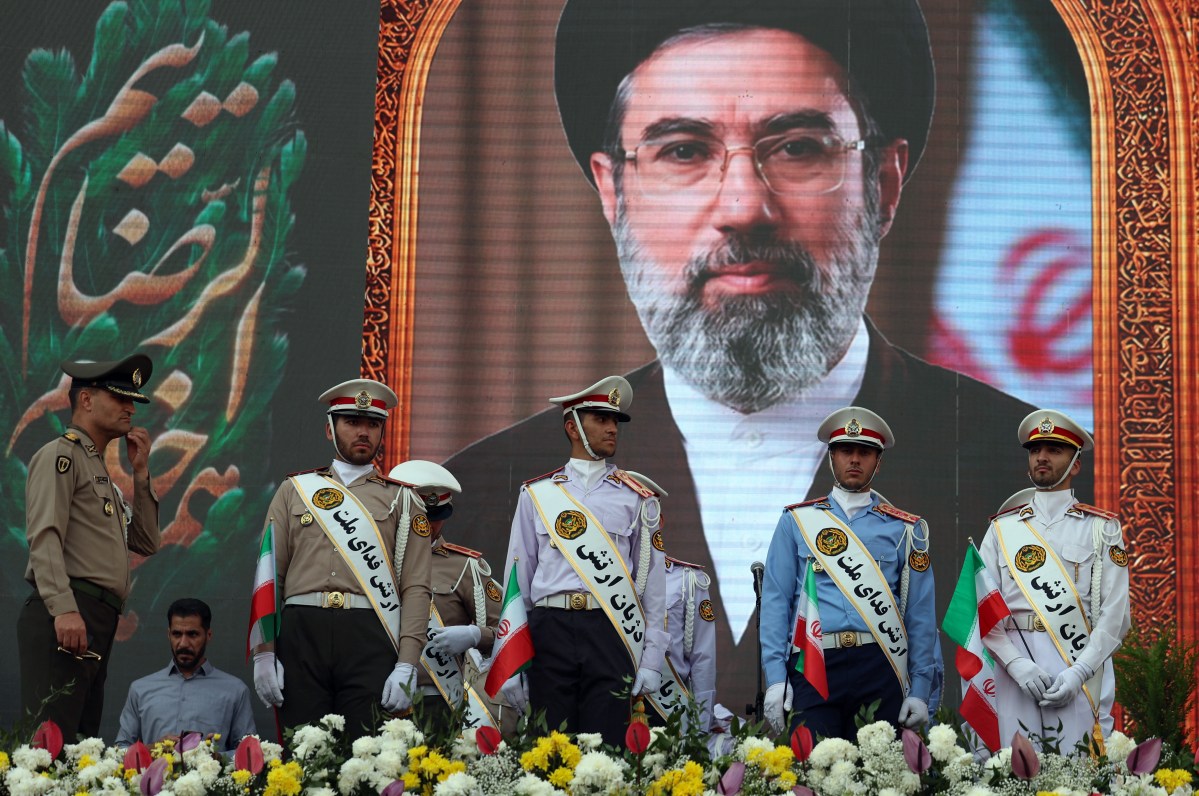
Iran has two main military forces: the Islamic Revolutionary Guard Corps (IRGC) and the Islamic Republic of Iran Army (Artesh). While much attention has focused on the IRGC in the recent war involving the U.S. and Israel, the Artesh has also played an important and growing role, especially through the use of drones and actions across land, air, and sea.
Key Facts
Iran’s military includes the IRGC, which protects the Islamic Republic and its ideology, and the Artesh, which handles traditional defense.
The IRGC has more influence and resources but has lost many leaders in recent conflicts.
The Artesh has mobilized drones called Arash in response to attacks and has expanded its role in the current war.
The Artesh operates the larger ships in Iran’s navy, unlike the IRGC navy, which uses smaller boats.
Artesh drones have been used against targets beyond Israel, including in the Gulf region.
At least one Artesh air force mission with old U.S.-made F-5 fighter jets reportedly reached a U.S. military base in Kuwait.
Artesh ground units have been put on alert due to threats like a possible Kurdish invasion and potential U.S. ground attacks on Iranian territory.
Despite having more soldiers (about 400,000) than the IRGC (around 120,000), the Artesh is considered less advanced and less capable in combat quality.
Read the Original
Want the full story? Tap a source to open the original
article.
Two volumes of the rare and valuable book Birds of America by John James Audubon are on display at the Royal College of Physicians and Surgeons in Glasgow. The book shows life-size, hand-colored images of North American birds and is considered one of the greatest works of bird art in the world.
Key Facts
The Royal College of Physicians and Surgeons of Glasgow has owned the two volumes since 1838.
Birds of America includes detailed, hand-colored pictures of over 200 bird species from early 19th-century North America.
Each page is very large, about 3 feet by 2 feet, and must be handled carefully by two people.
Audubon created the book to document all the bird species in North America and worked to sell copies before printing.
Charles Darwin attended Audubon’s lectures on birds in Edinburgh, where Audubon also found his first UK publisher.
The book was expensive to make and benefited from the work of enslaved and indigenous people in America.
The exhibition is free and open to the public at the college’s library in Glasgow, but visitors are asked to book in advance.
The book recently appeared in the BBC comedy Small Prophets as a key plot element.
Read the Original
Want the full story? Tap a source to open the original
article.
The entire international jury of the Venice Biennale art event resigned nine days before the opening due to disagreements about Russia’s participation. The event postponed the prize announcements until its closing in November, following a decision not to award prizes to countries accused of crimes against humanity, including Russia and Israel.
Key Facts
The Venice Biennale is a well-known international contemporary art event held in Italy.
The international jury resigned just nine days before the event was to begin.
The resignation happened because of controversy over Russia’s participation.
The organizers decided not to give prizes to countries accused of crimes against humanity.
Russia and Israel were among the countries banned from receiving prizes.
Normally, the winners are announced at the opening, but this was delayed until the event’s closing in November.
The situation shows how political conflicts can affect global cultural events.
Read the Original
Want the full story? Tap a source to open the original
article.
President Donald Trump said he might pull US troops out of Italy and Spain because both countries criticized the US military campaign in Iran. He also expressed frustration with their leaders for not supporting the conflict.
Key Facts
President Trump is reviewing the US military presence in Europe and may withdraw troops from Italy and Spain.
Italy and Spain have been critical of the US campaign in Iran.
Trump said Italy "has not been of any help" and Spain has been "horrible."
Italy’s Prime Minister Giorgia Meloni disagreed with the US war and refused US military use of a base in Sicily without approval.
Spain’s Prime Minister Pedro Sánchez has been openly against the US war and faced threats from Trump.
Germany’s leader Friedrich Merz has also faced criticism from Trump over energy, migration, and the Ukraine conflict.
Trump’s threats add to ongoing tensions between the US and some European allies.
Read the Original
Want the full story? Tap a source to open the original
article.
On May 1, International Workers' Day, people around the world held large street protests to call for better pay, safer workplaces, and more labor rights. In France, unions organized demonstrations with the slogan “bread, peace and freedom,” linking worker issues to conflicts in Ukraine and the Middle East.
Key Facts
May Day is also known as International Workers' Day.
Workers and activists protested for higher wages and improved working conditions.
French unions used the slogan “bread, peace and freedom” for their demonstrations.
The protests connected worker demands to global conflicts like those in Ukraine and the Middle East.
There was debate in France about whether employees should be allowed to work on May Day, which is a protected holiday.
The events took place in multiple countries, showing widespread participation.
May Day is a day traditionally used to highlight labor and social justice issues.
Read the Original
Want the full story? Tap a source to open the original
article.
Saudi Arabia's Public Investment Fund (PIF) has decided to stop funding the LIV Golf series after this season, raising doubts about the future of the golf tour. This move also raises questions about the kingdom's wider sports investments, which have been part of a plan to boost the country's economy and international image.
Key Facts
Saudi Arabia’s sovereign wealth fund, the Public Investment Fund (PIF), will no longer support LIV Golf after the current season.
The country has spent tens of billions of pounds on sports, hosting major events like boxing matches, Formula 1 races, tennis, and horse racing.
Saudi Arabia is set to host the men's FIFA World Cup in 2034.
The kingdom has attracted top sports stars, such as Cristiano Ronaldo, to its domestic football league and bought a majority stake in Newcastle United football club.
Sports investments are part of the Crown Prince's Vision 2030 plan to modernize the economy and increase tourism.
Recently, Saudi Arabia faced financial pressures including a $73 billion budget deficit and lower oil revenues, leading to a review of investments.
Some events, like the 2029 Asian Winter Games and WTA Finals, are postponed or no longer hosted in Saudi Arabia.
The PIF’s recent focus is on sustainable investments with long-term returns, suggesting less emphasis on sports spending.
Read the Original
Want the full story? Tap a source to open the original
article.
The United States is thinking about reducing the number of troops it has stationed in Germany. This comes after German Chancellor Friedrich Merz said the U.S. was being "humiliated" by Iran, which led to criticism and threats from President Donald Trump to pull troops out of Germany.
Key Facts
German Chancellor Friedrich Merz said the U.S. is being "humiliated" by Iran.
President Donald Trump criticized Chancellor Merz’s remark.
Trump threatened to withdraw U.S. troops from Germany.
The presence of U.S. troops in Germany is important for NATO defense.
Reducing troops could affect NATO’s military readiness in Europe.
The situation highlights tensions in the transatlantic partnership between the U.S. and Europe.
This news relates to discussions at recent European security meetings.
The U.S.-Germany military relationship is a key part of NATO defense systems.
Read the Original
Want the full story? Tap a source to open the original
article.
The UK has raised its national terror threat level from substantial to severe, meaning a terrorist attack is likely within six months. This decision follows recent antisemitic attacks, including a stabbing of two Jewish men in north London, with the suspect charged with attempted murder.
Key Facts
The UK increased the terror threat level from substantial to severe.
A severe threat level means a terrorist attack is considered likely soon.
Recent antisemitic incidents prompted this change.
Two Jewish men were stabbed in north London.
The stabbing suspect has been charged with attempted murder.
The UK government calls antisemitism an emergency.
Extra security measures will be put in place to protect Jewish communities.
Prime Minister Keir Starmer was heckled during a visit to the attack area.
Read the Original
Want the full story? Tap a source to open the original
article.
The head of London's Metropolitan Police criticized Green party leader Zack Polanski for sharing a social media post accusing officers of excessive violence during the arrest of a stabbing suspect. The police chief defended his officers' actions during a difficult situation and called for public support, while the Green party acknowledged the need to understand the police response better.
Key Facts
Two Jewish people were stabbed in Golders Green, north-west London.
Police detained a suspect and used a stun gun during the arrest.
A social media post claimed officers violently kicked a mentally ill man in the head after he was incapacitated.
Met Police Commissioner Mark Rowley said this claim was inaccurate and praised the officers’ efforts.
Rowley sent a letter to Green leader Zack Polanski, criticizing him for sharing the post without comment.
Polanski and the Green party called for more clarity on the police response.
The Met Police has requested 300 additional officers to protect Jewish communities in London.
A government minister confirmed that discussions are ongoing regarding this request due to concerns about rising antisemitism in the UK.
Read the Original
Want the full story? Tap a source to open the original
article.
At least 15 people were killed in southern Lebanon due to Israeli strikes, though some reports say the number could be higher. The US embassy called for a meeting between Lebanese President Joseph Aoun and Israeli Prime Minister Benjamin Netanyahu amid a fragile ceasefire situation.
Key Facts
Israeli strikes in southern Lebanon killed at least 15 people.
Some local media suggest the death toll could be over 30, but this is not confirmed.
The ceasefire between Lebanon and Israel has lasted nearly two weeks but remains fragile.
Lebanese President Joseph Aoun condemned what he called ongoing Israeli violations of the ceasefire.
The US embassy in Beirut described Lebanon as being at a critical crossroads.
The US called for a meeting between Lebanese President Aoun and Israeli Prime Minister Netanyahu to discuss the situation.
Read the Original
Want the full story? Tap a source to open the original
article.
The US President is considering new military strikes against Iran to change stalled negotiations. A plan for quick, strong attacks was made by US Central Command. This news caused oil prices to briefly rise.
Key Facts
The US President is reviewing military strike options against Iran.
US Central Command created a plan for “short and powerful” strikes.
The goal is to break the current deadlock in talks with Iran.
The news caused oil prices to jump nearly 7%, above $126 per barrel.
The situation involves concerns about conflict in the Middle East.
The news was reported by Axios and France 24 with a correspondent in Tehran.
Other related tensions include violence in Lebanon and threats from Iran.
Read the Original
Want the full story? Tap a source to open the original
article.
Iran has warned it will carry out “long and painful” attacks on US forces in the Gulf if the US renews military strikes. The Strait of Hormuz remains closed, blocking 20% of the world’s oil supply and pushing energy prices higher, while regional tensions grow due to ongoing conflict and blockades.
Key Facts
Iran says it will respond strongly if the US resumes attacks on its positions in the Gulf region.
The Strait of Hormuz, a key oil shipping route, is currently closed, affecting 20% of global oil and gas supplies.
This closure has caused global energy prices to rise and increased fears of an economic downturn.
A ceasefire has been in place since April 8, but Iran keeps blocking the strait in response to a US naval blockade of its ports.
Iran claims its actions are legal under international law because it is a coastal state defending its rights.
The United Arab Emirates has banned travel to Iran, Lebanon, and Iraq, and is urging its citizens to leave those countries.
Bahrain’s king condemned Iran’s actions and warned those cooperating with Iran could face punishment.
The US is deciding whether to continue military strikes against Iran, with President Trump receiving briefings on possible future actions.
Read the Original
Want the full story? Tap a source to open the original
article.
A 45-year-old man named Essa Suleiman was charged with attempted murder after stabbing two Jewish men in London. The attacks have raised concerns in the Jewish community, and the British government has promised to increase security and fight antisemitism.
Key Facts
Essa Suleiman faces two counts of attempted murder for attacking two Jewish men in Golders Green, London.
He also faces one count of attempted murder related to a separate incident earlier the same day.
The victims are 34 and 76 years old; one has left the hospital, and the other is in stable condition.
Golders Green is an area in north London known for its large Jewish population.
The British government has pledged to increase security for the Jewish community after recent attacks.
The UK's official terror threat level was raised to "severe," meaning an attack is highly likely soon.
Suleiman was referred to the Prevent program in 2020, which aims to stop extremism, but his case was closed later that year.
In recent weeks, there have been arson attacks on synagogues and other Jewish sites in London.
Read the Original
Want the full story? Tap a source to open the original
article.
Russia has launched heavy attacks on multiple regions in Ukraine over the last 24 hours, including drone strikes and artillery fire. These attacks have caused injuries, at least one death, and significant damage to buildings and infrastructure in cities like Odesa, Mykolaiv, Dnipropetrovsk, and Kherson. Ukraine has also conducted drone attacks targeting Russian energy facilities in the Black Sea port of Tuapse.
Key Facts
Russia attacked Ukraine for over 24 hours, hitting civilian areas and infrastructure.
A drone strike damaged port infrastructure in Odesa and injured two people.
Two high-rise residential buildings in Odesa were damaged, causing fires and destroyed apartments.
Mykolaiv, a Black Sea shipbuilding town, was also attacked by drones, causing fire and private property damage.
Russia attacked central Ukraine regions, including Kryvyi Rih, with nearly 20 strikes damaging homes and infrastructure; one person was injured there.
In the Kherson area, drone attacks killed one person and injured eight, damaging houses, buildings, and vehicles.
Ukraine launched a drone attack on Russia’s Black Sea port of Tuapse, causing a fire at a seaport terminal.
Local authorities in Ukraine are providing assistance to those affected by the attacks.
Read the Original
Want the full story? Tap a source to open the original
article.
Mali is facing a complex crisis where military action alone cannot solve the problems. The current conflict involves different groups with different goals, and the country is increasingly isolated from regional and international partners. Experts suggest that political talks may be the best way forward.
Key Facts
Mali’s Defence Minister, General Sadio Camara, recently passed away, and many people paid tribute to him.
The crisis in Mali today is more complicated than the 2012 conflict because new alliances mix different groups, including jihadists and Tuareg separatists.
The jihadists and Tuareg separatists have partly opposing goals: Islamist beliefs versus a secular desire for a Tuareg homeland.
Mali has distanced itself from regional groups like ECOWAS and former allies such as France while also being unhappy with Russian mercenaries supporting the government.
This isolation makes military solutions harder and less effective than before.
Experts believe Mali’s government might need to start political negotiations with opposition figures, including exiled leaders like Imam Mahmoud Dicko.
Political negotiation is seen as a weaker but necessary alternative to military force to try to resolve Mali’s crisis.
Read the Original
Want the full story? Tap a source to open the original
article.
A 45-year-old man was charged with attempted murder after stabbing two Jewish men in north London. Both victims are in stable condition, and police have raised the country’s terrorism threat level to “severe” following the attack.
Key Facts
The attack happened in Golders Green, a north London neighborhood with many Jewish residents.
The suspect, Essa Suleiman, faces two counts of attempted murder and one count of carrying a bladed weapon in public.
The victims are two Jewish men, aged 76 and 34.
Suleiman was born in Somalia and moved to the UK as a child.
Police say Suleiman has a history of serious violence and mental health problems.
He was previously referred to the UK’s Prevent program, which aims to stop radicalization.
The UK government raised the terrorism threat level to “severe,” meaning another attack is highly likely.
UK Prime Minister Keir Starmer promised increased protection for the Jewish community after the attack.
Read the Original
Want the full story? Tap a source to open the original
article.
Ukraine is using artificial intelligence (AI) in robot soldiers and drones to carry out military missions, including capturing enemy soldiers and delivering supplies. This technology marks a new stage in warfare, raising important questions about how much control should be given to machines in battle.
Key Facts
Ukrainian robots equipped with AI have captured Russian soldiers and taken enemy positions without direct human combat.
Ground robots in Ukraine have completed over 22,000 missions in three months, delivering supplies and evacuating wounded soldiers.
Military robots have expanded from bomb disposal and scouting to active frontline roles.
The US pioneered military drones in the early 2000s with the Predator drone, changing remote combat.
New AI systems help decide targets and guide attacks, increasing machine autonomy in warfare.
Experts warn that the level of autonomy given to military machines must be carefully managed.
Naval drones and underwater autonomous systems are also being developed for various military tasks.
Robotic dogs are tested for reconnaissance and bomb disposal, with some models armed.
Read the Original
Want the full story? Tap a source to open the original
article.
Many workers in Gaza are struggling to find jobs after years of war and destruction. With unemployment around 80%, people like Ibrahim Abu al-Eish do dangerous work clearing rubble for low pay to support their families. The economy is deeply affected, with high poverty and food insecurity, and conditions may remain difficult unless restrictions on Gaza are eased.
Key Facts
Gaza has been heavily damaged by war since October 2023, causing many jobs to disappear.
Unemployment in Gaza has reached about 80%, with over 250,000 people losing work.
More than 93% of people in Gaza live in poverty, and over 75% face serious food shortages.
Most people (over 95%) depend on humanitarian aid for basic needs.
Workers like Ibrahim clear rubble from destroyed buildings despite the work being dangerous and low paid (about $27 per day).
The government warns the economy will struggle without lifting Israel’s blockade and reopening crossings for trade and work.
Some local efforts try to rebuild and remove hazards, but the overall situation remains grim.
Temporary businesses, like bakeries, have been set up as people try to find ways to earn income.
Read the Original
Want the full story? Tap a source to open the original
article.
A knife attack in Golders Green, London, has increased fear among British Jews amid rising antisemitic crimes. Officials say many in the Jewish community feel unsafe in the UK as attacks on people and property continue.
Key Facts
Two men were stabbed in Golders Green, an area with a large Jewish population; a 45-year-old man was charged with attempted murder.
Antisemitic attacks in Britain have included arson on community ambulances, firebombing of a synagogue, and other hate crimes.
The UK Jewish community now experiences the highest rate of religious hate crimes per person in England and Wales.
Last year, an Islamist terrorist attacked a synagogue in Manchester on a Jewish holiday, killing two people.
Police are investigating links between antisemitic attacks and groups supported by the Iranian regime.
Many British Jews are changing daily habits, like hiding Jewish symbols or avoiding certain places, due to safety fears.
Government advisors and community leaders say antisemitism has become common and effective action to stop it is lacking.
Some British Jews are considering leaving the country because of ongoing threats and violence.
Read the Original
Want the full story? Tap a source to open the original
article.
John Denton, head of the International Chamber of Commerce, says opening the Strait of Hormuz is crucial not just for oil but for global food security. He warns that limited access to fertilizer through this route is creating a serious risk to the world’s food supply and economic stability.
Key Facts
The Strait of Hormuz is key for more than oil and gas; it impacts global food supply.
Fertilizer access is deteriorating, raising risks to food production worldwide.
John Denton calls this situation a threat to global food security, not just a humanitarian issue.
Syria, once isolated by war, is now playing an important new role in global trade shifts.
The stability of the world’s food system is closely tied to geopolitical events in the Middle East.
The current tensions highlight how changes in regional politics affect economic and human stability globally.
Ensuring open access through the Strait of Hormuz supports functioning food systems worldwide.
Read the Original
Want the full story? Tap a source to open the original
article.