Fact-first summaries of the news — stay informed, stay grounded.
Your favorite news sources, one calm feed — fact-first summaries that always link to the
original story. No outrage bait, and we tell you when you're caught up. How it works
World News
Comprehensive coverage of international news and global events
A UK minister said that food and fuel prices will stay higher for about eight months after the war in Iran ends, due to disruptions in energy supplies. The closure of a key shipping route, the Strait of Hormuz, has caused oil prices to rise since February, and the UK government is preparing to manage the impact on supplies.
Key Facts
The Strait of Hormuz carries about 20% of the world’s oil and gas but was closed during the conflict in Iran.
This closure has caused oil prices to increase, affecting energy and food costs in the UK.
Higher prices for energy, food, and flights may last for around eight months after the conflict ends and the strait reopens.
The UK government encourages people to keep using fuel and air travel as normal despite price rises.
President Donald Trump’s actions in the Middle East have been linked to this situation by the UK minister.
The US extended a ceasefire with Iran recently, but further peace talks were canceled.
The UK government is monitoring stock levels and planning how to reduce supply problems.
They are securing supplies of carbon dioxide, important for food production, drinks, medical use, and defense, to avoid shortages this summer.
Read the Original
Want the full story? Tap a source to open the original
article.
Strikes in Ukraine, Russian-occupied areas, and Russia have killed at least 16 people amid ongoing conflict. On the 40th anniversary of the Chernobyl nuclear disaster, officials renewed concerns about attacks near the damaged nuclear plant, which could cause serious environmental and safety risks.
Key Facts
At least 16 people were killed in drone and missile strikes across Ukraine, occupied territories, and Russia.
Nine people died from Russian strikes on the city of Dnipro in Ukraine.
A Ukrainian drone strike killed one person in Sevastopol, Crimea, which Russia annexed in 2014.
Ukrainian drones hit a village in Luhansk region and an oil refinery in Yaroslavl, Russia.
Ukraine’s long-range drones can reach targets 900 miles inside Russia and have recently targeted Russian oil facilities.
Ukrainian President Zelenskyy warned that Russian attacks threaten a repeat of a nuclear disaster near Chernobyl.
The International Atomic Energy Agency (IAEA) says repairs to Chernobyl’s protective shell are urgent to prevent further damage.
Russia denies targeting the Chernobyl plant and accused Ukraine of staging attacks.
Read the Original
Want the full story? Tap a source to open the original
article.
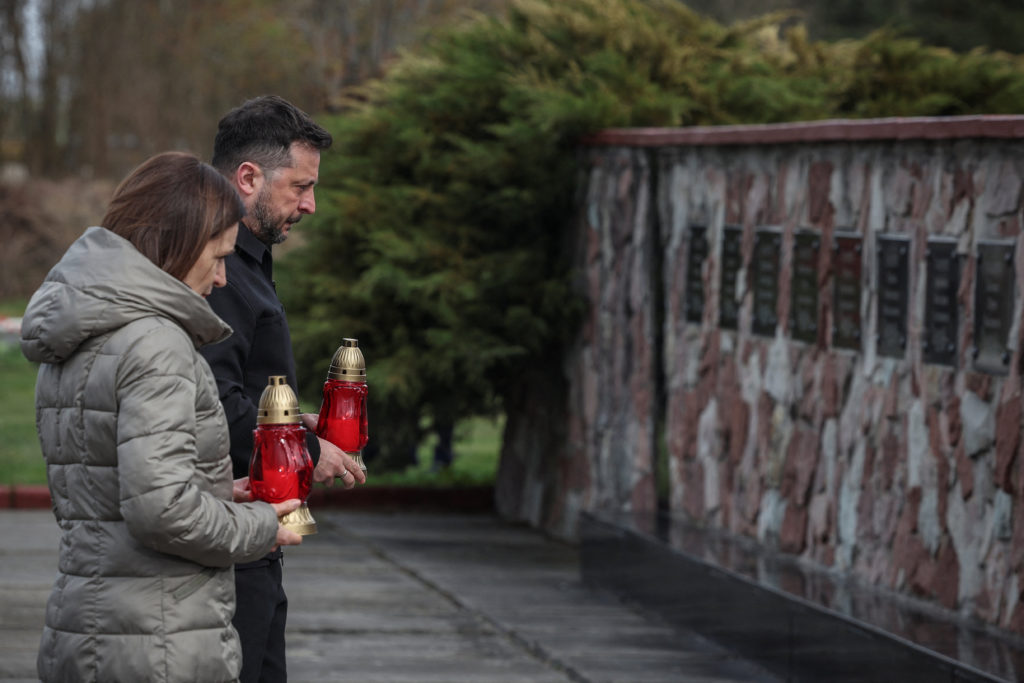
Strikes in Ukraine, Russian-occupied areas, and Russia have killed at least 16 people around the 40th anniversary of the Chernobyl nuclear disaster. Ukrainian President Zelenskyy warned that attacks near the Chernobyl plant risk causing a new nuclear disaster, while both sides have launched drone and missile strikes in recent days.
Key Facts
At least 16 people have died due to strikes in Ukraine, Russian-held territory, and Russia in the past day.
Ukrainian President Zelenskyy warned that Russian attacks near Chernobyl could cause a nuclear disaster similar to the 1986 accident.
Iran-designed Shahed drones have regularly flown over the Chernobyl plant; one previously struck the plant’s protective enclosure.
Russian strikes on the city of Dnipro killed at least nine people.
A Ukrainian drone strike on Sevastopol in Russian-occupied Crimea killed a man, according to Moscow-installed authorities.
Ukrainian drones also struck inside Russia, hitting an oil refinery in Yaroslavl, causing fires.
The International Atomic Energy Agency says repairs must begin soon on Chernobyl’s damaged protective structure to avoid safety risks.
Repairs on the Chernobyl facility are estimated to cost at least 500 million euros; funding commitments so far total about 130 million euros.
Read the Original
Want the full story? Tap a source to open the original
article.
Forty years ago, a nuclear reactor exploded at the Chernobyl power plant in Ukraine, causing the worst nuclear disaster in history. This event led to widespread environmental and health effects that are still studied today.
Key Facts
The Chernobyl accident happened 40 years ago at a nuclear power plant in Ukraine.
One reactor exploded, causing a major nuclear disaster.
It is considered the worst nuclear accident ever recorded.
The explosion released harmful radiation into the environment.
The disaster has had long-lasting effects on people and nature.
Experts continue to study and discuss the impact of the accident.
The event is an important moment in the history of nuclear energy.
The article references a video and guests who provide insights about Chernobyl.
Read the Original
Want the full story? Tap a source to open the original
article.
Negotiations between the US and Iran have stalled amid ongoing conflict and no scheduled talks to resolve it. Both sides remain firm, with Iran refusing direct talks while the US enforces a blockade on Iranian shipping. Efforts by Pakistan and other mediators have so far failed to restart meaningful discussions.
Key Facts
The conflict between the US and Iran has lasted nearly two months with no resolution.
Iran’s foreign minister, Abbas Araghchi, has been holding talks in Pakistan and Oman.
President Donald Trump canceled a planned visit by US envoys to Pakistan for talks with Iran due to what he called an inadequate Iranian offer.
Iran declined to attend direct talks while the US has blocked all shipping to and from Iran.
After Trump canceled the talks, Iran quickly sent a new proposal, which Trump said was improved.
Earlier US-Iran talks in Islamabad ended without agreement on key issues like Iran’s nuclear program and control of the Strait of Hormuz.
The US has extended a ceasefire but demands Iran allow free shipping through the strategic Strait of Hormuz, which is crucial for global oil supply.
Iran’s Islamic Revolutionary Guard Corps opposes lifting its blockade and wants to charge $2 million per tanker passing through the strait.
Read the Original
Want the full story? Tap a source to open the original
article.
Syria has started its first public trial of former officials from President Bashar al-Assad’s earlier government. Atef Najib, a former security chief, is being tried for his role in the 2011 crackdown in the city of Deraa.
Key Facts
This is the first public trial of officials from the Assad era in Syria.
Atef Najib, a former security chief, is the main person on trial.
Najib is in a courtroom cage during the trial.
The trial focuses on his actions during the 2011 crackdown in Deraa.
The crackdown in 2011 was part of the early conflict in Syria.
The trial is taking place in Damascus, the capital of Syria.
Read the Original
Want the full story? Tap a source to open the original
article.
Thailand police arrested a 33-year-old Indonesian man accused of scamming Americans out of $10 million through romance scams. He was caught on the island of Phuket and will be sent to the United States for trial.
Key Facts
The man is wanted by the U.S. FBI for defrauding Americans of about $10 million.
He was arrested at a luxury resort in Phuket, Thailand.
The arrest happened after the suspect traveled from Dubai to Thailand.
Police sent him to an immigration detention center in Bangkok while awaiting extradition.
The suspect allegedly used dating apps and social media to trick victims from 2022 to 2026.
He reportedly hired models to create fake relationships to convince victims to invest in bogus platforms.
Southeast Asia has become a hotspot for online scam operations using casinos and hotels as bases.
A UN report said Dubai is a growing hub for recruitment linked to cyber fraud scams in the region.
Read the Original
Want the full story? Tap a source to open the original
article.
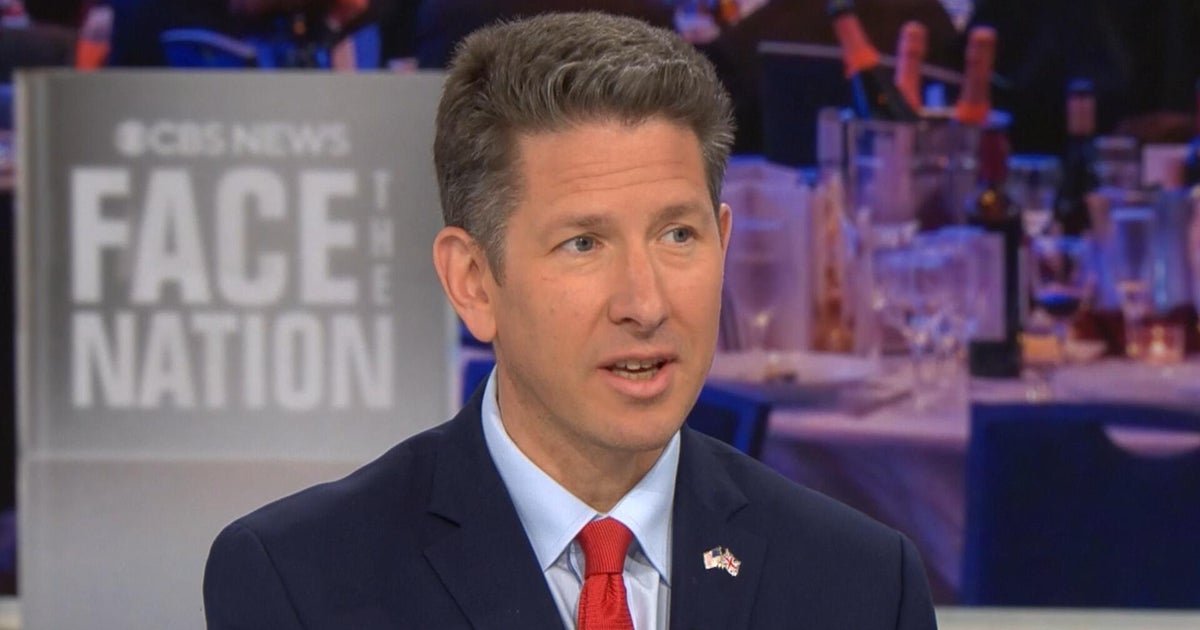
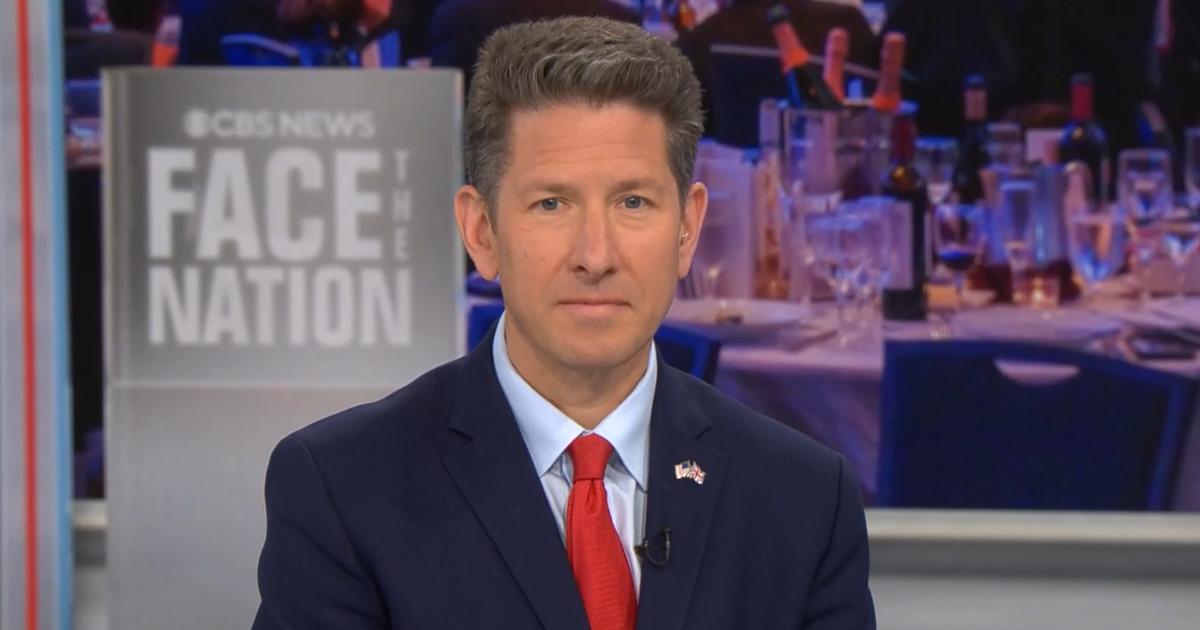
The British ambassador to the U.S., Sir Christian Turner, said he is very confident that King Charles and Queen Camilla will be well protected during their visit to the White House this week. He assured that they will receive the best security arrangements for the trip.
Key Facts
King Charles and Queen Camilla are visiting the White House this week.
The British ambassador to the U.S. is Sir Christian Turner.
Sir Christian Turner spoke on the CBS News program "Face the Nation."
He said he is "very confident" about the security plans for the visit.
The ambassador promised the royal couple will have the "very best security."
The visit involves close cooperation between the U.K. and U.S. security teams.
This visit is a sign of the relationship between the United Kingdom and the United States.
Read the Original
Want the full story? Tap a source to open the original
article.
A powerful tornado in northern Texas killed one person and damaged many homes. At the same time, wildfires in southeastern Georgia have destroyed over 120 homes and burned tens of thousands of acres, fueled by drought and human-related causes.
Key Facts
The Texas tornado struck Wise County around 10 p.m. causing major damage and one confirmed death.
Six people were treated for injuries related to the Texas storm, and at least 20 families lost their homes.
Recent severe weather in the central US included more than 30 tornadoes and widespread hail reports.
A tornado in northern Oklahoma injured 10 people and damaged about 40 homes, with no deaths reported.
Forecasters warn of continued storms with risks of tornadoes, large hail, and strong winds across Oklahoma, Kansas, and Missouri.
In Georgia, two large wildfires have burned a total of over 52,000 acres and destroyed 120 homes.
The Highway 82 fire in Georgia was caused by a foil balloon hitting power lines and is only 7% contained.
The Pineland Road fire near the Georgia-Florida border started by sparks from welding and is 10% contained.
Read the Original
Want the full story? Tap a source to open the original
article.
Iran is trying to keep food and medicines available for its people during ongoing war-related pressures. The government has reintroduced a cheaper currency exchange rate to import essential goods and is using money from its national fund to buy key food items.
Key Facts
Life in Tehran is returning to normal, but people are buying mostly basic goods due to uncertainty.
The Iranian government restarted a preferential exchange rate for importing essentials like wheat and medicines.
This exchange rate is much cheaper than the regular market rate for US dollars.
The government plans to use up to $3.5 billion from oil and gas revenues to pay for these imports.
Officials say prices of essential goods rose after removing this cheap exchange rate earlier.
Iran is also using up to $1 billion from its National Development Fund to buy key food products like sugar, rice, and meat.
The government is considering increasing monthly handouts and coupons to help with food costs.
Despite US sanctions and attacks, Iran claims it has enough currency and gold reserves to manage imports.
Read the Original
Want the full story? Tap a source to open the original
article.
In 1990, 13 valuable artworks were stolen from the Isabella Stewart Gardner Museum in Boston, making it the largest art theft in history. Despite years of investigation, the stolen art, valued at over $500 million, has not been recovered, but a former FBI agent has recently shared new details about the suspects and how the art moved through criminal groups.
Key Facts
The theft occurred on March 18, 1990, when two men dressed as police officers entered the museum and stole 13 artworks.
The stolen pieces include famous paintings by Vermeer, Rembrandt, Degas, and Manet.
The stolen art is valued at more than $500 million today.
The museum still displays empty frames where the paintings once hung.
A $10 million reward is offered for information leading to the recovery of the stolen works.
The FBI has said it knows who was responsible but has not named the suspects.
Several people linked to the case have died violently over the years, complicating the investigation.
A former FBI agent wrote a book detailing the investigation and linking the theft to criminal networks in Boston and beyond.
Read the Original
Want the full story? Tap a source to open the original
article.
Loyalists of Palestinian President Mahmoud Abbas won most seats in recent municipal elections, including some in Gaza for the first time in nearly 20 years. The vote in Gaza was mostly symbolic, showing the area as part of a future Palestinian state, despite low turnout and ongoing violence.
Key Facts
Abbas loyalists (Fatah party) won most seats in West Bank municipal elections.
Elections included a city in Gaza (Deir el-Balah) for the first time since 2006.
Hamas, ruling Gaza since 2007, did not officially participate and boycotted West Bank races.
Some Gaza candidates were linked to Hamas but won few seats.
Voter turnout was 56% in the West Bank and only 23% in Gaza.
Israeli restrictions limited some election materials entering Gaza.
Gaza’s low turnout was partly due to war devastation, displacement, and outdated voter lists.
Elections were held despite ongoing Israeli strikes and a recent ceasefire declared in October 2023.
Read the Original
Want the full story? Tap a source to open the original
article.
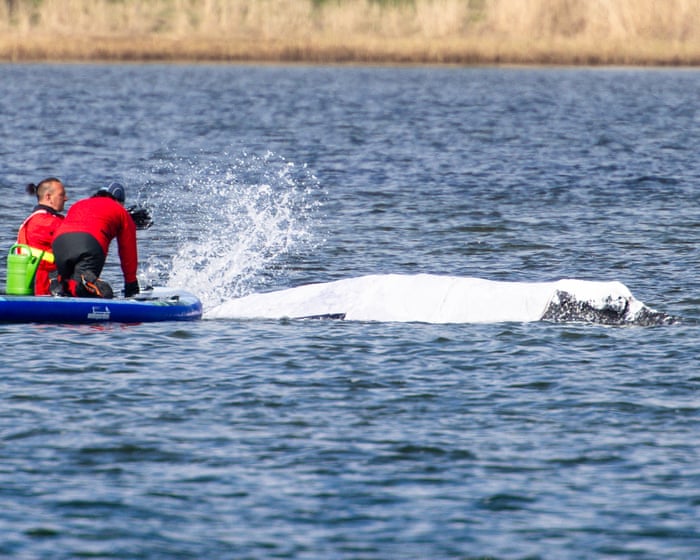
A large humpback whale named Timmy has been stuck in shallow waters off Germany’s Baltic Sea coast for nearly a month. A privately funded effort plans to tow the whale about 400 km to the North Sea in hopes of returning it to the Atlantic Ocean.
Key Facts
Timmy is a 12-tonne humpback whale stranded near the island of Poel in Mecklenburg-Vorpommern, Germany.
The whale has been there for over three weeks in water with too little salt for its survival.
A rescue plan called Operation Cushion involves lifting Timmy on air cushions in a large steel pontoon.
The pontoon will be towed by a tugboat to deeper waters in the North Sea, aiming to return Timmy to the Atlantic.
Local officials and rescue workers have been caring for the whale, keeping it hydrated and treating skin wounds.
Some marine experts believe the whale is too weak and that rescue attempts might cause more harm.
The rescue is funded by two millionaires and supported by some local politicians despite mixed opinions from scientists.
Hundreds of people have visited the site to watch the whale and the rescue efforts.
Read the Original
Want the full story? Tap a source to open the original
article.
Viktor Orbán's long rule in Hungary has ended after a recent election loss. People close to Orbán are quickly moving their money and assets out of Hungary to other countries, fearing legal trouble under the new government.
Key Facts
Viktor Orbán lost power after 16 years as Hungary’s leader.
Associates of Orbán reportedly moved large amounts of wealth abroad after the election.
Destinations for moved assets include Saudi Arabia, Oman, UAE, Australia, Singapore, the US, and Uruguay.
Opposition leader Péter Magyar accused Orbán’s allies of trying to avoid accountability.
Magyar called on Hungarian authorities to stop these individuals from escaping the law.
Some oligarch families have reportedly withdrawn their children from school and arranged security for leaving Hungary.
Journalists reported efforts to safeguard assets before the new government takes control in May.
The incoming government plans to fight corruption and recover stolen public wealth.
Read the Original
Want the full story? Tap a source to open the original
article.
President Donald Trump stated that U.S. officials will not travel to Pakistan for talks about peace related to the Iran war. He said that if other parties want to negotiate, they should either come to the U.S. or call by phone.
Key Facts
President Trump announced that no U.S. officials will go to Pakistan for peace talks.
The talks are about the conflict involving Iran.
Trump said the U.S. holds all the advantages or control ("all the cards").
He suggested that others interested in negotiating should come to the U.S. or use the phone to communicate.
The statement was made during a public appearance where Trump called in remotely.
Read the Original
Want the full story? Tap a source to open the original
article.
Sir Christian Turner, the U.K. ambassador to the U.S., spoke about recent security concerns and the upcoming visit of King Charles and Queen Camilla to the United States. Despite recent tensions, he expressed confidence in the safety of the visit and emphasized the importance of the relationship between the two countries.
Key Facts
Ambassador Turner has experience with security training in unstable countries.
He praised the Secret Service and journalists for their response to a recent security incident in Washington, D.C.
King Charles and Queen Camilla are scheduled to visit the U.S., including meetings with Congress and the White House.
Security plans are continuously reviewed to ensure the royal visit is safe.
The visit marks the 250th anniversary of U.K.-U.S. relations.
There have been recent political tensions between the U.S. and U.K., including disagreements between President Trump and Prime Minister Keir Starmer.
The King, as head of state, remains above politics and has never given an interview, which can help in diplomatic efforts.
The Ambassador highlighted the shared value between both countries against political violence and the need for peaceful resolution of differences.
Read the Original
Want the full story? Tap a source to open the original
article.
The U.S. President's Malaria Initiative has helped save millions of lives by fighting malaria. However, malaria is changing and becoming harder to control, so new efforts and American innovations are needed to continue making progress.
Key Facts
The U.S. President's Malaria Initiative aims to reduce malaria worldwide.
It has saved millions of lives and prevented billions of malaria cases.
Progress in fighting malaria is slowing down.
The malaria parasite is evolving, making it harder to control.
Renewed focus and innovation from the U.S. are needed to fight malaria effectively.
Malaria remains a serious health problem in many countries.
The initiative represents a key part of America's global health efforts.
Read the Original
Want the full story? Tap a source to open the original
article.
A bus exploded on a major highway in Colombia, killing at least 13 people. The country's president said that breakaway members of the FARC group caused the bombing.
Key Facts
The bombing happened on the Pan-American Highway in Colombia.
At least 13 people died in the explosion.
The bus had a bomb inside it.
Dashcam video captured the exact moment of the explosion.
Colombia’s president blamed dissidents from the FARC movement.
FARC is a former rebel group in Colombia with some members now acting independently.
The incident is under investigation by Colombian authorities.
Read the Original
Want the full story? Tap a source to open the original
article.
Israel has increased its military attacks in the Gaza Strip, killing more than 25 Palestinians in the past week and controlling about 60% of the area. The escalation happens amid a weak ceasefire agreement and the sidelining of a U.S.-backed Palestinian committee meant to manage Gaza’s reconstruction and governance.
Key Facts
At least 25 Palestinians were killed in Gaza in the past week during increased Israeli attacks.
Since the ceasefire in October, over 800 Palestinians have died in Gaza.
Israel has expanded the area it controls within Gaza by about 37 km, now holding roughly 60% of the territory.
Israeli forces are targeting Palestinian police officers, claiming some planned attacks, but no proof was provided.
The ceasefire agreement required Israel to withdraw troops from Gaza by the end of the first phase, but this has not happened.
The National Committee for the Administration of Gaza (NCAG), set up under President Trump’s initiative, is currently inactive and blocked from functioning by Israeli restrictions.
The "Board of Peace," chaired by President Trump and including U.S. officials, was designed to oversee Gaza’s future governance and reconstruction.
Israel’s military pause of the ceasefire is linked to Hamas’ refusal to disarm, according to U.S. analysts supporting Israel’s actions.
Read the Original
Want the full story? Tap a source to open the original
article.
A group of Italian chefs broke the world record for the longest tiramisu in London. The new tiramisu measured 440.6 meters, beating the old record of 273.5 meters from Milan.
Key Facts
The event took place at Chelsea Town Hall in London.
100 Italian chefs worked together to make the tiramisu.
They used 50,000 ladyfinger biscuits and over 3,000 eggs.
The tiramisu was made and assembled live in front of judges.
The previous record was set in Milan at 273.5 meters (897 feet).
The new tiramisu measured 440.6 meters (1,445 feet).
The event honored the King and the Royal Family, with a golden crown on top.
The dessert had to be at least 8 cm high and 15 cm wide to qualify.
Read the Original
Want the full story? Tap a source to open the original
article.