Germany’s ruling coalition led by Chancellor Friedrich Merz announced a large reform plan called the “Programme for Revival and Employment” to boost the economy. The plan includes tax cuts for lower and middle incomes, pension system changes, stricter sick leave rules, and less bureaucracy, with many measures starting in 2027.
Key Facts
The reform package includes 34 measures covering taxes, pensions, labor rules, and bureaucracy.
About €10 billion ($11.4 billion) in annual income tax cuts will benefit lower and middle-income earners starting January 1, 2027.
The highest earners will pay more to finance the tax relief through a surcharge restructuring.
Pension changes will tie retirement age to life expectancy after 2031, potentially raising it above 67 by the late 21st century.
Sick leave rules will require a doctor’s note from the first day of illness, removing the pandemic policy of telephone notes.
Labor rules will allow fixed-term contracts without cause to last up to 48 months, double the current limit.
The reform aims to reduce bureaucracy and ease challenges from high energy costs, global competition, and trade pressures.
The package needs approval from Germany’s Bundestag (lower house) and Bundesrat (upper house) before becoming law.
Read the Original
Want the full story? Tap a source to open the original
article.
A new Ebola outbreak in eastern Democratic Republic of Congo (DR Congo) has lasted over a month and continues to spread. There are over 1,000 confirmed cases and more than 250 deaths as health officials work to control the virus.
Key Facts
The Ebola outbreak was officially declared by Congolese authorities about one month ago.
The outbreak is located in eastern DR Congo.
More than 1,000 cases of Ebola have been confirmed so far.
Over 250 people have died due to the virus.
Health officials and authorities are actively trying to stop the spread of Ebola.
Doctors warn the epidemic may last for an extended time.
The African Centers for Disease Control say the outbreak is serious but not out of control.
Other countries like France have reported cases linked to DR Congo, such as a doctor returning from a mission there.
Read the Original
Want the full story? Tap a source to open the original
article.
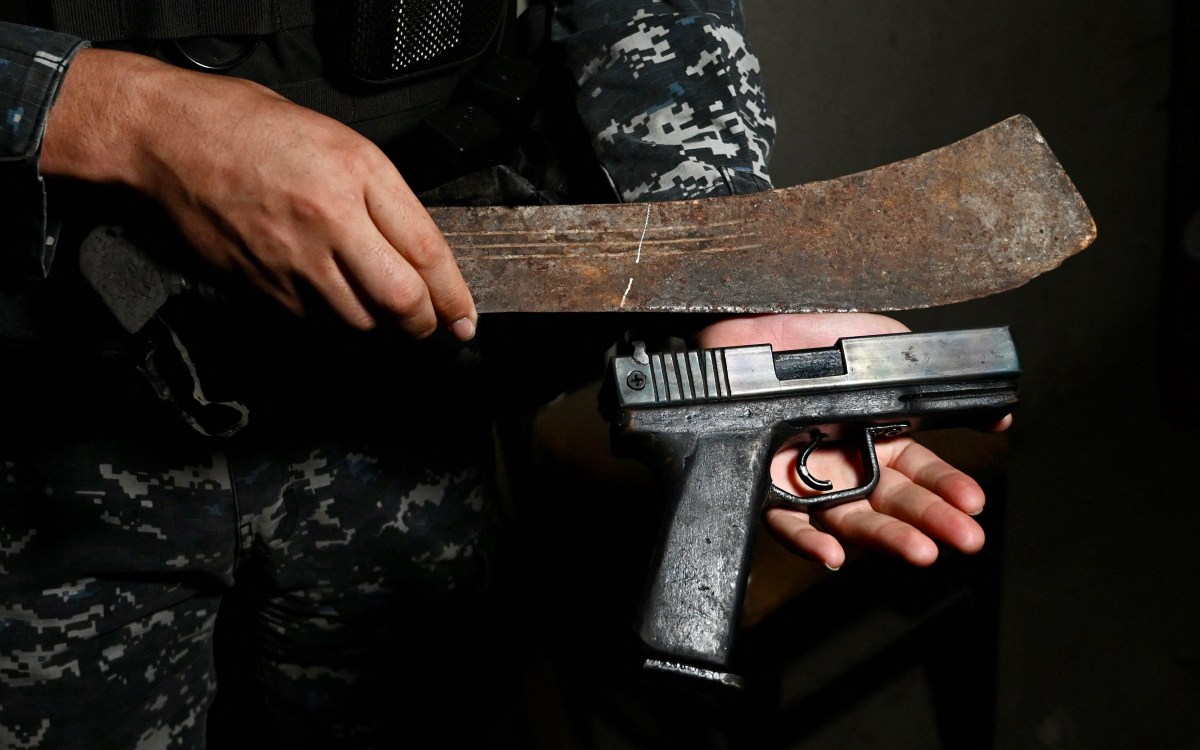
The U.S. government has officially labeled Ecuador’s Chone Killers gang as a foreign terrorist organization. This designation blocks their assets in the U.S. and makes it illegal to support them, as the group is linked to violent crimes and drug trafficking connected to larger cartels.
Key Facts
The Chone Killers gang from Ecuador was designated a foreign terrorist organization by the U.S. State Department.
The gang is also listed as a Specially Designated Global Terrorist, which leads to sanctions and legal penalties for aid.
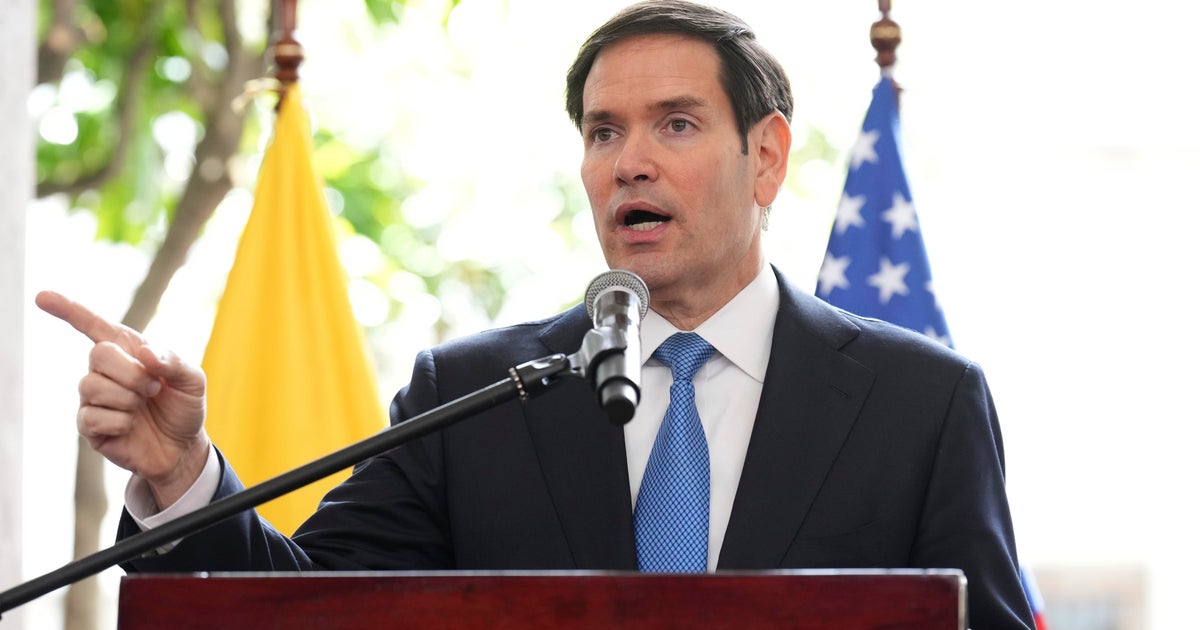
Secretary of State Marco Rubio said the group has attacked civilians, police, and government officials, including assassinations.
The gang works with Mexican drug cartels to smuggle and export drugs that fund terrorism and crime.
Ecuador’s government supports the U.S. decision and is working to fight criminal gangs under President Daniel Noboa.
The Chone Killers split from a larger Ecuadorian gang called Los Choneros after its leader was killed in 2020.
Ecuador is a major cocaine transit country for drugs moving from Colombia and Peru to North America and Europe.
The gang’s leaders are reportedly brothers Terry Israel Camacho ("Trompudo") and Antonio Benjamín Camacho ("Ben 10").
Read the Original
Want the full story? Tap a source to open the original
article.
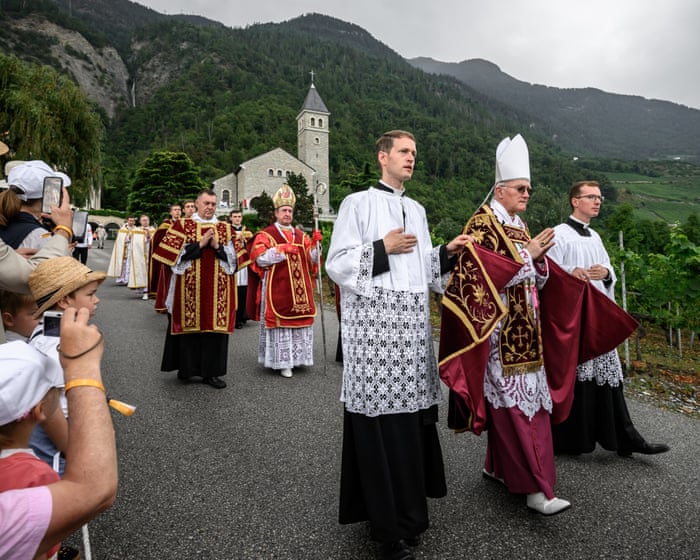
The Vatican has officially excommunicated all members and priests of the ultra-conservative group Society of Saint Pius X (SSPX) after they ordained bishops without the Pope's permission. This act caused a serious split, called a schism, in the Catholic Church, which Pope Leo has been trying to prevent.
Key Facts
The SSPX is an ultra-conservative Catholic group founded in 1970 in Switzerland.
The SSPX ordained bishops without approval from Pope Leo, an act the Vatican calls schismatic.
Under Catholic law, such an act leads to automatic excommunication.
The Vatican extended excommunication to all SSPX priests and Catholics who formally support the group.
About 16,500 people attended the ordination ceremony, including members of far-right Italian political parties.
SSPX rejects major changes from the Second Vatican Council, such as celebrating Mass in local languages instead of only Latin.
The group has a large following in countries like the United States, France, and Argentina.
Pope Leo, elected in May last year, has focused on church unity and healing divisions, but this is his first major crisis involving a traditionalist split.
Read the Original
Want the full story? Tap a source to open the original
article.
The U.S. has officially labeled the Ecuadorian gang "Chone Killers" as a foreign terrorist organization. This means the gang and its members can face U.S. sanctions and criminal charges. Ecuador supports this move to help fight violent gangs linked to drug trafficking.
Key Facts
The Chone Killers gang has attacked civilians, police, and government officials in Ecuador.
The U.S. froze any assets the gang or its members have in U.S. territory.
Ecuador's government praised the U.S. designation and continues to fight gangs with U.S. support.
The Chone Killers are connected to Los Chineros, a gang already designated as a terrorist group by the U.S. in 2020.
Ecuador has become a major cocaine trafficking center with gangs linked to Mexican and Colombian drug cartels.
The U.S. and Ecuador conduct joint military operations against drug gangs and terrorist groups in the region.
President Trump supports continued action against violent gangs and drug traffickers in Latin America.
The Ecuadorian government has used curfews and the military to try to stop gang violence.
Read the Original
Want the full story? Tap a source to open the original
article.
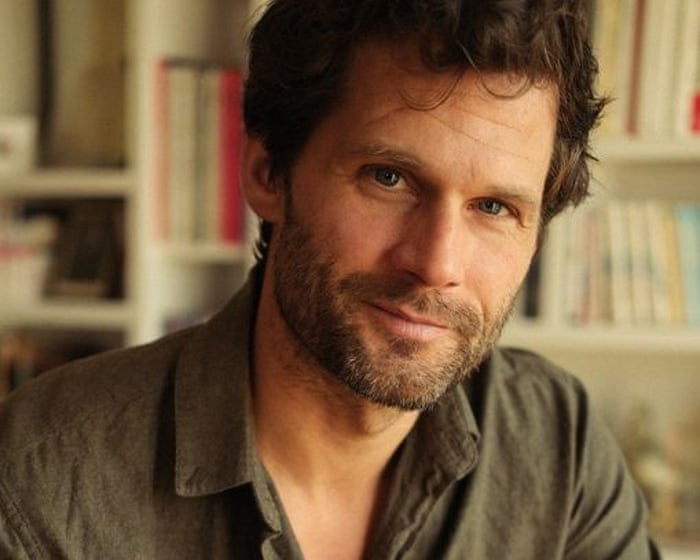
A far-right mayor in Castres, France, canceled a scheduled play about migrants called Passeport, calling it political propaganda. The cancellation sparked protests and debate about freedom of artistic expression in France, with government officials reaffirming that artistic freedom is protected by law.
Key Facts
The play Passeport tells the story of a young man from the Calais refugee camp trying to integrate into France.
The play has been performed widely in France since its premiere in 2024.
Florian Azéma, the far-right mayor of Castres, removed the play from the town’s cultural program in 2027.
Azéma said the play promotes illegal immigration and negatively portrays the police.
The cancellation drew accusations that the far-right National Rally party is censoring culture.
The French culture minister said artistic freedom is protected under national law.
The playwright, Alexis Michalik, called the decision political censorship and warned it threatens democracy.
Michalik described the play as a human story about migrants, based on real journeys he learned from migrants he met.
Read the Original
Want the full story? Tap a source to open the original
article.
As a new heatwave is expected in Paris, many people rushed to Lidl supermarkets to buy affordable air conditioners, causing police to intervene due to large crowds and disputes. France often lacks air conditioning in homes and schools because of historically mild summers, leaving it unprepared for frequent heatwaves linked to climate change.
Key Facts
A third heatwave this year is forecast to hit Paris soon.
Hundreds of people crowded Lidl stores to buy inexpensive air conditioners priced around €179.
Police were called to manage crowds and disturbances at multiple supermarkets.
More expensive air conditioners elsewhere cost over €1,200, making affordable units highly sought after.
Few French buildings have air conditioning due to mild past summers.
Record heatwaves recently caused excess deaths, hospital strain, school closures, and event cancellations.
Political debate exists over air conditioning, balancing climate concerns and public health needs.
Long lines and traffic jams occurred near supermarkets selling air conditioners.
Read the Original
Want the full story? Tap a source to open the original
article.
Iranian state TV said a foreign ship got stuck in the Strait of Hormuz after not following the route set by Iran’s Revolutionary Guard. But experts and tracking data show the ship, named Arista, is linked to Iran and has been stuck in Iranian waters since March.
Key Facts
Iran’s state TV claimed a foreign ship ran aground for ignoring Iran’s naval route rules in the Strait of Hormuz.
The ship is called Arista, which flies a false flag of Comoros but is tied to Iran.
The ship was previously known as Gauja and was flagged by Panama.
The U.S. Treasury sanctioned the ship for being part of an Iranian oil smuggling network.
The Arista has been stuck near Hormuz Island in Iranian waters since mid-March 2026.
The ship had been moving between two Iranian ports, Hormuz and Asaluyeh, before it got stuck.
Iran has not responded to questions about the incident from the Associated Press.
The Iranian Revolutionary Guard uses control of the Strait of Hormuz as leverage in regional conflicts and global energy markets.
Read the Original
Want the full story? Tap a source to open the original
article.
German prosecutors charged a former Ukrainian army officer for causing underwater explosions that damaged the Nord Stream gas pipelines in 2022. These pipelines carried Russian gas to Germany and the explosions disrupted energy supplies amid the war in Ukraine.
Key Facts
The suspect, called Serhii K., faces charges including causing explosions and being an accomplice to war crimes.
The explosions happened on September 26, 2022, damaging Nord Stream 1 and 2 pipelines under the Baltic Sea.
The pipelines were intended to carry Russian natural gas to Germany.
The goal was to stop gas deliveries and prevent Russia from earning money to fund its military.
Serhii K. was caught in Italy in August 2023 and taken to Germany in November.
He allegedly used a yacht hired with fake IDs from Germany to carry out the attack.
Russia blames the U.S. for the explosions, but the U.S. denies this.
Nord Stream 2 never started operating because Germany stopped its approval before the invasion of Ukraine.
Read the Original
Want the full story? Tap a source to open the original
article.
India and Japan agreed to deepen their cooperation in defense, economic, and maritime security after talks between Prime Minister Narendra Modi and Japan’s Prime Minister Sanae Takaichi in New Delhi. They planned joint work on naval radio systems, economic security, artificial intelligence, shipbuilding, biogas, semiconductors, and other critical technologies.
Key Facts
India and Japan held talks in New Delhi on July 2, 2026, led by Prime Ministers Modi and Takaichi.
Both countries agreed to collaborate on naval radio antenna systems to strengthen maritime security.
They adopted a joint road map to enhance economic security, viewing it as a shared interest.
Cooperation will extend to artificial intelligence, shipbuilding, biogas, semiconductors, and other key technologies.
Japan is a major investor in India, supporting infrastructure projects like the Mumbai-Ahmedabad high-speed rail line.
About 1,400 Japanese companies operate in India, mainly in manufacturing.
Two-way trade reached $27.5 billion in India’s 2025-26 fiscal year; Japanese investments totaled $3.2 billion between April and December 2025.
India and Japan are part of the Quad group with the U.S. and Australia, which focuses on regional security and countering China's influence in the Indo-Pacific.
Read the Original
Want the full story? Tap a source to open the original
article.
South Korea’s government disagreed with a U.S. congressional report that accused it of discriminating against Coupang, a large online shopping company based in Seattle. The report came after South Korea fined Coupang $403 million for a major data breach affecting millions of customers. South Korea said its actions followed its laws and were fair.
Key Facts
South Korea fined Coupang 625 billion won (about $403 million) for a data breach in June 2025.
The breach exposed personal data of over 37 million people, including 33 million Coupang customers.
Coupang failed to report the breach within the required 72-hour window.
The breach was caused by a former employee using a stolen security key to access customer accounts.
South Korean officials said Coupang had weak security that allowed continued access even after the employee left.
The U.S. House Judiciary Committee claimed South Korea used harsh tactics and unfairly targeted Coupang.
South Korea’s Foreign Ministry said the U.S. report only showed Coupang’s side and ignored South Korea’s legal process.
Coupang apologized for the breach but plans to challenge the fine in court, saying it improved its security.
Read the Original
Want the full story? Tap a source to open the original
article.
A trade deal between the United Kingdom and the United States on pharmaceuticals allows UK drug exports to the US without tariffs for three years. Research published in the British Medical Journal says the deal will force the UK’s National Health Service (NHS) to spend much more on new US medicines, potentially causing hundreds of thousands of extra deaths due to cuts in other health areas.
Key Facts
The UK-US pharmaceutical deal was signed in December and removes tariffs on UK drug exports to the US for three years.
The UK government agreed to increase NHS spending on new US medicines from 0.3% of GDP in 2026 to 0.6% by 2036.
This spending increase means medicine costs will rise from 10% to 12% of the NHS budget overall.
The deal does not provide extra funding to the NHS, so money will be diverted from other health services.
Researchers estimate this could lead to 229,000 additional deaths in the UK over time.
Scientists say the deal benefits pharmaceutical companies but could harm NHS patients by creating cost pressures elsewhere.
The extra NHS spending required would reach about £8.8 billion annually by 2036, totaling nearly £45 billion over 15 years.
UK officials argue the deal helps patients access new medicines and boosts Britain’s life sciences industry.
Read the Original
Want the full story? Tap a source to open the original
article.
There are no ads, so there is no reason to bait you. Readers who chip in keep it that way. Most choose $3.99/month, and get the daily digest every morning.
Venezuela is facing a serious health crisis after its worst earthquake in over 100 years killed more than 2,000 people and injured over 11,000. The earthquake damaged nearly half of the hospitals and clinics in the capital, making it harder to care for the injured and showing the weak state of the country’s health system.
Key Facts
The earthquake in Venezuela is the worst in more than a century.
Over 2,000 people died because of the earthquake.
More than 11,000 people were injured.
Nine out of 21 hospitals and clinics in the capital city were severely or critically damaged.
Hospitals are overwhelmed and struggling to treat patients.
Venezuela was already facing food shortages and potential disease outbreaks before the earthquake.
The disaster has exposed the fragile condition of the country’s health care system.
The situation is especially urgent in the capital city, Caracas.
Read the Original
Want the full story? Tap a source to open the original
article.
Eight Buddhist monks were killed and many others injured when an 11-year-old boy drove his family’s truck into their procession in northeastern Thailand. The boy took the vehicle without permission and crashed into the monks who were on a pilgrimage walk.
Key Facts
An 11-year-old boy stole his parents’ pick-up truck.
The truck hit a procession of about 30 Buddhist monks in Mukdahan province, Thailand.
Five monks died at the scene, and three more died later in hospital.
Between 10 and 20 people were injured, including monks and others.
The monks had just started a 260-kilometer pilgrimage walk about 30 minutes before the crash.
Police have taken the boy into custody and are waiting for child protection officers to interview him.
The vehicle is being checked by forensic experts to find out why the crash happened.
Buddhist monks are respected in Thailand and often travel in public processions to share their teachings.
Read the Original
Want the full story? Tap a source to open the original
article.
Algeria is holding parliamentary elections on July 2, 2026, seven years after large pro-democracy protests called Hirak. Although opposition groups are not boycotting these elections, many voters are expected to stay away to show dissatisfaction with politics.
Key Facts
The elections in Algeria are to choose members of the new parliament.
The last major political movement, Hirak protests, took place seven years ago.
In the previous election after Hirak, only 23% of voters participated.
Many people refused to vote last time as a way to show they were unhappy with the political options.
Several opposition parties boycotted the last election but are not boycotting this one.
Despite no boycott, voter turnout for 2026 is expected to remain low.
The elections reflect ongoing political challenges and public discontent in Algeria.
Read the Original
Want the full story? Tap a source to open the original
article.
A small plane crashed into Beijing’s tallest building, the CITIC Tower, on June 26, 2026, injuring 13 people and killing the 66-year-old pilot. Chinese authorities said the crash was caused by the pilot’s personal issues, as he wrote about wanting to end his life in his diary.
Key Facts
The crash happened around 6 p.m. in Beijing’s downtown business district.
The plane hit the 108-story CITIC Tower, also called the “Zun” building.
The pilot was a 66-year-old man named Liu who had no permanent job and lived alone.
Liu flew with another person before taking a solo flight and deviating from his planned route.
Contact with the pilot was lost before the crash.
Liu had insomnia and anxiety and wrote about suicide in his diary.
Thirteen people were injured, but none had life-threatening injuries; one person has already been discharged.
The crash raised safety concerns in Beijing’s capital city.
Read the Original
Want the full story? Tap a source to open the original
article.
German Chancellor Friedrich Merz and his government coalition announced a plan with 34 reform measures to improve Germany’s slow economy. The reforms include tax cuts for families, changes to the pension system, stricter sick leave rules, and efforts to reduce bureaucracy.
Key Facts
The reform package aims to boost Germany’s economy, which has been weak in recent years.
Tax cuts will benefit low- and middle-income families, with an example of a family of four saving over 600 euros annually by 2028.
The government plans to update the pension system, which is currently under stress due to an aging population.
New rules will make it harder for employees to take sick leave.
The government wants to cut down on slow and complicated administrative procedures.
Germany’s economy faces challenges from higher energy costs and global competition, including trade tensions involving President Donald Trump.
Merz’s coalition combines center-right and center-left parties and has been in office for just over a year.
The government hopes these reforms will help Germany return to steady economic growth after shrinking for two years.
Read the Original
Want the full story? Tap a source to open the original
article.
In Bangladesh, excitement for the 2026 World Cup has led to a dispute involving football fans and a religious leader. A hardline preacher urged people to replace football team flags, especially those of Argentina and Brazil, with Islamic flags, causing police concern over public order.
Key Facts
Football is very popular in Bangladesh, where many fans support teams like Argentina and Brazil.
Mufti Harun Izhar, a religious leader, called for removing Argentina and Brazil flags and raising white Islamic flags with the Kalima (Islamic profession of faith).
These Islamic flags have appeared in more than a dozen districts in Bangladesh.
Police are on alert and said they will act if the flags cause law and order problems.
Supporters have held rallies with these flags and religious songs after the preacher's speech spread online.
The preacher said the white flags should not be confused with Taliban or Islamic State flags.
Government officials are watching the situation closely because it may affect Bangladesh's image globally.
Some football fans oppose the move, saying football helps people escape everyday difficulties and is a key form of entertainment.
Read the Original
Want the full story? Tap a source to open the original
article.
A large Russian attack struck Kyiv overnight, hitting residential areas and causing significant damage. At least 13 people died and over 56 were injured in the strikes while many residents were asleep.
Key Facts
The attack on Kyiv is the largest Russian assault on the city to date.
The strikes targeted residential neighborhoods, affecting civilians.
At least 13 people were killed in the overnight attacks.
More than 56 people were wounded after the attack.
The Russian government stated it would increase pressure on Ukraine following the assault.
Emergency teams responded to fires and destruction caused by the strikes.
The attacks occurred while many residents were sleeping, increasing casualties.
Kyiv officials reported the damages and casualty figures to the public.
Read the Original
Want the full story? Tap a source to open the original
article.
Thousands of people have left South Africa to return to Malawi because of violent attacks against foreigners. The violence is linked to protests calling for undocumented migrants to leave South Africa, with accusations that migrants cause job losses and crime. South African leaders and human rights groups reject these claims.
Key Facts
On June 30, many people marched across South Africa demanding undocumented foreigners leave the country.
The protests have lasted several weeks and caused violence that killed four people.
About 15,000 Malawian citizens have returned home due to this violence.
Protesters blame migrants for causing unemployment and crime.
President Cyril Ramaphosa and human rights organizations say these claims are not true.
Xenophobic violence has occurred multiple times over the past twenty years in South Africa.
This wave of protests and violence is part of a larger, ongoing tension over immigration in South Africa.
Read the Original
Want the full story? Tap a source to open the original
article.