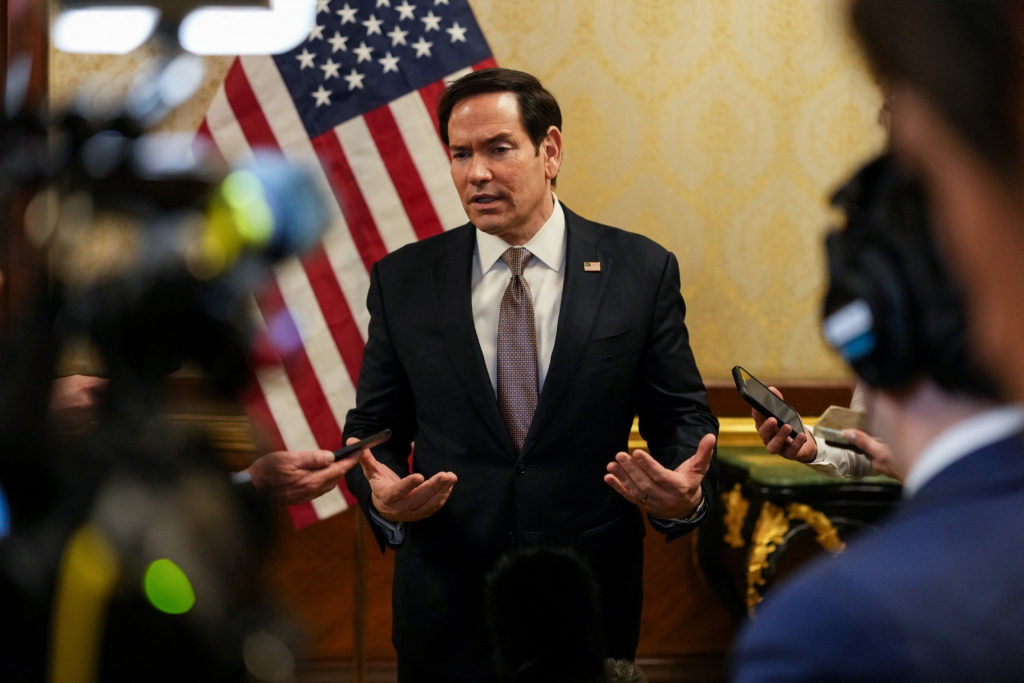
The United States and Iran recently signed a temporary deal about Iran's nuclear program and agreed that the United Nations nuclear agency (IAEA) would inspect Iran’s nuclear sites. However, Iranian officials say inspections will only happen after a final agreement is reached. Both sides continue to publicly disagree on what the deal means, while tensions remain high in the region due to ongoing fighting between Israel and Iranian-backed groups.
Key Facts
The U.N. nuclear agency, IAEA, said it will inspect Iran’s nuclear enrichment sites under a 60-day interim deal.
Iran says inspections will only occur after a complete, final agreement with the U.S.
The U.S. and Iran signed a memorandum of understanding to negotiate details during this 60-day period.
Iran has blocked IAEA access to key nuclear sites since 2025, making it hard to verify Iran’s uranium stockpile.
Iran has enriched uranium up to 60%, which is higher than any country without a weapons program.
Israel conducted an airstrike in southern Lebanon amid ongoing conflict with Iranian-backed Hezbollah.
The IAEA stressed inspections will happen soon, but the exact timing is uncertain.
The deal includes plans to reduce the uranium enrichment level (“downblend” it) to make it less suitable for weapons.
Read the Original
Want the full story? Tap a source to open the original
article.
Certain everyday habits by dog owners can cause stress and confusion for dogs, which may look like the dog disliking their owner. Experts say dogs need consistent rules, gentle treatment, respect for their personal space, and owners who pay attention to their body language.
Key Facts
Dogs respond best to consistent rules and routines; changing rules often confuses them.
Harsh punishments can make dogs scared of their owners instead of helping them learn.
Rewarding good behavior encourages dogs to repeat those actions more than punishing bad behavior.
Forcing dogs into physical contact, like hugging or petting when they want to rest, can make them avoid people.
Dogs use subtle body signals, like licking lips or moving away, to show discomfort.
Ignoring these signals may cause dogs to become distant or behave aggressively.
Understanding and respecting a dog’s limits helps build trust and a better relationship between dogs and owners.
Read the Original
Want the full story? Tap a source to open the original
article.
The United Nations nuclear agency says it will inspect Iran’s nuclear sites soon, but Iran says inspections depend on reaching a final deal with the United States. Talks between the US and Iran are continuing to resolve issues related to Iran’s nuclear program and sanctions.
Key Facts
The head of the International Atomic Energy Agency (IAEA), Rafael Grossi, said inspections of Iran’s nuclear sites are planned and will happen soon.
Dates and locations for inspections are still being discussed with Iran’s government.
Iran’s Deputy Foreign Minister said inspections depend on a final agreement with the US, especially on ending sanctions.
Iran has not allowed inspectors access to nuclear sites that were attacked previously.
The US and Iran signed a memorandum of understanding to guide nuclear inspections and started 60 days of talks to resolve key issues.
Iranian officials have refused requests for meetings with IAEA’s Grossi during recent negotiations.
Iran has said it will not negotiate its ballistic missile program.
Technical talks between the US and Iran are expected to continue in Switzerland at the end of June.
Read the Original
Want the full story? Tap a source to open the original
article.
Israeli Prime Minister Benjamin Netanyahu said Israel wants to produce more of its own weapons instead of relying mostly on the United States. This comes as Israel’s arms exports grow and tensions rise over U.S. talks with Iran.
Key Facts
Israel currently receives military aid from the United States.
Prime Minister Netanyahu wants Israel to build its own weapons production.
Israel’s arms exports reached a record $19 billion last year.
Israel markets its weapons as "combat-proven" because of its involvement in conflicts.
Growing demand for Israeli weapons has boosted its defense industry.
There are rising tensions due to the U.S. peace deal with Iran.
Israel’s move toward self-reliance could risk its relationship with the U.S.
Experts discussed the implications of Israel’s arms industry and security situation in the article.
Read the Original
Want the full story? Tap a source to open the original
article.
France experienced a new record for high temperatures during a heatwave in Western Europe. A climate expert warned that in the future, people might look back at this period as relatively cool compared to coming years.
Key Facts
France set a new heat record on June 24, 2026.
Western Europe is currently experiencing very high temperatures.
Jean-Pascal van Ypersele, a climate science professor, made the statement about future temperatures.
He was previously a vice chair of the Intergovernmental Panel on Climate Change (IPCC).
The expert said that this heatwave might seem cool compared to expected hotter years ahead.
Rising temperatures affect environments like coastal waters and agriculture.
France is considered well-prepared for heatwaves compared to some other European countries.
Efforts to reduce carbon emissions can help lower future heatwave severity.
Read the Original
Want the full story? Tap a source to open the original
article.
Dutch Prime Minister Rob Jetten unveiled a monument to honor the Moluccan community and formally apologized for the mistreatment they faced. The Moluccan people were brought to the Netherlands after Indonesia gained independence in 1949 because they had fought alongside Dutch forces during colonial times.
Key Facts
Prime Minister Rob Jetten unveiled a monument dedicated to the Moluccan community.
The monument recognizes the Moluccan community's suffering under Dutch colonial rule.
The Moluccans were brought to the Netherlands after Indonesia's independence in 1949.
Many Moluccans had fought alongside Dutch forces during the colonial era.
A formal state apology was issued alongside the unveiling of the monument.
The monument marks a significant recognition of a dark chapter in Dutch colonial history.
Read the Original
Want the full story? Tap a source to open the original
article.
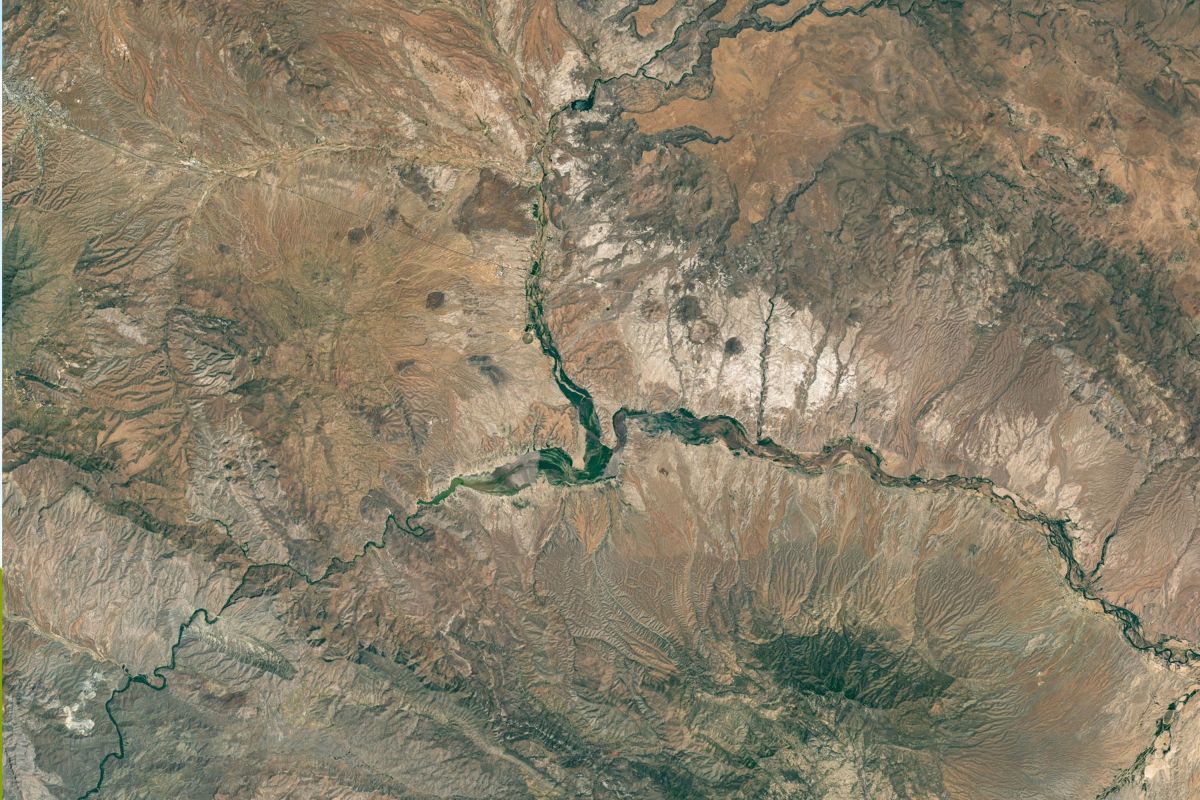
NASA satellite images show that Arizona’s San Carlos Reservoir is nearly empty, holding less than 1 percent of its capacity after a severe drought and water releases. The low water levels caused nearly all the fish to die and raised concerns about water supply for farms and communities.
Key Facts
The San Carlos Reservoir had only 389 acre-feet of water on May 22, 2026, down from about 60 percent full in June 2023.
The reservoir is fed by the San Carlos River, part of the important Gila River system in the Southwest.
Built by the Coolidge Dam, the reservoir supports about 100,000 acres of farmland.
Fish deaths occurred because low water levels reduced oxygen in the reservoir.
The reservoir is closed indefinitely due to health risks from decomposing fish.
The water loss was caused by very low snowfall (only 2 percent of normal) and required water releases to downstream farms.
Similar low water events and fish kills happened before, including in 1976 and 2018.
There is hope for recovery if above-average rainfall happens during the summer monsoon, possibly helped by El Niño.
Read the Original
Want the full story? Tap a source to open the original
article.
A large review of maternity care at Nottingham University Hospitals NHS Trust found serious problems that caused injury or death to many mothers and babies. The hospital leaders apologized, and the UK government said it would take quick action to fix the issues.
Key Facts
The review is the largest maternity care investigation in NHS history.
It focused on Nottingham University Hospitals NHS Trust.
Hundreds of mothers and babies were harmed or died due to failures in care.
The report described the problems as deep-rooted and systemic, meaning they were widespread and built into how things worked.
Hospital leaders have publicly apologized for these failings.
The UK Health Secretary promised immediate steps will be taken in response.
The review highlights significant challenges in the UK’s maternity care system.
Read the Original
Want the full story? Tap a source to open the original
article.
Citizens in Albania are protesting a plan by Ivanka Trump and Jared Kushner to build a $4 billion luxury resort on protected land along the Adriatic Sea. The project faces criticism over land deals, government involvement, and concerns about privatizing public coastline.
Key Facts
The protest movement is called the Flamingo Revolution of 2026.
Ivanka Trump and Jared Kushner want to build a luxury resort on land bought through Kushner’s Qatari contacts.
There are claims of no-bid government contracts and fraudulent land sales involving organized crime figures.
Some local ethnic Greeks have been mistreated, causing diplomatic tensions.
Albania’s prime minister supports the project, saying it will boost tourism.
The project raises questions about mixing President Donald Trump’s family business interests with diplomatic power.
President Trump has appointed family members to key government roles related to international affairs.
Public protests in Albania appear stronger than in the U.S. or France regarding this issue.
Read the Original
Want the full story? Tap a source to open the original
article.
France is experiencing very high temperatures during a heatwave. Many people find air conditioning too expensive, especially the most vulnerable, raising concerns about how to handle future heatwaves fairly.
Key Facts
France is facing a record-breaking heatwave with very hot weather.
Air conditioning can help people stay cool but is costly for many.
Vulnerable groups may not afford air conditioning during heatwaves.
Some experts suggest improving public services to help those affected.
Long-term solutions involve adapting infrastructure to hotter climates.
France is considered well-prepared for heatwaves compared to some countries.
Similar heat challenges are affecting other parts of Europe.
Discussions include policy ideas like shorter work hours or climate-related leave in response to heat.
Read the Original
Want the full story? Tap a source to open the original
article.
Ukraine is using new drones that have artificial intelligence to target Russian military sites far inside Russian territory. These drones help Ukraine strike important places and weaken Russia's ability to continue the war after more than four years of fighting.
Key Facts
Ukraine has increased attacks on Russian infrastructure and resources.
The goal is to disrupt Russia's military operations.
Ukraine is using AI-powered drones called Hornet drones.
These drones allow strikes deep inside Russian territory.
The conflict relates to Russia's ongoing invasion of Ukraine.
The use of AI gives Ukraine an advantage in the conflict.
The report about this came from France 24 on June 24, 2026.
Read the Original
Want the full story? Tap a source to open the original
article.
A new immigration and asylum bill, introduced by Shabana Mahmood, will be presented to UK Members of Parliament next week. The bill aims to increase forced removals of refused asylum seekers, strengthen age checks, limit some human rights claims, and change the asylum appeals system.
Key Facts
The bill will be debated in Parliament next Tuesday.
It plans to increase forced removals of people who have been refused asylum.
It will introduce stricter age checks for asylum seekers claiming to be children.
The bill aims to limit applications based on Article 8 of the European Convention on Human Rights, which covers the right to family life.
The current independent asylum appeals court will be replaced by a new appeals body within the Home Office.
The bill includes measures to stop late claims under the modern slavery framework.
The bill does not currently include plans to double the time required for indefinite leave to remain from 5 to 10 years, but this may be introduced separately.
Refugee charities have raised concerns about the bill’s rapid introduction and potential harm to children and families seeking protection.
Read the Original
Want the full story? Tap a source to open the original
article.
That's the point of this site, and readers keep it that way. Support for any amount and the daily digest lands in your inbox every morning at 7am Eastern.
The coastal waters of France are experiencing higher temperatures than usual during a heatwave. For example, near Marseille, the water temperature is 25 degrees Celsius, which is 3 degrees warmer than normal.
Key Facts
France is currently in the middle of a heatwave affecting both land and coastal waters.
Water temperatures are rising along the Atlantic coast and in the Mediterranean Sea.
Near Marseille, water temperature reached 25°C, about 3°C higher than typical levels.
Higher water temperatures can affect marine life and the local environment.
The heatwave is part of broader climate changes impacting the region.
France is considered one of the best-prepared countries in Europe for dealing with heatwaves.
Other parts of France are also experiencing record-high temperatures and challenges related to the heat.
Efforts to reduce carbon emissions can help lessen the severity and frequency of heatwaves.
Read the Original
Want the full story? Tap a source to open the original
article.
Conservative outsider Abelardo de la Espriella won Colombia's presidential election by a narrow margin and was endorsed by U.S. President Donald Trump. Progressive candidate Iván Cepeda conceded but said he will serve as a constructive opposition.
Key Facts
Abelardo de la Espriella, a businessman and lawyer with no previous political office, won the presidency by about 1 percentage point.
Iván Cepeda, a lawmaker and peace advocate, conceded the election but plans to oppose the new government.
De la Espriella is a dual citizen of Colombia and the U.S., a Republican, and supported by President Trump.
The election had a historic turnout with over 26 million voters and a significant number choosing a "none of the above" option.
De la Espriella promises tough measures against violent crime, inspired by strategies used in El Salvador.
He plans to form his Cabinet soon and join the "Shield of the Americas," a coalition to fight crime in Latin America.
The election result reflects a shift away from policies of outgoing President Gustavo Petro and a desire for new approaches.
Iván Cepeda’s political work is influenced by his family history and focus on peace negotiations in Colombia’s long internal conflict.
Read the Original
Want the full story? Tap a source to open the original
article.
A developing El Niño weather pattern in the Pacific Ocean may make Europe’s current heat waves even hotter and longer this summer. This natural climate event changes wind and ocean currents, which can push warm air from Africa into Europe, raising temperatures and increasing the risk of extreme heat.
Key Facts
El Niño is a natural climate cycle that warms parts of the Pacific Ocean and happens every 2 to 7 years.
A “super El Niño” is a stronger, rare version with ocean temperatures about 2°C (3.6°F) above normal.
El Niño changes global weather by shifting atmospheric circulation, affecting temperatures and rain worldwide.
Europe is experiencing one of the hottest June heat waves on record, with temperatures over 40°C (104°F) in many areas.
Some places in France have exceeded 44°C, breaking national heat records.
Heat waves have caused dozens of deaths in Europe, mostly from people trying to cool off in dangerous waters.
El Niño is expected to continue through March 2027, potentially worsening heat waves and other weather extremes.
The weather impact of El Niño also affects the U.S., often bringing wetter and stormier conditions.
Read the Original
Want the full story? Tap a source to open the original
article.
Police in Pakistan rescued a French woman and her five children after she said her husband held her captive and abused her for over 12 years. The husband was arrested, and authorities are working to help the family, including plans to send them back to France.
Key Facts
A 54-year-old French woman named Sylvie Yasmina was rescued in Bara, Khyber Pakhtunkhwa province, Pakistan.
She said her husband kept her captive and abused her physically and mentally for more than a decade.
Yasmina’s five children were also rescued; none had been enrolled in school.
One of the children escaped and reached the local police station to get help.
Yasmina and her children were found living in poor conditions with visible injuries on her face.
The husband was arrested, and police are investigating the case.
Authorities are coordinating with the French embassy to help Yasmina return to France.
Domestic violence is a widespread issue in Pakistan, with many cases going unreported.
Read the Original
Want the full story? Tap a source to open the original
article.
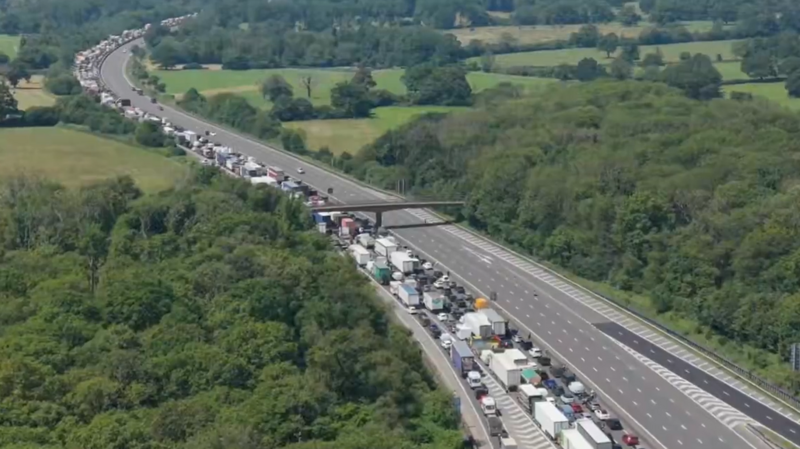
A serious crash between a van and a lorry on the M25 near Godstone caused long traffic jams during a heatwave with the highest June temperatures in 50 years. Emergency services treated people trapped in the traffic for heat-related illnesses, and a man was airlifted to hospital with a leg injury.
Key Facts
A crash on the M25 involved a white Mercedes Vito van and a white lorry.
The crash happened near junctions 6 and 7, causing the motorway to close and long traffic jams.
The temperature was the highest June heat recorded in 50 years, leading to heat-related illnesses among stranded drivers and passengers.
Emergency services had difficulty reaching patients due to heavy congestion.
A man in his 30s from the van was seriously injured and airlifted to hospital.
Surrey Police are investigating the crash and appealing for witnesses.
The road surface was damaged by an oil spill caused by the crash, delaying reopening.
Some exit slip roads have reopened, but the main carriageway remains closed.
Read the Original
Want the full story? Tap a source to open the original
article.
Children living in the Dheisheh refugee camp in the occupied West Bank regularly experience Israeli military raids, which cause fear and violence. A recent UN report highlights the large number of Palestinian children killed and injured, the rise in settler violence, and attacks on schools and hospitals in the area.
Key Facts
Nearly 7,500 Israeli military raids took place in the West Bank in the first nine months of 2025, about 27 raids per day.
This number represents a 37% increase in raids compared to the same period in 2024.
Israeli forces have killed over 20,179 Palestinian children and wounded more than 44,000 since October 2023, mostly in Gaza.
The UN report describes the deliberate targeting of children in Gaza as part of a genocide.
In the West Bank, there has been a marked increase in violence by settlers and killings by Israeli forces, including a two-year-old girl in January 2025.
Palestinian children are sometimes held in detention without access to lawyers or contact with their parents.
At least 85 schools in the West Bank face demolition, closure, or attacks.
The UN describes Palestinian life as being under constant terror due to repeated military actions and violence.
Read the Original
Want the full story? Tap a source to open the original
article.
A climate expert said Europe’s recent heatwave shows that very hot weather is becoming normal due to human-caused warming. France has prepared well for heatwaves with strong rules since 2003, but hotter and more frequent heatwaves still pose serious challenges.
Key Facts
Europe's heatwaves are no longer rare events but part of ongoing climate change caused by greenhouse gases.
Adaptation measures, like preparing cities and health systems, can reduce deaths and problems caused by heat.
France has one of the best systems in Europe to manage heat risks, with reforms made after the deadly 2003 heatwave.
Despite good preparation, rising temperatures and more frequent heatwaves will continue to create difficulties.
The UK tends to treat heatwaves as occasional annoyances rather than a major threat.
Experts say infrastructure and public policies need to change to handle hotter climates in the future.
Heatwaves are already impacting farming and outdoor work in France, causing economic and health issues.
The overall message is that climate change means extreme heat will be a growing concern worldwide.
Read the Original
Want the full story? Tap a source to open the original
article.
France recorded its hottest day since 1947 on Wednesday, breaking the previous heat record set just one day earlier. More than 50 regions across mainland France experienced temperatures of 40°C (104°F) or higher during a heatwave that began on June 17.
Key Facts
The French national weather agency reported the highest temperature for the country since records started in 1947.
The new record was set on Wednesday, surpassing the record from the day before.
Over 50 departments (regions) in mainland France recorded temperatures of 40°C or above.
The heatwave began on June 17 and is ongoing as of June 24, 2026.
The article mentions France is considered well prepared for heatwaves compared to some other European countries.
The intense heat has led to concerns about climate change and adapting infrastructure to hotter conditions.
The information was shared by France 24 and AFP news agencies.
Read the Original
Want the full story? Tap a source to open the original
article.