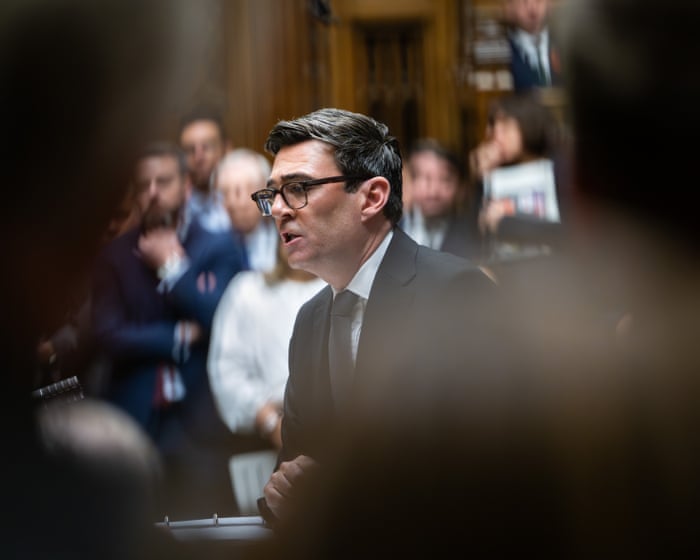
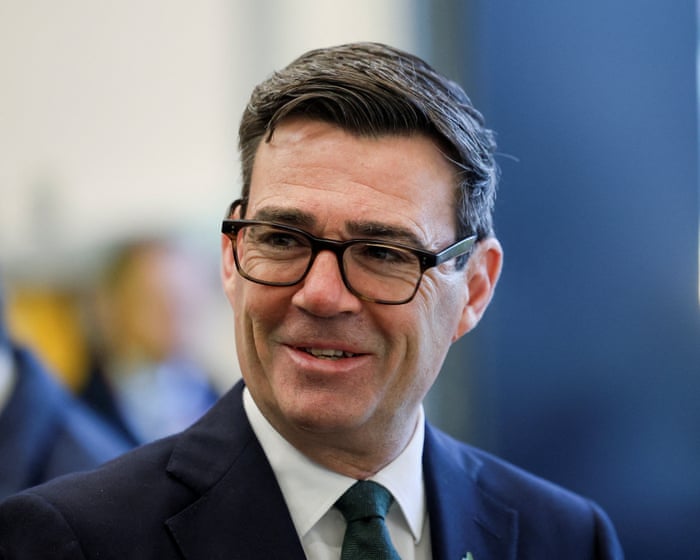
Andy Burnham said the UK’s Brexit deal has not delivered what voters were promised and is not good enough for Britain. He said he would not seek to rejoin the EU or make major changes during the current parliament, but wants practical steps to improve UK-EU arrangements.
Key Facts
Burnham said the UK ended up with a harder Brexit than the one presented during the referendum campaign.
He said Brexit had weakened the economy and the UK’s control of immigration.
Burnham linked the small boats crisis to the UK’s reduced ability to return people to Europe.
He said he would like to see the UK rejoin the EU in his lifetime but would not get ahead of public opinion.
He ruled out proposing EU membership again during the current parliament and said he would stick to Labour’s manifesto red lines.
Burnham supported the principle of a plan requiring some foreign workers to wait 15 years before qualifying for permanent residency.
He said there was no early general election planned.
Burnham said the UK-EU summit scheduled for 20 November could produce a deal that helps British food manufacturers.
Read the Original
Want the full story? Tap a source to open the original
article.
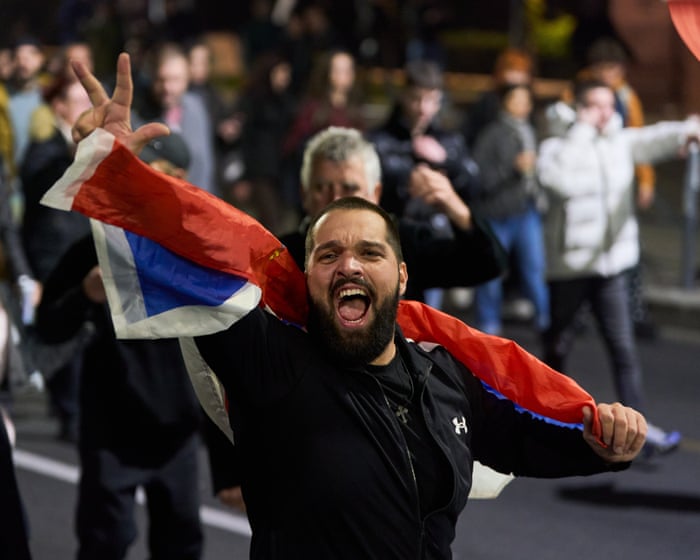
A student-led opposition movement won Serbia’s parliamentary election, defeating the bloc of Aleksandar Vučić. With 96.9% of polling stations processed, projections gave the Student List a majority, while international observers were expected to issue a preliminary report.
Key Facts
The Student List received 52.6% of votes, compared with 39.22% for Vučić’s bloc.
CeSID projected 140 seats for the Student List, above the 126 needed for a majority.
CeSID projected 103 seats for Vučić’s bloc.
No other party crossed the 3% threshold; national minority parties were projected to take the remaining seven seats.
Hungarian Prime Minister Péter Magyar commented on the celebrations and compared the Serbian result with Hungary’s political change.
Bulgaria’s presidential election first round had 22% turnout, and a second round was scheduled for Sunday.
Defence ministers from France, Germany, Italy, Poland and the UK were due to meet in Paris to discuss Ukraine.
Read the Original
Want the full story? Tap a source to open the original
article.
Flavio Bolsonaro says he will not concede after Lula da Silva won Sunday’s election, according to the article. Al Jazeera correspondent Lucia Newman reports from Brasília.
Key Facts
Flavio Bolsonaro is refusing to concede.
Lula da Silva won Sunday’s election, the article says.
The article describes Lula’s win as a historic fourth term.
Al Jazeera’s Lucia Newman reports from Brasília.
Read the Original
Want the full story? Tap a source to open the original
article.
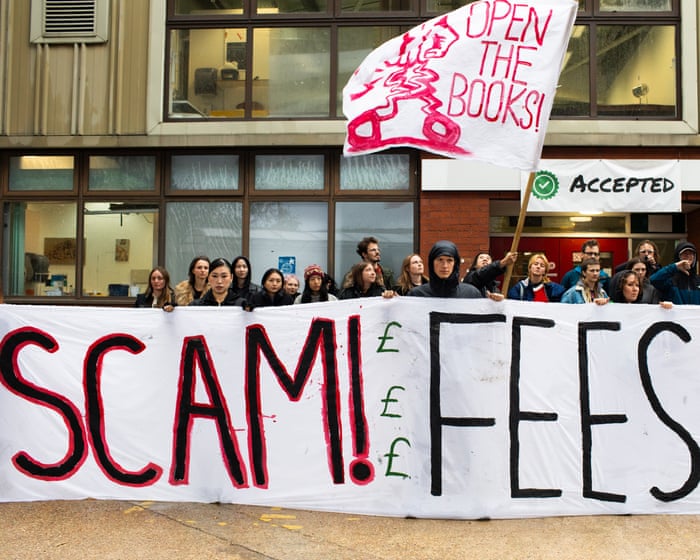
Fine art students at Goldsmiths, University of London, say a prolonged staff strike has disrupted teaching and are seeking compensation for lost learning. The university says about 8.5% of staff are on strike and cites financial pressures and steps to reduce the impact on students.
Key Facts
Ten of the 12 usual tutors on Goldsmiths’ master of fine art course are on strike, according to the article.
Students say they have received little teaching this term and that the disruption has caused financial strain and distress.
The strike began in June after a staff marking boycott over proposed job cuts and the university’s decision to deduct 100% of pay from those involved.
The University and College Union says the action responds to the scale and speed of proposed cuts and restructuring.
The strike is in its 21st week, and the article describes it as the longest in living memory in British higher education.
Goldsmiths says around 8.5% of its staff are on strike and says it has offered compromises, including a pause on compulsory redundancies.
The university says it faces significant financial challenges and has spent money to limit the effects of the dispute on students.
Read the Original
Want the full story? Tap a source to open the original
article.
The author argues that NATO’s predictable restraint may weaken deterrence as Russia escalates its actions against Ukraine and NATO countries. He calls for clearer red lines and less predictable responses, saying NATO should set the terms for how it responds to aggression.
Key Facts
The author is Vytautas Leskevicius, chief policy advisor at the Geopolitics and Security Studies Center.
The article cites Russia’s wars in Georgia in 2008 and Ukraine’s Crimea region in 2014, followed by its full-scale invasion of Ukraine in 2022.
The author says Russia has also carried out sabotage, cyber operations and interference with satellite navigation signals, and that drones have entered NATO territory.
The author criticizes NATO’s use of the term “sub-threshold” for hostile actions, arguing that it can weaken deterrence if NATO does not define the threshold or consequences for crossing it.
The article refers to NATO Secretary General Mark Rutte urging Allies to “keep calm, carry on, and support Ukraine.”
The author points to NATO’s 1967 flexible-response strategy as a model that kept the specific response uncertain while signaling that aggression could bring unacceptable costs.
The author argues that setting clearer red lines could lead Russia to test them, but says predictable restraint may also encourage further escalation.
Read the Original
Want the full story? Tap a source to open the original
article.
Andy Burnham said he would like to see the UK rejoin the European Union in his lifetime, but said the British public must decide and he would not push ahead of public opinion. He argued that revising the post-Brexit relationship could improve the economy and help bring together people who voted differently, while ruling out rejoining before the next election.
Key Facts
Burnham discussed Brexit in an interview on ITV’s Good Morning Britain.
He said he was not dogmatic about rejoining the EU and described his approach as pragmatic.
Burnham said he would like the UK to rejoin the EU in his lifetime.
He said the British public should be in charge of decisions about the UK’s relationship with Europe.
Burnham argued that the current post-Brexit settlement was not working and should be revised.
He said a practical discussion about Brexit could help unite people who voted differently.
Burnham ruled out trying to rejoin the EU before the next election.
He said there would be no election anytime soon.
Read the Original
Want the full story? Tap a source to open the original
article.
Palestinians displaced in Gaza are closely watching Israel’s election but remain uncertain that a new government would change Israeli policy or improve conditions. Two residents interviewed by Al Jazeera said they hoped for an end to the war and less restrictive policies, while doubting that major change or reconstruction would come soon.
Key Facts
Israelis are due to vote on Tuesday in an election shaped by the war on Gaza, the article says.
The article reports that Gaza has been under a ceasefire since October 2025 but continues to face near-daily Israeli air strikes, shortages and severe living conditions.
Mohammed Eliyan, a displaced resident living in Deir el-Balah, hopes Netanyahu will lose and says a different leader might be less hardline.
Eliyan called for an end to the war, prevention of displacement and starvation, and fewer restrictions at Gaza’s crossings.
Islam Salem, who was displaced from Beit Lahiya, said Israeli policy toward Gaza was unlikely to change after the election.
Salem cited Israel’s control of about 65 percent of Gaza’s territory inside the Yellow Line.
The article says more than 80 percent of buildings in Gaza have been damaged, and about two-thirds of those have been completely destroyed.
Read the Original
Want the full story? Tap a source to open the original
article.
A France 24 interview examined the political challenges facing Lula after his electoral victory in Brazil. Political scientist Felipe Krause said the right has strengthened its influence in state governments and the legislature, while pressure to address the needs of a growing middle class could limit Lula’s ability to advance his agenda.
Key Facts
The article describes Lula’s electoral victory as an “extraordinary victory.”
Political scientist Felipe Krause discussed Brazil’s political landscape in an interview with Oliver Farry.
Krause said the Brazilian right has consolidated influence across state governments and legislative institutions.
Krause said Lula faces pressure to adopt economic measures that support a growing middle class.
Krause said Lula may focus on preventing existing policies from eroding rather than advancing agendas such as environmental policy.
The article’s keywords include Flavio Bolsonaro, populism, and Big Tech.
Read the Original
Want the full story? Tap a source to open the original
article.
The article says Luiz Inácio Lula da Silva won Brazil’s presidential runoff with 51.8% of the vote, defeating Flávio Bolsonaro and ending a campaign that it frames as a contest over democracy, economic concerns and national sovereignty. It argues the result could disrupt a run of right-wing gains in Latin America and challenge the Trump administration’s involvement in Brazilian politics.
Key Facts
Lula won the runoff with 51.8% of the vote, compared with 48.2% for Flávio Bolsonaro.
Flávio Bolsonaro had led Lula in the first round, 47% to 45%, according to the article.
Brazil’s economy grew by a cumulative 9.2% from 2023 to 2025, the article says.
Unemployment fell from 9.3% in 2022 to 5.4% in 2026, which the article describes as a historic low.
Brazil left the United Nations Hunger Map in 2025, and deforestation in the Amazon fell to its lowest level in decades, the article reports.
The article says Lula proposed debt relief, limits on online betting, expanded social benefits, fuel subsidies and a shift to a five-day workweek.
Flávio Bolsonaro proposed spending cuts, privatisations, lower taxes and tougher crime measures; he also pledged to pardon his father and people convicted over the January 2023 assault on Brazil’s institutions.
The article says the Trump administration imposed tariffs on Brazil, sanctioned a Supreme Court justice involved in Jair Bolsonaro’s prosecution and publicly supported Flávio Bolsonaro.
Read the Original
Want the full story? Tap a source to open the original
article.
Storm Boelo caused flooding, property damage and power cuts across parts of the UK. About 90,000 properties remained without power on Monday, while crews faced high winds that made repairs unsafe.
Key Facts
Two men died after falling trees struck them during the storm: one in north London and one in Dumfries and Galloway.
The Energy Networks Association said about 90,000 properties were still without power on Monday.
Winds of 50 to 85 mph across parts of Scotland and northern England hampered repair work.
A Cumbria fragrance manufacturer said its factory and shop were expected to remain without power until Tuesday evening.
Five primary schools in Aberdeenshire and Ellon Academy closed on Monday because of power loss or storm damage.
Travel disruption continued on Monday, and strong winds and rain were forecast to persist.
Storm Boelo followed Storm Austen, which had also caused disruption in parts of the UK.
Read the Original
Want the full story? Tap a source to open the original
article.
A student-backed movement defeated President Aleksandar Vucic’s ruling party in Serbia’s snap parliamentary elections, prompting celebrations in Belgrade. The movement grew from protests after a 2024 railway-station canopy collapse killed 16 people, an incident widely blamed on corruption and cronyism.
Key Facts
Drivers honked cars decorated with Serbian flags as fireworks and crowds filled central Belgrade.
Supporters celebrated at the Student List headquarters after the election result.
Student List candidate Radomir Saicic called for peaceful celebrations and responsible work.
Pro-government encampments near parliament were dismantled as riot police trucks withdrew.
Student-led demonstrations began after the 2024 Novi Sad railway-station canopy collapse.
The collapse killed 16 people.
The protests grew into some of Serbia’s largest demonstrations since Slobodan Milosevic was overthrown in 2000.
Read the Original
Want the full story? Tap a source to open the original
article.
Uganda will quarantine for 21 days, at their own expense, citizens returning from the Democratic Republic of Congo (DR Congo) as it steps up measures against Ebola. The health ministry has also tightened screening at airports and land borders and barred travellers who have been to DR Congo from transiting through Uganda.
Key Facts
Uganda announced the restrictions on Sunday, according to the health ministry.
Returning Ugandans who have been to DR Congo must complete 21 days of quarantine at their own cost.
Travellers who have been to DR Congo will not be allowed to transit through Uganda.
Uganda has increased screening at Entebbe International Airport, land border crossings and designated road checkpoints.
The measures follow Ebola cases in Kenya and Nigeria involving people who had travelled through Uganda.
The health ministry said all 60 people monitored after contact with the Kenyan patient had been discharged.
Uganda reported 20 Ebola cases and two deaths earlier in the outbreak; the World Health Organization declared the country free of the disease in August.
Uganda says it has no current Ebola cases within its borders.
Read the Original
Want the full story? Tap a source to open the original
article.
China’s Communist Party has begun a four-day Fifth Plenum, a closed-door meeting of about 300 Central Committee members. The agenda is expected to include stricter Party discipline, while Xi Jinping may use the gathering to strengthen loyalty and shape priorities before next year’s Party Congress.
Key Facts
The meeting began on Monday and is scheduled to end on Thursday.
Chinese state media said the meeting would pave the way for tighter discipline within the Party.
A Politburo readout said the plenum would address strict governance of the Party.
The gathering follows purges of senior Party and military figures over allegations including corruption.
The Asia Society Policy Institute estimated that only two of the 44 military members appointed to the Central Committee in 2022 have not been removed.
The Central Military Commission, which runs China’s armed forces, has been reduced to Xi Jinping and one other general.
The next Party Congress is due in a year and will appoint a new Central Committee and set Party priorities.
Read the Original
Want the full story? Tap a source to open the original
article.
Officials from Saudi Arabia, Turkiye and Pakistan are due to meet Iranian officials in Tehran on Monday, according to Saudi and Iranian sources. Saudi Arabia says the visit aims to support de-escalation and dialogue as Houthi attacks on Saudi Arabia continue and regional tensions remain high.
Key Facts
Saudi Defence Minister Khalid bin Salman, Pakistani military chief Asim Munir and Turkish intelligence chief Ibrahim Kalin are expected to take part in the meeting.
Iran’s delegation will be led by Mohsen Rezaei, secretary of the Supreme National Security Council.
Saudi deputy minister Rayed Krimly said the visit is part of efforts to promote dialogue and diplomatic solutions, alongside mediation by Qatar and Pakistan.
The talks would be the first high-level contact between Iran and all three Mecca Defence Alliance members since Houthi attacks on Saudi Arabia escalated last month.
Saudi Arabia said it intercepted another wave of missiles and drones on Sunday as fighting with the Houthis continued.
Ministers from the three alliance countries met in Riyadh this month and agreed to ensure the rapid deployment of military forces and capabilities in Saudi Arabia.
Saudi Arabia, Turkiye and Pakistan signed the Mecca Joint Defence Agreement in August; Pakistan has approved it, while ratification efforts in Turkiye are under way.
Read the Original
Want the full story? Tap a source to open the original
article.
Supporters of Brazilian President Luiz Inácio Lula da Silva celebrated in cities including Rio de Janeiro and São Paulo after official results gave him victory in the presidential election. Lula received 51.8 percent of the vote, while his rival, Senator Flávio Bolsonaro, received 48.2 percent; Bolsonaro said he would seek to annul the result.
Key Facts
Crowds in Rio de Janeiro celebrated with fireworks, music, dancing and chants.
Thousands of Lula supporters gathered in central squares and on major roads in São Paulo.
Official results gave Lula 51.8 percent of the vote.
Senator Flávio Bolsonaro received 48.2 percent of the vote.
Lula called the high turnout a vote to defend democracy.
Bolsonaro refused to accept the result and said he would seek to annul the vote.
A Supreme Court decision extended polling by two hours.
Read the Original
Want the full story? Tap a source to open the original
article.
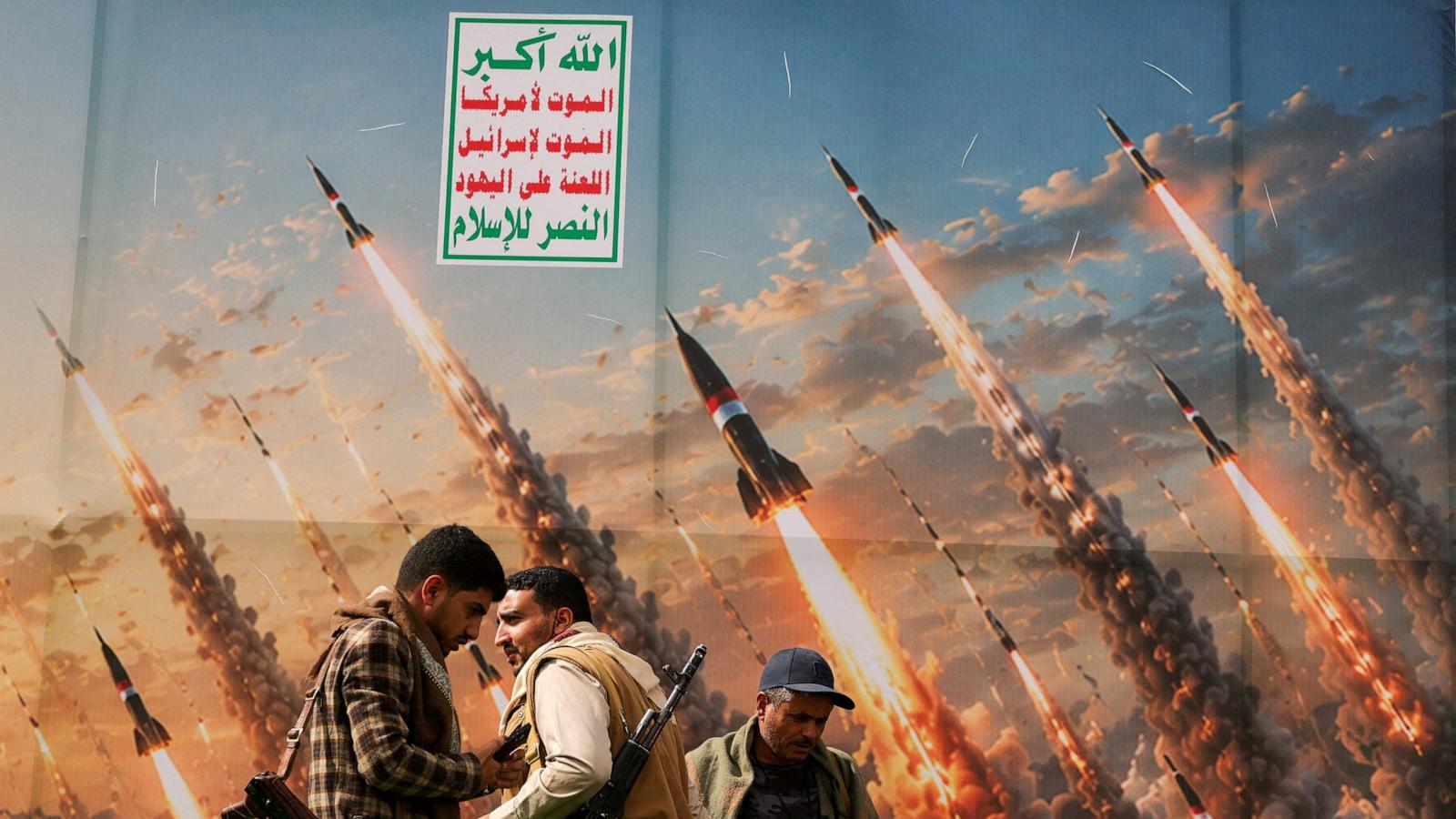
Yemen’s Houthi rebels said they launched a ballistic missile attack on Riyadh’s King Khalid International Airport. Saudi Arabia said its forces intercepted the missile and carried out airstrikes against Houthi missile sites in Yemen. The attack followed recent strikes that had disrupted airport flights.
Key Facts
Houthi military spokesperson Yahya Saree claimed the group attacked King Khalid International Airport on Monday morning.
Saudi military spokesperson Turki Al-Maliki said Saudi forces intercepted a ballistic missile headed for Riyadh.
Al-Maliki said Saudi forces struck missile storage and launch sites in Houthi-controlled parts of Yemen.
Saudi Arabia’s civil defense agency warned Riyadh residents of potential danger and later said the danger had passed.
Flights at the airport had resumed hours before the claimed attack, after being suspended following recent Houthi strikes.
The article says U.S.-Iran talks remain stalled despite a memorandum of understanding signed in June.
U.S. intelligence director Jay Clayton said Iran had substantially increased efforts to target U.S. officials abroad.
Read the Original
Want the full story? Tap a source to open the original
article.
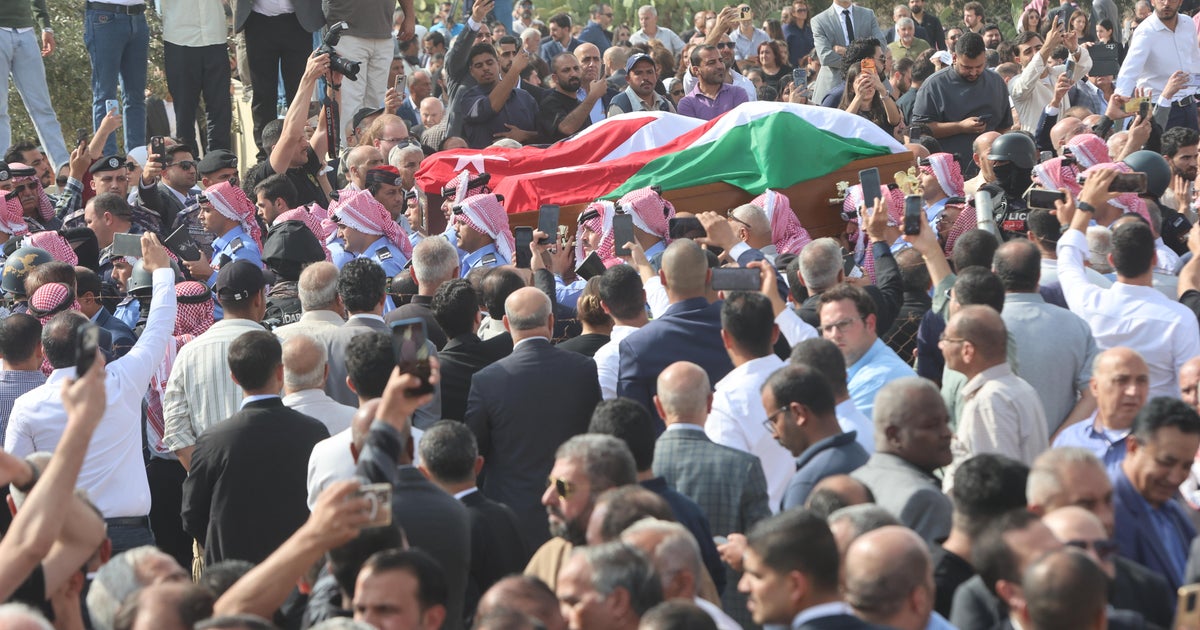
Jordanian security forces arrested three men in connection with a shooting at a Greek Orthodox church in Hammoud that killed nine people and wounded more than two dozen. Authorities said the suspects were injured in a shootout during their arrest; no group has claimed responsibility, and officials have not identified a possible militant link.
Key Facts
The church attack occurred Friday during a funeral in Hammoud, in Jordan’s Karak governorate.
The attack killed nine people and wounded more than two dozen.
Jordan’s Public Security Directorate said three suspects were arrested after a dawn shootout on Monday.
The directorate said all three suspects were wounded and no security personnel were injured.
Interior Minister Mazen Al-Faraya identified the three men as those responsible for the attack.
Authorities have not named the suspects or cited links to any armed group.
King Abdullah II called on authorities to respond forcefully to those seeking to undermine national unity.
Read the Original
Want the full story? Tap a source to open the original
article.
The article says Israel’s leading election candidates largely agree on security policy and do not offer a clear path to a two-state solution. It presents the main divide as domestic politics: whether Netanyahu’s government continues with less judicial oversight and its current coalition, or opponents govern under legal limits and without the coalition’s most extreme members.
Key Facts
The article describes the election as taking place on Tuesday.
It says leading candidates have not questioned Israel’s wars following the Hamas-led October 7, 2023 attack, including the war on Iran.
The article says most candidates have not set out a clear route to a two-state solution or an equitable settlement with Palestinians.
Benjamin Netanyahu said there would be no Palestinian state and that the land belongs to Israel.
Gadi Eisenkot said he considers the two-state principle a mistake.
Bezalel Smotrich called for ending the Oslo Accords, asserting sovereignty and encouraging migration from Gaza and the occupied West Bank.
Yair Golan said a rapid move to a two-state solution is impossible and advocated civil separation and Israeli security responsibility.
The article says Haredi military conscription has become more prominent as the human and economic costs of war have grown; Shas and United Torah Judaism have sought legal protections from conscription for ultra-Orthodox youth.
Read the Original
Want the full story? Tap a source to open the original
article.
Jordanian security forces arrested three suspects after a gun attack at a Greek Orthodox church funeral in Karak governorate killed eight people and injured 40. The suspects were wounded in a three-hour confrontation and taken into custody; 27 injured people remained in hospital on Monday.
Key Facts
Authorities found the three suspects in an abandoned house in Al-Jadeeda village on Monday.
The Public Security Directorate said the suspects refused to surrender and attacked security forces, who returned fire.
A government source said one suspect was in critical condition; no security personnel were reported injured.
A search of the site found firearms and live ammunition, Petra News Agency reported.
The attack took place on Friday at a funeral in Hamoud, about 120 km southwest of Amman.
Jordan’s Ministry of Health reported eight deaths and 40 injuries; 27 injured people remained in hospital on Monday.
King Abdullah II promised the attackers would face severe penalties and ordered a review of security procedures.
Read the Original
Want the full story? Tap a source to open the original
article.
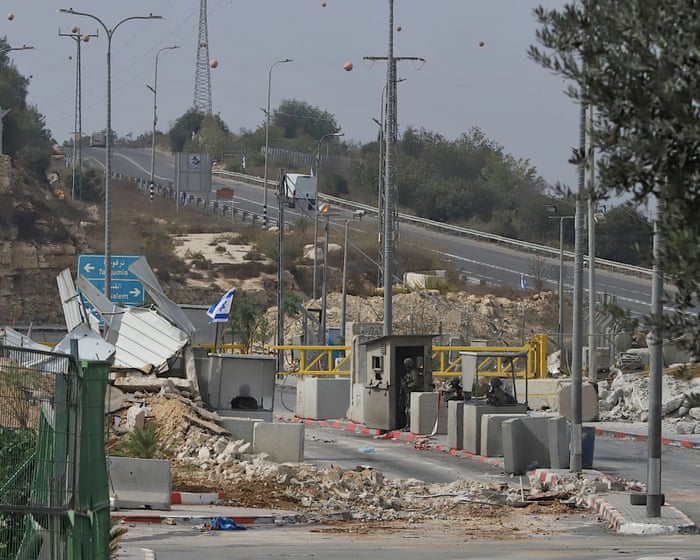
Israeli forces sealed parts of Hebron after a Friday attack at a military checkpoint that killed two Israeli soldiers. The municipality said the operation displaced nearly 2,000 people from Ein Deir Baha, while residents said soldiers forced them from their homes and used some houses as military positions; the army said civilians left voluntarily.
Key Facts
The attack on Friday killed two Israeli soldiers at a military checkpoint in Hebron.
Prime Minister Benjamin Netanyahu and Finance Minister Bezalel Smotrich visited Hebron after the attack, days before Israel’s election, and promised a strong response.
Israeli forces sealed off Hebron and demolished an industrial area in the Farsh al-Hawa neighbourhood, according to the article.
The Hebron municipality said 370 families, nearly 2,000 people, were displaced from Ein Deir Baha.
Residents said soldiers ordered them to leave, in some cases giving families only minutes to evacuate.
Resident Fahed Ahmaro said soldiers took over his house and damaged its gates and furniture.
The Israeli military said people who wished to evacuate were allowed to leave temporarily and described their departure as voluntary.
Read the Original
Want the full story? Tap a source to open the original
article.