Paris experienced very high temperatures due to a heatwave, prompting authorities to issue a red alert for half of France, including the capital. Many people in Paris cooled off by swimming in the Canal St Martin.
Key Facts
France issued a red heatwave alert for about half the country.
Paris is included in the heatwave warning area.
Temperatures are near record highs because of the heatwave.
Many Parisians chose to cool down by swimming in Canal St Martin.
The heatwave alert was announced ahead of a hot Monday.
The article mentions other European news but focuses on the heatwave in Paris.
Read the Original
Want the full story? Tap a source to open the original
article.
Keir Starmer, the UK Prime Minister, is expected to announce a timetable for leaving office in the autumn. Two main leadership transition paths are possible, with either Andy Burnham becoming the next Labour leader unchallenged or a contest involving Wes Streeting or others. The handover would be more gradual compared to previous UK transitions and different voting and nomination processes would happen depending on the candidates.
Key Facts
Starmer may announce his departure date from Downing Street soon, possibly in September 2024.
Andy Burnham is a leading contender to become Labour leader and Prime Minister, with strong support from some MPs.
If other candidates get enough support, there will be a leadership contest involving Labour members and MPs.
The Labour leadership election rules require at least 20% MP support to become an official candidate.
Nominees also need backing from local party branches or affiliated groups such as unions.
The leadership vote would be managed by the party’s national executive committee, aiming for a quick process.
During the transition, the current government must continue core work like autumn budget planning.
Starmer would act as a caretaker Prime Minister with limited authority until the handover is complete.
Read the Original
Want the full story? Tap a source to open the original
article.
Rep. Jason Crow said lawmakers will work strongly to find out the truth about a bombing that destroyed a girls’ school in Iran. The bombing happened on the same day as U.S. and Israeli airstrikes in Iran earlier this year. Crow criticized the Trump administration for delaying information about the event.
Key Facts
A girls’ school in Iran called Shajareh Tayyebeh Elementary was bombed.
This bombing took place on the day when the U.S. and Israel carried out airstrikes in Iran.
Rep. Jason Crow is leading efforts in Congress to get clear answers about the bombing.
Crow said the Trump administration has been slow to provide details on the incident.
Lawmakers want to understand who was responsible and why the school was hit.
The event is part of rising tensions in the Middle East involving the U.S., Israel, and Iran.
Read the Original
Want the full story? Tap a source to open the original
article.
Ethiopia’s Prosperity Party has won a majority in the recent parliamentary elections, securing Prime Minister Abiy Ahmed’s position. The elections did not take place in the Tigray region due to security concerns, and the country faces ongoing tensions despite a peace deal ending a recent civil war.
Key Facts
The Prosperity Party, led by Prime Minister Abiy Ahmed, won most seats in the current Ethiopian parliamentary elections.
Abiy Ahmed became prime minister in 2018 and created the Prosperity Party in 2019 after mass protests against the previous ruling coalition.
Abiy won the Nobel Peace Prize in 2019 for ending conflict with Eritrea.
Critics accuse Abiy’s government of detaining journalists and limiting civil society in recent years.
Ethiopia has seen violent unrest in ethnic regions such as Oromia and Amhara.
A civil war in the northern Tigray region from 2020-2022 caused many deaths, but a peace deal was signed in 2022.
Tigray’s main party tried to regain political control in 2023, raising concerns about new conflict.
Elections did not happen in Tigray due to poor security, according to the election board.
The Ethiopian government expects strong economic growth over 10% by 2026.
Read the Original
Want the full story? Tap a source to open the original
article.
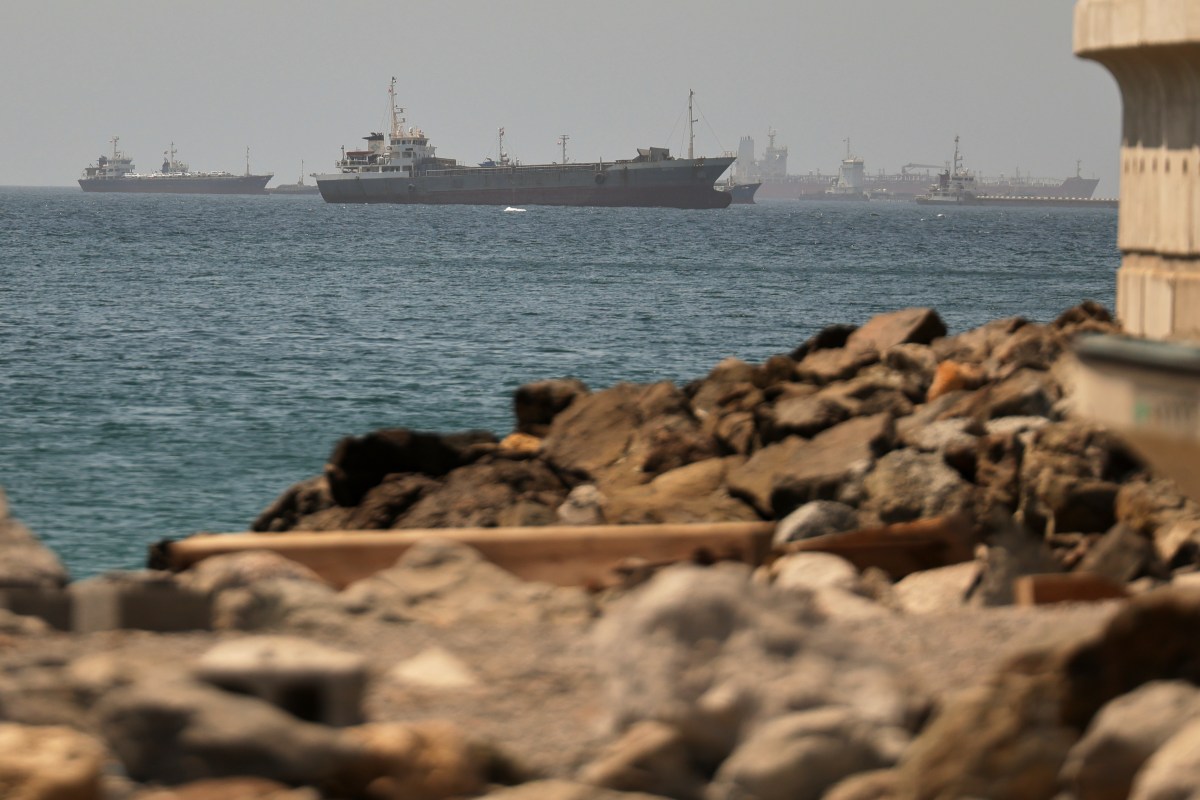
A temporary 60-day ceasefire between the United States and Iran has reopened the Strait of Hormuz, a key passage for global oil shipments. However, disagreements over who controls security, fees, and long-term management of the strait are causing uncertainty and raising concerns about future conflicts.
Key Facts
The ceasefire aims to stabilize energy markets and stop hostilities between the U.S. and Iran for 60 days.
The U.S. agreed to end its naval blockade of Iranian ports during this period.
Reports about the strait’s operation show some brief disruptions, but U.S. officials claim it remains open and busy.
Iran, Oman, and Gulf states are expected to negotiate how the strait will be managed after the ceasefire.
The agreement does not clarify who will enforce security or if transit fees can be charged later.
President Donald Trump supports the deal but warned the U.S. might impose a 20% fee on foreign ships after 60 days.
Trump also threatened strong military action if Iran tries to close the strait again.
Iran considers the strait within its own control and sent messages asserting its authority.
Read the Original
Want the full story? Tap a source to open the original
article.
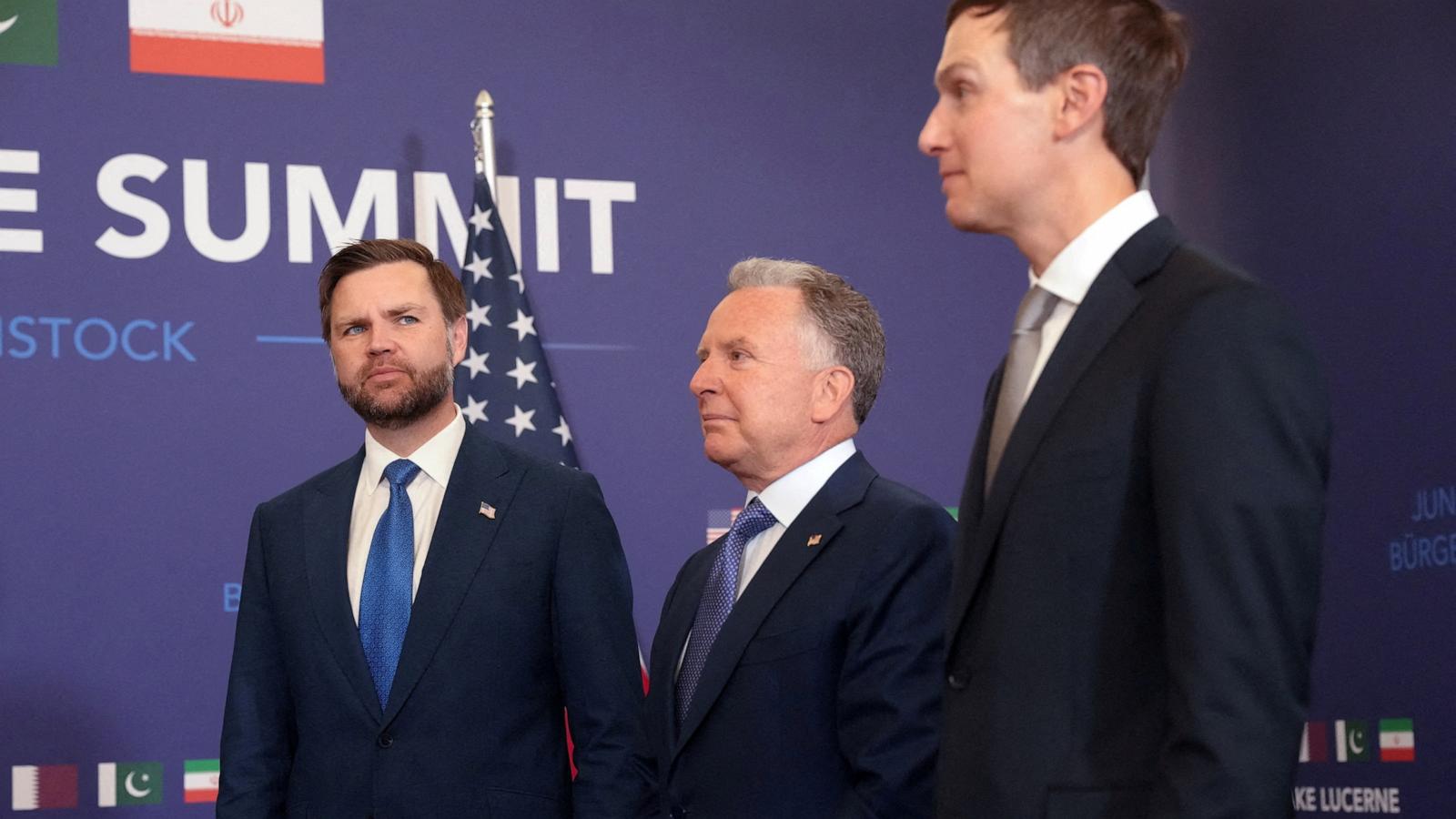
The Trump administration is focusing closely on stopping Iran from developing nuclear weapons during ongoing talks in Switzerland. U.S. officials, including Vice President JD Vance, met with Iranian leaders to negotiate details, aiming for a deal that would prevent Iran from enriching uranium for weapons.
Key Facts
The Trump administration calls its approach to Iran’s nuclear program “laser focused” and pragmatic.
High-level U.S. and Iranian officials held rare direct talks in Switzerland.
Iran’s nuclear program is under negotiation, including issues like Iran’s stockpile of highly enriched uranium.
The U.S. wants Iran’s nuclear program permanently ended, following President Trump’s red line against uranium enrichment.
Technical experts from the U.S. Department of Energy are involved to work on detailed nuclear issues.
The sides recently signed a memorandum of understanding but left many details unsettled to be worked out in the next 60 days.
The U.S. emphasizes verification and monitoring rather than trusting Iran, with possible sanctions relief if Iran complies.
Some U.S. lawmakers worry that easing sanctions could allow Iran to support its military or allied groups.
Read the Original
Want the full story? Tap a source to open the original
article.
Senior negotiators from Iran and the United States met in Switzerland to discuss a memorandum of understanding (MoU) aimed at ending the conflict that began with US and Israeli actions in February. Iran’s Supreme Leader Mojtaba Khamenei showed reluctance but ultimately approved the deal, though some Iranian hardliners oppose it and question its terms, especially regarding Lebanon and the Strait of Hormuz.
Key Facts
Iran and the US are meeting in Switzerland to advance a signed MoU aimed at ending recent hostilities.
Iran’s delegation was led by Parliament Speaker Mohammad Bagher Ghalibaf and Foreign Minister Abbas Araghchi.
The US delegation was led by Vice President JD Vance.
Supreme Leader Mojtaba Khamenei expressed initial disagreement but gave approval after President Masoud Pezeshkian accepted responsibility.
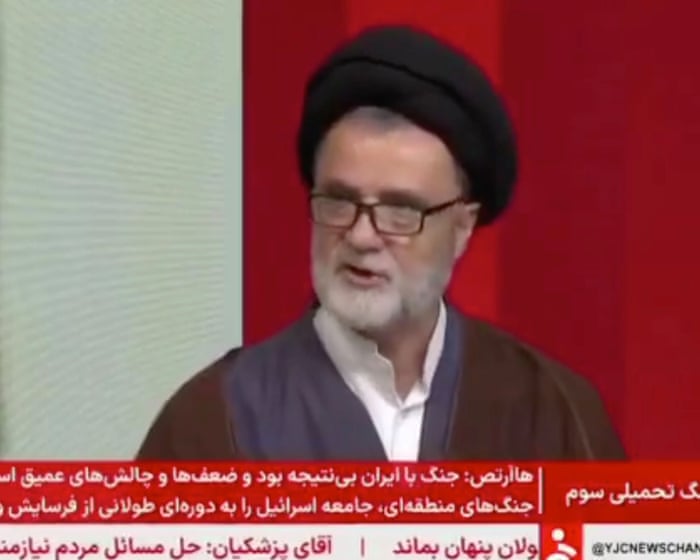
Some Iranian hardliners, including cleric Mahmoud Nabavian, oppose the MoU and claim Khamenei wanted stricter conditions such as control over the Strait of Hormuz.
An interview critical of the MoU was abruptly cut from Iranian state TV, leading to the resignation of the channel’s director.
Most members of Iran’s Supreme National Security Council voted for the MoU, except for hardliner Saeed Jalili.
Iran stressed the need to enforce the deal in Lebanon first, amid ongoing tensions and conflicting claims about the status of the Strait of Hormuz.
Read the Original
Want the full story? Tap a source to open the original
article.
China has supported North Korea's nuclear weapons program because it sees the program as a way to gain influence over the United States. This position was highlighted during a recent meeting between Chinese leader Xi Jinping and North Korean leader Kim Jong-un.
Key Facts
China has consistently backed North Korea's development of nuclear weapons.
The nuclear program helps China gain bargaining power over the U.S.
Chinese President Xi Jinping met with North Korean leader Kim Jong-un.
China’s support is linked to its strategic goals in relations with the United States.
North Korea’s nuclear program remains a key issue in international diplomacy.
Read the Original
Want the full story? Tap a source to open the original
article.
Shaun Burton, the driver who died in a train crash in Bedford, has been named by British Transport Police. Around 100 people were injured when two trains from East Midlands Railway crashed, with 28 still in hospital, some critically ill. The Rail Accident Investigation Branch is working to find out what caused the crash.
Key Facts
Shaun Burton, 60 years old, was the driver who died in the Bedford train crash.
About 100 people were injured in the collision between two East Midlands Railway trains.
28 injured people remain in the hospital, with nine in critical condition.
The accident happened near Bedford at 5:15 pm BST on Friday.
British Transport Police and the Rail Accident Investigation Branch are investigating the crash.
Train services to and from London St Pancras were suspended over the weekend.
The rail line between Bedford and Luton is expected to stay closed until June 28 for repairs and investigation.
Passengers reported a loud impact followed by sounds of pain after the crash.
Read the Original
Want the full story? Tap a source to open the original
article.
Israeli military actions in Lebanon and President Donald Trump’s inability to stop them may harm diplomatic talks between Iran and the United States. Experts believe it is unlikely these talks will advance beyond a basic agreement to a full peace deal.
Key Facts
Israel has carried out military actions in Lebanon recently.
President Donald Trump did not stop Israel from these actions.
This situation might cause the end of diplomacy between Iran and the U.S.
Iran and the U.S. have a memorandum of understanding, a basic agreement, but not a full deal.
The last U.S.-brokered Gaza ceasefire was in October 2025.
Israel did not fully follow the terms of that ceasefire.
Iranian leaders doubt progress in talks because of Israel’s actions.
Jeremy Scahill, a news commentator, shared these views in an interview.
Read the Original
Want the full story? Tap a source to open the original
article.
A strong El Nino weather pattern is expected to reach its highest point in November. This could cause problems with food supplies and lead to more severe weather events around the world.
Key Facts
A powerful El Nino will peak in November.
El Nino is a climate pattern that influences weather globally.
It can disrupt rainfall and temperature patterns.
These changes may threaten food production in some regions.
Extreme weather, like storms and droughts, could become more common.
Governments and organizations may need to prepare for these impacts.
The effects of El Nino are felt worldwide, affecting many countries.
Read the Original
Want the full story? Tap a source to open the original
article.
A youth-led political movement in India called the Cockroach Janta Party is camping out in New Delhi to demand the resignation of the education minister. The protest started because of leaked exam papers that caused exam cancellations and widespread frustration among young people.
Key Facts
The Cockroach Janta Party is a youth movement that began as a joke but grew into a real protest.
The group is led by Abhijeet Dipke, a recent graduate from Boston University who returned to India to organize street protests.
Many young people in India are angry due to repeated exam paper leaks and unfair exam results.
The education minister, Dharmendra Pradhan, is being asked to resign by the protesters.
Protests are happening in multiple cities including New Delhi, Mumbai, Bengaluru, and Nagpur.
India’s Telegram app was temporarily banned to try to stop exam paper leaks, but critics call this an ineffective gesture.
More than a dozen students died by suicide after the exam leaks, increasing pressure on the government.
Police have tried to remove protesters by cutting off water and food supplies, but the protesters say they will stay until the minister resigns.
Read the Original
Want the full story? Tap a source to open the original
article.
Three teenagers have been arrested after a 17-year-old boy was fatally stabbed in Battersea, south-west London. The victim died at the scene, and police are continuing their investigation.
Key Facts
The victim, Jamal Coombes, was 17 years old.
He was found with stab wounds early on Saturday morning around 4:20 a.m.
A 15-year-old girl and a 15-year-old boy were arrested on suspicion of murder on the same day.
A 14-year-old boy was arrested on Sunday on the same suspicion.
All three teenagers remain in police custody.
The stabbing followed reports of a fight or conflict.
The Metropolitan Police are asking for witnesses to come forward.
The investigation is ongoing and more details will be shared later.
Read the Original
Want the full story? Tap a source to open the original
article.
France and other parts of Europe are experiencing a severe heat wave with temperatures reaching around 40 degrees Celsius (104 degrees Fahrenheit). Governments have canceled events, restricted public drinking, and taken other measures to protect people from heat-related dangers like heatstroke and drownings.
Key Facts
About one-third of France is under a "red alert" heat warning due to very high temperatures.
The French government banned public drinking in certain areas to help emergency services focus on vulnerable people.
Multiple drownings occurred as people sought water to cool off; four children drowned in France recently.
France canceled trains, concerts, sports events, and closed 845 schools to reduce heat risks.
Other European countries like Spain, Italy, and Germany are also facing extreme heat and canceling outdoor activities.
The World Health Organization reported over 200,000 heat-related deaths in Europe in the last four years, most of which could have been prevented.
Climate change is linked to more frequent and intense heat waves and is expected to cause new temperature records in the coming years.
Authorities set up misting stations at popular places like the Eiffel Tower to help people stay cool.
Read the Original
Want the full story? Tap a source to open the original
article.
President Donald Trump warned Iran that the U.S. may carry out strikes if Iran does not stop Hezbollah from attacking. This warning came as U.S. and Iranian officials began peace talks in Switzerland to end fighting in Lebanon. Despite an agreement to stop hostilities, Israeli strikes in Lebanon continued due to attacks by Hezbollah.
Key Facts
President Trump threatened military action against Iran if it does not prevent Hezbollah’s attacks.
Hezbollah is a group supported by Iran and involved in fighting in Lebanon.
The U.S. and Iran signed an agreement aiming to stop fighting on all sides, including in Lebanon.
Peace talks between senior U.S. and Iranian officials started in Switzerland.
Israeli forces continued air strikes in Lebanon, responding to attacks from Hezbollah.
The conflict in Lebanon is part of the larger tension between Israel, Hezbollah, and Iran.
The situation is fragile despite efforts to reach a ceasefire.
The conflict has caused casualties and international concern over stability in the Middle East.
Read the Original
Want the full story? Tap a source to open the original
article.
A woman experienced a nosebleed and swelling without injury and later found out she had a serious bone infection. After treatment, further scans revealed a cancer called sinonasal squamous cell carcinoma, which required multiple surgeries including partial removal and reconstruction of her nose.
Key Facts
The woman got a nosebleed and soreness after jumping into a pool but had no injury.
Doctors initially suspected a broken nose but found a severe bone infection called osteomyelitis via a CT scan.
She had emergency surgery and antibiotics to treat the infection.
Despite treatment, swelling increased, and a biopsy revealed sinonasal squamous cell carcinoma (a type of cancer beginning in the sinuses).
She was 35 years old and worried about her children when diagnosed with cancer.
Surgery removed most of her nose and septum, but her nostrils were saved.
Reconstruction used rib cartilage to rebuild her nose.
She faced a long recovery with multiple operations and treatments following the diagnosis.
Read the Original
Want the full story? Tap a source to open the original
article.
A former member of Iran’s negotiating team, Mahmoud Nabavian, revealed alleged secret letters from Iran’s supreme leader, Mojtaba Khamenei, criticizing the negotiation team’s actions and setting strict conditions on talks with the US. This caused a major controversy, including a censored TV interview, calls for legal action, and resignations within Iran’s state media.
Key Facts
Mahmoud Nabavian, deputy chair of Iran’s national security council, disclosed secret letters he said were from Mojtaba Khamenei during a state TV interview.
The interview was cut off and later removed from the broadcaster’s archive; a senior official resigned afterward.
Nabavian claimed Khamenei said the negotiating team went beyond its authority and demanded 11 conditions for talks to continue, including compensation from the US and control over the Strait of Hormuz.
Iran’s negotiating team dismissed Nabavian’s claims as old and distorted.
Hardliners and reformists in Iran are divided over the situation; state media called Nabavian’s actions a legal violation.
The supreme leader has taken a direct role in the nuclear negotiations, often communicating through written statements rather than public appearances.
Nabavian said Khamenei wants Iran to charge tolls on ships passing through the Strait of Hormuz and use that money to support veterans and families of martyrs.
The controversy highlights tensions within Iran’s government about the direction and control of international talks.
Read the Original
Want the full story? Tap a source to open the original
article.
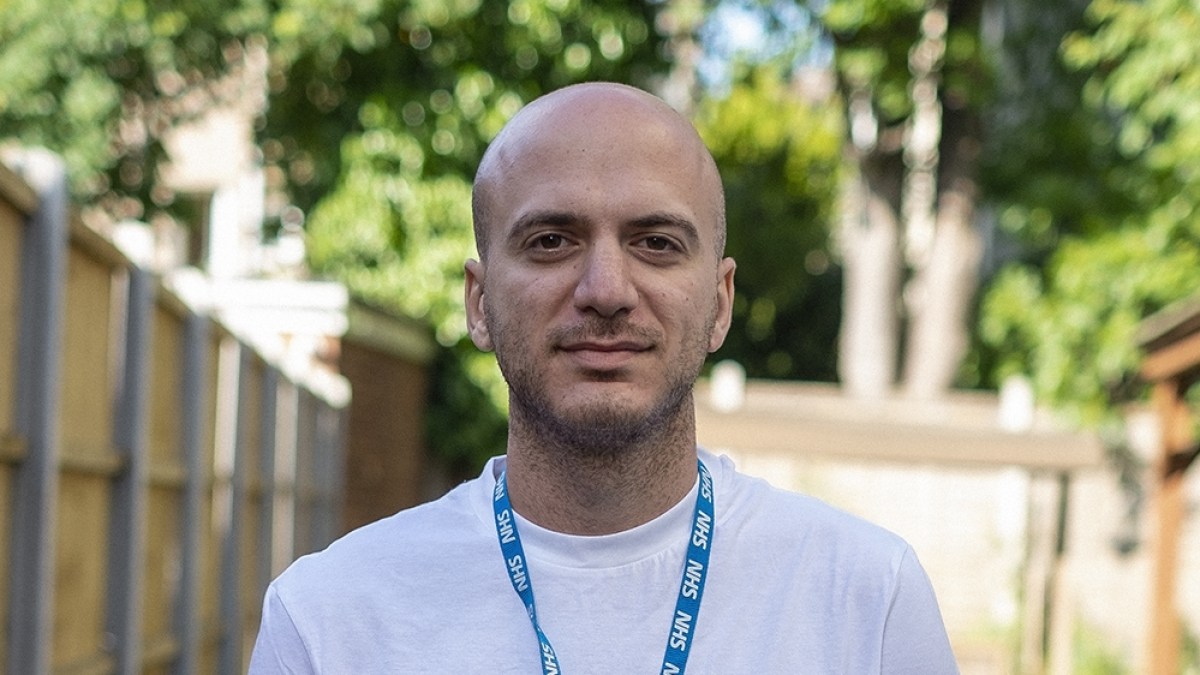
British Syrian activist Hassan Akkad was held in a Damascus prison for four days after being detained for his social media comments criticizing a journalist. He was released after the journalist withdrew a legal complaint against him related to the criticism.
Key Facts
Hassan Akkad is a British Syrian activist and filmmaker.
He was detained in Damascus on Wednesday evening and released four days later.
Akkad criticized Syrian journalist Mousa al-Omar for not fulfilling financial pledges made during a Syria reconstruction campaign.
Al-Omar filed a legal complaint leading to Akkad’s detention but later withdrew it.
The Public Prosecutor said Akkad was held on charges related to not responding to a cybercrime investigation.
Akkad previously spent time in prison under President Bashar al-Assad for documenting protests in 2011.
He fled Syria and traveled through Europe to reach the UK in 2015.
Akkad’s journey was part of a BAFTA-winning documentary series about migration.
Read the Original
Want the full story? Tap a source to open the original
article.
That's the point of this site, and readers keep it that way. Support for any amount and the daily digest lands in your inbox every morning at 7am Eastern.
Usha Vance traveled internationally when she was about eight months pregnant, raising questions about the safety of flying late in pregnancy. Medical experts in the U.S. say air travel can be safe in uncomplicated pregnancies but advise consulting a doctor, especially in the third trimester.
Key Facts
Usha Vance flew to Switzerland in her late pregnancy, with a due date in late July.
The U.S. CDC says most pregnant women can fly safely if the pregnancy has no problems but should check with a doctor first.
The American College of Obstetricians and Gynecologists agrees that occasional air travel is usually safe for healthy pregnancies.
Airlines often allow travel up to about 36 weeks, sometimes requiring a doctor’s note after 28 weeks.
Eight months pregnant is considered higher risk for preterm labor and blood clots during flights.
Long flights can cause swelling, tiredness, and circulation issues like deep vein thrombosis (DVT).
Experts recommend moving regularly, staying hydrated, and using compression stockings on long flights.
Traveling abroad requires extra planning to ensure access to medical care and insurance coverage.
Read the Original
Want the full story? Tap a source to open the original
article.
Susan Rice, who was national security adviser during the 2015 Iran nuclear deal, criticized a new preliminary agreement between the Trump administration and Iran. She said the new deal gives Iran many benefits too soon and does not have clear limits on its nuclear activities.
Key Facts
Susan Rice served as national security adviser when the 2015 Iran nuclear deal was made.
The 2015 deal stopped Iran from making nuclear weapons by limiting uranium enrichment and allowing inspections.
The new 2026 agreement is a short, two-page memorandum with fewer clear restrictions on Iran’s nuclear program.
Iran will regain the ability to sell all its oil and access billions of dollars of frozen assets soon.
Unlike the 2015 deal, there are no limits on how Iran can use its money now.
The memorandum mentions working on a plan involving $300 billion for Iran’s reconstruction and development with U.S. and Gulf partners.
Rice called the deal a "strategic blunder" because it gives Iran concessions without a full, comprehensive agreement.
The agreement briefly states Iran will not develop nuclear weapons but leaves key nuclear issues open for future talks.
Read the Original
Want the full story? Tap a source to open the original
article.