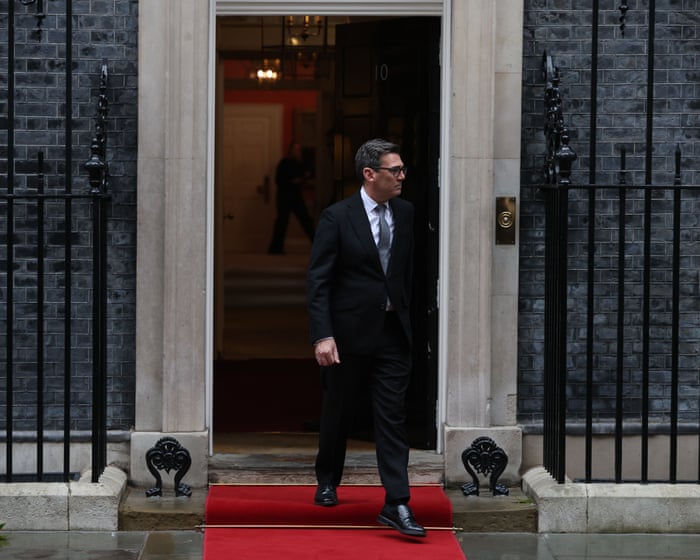
Prime Minister Andy Burnham is hiring new advisers to fill gaps in his team at No 10 Downing Street, including an expert on artificial intelligence (AI) and its impact on society. These advisers will focus on issues like AI’s effect on jobs, public services, the cost of living, and economic policy.
Key Facts
Andy Burnham wants to hire an AI expert to prepare for AI’s impact on jobs and public services.
There are concerns in government about AI’s risks and the UK’s readiness for its effects.
Burnham will also hire an adviser to focus on public control of essentials like transport, energy, housing, water, and the environment.
This adviser will work on policies related to the cost of living and bring new ideas to government plans.
Burnham has asked officials to consider more radical solutions for fixing Thames Water, even if they cost more or have legal risks.
A new economic adviser will be hired to focus on growth and government economic policy.
Other new roles include advisers on Scotland, work and welfare, and immigration, security, and justice issues.
Previous expert advisers declined to join Burnham’s team, partly due to disagreements over his economic approach.
Read the Original
Want the full story? Tap a source to open the original
article.
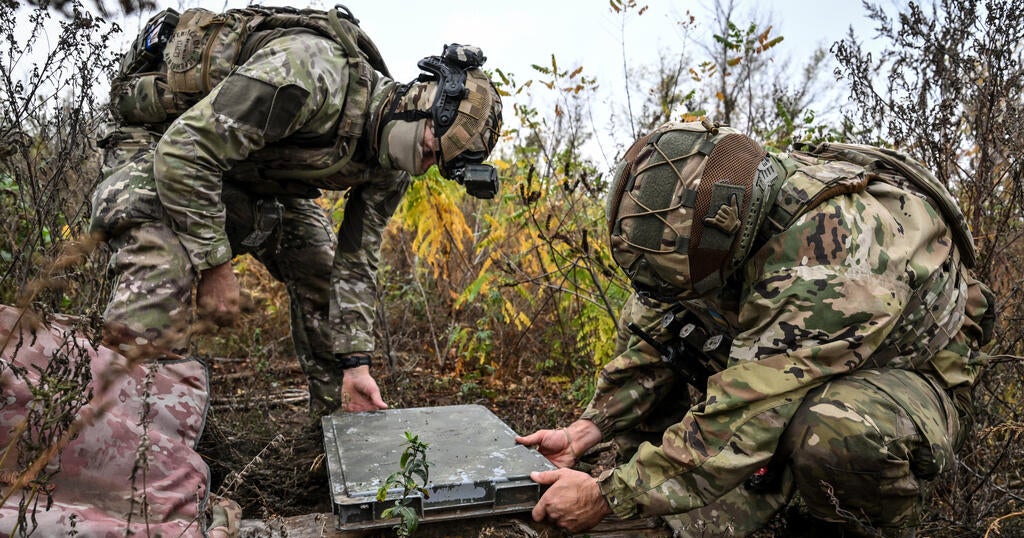
Ukraine depends on Elon Musk's Starlink and Starshield satellite networks to operate its drones in the war against Russia. Recently, Ukraine reported that the military-grade Starshield network was slowed down, causing its drones to fail, but Musk and U.S. officials have given conflicting statements about who was responsible.
Key Facts
Ukraine uses Starlink (commercial) and Starshield (military) satellite networks from SpaceX to connect and control its drones.
Starshield is licensed by the U.S. government and only available to countries like Ukraine, not Russia.
In mid-October, Ukraine experienced restrictions on Starshield, causing drones to lose connection and fall.
The restrictions involved limiting drone internet speeds, making it impossible for drones flying faster than certain speeds to stay connected.
President Zelenskyy said these limits stopped Ukraine from defending against Russian drones.
Elon Musk denied throttling the network, saying the U.S. government controls Starshield access.
CBS News reported Musk was behind slowing down Starshield, but this has not been fully confirmed.
There is no equivalent satellite internet system with the same global coverage as Starlink, making Ukraine highly dependent on it.
Read the Original
Want the full story? Tap a source to open the original
article.
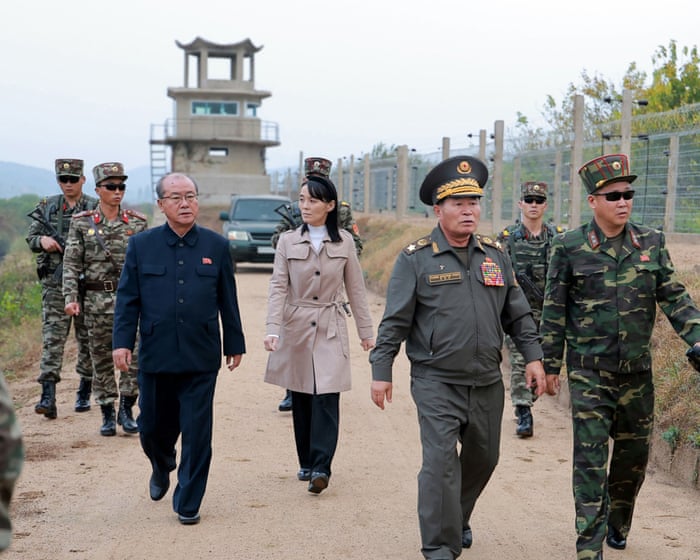
North Korea announced it will restart loudspeaker broadcasts with messages against South Korea along their shared border. South Korea called for talks to reduce tensions and avoid accidental conflicts. The two countries have a heavily guarded border known as the Demilitarized Zone (DMZ), where recent incidents have raised worries.
Key Facts
North Korea plans to set up loudspeakers along the entire border to broadcast propaganda against South Korea.
Kim Yo Jong, sister of North Korean leader Kim Jong Un, made this announcement after inspecting border defenses.
A recent landmine explosion injured three South Korean soldiers in the DMZ, increasing tensions.
South Korea accused North Korea of deliberately laying mines near the border; North Korea denied this.
Both Koreas have historically used loudspeaker broadcasts for propaganda, including K-pop music and news from the South.
North Korea has added mines, fences, and barriers since 2024 to strengthen its side of the DMZ.
South Korea’s Defense Ministry urged North Korea to talk and work to prevent accidental military clashes.
North Korea cut off a military hotline and said it will no longer pursue dialogue or unification with South Korea.
Read the Original
Want the full story? Tap a source to open the original
article.
Brazil’s presidential candidates, President Luiz Inacio Lula da Silva and Flavio Bolsonaro, have engaged in a dispute over releasing their personal records before the election run-off. Bolsonaro says he will share his records only if Lula also discloses information about his advisers, security staff, and companies linked to his children. Both candidates are involved in corruption investigations.
Key Facts
Flavio Bolsonaro is the right-wing candidate challenging President Lula in Brazil’s upcoming election run-off.
Bolsonaro demands Lula expand his record release to include advisers, security personnel, and companies held by Lula’s children.
Lula agreed to share his bank, tax, phone records, and those of his family if Bolsonaro does the same.
Lula’s campaign filed a conditional request with Brazil’s electoral court to release personal records.
Both candidates are involved in corruption probes linked to businessmen and alleged money laundering.
Bolsonaro is investigated for seeking an investment from banker Daniel Vorcaro.
Lula’s son is investigated for allegedly helping a businessman gain government access; he denies wrongdoing.
Lula has stated his son will be treated like any other citizen during investigations.
Read the Original
Want the full story? Tap a source to open the original
article.
An Australian TV reporter named Will Murray helped rescue a man trapped in a car that was sinking in floodwaters in Morayfield, Queensland. Murray was reporting on the floods when the man got stuck in his vehicle.
Key Facts
Will Murray is a journalist with Australia’s public broadcaster, ABC.
Murray was covering flood conditions in Morayfield, Queensland.
A man got trapped inside a four-wheel-drive vehicle in rising floodwaters.
The reporter and a bystander helped rescue the man from the car.
The rescue happened during live news reporting on floods.
Morayfield is an area affected by severe flooding at that time.
Read the Original
Want the full story? Tap a source to open the original
article.
A large dusky shark named Bukangi has returned to a canal in Busan, South Korea, after authorities tried to guide her out. The shark had been stuck in the canal for a month, drawing many visitors, but she swam back despite barriers and rescue efforts.
Key Facts
Bukangi is a three-metre-long dusky shark spotted in a Busan canal for about a month.
The shark became popular, attracting over 1.6 million visitors to a local park.
Authorities guided Bukangi out of the canal into open water using nets in a careful rescue operation lasting over eight hours.
Bukangi broke through barriers and returned to the canal the day after being relocated.
Officials are planning another rescue effort to move the shark again.
Experts think Bukangi may have entered the canal because of warm water and plenty of fish.
The warming sea temperatures in the area may lead to more shark visits in Busan in the future.
The shark showed signs of injury and not eating, raising concerns about her health as water temperatures drop.
Read the Original
Want the full story? Tap a source to open the original
article.
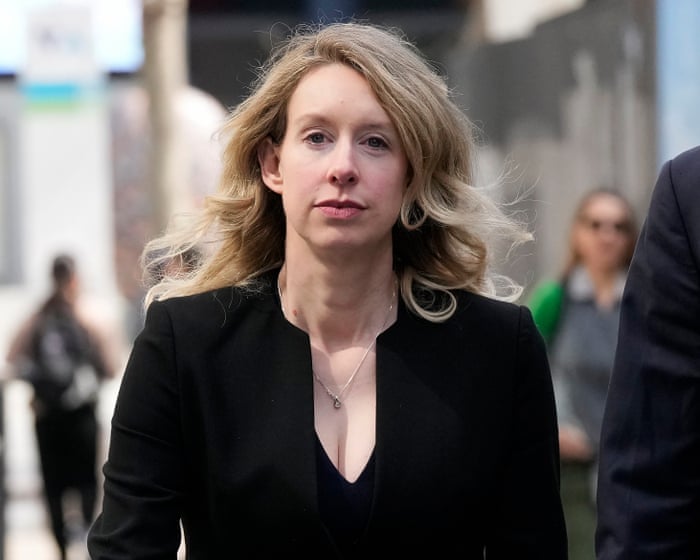
Elizabeth Holmes, the founder of the health technology company Theranos, has returned to public attention. People remain interested in her story because of the unusual and dramatic events surrounding her rise and fall.
Key Facts
Elizabeth Holmes started Theranos, a company claiming to have revolutionary blood-testing technology.
Theranos’s technology was later shown to be unreliable and inaccurate.
Holmes faced legal trials and was convicted for fraud related to her company’s false claims.
Her story involves themes of ambition, deception, and the impact on the healthcare industry.
A podcast and media coverage have renewed public interest in learning more about her life and case.
Read the Original
Want the full story? Tap a source to open the original
article.
North Korea plans to restart loudspeaker broadcasts of propaganda along the border with South Korea after 16 months. This comes amid rising tensions following an incident where South Korean soldiers were injured by a landmine near the border, which South Korea blames on North Korea. North Korea has also been strengthening its border defenses and calls recent South Korean responses provocations.
Key Facts
Kim Yo-jong, sister of North Korean leader Kim Jong-un, said loudspeakers will be ready to restart soon along the entire border.
These loudspeaker broadcasts are used to send propaganda messages and have been silent for 16 months.
South Korean President Lee Jae Myung stopped South Korea’s loudspeaker broadcasts in June 2025 to reduce tensions.
The loudspeaker broadcasts involve North Korea playing sounds like animal howls and South Korea playing K-pop music and news critical of North Korea.
Tensions increased after a landmine near the border injured three South Korean soldiers in September.
South Korea and the UN command said the mine came from North Korea, but North Korea denies this.
North Korea has increased border fortifications, including mines and barriers, declaring the border a permanent dividing line.
South Korea reports North Korean troops crossing the border during construction, leading to warning shots and loudspeaker warnings from South Korea.
Read the Original
Want the full story? Tap a source to open the original
article.
French police banned protests in parts of Paris following violent demonstrations linked to the rising cost of living and fuel prices. President Emmanuel Macron criticized US President Donald Trump for using the unrest for political advantage ahead of the US midterm elections.
Key Facts
Protests were banned from 8:00 am to 8:00 pm in key areas of Paris, including near the presidential palace, parliament, the Louvre, and Champs-Elysees.
The ban followed violent unrest during recent student and Yellow Vest protests.
French police said organizers could not guarantee the prevention of violence and vandalism.
Prime Minister Sébastien Lecornu planned to meet with mayors from Paris, Marseille, and Lyon, cities affected by riots.
A curfew was imposed in parts of Paris for some nights to maintain public order.
The Yellow Vest movement and high school students planned more demonstrations over the weekend.
Macron accused President Donald Trump of exploiting the unrest for political gain before the US midterms.
French intelligence services were involved in preparing for the upcoming protests.
Read the Original
Want the full story? Tap a source to open the original
article.
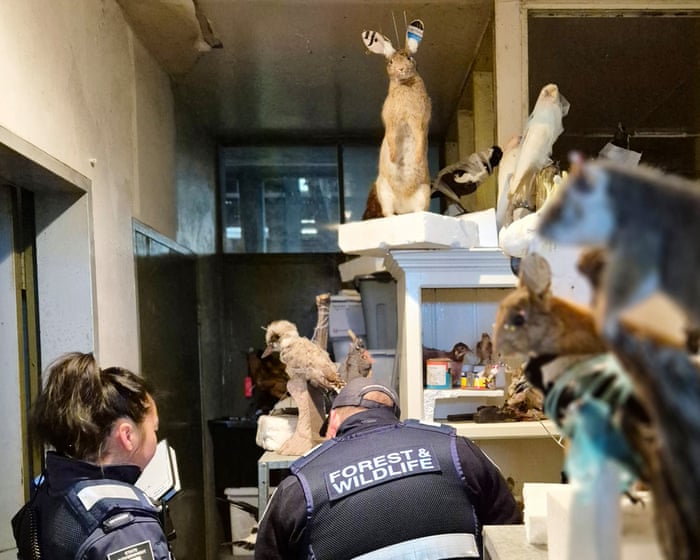
A man in Victoria, Australia, was fined $10,000 after more than 700 frozen and taxidermied native animals were found on his property without the proper licenses. The animals included protected and threatened species, and some live reptiles were also kept in poor conditions, which broke wildlife laws.
Key Facts
Glenn Richard Rollo, 74, was fined $10,000 and pleaded guilty to 13 charges related to illegal possession and selling of wildlife.
Authorities found over 700 dead native animals frozen or taxidermied, including birds, possums, echidnas, and threatened species like barking owls and diamond pythons.
His property included 14 freezers full of animals and enclosures with 15 live reptiles, some of which were not properly cared for.
Rollo did not have the required licenses under Victoria’s Wildlife Act 1975 to possess or trade these animals.
The law requires licenses for trading dead animals and for taxidermy to protect native wildlife and ensure their welfare.
The case was discovered during a wider crackdown on illegal wildlife trading in Victoria.
Officials stressed the importance of wildlife protection laws and the need for anyone keeping animals to follow them strictly.
An animal rights MP called for stronger, updated wildlife laws in Victoria, noting the fine was too low to act as a serious warning.
Read the Original
Want the full story? Tap a source to open the original
article.
Stephen Hubbard, a 74-year-old American, was released from a Russian prison after four years. He had been convicted in Russia of being a mercenary for Ukraine, which he denies. His release happened while a US envoy was visiting Russia to encourage peace talks.
Key Facts
Stephen Hubbard is a 74-year-old US citizen.
He was held in a Russian prison for four years.
Russia convicted him of being a mercenary for Ukraine.
Hubbard denies the claim that he was a mercenary.
His release happened during a visit by US envoy Steve Witkoff to Russia.
The envoy's visit aimed to get Russia to rejoin peace talks.
The article focuses on a development related to the conflict involving Russia and Ukraine.
Read the Original
Want the full story? Tap a source to open the original
article.
A UK parliamentary report warns that the country has serious weaknesses in defending the Arctic region, which could leave it open to attacks by Russia. The UK lacks enough warships and submarines to protect important undersea cables and energy supplies, making critical infrastructure vulnerable.
Key Facts
UK MPs say there are big gaps in the country's Arctic defence capabilities.
The Royal Navy has too few warships and submarines to protect key areas in the High North (Arctic region).
Russia’s increased submarine activity in the North Atlantic poses a threat similar to Cold War levels.
Russian submarines could hide beneath Arctic ice to threaten UK and NATO sea routes and infrastructure.
The Defence Committee chair says Russia wants military control of the Arctic for advantage.
The UK Ministry of Defence is investing in protecting undersea cables but there are still shortages.
The report suggests the UK-led Joint Expeditionary Force should focus more on defending the High North.
There is concern about uncertain support from the US for NATO in Arctic defence matters.
Read the Original
Want the full story? Tap a source to open the original
article.
In Mekelle, the capital of Ethiopia’s Tigray region, shops and banks are reopening, but people remain worried after fighting recently resumed. The region is still recovering from a war that lasted from 2020 to 2022, and many face problems with money, jobs, and education because of delays in salary payments and ongoing insecurity.
Key Facts
Ethiopian federal forces and allied fighters retook Mekelle on October 4.
The Tigray region fought a war from 2020 to 2022 involving the federal government and the Tigray People’s Liberation Front (TPLF).
Many public workers have not received salaries for months, creating financial problems for about 137,000 civil servants.
A funding shortfall of about $52,000 has affected salary payments and development projects.
Students worry that new fighting will interrupt their education again, and some have moved to other regions to continue studying.
Over 5,000 students applied to transfer to universities outside Tigray as of mid-September.
There are fears of wider conflict near the Eritrean border, with reports of Eritrean troops entering some areas, though these reports are not independently confirmed.
Ethiopian government forces have advanced into border towns like Zalambessa.
Read the Original
Want the full story? Tap a source to open the original
article.
The Democratic Forces for the Liberation of Rwanda (FDLR) is a group formed from people who fled Rwanda after the 1994 genocide against the Tutsi. Their ideology is based on deep-rooted hatred of the Tutsi, which was taught through political and military systems in Rwanda before the genocide. The FDLR still operates in the Democratic Republic of the Congo and causes ongoing security problems in the region.
Key Facts
The FDLR was created by Rwandans who left the country after the 1994 genocide against the Tutsi ethnic group.
Former FDLR officers say they were taught to hate the Tutsi long before the genocide.
The group’s ideology compares Tutsis to “snakes” that must be killed before they can harm others.
Ethnic identities between Hutu and Tutsi became more rigid under Belgian colonial rule using identity cards.
Violence, exile, and refugee crises occurred between the 1950s and 1980s due to ethnic conflicts in Rwanda.
The Rwandan Patriotic Front (RPF), which took power in 1994, was founded by Tutsi exiles from Uganda.
Many soldiers in Rwanda’s army were taught to see Tutsis as enemies, and soldier’s marriage choices were restricted to avoid Tutsi connections.
The FDLR remains active in eastern DRC, causing tension between Rwanda and the Democratic Republic of the Congo.
Read the Original
Want the full story? Tap a source to open the original
article.
Russian missiles hit Kyiv overnight, injuring six people and forcing residents to take shelter. At the same time, Russia signaled it was ready to resume peace talks with Ukraine and the United States, with US President Donald Trump saying negotiations were closer than ever to ending the war.
Key Facts
Russian missiles struck Kyiv, wounding six people; four were hospitalized.
Kyiv’s air force warned of ongoing missile threats and urged residents to stay in shelters.
Russia expressed willingness to restart trilateral peace talks in mid-November after US midterm elections.
US envoy Steve Witkoff met with Russian President Vladimir Putin and called the talks “constructive” but said important work remains.
President Trump said the talks were the closest to ending the war so far.
Putin has refused direct talks with Ukrainian President Volodymyr Zelensky and aims to control eastern Ukraine.
Russia intercepted over 160 drones flying towards Moscow during the night.
A summit involving Putin, Trump, and China’s Xi Jinping is planned for next month in Shenzhen.
Read the Original
Want the full story? Tap a source to open the original
article.
Qatar and France have called for the Strait of Hormuz to be open for free navigation and for a ceasefire in Gaza to be implemented. Their leaders met in Doha and agreed on the importance of stopping violence, delivering humanitarian aid, and supporting regional stability.
Key Facts
Qatar’s Emir Sheikh Tamim and French President Emmanuel Macron met in Doha to discuss regional issues.
Both leaders emphasized the need to keep the Strait of Hormuz open without restrictions or fees.
They condemned Iranian military attacks in the region as violations of international law.
The leaders called for Israeli forces to withdraw from Gaza as part of agreed ceasefire arrangements.
They urged for safe and unrestricted delivery of humanitarian aid to Gaza, where about 1.4 million people face food crisis.
Qatar and France oppose Israeli settlement expansion and violence in the West Bank.
The two countries support restoring Lebanese sovereignty, disarming Hezbollah, and ensuring Israeli troop withdrawal.
France and Qatar agreed to increase cooperation in defense, security, and the economy.
Read the Original
Want the full story? Tap a source to open the original
article.
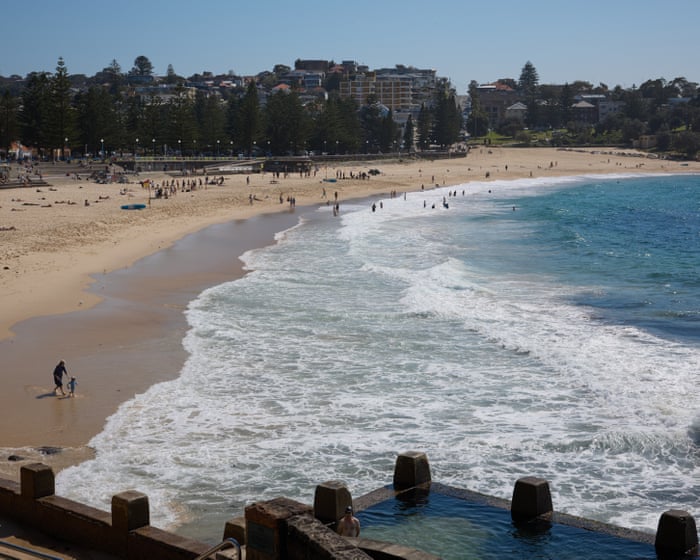
Two popular Sydney beaches, Coogee and Maroubra, are closed after a whale carcass washed up on nearby rocks. The local council is working with authorities and Indigenous groups to remove the whale safely and respectfully while keeping the public away from the area.
Key Facts
The whale carcass washed up between Coogee and Maroubra beaches in Sydney’s eastern suburbs.
Both beaches are closed as a safety precaution while the removal is planned.
The carcass is in a hard-to-reach place surrounded by cliffs and rocks.
The local council is consulting with Gamay Rangers for a culturally sensitive removal, respecting the whale’s importance to the Bidjigal Indigenous people.
The whale carcass appears small, damaged, and has bite marks but does not smell strongly.
Authorities are still trying to identify the whale species and understand how it got there.
Visitors and residents are asked to avoid the area and follow lifeguard instructions.
At the same time, another large whale is stuck near Turners Beach in Tasmania, with public warned to stay away for safety.
Read the Original
Want the full story? Tap a source to open the original
article.
Judges in England and Wales will get new powers next year to punish criminals who refuse to attend their sentencing hearings. These punishments include keeping offenders in solitary confinement for up to three weeks and limiting their social visits. The goal is to make sure offenders face their victims’ families and accept responsibility for their crimes.
Key Facts
New rules start next year for criminals who skip sentencing in England and Wales.
Judges can put offenders in solitary confinement for up to three weeks if they refuse to attend sentencing.
Social visits can be banned for nearly a month or reduced to once every four weeks for up to three months.
Prison privileges can be taken away for longer periods as a punishment.
Criminals aged 18-20 may face similar restrictions but for shorter times.
Visits from prisoners’ children will still be allowed despite new restrictions.
The Ministry of Justice says longer jail time alone does not make offenders attend sentencing.
Victims’ families and officials support the new laws to make sure offenders face justice.
Read the Original
Want the full story? Tap a source to open the original
article.
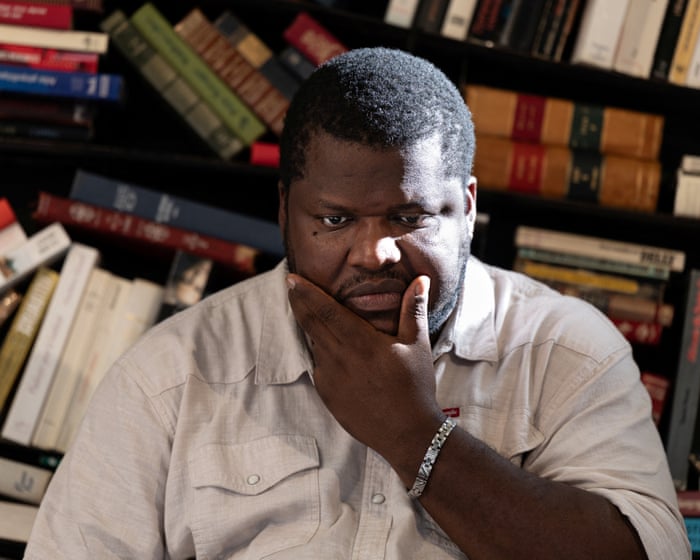
Canadian publisher Les Éditions du Boréal ended its relationship with Haitian Canadian writer Thélyson Orélien after confirming he used artificial intelligence (AI) to help write his novel *C’était ça ou mourir*. The novel was previously removed from a major French literary prize list amid allegations of AI use, which Orélien has denied, saying AI was only used for research.
Key Facts
Thélyson Orélien is a Haitian Canadian writer whose novel faced accusations of using AI in its writing.
Les Éditions du Boréal initially supported Orélien but ended their professional relationship after further investigation.
An external analysis found AI tags in some draft documents, suggesting AI was involved in the writing process.
Orélien denied using AI to create sentences or story structure, saying it was only used for research and foreign idioms.
The novel was withdrawn from France’s Prix Goncourt literary prize list due to suspicions from AI detector tests.
Orélien started writing the book years before popular AI tools like ChatGPT existed.
The book’s themes include migration, reflecting Orélien’s own experience fleeing Haiti after a 2010 earthquake.
Orélien admitted to past mistakes involving plagiarism but said he has learned since then.
Read the Original
Want the full story? Tap a source to open the original
article.
Colombian President Abelardo de la Espriella is removing exhibits from the National Museum that focus on social movements and minority groups, aiming to stop what he calls "atheist social communism." This move has caused protests from students, artists, and civil rights groups who say it erases important parts of Colombia’s diverse history.
Key Facts
President de la Espriella is leading a cultural "counterrevolution" by changing museum exhibits.
Exhibits related to feminist, LGBTQ+ activism, social movements, and political violence have been removed.
Protesters say the government is trying to promote a narrow image of Colombia as white, Catholic, and Spanish-speaking.
Some experts say Colombia’s actions reflect political ideas similar to those promoted by U.S. President Donald Trump.
The U.S. White House has criticized Smithsonian museums for presenting what it calls radical views, linking to similar tactics abroad.
Colombia’s Culture Minister said museums are being reviewed and redesigned to reflect the government’s views.
The Foreign Ministry renamed a courtyard honoring an Indigenous leader, part of the campaign against "woke" ideology.
Critics say the government is inventing cultural conflicts to erase identities that are already part of Colombia’s reality.
Read the Original
Want the full story? Tap a source to open the original
article.