A £3.6 billion plan has been proposed to stop sewage from entering Windermere, England’s largest lake, by building a tunnel up to 12 miles long to carry sewage away. The plan aims to protect the lake from pollution and algae growth and now awaits government approval.
Key Facts
Windermere is England’s largest lake and part of the Lake District, a UNESCO World Heritage site.
Sewage currently discharged into the lake causes algae blooms, turning parts of the lake green in summer.
The plan involves a tunnel up to 12 miles (19 km) long to carry sewage to a new treatment plant.
The project would connect 12,800 people to the sewage network for the first time.
Two plans suggest treated water would be released either into the River Leven or the Irish Sea.
The cost is £3.6 billion and could increase local water bills by up to £3.17 a month.
Some local groups want the cost shared across England, adding about 35p per month to all bills.
The government will decide if the project moves forward.
Read the Original
Want the full story? Tap a source to open the original
article.
US special envoy Steve Witkoff met with Ukrainian President Volodymyr Zelensky in Oslo, then traveled to Saint Petersburg to meet Russian President Vladimir Putin with a renewed peace proposal aimed at ending the war in Ukraine. These talks follow tensions between the US and Ukraine after President Donald Trump made a diesel deal with Russia and urged Zelensky to negotiate with Moscow.
Key Facts
Steve Witkoff is the US special envoy working to promote peace talks between Russia and Ukraine.
Witkoff had "positive" talks with Ukrainian President Zelensky in Oslo before meeting Putin in Russia.
The US plans to present an updated peace proposal to Putin during the meeting.
President Trump struck a diesel supply deal with Russia, causing tension with Ukraine.
Zelensky thanked the US for restarting intelligence sharing, which helps warn about Russian missile strikes.
Jared Kushner, Trump’s son-in-law, will join the meeting with Putin virtually.
President Trump asked Putin to release an American captive held by Russia in Ukraine.
There are ongoing disputes about US support to Ukraine, including allegations about reduced satellite communication speeds.
Read the Original
Want the full story? Tap a source to open the original
article.
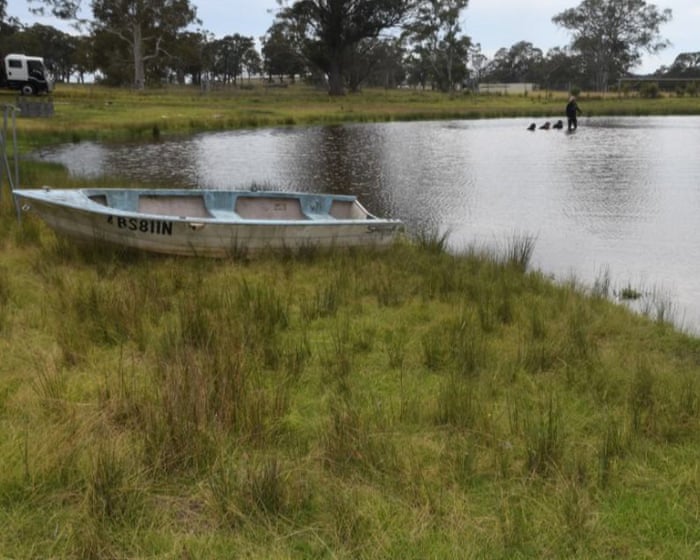
Beau Lamarre-Condon is accused of killing two men and trying to hide their bodies while playing Taylor Swift’s song "No Body, No Crime." A friend who was with him during part of this time shared details about the trip and events in court, but denied some claims made by the defense.
Key Facts
Beau Lamarre-Condon faces charges of killing Jesse Baird and Luke Davies with his police weapon.
The alleged murders happened on 19 February 2024 in Paddington, NSW.
Lamarre-Condon played the Taylor Swift song "No Body, No Crime" while driving to similar disposal sites.
A friend, called Elizabeth Kennedy in court, was with Lamarre-Condon during a trip to Bungonia two days after the murders.
Kennedy said Lamarre-Condon showed her a tarpaulin in the van but denied seeing a body or choosing the music.
Lamarre-Condon asked Kennedy to pay for tools to break into a property in Bungonia; he then drove off to an isolated area.
The court heard Lamarre-Condon had injuries from cutting a padlock and told Kennedy not to use her phone or call anyone.
Lamarre-Condon pleaded not guilty, claiming the killings were self-defense.
Read the Original
Want the full story? Tap a source to open the original
article.
Italy has approved new security measures to stop protests in the north that sometimes turned violent. These include sending 500 troops to Milan, harsher punishments for violent protesters, and holding parents responsible if their children damage property.
Key Facts
Italy will send 500 troops to Milan to support security at important places.
A new law makes violent protest actions a crime punishable by up to five years in prison and fines up to €20,000.
Penalties increase if protesters hide their faces or cause injuries.
Parents can be held responsible if their children are involved in vandalism or looting.
Police can detain youths aged 14 to 17 if they are seen as a danger, even without committing a crime.
The government decided not to give soldiers the power to act as police after the president opposed this.
The protests were caused by rising fuel and energy costs, high rents, low wages, and poor public services.
Similar violent protests have occurred recently in France and other parts of Italy.
Read the Original
Want the full story? Tap a source to open the original
article.
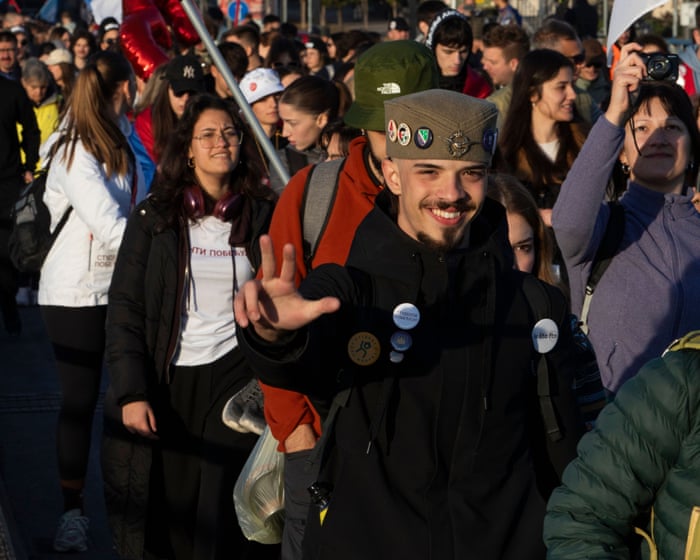
In Serbia, a student protest group called the Student List has been active for two years and is now running candidates in parliamentary elections. They aim to challenge the long-standing rule of Aleksandar Vučić and his party, as concerns grow over corruption and poor public services.
Key Facts
The Student List is a student volunteer movement protesting against the Serbian government.
They plan to run in parliamentary elections to challenge Aleksandar Vučić's party, the Serbian Progressive Party (SNS).
Vučić recently stepped down as president but remains prime minister, continuing his hold on power.
Corruption is a major complaint, with Serbia ranked as one of the most corrupt countries in Europe by Transparency International.
Local issues include poor road and sewage infrastructure in suburbs like Krnjača.
The protest movement gained momentum after a deadly infrastructure collapse at Novi Sad railway station that killed 16 people.
Neighboring Hungary recently saw the defeat of an allied leader, Viktor Orbán, encouraging hopes for change in Serbia.
There are fears of unrest after the elections if results are disputed by either side.
Read the Original
Want the full story? Tap a source to open the original
article.
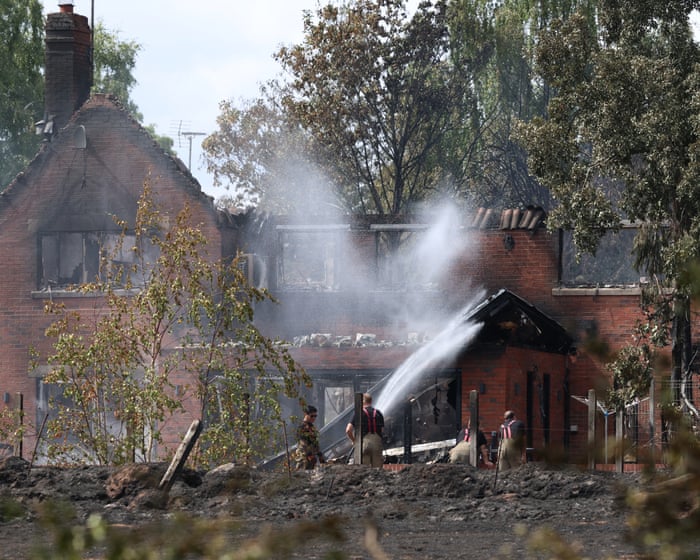
UK firefighters faced serious problems getting enough water to fight wildfires during the record hot and dry summer this year. Government committees have urged clearer rules for water companies to ensure firefighting needs are met during future major fires.
Key Facts
The UK had its hottest summer ever, causing more wildfires than usual.
Firefighters said fires spread faster because water supplies were limited.
In one wildfire, refilling a water carrier took nearly 40 minutes due to low water pressure.
Drought reduced water levels in rivers and lakes, limiting natural water sources.
Fire services had to reduce their use of mains water to avoid shortages for the public.
A survey showed 81% of UK fire services changed how they respond to fires because of water access issues.
The Environment Agency warns England could face a daily water shortfall of 5 billion liters by 2055 if no action is taken.
The government is working with partners to improve wildfire readiness and firefighting water support.
Read the Original
Want the full story? Tap a source to open the original
article.
A fifth foreign company has stopped working on a plan to build a cable car from West to East Jerusalem because of concerns about land and property rights affecting Palestinian families. Although several companies have dropped out, Israeli local authorities say the project will continue as planned.
Key Facts
The cable car would travel 1.4 kilometers, connecting West Jerusalem to a new tourist area in East Jerusalem.
The Israeli government approved the project in 2019, and the high court supported it in 2022.
East Jerusalem is considered occupied territory under international law, and the land involved is claimed by Palestinians.
At least five foreign companies, including French, Swiss, and Italian firms, have pulled out due to political sensitivity.
The Jerusalem Development Authority plans to continue the project and issue public tender offers soon.
Palestinian and Israeli heritage groups have protested, saying the cable car threatens Palestinian communities and cultural sites.
The project is connected to wider issues of land disputes and settler activity in the occupied territories.
Israel annexed East Jerusalem in 1980, but this is not recognized internationally.
Read the Original
Want the full story? Tap a source to open the original
article.
Brendan Nugent, 43 years old, appeared in court in Wangaratta, Australia, charged with attacking Helen Haines, an Australian Member of Parliament (MP). This was his first court appearance in the case.
Key Facts
Brendan Nugent is 43 years old.
He is charged with attacking Helen Haines, who is an Australian MP.
The court appearance took place in Wangaratta courthouse.
This was his first time appearing in court for this case.
The incident involves a political figure in Australia.
The news report was provided by the BBC's Australian correspondent Katy Watson.
The coverage focuses on the court process after the alleged attack.
The event occurred recently, with the report published 31 minutes ago.
Read the Original
Want the full story? Tap a source to open the original
article.
A Greenpeace report found that drinking water in Mexico’s Yucatan state is polluted by faecal bacteria. The contamination likely comes from pig farms and sewage, affecting wells and natural sinkholes that supply water to local communities.
Key Facts
Greenpeace tested water from 17 sites near Merida, including wells and cenotes (natural sinkholes).
Most samples showed faecal bacteria contamination, with pig-specific markers found in some.
Yucatan has over 500 industrial pig farms housing more than 50,000 pigs, many near Indigenous lands.
The region’s porous limestone allows pollutants to quickly enter groundwater, the only freshwater source.
A UN report noted many farms lack permits and government actions are insufficient to control pollution.
Local pig industry leaders say they invest in water treatment but blame government inaction.
Indigenous communities and Greenpeace are calling on authorities to address the pollution problem urgently.
State and national water officials did not respond to requests for comment.
Read the Original
Want the full story? Tap a source to open the original
article.
Brendan Nugent has been charged after allegedly driving a car into Australian MP Helen Haines, causing serious injuries. Police said they did not have any warning that Nugent would carry out this attack, and they are reviewing possible extra charges while working to protect politicians.
Key Facts
Brendan Nugent allegedly attacked MP Helen Haines by driving into her with a Toyota LandCruiser.
Haines lost one leg and remains in critical but stable condition in a hospital in Melbourne.
Nugent appeared in court, did not request bail, and will stay in custody until a hearing on February 4.
He has mental health and neurological issues but was not on medication at the time.
Police and federal officers did not have prior intelligence or warnings about Nugent’s threat.
Authorities are considering adding more charges related to the attack.
Police confirmed a rise in threats and abuse aimed at politicians in Australia.
Federal police and intelligence agencies will increase safety briefings for MPs.
Read the Original
Want the full story? Tap a source to open the original
article.
Thousands of people in Portugal returned to protest in central squares after police cleared their camps earlier that day. The protests focus on a housing crisis and government plans to allow easier evictions and end rent limits on new leases.
Key Facts
Protesters gathered in Lisbon’s Rossio Square and Porto’s Dom Joao I Square to demonstrate against housing issues.
Police cleared protest camps, arresting 55 people who were later released before their court appearance.
The government passed a first reading of a bill to make evictions easier and remove rent caps on new leases.
Lisbon and Porto protesters say rising housing costs make it hard for people to afford homes and start families.
Portugal faces one of Europe’s worst housing affordability crises, with property prices and new rents nearly doubling since 2017.
Protests are part of a wider wave of cost-of-living demonstrations in several European countries including France, Belgium, Italy, and Spain.
The protests began over ten days ago in Porto and since Saturday in Lisbon, with hundreds of tents set up at the protest sites.
Some residents blame rapid tourism growth and remote workers moving in for increasing housing costs in major cities.
Read the Original
Want the full story? Tap a source to open the original
article.
A drone attack near a market in Abyei killed at least 150 people. The attack happened amid growing fighting between Sudan’s government forces and the paramilitary group called the Rapid Support Forces (RSF).
Key Facts
The drone strike targeted a market area in Abyei.
At least 150 people were killed in the attack.
Abyei is a region near the border between Sudan and South Sudan.
Fighting between Sudan’s government and the RSF has recently grown worse.
Khartoum, Sudan’s capital, says the RSF is hiding in the disputed Abyei area.
The Rapid Support Forces is a paramilitary group involved in Sudan’s conflict.
Abyei is a contested region claimed by both Sudan and South Sudan.
The situation remains tense with ongoing clashes in the area.
Read the Original
Want the full story? Tap a source to open the original
article.
UN human rights experts have asked the Indian government to stop using too much force against protesters. They want a fair investigation because many protesters were hurt and some faced abuse, including sexual violence, during recent demonstrations against voter list removals.
Key Facts
UN experts said Indian authorities used excessive force against peaceful protesters.
Some protesters reported injuries and ill-treatment, including sexual and gender-based abuse.
The protests were led by opposition parties and students demanding the resignation of the Chief Election Commissioner.
The protesters oppose the removal of 130 million names from voter lists, claiming it targets poor, homeless, and minority groups.
The Indian government and Election Commission say the voters removed were duplicates or ineligible, and errors can be appealed.
Police used lathi charges—baton charges—to break up protests.
UN experts called for an end to force, assembly bans, online surveillance, and internet disruptions related to the protests.
India denies the criticism, calling it interference in its internal affairs.
Read the Original
Want the full story? Tap a source to open the original
article.
Recent riots in France involved widespread violence and looting, with some evidence showing involvement by far-left groups, including anarchists and political movements. French leaders have called for investigations, and authorities are using technology and social media to identify those involved.
Key Facts
Riots occurred on October 17 in multiple French cities, with over 3,000 shops and businesses looted.
Violence seemed partly planned, with groups dressed in black attacking police vehicles using hammers or machetes.
Far-left groups, such as anarchists and the political party La France Insoumise (LFI), have been accused of encouraging violence ahead of the 2027 elections.
French intelligence reported on manipulation of student protests by radical left-wing groups.
Some looters tried to sell stolen items like designer shoes online, often without hiding their identity.
Authorities are reviewing CCTV footage and social media posts to catch those responsible.
President Macron and French officials promise to bring perpetrators to justice.
There are calls to limit social media sharing to reduce influence on further violence, a method described as “TikTokisation” of riots.
Read the Original
Want the full story? Tap a source to open the original
article.
French Prime Minister Sébastien Lecornu plans to meet with five major trade unions to discuss how to keep protests peaceful and safe after recent violent riots in France. New demonstrations are scheduled by students and Yellow Vest protesters, and the government has imposed curfews and increased security to manage the situation.
Key Facts
Prime Minister Sébastien Lecornu will meet union representatives from CFDT, CGT, FO, CFTC, and CFE-CGC.
The meeting aims to ensure the right to protest without violence or damage.
Interior Minister Laurent Nunez will also attend the meeting.
New protests are planned for Saturday by students and the Yellow Vest movement, with unions organizing protests for November 5.
Lecornu accused radical groups of planning violent riots during nationwide protests about the high cost of living.
Nightly curfews have been imposed in major cities including Paris and Lyon to prevent further violence.
The government plans a large security operation to reinforce police with military help for upcoming protests.
Some unions criticized that school student representatives were not included in the meeting despite the protests starting with high school students.
Read the Original
Want the full story? Tap a source to open the original
article.
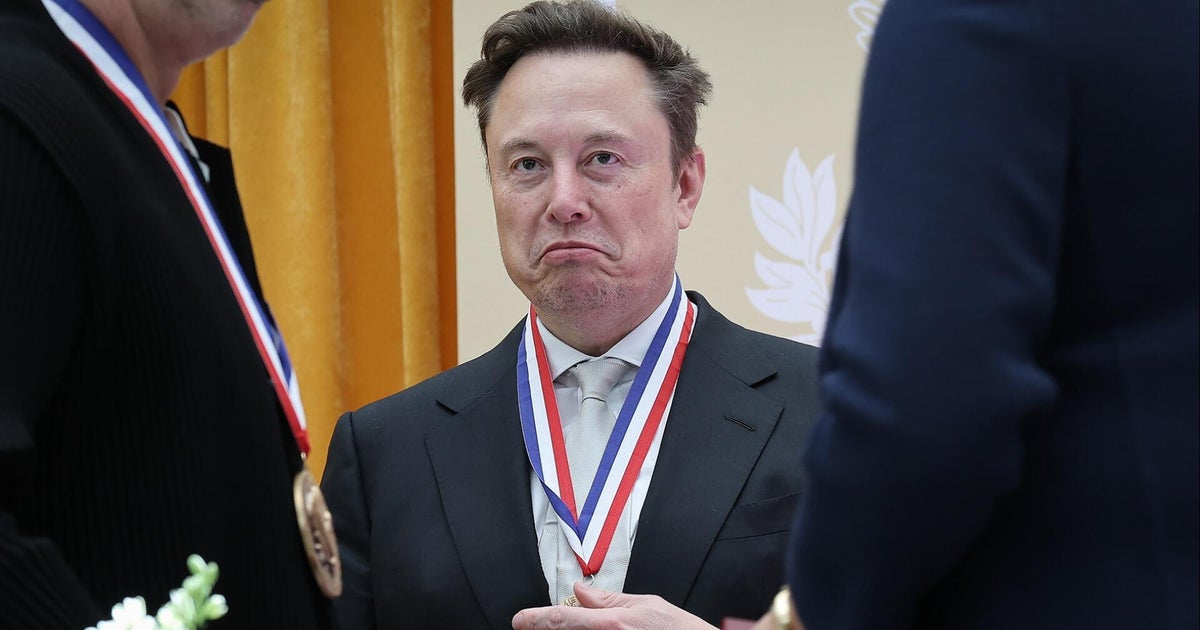
Elon Musk decided to limit Ukraine's use of SpaceX's satellite network, which helps with drone operations and protection in the war. Musk talked several times with U.S. officials before making the decision, seeking clarity on the administration's position. The U.S. government says it did not order any limits on the service.
Elon Musk limited Ukraine’s access to SpaceX’s satellite network, which affected Ukraine’s ability to operate drones. This decision changed how Ukraine could use satellite services during the conflict.
Key Facts
Elon Musk controls SpaceX’s satellite network called Starlink.
Ukraine uses Starlink satellites to communicate and operate drones.
Musk decided to restrict Ukraine’s access to this satellite service.
The restriction impacted Ukraine’s drone operations.
The decision was confirmed by sources familiar with the situation.
Starlink provides internet service through a network of satellites in space.
This restriction affects Ukraine’s capabilities in the ongoing conflict.
The information came from a CBS News report.
Read the Original
Want the full story? Tap a source to open the original
article.
Jean Claude Hategekimana, a former fighter of the Democratic Forces for the Liberation of Rwanda (FDLR), left the armed group and returned to Rwanda to start a civilian life. The Mutobo Demobilisation and Reintegration Centre in northern Rwanda helps former fighters like him by providing medical care, psychological support, and assistance with reconnecting with their families.
Key Facts
Jean Claude Hategekimana joined the FDLR armed group in 2018 and reached the rank of captain.
The FDLR is a group formed after the 1994 genocide and has been accused by Rwanda of attacks and causing insecurity.
Hategekimana feared for his life upon return because the FDLR taught fighters that returnees would be killed.
The Mutobo Centre was set up in 2001 to help members of the FDLR and other groups come back from the Democratic Republic of the Congo.
The centre offers medical care, psychological help, civic education, and helps returnees connect with family and community.
Returnees can visit their former communities during rehabilitation to rebuild trust and confidence.
Other former commanders also left the FDLR due to family ties, disappointment with the group, and safety concerns.
Major-General Anastase Munyaneza, a former commander, left the FDLR after seeing his family rebuild their lives in Rwanda.
Read the Original
Want the full story? Tap a source to open the original
article.
One year after Raila Odinga’s death, Kenya's main opposition party, the Orange Democratic Movement (ODM), is facing internal conflicts about its future and its relationship with President William Ruto's government. Raila’s leadership had long united the opposition, but now the party struggles to find a new leader and maintain its independence while cooperating with the ruling government.
Key Facts
Raila Odinga led Kenya’s opposition for many years before his death a year ago.
The Orange Democratic Movement (ODM) is the political party Raila led.
ODM is currently divided over how closely to work with President William Ruto’s government.
Secretary-General Edwin Sifuna was removed from ODM after opposing cooperation with President Ruto.
Raila was known for pushing for democracy, constitutional reform, and social justice.
Raila’s decision to cooperate with President Ruto in 2024 caused protests and controversy.
Political experts say the opposition lacks a strong leader to unite it after Raila’s death.
The future of Kenya’s opposition depends on whether it can organize beyond loyalty to one person.
Read the Original
Want the full story? Tap a source to open the original
article.
The UK government plans to approve the Jackdaw gasfield project, boosting North Sea oil and gas production but causing concern among climate campaigners and some Labour MPs. Meanwhile, Prince Harry gave an interview expressing a desire to reconcile with his family, and the UK is facing debates over migrant worker rules, anti-Semitism in schools, and government care home failures during Covid.
Key Facts
The Jackdaw gasfield project will add about 6% to North Sea gas production and show Prime Minister Andy Burnham’s support for the oil and gas industry.
Some climate campaigners and Labour MPs oppose the gasfield plan due to environmental worries.
Prince Harry told GQ magazine he hopes to fix his family feud, denying his comments targeted his brother, Prince William.
UK Home Secretary Suella Braverman faces pressure over changes to migrant rules that would extend the time foreign workers must live in the UK before gaining permanent residence.
A report on anti-Semitism in English schools is expected to recommend banning teachers from wearing pro-Palestine badges and improving guidelines for political neutrality.
Manchester City’s former owners made a sponsorship deal worth about £10 million per year with the local council before selling the club to Etihad Airways.
An inquiry found that the UK government’s failures in care homes helped Covid spread among vulnerable people, contradicting Health Secretary Matt Hancock’s claim that care homes were protected.
Traders are buying credit default swaps to protect against risks in AI-related investments, showing concern over the large amount of borrowing for AI technology.
Read the Original
Want the full story? Tap a source to open the original
article.