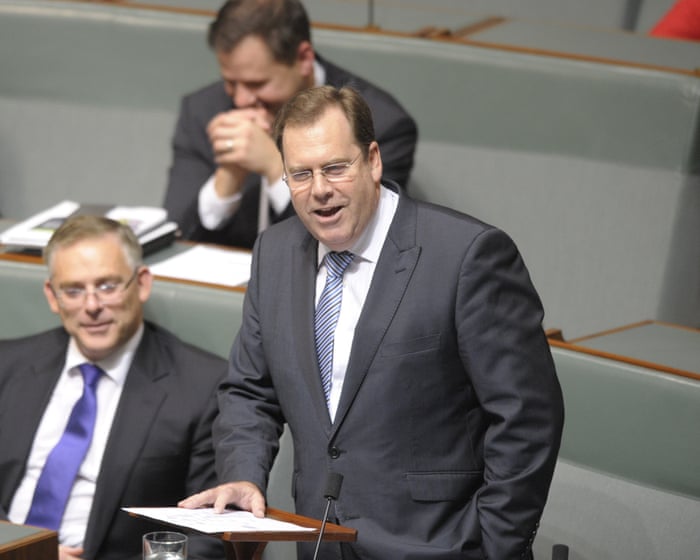
Robert McClelland, a former Labor attorney general and federal judge, has been chosen as the new head of the National Anti-Corruption Commission. He and Christopher Savundra, the new deputy commissioner, will start five-year terms in January.
Key Facts
Robert McClelland served as attorney general from 2007 to 2011 under the Rudd government.
He has been deputy chief justice of the federal circuit and family court of Australia since 2018.
McClelland was appointed to the court by the Coalition government in 2015.
The first anti-corruption commission head, Paul Brereton, resigned in May due to criticism.
Attorney General Michelle Rowland said McClelland was chosen through a fair and competitive process.
Christopher Savundra was named deputy commissioner of the National Anti-Corruption Commission.
Both appointments were approved unanimously by the Parliamentary Joint Committee.
Their five-year terms start on January 11 next year.
Read the Original
Want the full story? Tap a source to open the original
article.
Ukraine launched over 1,000 drones in a large attack on Russian targets near St. Petersburg, causing fires, one death, and multiple injuries. The strike damaged oil facilities, homes, and infrastructure, while Ukraine and the US showed tensions over sanctions and peace efforts related to the war.
Key Facts
Ukraine used more than 1,000 drones to attack Russian sites in and near St. Petersburg.
The raid caused fires at an oil terminal, an oil depot, and warehouses, injuring five people and killing one.
Russian authorities said 145 drones were shot down and about 20,000 people lost electricity after the strikes.
The attacks disrupted flights at St. Petersburg’s main airport and affected a logistics hub and data center.
Russian defense reported neutralizing 1,015 Ukrainian drones over 15 regions, Crimea, and the Black Sea.
President Donald Trump criticized Ukraine’s strikes on Russian energy and delayed new US sanctions on Russia.
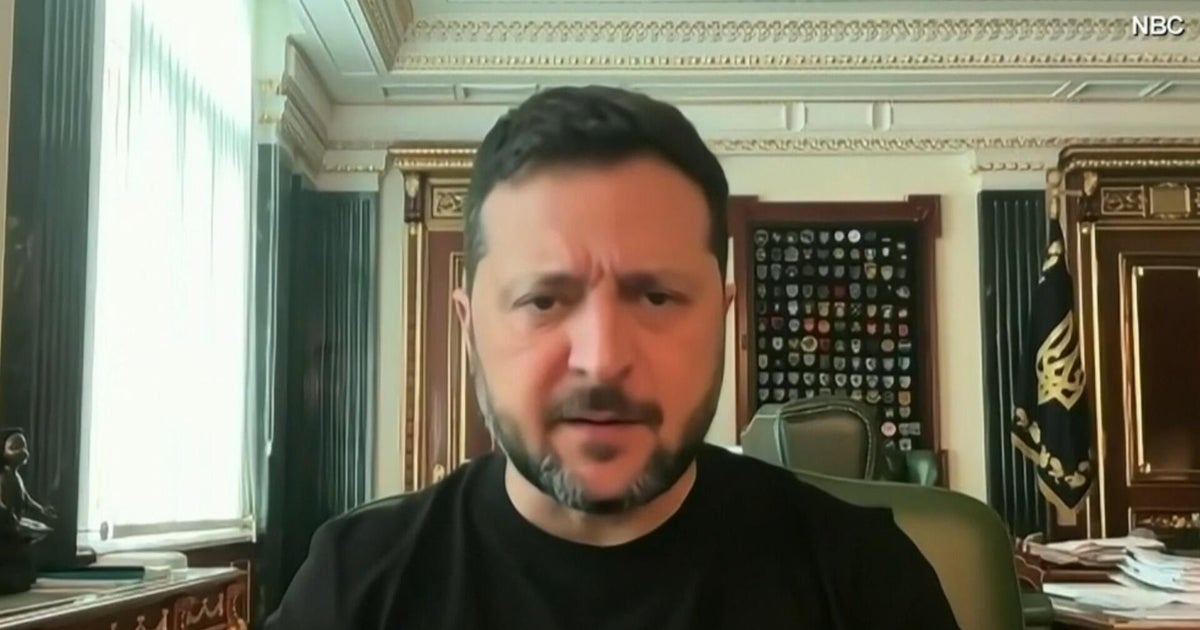
Ukrainian President Zelenskyy stated Russia continued attacks on Ukraine’s energy sector and accused Russia of causing blackouts.
Zelenskyy spoke about ongoing US-Ukraine diplomacy and said intelligence sharing with the US resumed after a pause.
Read the Original
Want the full story? Tap a source to open the original
article.
Iran’s Foreign Minister Abbas Araghchi warned the United States against restarting attacks on Iran. He said Iran also has tasks it wants to complete and cautioned the U.S. to be careful.
Key Facts
Iran’s Foreign Minister is Abbas Araghchi.
He issued the warning on a social media platform called X.
The warning was directed at the United States.
Araghchi said that when the U.S. previously tried to “finish the job,” Iran became stronger.
He suggested the U.S. could try again but warned there would be consequences.
Iran claims it has “unfinished jobs” it wants to complete.
The message implies tension between Iran and the U.S. over potential attacks.
Read the Original
Want the full story? Tap a source to open the original
article.
One year after thieves stole $100 million worth of crown jewels from the Louvre Museum in Paris, the stolen items have not been found. Four suspects remain in jail awaiting trial, but police have no new leads on where the jewels might be.
Key Facts
The theft happened on October 19, 2025, at the Louvre Museum in Paris.
Thieves disguised as workers used special cutting tools to break in and stole eight valuable items, including jewelry from Empress Eugenie.
The stolen items are worth about $100 million and are historic pieces from the 19th century.
All four main suspects were arrested within 10 days and live in northern Paris suburbs.
Despite searching their homes and nearby places, police have not found the jewels.
Experts think the jewels might be hidden locally or were given to someone else to sell.
Police hope one suspect might confess and give information about the jewels’ location.
It is possible the jewels were taken out of France and prepared to be resold by breaking them down, especially diamonds that can be recut and sold again without easy detection.
Read the Original
Want the full story? Tap a source to open the original
article.
Indonesia is facing its worst wildfire season in ten years, causing a thick, toxic haze in the region. This haze has made the air very unhealthy and has caused many people to get lung and breathing problems. The smoke has also spread to nearby countries like Singapore and Malaysia.
Key Facts
Wildfires in Indonesia are at their worst level in a decade.
The fires produce a toxic haze that covers large areas of Indonesia.
Air pollution levels are very high in central Kalimantan, a region in Indonesia.
Many residents have respiratory illnesses due to the haze.
The smoke has traveled to neighboring countries including Singapore and Malaysia.
The haze is making the air quality hazardous, meaning it is unsafe to breathe.
The BBC reporter Liza Tambunan is reporting from the wildfire-affected area.
Read the Original
Want the full story? Tap a source to open the original
article.
Bollywood actor Tiger Shroff was targeted in a shooting while leaving a football club in Mumbai but did not get hurt. Police are investigating the attack, which also injured his driver and has raised safety concerns for public figures in India.
Key Facts
Tiger Shroff was in a car leaving a football club in the Juhu area of Mumbai when gunmen fired shots at him.
The actor did not have any gunshot wounds, but his driver was injured.
Maharashtra’s deputy chief minister Eknath Shinde visited Shroff and said the attack left him and his mother shaken.
Police are treating the shooting as an attempt to intimidate and have promised to stop such violence.
The attack adds to recent incidents targeting celebrities and politicians in India, including a 2024 shooting at Salman Khan’s home and the killing of politician Baba Siddique.
Tiger Shroff is 36 years old and comes from a family of actors. He started acting in 2014 and also plays for Mumbai FC, a football club.
Read the Original
Want the full story? Tap a source to open the original
article.
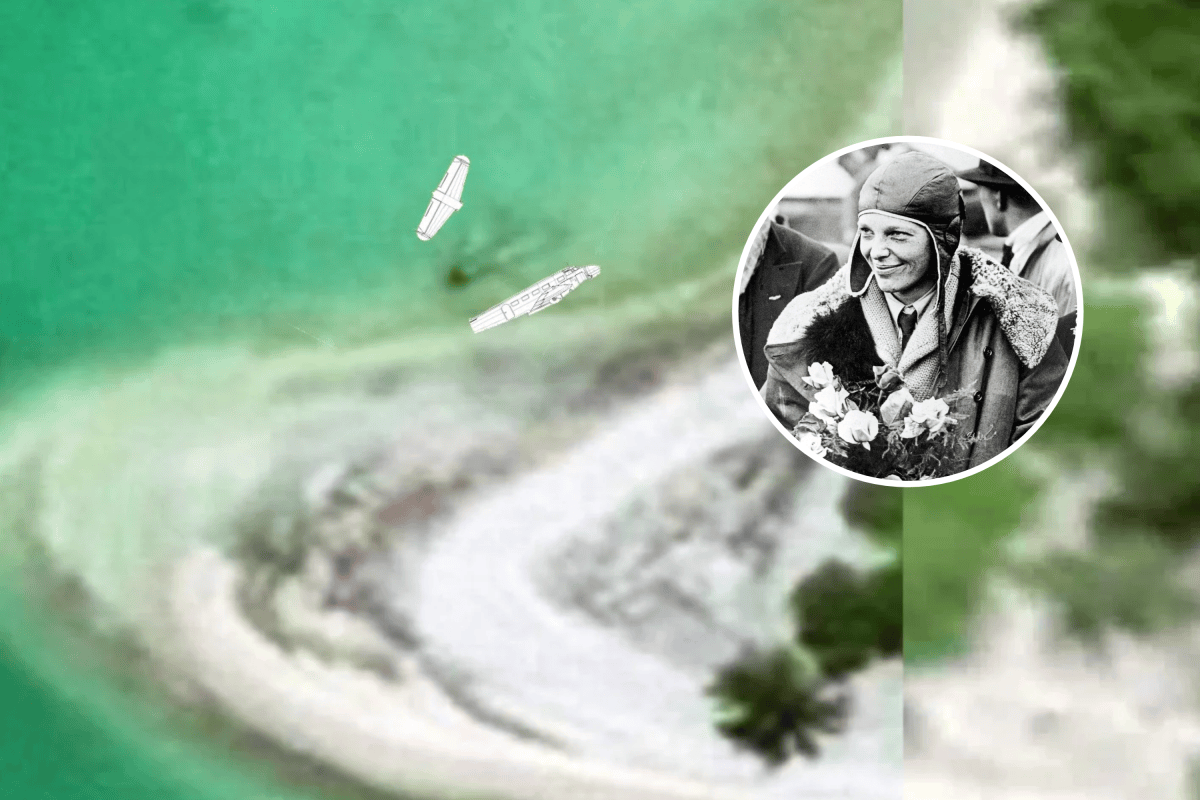
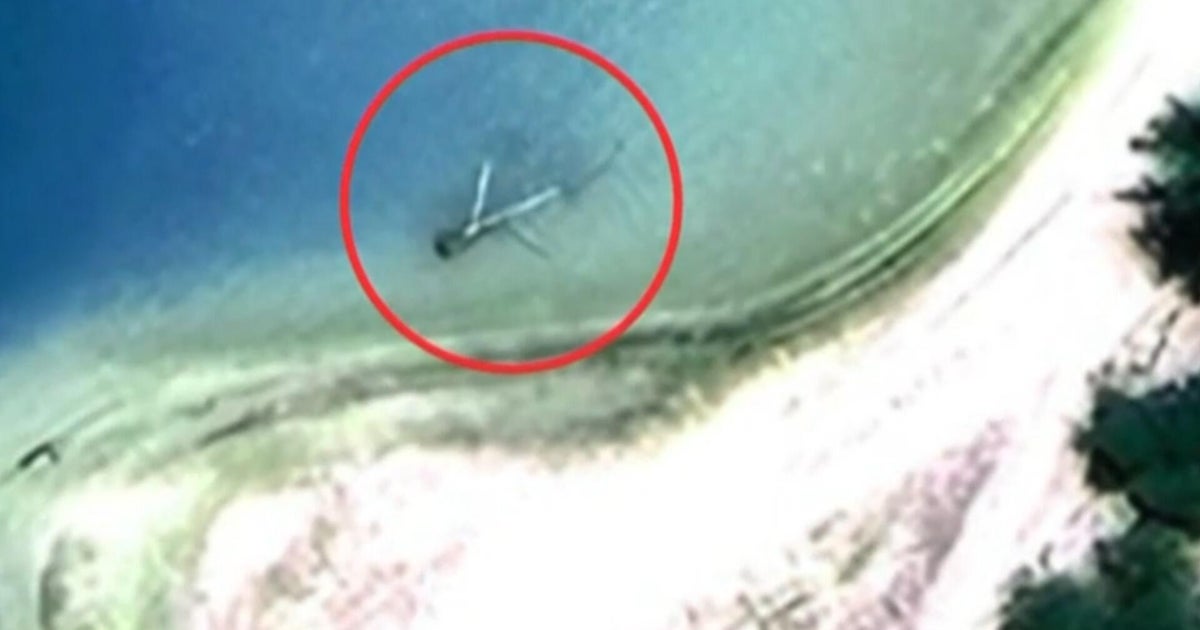
A recent expedition searching for Amelia Earhart’s missing plane has found that a large object seen in satellite images on a remote Pacific island is not part of her aircraft. Instead, the object is likely a group of trees, and no clear plane wreckage was found, but other artifacts were discovered and will be studied further.
Key Facts
The expedition was looking for the plane of Amelia Earhart, who disappeared in 1937 while flying around the world.
The search focused on Nikumaroro, a remote island in Kiribati, where satellite images showed a suspicious object in 2020.
Researchers concluded the object was probably large trees on a sandy area, not plane wreckage.
By the time the team arrived, much debris had broken down or washed away, leaving only a Y-shaped fragment.
The team found other items, like a 30-inch steel tube in a lagoon, which need more study.
Amelia Earhart’s disappearance remains a mystery, with no final answers from this expedition.
Researchers continue to explore the idea that Earhart and her navigator Fred Noonan may have landed and been stranded on Nikumaroro.
The search was funded by private donors and involved researchers from Purdue University and the Archaeological Legacy Institute.
Read the Original
Want the full story? Tap a source to open the original
article.
A team of researchers searched near a remote island in the South Pacific to find Amelia Earhart’s missing plane but did not find it. They learned that what looked like a possible plane in satellite images was actually a group of large trees along the shore.
Key Facts
The search took place near Nikumaroro Island, specifically at the Taraia Peninsula.
Satellite images from 2020 showed a strange shape that looked like part of a plane.
When the team visited, they found only natural debris, mainly trees, not the aircraft.
Some debris had broken apart and washed away before the researchers arrived.
Amelia Earhart’s plane has been missing for many years since her 1937 flight.
The research team shared their results publicly on Sunday.
This was part of ongoing efforts to learn what happened to Earhart's flight.
The discovery helps explain the earlier satellite image but does not solve the mystery.
Read the Original
Want the full story? Tap a source to open the original
article.
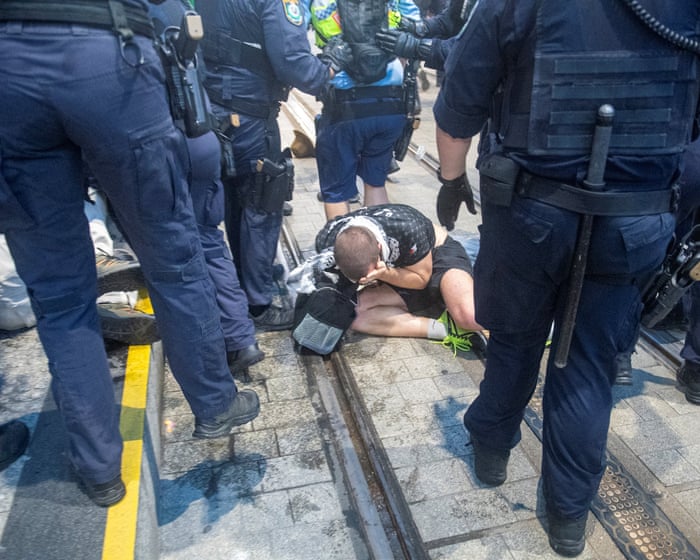
An official inquiry into a February protest in Sydney against Israeli President Isaac Herzog’s visit has found that most protesters were peaceful and that there is little proof of violence by the protesters. The investigation is also looking into police actions, including the use of force and crowd control measures during the event.
Key Facts
The protest took place at Sydney’s town hall in February against President Isaac Herzog’s visit.
The Law Enforcement Conduct Commission (Lecc) is investigating the police’s use of OC spray and claims of excessive force.
Video footage showed police punching protesters and grabbing Muslim worshippers during sunset prayers.
Protesters were mostly peaceful early in the protest, with later actions mainly being verbal and related to marching.
Police charged 30 people with various offenses, but many charges were later dropped.
The law limiting protests at the time was declared unconstitutional two months after the protest.
The inquiry is reviewing 400 complaints and around 1,000 hours of footage.
The investigation also looks at whether police behavior was widespread or officially allowed.
Read the Original
Want the full story? Tap a source to open the original
article.
Kenya has confirmed its eighth case of Ebola during a regional outbreak spreading from the Democratic Republic of the Congo (DRC). The virus is the Bundibugyo strain, for which there is no vaccine or specific treatment, and health authorities are taking steps to prevent further spread.
Key Facts
Kenya detected its eighth Ebola case, a 49-year-old man who showed symptoms and was quarantined.
The man likely caught the virus from Kenya’s first Ebola patient, who died after traveling from the DRC.
Four new cases were reported on the previous day, including three healthcare workers.
The current outbreak started in May in the DRC and involves over 9,400 cases and 4,500 deaths.
Ituri province in the DRC is the center of the outbreak, responsible for nearly 75% of cases.
North Kivu province in the DRC is imposing travel bans and public gathering limits to stop the virus.
Uganda recently had 20 confirmed cases and was declared Ebola-free in August.
The Bundibugyo strain of Ebola has no vaccine or specific treatment currently available.
Read the Original
Want the full story? Tap a source to open the original
article.
Piracy off the coast of Somalia has increased since April 2026, especially near the town of Bander Beyla. Fishing communities face hardships due to restrictions, arrests, and confusion between fishermen and pirates. Piracy is supported not just at sea but also by networks on land involving family and clan ties.
Key Facts
Bander Beyla, a fishing town in Somalia, is a center of renewed piracy activity.
Illegal foreign fishing has reduced local fish and lobster catches, harming fishermen's livelihoods.
Somali local authorities banned fishing for two months starting late August to stop pirates disguising as fishermen.
Fishermen risk arrest or violence if caught at sea, either by local authorities or international navies.
Dozens of people have been arrested for helping pirates by delivering food or supplies.
Business owners are warned not to sell goods to pirates or face being labeled as pirates themselves.
Some pirates come from the local community and rely on family and clan networks for support.
Experts say clan relationships help pirates get money, equipment, and protection needed for hijackings.
Read the Original
Want the full story? Tap a source to open the original
article.
Four Canadian service members died in an incident at a military base in Alberta, which also caused a large fire. Canadian Prime Minister Mark Carney described the event as one of the worst peacetime tragedies for the country’s military.
Key Facts
Four Canadian military personnel were killed during the incident.
The incident took place at a military base in Alberta, Canada.
A large fire broke out as a result of the incident.
Canadian Prime Minister Mark Carney commented on the tragedy.
The prime minister called it one of the worst peacetime tragedies for Canada’s military.
Details about the cause of the incident and fire were not included.
The event has drawn national attention in Canada.
Read the Original
Want the full story? Tap a source to open the original
article.
Around 500,000 people marched in France to protest poor school conditions and the high cost of living. President Emmanuel Macron said the protests included violent actions from radical far-left groups and criminals.
Key Facts
About half a million people participated in protests across France.
The protests focused on poor school conditions and high living costs.
President Macron described some violence as caused by radical far-left groups and criminals.
The protests gained significant attention but were marked by unrest.
The situation took place recently in France.
The government's response highlighted concerns about security and order.
The protests reflect ongoing social and economic issues in the country.
Read the Original
Want the full story? Tap a source to open the original
article.
Alberta is holding a vote on whether to stay part of Canada or start a process to leave the country. The vote is expected to favor staying, but it has caused disagreement among people, including within families.
Key Facts
Alberta voters will decide on a referendum about the province's future in Canada.
The referendum asks if Alberta should remain in Canada or hold a separate vote to leave.
The group supporting staying in Canada is expected to win.
The referendum has created tensions among residents of Alberta.
A family in Buck Lake has members with opposing views on the separation issue.
The referendum is a significant political event in Alberta and Canada.
The report was made by a BBC journalist who met the family to show different opinions.
Read the Original
Want the full story? Tap a source to open the original
article.
President Donald Trump said there has been "great progress" in talks with Russia to end the war in Ukraine. Meanwhile, Ukrainian President Volodymyr Zelenskyy warned that if the U.S. supports Russia, it would be a serious mistake.
Key Facts
President Trump talked about progress in ending the conflict between Russia and Ukraine.
The war in Ukraine started when Russia invaded Ukraine.
Ukrainian President Zelenskyy warned the U.S. not to side with Russia.
Zelenskyy said supporting Russia would be a "historic mistake."
The conversation happened as part of ongoing discussions about the war and U.S. foreign policy.
This news was reported from West Palm Beach, Florida.
Read the Original
Want the full story? Tap a source to open the original
article.
The UK may face its first named storm of the autumn this week due to a strong jet stream causing unsettled weather and rain across the country. A deep low pressure system could bring heavy rain and strong winds, especially in southern England and Wales, by Friday.
Key Facts
A strong jet stream over North America is expected to drive stormy weather to the UK later this week.
Rain will affect all parts of the UK, with varying amounts based on the storm's exact path.
Temperatures this October have generally been 1 to 3 degrees Celsius above normal despite a chilly recent weekend.
Some areas in southern England are under severe drought conditions due to very low rainfall this autumn.
By Friday, a deep low pressure system may bring heavy rain and gale-force winds mostly to southern England and Wales.
If the storm is considered severe, it could be named "Storm Austen" by weather authorities.
The exact storm path is uncertain and could affect Scotland and Northern Ireland if it moves further north.
Weather warnings might be issued if the expected storm causes significant impacts.
Read the Original
Want the full story? Tap a source to open the original
article.
A Russian man working secretly for Ukraine’s intelligence has shared videos showing surveillance missions he says he did inside Russia. He claims to have helped with Ukrainian drone attacks on military targets but gave limited details, so it is hard to confirm his story.
Key Facts
The man is a Russian saboteur involved with Ukraine's intelligence services.
He shared reconnaissance videos showing his work inside Russia.
He says he helped Ukrainian drone strikes on strategic bombers and munitions factories.
The man is named Ivan in the report; his full identity is not disclosed.
His claims were featured in a BBC World Service documentary.
He was cautious about providing details, making verification difficult.
The news relates to the ongoing conflict between Russia and Ukraine.
The reconnaissance videos are part of Ukraine’s efforts to weaken Russian military targets.
Read the Original
Want the full story? Tap a source to open the original
article.
Two Russian men working secretly for Ukraine’s military intelligence have described their roles in sabotage activities inside Russia. They claim to have helped with drone attacks on military targets and gathered information on Russian officers for possible Ukrainian operations.
Key Facts
The men, called Ivan and Foma, work with Ukraine’s military intelligence agency, GUR.
Ivan says he helped plan and prepare Ukrainian drone attacks against Russian military sites.
Foma manages a network of volunteers in Russia who watch high-level officers to provide information to Ukraine.
Both men oppose President Vladimir Putin and want his regime to fall if Russia loses the war.
Ukraine has admitted to using drones and secret agents for attacks but does not officially claim responsibility for assassinations.
Lt Gen Fanil Sarvarov was killed in Moscow last year, and Foma says he helped provide intelligence on him.
The exact number of Russians working for Ukraine in this way is unknown but may be around 300-500.
Both the men and their handlers are cautious about details, and their claims cannot be independently verified.
Read the Original
Want the full story? Tap a source to open the original
article.
A flight from Tel Aviv to Vienna made an emergency landing in Sofia, Bulgaria, after a bomb threat. The passengers and crew were safely evacuated, and authorities are investigating the incident.
Key Facts
The plane was an Airbus A320 operated by Austrian Airlines, flight OS82.
The flight was near Romania’s border when the bomb threat was received.
Bulgarian air force jets escorted the plane to Sofia airport.
The aircraft carried 6 crew members and 51 passengers, all safely off the plane.
The plane was searched for any threats, and passengers will be rebooked on other flights.
The emergency signal code 7700 was sent, indicating a general emergency.
Last month, a Flydubai flight was attacked by a co-pilot who tried to crash the plane, leading to increased security checks on pilots flying into Israel.
Read the Original
Want the full story? Tap a source to open the original
article.