Christians in the UK want the Church of England to officially respond to a document called Kairos Palestine II. This document, written by Palestinian Christian leaders, describes the conflict in Gaza as genocide and asks churches to boycott Israel.
Key Facts
UK Christians are asking the Church of England General Synod to take official action.
The action is to formally engage with Kairos Palestine II.
Kairos Palestine II is a document made by Palestinian Christian leaders.
The document describes Israel’s actions in Gaza as genocidal.
It also calls on churches worldwide to boycott Israel.
The Church of England has not yet decided on the motion.
The motion is being discussed within the Church of England’s main decision-making body, the General Synod.
Read the Original
Want the full story? Tap a source to open the original
article.
Representative Ro Khanna said that the Israeli Defense Forces (IDF) were not truthful about an event in the West Bank where Israeli settlers detained him. Khanna spoke about this on NBC News’s "Meet the Press" program.
Key Facts
Ro Khanna is a Democratic Congressman from California.
He was detained by Israeli settlers in the West Bank.
Khanna claims the IDF lied about the details of this incident.
The incident happened in a small Palestinian area in the West Bank.
Khanna discussed the event on the TV show "Meet the Press" hosted by Kristen Welker.
The West Bank is a disputed territory with ongoing conflicts between Israelis and Palestinians.
The IDF is Israel's military force responsible for security in the region.
Khanna’s statements challenge the official Israeli military account.
Read the Original
Want the full story? Tap a source to open the original
article.
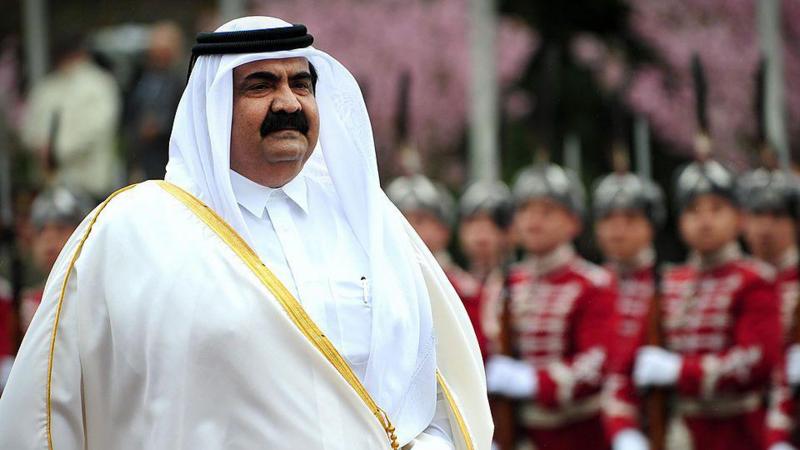
Funeral prayers were held for Sheikh Hamad bin Khalifa Al Thani, the Father Emir of Qatar, at the country’s national mosque. Many important people, members of the ruling family, and citizens attended before his burial at Lusail Cemetery.
Key Facts
Sheikh Hamad bin Khalifa Al Thani was the Father Emir of Qatar.
Funeral prayers took place at Qatar’s national mosque.
The event was attended by dignitaries and members of the ruling family.
Citizens also attended the funeral prayers.
He was buried at Lusail Cemetery in Qatar.
Read the Original
Want the full story? Tap a source to open the original
article.
Professor Bader Al-Saif from Kuwait University expressed his condolences for the death of Sheikh Hamad Bin Khalifa Al Thani, Qatar’s former Emir. He highlighted the important role Sheikh Hamad played for the Gulf countries.
Key Facts
Sheikh Hamad Bin Khalifa Al Thani was the Emir of Qatar.
He has passed away.
Professor Bader Al-Saif is from Kuwait University.
Al-Saif offered condolences on the death of Sheikh Hamad.
Sheikh Hamad is remembered positively throughout the Gulf region.
Sheikh Hamad had a significant impact on Gulf countries’ affairs.
The Gulf refers to countries in the Persian Gulf area, including Kuwait and Qatar.
Read the Original
Want the full story? Tap a source to open the original
article.
President Donald Trump said the conflict with Iran was over shortly after the two countries signed a temporary peace agreement. However, both the US and Iran accuse each other of breaking the agreement, leading to more fighting. Experts are discussing what this means for the future of peace and for President Trump’s record.
Key Facts
The US and Iran signed a memorandum of understanding to pause conflict.
President Trump declared the conflict ended after this agreement.
Both countries claim the other has violated the temporary peace deal.
Fighting has increased again despite the agreement.
Discussions are ongoing about whether lasting peace is possible.
Analysts are considering how this situation affects President Trump’s legacy.
The article includes insights from former US defense official Heino Klinck.
Read the Original
Want the full story? Tap a source to open the original
article.
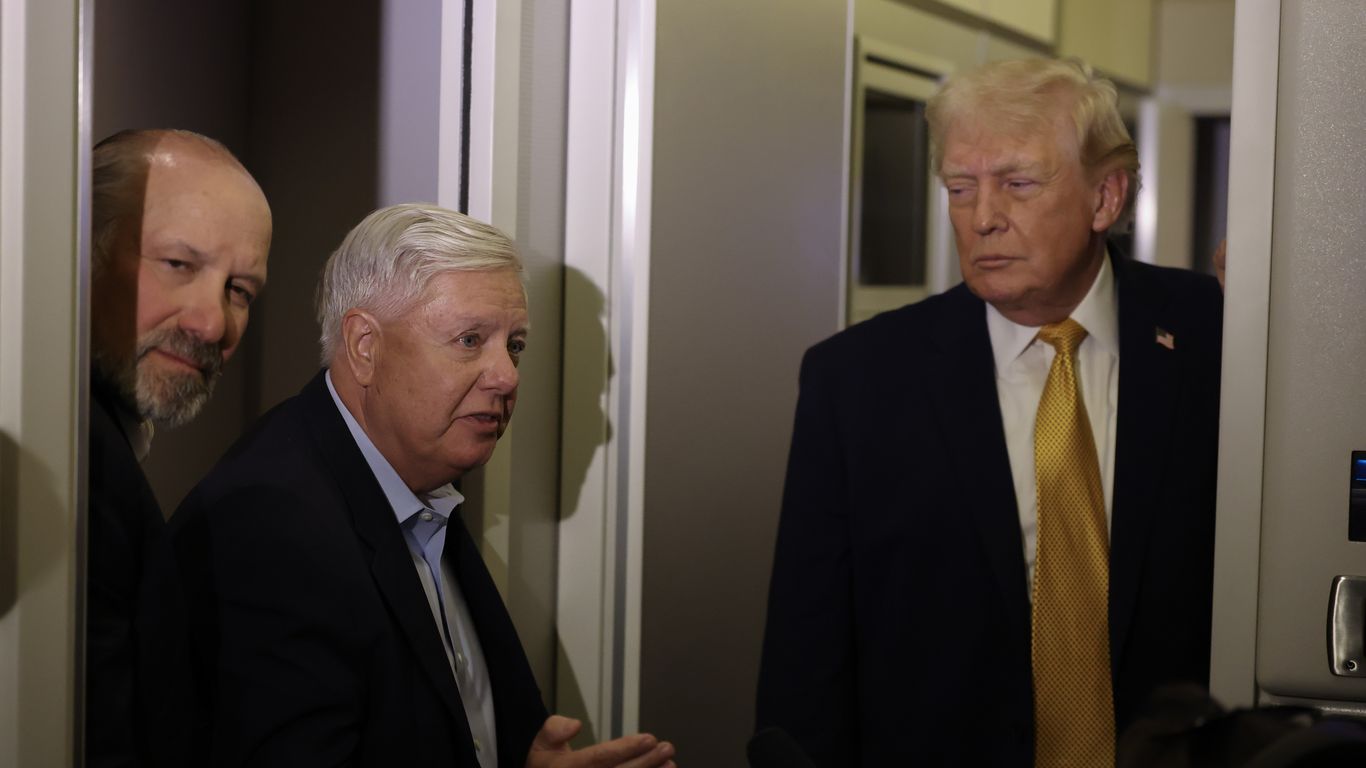
Senator Lindsey Graham spent his last weeks working on a plan to improve relations between Saudi Arabia and Israel as part of a bigger effort for peace in the Middle East. He aimed to start serious talks after Israel’s October election and hoped to reach an agreement before the new U.S. Congress began in January.
Key Facts
Lindsey Graham died suddenly but remained active in foreign policy until the end.
He focused on normalizing ties between Saudi Arabia and Israel to reshape the Middle East.
Graham worked with President Trump, the Biden administration, and others on this plan.
The plan depended on controlling the conflict with Iran, especially in the Strait of Hormuz.
Saudi Arabia wanted a clear path to a Palestinian state as part of any deal.
Israel’s current government, led by Prime Minister Netanyahu, opposed that condition.
Graham coordinated with U.S. envoys and officials from Israel and Saudi Arabia.
A U.S.-Saudi defense treaty was part of the deal and needed Senate approval.
Graham saw the post-election period as a key time to get support from Congress.
Read the Original
Want the full story? Tap a source to open the original
article.
About 40 million people in the western U.S. are under severe heat warnings due to a heat dome, which traps hot air over an area. Temperatures are expected to reach 105 to 115 degrees, causing health risks and increasing wildfire danger across several states.
Key Facts
A heat dome is causing extremely high temperatures across the western United States.
Around 40 million people are under heat alerts in states like Montana, Utah, North Dakota, and South Dakota.
Temperatures could climb as high as 112 degrees in Billings, Montana, and up to 107 degrees in Salt Lake City, Utah.
The heat wave is unusually long and intense, with limited cooler relief expected.
High temperatures increase the risk of heat-related illnesses such as heat stroke.
Wildfire risk is growing due to the hot and dry conditions.
The heat dome’s impact is spreading eastward while staying strong in the northern Plains and Southwest deserts.
Officials warn that health systems and infrastructure may be strained by the extreme heat.
Read the Original
Want the full story? Tap a source to open the original
article.
Spain’s Prime Minister Pedro Sanchez criticized former Prime Minister Mariano Rajoy for saying that France’s national football team had “no French players.” Sanchez and several French politicians called Rajoy’s remark xenophobic, meaning it showed dislike of foreigners or people from other countries.
Key Facts
Mariano Rajoy, former Spanish Prime Minister, said France’s football team had “no French players.”
The comment was made in an opinion article before the World Cup semi-final match between Spain and France.
Current Spanish Prime Minister Pedro Sanchez called Rajoy’s comment xenophobic and said belonging should be about love and work for the country.
French politicians, including Socialist party leader Olivier Faure and Interior Minister Laurent Nunez, condemned Rajoy’s remark as unacceptable.
French communist leader Fabien Roussel compared the comment to other racist remarks made about French players.
France’s minister for overseas territories, Naima Moutchou, said such comments show widespread hatred toward France.
The controversy occurred during heightened emotions around the World Cup football tournament.
Read the Original
Want the full story? Tap a source to open the original
article.
Sheikh Hamad bin Khalifa Al Thani, the former leader of Qatar, died at age 74. He ruled Qatar from 1995 to 2013 and is known for transforming the country’s economy using natural gas wealth and establishing key institutions like Al Jazeera and the Qatar Investment Authority.
Key Facts
Sheikh Hamad took power in a bloodless coup in 1995, replacing his father while he was abroad.
He led Qatar for 18 years and voluntarily gave power to his son in 2013.
Under his rule, Qatar became a top exporter of liquefied natural gas through international partnerships.
He launched the Al Jazeera news network in 1996, which grew into a major international broadcaster.
Sheikh Hamad founded the Qatar Investment Authority, which invested in global businesses like Harrods and Paris Saint-Germain football club.
Qatar won the right to host the 2022 FIFA World Cup during his leadership, a major achievement with some controversy over labor and human rights issues.
The country observed several days of public mourning, flying flags at half mast and closing public offices.
Qatar has been ruled by the Al Thani family since 1851 and became independent from Britain in 1971.
Read the Original
Want the full story? Tap a source to open the original
article.
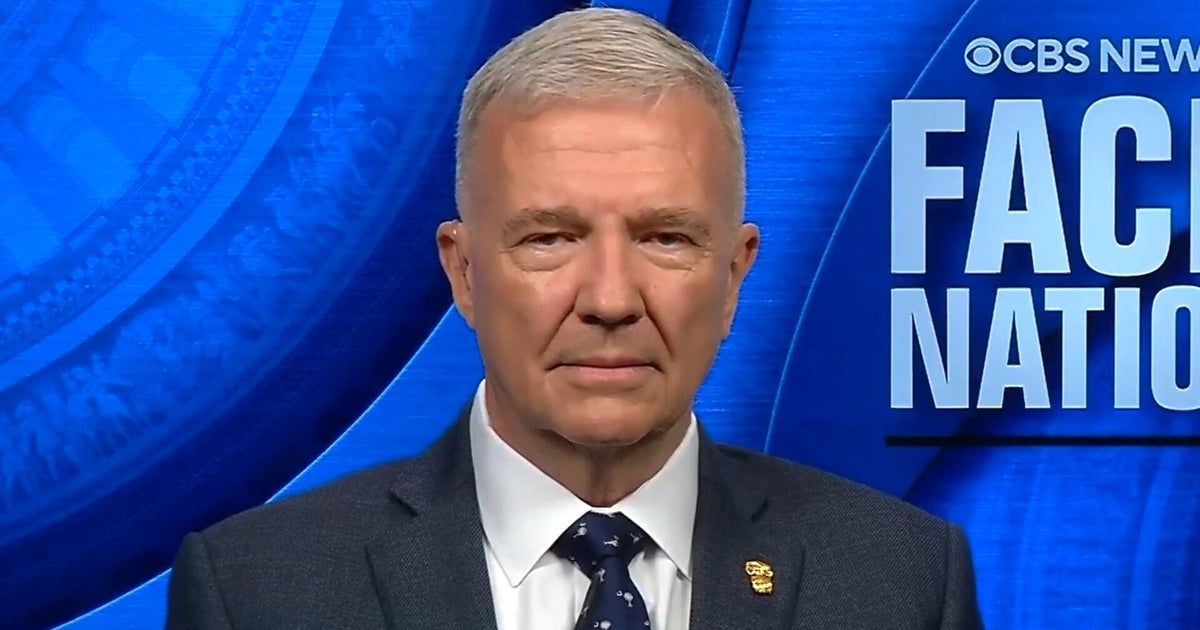
Retired General Frank McKenzie discussed possible actions the Trump administration could take against Iran amid ongoing conflicts. He said the U.S. has the power to control important oil locations like the Strait of Hormuz and Kharg Island to pressure Iran.
Key Facts
Retired Gen. Frank McKenzie led U.S. Central Command.
He spoke on the show "Face the Nation" about U.S. options with Iran.
The U.S. and Iran have exchanged military strikes recently.
McKenzie said the U.S. can take control of the Strait of Hormuz.
The U.S. can also target Iran’s Kharg Island oil terminal.
He suggested that strong pressure is needed to cause Iran to change its actions.
McKenzie described pressure that might be "existential" to the Iranian regime, meaning it threatens their survival.
Read the Original
Want the full story? Tap a source to open the original
article.
The former UK Ambassador to Qatar, Sir Graham Boyce, spoke about the late Emir Sheikh Hamad Bin Khalifa Al Thani, describing him as a kind and humble leader who had a good sense of humor. Boyce shared personal stories about the Emir’s generosity and warmth from their friendship over more than 30 years.
Key Facts
Sir Graham Boyce served as the UK Ambassador to Qatar.
He remembered Sheikh Hamad Bin Khalifa Al Thani, the late Emir of Qatar.
Boyce described the Emir as humble, compassionate, and humorous.
Their friendship lasted for over three decades.
Boyce shared personal stories about the Emir’s generosity and warmth.
Read the Original
Want the full story? Tap a source to open the original
article.
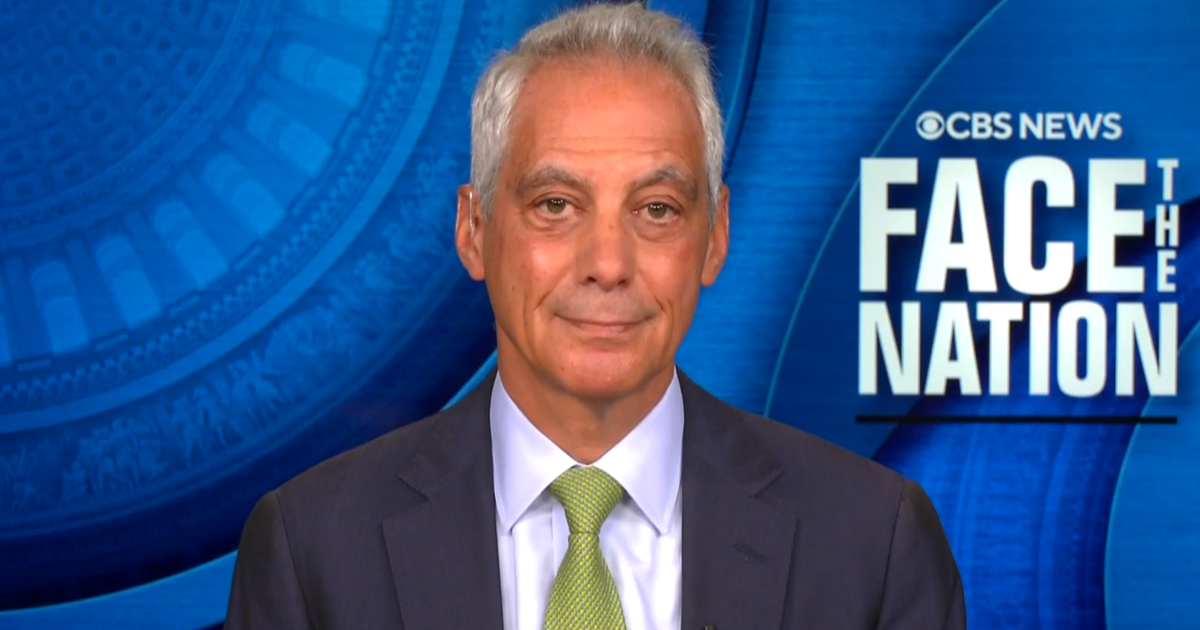
Rahm Emanuel talked about the relationship between the United States and Israel on a news program. He shared his idea called the "23-state solution," which involves Israel, Palestinians, and other Arab countries working together for peace.
Key Facts
Rahm Emanuel is a former White House chief of staff.
He appeared on the show "Face the Nation" to talk about U.S.-Israel relations.
Emanuel proposed a "23-state solution" as a way to improve peace in the region.
This plan includes Israel, the Palestinians, and various Arab states.
The goal of the plan is to stop Israel from being isolated or seen negatively in the world.
Read the Original
Want the full story? Tap a source to open the original
article.
Israeli Prime Minister Benjamin Netanyahu said Senator Lindsey Graham made clear plans to stop Iran’s nuclear program before he died. Netanyahu said removing the threat of Iran’s nuclear weapons was important for global safety.
Key Facts
Netanyahu spoke about Senator Lindsey Graham's position on Iran’s nuclear program.
Lindsey Graham passed away recently, before Netanyahu’s statement.
Graham was clear about wanting to stop Iran from developing nuclear weapons.
Netanyahu described Iran’s nuclear weapons as an immediate and serious danger.
The goal was to protect everyone from the risk of nuclear weapons in Iran.
Read the Original
Want the full story? Tap a source to open the original
article.
Syria’s new transitional parliament held its first meeting more than 18 months after President Bashar al-Assad was overthrown by rebel leader Ahmed al-Sharaa. The parliament aims to draft a new constitution and help rebuild the country’s economy and government after years of war and hardship.
Key Facts
The parliament, called the People’s Assembly, met for the first time in Damascus.
Ahmed al-Sharaa, now Syria’s president, led the rebels who overthrew Bashar al-Assad.
The assembly has 210 seats; two-thirds were elected regionally, and 70 members were appointed by al-Sharaa.
The parliament’s main job is to create a new constitution and support democracy after decades under the al-Assad family.
Syria faces serious economic problems and political tensions after years of civil war.
President al-Sharaa prioritized improving the economy, public services, and attracting foreign investment.
Nationwide elections were not held due to difficulties caused by war, like inaccurate population data.
A UN official called the parliament’s opening a key step in Syria’s political transition and said the international community supports its work.
Read the Original
Want the full story? Tap a source to open the original
article.
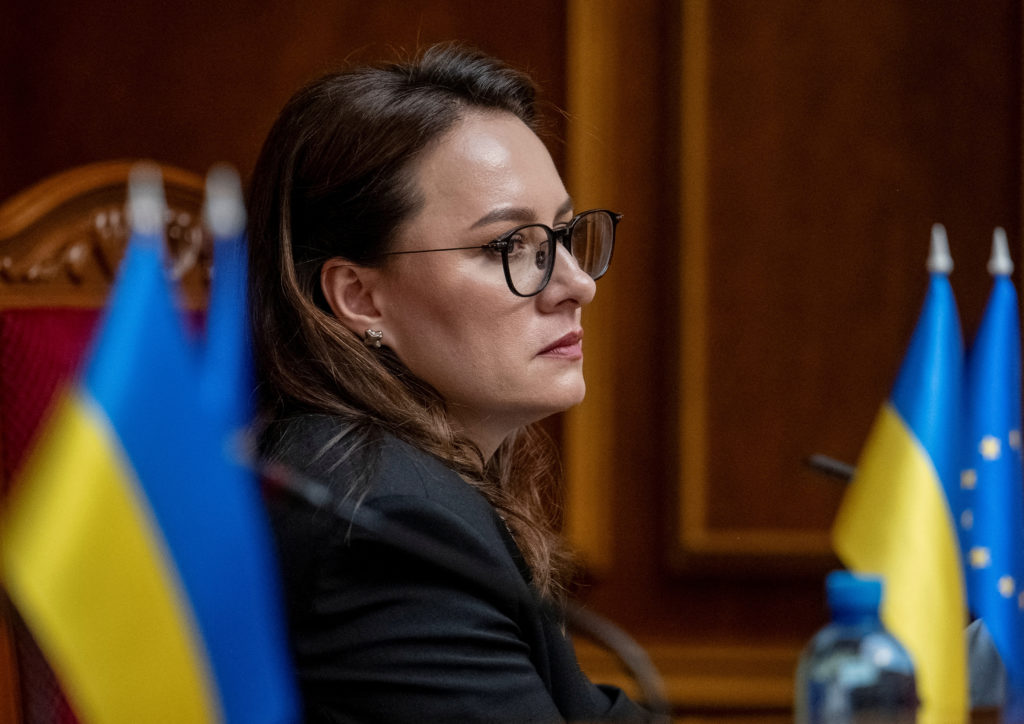
Ukraine’s Prime Minister Yulia Svyrydenko resigned as President Zelenskyy announced a government reshuffle to change Ukraine’s political strategy during wartime. Zelenskyy plans to assign key foreign policy roles to experienced officials, while also changing top law enforcement leaders amid ongoing conflict with Russia.
Key Facts
Yulia Svyrydenko stepped down as Ukraine’s prime minister during martial law.
President Zelenskyy offered her a new important position related to international relations.
Svyrydenko became prime minister in July 2025 at age 39, previously serving as economy minister.
Ukraine continues to strike Russian oil facilities, damaging refineries and tankers.
A Ukrainian attack in Russia’s southwest killed one person and injured three, damaging homes and an industrial site.
Attacks on Russian oil infrastructure have caused fuel shortages and rationing in Russia.
Zelenskyy’s government reshuffle is the fourth major change since Russia’s full-scale invasion began.
Moscow responded with increased missile strikes on Ukrainian cities in retaliation.
Read the Original
Want the full story? Tap a source to open the original
article.
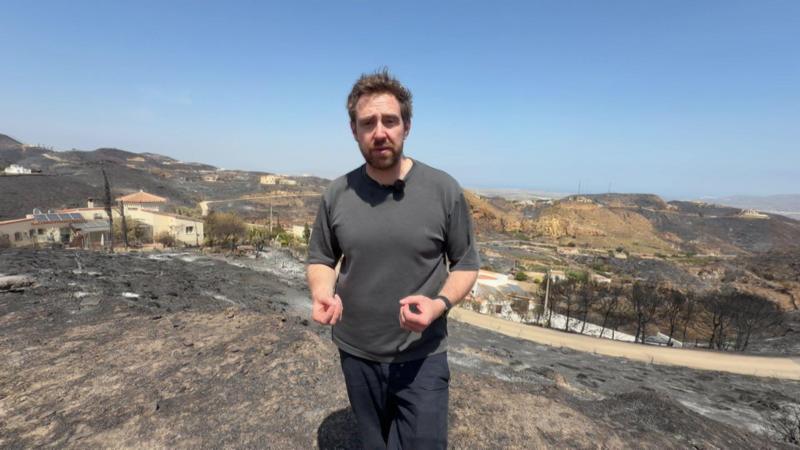
A large wildfire has burned a village in southern Spain, destroying many homes and killing 12 people. The fire spread quickly because of a long heatwave with temperatures around 40°C (104°F), affecting parts of Southern Europe including Spain, France, and Portugal.
Key Facts
The wildfire hit the village of Bédar in Almería province, southern Spain.
Hundreds of firefighters are working to control the fire.
The fire has burned about 6,600 hectares (16,300 acres) of land.
Twelve people have died due to the wildfires.
The region is experiencing a heatwave with very high temperatures near 40°C (104°F).
Similar wildfires have affected other countries in Southern Europe like France and Portugal.
The landscape near the village is described as completely burned and blackened.
The fire started and spread rapidly on Thursday.
Read the Original
Want the full story? Tap a source to open the original
article.
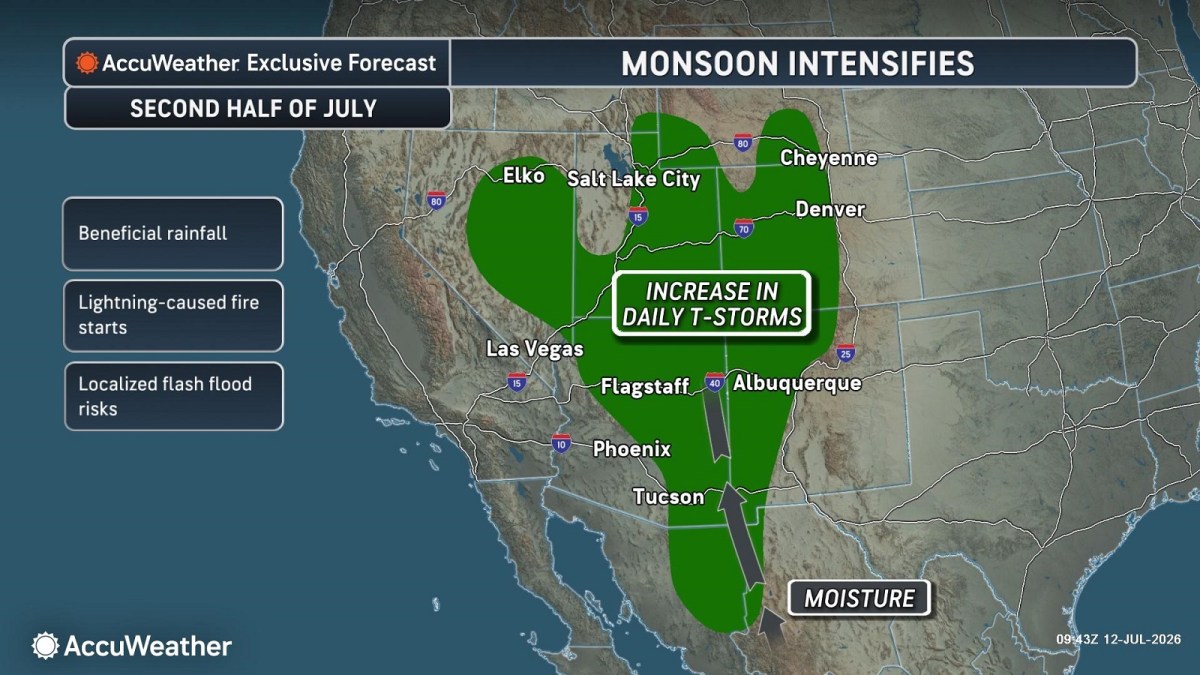
The North American monsoon is starting in the U.S. Southwest, bringing much-needed rain to dry areas but also causing risks like flash floods and wildfires. States such as Arizona, New Mexico, Nevada, Utah, Colorado, and Texas will see storms that can cause heavy rain and strong winds this summer.
Key Facts
The monsoon usually begins in early July but is starting on time or slightly early this year.
A large high-pressure system over the central U.S. directs moisture from Mexico and the Gulf of California into the Southwest.
The storms will bring relief from extreme heat but create dangers like flash flooding and dry lightning that can cause wildfires.
Areas at highest risk include Arizona and western New Mexico, with some places potentially receiving several inches of rain in a week.
Dust storms with strong winds up to 60 mph may occur, reducing visibility and causing damage.
Most of the Southwest is experiencing moderate to severe drought, so rain is helpful but unpredictable in amount.
Officials warn residents and visitors to be cautious near areas prone to sudden flooding, such as slot canyons and dry riverbeds.
The overall monsoon season is expected to be near average but could become wetter if tropical storms bring extra moisture from the Pacific.
Read the Original
Want the full story? Tap a source to open the original
article.
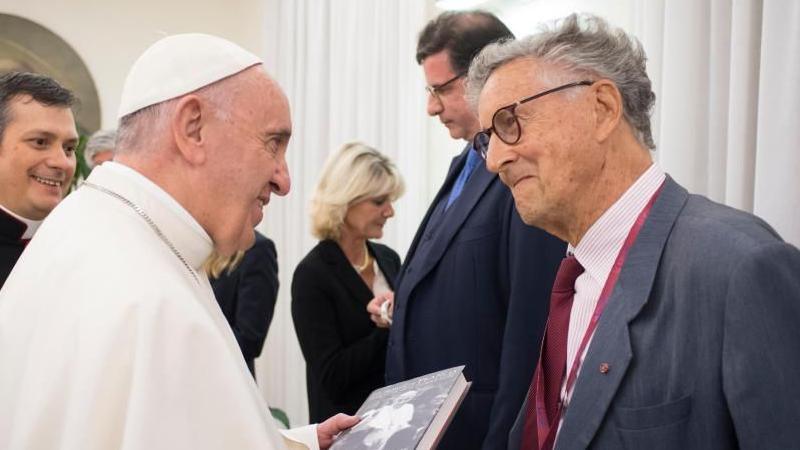
David Willey, a BBC foreign correspondent who covered many important international events for over 50 years, has died at age 93. He was well known for his work in Rome as the Vatican correspondent, reporting on five popes and writing a book about Pope Francis.
Key Facts
David Willey worked as a BBC foreign correspondent for more than 50 years.
He reported from countries including Algeria, Vietnam, China, and especially Rome at the Vatican.
He covered the papacies of five popes, including the assassination attempt on Pope John Paul II in 1981.
Willey wrote a book called "The Promise of Francis" about Pope Francis and gave him a copy in 2016.
He received an OBE (Order of the British Empire) for his services to broadcast journalism.
He began his career with Reuters and covered the signing of the Treaty of Rome in 1957, which led to the European Union.
Willey continued working into his 90s, reflecting on the Vatican and changes under Pope Francis.
He lived in Italy and died of heart failure there.
Read the Original
Want the full story? Tap a source to open the original
article.
France has temporarily shut down three nuclear reactors and reduced power on eight others because of a heatwave. This action helps protect the environment by preventing the release of too-hot water into rivers already warmed by the heat.
Key Facts
Three nuclear reactors were shut down at Golfech, Bugey, and Chooz plants in France.
Eight other reactors are operating at reduced power.
The shutdowns are due to an environmental rule to keep river water temperatures safe.
Nuclear plants use river water to cool reactors, which heats the water before it is released back.
France is experiencing its third major heatwave since May 2026, with temperatures up to 41°C (about 106°F).
The heatwave has affected over 25 million people and caused events cancellations and early closures in tourist areas.
The government issued an exemption allowing higher river temperatures near the Bugey plant until July 20 to keep the power grid stable.
These measures follow similar reactor shutdowns in June due to extreme heat.
Read the Original
Want the full story? Tap a source to open the original
article.
The United States launched airstrikes on Iran after Iran attacked a container ship in the Strait of Hormuz, a crucial route for global oil and gas shipments. Iran responded by firing missiles at several Middle Eastern countries, escalating the conflict and threatening ongoing negotiations aimed at ending the war.
Key Facts
The U.S. struck about 140 Iranian targets, including missile sites and communication centers.
Iran attacked Bahrain, Kuwait, Qatar, Jordan, and Oman in response to the U.S. strikes.
The Strait of Hormuz is a vital channel for about 20% of world oil and natural gas trade.
Iran claims it controls the strait and wants to charge ships passing through; the U.S. disagrees and keeps it open.
The conflict threatens a 60-day interim deal signed on June 17 to end the war.
Oman protested Iran’s missile attacks by summoning the Iranian ambassador.
Several missiles were intercepted by Gulf states, but some caused minor injuries and damage.
President Donald Trump confirmed the U.S. military actions on national TV, saying the strikes heavily weakened Iran’s threats to shipping.
Read the Original
Want the full story? Tap a source to open the original
article.