The Vatican announced that Pope Leo XIV has lung cancer and has undergone surgery to remove part of his lung. This is a health update from the Vatican about the Pope’s condition.
Key Facts
Pope Leo XIV was diagnosed with lung cancer.
Doctors performed surgery to remove part of his lung.
The Vatican officially announced the health situation.
The news comes as part of routine updates about his condition.
No further details about his health or treatment were provided in the announcement.
Read the Original
Want the full story? Tap a source to open the original
article.
The article warns that Chinese telecom companies near the U.S.-Mexico border pose a security risk to both countries. It suggests that Mexico should reconsider its business relationships with these companies to protect national security.
Key Facts
Chinese telecom companies operate close to the U.S.-Mexico border.
This closeness is seen as a security risk for both Mexico and the United States.
The article urges Mexico to rethink partnerships with these Chinese firms.
The concern relates to national security for both countries.
The issue involves telecommunications infrastructure, which can affect data and communications security.
Read the Original
Want the full story? Tap a source to open the original
article.
Colombia has opened an embassy in West Jerusalem and restarted a free trade agreement with Israel. These actions are part of changes made by Colombia’s new President Abelardo de la Espriella, who is reversing previous policies.
Key Facts
Colombia opened a new embassy located in West Jerusalem.
The embassy opening marks a shift from the previous Colombian government’s stance.
Colombia’s new President is Abelardo de la Espriella, described as far-right.
President de la Espriella reversed the earlier break with Israel.
Colombia restored a free trade agreement with Israel.
This marks closer diplomatic and economic ties between Colombia and Israel.
The changes signal a new direction in Colombia’s foreign policy towards Israel.
Read the Original
Want the full story? Tap a source to open the original
article.
Pope Leo XIV has been diagnosed with lung cancer and had surgery to remove a part of his right lung. The Vatican reports the surgery was successful, but future travel plans and the Pope's workload may be affected as he recovers.
Key Facts
Pope Leo XIV is 71 years old.
He was diagnosed with lung adenocarcinoma, a type of lung cancer.
Doctors removed the lower lobe of his right lung during a 90-minute surgery.
The Pope is expected to stay in Rome's Gemelli Hospital for about a week after surgery.
There had been few early signs indicating serious health risks before this diagnosis.
The Pope is known for staying active, including playing tennis weekly.
A planned trip to South America in November might be canceled due to health and travel risks after lung surgery.
Pope Leo XIV has been a strong voice on issues like war, migration, and AI.
Read the Original
Want the full story? Tap a source to open the original
article.
President Donald Trump announced that large-scale exploration of oil, gas, and minerals is about to start in Greenland. He mentioned Greenland's rich natural resources but did not provide many details about the project.
Key Facts
President Trump made the announcement on Truth Social.
The focus is on exploring oil, natural gas, and minerals in Greenland.
Greenland is a Danish territory with abundant natural resources.
The announcement did not include detailed plans or timelines.
Experts reportedly say Greenland has a significant amount of these resources.
The initiative is described as “massive” by President Trump.
Read the Original
Want the full story? Tap a source to open the original
article.
The Louvre museum in France may have to close to the public if the government does not fund a major renovation and update. The museum’s director, Christophe Leribault, said repairs are needed to fix security problems, outdated facilities, and overcrowding, especially after a recent costly jewel heist.
Key Facts
The Louvre is the world’s most-visited museum, welcoming around nine million visitors last year.
Director Christophe Leribault warned the museum could close without major repairs and upgrades.
A $100 million jewel heist at the Louvre last year exposed serious security flaws.
An 83 million euro security plan is underway, including new security roles and better cameras.
The museum’s old plumbing, poor insulation, and crowded spaces need fixing.
President Emmanuel Macron supports a 600 million euro overhaul, including a new entrance.
French governments have struggled to approve budgets due to public spending limits and political challenges.
Leribault says the problems are complex and require a full, interconnected renovation, not just surface fixes.
Read the Original
Want the full story? Tap a source to open the original
article.
The Louvre Museum in Paris may have to close if it does not get approval for major renovations. Christophe Leribault, the museum’s head, says that both private funds and public money after next year’s elections are needed to update the aging building and improve security.
Key Facts
The Louvre is overcapacity and has structural problems like old plumbing and cramped spaces.
A major $600 million renovation is planned but requires government approval.
The museum suffered a major jewel theft worth $100 million last year, highlighting security weaknesses.
New security measures include better cameras, more surveillance, and a new head of security.
Louvre received about 9 million visitors last year.
The current French government is focused on reducing spending amid a large budget deficit.
President Emmanuel Macron supports the full-scale renovation plan.
Some critics want smaller upgrades focused on visitor experience instead of big architectural changes.
Read the Original
Want the full story? Tap a source to open the original
article.
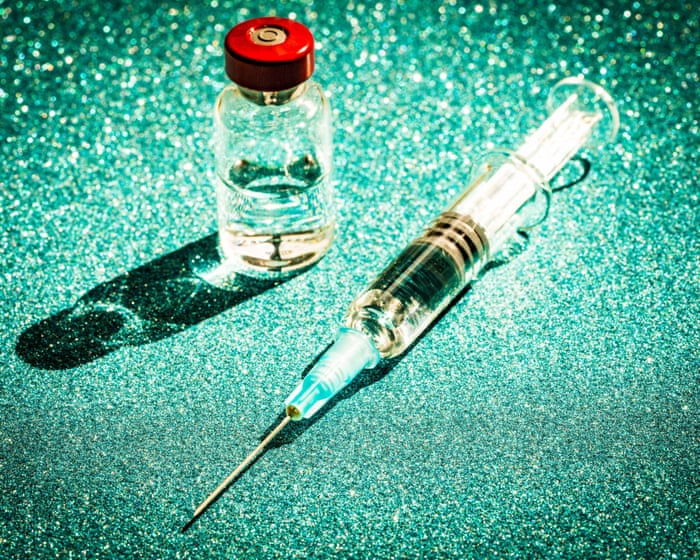
Guinea-Bissau's health ministry said it did not approve a planned vaccine study in newborns that would be funded by the US government and private groups. The study aims to track general health outcomes after vaccination but has faced criticism and ethical concerns from experts and local authorities.
Key Facts
Guinea-Bissau denied approving a hepatitis B vaccine study in newborn babies.
The study would not test vaccine safety or effectiveness but focus on other health issues like mortality and brain development.
US government and private partners were expected to fund the study.
Danish researchers involved said the study had local approval, but Guinea-Bissau officials disagreed.
The study has been criticized as unethical and potentially harmful by experts and human rights groups.
Guinea-Bissau’s health ministry held a meeting with local health organizations to clarify the issue.
It costs about $13,200 a year to provide all newborns in Guinea-Bissau with hepatitis B vaccinations.
The US Department of Health and Human Services states the study has not been approved.
Read the Original
Want the full story? Tap a source to open the original
article.
A hidden video recording device was found on the Australian navy ship HMAS Leeuwin in Cairns, Queensland. The Australian Defence Force is investigating the incident, which involved concerns about privacy violations and possible sharing of private footage.
Key Facts
The device was discovered in a cabin on the HMAS Leeuwin on a Sunday.
Independent Senator Jacqui Lambie reported that concealed cameras were also found in female sailors' shower areas.
The ship was kept docked while investigations took place.
There are claims that footage from these cameras may have been uploaded online before being discovered.
The Defence Department confirmed the incident and referred it to the Joint Military Police Unit.
The department said it takes the issue very seriously and is supporting the affected crew members.
Details about the exact location of the device and the number of affected individuals have not been released to protect privacy.
The investigation is ongoing, and the Defence Department has not provided more comments.
Read the Original
Want the full story? Tap a source to open the original
article.
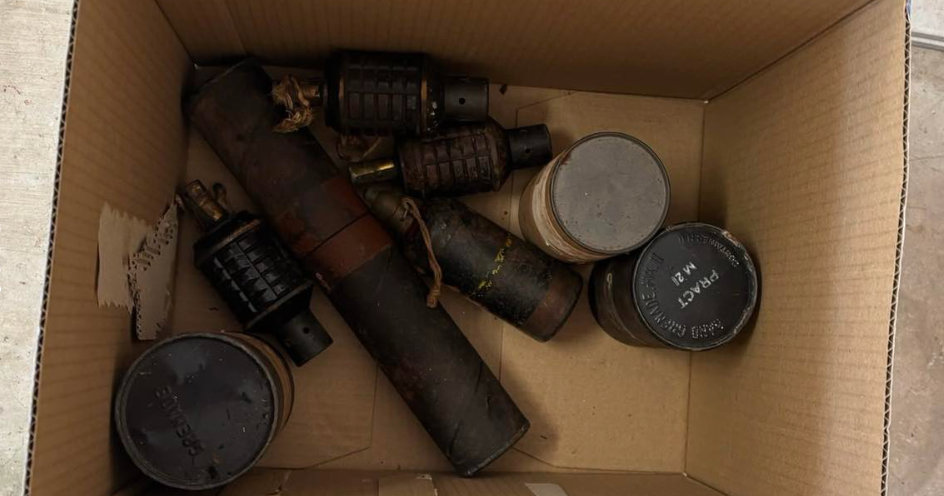
Police in Austin, Texas, found live grenades from World War II inside a box bought at an estate sale. The bomb squad safely removed the explosives, and authorities warned people not to touch old military weapons and to let experts handle them.
Key Facts
A person bought a box at an estate sale in Austin, Texas, that contained World War II-era grenades.
The grenades were live, meaning they could explode, according to the police bomb squad.
Police quickly secured the area and kept neighbors safe while removing the grenades.
Handling old explosives is very dangerous because their condition is unpredictable.
Police advised people to avoid touching or moving any old military weapons they find.
Unexploded military items from past wars are sometimes discovered in veterans' belongings.
Similar incidents have happened before, including a 3-year-old finding a live grenade in Washington state last year.
Bomb squads are trained to safely remove and dispose of these dangerous items.
Read the Original
Want the full story? Tap a source to open the original
article.
The XFG variant of COVID-19, also called "American COVID" or "Stratus," is spreading in the UK, United States, and other parts of the world. It causes symptoms similar to other COVID variants, with hoarseness being a common sign, but it is not causing more severe illness or deaths according to health authorities.
Key Facts
XFG is a COVID-19 variant that combines two earlier variants, LF.7 and LP.8.1.2.
The first known XFG case was found in January 2025, and the WHO began monitoring it in June 2025.
It is currently the most common COVID variant in the UK, with a 7% positive test rate and a 50% increase in hospital admissions during September.
Similar increases in COVID cases have been observed across Europe and the U.S.
XFG symptoms include common COVID signs like sore throat, cough, and fever, plus a hoarse or raspy voice.
Doctors cannot identify XFG by symptoms alone; genetic testing is used to confirm the variant.
The WHO and UK health agencies say XFG does not cause more severe illness or death than other variants.
The nickname "American COVID" comes from where the variant was first detected, not necessarily where it started.
XFG has been found in 38 countries and is spreading in multiple regions worldwide.
Read the Original
Want the full story? Tap a source to open the original
article.
A 44-year-old woman jumped off a cruise ship into the Ionian Sea near Greece and was rescued after 20 hours in the water. Greek coastguard teams, a navy helicopter, and nearby ships searched for her, and a passing freighter found her alive in a life ring before she was taken to a hospital.
Key Facts
The incident happened early on a Friday near the island of Zakynthos in Greece.
The woman was a passenger on the Royal Caribbean ship Odyssey of the Seas.
She said she jumped because she wanted to leave the ship.
Rescue efforts included two coastguard boats, a navy helicopter, and the cruise ship itself.
A passing freighter found her floating with a life ring on Saturday morning.
She was taken to Katakolo port and then to a hospital in Pyrgos for medical and psychiatric tests.
The case is being investigated by local authorities.
Last year, a similar case involved a man jumping from another Royal Caribbean ship to avoid debt.
Read the Original
Want the full story? Tap a source to open the original
article.
There are no ads, so there is no reason to bait you. Readers who chip in keep it that way. Most choose $3.99/month, and get the daily digest every morning.
Rapper Tinie Tempah has agreed to visit the town of Scunthorpe for the first time, 16 years after mentioning the town in his hit song "Pass Out." This decision came after a fan-led campaign asking for 5,000 pre-saves of his new album in exchange for his visit.
Key Facts
Tinie Tempah's 2010 song "Pass Out" mentioned he had never been to Scunthorpe.
A fan named Ben Johns led a campaign in Scunthorpe to get Tempah to visit.
Johns carried a cardboard cutout of Tempah around town with a QR code to pre-save the new album.
Tempah agreed to visit if the album "The Night’s Not Dead" reached 5,000 pre-saves.
Tempah plans to visit Scunthorpe soon and thanked Johns for his efforts.
The campaign involved local places like Scunthorpe United’s stadium and a local college.
Tempah described the visit as "long overdue" and expressed excitement to meet people there.
Tempah’s management said they are preparing something special for fans in Scunthorpe.
Read the Original
Want the full story? Tap a source to open the original
article.
Eight candidates from different Israeli parties competing in the upcoming election all oppose creating a Palestinian state. None of these candidates support the idea of establishing an independent state for Palestinians.
Key Facts
There are eight Israeli candidates from various parties running in the upcoming election.
All eight candidates reject the creation of a Palestinian state.
The candidates come from different political backgrounds but share this common view.
The Palestinian state refers to an independent country for Palestinians living in the West Bank and Gaza.
This election is important for determining Israel's future policies toward the Palestinians.
The article does not mention support for any other solutions besides rejecting a Palestinian state.
Israeli elections impact the region's peace process and international relations.
The candidates' views reflect a unified position against Palestinian statehood among this group.
Read the Original
Want the full story? Tap a source to open the original
article.
A Saudi-led coalition intercepted a ballistic missile launched by the Houthi armed group toward Riyadh, Saudi Arabia’s capital. The Houthis also claimed responsibility for attacks on other targets in Saudi Arabia, including an oil company and airports, amidst ongoing conflict in Yemen that has escalated recently.
Key Facts
The Saudi-led coalition destroyed a Houthi missile aimed at Riyadh.
The missile attack followed earlier strikes on Riyadh’s King Khalid international airport that killed 14 people and injured hundreds.
The Houthis targeted Saudi Aramco facilities in Dhahran and Riyadh, as well as King Khalid airport.
Saudi Civil Defence issued early warnings for Riyadh and Al-Kharj governorate but later said the danger passed.
Saudi-backed Yemeni forces launched a counterattack near Yemen’s Bab al-Mandeb strait to retake territory from the Houthis.
Fighting resumed after a UN-brokered ceasefire broke down last month.
The Houthis have controlled northern Yemen, including the capital Sanaa, since 2014.
Analysts expect Saudi-led forces to intensify air strikes and possibly begin ground operations to reclaim land from the Houthis.
Read the Original
Want the full story? Tap a source to open the original
article.
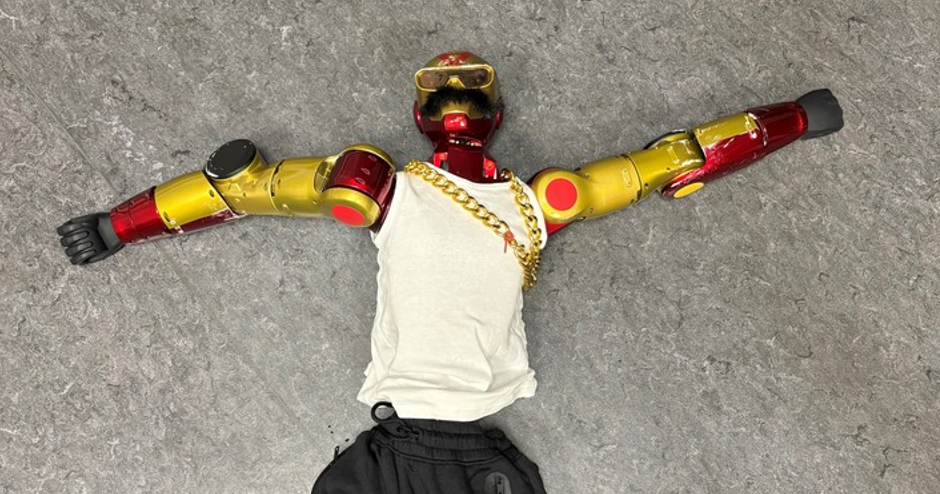
German police seized a humanoid robot after it allegedly touched a 16-year-old girl inappropriately and made sexual gestures in Cologne. Two young men reportedly controlled the robot and livestreamed the event on social media. Police are investigating the incident to understand how the robot was operated and to determine possible legal actions.
Key Facts
The incident happened on the night of October 10 in Cologne, Germany near a busy nightlife area.
A red-and-gold robot about 4 feet tall was seen touching a 16-year-old girl's buttocks and making suggestive movements.
Two young men, aged 16 and 19, who owned and controlled the robot, livestreamed and commented on the incident.
Police seized the robot and the suspects’ smartphones as evidence shortly after being alerted.
The robot is a commercially available model costing around 5,000 euros (about $5,600).
Videos suggest the robot deliberately performed the gestures after some initial contact with the girl.
German sexual harassment laws require direct physical contact between people, complicating potential charges involving a robot.
Authorities are investigating the case as a sexually motivated insult and possible unauthorized publishing of images.
Read the Original
Want the full story? Tap a source to open the original
article.
French President Emmanuel Macron said student protesters in France have real concerns but are also being used by political groups as the country approaches presidential elections. The protests have led to clashes with police, causing injuries and ongoing investigations into police conduct.
Key Facts
Students in France have been protesting for three weeks, closing many schools.
President Macron said students have legitimate issues but are being "exploited" by political forces.
Around 160,000 people joined protests on October 13, according to the interior ministry; unions reported up to 480,000.
Some protests turned violent in Paris and Lyon, with police using tear gas.
Far-left candidate Jean-Luc Melenchon joined a Paris protest, while far-right candidate Marine Le Pen supported police actions.
Students and rights groups accuse police of brutality; one 15-year-old lost a hand due to a police stun grenade.
Police investigations are open into 36 cases of alleged officer violence; one police officer was charged following a student’s injury.
President Macron has asked his government to propose solutions to the unrest in the coming weeks.
Read the Original
Want the full story? Tap a source to open the original
article.
Mauritius experienced its worst riots in decades after a woman was shot by police during protests that began over water shortages and the high cost of living. The government imposed a curfew to control the violence, which included roadblocks, burning tires, and damage to public buildings.
Key Facts
Protests started peacefully about water shortages and high living costs but became violent after a woman was shot by police.
The police officer involved in the shooting was arrested and is in custody.
Prime Minister Navin Ramgoolam ordered a curfew to stop the unrest.
Protesters damaged public property, including police stations, and blocked roads.
Schools and public transport were closed due to the riots.
Foreign embassies warned their citizens to be careful during the unrest.
Despite the curfew, some violent incidents and arrests continued overnight.
The government provided more water when protests began but water shortages are expected until the rainy season in December.
The cabinet planned to meet to discuss the situation and next steps.
Read the Original
Want the full story? Tap a source to open the original
article.
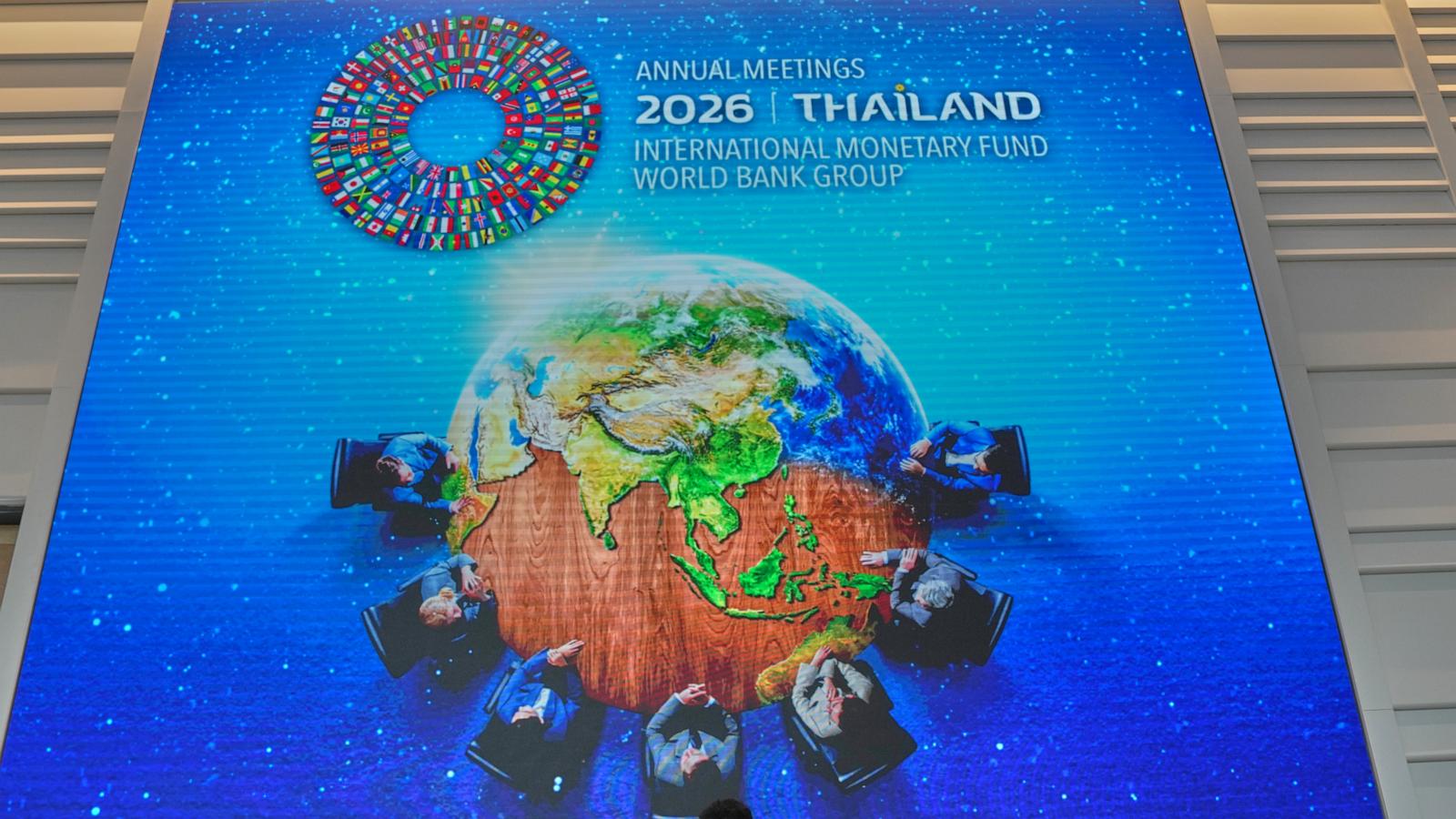
The head of the International Monetary Fund (IMF) said the United States and other wealthy countries must urgently control rising global debt. High debt levels and inflation are making it harder for poor countries to pay their debts and maintain essential services.
Key Facts
IMF Managing Director Kristalina Georgieva warned that growing national debt is harming poorer countries the most.
The U.S. national debt is over $40 trillion, and simply relying on economic growth will not fix the debt problem quickly enough.
Rising global inflation and interest rates are partly driven by high energy costs due to the war in Iran.
Many low-income countries are paying a large portion of their revenue in interest, limiting their ability to fund public services.
The IMF calls for "fiscal consolidation," which means reducing government deficits and controlling spending.
The U.K. Foreign Secretary called for a new debt deal to help developing countries manage repayments with better terms.
Developing countries pay about three times more in interest on debt compared to wealthy countries on average.
Higher costs for fuel, food, and borrowing combined with climate events are worsening the financial struggles of poor nations.
Read the Original
Want the full story? Tap a source to open the original
article.
Iran has increased its military surveillance and operations around the Strait of Hormuz, a crucial passage for global oil transport. There has been a rise in attacks on ships, causing oil flows through the strait to drop again, amid rising tension between Iran and the United States.
Key Facts
Iran’s navy deployed new units east of the Strait of Hormuz and across nearby waters to monitor shipping activities.
The Iranian navy warned ships not to turn off their transponders and to communicate with Iranian forces for safe passage.
Iran started using more aggressive tactics against ships it sees as violating its rules about 10 days ago.
Attacks on ships in the Strait of Hormuz have reached their highest levels since the war involving the US and Israel against Iran began.
Between late September and mid-October, at least 25 attacks on ships were recorded, including tankers and container ships.
Iran says these attacks are for national security and responding to US and Israeli actions.
The US Navy-led Joint Maritime Information Center rated the threat to ships in the strait as “severe,” the second-highest level.
Iranian forces use drones and radio communications to monitor and harass merchant ships in the area.
Read the Original
Want the full story? Tap a source to open the original
article.