Najmeh Amini, a 23-year-old Iranian woman and student, has been sentenced to death for blasphemy related to a social media post. She also faces a prison sentence for charges including acting against national security. Human rights groups say this case highlights a rise in harsh punishments in Iran, especially after recent protests.
Key Facts
Najmeh Amini was sentenced to death for “insulting the prophet” based on a social media post.
She also received a 12-year prison sentence for charges like acting against national security and spreading anti-government propaganda.
Amini was arrested during protests in January that faced deadly government crackdowns with thousands killed and over 50,000 arrested.
She is held in Vakilabad prison in Mashhad, Iran.
Amini said she made the post while hallucinating after taking psychedelic mushrooms, but the judge did not accept this explanation.
Iran’s Islamic law allows death for insulting the prophet, but sometimes excuses are made if there was no deliberate intent.
Human rights groups warn Iran is using executions to scare people and stop protests, with over 600 executions so far this year.
The case is a warning about increasing harsh punishments for peaceful speech and the international community’s response is seen as important.
Read the Original
Want the full story? Tap a source to open the original
article.
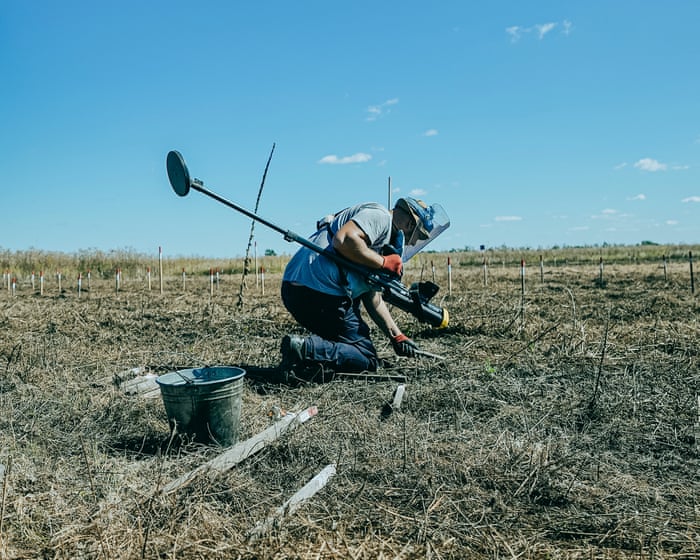
Ukraine is covered with many landmines from ongoing conflicts, creating a dangerous and large-scale problem similar to what was seen during the Vietnam War. Removing these landmines is risky and slow, but new technology like remote-controlled machines and advanced detection tools are helping make the process safer and faster.
Key Facts
Eastern Ukraine fields are heavily contaminated with landmines left from fighting with Russian forces.
Landmines make land unsafe and unusable for years after conflicts end.
Drone use in Ukraine has increased the spread and variety of landmines, making contamination worse.
New mines like the POM-3 are especially dangerous because they can be triggered by vibrations and look like everyday items.
The Halo Trust is a large humanitarian group working to clear mines in Ukraine despite risks from ongoing drone and missile attacks.
New technology, such as the DMR-7 remote-controlled vehicle, can clear land faster and more safely than manual digging.
Other high-tech tools include AI image analysis and ground-penetrating radar, which improve mine detection.
Since Russia’s 2022 invasion, $1.5 billion has been invested in Ukraine’s mine-clearing efforts.
Read the Original
Want the full story? Tap a source to open the original
article.
A UN official said there is a limited chance to make peace in eastern Democratic Republic of the Congo (DRC), a region with ongoing conflict. Despite some progress in peace talks led by the US and Qatar, fighting continues between armed groups and the Congolese army.
Key Facts
The eastern DRC is rich in minerals but has suffered from conflict for many years.
Huang Xia, the UN special envoy for the Great Lakes Region, spoke to the UN Security Council about current peace efforts.
Both US- and Qatar-led peace talks have made some progress but have not stopped fighting.
Armed clashes involve the Rwanda-backed M23 group and the Congolese army.
The Congolese government and M23 signed a ceasefire agreement in July 2025 in Doha.
The DRC and Rwanda made a US-supported peace deal in December 2024 in Washington, DC.
Fighting is still ongoing despite these agreements.
The UN plans to host a meeting on October 18 in Lusaka, Zambia, with defense ministers from Burundi, DRC, Uganda, Rwanda, and Tanzania to push peace efforts.
Read the Original
Want the full story? Tap a source to open the original
article.
Saudi Arabia reported that missiles fired by Houthi rebels hit a building owned by the oil company Aramco in Dhahran, causing a small fire. Four people were injured in Riyadh by debris from intercepted missiles aimed at the capital.
Key Facts
Houthi rebels launched missile attacks targeting Saudi Arabia, including the capital, Riyadh.
Saudi Arabia's air defenses intercepted several missiles on Tuesday evening.
One Aramco administrative building in Dhahran was struck, causing a limited fire but no deaths.
Four civilians (two women, one man, and one child) were wounded in Riyadh by missile debris.
Fifteen homes in Riyadh were damaged from debris falling after interception.
The conflict is part of ongoing fighting involving the Saudi-led coalition and Houthi rebels from Yemen.
Iran is using new tactics to target ships in the nearby Strait of Hormuz to influence oil prices and political events.
The Strait of Hormuz is a critical waterway that carries about 20% of the world’s oil and natural gas.
Read the Original
Want the full story? Tap a source to open the original
article.
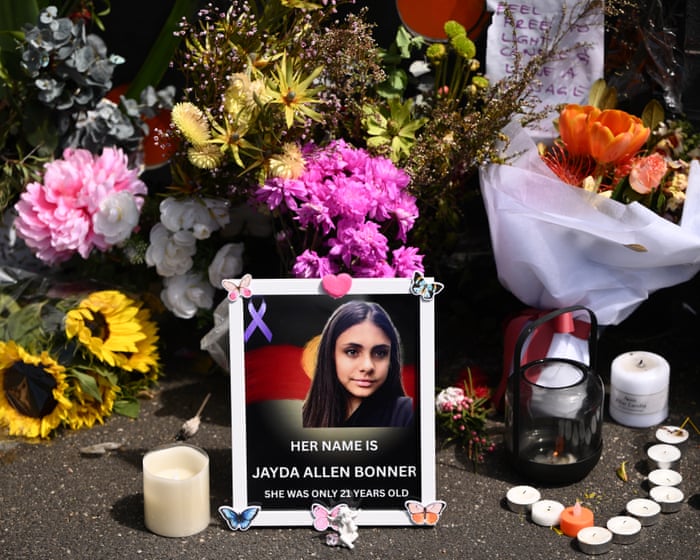
Jayda Allen Bonner, a 21-year-old Indigenous woman, was found dead in an apartment in Melbourne on Saturday. A 31-year-old man has been charged with her murder, while another man initially arrested was released without charge.
Key Facts
Jayda Allen Bonner was found dead early Saturday morning on the fifth floor of an apartment building in Carlton, Melbourne.
Police charged a 31-year-old man with murder; he turned himself in on Monday.
A 60-year-old man initially arrested was released without any charges.
Bonner’s family described her as a vibrant and beautiful young woman with many dreams.
She lived with her aunt in Melbourne as a child and attended school in Carlton.
Bonner wanted to move back to Queensland to help her Indigenous community.
Her aunt expressed deep sadness and emphasized the need to remember Jayda.
Read the Original
Want the full story? Tap a source to open the original
article.
Pope Leo XIV had a successful surgery to remove a cancerous tumor from his right lung. The Vatican said he will have more tests to decide if further treatments are needed.
Key Facts
The Pope had surgery to remove a tumor from the lower part of his right lung.
The tumor was a type of lung cancer called pulmonary adenocarcinoma, the most common form of non-small cell lung cancer.
The tumor was detected at an early stage, which improves the chances of successful treatment.
Lung cancer is the leading cause of cancer death worldwide, but early detection can greatly increase survival rates.
A part of the lung was removed during the 90-minute operation, which is a standard procedure.
People can live a normal life with part or even a whole lung removed.
Additional tests will determine if the Pope needs chemotherapy or radiation.
Smoking is a well-known cause of lung cancer, but many lung cancer patients have never smoked or quit long ago.
Read the Original
Want the full story? Tap a source to open the original
article.
Israel has returned 22 ancient artefacts to Greece that had been stolen. The items, which include vases and a bronze statue from ancient Greece, were handed over in a ceremony in Athens as part of growing cooperation between the two countries.
Key Facts
Israel returned 22 stolen ancient artefacts to Greece.
The artefacts include 15 Attic vases, six Corinthian vases, and one bronze female statuette.
These items date from between 700 BC and 320 BC.
The Israeli Antiquities Authority located the artefacts through its Theft Prevention Unit.
The return was celebrated in a ceremony at the National Archaeological Museum in Athens.
Greek Minister of Culture Lina Mendoni accepted the artefacts from Israeli officials.
This is the first time Israel has returned antiquities to Greece.
Greece and Israel are strengthening cultural, energy, and defense ties, including a large Israeli defense deal with Greece.
Read the Original
Want the full story? Tap a source to open the original
article.
Saudi Arabia reported that its defense forces intercepted missiles aimed at Riyadh and Dhahran. Some debris from the missiles caused injuries and damage to homes. At the same time, Yemen’s government, supported by Saudi Arabia, said it is making progress in its fight to regain areas controlled by the Houthi movement.
Key Facts
Saudi Arabia intercepted missiles targeting the cities of Riyadh and Dhahran.
Debris from the intercepted missiles caused injuries to at least four people.
Some homes were damaged in Riyadh because of falling missile debris.
Yemen’s government, backed by Saudi Arabia, is pushing to retake land from the Houthi group.
The fighting between the Saudi-backed government and the Houthis is ongoing and escalating.
The conflict involves missile attacks crossing from Yemen into Saudi Arabia.
Read the Original
Want the full story? Tap a source to open the original
article.
A former Ukrainian military officer is on trial in Germany, accused of leading a secret operation that blew up the Nord Stream gas pipelines in 2022. The case, which involves sabotage of major gas pipelines that supplied Europe with Russian gas, is the first public hearing in a multi-year investigation and will continue until February next year.
Key Facts
The trial began at the Hamburg Higher Regional Court and is expected to last until February.
The accused, identified only as Serhii K. due to German privacy laws, denies involvement.
Prosecutors say Serhii K. led a team including divers and an explosives expert to damage the pipelines.
He was arrested in Italy in August 2025 and extradited to Germany in November.
The group allegedly used a sailboat from Rostock to plant timed military-grade explosives near the Danish island of Bornholm.
The explosion caused major leaks in the Nord Stream 1 and 2 pipelines, releasing methane gas into the atmosphere.
Ukraine denies any role in the blasts, while Russia expects fair punishment for those responsible.
Another suspect, Vladimir Z., described as a trained scuba diver on the team, was arrested in Croatia and is being transferred to Germany.
Read the Original
Want the full story? Tap a source to open the original
article.
The United Nations General Assembly elected 15 members to the Human Rights Council without any competition, as each region put forward the exact number of candidates for available seats. Human rights groups criticized this uncontested vote, saying it allows countries with poor human rights records to join the council.
Key Facts
The UN General Assembly has 193 member countries and elected 15 members to the Human Rights Council.
The 47-member Human Rights Council seats are divided among regions to ensure fair geographic representation.
This year, every regional group nominated the same number of candidates as available seats, so there was no competition.
Some members elected have been criticized for poor human rights records, including countries from Africa, Asia-Pacific, Latin America, Western, and Eastern Europe groups.
The council investigates human rights abuses worldwide, including in North Korea, Iran, Myanmar, Ukraine, and Israel.
The Human Rights Council replaced a previous UN body in 2006 that was discredited for including countries with bad records.
The council faces ongoing criticism that some countries join to protect themselves and their allies.
President Donald Trump withdrew the US from the council twice, citing concerns about bias against Israel.
Read the Original
Want the full story? Tap a source to open the original
article.
Russian ballistic missiles hit Kyiv for a second day in a row. Ukraine did not get an early warning from Western countries and only detected the missiles as they approached the city.
Key Facts
Russian missiles targeted Kyiv two days in a row.
Ukraine did not receive advance warnings from its Western allies.
President Volodymyr Zelenskyy said the missiles were detected only near Kyiv.
The attacks used ballistic missiles, a type that follows a high arc path.
Ukrainian officials reported the missile strikes.
Read the Original
Want the full story? Tap a source to open the original
article.
The Vatican announced that Pope Leo XIV was diagnosed with lung cancer after having surgery on his right lung. Medical experts have discussed the possible outlook for his health following the diagnosis.
Key Facts
Pope Leo XIV had surgery on his right lung.
After surgery, doctors found he has lung cancer.
The Vatican made this health information public.
Health experts talked about what the diagnosis might mean for the Pope’s future health.
Lung cancer affects the lungs and can be serious depending on how advanced it is.
Pope Leo XIV is currently recovering in a hospital.
The news was reported by CBS News and discussed by medical professionals.
Read the Original
Want the full story? Tap a source to open the original
article.
There are no ads, so there is no reason to bait you. Readers who chip in keep it that way. Most choose $3.99/month, and get the daily digest every morning.
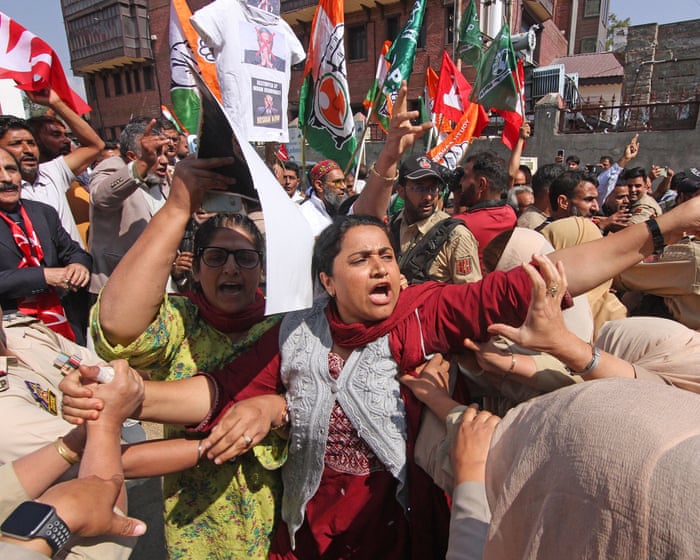
India has removed 130 million names from its voter list in a special process called SIR (special intensive revision). Many people, especially from Muslim and minority communities, say they were wrongly left off the list and some have even been pushed across the border to Bangladesh.
Key Facts
130 million names were removed from the Indian voter list in a short time, the largest removal since India’s independence.
The government says SIR cleaned the list by removing dead and duplicate names, but many living citizens were also excluded.
Critics say the process disproportionately removed Muslims, minorities, and poor people, who mostly do not support the ruling BJP party.
Protests against SIR have occurred in major Indian cities, including large marches and police detentions.
Opposition parties accuse the government of using SIR to steal votes and have asked the election commissioner, Gyanesh Kumar, to step down.
In West Bengal, the BJP has increased detention of “illegal” immigrants after coming to power, targeting people excluded from the voter list.
Shahida Fakir, an excluded voter, was detained and pushed into Bangladesh, even though she has documents proving her Indian citizenship.
The election commission, led by Kumar, has taken on new powers to decide who is a citizen, which some view as beyond its legal role.
Read the Original
Want the full story? Tap a source to open the original
article.
Protests broke out in Pakistan’s Khyber Pakhtunkhwa province after emergency and governor’s rule were imposed. Police and protesters clashed, and police fired shots that injured at least five people.
Key Facts
The protests happened in Khyber Pakhtunkhwa, a province in Pakistan.
Authorities imposed emergency and governor’s rule, meaning the local government’s powers were limited.
This action was due to claims that the local government failed to control Tehrik-e-Taliban Pakistan fighters.
Police confronted the protesters during the demonstrations.
Police fired on protesters, causing injuries to at least five people.
The protests occurred in areas where former Prime Minister Imran Khan has strong support.
The situation reflects ongoing security and political challenges in the region.
Read the Original
Want the full story? Tap a source to open the original
article.
Australia’s highest court ruled that a woman, Rachel Smith, has the right to freeze her eggs while serving a prison sentence in Queensland. The court decided that egg freezing does not count as "assisted reproductive technology," which is banned in Queensland prisons, and sent the case back for reconsideration.
Key Facts
Rachel Smith is serving a 10-year prison sentence in Queensland for drug trafficking.
She will be 39 when she can apply for parole and 41 when her sentence ends.
Smith wanted to freeze her eggs while in prison to reduce the risk of infertility caused by aging.
Queensland prison officials said egg freezing was banned because it is considered assisted reproductive technology under state law.
Smith challenged this claim, saying her human rights were violated and the law was misapplied.
Lower courts ruled against her, but the High Court of Australia ruled in her favor.
The High Court said egg freezing is not assisted reproductive technology under the law.
The case was sent back to Queensland Corrections to reconsider her application quickly.
Read the Original
Want the full story? Tap a source to open the original
article.
Jamaica has received its first group of 22 deportees from the United States under a new agreement allowing "third-country deportations," where people are sent to countries other than their home nations. This deal is part of President Donald Trump’s wider deportation program that involves many countries but has raised legal and human rights concerns.
Key Facts
On Tuesday, 22 deportees from the U.S. arrived in Jamaica via Norman Manley International Airport.
Jamaica agreed in June to accept third-country deportations, meaning some deportees will be transferred to other countries from Jamaica.
The Jamaican government promised not to accept deportees with criminal records and said the arrangement is only a transit process.
The International Organization for Migration, a UN group, will support care for the deportees, and Jamaica will not pay for the program.
Over 35 countries have signed similar agreements with the U.S. to accept third-country deportations.
Opposition leaders in Jamaica criticize the deal, saying it was not openly discussed and could threaten security.
Legal challenges in the U.S. argue these deportations bypass immigrants’ rights to a fair legal process and may endanger those sent to unsafe countries.
The Trump administration has dedicated about $410 million to support these deportation efforts.
Read the Original
Want the full story? Tap a source to open the original
article.
Colombia’s Special Jurisdiction for Peace (JEP) has charged 10 former FARC fighters with war crimes, including torture and forced displacement, against Indigenous peoples between 1996 and 2016. The tribunal is part of Colombia’s ongoing efforts to address crimes from the country’s long civil conflict, which ended in a 2016 peace deal with the FARC.
Key Facts
The JEP charged 10 ex-FARC members with war crimes and crimes against humanity against five Indigenous groups.
Crimes include torture, murder, forced displacement, planting landmines, and damaging ecosystems.
The conflict lasted over 50 years and involved left-wing rebels, government forces, paramilitary groups, and criminal gangs.
Over 450,000 people were killed and more than 120,000 disappeared between 1985 and 2018 due to the conflict.
Some former FARC members involved in crimes were given political roles after the 2016 peace deal.
The tribunal can impose non-prison penalties, such as reparations and community service.
Critics worry about budget cuts to the JEP under Colombia’s new president, Abelardo de la Espriella, which could affect its work.
Indigenous leaders praised the tribunal’s recognition of attacks against their cultures and communities.
Read the Original
Want the full story? Tap a source to open the original
article.
The head of MI5, Sir Ken McCallum, warned that Russia is the biggest threat to the UK's security. He highlighted dangers like sabotage, artificial intelligence (AI), bioweapons, and violence, comparing the threat level to that after 9/11. The UK also faces risks from online interference and right-wing terrorism.
Key Facts
MI5 chief Sir Ken McCallum said Russia is the top security threat to the UK.
Threats include sabotage, arson, AI, bioweapons, coercion, and violence.
Russia's online trolls allegedly tried to affect the Brexit vote, but McCallum said Russia did not sway the referendum.
Terrorists are using AI to plan attacks.
Threats from foreign enemies have increased four times in the last decade.
The UK has resisted EU pressure to impose tariffs on China.
The MI5 chief warned of a shift from anti-migrant views to right-wing terrorism in the UK.
Another article reported a man killed in a tiger enclosure and mentioned job data and tax news, but these are separate topics.
Read the Original
Want the full story? Tap a source to open the original
article.
Namibia is facing an outbreak of foot-and-mouth disease, a contagious illness affecting cattle. The outbreak has caused meat shortages and import suspensions by the European Union, leading to higher prices and market disruptions in the country.
Key Facts
The foot-and-mouth disease outbreak began on a commercial farm in southern Namibia on September 23, 2026.
By early October, around 129 animals tested positive across 17 farms in two regions.
Government teams have set up roadblocks, surveillance, and movement restrictions to control the disease.
The European Union has suspended several meat imports from Namibia due to the outbreak.
Meat vendors and consumers in Windhoek report higher prices and limited meat availability.
Emergency vaccination and stricter controls on animal movement are underway to stop the spread.
Some meat sales at export-approved slaughterhouses continue under strict regulations.
Livestock exports are crucial to Namibia’s economy, so the outbreak poses significant economic risks.
Read the Original
Want the full story? Tap a source to open the original
article.
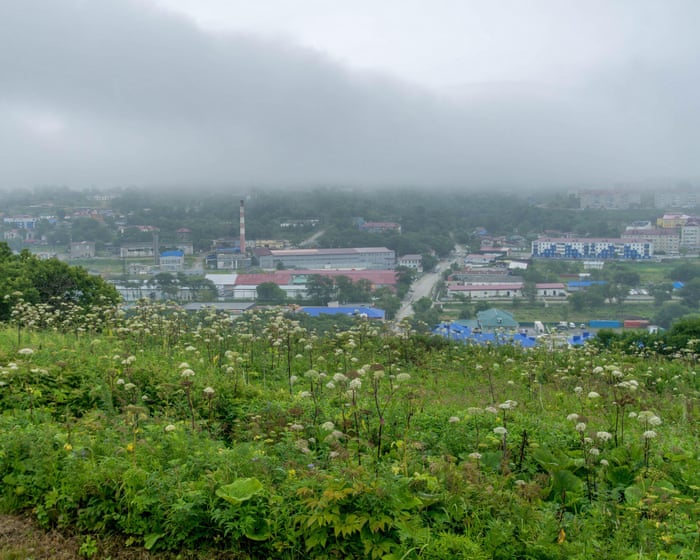
Russia has arrested a Japanese journalist named Yuki Imai on the island of Sakhalin, accusing him of spying for Japanese intelligence. The journalist was detained by Russia’s security agency, the FSB, and is being held in pre-trial detention while facing charges that could lead to 20 years in prison.
Key Facts
Yuki Imai works for the Japanese newspaper Hokkaido Shimbun.
Russia says he was conducting espionage activities in Russian territory.
He was arrested by the FSB on Sakhalin island and flown to Moscow.
A court ordered that Imai remain in custody while awaiting trial.
Russia considers Japan an “unfriendly” country because Japan supports sanctions against Russia’s war in Ukraine.
Russia and Japan have a long-standing territorial dispute over islands near Sakhalin called the Kuril Islands (or Northern Territories in Japan).
Russia’s President Vladimir Putin recently visited one of the disputed islands, increasing tensions.
Similar spy cases have involved other foreign nationals, including a U.S. journalist arrested in 2023 and later released in a prisoner swap.
Read the Original
Want the full story? Tap a source to open the original
article.