Police are investigating after a man died from falling off a roller coaster at Six Flags Over Georgia near Atlanta. The accident happened on Monday, and several other people were injured, but their conditions have not been shared yet.
Key Facts
A man fell from a roller coaster at Six Flags Over Georgia in Austell, near Atlanta.
The fall caused the man’s death.
Other visitors saw the man fall from the ride.
Several people were injured in the incident.
Officials have not confirmed the exact cause of the man's death.
The police department’s major crimes unit is handling the investigation.
The amusement park is located about 15 miles northwest of Atlanta.
Read the Original
Want the full story? Tap a source to open the original
article.
Spain’s King Felipe and Queen Letizia visited Ceuta, a Spanish territory, for the first time during his 12-year reign. The visit happens amid a migration crisis, with at least 10,000 migrants currently in Ceuta after about 72,000 crossed from Morocco in July.
Key Facts
King Felipe and Queen Letizia visited Ceuta for the first time in 12 years.
Ceuta is a Spanish territory, surrounded by Morocco.
Around 72,000 migrants crossed from Morocco into Ceuta in July.
At least 10,000 migrants remain in Ceuta now.
The visit was linked to the ongoing migration crisis in this area.
Migration pressure has increased tensions between Spain and Morocco.
Ceuta is a small exclave on the north coast of Africa controlled by Spain.
Read the Original
Want the full story? Tap a source to open the original
article.
Haitian-Canadian writer Thelyson Orelien denied claims that he used artificial intelligence (AI) to write his novel "It Was Either That Or Die". He admitted to past plagiarism mistakes in some earlier writings and apologized for them.
Key Facts
Thelyson Orelien is a Haitian-Canadian author whose novel was accused of being written by AI.
His book, originally in French, was about migration and was set to be translated into more than 20 languages.
AI detection software called Pangram showed a 100% chance the book contained AI-generated text.
Orelien said he only used tools to help research foreign expressions but not to write any part of the book.
He started writing the novel in 2017 and finished a draft in 2019, before popular AI text generators existed.
The book was removed from the shortlist for the prestigious French Goncourt prize due to the controversy.
His publisher could neither confirm nor deny the AI allegations.
Orelien admitted to past plagiarism in a column and short story written before his novel and apologized for those "unacceptable mistakes."
He left Haiti after the 2010 earthquake caused major damage and unrest.
Read the Original
Want the full story? Tap a source to open the original
article.
Novelist Thélyson Orélien denied claims that he used artificial intelligence (AI) to write his bestselling French novel, which was removed from a major French literary prize list amid controversy. He acknowledged past plagiarism mistakes from earlier works but insisted his novel was written entirely by him, with no AI help.
Key Facts
Thélyson Orélien, a Haitian-Canadian writer, was accused of using AI to write his novel "C'était ça ou mourir" ("It Was Either That Or Die").
His book was withdrawn from the shortlist for the French Goncourt prize because an AI detection tool showed a high chance AI was used.
Orélien said he only used software to help research foreign expressions, but no part of the book’s sentences or story came from a machine.
He began writing the novel in 2017 and finished the first draft in 2019, before popular AI text generators like ChatGPT existed.
His publisher could neither confirm nor deny if AI was used in the book.
Tests by different AI detectors gave mixed results about whether the text was AI-generated.
Orélien admitted to plagiarism in earlier writings, offered an apology, and said he was immature at that time.
The controversy has raised broader questions about AI’s role in writing and the reliability of tools that detect AI-generated text.
Read the Original
Want the full story? Tap a source to open the original
article.
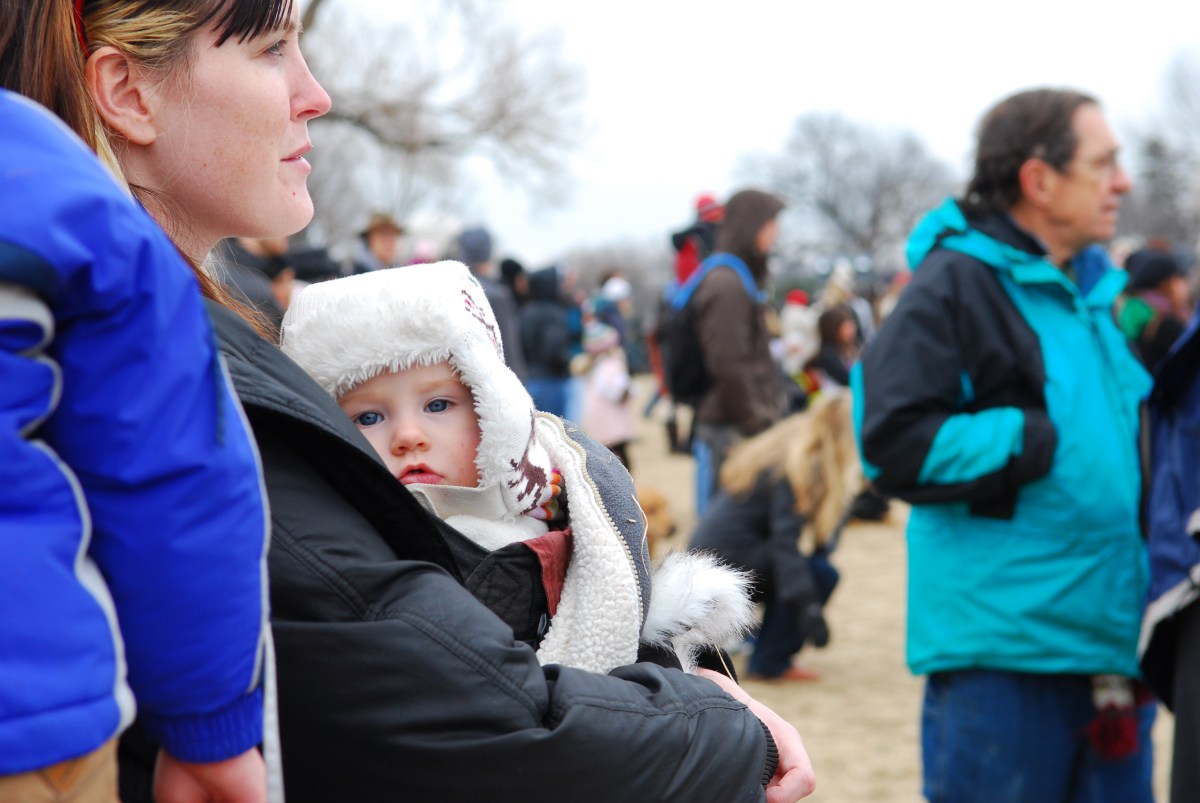
Babywearing is a popular way for parents to keep their child close while having free hands, but it requires special care in winter to keep babies warm and safe. Experts advise dressing babies in thin layers under the carrier and using specially designed winter covers rather than bulky coats, to ensure proper fit, visibility, and support.
Key Facts
Babywearing lets parents carry children close while doing other tasks or traveling.
Thick winter clothes like coats and blankets can make carriers fit poorly and be unsafe.
Babies should be kept upright, with faces visible and uncovered to breathe properly.
Dressing babies in thin layers under the carrier helps keep them warm without bulk.
Winter covers for carriers can protect babies from cold while allowing a safe fit.
Incorrect baby positioning in carriers can harm hip development; legs should form an “M” shape.
Carrying babies for long times can strain parents' backs and hips, so breaks and changing positions are recommended.
Babywearing helps bonding, may reduce colic, and prevent flat head syndrome when done correctly.
Read the Original
Want the full story? Tap a source to open the original
article.
France’s National Assembly is voting on a new law to fight sexual and gender-based violence. The law would create special police teams, expand the incest definition, introduce penalties for stalking and sending unwanted explicit images, and include school interviews to spot abuse.
Key Facts
The bill aims to better address sexual and gender-based violence in France.
It proposes specialized police units focused on sexual crime investigations.
The legal definition of incest would be expanded.
New punishments would target stalking and sending unsolicited explicit pictures.
Schools would conduct interviews to identify possible abuse or violence.
The law, if passed, would start being enforced in 2032.
Most political groups support the bill, but some NGOs are unhappy with the final version, saying some important parts were weakened or removed.
Read the Original
Want the full story? Tap a source to open the original
article.
Belgium is building new schools with help from European Union funding to replace old buildings and make schools greener. However, many school buildings in Belgium still need repairs and renovations.
Key Facts
A new school was built in Ganshoren, Belgium, funded by the European Union.
The new school replaces old and worn-out buildings.
The goal is to make schools more environmentally friendly ("greener").
Many schools in Belgium still require significant repairs and updates.
The funding comes from European programs aimed at improving infrastructure.
This project is part of broader efforts across Europe to modernize school buildings.
The renovations focus on energy efficiency and sustainability.
Read the Original
Want the full story? Tap a source to open the original
article.
Prince Harry’s effort to restore his police bodyguards in the UK has gained support as the British Government starts a review of security for public figures, including royals. This review aims to improve protection after concerns about safety and recent violent events involving political figures.
Key Facts
Prince Harry and Meghan Markle lost their round-the-clock police bodyguards in 2020 after stepping back from royal duties.
Harry has tried to get his security reinstated through legal actions but was unsuccessful.
The UK Government announced a review of protection for public figures, including politicians and royals.
This review was prompted partly by the murder of Ann Widdecombe, a former Member of Parliament.
Home Secretary Shabana Mahmood said the government would increase police support for political figures and possibly provide more funding.
Harry currently has limited security support through a police contact number for advice.
Harry argues security should be based on risk, not official status.
Harry moved to England with his family in August despite concerns about safety and threats.
Read the Original
Want the full story? Tap a source to open the original
article.
NATO warns Russia that an attack on any member country could lead to wide retaliation against all supporting systems of the attacker. At the same time, questions arise about Europe's ability to defend itself without strong support from the United States, especially with President Donald Trump showing signs of warming relations with Russia.
Key Facts
NATO has issued a warning to Russia about consequences if it attacks alliance territory.
Retaliation could affect anything that supports or controls the attacking Russian forces.
The warning comes amid concerns about Russia creating crises in many geographic areas.
Europe’s defense capabilities are questioned if the U.S. reduces its involvement.
President Donald Trump has indicated a move toward better relations with Russia.
The situation involves ongoing tensions between NATO, Russia, and the U.S.
NATO expert Dr. Gavin Hall discussed these issues in a France 24 video segment.
The news highlights the broader geopolitical struggle involving NATO, Russia, and the United States.
Read the Original
Want the full story? Tap a source to open the original
article.
Lakecia Benjamin is a saxophonist who has worked with famous musicians like Stevie Wonder, Missy Elliott, and Jay-Z. After surviving a serious car accident, she released an album called "Phoenix" that earned three Grammy nominations, and her latest album "We Dream" mixes jazz, hip-hop, and soul to promote unity and hope.
Key Facts
Lakecia Benjamin is a six-time Grammy-nominated saxophonist.
She has played with major artists such as Stevie Wonder, Missy Elliott, Jay-Z, and Alicia Keys.
Her 2023 album "Phoenix" was made after a near-fatal car accident and earned three Grammy nominations.
Her sixth album "We Dream" combines jazz, hip-hop, and soul music styles.
The album explores themes of political and cultural divisions and promotes messages of unity and compassion.
Lakecia Benjamin talked about how music can bring people together despite conflicts in the world.
She was once a fan trying to sneak into Prince’s shows early in her career.
She will perform at the New Morning venue in Paris on October 13.
Read the Original
Want the full story? Tap a source to open the original
article.
RJ Mitte, an actor with cerebral palsy, acted in the TV show Breaking Bad, playing a character with the same condition. He worked to support people with disabilities and helped change how disabled performers are seen in the entertainment industry.
Key Facts
RJ Mitte had cerebral palsy, a condition affecting movement caused by brain development issues at birth.
He played Walter "Flynn" White Jr., a character with cerebral palsy, in Breaking Bad.
Mitte supported disability charities like United Cerebral Palsy and Can Do Canines.
He founded The Mitte Foundation to offer community grants in Texas.
Mitte died by suicide at the age of 34.
He helped inspire disabled people to pursue careers in acting and the arts.
Other actors and advocates say Mitte’s work improved inclusion and representation in TV.
Breaking Bad is noted for featuring a disabled character where the disability is part of the role but not the whole story.
Read the Original
Want the full story? Tap a source to open the original
article.
French students have been protesting across France, and police have seized some protest signs during these events. The article explains whether this police action is legal and talks about popular protest slogans, including one that has upset President Emmanuel Macron.
Key Facts
French student protests are ongoing across the country.
Police have taken away some protest signs from students.
There is debate on whether police seizure of signs is legal or a form of intimidation.
A new protest slogan gaining attention is "Bismillah, c'est les ténèbres" ("In the name of God, it is darkness").
Another slogan has reportedly angered President Emmanuel Macron.
The protests focus on student demands and grievances.
The article looks at how these slogans reflect the mood of the protests.
Police tactics and actions during protests have drawn public scrutiny.
Read the Original
Want the full story? Tap a source to open the original
article.
That's the point of this site, and readers keep it that way. Support for any amount and the daily digest lands in your inbox every morning at 7am Eastern.
Israeli forces carried out military raids on three Palestinian refugee camps in the occupied West Bank starting in January 2025, displacing thousands of residents. Many homes and infrastructure were damaged or destroyed, and the displaced Palestinians have been prevented from returning to their camps.
Key Facts
The military operation, called “Iron Wall,” began on January 21, 2025, targeting the Jenin camp and later expanding to Tulkarem and Nur Shams camps.
Over 33,000 Palestinians remain displaced from the three camps according to a UN report.
By October 2025, nearly half of the structures in Jenin and Nur Shams camps and over a third in Tulkarem were damaged or destroyed.
Israeli forces killed 102 Palestinians, including 21 children, during this period.
The camps’ infrastructure, including water and electricity systems, was heavily damaged and humanitarian aid was cut off.
The Israeli Supreme Court ordered the government to provide a plan for the displaced people to return by November 23, 2025.
Some Israeli government officials oppose allowing residents to return, citing security concerns.
Displaced Palestinians, like Fuad Abu Salam, hope to return and rebuild their homes despite the destruction.
Read the Original
Want the full story? Tap a source to open the original
article.
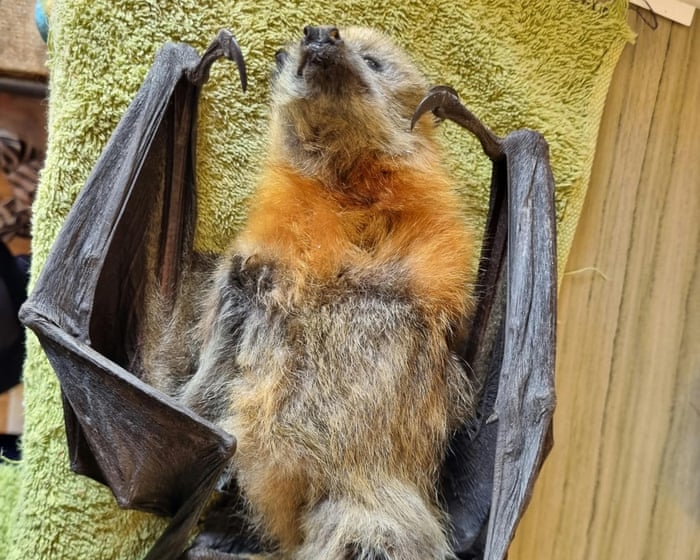
Flying foxes, a type of bat, are starving in large numbers across New South Wales (NSW) and parts of Victoria, Australia, due to a lack of food. Wildlife rescuers are receiving many calls about weakened and dead bats, including young pups, suffering from food shortages caused by habitat loss and dry weather.
Key Facts
Grey-headed flying foxes, listed as vulnerable, are mainly affected.
They feed on the flowers and nectar of native trees like eucalyptus.
Food shortages are reported from northern NSW to the south coast and in parts of Victoria.
Many bats are so weak they stay in backyards and eat fruit from gardens.
Poor seasonal flowering and a dry winter have reduced their food supply.
Malnourished pregnant females often lose their young due to lack of nutrients.
Unusual behaviors include eating on the ground and drinking water from grass.
Wildlife groups warn people not to touch bats and to report sick or dead bats to rescue centers.
Read the Original
Want the full story? Tap a source to open the original
article.
Azerbaijan has filed a lawsuit against CNN, showing how countries might use American courts to pursue legal battles that serve political purposes. This case illustrates a growing trend where nations use defamation lawsuits as a form of indirect conflict or "lawfare."
Key Facts
Azerbaijan has sued CNN in a U.S. court.
The lawsuit involves claims of defamation, which means damaging someone's reputation with false statements.
This case may signal more countries using U.S. courts to settle political disputes.
The use of legal actions like this in international conflicts is called "lawfare."
"Lawfare" means using law as a weapon in conflicts, rather than traditional fighting.
The case reflects concerns about how courts could be used by governments in global conflicts.
Read the Original
Want the full story? Tap a source to open the original
article.
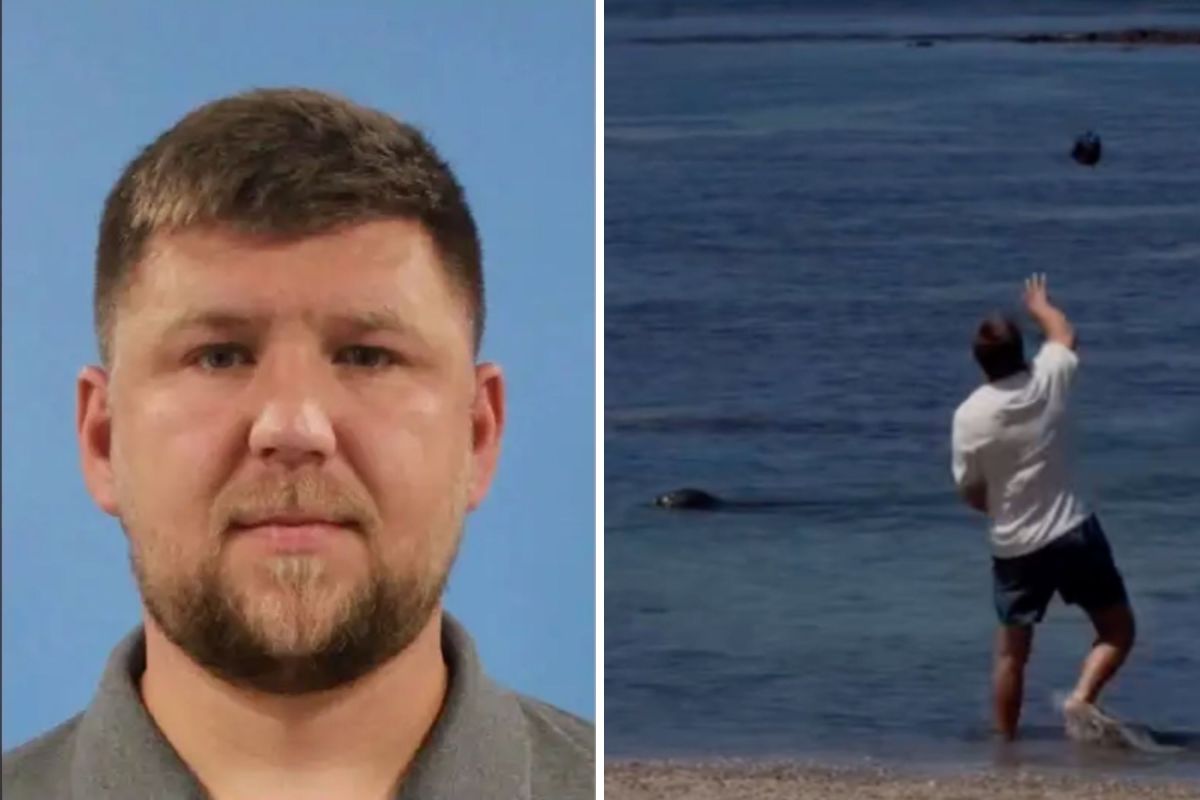
A tourist in Hawaii is charged with throwing a rock at an endangered monk seal in May. He is asking for proof that Delta Air Lines warned him about Hawaii’s protected wildlife before his flight. The case centers on whether he knew about the laws protecting the seals.
Key Facts
Igor Mykhaylovych Lytvynchuk, 38, faces federal charges for allegedly throwing a rock at a monk seal in Maui.
The incident was caught on video and led to public condemnation.
Lytvynchuk denies trying to harm the seal.
His lawyers say prosecutors have no evidence that Delta Air Lines showed passengers any wildlife warning videos.
Hawaiian Airlines has a “Travel Pono” video about protecting Hawaii’s wildlife, but it is unclear if Delta showed anything similar.
Lytvynchuk's legal team wants to get records from Delta about in-flight videos and warnings.
The case could depend on whether Lytvynchuk knew the seal was protected by law.
Witnesses said Lytvynchuk threatened to pay fines and left the scene after the incident.
Read the Original
Want the full story? Tap a source to open the original
article.
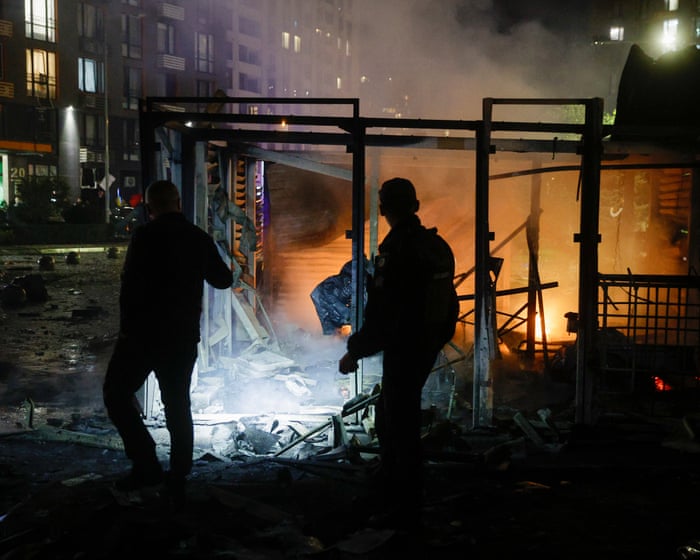
Ukraine's President Zelenskyy said Ukraine did not get a warning from its partners before Russian missiles hit Kyiv, causing damage to civilian areas. Zelenskyy emphasized that early warnings save lives, while Ukraine's Foreign Minister said the lack of notice was because of a special Russian weapon. Meanwhile, President Trump has urged Ukraine to stop attacking Russian oil refineries and made a deal to buy diesel from Russia.
Key Facts
Five Russian ballistic missiles hit civilian infrastructure in Kyiv on Monday.
Ukraine did not receive early warning from its Western allies about the missile strike.
Early warnings help prevent casualties by alerting people to incoming missile attacks.
Ukraine’s Foreign Minister said the lack of warning was due to a specific Russian weapon type.
President Trump demanded Ukraine stop attacking Russian energy facilities and blamed Zelenskyy for rising U.S. fuel prices.
President Trump announced a deal to import diesel from Russia, lifting previous U.S. sanctions.
Russia continues bombing Ukraine’s energy infrastructure despite claims of an “energy ceasefire.”
Russia’s attacks on Ukraine’s power grid aim to cause blackouts and force civilian displacement.
Read the Original
Want the full story? Tap a source to open the original
article.
The French embassy in Saudi Arabia advised its citizens not to travel to or use the airports in Riyadh, Jeddah, and Dammam due to recent attacks by Yemen's Houthi rebels. These attacks come amid increased fighting between the Saudi-led coalition and the Iran-backed Houthis, which has also disrupted air travel in Saudi Arabia.
Key Facts
The French embassy warned citizens to avoid Riyadh, Jeddah, and Dammam airports because of security concerns.
Houthis have launched missile attacks on Saudi airports and oil facilities since last week.
Riyadh’s main airport remained closed after a deadly missile strike on Saturday that killed at least 12 people.
The conflict is part of a wider regional fight involving Saudi Arabia, Yemen’s Houthis, and Iran.
Saudi Arabia is conducting strikes on Houthi-held areas and supporting Yemeni government forces.
The Saudi-led coalition asked civilians to evacuate an oil company facility in Yemen’s capital, Sanaa, ahead of a military operation.
Houthis threatened strong retaliation for any attacks on Sanaa, including strikes in Riyadh.
Houthis warned workers near Saudi Aramco oil sites to leave, calling these facilities their targets.
Read the Original
Want the full story? Tap a source to open the original
article.
It has been 50 years since Naseem Khan’s 1976 report highlighted the lack of recognition for Black and Asian artists in British arts. A conference in Leicester and a new book mark this milestone by examining progress and ongoing challenges for cultural diversity in the UK arts scene.
Key Facts
Naseem Khan’s 1976 report, "The Arts Britain Ignores," called for recognition of diverse cultural creativity in Britain.
The report was commissioned by the Arts Council of Great Britain and presented a vision of a multicultural national culture.
Today, artists like Frank Bowling, Sonia Boyce, and Anish Kapoor are well-known and respected in Britain.
The 50th-anniversary conference is held by the Serendipity Institute for Black Arts and Heritage in Leicester.
The conference brings together artists, experts, organizers, and policymakers to discuss progress and future needs.
The new book "The Arts Britain Ignores at 50" includes essays and research on cultural diversity in British arts.
Organizers say while funding has improved, sustainable growth and recognition in dance and theatre remain challenges.
Dawn Airey, chair of Arts Council England, will give a speech emphasizing the importance of Khan’s work today.
Read the Original
Want the full story? Tap a source to open the original
article.
Yemen’s internationally recognized government has conducted nine air strikes against Houthi fighters in the southwest, while fighting continues in the Taiz region. The conflict, which began in 2014, has caused many civilian deaths and injuries, displacement, and damage to homes and infrastructure.
Key Facts
The Yemeni government carried out nine air strikes in Taiz governorate on Tuesday, targeting Houthi positions.
Fighting is ongoing between government forces and Houthis in areas south of Taiz city.
At least five civilians, including a child, were killed by Houthi shelling in the past 24 hours, and 17 others were injured.
The conflict started in 2014 when Houthis seized Yemen’s capital, Sanaa, pushing the government out.
A Saudi-led coalition has supported the Yemeni government since 2015.
A UN-backed truce in 2022 reduced fighting, but tensions resumed after Houthis imposed a naval blockade of Saudi ports.
Recent Houthi attacks on Saudi Arabia have targeted airports and oil facilities, killing civilians and disrupting flights.
More than 200,000 people have been displaced in Yemen since September amid heavy fighting.
Read the Original
Want the full story? Tap a source to open the original
article.