The UK Supreme Court is reviewing whether Benjamin Field, who was convicted of murdering Peter Farquhar by secretly drugging him, can legally be held responsible for Farquhar’s death if Farquhar knowingly consumed the drugs. Field was jailed in 2019, but his conviction was quashed in April, and the court is now deciding if Field caused the death under the law.
Key Facts
Benjamin Field was convicted in 2019 for the 2014 murder of Peter Farquhar in Buckinghamshire.
Field was accused of secretly giving Farquhar sedatives and spiked whisky to make his death look accidental or a suicide.
The conviction was overturned in April 2024, and a retrial was ordered.
The Crown Prosecution Service (CPS) appealed to the Supreme Court to clarify if Field could legally be responsible if Farquhar consented knowingly.
Field had also been convicted of burglary and fraud related to his relationships with Farquhar and a neighbor to change their wills.
The trial evidence included claims that Field drugged Farquhar with Dalmane, a sedative, and other drugs without his knowledge.
Field’s defense argues Farquhar freely chose to drink and that Field’s giving of the drugs did not legally cause the death.
A decision from the Supreme Court is expected after the hearing concludes.
Read the Original
Want the full story? Tap a source to open the original
article.
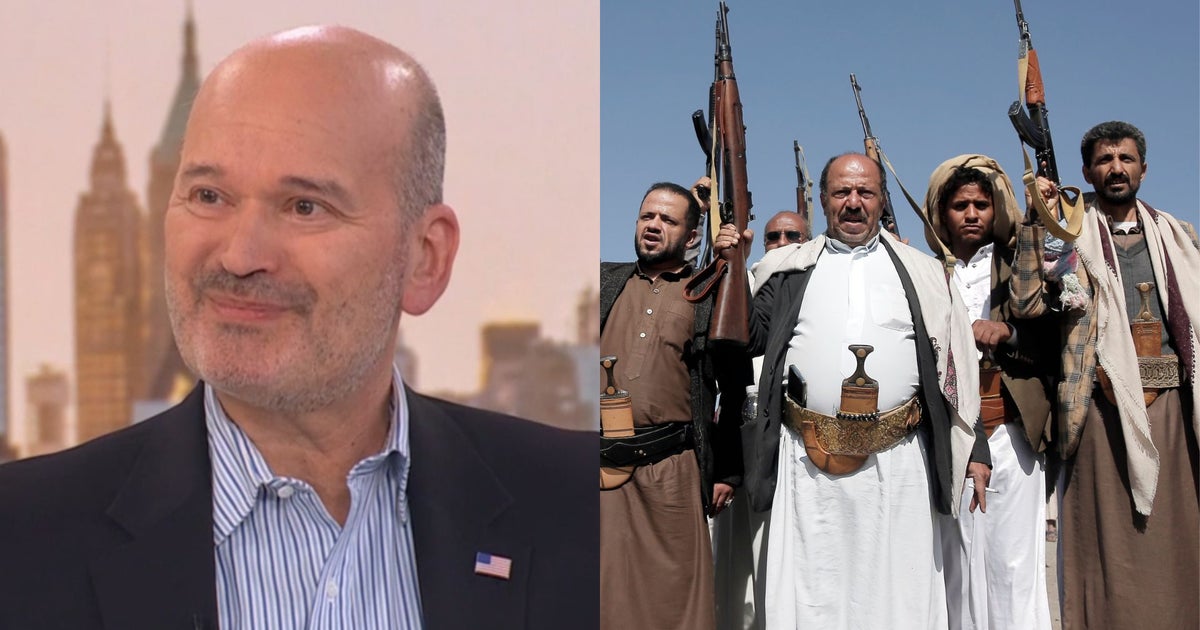
A former CIA counterterrorism official explained recent news about tensions in the Middle East, focusing on the conflict involving Iran and the Houthis in Yemen. The Houthis have warned the U.S. not to retaliate after their attacks in Saudi Arabia, while Saudi Arabia has promised to respond to Houthi actions.
Key Facts
The U.S. is involved in ongoing conflict related to Iran and its allies.
The Houthi rebels in Yemen have threatened the U.S. not to take military action against them.
The Houthis recently launched attacks on Saudi Arabia.
Saudi Arabia has promised to respond or retaliate against the Houthis.
A former CIA deputy assistant director for counterterrorism provided insight into the situation.
There is concern about wider instability in the Middle East due to these developments.
Reports mention that President Donald Trump is considering strikes against the Houthis.
This situation represents part of the larger conflict between the U.S., Iran, and their allies in the region.
Read the Original
Want the full story? Tap a source to open the original
article.
The UK government accused Iran’s Islamic Revolutionary Guard Corps (IRGC) of planning a plot near a RAF Fairford airbase in England last month, leading to arrests and sanctions against two Iranian nationals. Iran denied the claims, calling them false and part of a Western plan to avoid accountability in conflicts involving Iran and accused the UK of making up security threats.
Key Facts
The UK said it was “highly likely” that Iran’s IRGC coordinated a suspected plot near RAF Fairford, a military airbase in England.
Five British men were arrested on terrorism and explosives charges but later released on bail; two others were also arrested and released.
The UK sanctioned two Iranian nationals for alleged “hostile activity” related to the incident.
Iran’s Foreign Ministry called the accusations a “false flag operation” and said the UK provided no solid proof.
RAF Fairford hosts US military aircraft, including B-1 bombers, which were partly withdrawn after the incident over security concerns.
Israeli Prime Minister Netanyahu claimed Israel warned the UK about the Iranian plot before sanctions were imposed.
Iran linked this incident to other alleged attacks, like the Flydubai cockpit incident, dismissing them as poorly made-up plots.
The UK Home Secretary said investigators believe the plot was coordinated by someone in Iran, but details of evidence have not been shared.
Read the Original
Want the full story? Tap a source to open the original
article.
Scientists studied how honey bee stingers pump venom after the bee flies away. They found that the stinger uses two sliding parts that work like pistons to push venom continuously into the target.
Key Facts
Honey bees leave their stingers in the skin after stinging and then fly away.
The stinger keeps pumping venom on its own through a double-piston mechanism.
The stinger has three parts: a chamber called a stylet and two sharp lancets that slide back and forth.
Valves on each lancet change shape to create pressure and pump venom continuously.
Researchers filmed stingers inserted in gel using high-speed video and microscopes to see these movements.
They made a 3D-printed model that copied the stinger’s pumping to confirm their findings.
Future studies will look at the material features of the stinger valves and the possible role of capillary action (liquid movement in small spaces).
Read the Original
Want the full story? Tap a source to open the original
article.
Iran’s security chief has warned that data centres, internet cables, and artificial intelligence facilities in the Gulf region could be attacked if war with the United States restarts. The warning comes amid fighting near the Bab al-Mandeb strait, a key point for global internet and shipping, raising concerns about the safety of important internet connections.
Key Facts
Iran’s security chief Mohsen Rezaei threatened attacks on regional data centres and internet cables if conflict with the US resumes.
The Bab al-Mandeb strait connects the Red Sea to the Gulf of Aden and is a crucial route for about 20% of global internet traffic.
More than 90% of data between Europe and Asia passes through undersea cables near this narrow 26 km-wide strait.
Fighting continues in Yemen between the government and Iran-backed Houthis near this strategic area.
Data centres rely on constant power, cooling, and communications, making them vulnerable even without direct server damage.
In March, Iran’s Revolutionary Guard named US and Gulf tech companies as possible targets, including Google, Microsoft, and Meta.
Previous attacks targeted data centres and US business interests in Bahrain and the UAE during conflicts with Israel and Iran.
Experts say Iran’s threats aim to discourage US and Gulf military actions by highlighting the risk to key technology infrastructure.
Read the Original
Want the full story? Tap a source to open the original
article.
NASA's Perseverance rover has driven 28.1 miles on Mars, setting a new record for the longest distance traveled by any vehicle on another planet. The rover uses a self-driving system to explore Mars' Jezero Crater, where scientists study ancient environments that might have supported microbial life.
Key Facts
Perseverance rover landed on Mars in February 2021.
It recently drove 28.1 miles, beating the previous record of 28.06 miles held by the Opportunity rover.
The rover explores the Jezero Crater, believed to have some of the oldest planetary terrain.
Scientists are looking for signs of past water activity and possible ancient microbial life.
Perseverance uses an autonomous navigation system called AutoNav to map terrain and plan routes.
The rover can drive up to 1,351 feet per Martian day (called a sol).
The mission was extended to continue exploring Jezero Crater until the end of 2028.
This technology allows the rover to "think while driving," increasing its range compared to past rovers.
Read the Original
Want the full story? Tap a source to open the original
article.
Journalist Natasha Lennard explores how the phrase “these uncertain times” became common during the Covid pandemic and highlights that some strong beliefs or “certainties” still shape society today. In her new book, she discusses how certain accepted ideas—about issues like borders, gender, and technology—limit action and how social movements in history have challenged such fixed ideas.
Key Facts
The phrase “these uncertain times” became widely used during the Covid pandemic starting in 2020.
Society faces many problems like pandemics, political shifts, inequality, climate change, and technology risks.
Lennard’s book uses the philosopher Ludwig Wittgenstein’s work to question what is considered “certain.”
Some ideas, such as strict border controls and fixed gender definitions, remain strongly accepted by many.
These “certainties” influence how people understand social and political challenges.
Lennard references past movements like Occupy Wall Street and the 2020 George Floyd protests as examples of challenging accepted ideas.
She encourages people to rethink what is accepted as “certain” to overcome feelings of helplessness.
Read the Original
Want the full story? Tap a source to open the original
article.
A man died after falling from the Goliath roller coaster at Six Flags in Georgia. Several other people were also hurt in the incident. Emergency teams responded to the scene.
Key Facts
The incident happened at the Goliath roller coaster in Six Flags, Georgia.
One man died after falling from the ride.
Multiple people were injured during the event.
Emergency responders arrived to assist the victims.
The roller coaster is a major attraction at Six Flags.
Authorities are investigating the cause of the accident.
No other details about the injured or the exact circumstances have been released.
Read the Original
Want the full story? Tap a source to open the original
article.
Yemeni government forces, supported by Saudi Arabia, are advancing in the Marib region during their “Dawn of Yemen” military operation to recapture areas held by Houthi fighters. Meanwhile, heavy fighting and shelling continue in the city of Taiz, causing many civilian casualties and worsening supply shortages.
Key Facts
The “Dawn of Yemen” operation aims to retake Houthi-controlled areas, including Yemen’s capital, Sanaa.
The Houthis, an armed group backed by Iran, recently captured the strategic port city of Mocha and areas near the Bab al-Mandeb shipping route.
Government forces took control of key military positions in north and south Marib after intense clashes with the Houthis.
The Yemeni military reported nearly 1,900 precise strikes that killed 950 Houthi fighters and destroyed 380 vehicles and equipment.
Houthi forces launched a ballistic missile at Jabal Kahboub mountain range in Taiz, where battles are ongoing.
Fighting in Taiz has caused dozens of civilian casualties and worsened shortages of cooking gas and other supplies.
Both sides continue to use drones, artillery, rockets, and airstrikes in the conflict.
Read the Original
Want the full story? Tap a source to open the original
article.
Students in France are protesting because of overcrowded classrooms, teacher shortages, and problems with the university admissions system called Parcoursup. A march is taking place in Paris from Place d’Italie to Les Invalides, while protests and blockades continue near some high schools.
Key Facts
French students are unhappy about crowded classes and lack of enough teachers.
They want reforms or the removal of Parcoursup, the system used to apply to universities.
School blockades have decreased but some disruptions still happen at high schools.
A demonstration is currently happening in Paris, moving between two well-known places: Place d’Italie and Les Invalides.
The protests are part of ongoing concerns about education conditions in France.
Read the Original
Want the full story? Tap a source to open the original
article.
Ukrainian drones have attacked three data centers owned by Russia’s Yandex company, causing major damage and reducing internet services in Russia. These strikes have also led to a big drop in automated bot traffic, raising questions about how this might affect Russian online disinformation efforts ahead of upcoming U.S. elections.
Key Facts
Ukrainian drone strikes hit three Yandex data centers in Russia as a response to earlier Russian attacks on Ukrainian data centers.
The largest strike damaged a key Yandex facility in Sasovo, which housed tens of thousands of servers and two supercomputers used for AI development.
Damage from the strikes has caused internet disruptions for Russian businesses, consumers, and critical infrastructure.
Restoring the damaged centers will take at least six months and will be costly due to equipment shortages and the need for foreign-made parts.
Bot traffic from the Yandex network fell sharply to under 1 percent after the strikes but partially recovered shortly afterward.
U.S. intelligence agencies are watching for Russian efforts to interfere in the U.S. midterm elections using online disinformation.
Experts note that the strikes might affect a range of malicious activities coordinated by Russia beyond just disinformation.
Yandex has not yet publicly commented on the strikes.
Read the Original
Want the full story? Tap a source to open the original
article.
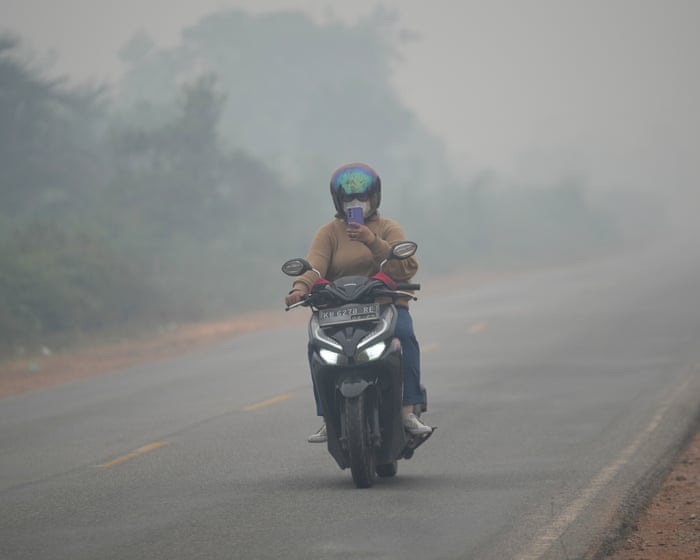
A wildfire on Sumatra island in Indonesia, worsened by the El Niño weather pattern, destroyed nearly 300 homes and forced about 1,000 people to evacuate. The fire spread quickly due to smouldering peatland and strong winds, causing severe smoke and air pollution in the region.
Key Facts
The fire began near a village in Bangka Belitung province and residents tried to put it out themselves at first.
Peatland, a type of soil that can burn underground, kept the fire smouldering even after it seemed to be out.
About 1,000 people fled the village, and many lost their homes made mostly of wood.
The village was built on peatland that had been converted into housing last year, in a protected area.
El Niño, a climate pattern that causes dry weather, has made fires worse this year in Indonesia.
Slash-and-burn clearing for land use has also increased fire risks on Sumatra and Borneo islands.
The smoke caused health problems and raised air pollution levels in nearby countries like Singapore and Malaysia.
Indonesia’s president ordered maximum government efforts, deploying over 60,000 people to fight the fires.
Read the Original
Want the full story? Tap a source to open the original
article.
The African Union (AU) held talks in Kigali, Rwanda, to promote peace in the eastern Democratic Republic of the Congo (DRC), where fighting still continues. The discussions focused on implementing the Washington Peace Agreement, protecting civilians, cooperating on security, and boosting regional economic ties.
Key Facts
AU consultations took place on October 6 in Kigali, led by former African leaders including Sahle-Work Zewde.
Prior meetings were held in Goma, eastern DRC, involving UN agencies and armed groups like AFC/M23.
The talks emphasized respecting ceasefire commitments and protecting civilians from violence and abuse.
Discussions in Kigali covered refugee protection and regional economic cooperation, including mining and trade.
The Washington Peace Agreement, signed by DRC and Rwanda in June 2025, aims to improve security and reduce armed conflict.
Another peace process, the Doha Framework, involves direct talks between the DRC government and AFC/M23 rebels.
Kinshasa accuses Rwanda of supporting rebels (AFC/M23), while Rwanda accuses the DRC of backing the FDLR militia.
The AU plans to continue dialogue in Kinshasa to support peace efforts and achieve agreement implementation.
Read the Original
Want the full story? Tap a source to open the original
article.
Thailand has become a popular place in Asia for people seeking fertility treatments like IVF and egg donation. Many foreigners come to Bangkok clinics because they offer shorter waiting times, lower costs, and fewer rules than in their home countries.
Key Facts
Thousands of patients from China, South Korea, Europe, and Southeast Asia travel to Thailand each year for fertility care.
Bangkok clinics provide services like medical packages, interpreters, hotel arrangements, and quick appointments.
Thailand is seen as a solution for couples facing long, costly, and difficult fertility treatments elsewhere.
The growing demand has led to a network of middlemen and some illegal practices.
NGOs warn that young women from Thailand and Cambodia may be recruited as egg donors without full information about health risks.
Some women are contacted through social media or messaging apps and offered money for invasive medical procedures.
Fertility clinics in Thailand combine advanced medical technology with services tailored to foreign patients.
This situation raises concerns about ethical issues and the protection of donors’ rights.
Read the Original
Want the full story? Tap a source to open the original
article.
A man named William Chapman was killed after entering a tiger's enclosure at Yorkshire Wildlife Park near Doncaster. The park is closed while police and council conduct investigations, and the tiger involved will not be put down.
Key Facts
The incident happened shortly after 1:30 pm at Yorkshire Wildlife Park.
The man entered the tiger enclosure alone and was attacked by a rare Amur tiger named Altai.
He died at the scene, according to South Yorkshire Police.
An eyewitness saw the man pacing near the enclosure wearing headphones before the attack.
The park remains closed during the ongoing investigation.
The man’s family has been informed and is receiving support from specialist officers.
The City of Doncaster Council has started a health and safety investigation as part of their official duties.
The tiger involved will stay in the enclosure and will not be euthanised.
Read the Original
Want the full story? Tap a source to open the original
article.
Families in Yemen are struggling to find their missing loved ones due to ongoing fighting in the civil war. Despite previous hopes for a truce that could help with searches, renewed violence has stopped many efforts to locate people who disappeared during the conflict.
Key Facts
Munif, an 18-year-old from Sanaa, disappeared after joining the Houthi forces in 2020 and has not returned home.
Hundreds of people have gone missing since Yemen’s civil war began in 2014, when the Houthis took control of the capital.
The International Committee of the Red Cross received over 1,800 requests from families looking for missing relatives this year.
A 2022 truce between the Saudi-backed government and the Iran-aligned Houthis raised hopes for family reunions, but fighting restarted in July, stopping many searches.
Both sides have held prisoners of war, but the total number of captives is unknown.
An agreement to exchange over 1,600 prisoners was signed in May but has been delayed due to accusations of obstruction from both sides.
Fighting has increased recently in areas like Marib and Al-Jawf, with heavy use of artillery and air attacks.
Families continue to wait for news, unsure if their loved ones are alive, dead, or held captive.
Read the Original
Want the full story? Tap a source to open the original
article.
The Pacific region east of the international date line has set a new record for strong, long-lasting hurricanes this season. Scientists say this is mainly due to a powerful El Niño weather pattern that warms ocean water and changes winds, helping hurricanes to grow and last longer.
Key Facts
The area east of the international date line, which affects Hawaii, Mexico, and the U.S. West Coast, has broken the record for the most intense and long-lasting hurricanes.
Accumulated Cyclone Energy (ACE), a measure of storm strength and duration, has surpassed the old record set in 2018.
Hurricanes Simon and others have recently formed, with Simon reaching Category 4 strength.
A strong El Niño is weakening winds that normally stop hurricanes and is warming the ocean, providing more fuel for storms.
The Atlantic hurricane activity is low this year because El Niño creates conditions that weaken storms there.
Warm ocean water and a weather pattern called a gyre over Central America have helped start multiple storms.
Recent Pacific hurricanes such as Nolo, Odalys, Polo, Rachel, and Simon have all been very strong, with Polo spending a record 2.5 days at Category 5.
Climate change is also contributing to warmer ocean temperatures that support stronger hurricanes.
Read the Original
Want the full story? Tap a source to open the original
article.
Afghanistan’s Taliban government has stopped BBC FM radio broadcasts across the country, citing repeated rule violations. The BBC is still providing news through other channels like shortwave radio, online, and satellite services.
Key Facts
The Taliban suspended BBC FM radio broadcasts in Afghanistan.
The government mentioned "repeated violations" but gave no details.
BBC is the only international news group still broadcasting inside Afghanistan after two US outlets were banned in 2022.
BBC reaches over 20% of Afghan adults weekly with news and educational programs.
Educational shows on BBC help girls, who are banned from secondary schools by the Taliban.
The Taliban controls media tightly, limiting music, women’s appearances, and mixed-gender broadcasts.
Many people in Afghanistan face challenges using social media due to electricity shortages, costs, and low literacy.
The BBC’s Afghan service has been operating since 1981.
Read the Original
Want the full story? Tap a source to open the original
article.
On the biggest stories we show what the outlets agree on and where they differ. Readers keep that going, and get the daily digest by email every morning. Most choose $3.99/month.
The head of MI5, Sir Ken McCallum, said the UK faces serious threats from Russia, Iran, and rising right-wing terrorism. He highlighted new dangers from terrorists using artificial intelligence (AI), especially to help attacks or create bioweapons.
Key Facts
MI5 is spending more resources on threats from countries than it did during the Cold War.
Russia is called "aggressor number one" and is using hybrid warfare without directly fighting NATO armies.
MI5 has expelled nearly 1,000 Russian spies since Russia’s invasion of Ukraine.
Iran is increasing its hostile activities in the UK, with 50 arrests linked to Iran in the past year.
There is a rise in extreme right-wing terrorism, especially driven by young people and internet radicalization.
Terrorists have tried to use AI to improve attacks, including drones equipped with AI.
MI5 warns about the potential future use of AI to create dangerous bioweapons.
The UK’s terrorism threat level was raised to "severe" in April, meaning an attack is highly likely.
Read the Original
Want the full story? Tap a source to open the original
article.
The head of MI5, Ken McCallum, said rightwing extremists with anti-immigration views in the UK are more often planning violent terrorist attacks, especially against migrants and Muslims. He also warned about increased threats from hostile countries like Iran and Russia, and highlighted new dangers from AI technology.
Key Facts
Rightwing extremists in the UK are increasingly planning terrorist attacks targeting immigration centers and asylum hotels.
There has been a rise in attacks and plots motivated by hate against migrants and Muslim communities.
Some young people, including teenagers, are becoming involved in extreme rightwing terrorism.
Iran is expanding hostile actions in the UK, aiming at military targets and British Jewish communities, leading to over 50 arrests.
Russia continues to conduct aggressive actions like assassination plots, cyber-attacks, and interference in political events.
MI5 is creating a new center to assess threats linked to artificial intelligence, especially related to dangerous bioweapons.
Violence against political, religious, and community figures has increased.
Threats from other countries have grown and now are a major focus alongside traditional counter-terrorism.
Read the Original
Want the full story? Tap a source to open the original
article.