Foreign aid to Africa has decreased by more than 25%. This reduction is affecting health programs for women and children, especially in countries like Kenya. Experts warn that these cuts are making life harder for vulnerable groups across the region.
Key Facts
Foreign aid to Africa has fallen by over 25 percent recently.
Health programs for women, supported by US aid, are being cut or reduced.
Women and children are facing the biggest impact from these aid reductions.
In Kenya, health services that rely on foreign aid are struggling to continue.
The African Women's Development Fund highlights serious consequences for the entire region.
Aid cuts can force women into risky situations to support their families.
Other countries like Indonesia are also facing challenges affecting women, such as during severe fire seasons.
NGOs warn that sudden loss of aid leaves no time for communities to adapt or find alternatives.
Read the Original
Want the full story? Tap a source to open the original
article.
India still faces serious problems with dowry, even though it has been illegal since 1961. Many families give money or gifts from the bride’s side in marriage deals, which sometimes leads to harassment and even death of women.
Key Facts
Dowry means giving money or valuables from the bride’s family to the groom’s family during marriage.
India banned dowry in 1961, but the practice continues widely.
In 2024, 5,737 deaths in India were linked to dowry issues, about 16 women per day.
A strong preference for sons leads families to demand high dowries for daughters.
Dowry amounts often depend on the groom’s job, education, and income.
Some families hide dowry demands by calling gifts "voluntary offerings."
Many women face ongoing pressure to bring more money or valuables after marriage.
Dowry-related cruelty and deaths are underreported and hard to measure accurately.
India’s wedding industry is very large, worth about $130 billion a year, adding to financial pressure.
Read the Original
Want the full story? Tap a source to open the original
article.
The Cockroach Janta Party in India says that many of its members have been arrested before a planned protest in New Delhi. The protest calls for the resignation of the head of the election commission, due to claims that voter lists were changed unfairly to help Prime Minister Modi’s party.
Key Facts
The Cockroach Janta Party is organizing a protest in New Delhi.
Thousands of party members report being detained across India before the protest.
The protest is set for Saturday.
Demonstrators want the election commission chief to resign.
The reason for the protest is alleged unfair changes to voter lists.
Critics say these changes helped Prime Minister Modi’s Bharatiya Janata Party (BJP).
The party claims these actions are part of government interference in elections.
Read the Original
Want the full story? Tap a source to open the original
article.
Two valuable Renoir paintings stolen from a museum in southern France have been found, and six suspects were arrested. The thieves broke in by cutting a fence and smashing a window but abandoned two other stolen paintings while escaping.
Key Facts
The theft happened in early September at a museum in Cagnes-sur-Mer on the French Riviera.
Thieves took four paintings but only escaped with two: "Madame Colonna Romano" and "Jeune femme au puits."
The stolen paintings were recovered about a month later.
Six suspects have been arrested in connection with the theft.
The thieves used tools like an electric saw to remove the paintings from their frames.
Two other stolen paintings were dropped during the getaway.
The museum houses nine Renoir paintings, along with sculptures and personal items of the artist.
Recent museum thefts in France have raised concerns about security and organized criminal groups targeting art collections.
Read the Original
Want the full story? Tap a source to open the original
article.
Two paintings by Auguste Renoir stolen from the Renoir Museum in southern France last month have been found. Six suspects have been arrested in connection with the theft.
Key Facts
The theft happened on September 8 at the Renoir Museum in Cagnes-sur-Mer, where Renoir lived in his final years.
Thieves cut through a fence, smashed a window, and used an electric saw inside the museum.
Four paintings were initially taken, but two were dropped in the museum’s garden as the thieves fled.
The recovered paintings are "Portrait of Madame Colonna Romano" (1910) and "Jeune fille au puits" (1886).
Mayor Bryan Masson said the paintings are important parts of the city’s history and cultural heritage.
The Renoir Museum houses 12 works by Renoir and personal items like his easel and wheelchair.
Similar art thefts have recently occurred in Europe, including a robbery at a museum near Parma, Italy, and a major jewel theft at the Louvre in Paris.
More details about the recovery of the paintings were expected to be announced later.
Read the Original
Want the full story? Tap a source to open the original
article.
South Africa has stopped a new policy to accept more asylum applications after violent protests. The protests followed a court ruling that allowed people who entered the country illegally to apply for asylum, leading to unrest and safety concerns for immigration staff.
Key Facts
South Africa’s Constitutional Court said people can apply for asylum even if they entered illegally or did not report to authorities on time.
Riots broke out in Durban and Johannesburg, with shops run by foreigners looted and 24 cars set on fire.
The Department of Home Affairs opposed the court order and decided to halt the new asylum policy.
Officials said the new policy overwhelmed their operations and put staff and public safety at risk.
The government plans to create a new method to follow the court’s ruling safely.
Many migrants come to South Africa from neighboring countries like Zimbabwe and Malawi.
Immigration has been a tense issue in South Africa, causing repeated violent protests in recent years.
Earlier this year, at least four people died in anti-foreigner protests in Durban.
Read the Original
Want the full story? Tap a source to open the original
article.
The host of the upcoming UN climate summit, Turkey’s climate minister Murat Kurum, said rich countries should spend much more money on climate action than on defense. The meeting in Fiji prepared for the main summit in Turkey, where countries will discuss how to protect vulnerable nations like Tuvalu from climate risks and reduce global heating.
Key Facts
Wealthy countries currently spend about 5% of their GDP on defense; the climate summit host wants more spending focused on climate action instead.
Murat Kurum, Turkey’s climate minister, said the world is already moving away from fossil fuels but did not confirm a direct goal to eliminate them.
The pre-summit in Fiji gathered leaders, ministers, and officials from about 190 countries to prepare for Cop31 in Turkey in November.
Tuvalu, a small island nation at high risk from rising seas, showed delegates projects and stories about the climate threat.
A young Tuvaluan, Melelusi Sokotia, spoke about concerns for her generation’s future safety on the island.
Fiji’s climate minister, Lynda Tabuya, urged delegates to remember the people of Pacific islands and the responsibility to act on climate.
The UN environment report warns that global temperatures will rise at least 1.8°C, exceeding the Paris Agreement goal of 1.5°C, unless emissions are cut immediately.
Australia’s climate minister highlighted the lack of climate finance for small island nations, with only 0.2% of funds going to help them adapt.
Read the Original
Want the full story? Tap a source to open the original
article.
The news segment shows a choir performing the "Hallelujah" chorus on Pentecost Sunday at the Basilica of Saint Francis of Assisi in Italy. This event was captured by CBS News for the program "60 Minutes."
Key Facts
The "Hallelujah" chorus was performed by a choir.
The location was the Basilica of Saint Francis of Assisi in Italy.
The event took place on Pentecost Sunday, a Christian holiday.
CBS News recorded the performance.
The footage was part of the program "60 Minutes."
The segment lasts about 3 minutes and 37 seconds.
The event highlights a religious and cultural celebration in a historic church.
Read the Original
Want the full story? Tap a source to open the original
article.
Thieves stole 30,000 bottles of valuable wine worth €5 million from the Marchesi Antinori winery in Tuscany, Italy. The gang broke in, shut off security, and used forklifts to load two trucks with the wine, which was discovered missing when staff arrived Monday.
Key Facts
The theft took place at Marchesi Antinori, a historic winery founded in the 1300s in Cortona, Tuscany.
At least seven masked thieves disabled alarms and cameras before stealing the wine.
The stolen wine included prized labels like Solaia, Guado al Tasso, and Tignanello from the 2023 vintage.
The total value of the stolen wine is about €5 million (£4.2 million).
The theft happened over the weekend, just before a major shipment abroad.
Investigators believe the wine might be sold to collectors, bars, or restaurants but warned buyers to be cautious.
The winery’s insurance does not cover losses from wine theft of this size.
Similar winery thefts have occurred recently in northern Italy, possibly by the same group.
Read the Original
Want the full story? Tap a source to open the original
article.
Drought has been officially declared in Yorkshire due to very dry weather from April to September. Despite some recent rain, water levels in reservoirs and rivers are low, but Yorkshire Water does not plan to limit water use for now.
Key Facts
Yorkshire experienced its fifth driest period on record between April and September.
The Environment Agency declared a drought in Yorkshire after months of low rainfall.
Water levels in reservoirs and rivers are below normal for this time of year.
Yorkshire Water said it is not introducing water restrictions yet.
The drought status means the region had a significant lack of rain during spring and summer.
Andy Shaw from Yorkshire Water said the drought declaration does not currently require limiting water use.
The announcement reflects widespread dry conditions across Yorkshire despite some recent rainfall.
Read the Original
Want the full story? Tap a source to open the original
article.
Mikhail Zvinchuk, a well-known pro-Kremlin Russian military blogger, was arrested in Montenegro with several others on suspicion of spreading Russian influence and trying to destabilize the country. Montenegro’s government linked the arrest to warnings about hybrid warfare, and Russia said it would seek Zvinchuk’s release.
Key Facts
Mikhail Zvinchuk founded the Rybar war blog, which supports Russia’s military actions and has over 1.5 million followers on Telegram.
Zvinchuk and four others were arrested in the town of Risan, Montenegro, suspected of promoting Russian influence and destabilizing the country.
Montenegro’s prime minister confirmed the arrests followed warnings of hybrid warfare—an approach combining military, political, and cyber tactics.
Britain sanctioned Zvinchuk and Rybar for spreading Kremlin propaganda and undermining Ukraine.
The US accused Zvinchuk of trying to interfere in the 2024 US presidential election and offered a $10 million reward for information on related individuals.
Zvinchuk was reported trying to enter Montenegro despite Western sanctions and a travel ban.
Russia’s government is working to help Zvinchuk and suggested possible prisoner exchanges involving Europeans and Americans.
Montenegro has tense relations with Russia, especially after a 2016 alleged coup attempt linked to Russian operatives, and has imposed sanctions on Russia since 2022.
Read the Original
Want the full story? Tap a source to open the original
article.
The city of Kramatorsk in eastern Ukraine is experiencing more attacks from Russian drones and shelling. Many residents who stayed despite the danger are now forced to leave their homes to stay safe.
Key Facts
Kramatorsk is located in eastern Ukraine.
The city is facing increased attacks by Russian forces.
The attacks include drone strikes and shelling.
Residents who stayed initially are now fleeing due to the rising threat.
An evacuation was recently carried out as reported by France 2 journalists.
The situation is part of the ongoing conflict between Ukraine and Russia.
Civilians face daily dangers from the attacks in Kramatorsk.
Read the Original
Want the full story? Tap a source to open the original
article.
That's the point of this site, and readers keep it that way. Support for any amount and the daily digest lands in your inbox every morning at 7am Eastern.
Saudi Arabia reopened Riyadh’s King Khalid International Airport after attacks by the Houthi armed group killed three people and injured several others. The attacks damaged airport facilities and a Saudia Airlines plane, and were part of ongoing conflict between the Houthis and Yemen’s internationally recognized government backed by Riyadh.
Key Facts
The Houthis launched missile attacks that hit Riyadh’s main airport and other airports in Saudi Arabia this week.
Three people were killed, including a Saudia Airlines pilot, and many others were injured in attacks on airports.
Airport operations in Riyadh have returned to normal after temporary closure caused by damage.
The Houthis warned airlines not to fly in Saudi airspace except near the holy cities of Mecca and Medina.
The attacks are linked to ongoing fighting in Yemen between Houthi rebels and government forces backed by Saudi Arabia.
Yemeni government forces claimed advances near the Bab al-Mandeb strait, a key shipping route, despite continued fighting.
Pakistan and Turkey have agreed to deploy troops to Saudi Arabia to support defense under a pact signed earlier this year.
The Saudi-led coalition destroyed Houthi rocket launch platforms used in recent attacks to protect regional security.
Read the Original
Want the full story? Tap a source to open the original
article.
Ukrainian forces have made important advances in the eastern Donbas region, including breaking through Russian front lines near Slovyansk and Kramatorsk. These gains challenge Russian claims of progress, as independent analysts and pro-Kremlin bloggers recognize the Ukrainian advances.
Key Facts
Ukrainian troops captured new areas east of Slovyansk and Kramatorsk in Donbas.
Pro-Kremlin military bloggers acknowledged Ukrainian successes despite official Russian statements.
The Institute for the Study of War (ISW) mapped four breakthrough points showing Ukraine's progress.
Ukrainian forces improved positions north of Lyman during Operation Vivaldi, disrupting Russian plans.
Russian forces reportedly lost about 30 square miles in September, contradicting President Putin’s claim of gains.
Ukrainian advances crossed the Siverskyi Donets River, a major natural barrier.
Russian missile and drone strikes continue on Ukrainian cities, including a recent strike on a bus in Kramatorsk killing at least 33 civilians.
Russian efforts to fully capture Donbas face serious challenges due to Ukrainian resistance.
Read the Original
Want the full story? Tap a source to open the original
article.
Dr. Vincent Brown, a doctor living in London, is accused of involvement in killings during the 1994 Rwanda genocide. He will face trial in the UK starting in October 2027 and denies the charges.
Key Facts
Dr. Vincent Brown, aged 65, is charged with conduct related to genocide and murder during the 1994 Rwanda genocide.
He is the first person in the UK charged over the Rwanda genocide.
Brown faces one count connected to genocide and six related to murder as crimes against humanity.
The trial is provisionally scheduled to last eight to twelve weeks, starting October 4, 2027.
Brown appeared for a pre-trial hearing via video from Belmarsh prison and has not yet pleaded guilty or not guilty.
He is accused of involvement in murders between April 6 and 13, 1994, during a seven-year UK investigation.
The Rwanda genocide resulted in around 800,000 deaths, mainly Tutsis and some moderate Hutus.
Brown trained as a doctor in Rwanda in the 1980s and was a department head in Kigali before moving to London.
Read the Original
Want the full story? Tap a source to open the original
article.
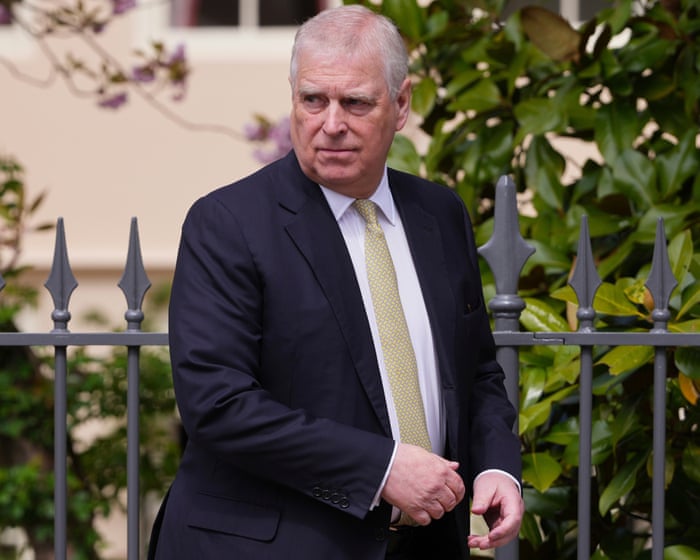
Andrew Mountbatten-Windsor received £302,000 in compensation after giving up the lease on Royal Lodge, his former home in Windsor, over 50 years early. He successfully challenged a police search warrant linked to an investigation that arose from files related to Jeffrey Epstein.
Key Facts
Andrew Mountbatten-Windsor surrendered the Royal Lodge lease more than 50 years early and got £302,000 compensation.
He had paid £1.8 million in repair and restoration costs on the property.
The lease terms allowed him compensation if he surrendered it within the first 25 years.
Royal Lodge is now to be marketed for future use by two national real estate agents.
He moved out after files linked to Jeffrey Epstein were released and amid criticism about his rent payments.
An investigation showed he earned private income from subletting cottages while paying a very low rent on Royal Lodge.
He won a legal case that ruled the police search warrants used at his homes were unlawful because the police cited the wrong law.
King Charles removed Andrew's right to be a prince and his dukedom due to his connection with Epstein.
Andrew receives an undisclosed annual payment from King Charles’s private funds, which is not to be used for legal costs.
Read the Original
Want the full story? Tap a source to open the original
article.
Ethiopia and Eritrea have cut diplomatic ties and accuse each other of starting a war of aggression over the conflict in Ethiopia’s northern Tigray region. Ethiopian forces have retaken major cities from Tigray rebels, while Eritrean troops are reported fighting alongside the rebels and have been targeted by Ethiopian drone strikes.
Key Facts
Ethiopia and Eritrea officially cut diplomatic relations amid escalating conflict.
Ethiopia says around 5,000 to 8,000 Eritrean soldiers are fighting in Tigray alongside rebels.
Ethiopian federal forces captured the Tigrayan capital, Mekelle, and other cities like Shire and Adigrat.
Eritrea claims it faces an unprovoked war from Ethiopia, while Ethiopia accuses Eritrea of aggression.
Ethiopian forces have used drone strikes against Eritrean troops in Tigray.
Rebel fighters are retreating to towns near the Eritrean border, such as Sheraro.
Relations between the two countries worsened after Eritrea’s involvement in Ethiopia’s civil war and disagreements over border issues and access to the Red Sea.
Eritrea became independent from Ethiopia in 1993 and fought a border war with Ethiopia from 1998 to 2000.
Read the Original
Want the full story? Tap a source to open the original
article.
The French government has promised to provide 3,000 extra substitute teachers to address student protests demanding more support in secondary schools. The protests have involved thousands of students, with some violence and arrests, but the government’s offer does not include large new spending.
Key Facts
The French government will send 3,000 additional substitute teachers to about 500 high schools in greatest need.
About 6,877 people have been arrested since the protests began, 86% of whom are under 18 years old.
Around 71,000 people protested nationwide, with 24,000 in Paris on one of the biggest protest days.
Police used tear gas against some groups who threw stones and homemade fireworks.
Some high schools were damaged or partially closed, but fewer schools closed than in previous days.
The government will offer more money for teachers who work overtime to fill gaps.
Student groups are watching closely to see how the government fulfills its promises and want more significant funding.
Political reactions differ, with some backing the students and others criticizing the government’s concessions.
Read the Original
Want the full story? Tap a source to open the original
article.
Each summary links back to the original reporting, so you can check the work. Support that, and get the daily digest every morning. Most choose $3.99/month.
Navi Pillay, a South African judge and former United Nations human rights chief, won the Nobel Peace Prize for her work in promoting peace and international law. The award highlights her role in leading a UN commission that found Israel guilty of genocide in Gaza, a conclusion rejected by both President Trump and Israeli Prime Minister Netanyahu.
Key Facts
Navi Pillay is a South African-born jurist and former UN human rights chief.
She currently serves as an ad hoc judge at the International Court of Justice.
She won the Nobel Peace Prize on October 9, 2026.
Pillay led a UN commission that concluded Israel committed genocide in Gaza.
Both President Donald Trump and Israeli Prime Minister Benjamin Netanyahu rejected the commission's findings.
These leaders have criticized the institutions where Pillay has worked.
Pillay’s Nobel Peace Prize is seen as a strong statement on international justice and human rights.
Read the Original
Want the full story? Tap a source to open the original
article.
Zimbabwean author Simbarashe Steyn Kundizeza won the 2026 Caine Prize for African Writing for his short story "The Blue Fighter." The prize is awarded to the best short story in English by an African writer and includes a cash award of £10,000.
Key Facts
Simbarashe Steyn Kundizeza is based in Harare, Zimbabwe.
He won the 2026 Caine Prize for African Writing.
The winning work is a short story titled "The Blue Fighter."
The prize recognizes the best short story written in English by an African author.
The award includes a cash prize of £10,000.
The Caine Prize is a respected literary award in Africa.
The announcement was reported by FRANCE 24 on October 9, 2026.
Read the Original
Want the full story? Tap a source to open the original
article.