An 87-year-old woman named Maria del Carmen Abascal died weeks after being evicted from her home in Madrid. Her eviction and death have sparked protests and made housing affordability a major political issue in Spain.
Key Facts
Maria del Carmen Abascal lived in the same Madrid flat for 70 years before being evicted.
She died in the hospital shortly after the eviction, which was shown on television.
Her case highlighted problems with rising rents and aggressive evictions in Spain.
Spain’s average rent has nearly doubled in 10 years.
Over 25% of Spanish renters spend about 40% of their income on housing and utilities.
Protests erupted across the country demanding better tenant rights.
The Spanish Prime Minister, Pedro Sanchez, called an early election for November 29 due to the political crisis.
Opposition leaders expressed sympathy but warned against politicizing the tragedy.
Read the Original
Want the full story? Tap a source to open the original
article.
Maricarmen, a Spanish pensioner who became a symbol of Spain’s housing crisis after being evicted from her rent-controlled apartment in Madrid, has died at age 87. Her eviction last month led to nationwide protests, making her a figure representing the struggle for affordable housing in Spain.
Key Facts
Maricarmen was 87 years old and wheelchair-bound.
She lived in a rented apartment in an upscale Madrid neighborhood for over 70 years.
A company bought her rent-controlled apartment at a very low price and evicted her.
Her eviction sparked protests across Spain and made her a symbol of the housing crisis.
She recently died in hospital after her health declined due to the eviction and long legal battle.
Protesters marched to Spain’s parliament to mourn her and promised to continue her fight.
The article also mentions ongoing student protests in France for better school conditions.
Other topics in the article include a 194-year-old tortoise studied by scientists and a fashion etiquette controversy involving actress Zendaya.
Read the Original
Want the full story? Tap a source to open the original
article.
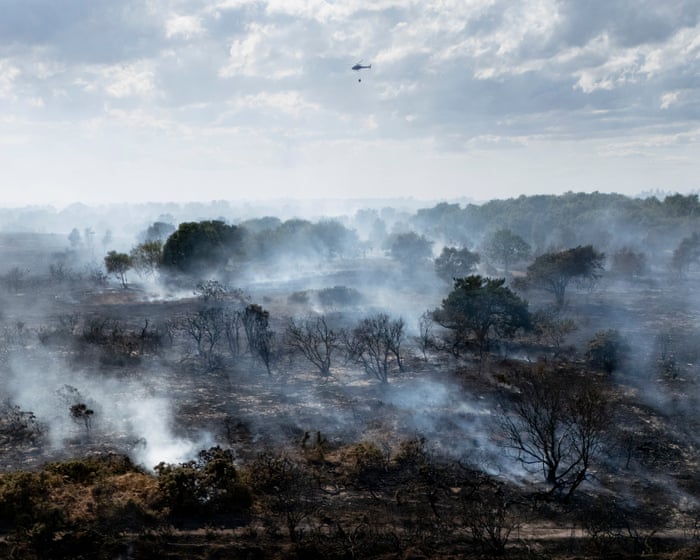
July 2026 saw the highest number of wildfires ever recorded in England, with 624 fires that month and 1,354 so far this year. The extreme heat, driven by climate change, made the situation worse, leading to widespread damage and even a wildfire-related death.
Key Facts
England recorded 624 wildfires in July 2026, the highest for any July on record.
So far in 2026, there have been 1,354 wildfires, making it the second worst year after 2022.
July 2026 was the hottest on record in the UK, with 40 days over 30°C (86°F).
A wildfire near Sizewell B nuclear power station damaged protected nature areas.
A 70-year-old man died due to a wildfire in Gloucestershire, the first fire-related death in data from 2010 to 2026.
The UK government canceled wildfire preparation plans and fire crews lack proper protective gear.
In response to wildfires, the Prime Minister held an emergency meeting and banned disposable barbecue sales temporarily.
The government is investing nearly £100 million to improve wildfire response and is planning a summit to improve readiness.
Read the Original
Want the full story? Tap a source to open the original
article.
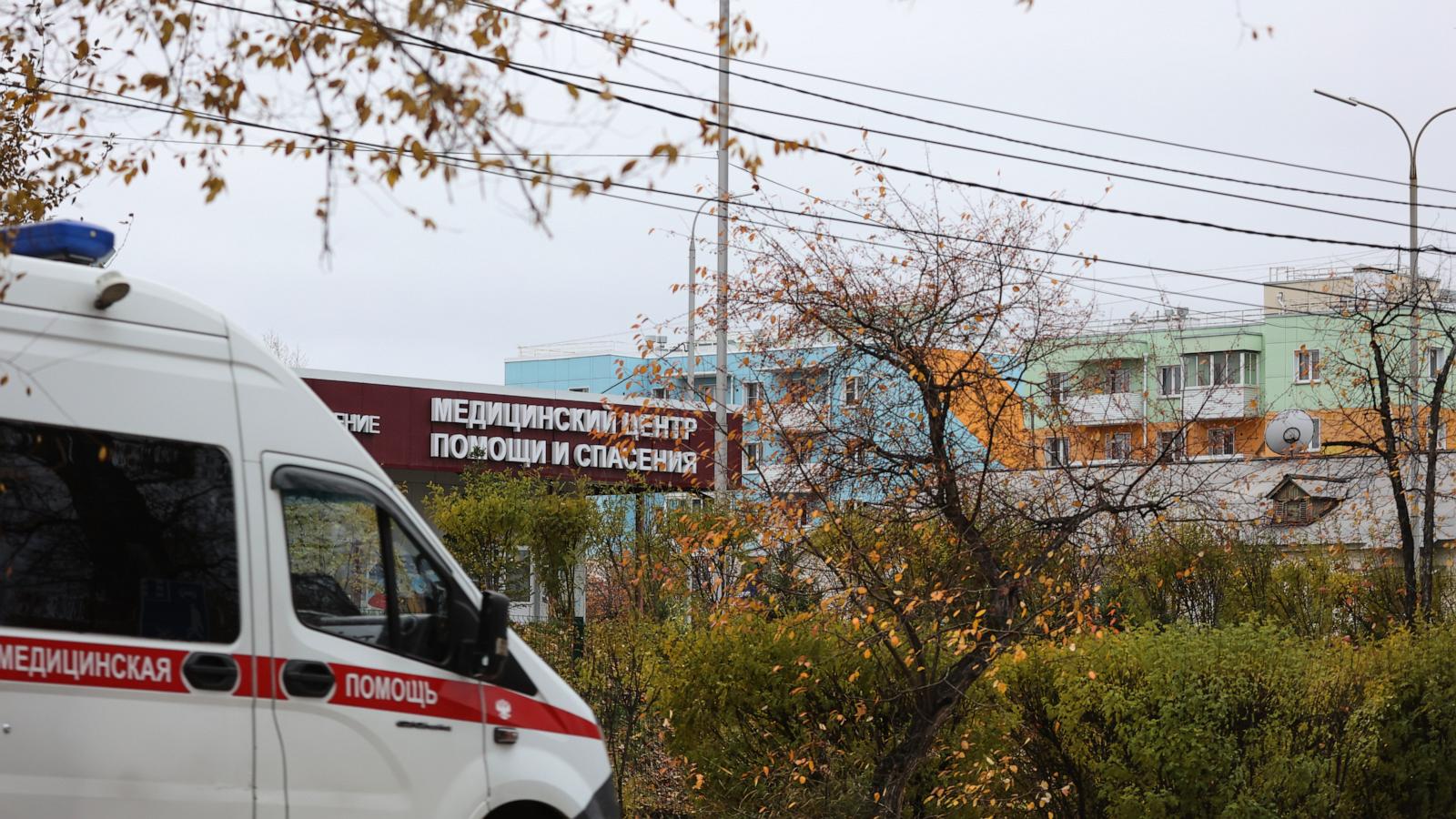
Russia’s public health agency said a lab worker who died in Siberia did not infect anyone else. The agency found no evidence that her illness was caused by plague, and the World Health Organization (WHO) said it does not know the cause of her pneumonia-like illness.
Key Facts
A lab worker at a plague research institute in Irkutsk, Siberia, died from pneumonia of unknown origin.
Russia’s health watchdog, Rospotrebnadzor, reported no infections linked to the worker and no official plague case in the region.
The agency denied reports that another person was infected after contact with the lab worker, calling them false.
Extensive tests found no sign that the illness was caused by plague or other pathogens handled at the lab.
WHO has requested more information from Russia about the cause of the illness and related health measures.
The infected worker had been vaccinated and had immunity to dangerous infections.
Russian media have largely avoided detailed coverage, and some earlier reports about the case were withdrawn.
An investigation found no safety issues at the plague research facility.
Read the Original
Want the full story? Tap a source to open the original
article.
Malaysia’s Prime Minister Anwar Ibrahim said his government will try to help Myanmar return to the group of Southeast Asian countries called ASEAN. Myanmar’s military-backed President Min Aung Hlaing visited Malaysia for the first time since becoming president in April, as part of efforts to bring Myanmar back into regional talks after a 2021 coup and ongoing conflict.
Key Facts
Malaysia’s Prime Minister wants to ease Myanmar’s return to ASEAN, where Myanmar has been excluded since 2021.
Myanmar’s President Min Aung Hlaing visited Malaysia for two days, his first trip since becoming president.
The visit is part of a diplomatic effort to improve Myanmar’s international relations after a 2021 military coup.
Malaysia and Myanmar agreed to work on the safe and voluntary return of over 10,000 Myanmar nationals from Malaysia.
It is unclear if Rohingya Muslims, a persecuted minority group, are among those returning to Myanmar.
The two leaders discussed cooperation in trade, energy, security, and economic issues.
Human rights groups have criticized Malaysia for sending migrants back to Myanmar and for seeming to legitimize Min Aung Hlaing’s presidency.
Human Rights Watch urged Malaysia to push Myanmar to stop human rights abuses and stop forced returns.
Read the Original
Want the full story? Tap a source to open the original
article.
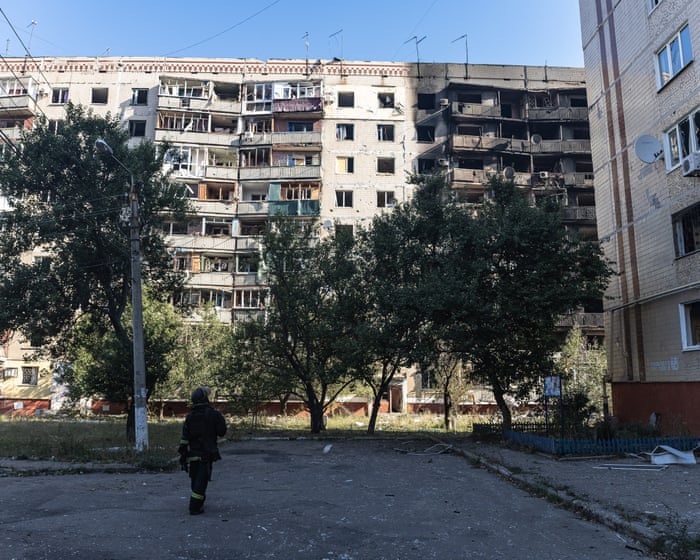
A Russian attack on a bus in eastern Ukraine’s city of Kramatorsk killed at least 12 people and injured 14. Separately, a missile strike on a residential building in northern Ukraine killed 22 people, including five children. In Russia, a drone caused a fire at a major technology company’s data center.
Key Facts
The bus attack happened in Kramatorsk, a key city near the front line in Ukraine’s eastern Donetsk region.
Local authorities said 12 people died and 14 were wounded in the bus attack.
Kramatorsk is important for Ukrainian military supplies and has not been captured by Russian forces.
Another attack in Pryluky, northern Ukraine, killed 22 people, including five children, after a missile hit a residential building.
Ukrainian President Zelenskyy said a cruise missile struck the building in Pryluky.
In Russia, a drone caused a fire at Yandex’s data center in Ryazan, southeast of Moscow.
Yandex is Russia’s largest tech company, running the country’s main search engine and popular apps.
Both Russia and Ukraine have increased long-range attacks on each other’s military and civilian targets recently.
Read the Original
Want the full story? Tap a source to open the original
article.
The African Union has started the Africa Credit Rating Agency (AfCRA), which is the first credit rating agency created for the continent. It aims to offer a new way to evaluate credit instead of relying on the three large global rating companies, helping African countries manage their debt.
Key Facts
The African Union created its first credit rating agency called AfCRA.
African leaders agreed on starting AfCRA in 2018.
AfCRA was officially launched in Port Louis, the capital of Mauritius.
The agency will serve as an alternative to the three main global credit rating agencies.
Many African countries face challenges with large amounts of debt.
AfCRA aims to provide more relevant and fair credit ratings for Africa.
The launch ceremony was attended by officials from various African nations.
Credit rating agencies give scores to show how likely countries or companies are to pay back money they borrow.
Read the Original
Want the full story? Tap a source to open the original
article.
Lenora Thaker won the top prize at the Queensland Literary Awards for her debut novel, The Pearl of Tagai Town. The book tells the story of a historic shantytown in Queensland that was home to Indigenous and diverse immigrant communities separated from white residents.
Key Facts
The Pearl of Tagai Town won the $30,000 Queensland Premier’s Award for state significance.
The novel is based on an unmapped shantytown called Cairns-Malay Town, inhabited from the late 1800s to the 1950s.
Communities in the town included Indigenous Australians and people from China, India, Japan, Malaysia, and Sri Lanka.
The judges praised the book for its vivid setting, warm characters, and use of local languages.
Other winners at the awards included Claire Thomas (fiction), Micaela Sahhar (nonfiction), Zeno Sworder (children’s), Julianne Negri (young adult), Helena Pantsis (short story), Eunice Andrada (poetry), and Sita Walker (people’s choice).
The awards ceremony took place at Brisbane Powerhouse during the Brisbane Writers Festival.
The Queensland Literary Awards have a complex history, including a recent controversy involving arts minister John-Paul Langbroek and a First Nations author that delayed the awards in 2025.
Management of the awards was transferred to the Brisbane Writers Festival starting this year.
Read the Original
Want the full story? Tap a source to open the original
article.
Eritrean troops have entered Ethiopia’s northern Tigray region, according to multiple sources. This move risks expanding the conflict between the Tigray People’s Liberation Front (TPLF) rebels and Ethiopian federal forces, which resumed fighting in late September.
Key Facts
Fighting started on September 23 between the TPLF rebels and Ethiopian federal forces.
Eritrean troops have reportedly moved into the Tigray region in northern Ethiopia.
This could turn the Ethiopian internal conflict into a larger regional war.
Ethiopia accuses Eritrea of supporting the TPLF rebels.
Ethiopia and Eritrea cut off diplomatic relations last week.
The previous Tigray war lasted from 2020 to 2022 and was very destructive.
Read the Original
Want the full story? Tap a source to open the original
article.
French astronaut Sophie Adenot and her SpaceX Crew-12 team have started their trip back to Earth from the International Space Station. Adenot is the second French woman in space and now holds the European record for the longest continuous stay in orbit. Their return landing is planned off California's coast.
Key Facts
Sophie Adenot is a French astronaut and experienced helicopter pilot.
She is the second French woman to go to space.
Adenot set a new record for the longest continuous time spent in space by a European astronaut.
She traveled to space as part of the SpaceX Crew-12 mission.
The crew is returning to Earth from the International Space Station.
Their splashdown (return landing in water) will happen off the coast of California.
The return journey began on October 8, 2026.
The mission began earlier and involved living and working in orbit for an extended period.
Read the Original
Want the full story? Tap a source to open the original
article.
The former CDC director, Robert Redfield, raised concerns that a Russian lab may have altered the bacteria linked to a recent plague death. Russian officials said a woman died from pneumonia for unknown reasons, but reports suggest she may have accidentally released plague bacteria while working in a lab.
Key Facts
Robert Redfield was the head of the CDC during the start of the COVID-19 pandemic.
A 28-year-old woman named Darya Shipilova died in Siberia after working at a Russian anti-plague lab.
Russian health officials said she died of pneumonia with an unknown cause.
Unconfirmed reports say she accidentally broke a test tube with live plague bacteria.
About 200 people who were in contact with Shipilova are now being watched for illness.
Hospitals and a maternity ward in the area have been quarantined to prevent spread.
Redfield said if the plague bacteria had been changed to resist antibiotics, it could explain why treatment failed.
The U.S., European Union, and World Health Organization want Russia to be clear and open about this situation.
Read the Original
Want the full story? Tap a source to open the original
article.
A suspected case of pneumonic plague was reported in the Russian city of Irkutsk, causing one death and hospital quarantines. The U.S. government has issued warnings and requested more information from Russia, while President Donald Trump called it a serious issue but downplayed concerns about bioweapons.
Key Facts
A 28-year-old anti-plague biolab worker in Irkutsk, Russia, died from suspected pneumonic plague.
Pneumonic plague is highly deadly without treatment but spreads less easily than some other diseases.
The U.S. Embassy in Moscow issued a health alert about the case and recommended Americans leave Russia due to security issues.
The U.S. State Department formally asked Russia for more details about the outbreak.
President Donald Trump said the situation is a "big problem" and planned to discuss it with Russian President Vladimir Putin.
Pneumonic plague spreads mainly through close contact with infected respiratory droplets, not through the air over long distances.
Historical data show pneumonic plague has low pandemic potential because it rarely causes many new infections.
Experts say modern health measures like masks and distancing can control its spread effectively.
Read the Original
Want the full story? Tap a source to open the original
article.
That's the point of this site, and readers keep it that way. Support for any amount and the daily digest lands in your inbox every morning at 7am Eastern.
A Russian glide bomb attack on two civilian buses in the frontline city of Kramatorsk killed 33 people and injured 18, according to officials. The attack is part of a recent surge in Russian strikes across Ukraine, which have increased civilian casualties and caused concern for public safety in conflict areas.
Key Facts
The attack targeted two buses in Kramatorsk, a city near the frontlines in eastern Ukraine.
Thirty-three people died and 18 others were injured in the bombing.
Kramatorsk and nearby Slovyansk are key cities in the Donbas region, which Russia aims to control.
Russian attacks on Ukraine have been rising, causing more civilian deaths than in previous years.
Another recent attack in Pryluky killed 22 people, including five children.
Local officials have stopped public transport in the area to protect civilians.
Ukraine’s President Zelensky called for more defense support from international partners.
Russian officials have not commented on the latest bus attack.
Read the Original
Want the full story? Tap a source to open the original
article.
Russian forces attacked two passenger buses near the frontline in Kramatorsk, eastern Ukraine, killing 30 people and injuring 18. Local authorities confirmed the attack and suspended public transport in the area, while the region faces ongoing military strikes.
Key Facts
Thirty people died and 18 were wounded after Russia hit two buses in Kramatorsk.
Kramatorsk is near the frontline in eastern Ukraine’s Donetsk region.
Authorities stopped public transport following the attack.
Photos showed bodies on the street and a burnt bus shell.
The regional governor said the attack was by the Russian army and highlighted the serious human toll.
Russian forces increased drone and bomb attacks in the Donetsk region’s defensive belt.
Russia demands Ukraine give up control of remaining areas in Donetsk to stop fighting; Ukraine refuses.
This attack happened one day after Russian air strikes targeted Ukraine’s power grid and caused many deaths.
Read the Original
Want the full story? Tap a source to open the original
article.
A 22-year-old man was arrested and later released on bail in connection with a security incident near RAF Fairford airbase in England. Seven men have been arrested so far in this case, but no charges have been made.
Key Facts
The man arrested is a 22-year-old British national.
He was arrested in Westminster, London.
The arrest was made under Section 5 of the Terrorism Act 2006.
The incident happened near RAF Fairford, a Royal Air Force base in Gloucestershire.
The incident took place on 27 September.
Seven men, all in their 20s, have been arrested so far.
No one has been formally charged yet.
The investigation is ongoing, and more information will be provided later.
Read the Original
Want the full story? Tap a source to open the original
article.
At least 30 people were killed and 18 injured when Russian forces struck two passenger buses in Kramatorsk, eastern Ukraine. On the same day, a drone hit a data centre owned by the Russian tech company Yandex, causing a fire and service disruptions.
Key Facts
Russia attacked two buses in Kramatorsk, killing at least 30 people and wounding 18.
Kramatorsk is a key city near the front line in Donetsk region, important for Ukraine’s military logistics.
The buses were struck by what Ukraine called a glide bomb.
Public transport in Kramatorsk was suspended after the attack.
The day before, a Russian missile killed 22 people, including five children, in northern Ukraine’s Chernigiv region.
A drone caused a fire at Yandex's data centre in Ryazan, southeast of Moscow, disrupting some services.
Yandex is Russia’s largest technology company, known as "Russia’s Google."
Emergency services responded to the fire, and no casualties were reported in the data centre strike.
Read the Original
Want the full story? Tap a source to open the original
article.
A tanker was hit by multiple projectiles in the Gulf north of Qatar, causing casualties, according to the UK Maritime Trade Operations agency. The incident is part of ongoing attacks on merchant ships in the region linked to the war between the US, Israel, and Iran.
Key Facts
The tanker struck was identified as the Acers, registered in Antigua and Barbuda.
The attack occurred 51 nautical miles north of Madinat al-Shamal, Qatar.
Merchant ships in this region have faced repeated attacks since the Iran war started in February.
At least 24 seafarers have died in 93 confirmed attacks, according to the UN's International Maritime Organization.
The Strait of Hormuz is a vital route for about 20% of the world's oil and gas shipments.
The strait was nearly closed after the war began, due to missile and drone attacks and a US naval blockade.
A preliminary agreement to reopen the strait in June failed when attacks resumed and the US reinstated the blockade.
The US military currently guards tankers to help maintain crude oil exports at about 80% of pre-war levels.
Read the Original
Want the full story? Tap a source to open the original
article.
French students have been protesting school conditions like crowded classrooms and teacher shortages since September 21. France spends 5.1 percent of its GDP on education, which is above the EU average but still faces issues like high class sizes and unqualified teachers.
Key Facts
Protests began on September 21 in a Paris suburb and spread nationwide, involving clashes between students and police.
More than 6,100 people have been arrested during the protests and strikes.
France spends 5.1% of its GDP on public education, or 6.7% when including private and business contributions, totaling about 199.2 billion euros in 2025.
Secondary education receives the largest share of educational funding (37%), followed by primary (30%), higher education (23%), and adult education (10%).
Sweden spends the most on education in Europe at 7.3% of GDP; France ranks 13th among European countries.
Teacher shortages are a problem in France, with 11% of secondary school teachers not fully qualified.
Average secondary school class size in France is 26 students, above the OECD average of 23.
Students report poor school conditions, including old buildings, lack of furniture, and rodent problems, worsened by recent heatwaves.
Read the Original
Want the full story? Tap a source to open the original
article.
On the biggest stories we show what the outlets agree on and where they differ. Readers keep that going, and get the daily digest by email every morning. Most choose $3.99/month.
The United Nations said that the El Nino weather pattern will get stronger and is expected to reach its highest point in December. This event could be one of the strongest since 1950 and will cause higher temperatures around the world, adding to the effects of human-caused climate change.
Key Facts
El Nino is a natural weather event that affects global temperatures.
The United Nations warned it will intensify and peak in December 2026.
This El Nino could be among the strongest recorded since 1950.
It will cause warmer temperatures across much of the planet.
The warming from El Nino adds to the ongoing rise in temperatures caused by human activities such as burning fossil fuels.
Higher global temperatures can affect weather patterns, agriculture, and water supplies worldwide.
The warning comes from the UN’s weather and climate agency.
Preparing for El Nino effects is important to reduce damage to people and the environment.
Read the Original
Want the full story? Tap a source to open the original
article.
The UK and Germany are starting a joint effort to stop sabotage and cyberattacks. This comes as UK Prime Minister Andy Burnham and German Chancellor Friedrich Merz meet in Berlin and both warn about threats from Russia.
Key Facts
The UK and Germany will work together to fight cyberattacks and sabotage.
UK Prime Minister Andy Burnham and German Chancellor Friedrich Merz met in Berlin.
Both leaders spoke about the hybrid threat, which means a mix of cyber and other kinds of attacks.
The warning focused on concerns about actions from Russia.
The partnership aims to better protect both countries from digital and physical attacks.
This is part of broader efforts to improve security in Europe against hostile activities.
The announcement was reported by France 24 on October 8, 2026.
Read the Original
Want the full story? Tap a source to open the original
article.