A British Airways flight from London to Chicago dropped 27,000 feet shortly after takeoff due to a technical problem. The plane returned safely to London Heathrow Airport after circling over Ireland to burn fuel.
Key Facts
The flight descended from 36,000 feet to 9,000 feet about 30 minutes after leaving London.
The airline said there was a technical issue with the plane.
The descent was controlled, meaning the pilots managed it safely.
The plane turned around and flew over Ireland, circling for hours to reduce its fuel load.
The plane landed back safely at London Heathrow Airport in the evening.
Passengers left the plane normally.
British Airways is working to help passengers continue their journeys.
The story is still developing with more updates expected.
Read the Original
Want the full story? Tap a source to open the original
article.
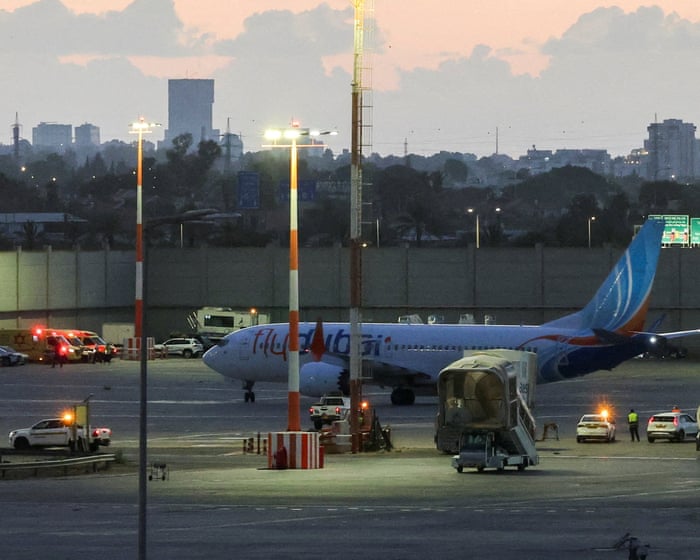
Investigators believe that Hamam al-Hammami, the co-pilot who tried to hijack a Flydubai plane flying from Dubai to Tel Aviv, had planned the attack since July but delayed it. He used a crash axe to attack the captain but was overpowered by passengers, and the plane landed safely in Saudi Arabia where Hammami was detained.
Key Facts
Hamam al-Hammami, 29, is an Omani national who attempted to hijack Flydubai flight FZ1073 last week.
The attack was postponed from July, possibly because a friend was on the crew.
He used an emergency crash axe to attack the pilot about two hours after takeoff.
The flight was carrying over 180 passengers, mostly Israeli.
The captain, Smit Machchhar, was injured but managed to unlock the cockpit door.
Passengers subdued Hammami, and a reserve pilot landed the plane in Saudi Arabia.
Hammami had worked for Oman Air and Royal Air Maroc before joining Flydubai.
Authorities in at least eight countries are investigating Hammami’s background and potential radicalization.
Social media posts linked to Hammami praised known militants and showed extremist views.
Israeli Prime Minister Netanyahu said Hammami had been radicalized and was suicidal.
Read the Original
Want the full story? Tap a source to open the original
article.
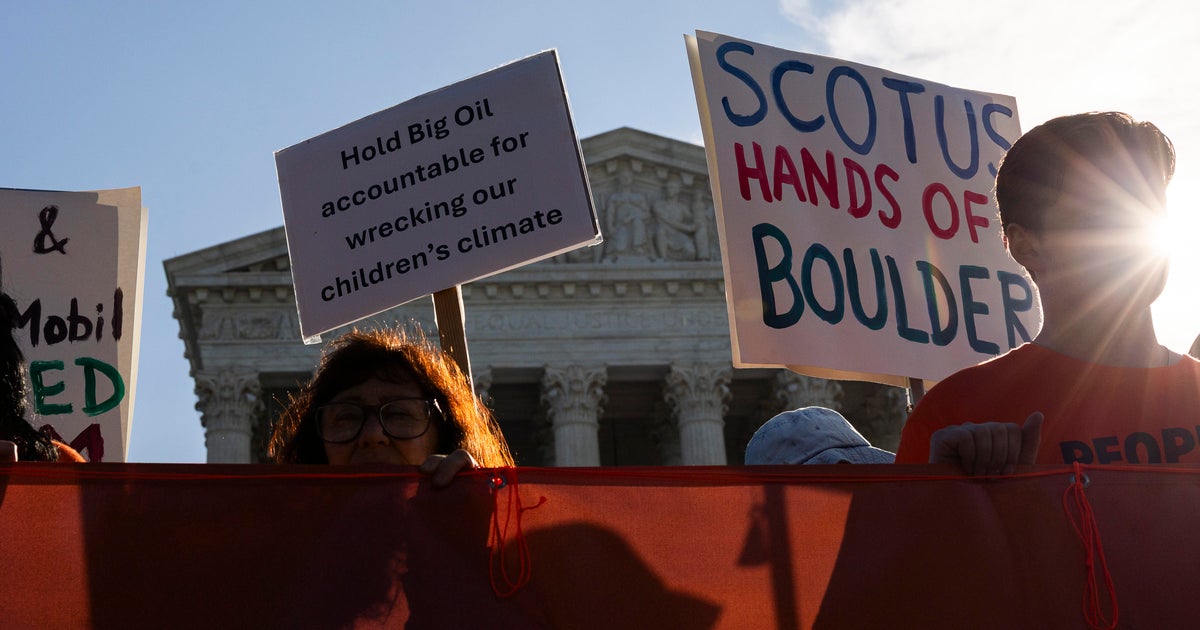
The U.S. Supreme Court heard a case about whether energy companies Exxon and Suncor can be held responsible for climate change damages claimed by Boulder, Colorado. The court is deciding if federal law blocks the lawsuit, which argues the companies contributed to global warming and caused local harm.
Key Facts
The case is Suncor Energy v. Commissioners of Boulder County, started in a Colorado state court in 2018.
Eight Supreme Court justices heard the arguments; Justice Samuel Alito recused himself due to stock holdings in energy companies.
The main question is whether federal law, such as the Clean Air Act, prevents the state lawsuit from moving forward.
The city and county of Boulder claim Exxon and Suncor caused harm through emissions and misled the public about fossil fuels.
The Trump administration supports Exxon and Suncor, saying pollution across state lines is controlled by federal law.
The Colorado Supreme Court allowed the lawsuit to continue, but the energy companies appealed to the U.S. Supreme Court.
Justice Ketanji Brown Jackson expressed concern that the case might be too early for the Supreme Court to decide.
The lawsuit is part of many similar suits by states and cities seeking damages for climate harms linked to fossil fuel companies.
Read the Original
Want the full story? Tap a source to open the original
article.
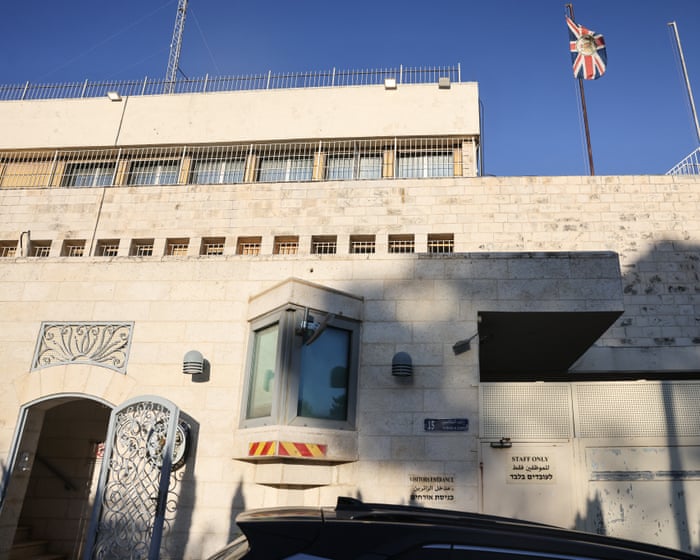
The UK has warned it might expel Israeli diplomats if Israel closes the UK consulate in East Jerusalem. This threat comes after Israel planned to shut the consulate in response to the UK banning trade in goods from Israeli settlements in the occupied West Bank.
Key Facts
The UK said it could expel one Israeli diplomat for each British diplomat forced to leave Israel.
Israel plans to close the UK consulate in East Jerusalem later this week.
The UK banned trade with goods from Israeli settlements in the occupied West Bank.
The UK sees East Jerusalem as occupied Palestinian land, based on international views.
Israel calls the UK sanctions “morally distorted” and accuses the UK Labour party of hostility.
The UK consulate covers East Jerusalem, the West Bank, and Gaza, and is different from the embassy in Tel Aviv.
UK national security adviser Jonathan Powell tried but failed to stop the consulate closure.
Israel also plans to revoke credentials of Dutch diplomats due to a similar ban by the Netherlands.
Read the Original
Want the full story? Tap a source to open the original
article.
A group of U.S.-based researchers is investigating a boat-shaped rock formation in Turkey, called the Durupınar Formation, to see if it might be the remains of Noah’s Ark. They believe finding the Ark would challenge the scientific theory of evolution and have called for changes in school teaching if proven true. The evidence is not yet confirmed by other scientists.
Key Facts
The Durupınar Formation in Turkey is about 515 feet long and shaped like a boat.
A U.S. group called Noah’s Ark Scans is testing samples from the formation to find wood or other proof of the Ark.
The group believes finding Noah’s Ark would challenge the theory of evolution, which says species change over millions of years.
Lauren Witzke, fundraising director for Noah’s Ark Scans, says they want school curriculums rewritten if they prove the Ark’s existence.
Andrew Jones, founder of Noah’s Ark Scans, says radar images show "organized patterns" under the formation that might be man-made.
Radar specialist Khosrow Bakhtar described structures inside the formation that he said look “extraordinary” and “organized.”
No wood or firm evidence of the Ark has been found yet, and the radar data has not been peer-reviewed by independent scientists.
The scientific community says evolution is a key part of modern biology and has strong support from many studies.
Read the Original
Want the full story? Tap a source to open the original
article.
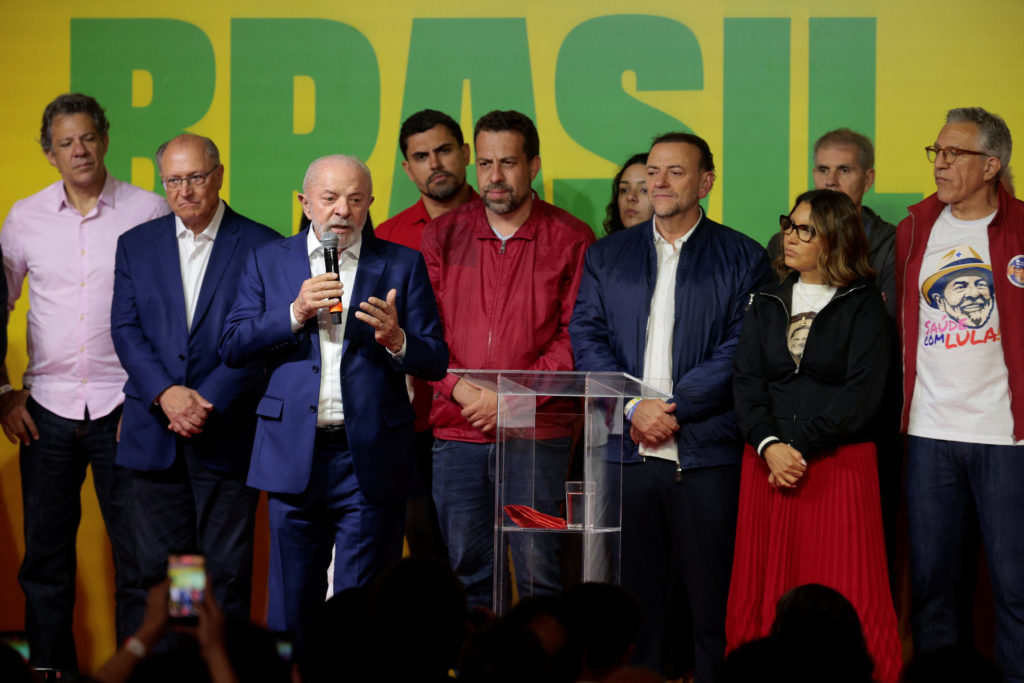
Senator Flavio Bolsonaro, supported by President Donald Trump, gained 47% of the vote in Brazil’s presidential election first round, narrowly trailing President Luiz Inácio Lula da Silva, who received 45%. Both will compete in a runoff election scheduled for October 25, with Bolsonaro’s strong congressional support and Lula’s efforts to adjust his campaign strategy shaping the close contest.
Key Facts
Flavio Bolsonaro is the son of former President Jair Bolsonaro and has ties to President Donald Trump.
Bolsonaro won 47% of the vote in the first round, while incumbent President Lula received 45%.
No candidate received over 50%, so a runoff election will happen on October 25.
Bolsonaro’s Liberal Party won over one-third of the Senate seats in this election.
Lula has held the presidency previously and is seeking a fourth nonconsecutive term.
Lula’s campaign is revising its strategies, including preparing for TV debates and targeting key states.
Some other presidential candidates have declined to endorse either Bolsonaro or Lula.
Brazil has been leaning more to the right politically since 2016, which may make Lula’s re-election harder.
Read the Original
Want the full story? Tap a source to open the original
article.
The U.S. Supreme Court justices expressed doubt about oil companies’ request to stop a lawsuit about climate change damage before it begins. The justices questioned whether the court should handle the case right now.
Key Facts
Oil companies want the court to block a climate change lawsuit against them.
The lawsuit could hold these companies responsible for damages caused by climate change.
Several Supreme Court justices showed skepticism about the companies’ request.
The justices questioned if the court should hear this case at the current stage.
The discussion happened during a Supreme Court session on Monday.
The case involves legal issues about responsibility for climate harms.
The justices’ comments suggest uncertainty about how to proceed with such cases.
Read the Original
Want the full story? Tap a source to open the original
article.
Architects predict major changes in housing by 2050, focusing on more shared and multi-family homes instead of single-family houses. They expect cities to adapt with denser living spaces and buildings that use new technology, like self-cooling and robotic construction, to address housing shortages and environmental challenges.
Key Facts
About 45% of the world’s 8.2 billion people live in cities, with more people expected to move to cities by 2050.
Single-family homes on individual plots will be less common and considered unsustainable.
Multi-family housing such as townhouses, cottages, and apartment buildings is expected to increase to use land more efficiently.
“Missing middle” housing refers to small- and medium-sized multi-family homes that add density to suburbs without losing a neighborhood feel.
Changes in zoning and building codes will help new housing types become more common.
Homes in 2050 may be self-cooling and self-powered to fight the effects of climate change.
Future construction might use robots to build sustainable, multi-family homes quickly.
World Architecture Day and UN reports highlight the global housing crisis, with 3.4 billion people lacking safe, adequate housing.
Read the Original
Want the full story? Tap a source to open the original
article.
US Secretary of State Marco Rubio traveled to Iceland, Greece, and Portugal to discuss economic and security cooperation. He said the US decision to remove B-1 bombers from a British base was not directly connected to a recent security incident there.
Key Facts
Marco Rubio began a four-day European tour in Reykjavik, Iceland.
The tour will include visits to Greece and Portugal.
Rubio said the US removal of B-1 bombers from Fairford base in the UK is not directly linked to a recent security incident.
Five British men were arrested near Fairford on suspicion of planning terrorist acts but were released on bail.
A sixth man with UK-Iranian nationality was also arrested in London and released on bail.
B-1 bombers, previously used for strikes on Iran, have been returned to the US.
A NATO source said Iran still poses a threat to US assets in the UK.
Rubio’s talks in Greece and Portugal will focus on defense, regional security, energy, economic, and technology cooperation.
Read the Original
Want the full story? Tap a source to open the original
article.
The private diaries of Pope Francis, covering his time before and during his leadership as pope, will be published on November 24. These writings offer personal insights into his thoughts and experiences from 1992 until shortly before his death in 2025.
Key Facts
The diaries span from December 1992 to August 2024.
They are being published in English and four other languages by Image, part of Penguin Random House.
The book is produced in partnership with the Vatican Publishing House (LEV).
The English version was translated from Spanish by Sister Bernadette Reis and edited by Cardinal Víctor Manuel Fernández.
Pope Francis, born Jorge Mario Bergoglio, was the first Latin American pope.
He was known for his simple style and focus on humility and social issues.
He passed away on April 21, 2025, at age 88.
His leadership included outreach to LGBTQ+ Catholics and vocal opinions on migration and political issues.
Read the Original
Want the full story? Tap a source to open the original
article.
A Russian lab worker near Irkutsk reportedly died after possibly contracting plague, according to media reports. U.S. health officials and the Centers for Disease Control and Prevention (CDC) are monitoring the situation closely. The article explains how plague compares to other serious diseases like Ebola and COVID-19.
Key Facts
A 28-year-old woman working at the Irkutsk Anti-Plague Institute in Siberia died after possibly breaking a test tube with live plague bacteria.
Russian health authorities diagnosed her with pneumonia of unknown cause and had not confirmed the bacteria linked to plague.
The CDC states that plague has three main forms: bubonic, pneumonic, and septicemic, with pneumonic plague being the most serious and contagious.
Pneumonic plague symptoms include fever, headache, chest pain, cough, and difficulty breathing.
Without treatment, pneumonic and septicemic plague can be fatal, with death rates from 30% up to 100%.
Ebola is a deadly virus spread through contact with infected body fluids, with a fatality rate averaging about 50%.
Ebola symptoms start with fever and fatigue and can include vomiting, diarrhea, and organ problems.
Early medical care improves survival chances for both plague and Ebola.
Read the Original
Want the full story? Tap a source to open the original
article.
There are no ads, so there is no reason to bait you. Readers who chip in keep it that way. Most choose $3.99/month, and get the daily digest every morning.
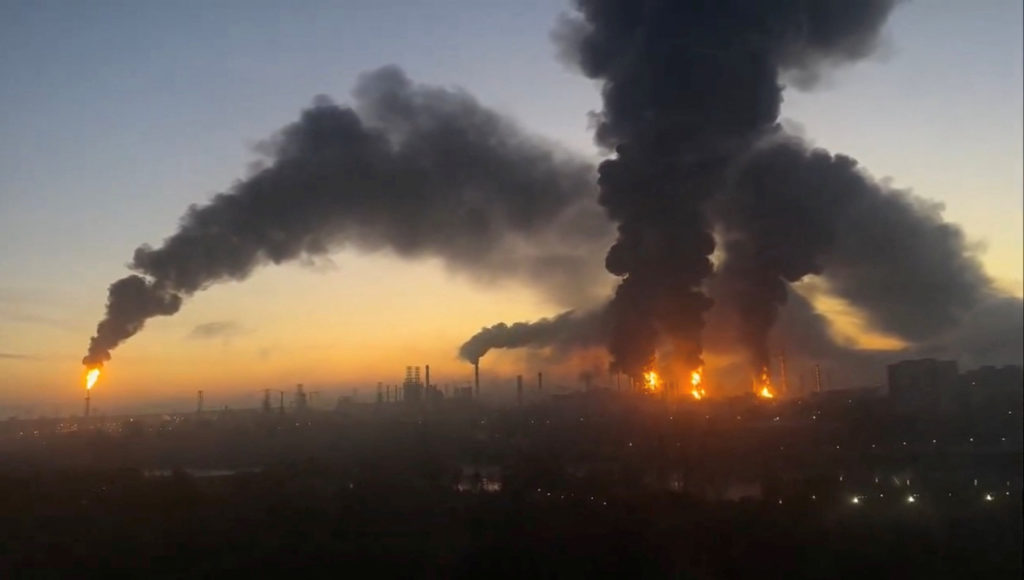
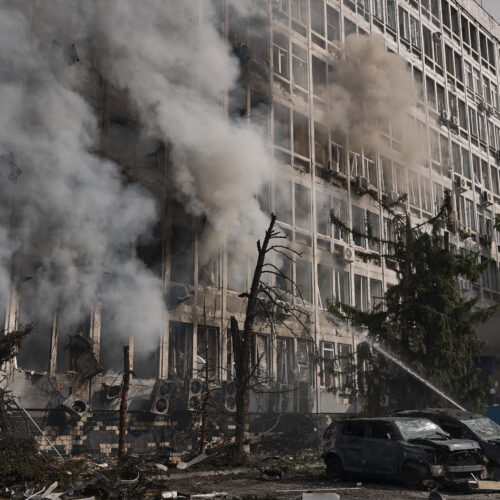
Ukraine says its long-range attacks have damaged more than half of Russia's oil refining capacity, hurting Russia's ability to fuel its military during the ongoing war. These strikes have caused a fuel crisis in Russia, while Russia continues attacks that have killed civilians in Ukrainian cities like Kharkiv and Sloviansk.
Key Facts
Ukraine claims it disabled 51% of Russia’s oil refining capacity through recent attacks on multiple refineries.
These strikes have affected refineries in cities including Moscow, Yaroslavl, Ust-Luga, Perm, Saratov, and Syzran.
Russia is facing fuel shortages, leading to gasoline sale restrictions and lowered fuel quality standards.
Russian President Vladimir Putin said the strikes have cost Russia about 1% of its economic output.
The International Energy Agency reports a 30% drop in diesel production in Russia and long wait times at gas stations.
Russia has responded by delaying refinery maintenance, restarting old units, and banning diesel exports.
Russian airstrikes on Ukrainian cities Kharkiv and Sloviansk have killed at least four people and caused injuries and damage.
Ukrainian officials warn residents in some regions to evacuate before mandatory orders.
Read the Original
Want the full story? Tap a source to open the original
article.
Spain’s Prime Minister Pedro Sanchez has called an early election for November 29. The decision comes after growing public frustration with the country’s housing crisis and Sanchez’s government losing a vote on housing laws in parliament.
Key Facts
Spain is facing a housing crisis causing widespread public anger.
Prime Minister Pedro Sanchez leads a minority government.
Sanchez’s government recently lost a parliamentary vote on housing measures.
Due to these challenges, Sanchez decided to hold a snap election.
The election is scheduled for November 29, 2024.
The early vote is seen as a political risk for Sanchez.
Housing affordability and availability are key issues in Spain currently.
Read the Original
Want the full story? Tap a source to open the original
article.
Russian forces have increased drone attacks on Ukrainian data centers, causing Internet and phone outages, especially around Kyiv. Ukrainian officials warn that these attacks threaten the country’s digital economy and efforts to resist the invasion, while Ukraine struggles to improve its air defenses against faster drones.
Key Facts
Since late September, Russian jet-powered drones have targeted Ukrainian data centers, disrupting telecom services.
Over 100,000 households near Kyiv faced temporary Internet outages from the initial strikes.
Russia has stepped up attacks on multiple telecom providers and facilities in Kyiv within a few days.
Russian drones are harder to shoot down than before; Ukraine’s air defenses intercept only 50-60% of newer, faster drones.
The strikes aim to damage Ukraine’s civilian infrastructure, including banks and public services, especially during fall and winter.
Russia’s drone attacks coincide with setbacks on the battlefield as Ukraine regains some territory in the east.
Ukraine has moved some data centers abroad and built underground networks to protect telecom infrastructure.
Russian attacks on infrastructure are part of a broader strategy to pressure Ukraine to surrender.
Read the Original
Want the full story? Tap a source to open the original
article.
King Charles provides a private allowance to his brother, Andrew Mountbatten-Windsor, but this money should not be used to pay for Andrew’s legal fight against police search warrants. Andrew, who is no longer a working royal, is challenging the police search warrants linked to his arrest in a private court hearing.
Key Facts
King Charles gives his brother Andrew a private allowance and housing on the Sandringham estate.
Andrew Mountbatten-Windsor is not a working royal, so Buckingham Palace does not speak or act for him.
The King’s money should not be used to fund Andrew’s legal case against Thames Valley Police.
Andrew was arrested in February on suspicion of misconduct related to the Epstein case but denies any wrongdoing.
Andrew’s lawyers are asking the court to review and possibly cancel the search warrants used at Sandringham and Royal Lodge.
Thames Valley Police confirmed they are involved in legal proceedings about the warrants but won’t comment further.
Andrew lost his royal titles related to his connection with Jeffrey Epstein.
A private court hearing will happen on Thursday to discuss the legality of the search warrants and some documents.
Read the Original
Want the full story? Tap a source to open the original
article.
A colony of beavers was brought back to London after being extinct there for about 400 years. The beavers have built small ponds and reservoirs that help stop flooding near a railway station.
Key Facts
Beavers were hunted to extinction in London around 400 years ago.
The Ealing Beaver Project reintroduced beavers to London three years ago.
The beavers built ponds that hold water and reduce the chance of floods.
The flooding control benefits a nearby railway station.
Beavers naturally change the environment by building dams, which helps manage water flow.
This project shows how animals can help with environmental challenges like flooding.
Read the Original
Want the full story? Tap a source to open the original
article.
The British Museum’s director apologized for problems visitors faced at the Bayeux Tapestry exhibition, such as long waits and overcrowding. The museum is changing how visitors see the tapestry by offering longer hours, audio guides, more seating, and better signs to improve the experience.
Key Facts
Visitors reported waiting up to two hours to see the Bayeux Tapestry.
The museum closed early once due to a private event, causing some ticket holders to be turned away.
More than 100,000 visitors have seen the exhibition within three weeks.
Visitors are spending more time than expected viewing the tapestry, causing delays.
The museum consulted the tapestry’s home museum in Bayeux for advice on managing crowds.
Tickets cost £33 at peak times and £27 off-peak; children under 16 enter free.
The Bayeux Tapestry is a 70-meter-long embroidery showing scenes from the 1066 Norman conquest.
This is the first time in over 900 years the tapestry has been displayed in the UK, on loan until 2027.
Read the Original
Want the full story? Tap a source to open the original
article.
Israeli Prime Minister Benjamin Netanyahu told voters they must choose between supporting him or supporting Palestine in the upcoming election. This statement came as Israelis marked three years since the October 7th attacks.
Key Facts
Netanyahu said voters face a clear choice: vote for him or vote for Palestine.
The statement was made during the election campaign.
Israelis are observing the third anniversary of the October 7th attacks.
The attacks on October 7th are a significant event in recent Israeli history.
Netanyahu is aiming to influence voter decisions with this ultimatum.
Read the Original
Want the full story? Tap a source to open the original
article.
France and Germany have proposed a new legal tool for the European Union (EU) to quickly respond to trade threats or unfair practices like dumping, which can harm the EU economy. This proposal aims to give the EU faster power to act in trade disputes, especially as tensions with China rise.
Key Facts
French President Emmanuel Macron and German Chancellor Friedrich Merz suggested the EU create a rapid response tool for trade conflicts.
The tool would allow the EU to act quickly without waiting for approval from all 27 member countries, although a majority could still block the action.
The proposal comes just before EU Chief Ursula von der Leyen visits China to discuss trade issues.
The new instrument could cut off access to the EU market if a country harms the EU’s economy, such as by stopping supply of critical raw materials.
The EU currently has fewer and slower tools to respond to trade disputes compared to the U.S. and China.
Europe’s goods trade deficit with China was about 360 billion euros ($400 billion) last year.
The EU depends on China for many critical raw materials and faces strong competition from Chinese companies in sectors like steel, semiconductors, and batteries.
The proposal also aims to reduce Europe's economic dependence on China.
Read the Original
Want the full story? Tap a source to open the original
article.